by in News

Subsidies for green heating approved for 100,000 Greek homes

The Greek Ministry of Environment and Energy published the first list of households that will benefit from the national program for modernizing heating systems.

In total, more than 100,000 households have been accepted, of which 5,000 are classified as vulnerable. The renewable heating program had an original budget of EUR 223 million, with support from the NextGenerationEU fund, but it was later enlarged to EUR 647 million. It takes place under the RePowerEU policy initiative and the National Recovery and Resilience Plan Greece 2.0.

The initiative supports energy upgrades of buildings and the substitution of older heating systems using fossil fuels, with new ones based on renewable energy. Notably, Greece set a goal for a 52.6% share of renewable heating by 2030, according to its National Energy and Climate Plan (NECP). In 2023, the level reached 26.2%, therefore there is a long distance to cover.

Most buildings in the country currently use either heating oil or natural gas. The goal is to shift to green technologies such as heat pumps or rooftop solar water heaters. These solar systems are especially popular in Greece, since the scorching sun provides ample thermal energy to convert into hot water, even during winter months. They also have a high domestic added value, as they are mainly constructed by Greek companies.

At least 50% of the cost covered

Support is provided for the general public according to income criteria, with 50% to 60% of the cost covered. Beneficiaries get up to EUR 1,020 for their energy upgrades.

As for vulnerable households, there are no income criteria and they get up to EUR 6,000 for each installation.

More applications are expected to be approved in the following months, as Greece aims to complete the program before June 2026, when the EU’s Recovery and Resilience Facility (RRF) reaches its end.

by in News

Novi Sad plans to build waste-to-energy cogeneration plant

The City of Novi Sad plans to produce electricity and heat from solid municipal waste and has invited bids for a preliminary feasibility study for a cogeneration plant that would burn processed waste from a planned regional waste management center. Surplus energy could be stored within the future solar thermal system.

Serbia’s capital, Belgrade, already has a combined heat and power plant (CHP) that uses municipal waste. As such facilities exist all over Europe, Novi Sad’s district heating enterprise Novosadska toplana specified in the public call that the study must include an overview of relevant examples and best practices.

The document is to assess the feasibility of obtaining energy from waste processed into refuse-derived fuel (RDF) and solid recovered fuel (SRF). The fuel would be produced in a mechanical-biological treatment (MBT) plant for biodegradable waste within the future regional waste management center for Novi Sad and the municipalities of Bačka Palanka, Bački Petrovac, Beočin, Žabalj, Srbobran, Temerin, and Vrbas, according to the public call.

The bid submission deadline is December 15, and the study must be completed within 180 days of the contract signing. The job is valued at RSD 22 million.

The purpose of the study is to provide a preliminary assessment of the potential for and benefits of using available solid fuel from waste for high-efficiency cogeneration for the city’s needs, as well as the feasibility of building a CHP plant fueled by RDF and SRF, according to the public call.

The cogeneration plant could burn up to 40,000 tons of solid waste fuel per year

The MBT plant at the regional waste management center is expected to produce between 30,000 and 40,000 tons of solid fuel for cogeneration. The planned location of the plant, along with a fuel storage facility, is adjacent to the existing landfill in Novi Sad, according to the documentation.

The preliminary feasibility study should propose the optimal site for the cogeneration plant, taking into account the infrastructural capacity for connection to Novi Sad’s district heating system and the distance from the fuel storage facility.

The authorities suggest that the site should be in the vicinity of the TE-TO cogeneration plant in Novi Sad, Serbia’s second-largest city, due to its excellent connections to the power grid and the city’s district heating system. In addition, this site will host a planned solar thermal system, whose underground storage facility would be able to store excess energy from the waste-to-energy plant during the summer.

Surplus energy could be stored in the future solar thermal system

The project has secured an EUR 85 million loan from the European Bank for Reconstruction and Development (EBRD) and a grant of EUR 24.7 million from the Western Balkans Investment Fund (WBIF). The system will have a storage capacity of around 870,000 cubic meters, solar collectors with a total capacity of 31 MW, heat pumps with a capacity of 17 MW, and two electric boilers with a combined capacity of 60 MW, according to the EBRD website.

The bank said the launch of the public procurement is expected on November 26.

The proposed location for the cogeneration plant should also take into account Novi Sad’s newly-built heating plant, Majevica, which is expected to become operational by the end of the year.

The study should propose the optimal technology for solid fuel incineration, a preliminary design for the cogeneration plant, as well as systems for flue gas cleaning and ash management, according to the documentation.

Since the City of Novi Sad plans to apply for grants from international institutions and funds for the preparation of technical documentation and further project development, the public call states that the study should be carried out in line with the methodology of international financial institutions such as the World Bank, the German development bank KfW, and the EBRD, including a financial analysis and an assessment of CO₂ emission reductions.

by in News

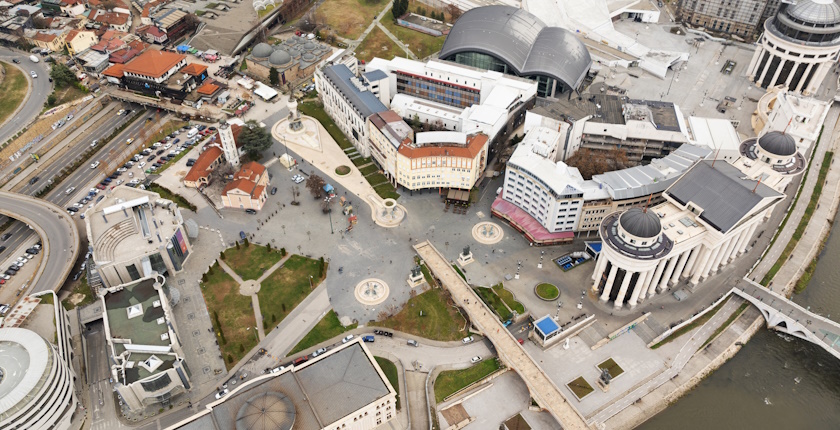
North Macedonia adopts Law on Energy Efficiency

North Macedonia’s new Law on Energy Efficiency brings a long-term strategy for the reconstruction of buildings and the obligation to set up solar collectors on public buildings. It envisages financial support for investments in solar panels, geothermal systems and smart technologies.

The Assembly of North Macedonia adopted the Law on Energy Efficiency at its last session. The new legal framework, aligned with European standards, will directly contribute to lowering bills for citizens and businesses, a cleaner environment and the creation of new green jobs, the Ministry of Energy, Mining and Minerals said.

The law is a substantial step forward in reducing energy consumption, integrating renewable sources and reducing greenhouse gas emissions, the statement reads. It will bring the country closer to fulfilling European climate goals and to a green transition, the ministry added.

The new legislation introduces the European Union’s principle “energy efficiency first,” according to the announcement. One of the novelties is a long-term strategy for the reconstruction of residential, public and commercial buildings.

At least 3% of public buildings must be reconstructed every year

The law mandates tripling energy savings in the public sector. At least 3% of public buildings must be reconstructed every year. In the construction or reconstruction of schools, kindergartens and public institutions, it will be obligatory to install solar collectors.

New measures include financial support for investments in solar panels, geothermal systems and smart technologies. The ministry said the law brings high standards in public procurement, digital transparency and professionalization of energy audits. Energy performance certificates will be included in the real estate cadastre.

The Law on Energy Efficiency is part of the package of reform laws that lay the foundation for a stable, sustainable and competitive energy sector – with energy security, better quality of life for citizens and accelerated accession to the European Union, the ministry underscored.

Of note, public calls are ongoing for households in energy poverty, for free inverter air conditioners and financial aid.

by in News

Turkish oil company Tüpraş to produce sustainable aviation fuel

Oil refiner Tüpraş is working on a technology for biofuel from algae and yeasts, using solar energy. The Sunfusion project involves processing into sustainable aviation fuel – kerosene – and green alternatives for vessels. It received EU support and includes partners from Greece, France, Germany, Norway and Serbia.

Istanbul-based Türkiye Petrol Rafinerileri AŞ (Tüpraş) has several decarbonization projects underway, counting on the expansion of green energy markets. One of the endeavors is Sunfusion – advancing biofuel production from purified microalgae and oleaginous yeasts by utilizing state-of-the-art solar technologies.

The project, which runs until the end of 2028, received EUR 3 million through the European Union’s Horizon Europe program. Centre for Research and Technology Hellas (CERTH), known also by its Greek acronym EKETA, is the coordinator.

Ten partners include the Middle East Technical University (METU/ODTÜ), located in Ankara, Aristotle University of Thessaloniki (AUTH) and Foodscale Hub (FSH), which is in Novi Sad, Serbia. The rest are from France, Germany and Norway.

Solar-to-biocrude efficiency must top 50%

Tüpraş, the largest oil refiner in Turkey, is majority-owned by Koç Holding and its related businesses. It launched Sunfusion to develop the conversion of microalgae and oleaginous yeasts using the hydrothermal liquefaction (HTL) method. Among the goals is to minimize costs, emissions and waste and achieve a solar-to-biocrude efficiency target of more than 50%.

The company and its partners intend to cultivate high-lipid, low-nitrogen microalgae and yeasts

The initiative involves photobioreactors, open raceway ponds and a solar thermal system supplying energy for the process. The company and its partners intend to cultivate high-lipid, low-nitrogen microalgae and yeasts.

Hydrotreatment units would have fractionation capabilities, for refining the biocrude into high-value fuels such as sustainable aviation fuel – kerosene – and alternative marine fuels.

First SAF supply deal in Turkey already in scope

In June, Tüpraş signed a letter of intent with Turkish Airlines for a sustainable aviation fuel (SAF) supply arrangement. They claimed that carbon emissions would be up to 87% lower than from conventional jet fuel.

“We will begin SAF production next year at our Izmir Refinery by leveraging our existing facilities. We aim to finalize the investment decision for a new unit that will increase our SAF production capacity to 300,000 tons by the end of this year. The use of SAF is becoming a necessity under both international and local regulations for the decarbonization of the aviation sector,” General Manager of Tüpraş Ibrahim Yelmenoğlu stated.

It would be both the first production and supply operations in Turkey. The company revealed at the time that it would make the SAF from bio-based feedstocks.

Tüpraş has seven projects with support from Horizon Europe

Tüpraş said it has completed 17 projects under Horizon 2020 and that seven are ongoing through Horizon Europe. The company updated its strategic transformation plan in April, placing the focus on sustainable refining, SAF, zero-carbon electricity and green hydrogen.

In the Horizon portfolio, it is conducting the Eastern Lights project for geological storage of carbon dioxide. ICO2nic is in the same segment, with carbon capture and electrochemical conversion of CO2, while the Hermes initiative is for the separation and purification of hydrogen with innovative membranes.

Also of note, one of the oil refiner’s subsidiaries took over a major solar power project in Romania early this year.

by in News

Slovenia kicks off grants program for renewables-based district heating, cooling

The Ministry of the Environment, Climate and Energy of Slovenia launched a public call for cofunding the construction or restructuring of district heating and cooling systems using renewable energy sources. The grants, for companies and cooperatives, are from the European Union’s cohesion support mechanisms.

The introduction of renewables-based district heating and cooling systems reduces pollution, greenhouse gas emissions and the dependence on fossil fuels. Much of the European household and business sectors still rely on gas boilers for heating. In addition, the ever-increasing severity and length of heat waves are prompting the need for a systemic cooling solution.

As part of its decarbonization and energy efficiency efforts, Slovenia launched a EUR 51.2 million cofunding package for companies and cooperatives.

The program covers the construction or restructuring of district heating and cooling systems using renewable energy sources. The first deadline for applications is September 11, followed by one on January 8, the Ministry of the Environment, Climate and Energy said.

The public call will be open until the entire sum is allocated, or at the latest until September 11, 2026, the third deadline. The EU’s cohesion funding accounts for 85% and Slovenia is providing the rest.

District heating projects that include cooling get additional points

While primarily aimed at increasing the production of electricity and heat from renewable energy sources and from waste heat, the scheme includes additional points for projects that involve cooling. The systems are required to cover at least 350 kW of consumption.

Eligible equipment includes heat pumps, solar collectors, wood biomass boilers and combined heat and power (CHP or cogeneration) solutions.

Large companies can receive up to 45% of their investment, while mid-sized ones can get 55%. The cap for small and micro enterprises is 65%. The maximum individual grant is EUR 30 million.

Slovenia’s current calls for subsidizing sustainable mobility, energy efficiency and renewables projects are worth more than EUR 300 million altogether. The government is preparing four more, for EUR 62 million overall.

by in News

Clean energy, grid upgrade projects in Western Balkans to be backed under EU’s Growth Plan

The European Commission has proposed the first support package, of EUR 87.7 million, under the European Union’s Growth Plan for the Western Balkans, to help implement EUR 487.3 million worth of hydropower, solar district heating, and grid modernization projects in Albania, Montenegro, and Serbia. The package was announced following a high-level meeting between European Commissioner for Enlargement Marta Kos and Western Balkan partners in North Macedonia’s capital, Skopje.

The package, funded from the EUR 6 billion Reform and Growth Facility (RGF), set up under the Growth Plan, will be rolled out through the Western Balkans Investment Framework (WBIF). The proposal was made to the WBIF Operational Board, according to a press release from the commission.

The eight proposed projects include building a new generation unit and upgrading existing ones at Serbia’s Potpeć hydropower plant, which would increase its annual production to 236 GWh while reducing CO2 emissions. The investment is valued at EUR 72.1 million, with the RGF support amounting to EUR 15.8 million. The project is targeted for completion in 2030, according to the commission’s fact sheet.

Serbia could get support for introducing solar energy in district heating

The other project in Serbia is the construction of a 31 MW solar-thermal plant and 17 MW heat pump in Novi Sad, which will introduce renewable energy sources to the district heating system. The project would cost a total of EUR 114.3 million, with the RGF support at EUR 25 million. The targeted completion date is 2028.

In Montenegro, the package would support three projects. The first is an EUR 18.3 million investment in building a 38-kilometer 110kV overhead transmission line between Vilusi and Herceg Novi, aimed at increasing transmission capacity and reducing energy losses. It would receive EUR 3.1 million from the RGF.

The EU plans to back Montenegro’s SCADA roll-out

The second project in Montenegro is the introduction of SCADA in the power distribution system, estimated at EUR 26.5 million, with the proposed RGF support of EUR 5 million. The third one is a planned upgrade of the Brezna substation on the Trans-Balkan Electricity Corridor. The EUR 35.6 million investment would be backed with EUR 6.3 million from the RGF.

Albania plans to digitalize its transmission network in EUR 64.2 million project

The support package also includes Albania’s EUR 95.3 million investment in upgrading the Fierza hydropower plant, aimed at increasing its capacity by 10% and extending its lifespan by at least 30 years. The support from the RGF would amount to EUR 10.5 million. The other project to be supported in Albania is the EUR 64.2 million digitalization of the transmission network, which would receive 13.6 million from the RGF.

by in News

Adolf Goetzberger Award 2026: Apply with innovative solar solutions and win EUR 25,000

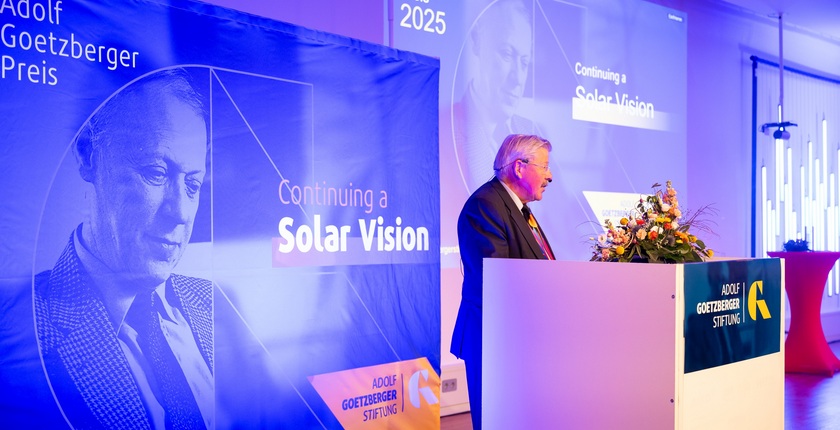
The Adolf Goetzberger Award, which recognizes innovation in solar, energy storage, smart grids, and power system efficiency, has invited applications for 2026, following a successful debut in 2025. The award once again spotlights developments that combine technological excellence with practical value and societal impact, according to the organizers.

The EUR 25,000 Adolf Goetzberger Award, named after German physicist and solar energy pioneer Adolf Goetzberger, honors individual contributions to forward-looking concepts, prototypes, or processes in photovoltaics, solar thermal energy, energy storage, smart grid integration, and system efficiency. Systemic and cross-disciplinary solutions are expressly welcome, the Adolf Goetzberger Foundation said.

The innovations should make a tangible contribution to sustainable energy system transformation

What matters is that the innovations address real-world technical and economic challenges and make a tangible contribution to the sustainable transformation of the energy system, reads a press release from the foundation, which is dedicated to promoting science and research, environmental protection, and climate action, with a particular focus on solar energy.

The inaugural Adolf Goetzberger Award was handed out in March 2025 to Heribert Schmidt for developing the HERIC® (highly efficient and reliable inverter concept) topology. The 2026 award ceremony will be held next spring.

Awarding innovation that makes the world a better place

“Innovation starts with a clear goal: making the world a better place. That’s the mission behind the Adolf Goetzberger Award. We aim to spotlight solutions that truly move the needle – technologically sound and socially relevant,” said Thomas Nordmann, Chair of the Adolf Goetzberger Foundation Board of Trustees.

This year’s award has an expanded scope

In addition to traditional entries from photovoltaics and solar thermal energy, the award now also invites cross-sectoral approaches, such as the smart combination of multiple technologies, advanced control and automation systems, innovative storage solutions (including power-to-X), the integration of heat pumps, or efficiency improvements in hybrid systems.

The award primarily targets applicants from Europe but is open to international individuals as well. In addition to the EUR 25,000 cash prize, recipients will receive a certificate recognizing their contribution to the energy transition. Applications can be submitted online at Goetzbergerstiftung.de.

by in News

Bulgaria suspends ill-designed solar energy support program

The Ministry of Energy of Bulgaria doesn’t intend to publish the second call for subsidies for households for solar panels with batteries and solar collectors. The program is partly covered by the European Union’s Recovery and Resilience Facility, so now the country risks losing the funds.

The Ministry of Energy of Bulgaria told Kapital that it does not plan to launch a second procedure to support households in purchasing and installing rooftop photovoltaic panels and solar water heaters. The measure was one of the few for citizens in the National Recovery and Resilience Plan (NRRP) rather than businesses or municipalities.

Through the first call, 1,500 households were selected for grants, worth some EUR 20.5 million in total. There is EUR 123 million for the entire scheme, called Support for Renewable Energy for Households. The solar power panel segment includes an option to install batteries as well.

Procedure too complicated

Initially there were fears that there would be more applications than the sum can cover, the article adds. But the procedure turned out to be so complicated that few people actually submitted documentation, the news outlet wrote. So now Bulgaria is about to lose the funds, after the European Commission already blocked the second NRRP tranche late last year.

The Ministry of Energy said it expects all the remaining contracts from the first round to be signed by the end of the month.

The program covers up to 70% of the costs for PV panels and 100% for solar collectors

According to Balin Balinov from Greenpeace, the government is once again demonstrating lack of commitment when it comes to energy poor households.

The program covers up to 70% of the costs for PV panels and 100% for solar collectors. But beneficiaries must buy them on their own and get reimbursed afterward. Notably, people who can afford such devices don’t want to deal with the bureaucracy, the report adds.

Installers struggling with backlogs amid tight deadlines

Moreover, Balinov said, there are hardly any firms available at the moment for installing solar panels, and the deadlines are short. Another issue is the lack of a net metering mechanism for rooftop and balcony photovoltaics. In such a setting, the electricity that beneficiaries generate would be subtracted from their bills.

The draft Law on Energy from Renewable Sources, currently in procedure in the National Assembly of Bulgaria includes the introduction of virtual net metering for prosumers and renewable energy communities. The deadline for approving an application for the installation of a solar power system of up to 20 kW would be just one month, the ministry pointed out.

Moreover, to get a grid connection, prosumers with up to 10.8 kW would only be required to notify the operator.

by in News

Kosovo* to subsidize solar panels for prosumers, solar thermal systems

Kosovo* is using an EU grant for public calls for families and firms to install solar power panels and solar thermal collectors. The subsidies for photovoltaics amount to EUR 250 per kW, or EUR 200 per kW for businesses that set up larger systems. There is a bonus for female-owned enterprises.

The Ministry of Economy of Kosovo* launched a mechanism to support households and micro, small, and medium-sized enterprises in investing in renewable energy. The measures are funded with a EUR 75 million grant from the European Union within its EUR 500 million direct budget aid package for the Western Balkans. It was approved at the height of the energy crisis, to subsidize the energy bills of households and businesses that were at high risk.

The authorities issued a call for photovoltaics for self-consumption for families and micro, small, and medium-sized enterprises. Households can apply for support for solar systems with capacities ranging from 3 kW to 7 kW. They will be subsidized with EUR 250 per kW to become prosumers but only up to EUR 1,750 overall.

Firms that build photovoltaic systems of 10 kW and more are entitled to as much as EUR 6,000 per beneficiary

For micro, small, and medium-sized enterprises, the subsidy will be EUR 250 per kW for capacities ranging from 3 kW to 9 kW. The maximum payment to one beneficiary is EUR 2,000. For capacities of 10 kW and above, future prosumers in the business sector will be subsidized with EUR 200 per kW or up to EUR 6,000 in total.

In cases where businesses are owned by women or are jointly owned by women holding at least 51% of ownership, the government will add EUR 200 to the subsidy.

The deadline for the first phase is May 31 or until all funds are reserved, on a first-come-first-served basis. Applications in the second phase will be accepted until September 30, according to the announcement.

Public call for solar thermal systems for firms expected in one week

The other call, which the ministry expects to be launched in mid-February, is for supporting micro, small, and medium-sized enterprises in investing in solar thermal systems, for water heating.

The share of subsidies is 40% of the investment value or up to EUR 4,000 in total.

Government promises pathways for investments

Kosovo’s Prime Minister Albin Kurti expressed commitment to the energy transition pathway.

“While we are working on projects with large capacities such as the solar auction, we are also pushing forward opportunities for our citizens to develop small-scale energy capacities for consumption and self-consumption. Not only are we reducing the burden on our system, but we are also empowering families and businesses to make sustainable and affordable choices,” he said.

The Law on Renewable Energy Sources has passed the first reading in parliament

It is a favorable time for investments in renewables, Minister of Economy Artane Rizvanolli claimed and highlighted the work on the Law on Renewable Energy Sources. It has passed the first reading in parliament.

The law will make the installation of solar systems more attractive and obligate operators to make it easier for citizens, she added. The energy strategy stipulates that citizens should be in the center with regard to development and benefit from the energy transition, Rizvanolli asserted.

Alessandro Bianciardi from the European Union Office in Kosovo* vowed to continue supporting the government’s initiatives in the sector. They are cooperating on the 2024-2027 agenda to boost the economy of Kosovo* and other Western Balkan countries with grants and subsidies in the energy sector, he stressed.

* This designation is without prejudice to positions onstatus and is in line with UNSCR 1244/99 and the ICJ Opinion on the Kosovo declaration of independence.