by in News

Nofar Energy launches work on Romania’s largest solar park

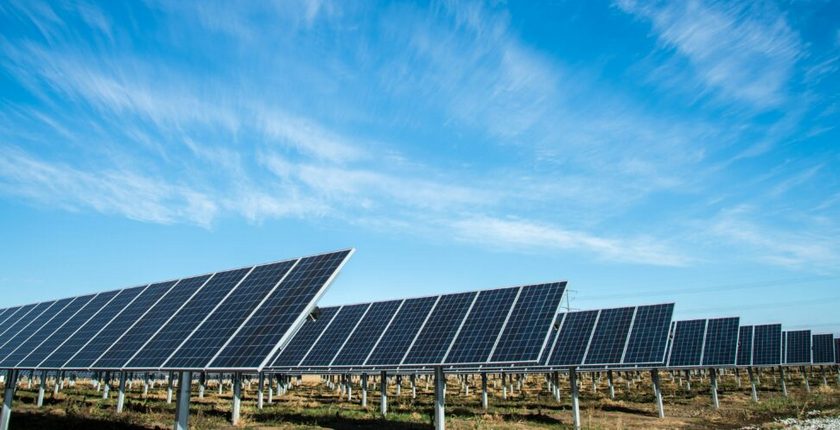
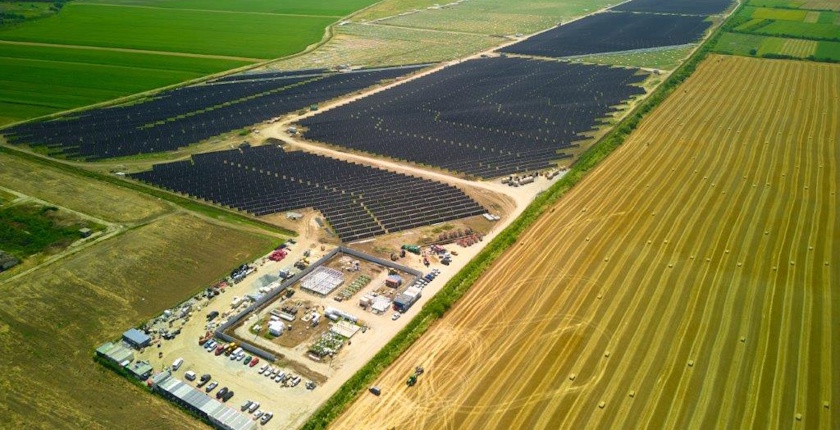
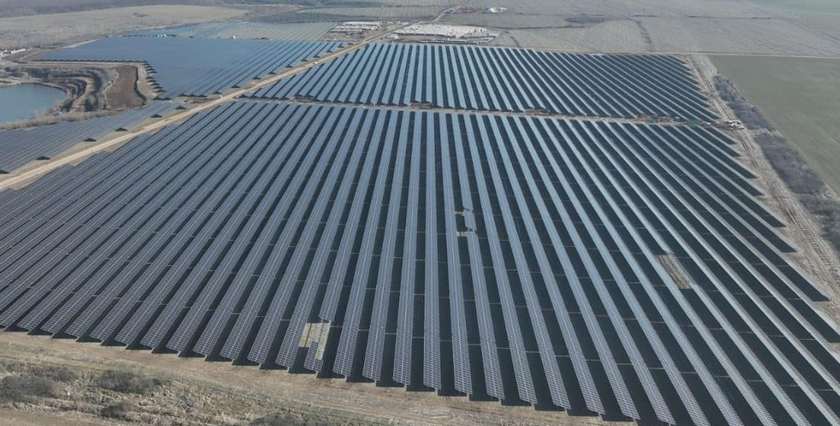
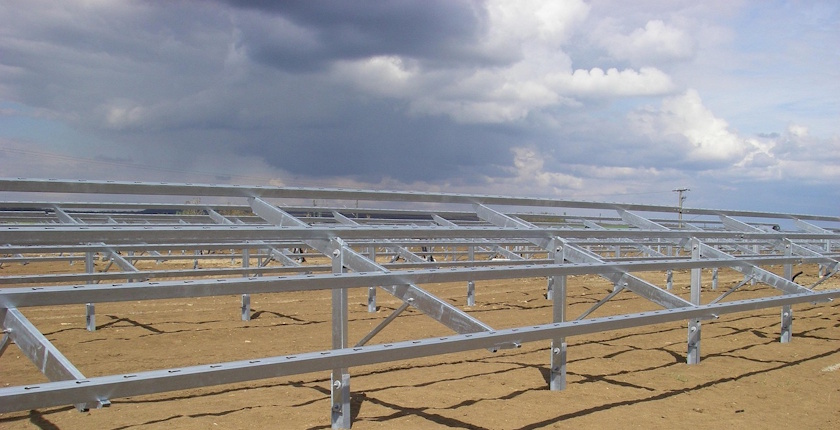
Israel’s Nofar Energy has begun construction of the 282 MW Corbii Mari solar park in Romania, with plans to connect it to the grid next year. The project is being financed from a recently secured EUR 192 million financing package that also covers the company’s two other large solar facilities in Romania.

The financing for Nofar’s projects was arranged by the European Bank for Reconstruction and Development (EBRD). The bank is providing a EUR 64 million loan, with the remaining EUR 128 million mobilized from commercial lenders.

In addition to Corbii Mari, the financial package covers the Iepurești II and Slobozia solar parks. The total capacity of all three projects is 531 MW, and the planned annual electricity production is 676 GWh.

Two solar parks are zero-subsidy projects, while the third has secured a contract for difference

Corbii Mari and Iepurești II will sell electricity on Romania’s competitive day-ahead market, while Slobozia will benefit from a 15-year contract for difference (CfD), according to an EBRD press release.

In late 2023, when Nofar acquired the Corbii Mari project, it was announced that the solar power plant would produce 362 GWh of electricity a year, enough to meet the needs of around 160,000 households.

There are several solar projects in Romania larger than Corbii Mari in various stage of development. These include the 1 GW Dama Solar, developed by Czech company Rezolv Energy, and the 300 MW Butimanu project, implemented by the investment division of Sweden-based Ingka Holding, the largest IKEA franchisee company.

Austria-based Enery is preparing to begin construction works early next year on a photovoltaic facility of 750 MW in peak capacity just outside of Bucharest.

Corbii Mari is set to be Romania’s biggest solar park to date

Given the longer completion timelines for these projects, Corbii Mari is expected to be Romania’s largest solar park for a time, local media reported. The top spot is currently held by Econergy’s Rătești solar power plant, with an installed capacity of 155 MW.

Nofar is also building its Ghimpați solar project near Bucharest, with an installed capacity of 146 MW. Earlier this year, the Israeli company said it had connected to the grid its solar park in Ada, the largest such system in neighboring Serbia.
by in News

Šahmanović: Second submarine cable line with Italy to be installed by 2031

The second line of the submarine cable connecting Montenegro and Italy is expected to be completed by 2031, Montenegro’s Minister of Energy and Mining Admir Šahmanović said at the European Union – Montenegro Investment Conference.

The two-day conference, titled Smart Growth, Green Future: Accelerating Investment in Montenegro, was opened yesterday in Luštica, near Tivat, by European Commission President Ursula von der Leyen and Prime Minister of Montenegro Milojko Spajić.

Fourteen cooperation projects between Montenegrin and European companies have been initiated at the conference, including investments in wind farms, solar parks, energy storage, and grids. It shows the great significance of the energy sector for investments.

A panel called Renewables: Scaling Montenegro’s Energy Transition examined the possibilities for accelerating the country’s energy transition and enhancing the sector’s attractiveness for investment in renewables.

Šahmanović: Montenegro strives to position green energy as an export product

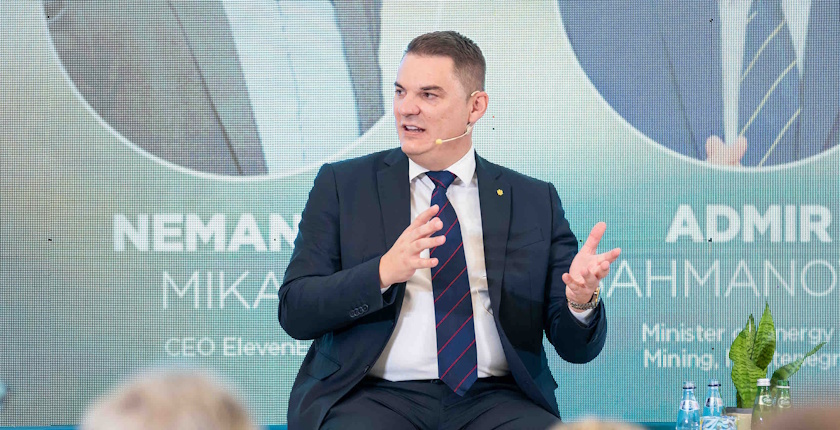
Prominent international experts and investors took part in the discussion. Representing the Government of Montenegro, Minister of Energy and Mining Admir Šahmanović outlined the country’s renewable energy priorities and highlighted Montenegro’s role as a regional leader in clean energy.

Montenegro has fully harmonized its legislation with EU standards, creating a stable and predictable investment environment, in his words. Šahmanović highlighted the launch of the first solar power auction as a significant step forward in the development of renewables.

Photo: Đorđe Cmiljanić/Government of Montenegro

“The government invests in battery energy storage systems (BESS), ensuring the flexibility and stability of the grid. Montenegro strives to position green energy as a recognizable export product, thereby strengthening the country’s economic sustainability,” Šahmanović stated.

He revealed that Montenegro is about to sign a memorandum of understanding with Italy that would additionally position Montenegro as an energy bridge between the Western Balkans and the EU.

Montenegro is looking for strategic partners and investors ready to jointly implement capital projects in the energy sector

The government is wrapping up the work concerning the oil and gas sector to close chapter 15 in its accession negotiations with the EU, further strengthening investor trust, Šahmanović said.

“The implementation of the project for the construction of the second phase of the subsea cable link with Italy is expected by 2031, which will further strengthen Montenegro’s role in regional and European energy connectivity. Montenegro is looking for strategic partners and investors ready to jointly materialize capital projects in energy and contribute to regional energy stability,” the minister underlined. The investment is estimated at EUR 500 million, he asserted.

In a message to investors, Šahmanović said Montenegro is open for investments and added: “Now is the time for you to invest. We will be your service 24 hours a day, seven days a week.”

Participants at the panel included Daniel Calderon, Alcazar Energy Co-Founder and Managing Partner, Yann Guinard, EDF Director of Development for Europe, Louis Blanchard, Qair Energy President, and Nemanja Mikać, ElevenEs CEO.

Memorandum with EDF

Admir Šahmanović and Yann Guinard (photo: Ministry of Energy and Mining)

Within the conference, the Ministry of Energy and Mining of Montenegro and EDF International Networks signed a memorandum of understanding. It establishes a framework for future cooperation on modernizing the distribution network, digitizing smart grids, and integrating renewable energy sources, according to the ministry.

The memorandum foresees the implementation of pilot projects and feasibility studies that will contribute to the acceleration of the energy transition of Montenegro.

Admir Šahmanović said the deal is an important step towards strengthening green and innovative energy projects. Cooperation with EDF confirms the position of Montenegro as a country with a clear vision and open opportunities for investors, he underscored.

“EDF International Networks, as part of the global EDF Group, brings international expertise in the sector of power distribution, grid upgrade and digital transformation, which opens up space for new strategic partnerships and capital infrastructure projects,” the minister pointed out.

The memorandum confirmed the joint commitment to sustainability, integrity and energy security, with a clear focus on the well-being of citizens and the economy of Montenegro, the ministry said.

by in News

CWP Europe gets European Commission’s backing for renewables projects in Albania, Montenegro

CWP Europe has signed a joint declaration with the European Commission, the Albanian Investment Development Agency, and the Montenegrin Investment Agency in support of its two landmark renewable energy projects – the Tropoja wind farm in Albania and the Montechevo solar farm with battery storage in Montenegro.

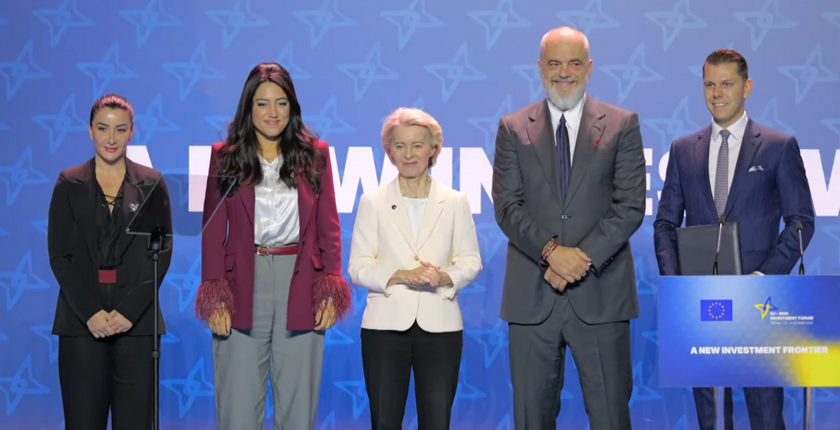
The declaration of support for CWP Europe’s projects was signed during the EU-Western Balkans Investment Forum in Albania’s capital, Tirana, in the presence of Albanian Prime Minister Edi Rama and European Commission President Ursula von der Leyen, according to a press release from CWP Europe, a leading renewable energy project developer in Southeast Europe.

The 600 MW Tropoja wind farm will advance Albania’s energy independence by providing clean, affordable electricity, supporting the country’s energy strategy, the company stressed.

The 600 MW Tropoja wind farm will boost Albania’s energy independence

In Montenegro, the 400 MW Montechevo solar farm will combine solar generation with battery storage directly connected to the country’s new 400 kV transmission grid. It will leverage Montenegro’s strategic interconnections – including the undersea power cable to Italy – to maximize the export of clean electricity and its integration into the European energy market.

A new energy backbone for the Western Balkans and Europe

Speaking at the signing ceremony, von der Leyen emphasized the Western Balkans’ increasing role in Europe’s clean energy transition.

“Today you are signing several investments that will do just that. From clean energy production in all six Western Balkan partners to energy storage in Montenegro. They will bring the cost of electricity down. And they will also contribute to our collective energy independence. You are building a new energy backbone not only for the Western Balkans. But for all of Europe,” said von der Leyen.

CWP Europe CEO Dimitar Enchev signed the declaration on behalf of the company, alongside Executive Vice Presidents Maja Turković and Viktor Garbev.

Enchev: We are unlocking the region’s immense renewable energy potential

“With Tropoja and Montechevo, we are unlocking the region’s immense renewable energy potential and strengthening cooperation across the Western Balkans. We greatly appreciate the support of the European Commission, the Albanian Investment Development Agency, and the Montenegro Investment Promotion Agency in advancing this shared vision for a clean, economically competitive and secure energy future of the region and Europe as a whole,” said Enchev.

Over the past 17 years, CWP has invested in sustainable development and the energy transition, successfully developing the largest wind farms in the region, including the largest one in Europe – the 600 MW Fântânele-Cogealac project in Romania. It is currently developing over 7 GW of renewable energy capacity, according to the statement.

by in News

Zen Energy Group kicks off construction of hybrid PV-BESS project in North Macedonia

Luxembourg-based Zen Energy Group has started the installation of a hybrid energy project in North Macedonia, combining a solar power plant and a battery energy storage system.

A solar power plant with a battery energy storage system (BESS) could become the country’s second hybrid power plant, with Fortis Energy installing energy storage near Oslomej solar park.

Zen Energy Group kicked off the construction of a landmark solar plus storage project in North Macedonia, Yossi Edelstein, Chief Executive Officer of Zen Energy Group, wrote on LinkedIn.

From concept to construction, Zen Energy Group is making the future of energy a reality in the country, he added.

“We are proud to share that our 82 MW utility-scale solar project with 50 MWh BESS in North Macedonia has officially entered the construction phase,” Edelstein stated.

The PV plant will use LONGi bifacial solar panels

The company’s team kicked off earthworks, development of access roada and cut-and-fill activities. The project is scheduled to start delivering green electricity to the national grid by late April 2026 and to achieve full commercial operation date in August 2026, according to Edelstein.

The project marks another significant step toward advancing clean energy generation in the region, he added.

According to the firm’s website, the photovoltaic plant will be located near Negotino. It will use LONGi bifacial solar panels for the expected annual production of 124,198 MWh.

The financing was secured from NLB bank, the website reads.

The developer revealed that it has signed a power purchase agreement (PPA) for 10 years in total, with a six-year fixed price period.

Seven projects in the pipeline

Works near Negotino (photo: Zen Energy Group/LinkedIn)

Zen Energy Group is developing seven energy investments – for three solar parks, two wind farms, a standalone BESS, and a commercial and industrial (C&I) portfolio in the UK.

Wind farms Unirea (102 MW) and Traian (78 MW) are located in Romania, while two PV facilities in North Macedonia would have a total capacity of 137 MW. The Negotino endeavor is for 82 MW and the Armatus investment envisages 55 MW.

Solar project Hajdučica of 125 MW is planned in Serbia. All three PV plants would have BESS. The company is developing the Lacu Sarat standalone battery facility in Romania. If it were in operation now, it would be the largest BESS in Europe.

by in News

Abu Dhabi’s Mubadala buys into renewables developer Rezolv Energy

Mubadala Investment Company, a sovereign investment fund from Abu Dhabi, is acquiring a stake in Rezolv Energy, a major renewable energy investor in Romania, which is developing the largest solar park in Europe.

Mubadala is setting up a joint venture with Rezolv Energy’s owner, sustainable infrastructure investment fund Actis, for joint control of the firm, whose ongoing projects in the country exceed 2 GW, according to a report by Profit.ro.

The Mubadala-Actis joint venture, which has received the green light from the European Commission, will be created through the purchase of shares and securities.

Mubadala, with assets under management of USD 300 billion as of the end of 2024, is wholly owned by the government of Abu Dhabi, the United Arab Emirates (UAE).

The transaction has been cleared by the European Commission

Rezolv Energy’s ongoing projects in Romania include the construction of a photovoltaic park with an installed capacity of 1,044 MW in Arad County, called Dama Solar. Once in operation, it is expected to be the largest solar park in Europe. The investment envisages a battery energy storage system (BESS) with 500 MW of operating power.

Rezolv Energy is developing the 1,044 MW Dama Solar project and over 1 GW of wind farms in Romania

Its portfolio in Romania also includes a 600 MW wind project in Constanța county and a 461 MW wind park in Buzău county. The company has already signed a grid connection agreement for the facility in Constanța.

The company won four contracts for difference (CfD), for a total capacity of 951.2 MW, in the first two auctions organized by the Romanian Ministry of Energy, according to Profit.ro.

Rezolv Energy was launched by Actis in 2022, with an initial investment of EUR 500 million. It is now active in Romania, Croatia, the Czech Republic, Luxembourg, Bulgaria, and Slovakia, with a total portfolio of 2.5 GW of solar and wind projects.

by in News

Abu Dhabi’s Mubadala buys into Romanian renewables developer Rezolv Energy

Mubadala Investment Company, a sovereign investment fund from Abu Dhabi, is acquiring a stake in Rezolv Energy, a major renewable energy investor in Romania, which is developing the largest solar park in Europe.

Mubadala is setting up a joint venture with Rezolv Energy’s owner, sustainable infrastructure investment fund Actis, for joint control of the Romanian firm, whose ongoing projects in the country exceed 2 GW, according to a report by Profit.ro.

The Mubadala-Actis joint venture, which has received the green light from the European Commission, will be created through the purchase of shares and securities.

Mubadala, with assets under management of USD 300 billion as of the end of 2024, is wholly owned by the government of Abu Dhabi, the United Arab Emirates (UAE).

The transaction has been cleared by the European Commission

Rezolv Energy’s ongoing projects in Romania include the construction of a photovoltaic park with an installed capacity of 1,044 MW in Arad County, called Dama Solar. Once in operation, it is expected to be the largest solar park in Europe. The investment envisages a battery energy storage system (BESS) with 500 MW of operating power.

Rezolv Energy is developing the 1,044 MW Dama Solar project and over 1 GW of wind farms in Romania

Its portfolio in Romania also includes a 600 MW wind project in Constanța county and a 461 MW wind park in Buzău county. The company has already signed a grid connection agreement for the facility in Constanța.

The company won four contracts for difference (CfD), for a total capacity of 951.2 MW, in the first two auctions organized by the Romanian Ministry of Energy, according to Profit.ro.

Rezolv Energy was launched by Actis in 2022, with an initial investment of EUR 500 million. It is now active in Romania, Croatia, the Czech Republic, Luxembourg, Bulgaria, and Slovakia, with a total portfolio of 2.5 GW of solar and wind projects.

by in News

Turkish firm Astor Enerji to install 2 GWh of battery capacity at its solar projects in Romania

Swiss energy storage provider Energy Vault has signed an agreement to supply up to 2 GWh of battery capacity for the solar power projects of Turkey-based Astor Enerji in Romania. Astor Enerji, for its part, will provide transformers and high-voltage equipment for more than 1 GW of Energy Vault’s battery projects worldwide.

Astor Enerji recently entered the Romanian market through the acquisition of four photovoltaic projects with a total capacity of 279 MW, according to reports. The transactions, which require regulatory approval, were carried out in April through Astor Enerji’s Romanian subsidiary Astor RO Energy.

Astor Enerji has acquired 279 MW of solar projects in Romania

Under the global partnership agreement, Astor will receive battery energy storage systems (BESS) for the four grid-connected photovoltaic projects in Romania, with a total storage capacity of up to 2 GWh, according to a press release from Energy Vault.

Astor Enerji, for its part, will supply transformers and high-voltage equipment for Energy Vault’s BESS projects of over 1 GW overall, planned in the United States, Australia, and Europe.

Olcay Doğan, CFO of Astor Enerji, stated that Energy Vault’s innovative approach to energy storage makes it an ideal partner to support the Turkish company’s expansion into the battery sector.

According to Energy Vault’s chief revenue officer, Marco Terruzzin, the collaboration with Astor Enerji will help build the technology and supply chain capacity to meet surging power demand from artificial intelligence (AI) data centers and the rapid adoption of renewable energy.

Energy Vault has secured USD 300 million for BESS projects around the world

Energy Vault develops and deploys utility-scale energy storage solutions, including proprietary gravity-based storage, battery storage, and green hydrogen energy storage technologies. It recently announced a USD 300 million deal with an investment fund to finance the launch of a subsidiary that will develop, build, own, and operate energy storage assets, standalone or paired with generation facilities, around the world.

Astor Enerji supplies power transformers, distribution transformers, and high-voltage to medium-voltage switchgear to markets in Europe, Africa, Asia, and the United States.

by in News

DRI secures financing for Vacaresti solar park in Romania

Renewable energy firm DRI has secured financing for the construction and operations of its Vacaresti solar park in Romania.

DRI, UniCredit and Garanti BBVA have signed an agreement for non-recourse loans of up to EUR 60 million to finance the construction and operations of the Vacaresti solar park in Romania.

DRI is Ukraine-based DTEK’s renewables subsidiary in the European Union.

The loan is inclusive of a long-term, fully amortizing construction and term loan, value-added tax, a debt service reserve facility, and the letter-of-credit facilities, according to the firm.

The project is expected to come online in the autumn

The loan structure is aligned with Green Loan Principles and the European Union’s Taxonomy Alignment Criteria, DRI added. It serves as a cornerstone of the EU’s sustainable finance framework and a key tool for market transparency, by providing clear guidelines for direct investments that support the green transition in line with the objectives of the European Green Deal, the press release reads.

The solar power plant will be located in the Văcărești area in Dâmbovița county. The project is for 126 MW in peak capacity, enough to power about 50,000 households and avoid 48,600 tonnes of carbon emissions per year. Construction kicked off in January 2025 and the project is expected to be online in the autumn.

The buyer of 50% of the electricity output is oil and gas company OMV Petrom. The deliveries will start in January 2027. It is a part of Romania’s largest physical solar power purchase agreement (PPA), signed last December, DRI noted.

Geliukh: DRI is demonstrating its capability to partner with globally renowned financial institutions

“With the signing of this project financing agreement, we have reached another important milestone: this is DRI’s first internationally led syndicated financing, our first certified green loan, and our first multi-currency loan,” DRI CEO Ivan Geliukh stressed.

In his words, it is an important achievement not only for DRI but also for Romania, contributing to the development of renewable energy in the country.

With the project, DRI is demonstrating its capability to partner with globally renowned financial institutions like UniCredit, and with Garanti BBVA, one of Romania’s leading local lenders, according to Geliukh.

DRI has three operational projects in Romania

In Romania, DRI has three operational projects with a total peak capacity of 173 MW. Solar parks Glodeni I and Glodeni II have a combined installed capacity of 113 MW. They are one of the largest renewable energy sites in the country, according to the company.

The 60 MW Ruginoasa wind farm was built in just 10 months. It was the first in the country after a decade, according to the firm.

DRI now has a 1.3 GW portfolio of projects in operation, construction and other stages of development. The company is also active in Croatia.

by in News

Nofar Energy set to secure financing for 515 MW of solar in Romania

Israeli renewables company Nofar Energy is set to secure a EUR 68 million loan from the European Bank for Reconstruction and Development (EBRD) for three large-scale photovoltaic projects in Romania, with a combined capacity of 515 MW, including the 265.5 MW Corbii Mari solar park.

The EBRD’s loan, with an expected approval date of September 10, 2025, will be disbursed to Nofar’s three Romanian subsidiaries – Corbii Mari Solar Plant, Aviv Renewable Investment, and Slobozia Solar Plant.

Nofar’s firms intend to build a 175.7 MW solar farm in Iepurești, a 74 MW solar farm in Slobozia, both in Giurgiu county, and a 265.5 MW solar farm in Corbii Mari, Dâmboviţa county, according to the EBRD.

The three solar parks are expected to generate 676 GWh of electricity annually. Their operation is expected to reduce CO2 emissions by 280,000 tons annually, the bank noted.

The three solar parks are expected to produce 676 GWh a year

The Corbii Mari solar park, spanning a total of 290 hectares, would be located near the Romanian capital, Bucharest. Given its size, the project is divided into six lots, Romanian news portal Profit.ro reported.

Nofar operates the largest existing photovoltaic park in Romania, of 155 MW, located in Rătești in Argeș county.

Nofar’s 155 MW solar park in Rătești is currently the largest in Romania

There are other major photovoltaic projects in Romania larger than Corbii Mari, in various stages of development, including one of over 1 GW, under development in Arad county by Czech company Rezolv Energy.

Ingka Investments, the investment division of Sweden-based Ingka Holding, the largest IKEA franchisee company, is building its first solar power plant in Romania. The Butimanu project is for 300 MW in peak capacity, it recently said.

Nofar is also developing the Ghimpați solar project near Bucharest, with an installed capacity of 146 MW. Earlier this year, the Israeli company said it had connected to the electricity grid its solar park in Ada, the largest such system in neighboring Serbia.
by in News

Sunotec, Sungrow sign 2.4 GWh battery storage agreement

China-based Sungrow and Bulgarian-German company Sunotec have agreed to install 2.4 GWh of battery energy storage systems (BESS) in Europe.

Sunotec and Sungrow have signed a strategic agreement to deploy 2.4 GWh of battery energy storage systems (BESS) across multiple solar power projects in Europe, according to Sunotec.

The 2.4 GWh of energy storage capacity will support grid stability, enable better renewable energy integration, and enhance the reliability of solar parks developed and constructed by Sunotec throughout Bulgaria and wider Europe.

The portfolio includes several large-scale projects across Bulgaria, which will serve energy storage needs, the update reads. Some of the projects in the pipeline will be supported by funds under Bulgaria’s RESTORE national support program.

Velichkov: The next chapter of clean energy

Sungrow intends to supply its industry-leading PowerTitan 2.0 BESS, recognized globally as a top-tier solution for utility-scale applications, while the string inverter SG350HX-20 and Sungrow’s MVS will be used for a hybrid project (PV and BESS) in the portfolio. It would be the first BESS project in Bulgaria with Sungrow technology.

“The global energy transition depends not only on how much renewable power we produce, but on how intelligently we manage and store it,” Sunotec CEO Kaloyan Velichkov said.

The partnership with Sungrow, in his words, reflects shared ambition to lead the next chapter of clean energy – by building resilient, storage-enabled infrastructure that brings stability, sustainability, and scale to markets across Europe and beyond.

Gkinis: The deal is a cornerstone of the two companies’ mission to accelerate clean energy deployment in Bulgaria and Europe

According to Anastasios Gkinis, Regional Director of Sungrow for CEE, SEE and CIS, the collaboration with Sunotec is a cornerstone of his company’s mission to accelerate clean energy deployment in Bulgaria and across Europe.

“Combining Sungrow’s cutting-edge energy storage technology with Sunotec’s execution excellence, we create a powerful force to redefine the energy landscape in Bulgaria and support the region’s transition to a sustainable energy future,” he stressed.

Sunotec has delivered over 650 solar projects with a total installed PV capacity of 11 GW. As of December 2024, Sungrow has installed 740 GW of power electronic converters worldwide, the update reads.

  • 1
  • 2