by in News

Project for first gas power plant in Albania enters next stage

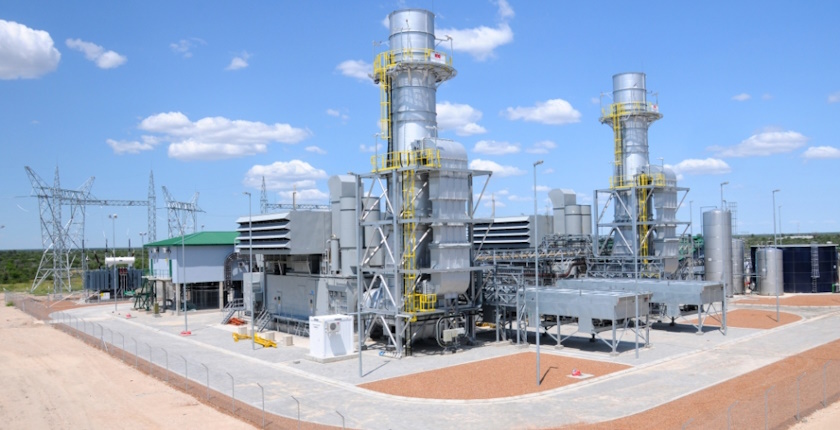
In partnership with domestic company Gener 2, Greece-based GEK Terna and DEPA Commercial are preparing to build the first gas power plant in Albania. The current phase involves seeking financing. Separately, Azerbaijan’s SOCAR is expected to start installing the first gas distribution network in Albania, in the city of Korça.

Albania is almost 100% dependent on hydropower plants in domestic electricity production. Efforts are underway to diversify the mix with solar and wind energy and introduce storage capacities. Actually, not a single wind turbine has been built yet, but there is another opportunity for strengthening the energy supply: with gas from the Trans Adriatic Pipeline – TAP. Greek conglomerate GEK Terna and state-owned gas supplier, importer and trader DEPA Commercial intend to build the first gas power plant in Albania, with a local partner.

Late last year, the Council of Ministers, the country’s government, approved the project and determined a three-year deadline for completion. The site for the gas plant is in the municipality of Roskovec in Fier in western Albania. Notably, the county attracts most solar power projects in the country.

Gas facility in western Albania reportedly to have 147 MW in capacity

In the current project development phase, Fier Thermoelectric, the joint venture, is seeking financing, Insider.gr reported. The facility is envisaged to have 147 MW in capacity, according to the article. The government’s decision was for 170 MW.

DEPA Commercial, also known as DEPA Emporias (in Greek), DEPA Commerce and DEPA Trading, entered the project in 2023. It took over a 35% stake from GEK Terna and signed a seven-year gas supply contract for the proposed facility.

They have equal ownership, while Albanian company Gener 2 holds the remaining 30%. It is active in construction, infrastructure, civil works, energy, real estate development, telecommunications and retail in Albania and the broader region.

Both GEK Terna and Gener 2 have solar power projects in Albania as well

Gener 2 has submitted a 50 MW solar power project to the government a year ago. The location is in Bistrica in Finiq municipality, Vlora district.

The government’s approval is not for a concession, but the operator is obligated to either deliver 2% of electricity it produces, as royalty – royal right, or give an equivalent sum for the state budget. The permit is for 49 years since the entry of the decision into force. The firm also needs to sell a share of output to the public power supplier, in accordance with the country’s law.

A group of residents of surrounding villages has repeatedly protested against the investment, arguing that they weren’t consulted. The locals even filed a criminal complaint against Roskovec Mayor Majlinda Bufi.

They claim that the gas facility would pollute the area and jeopardize public health while exporting 90% of the produced electricity.

GEK Terna to benefit from synergies with its gas power plants in Greece

GEK Terna has three gas-fired power plants in Greece. The group’s other energy investment in Albania, through its subsidiary Heron, isn’t without controversy either.

The project is for a 93 MW photovoltaic plant in Libohova, near the Greek border, in Gjirokastër county. Project firm Faethon won approval from the Council of Ministers in Tirana in early 2024. It would be valid for up to 49 years.

GEK Terna’s solar power plant project in Gjirokastër was disrupted last year over fake documentation

Local press wrote last summer that some land documentation for the 122-hectare area was forged, prompting a raid and arrests in the cadastral office in Gjirokastër. The operator of the Libohova plant is obligated to deliver 2% of its electricity for free, too.

First gas distribution network in Albania about to be built in Korça

Albania aims to become a net electricity exporter before the end of the decade. There is also a project for a liquefied natural gas (LNG) terminal in the port city of Vlora, where a gas-fired power plant is planned to be built.

A long-awaited project called Nur, for the gasification of Korça, was presented last week. It would be the first city in Albania with gas.

The final investment decision is expected this year. State Oil Company of Azerbaijan (SOCAR) would be tasked with implementation, with financing from its government. The estimated cost is EUR 21 million. The idea is to then expand the local gas distribution network to nearby Pogradec and Erseka.

Fier and Elbasan are next on the schedule. Azerbaijan and its company are also interested in the project for the LNG terminal in Vlora and to connect the facility with TAP.

by in News

TAP receives around 95% of total pipes needed for construction

By Leman Zeynalova:

Approximately 95 percent of the total 55,000 pipes to be used for the construction of the Trans Adriatic Pipeline (TAP) have been received in Greece, Albania and Italy, said the message from TAP AG.

The last shipment of offshore line pipes has been offloaded in Brindisi, Italy, between 3 and 6 September 2017.

TAP’s contractors have cleared approximately 70 percent of the project route in Greece and Albania (539km out of 765km). Also, over 45 percent of welded steel pipes are already in the ground (backfilled).

“We are pleased that TAP continues to progress on time and on budget. We therefore remain on track to deliver the first Shah Deniz II gas in 2020, bringing a much-needed new source of energy into the European energy network,” said TAP Managing Director Luca Schieppati.

“I want to underline that our project is built with the utmost care for the environment. Our teams are working very carefully along our route to ensure that the land on which construction has been completed is returned to the owners or users in its original condition or better. We are also collaborating with local authorities and local stakeholders to ensure that the benefits of our project are tangible across all those communities crossed by the pipeline,” Schieppati added.

Nearly 2,500 tie-ins have been completed as part of the implementation of TAP project in Greece and Albania, TAP AG consortium said in a message on its Twitter page.

“This is the construction step where 2 pipe strings (~1km) are welded together inside the trench,” said the message.

TAP is a part of the Southern Gas Corridor, which is one of the priority energy projects for the European Union. The project envisages transportation of gas from Azerbaijan’s Shah Deniz Stage 2 to the EU countries.

The pipeline will connect to the Trans Anatolian Natural Gas Pipeline (TANAP) on the Turkish-Greek border, run through Greece, Albania and the Adriatic Sea, before coming ashore in Italy’s south.

TAP will be 878 kilometers in length (Greece 550 kilometers, Albania 215 kilometers, Adriatic Sea 105 kilometers, and Italy 8 kilometers).

TAP’s shareholding is comprised of BP (20 percent), SOCAR (20 percent), Snam S.p.A. (20 percent), Fluxys (19 percent), Enagás (16 percent) and Axpo (5 percent).

Source : Trend

by in News

Albania, Montenegro Eye EU Funding for Gas Pipeline

Albania’s Energy Ministry on Friday presented a feasibility study for a 618-million-euros gas corridor between Albania, Bosnia and Croatia, which it hopes the EU and US will support.

Albania’s Ministry of Energy on Friday in Tirana unveiled a preliminary feasibility study for a proposed Ionian-Adriatic gas pipeline, hoping the EU may fund construction of the section of the pipeline between Albania and Montenegro.

Damian Gjiknuri, Minister of Energy and Infrastructure, said Albania had a strong interest in the pipeline project, which could help gasify the country. “We hope for support from the EU and the US [for the project],” he said.

The 511-km-long pipeline, expected to cost up to 618 million euros, aims to link the Trans-Adriatic Pipeline with Montenegro, Bosnia and Croatia.

The feasibility study calls for a new pipeline with a capacity of 5 billion cubic meters per year, BCM, from which Albania and Bosnia hope to consume 1 BCM each, Montenegro 0.5 BCM while Croatia, the biggest and the strongest economy in the Western Balkans, is expected to consume 2.5 BCM per year.

The US Ambassador to Tirana, Donald Lu, expressed America’s support for the project, as a way to obtain a new source of energy that is not dependent on Russia, and as a means to strengthen regional energy collaboration.

The Albanian Energy Ministry said that, in collaboration with the European Commission, its Directory for Energy and the Ministry of Economy of Montenegro had presented a proposal to the Western Balkans Investment Framework, hoping it will finance the development of the project for the sections in Albania and Montenegro.

The Trans-Adriatic Pipeline is currently under construction. It is expected to ship gas from Azerbaijan to Italy through existing pipelines in Turkey and Greece and through a new pipeline running from Greece to Italy through Albania and under the Adriatic Sea.

The pipeline will have an exit point near Fieri, in Albania, which creates hopes of getting new energy supplies for all Western Balkan countries.

They all have large energy deficits and are heavily dependent on coal to generate electricity. Albania and Montenegro have large hydropower capacities but they are not sufficient to cover all their energy needs.

A gas network could help both countries to produce electricity by burning gas and substitute the use of electricity in some functions like heating, thus limiting the need to use coal and protecting the environment at the same time.

Source: Balkaninsight

by in News

IAP project counts on EU, US support

The countries involved in the construction of the Ionian-Adriatic Pipeline (IAP), Albania, Montenegro, Bosnia and Herzegovina and Croatia count on the support of the European Union and the United States.

The remarks were made during the meeting of the Project Management Unit for IAP project held in Tirana.

Addressing the event, Albania’s Energy Minister Damian Gjiknuri stated that his country has completed the drafting of the Gas Master Plan and has built a fruitful cooperation with Montenegro, Bosnia and Herzegovina, Croatia and the Energy Community for the implementation of the IAP project.

He expressed confidence that this project will be supported by both the United States and the European Union, said the message posted on the website of Albanian energy ministry.

Of course, the Trans Adriatic Pipeline (TAP) project is really the main pillar to support the development of the gas sector in Albania, but IAP pipeline will also play a primary role, said Gjiknuri.

IAP is not just a natural extension of TAP, said the minister, adding that it will also ensure energy security in the region and bring economic progress to the countries through which it passes.

“We point out that three of the IAP countries are NATO member countries and this makes the IAP project even more necessary in terms of strategic interests in the region,” said Gjiknuri.

IAP is a proposed natural gas pipeline in Southeastern Europe (SEE) that will stretch from Albania through Montenegro, and Bosnia and Herzegovina, to Split in Croatia. It will be connected with the Trans Adriatic Pipeline (TAP).

IAP will provide deliveries of Azerbaijani gas to several countries of South-Eastern Europe. The capacity of the pipeline will amount to five billion cubic meters of gas per year.

TAP is a part of the Southern Gas Corridor, which is one of the priority energy projects for the European Union. The project envisages transportation of gas from Azerbaijan’s Shah Deniz Stage 2 to the EU countries.

The pipeline will connect to the Trans Anatolian Natural Gas Pipeline (TANAP) on the Turkish-Greek border, run through Greece, Albania and the Adriatic Sea, before coming ashore in Italy’s south.

TAP will be 878 kilometers in length (Greece 550 kilometers, Albania 215 kilometers, Adriatic Sea 105 kilometers, and Italy 8 kilometers).

TAP’s shareholding is comprised of BP (20 percent), SOCAR (20 percent), Snam S.p.A. (20 percent), Fluxys (19 percent), Enagás (16 percent) and Axpo (5 percent).

by in News

World Bank Agrees $800 mln loan for Turkey, Azerbaijan gas pipeline

The World Bank’s board of directors approved loans of $400 million each for Turkey and Azerbaijan, for the Trans-Anatolian Natural Gas Pipeline (TANAP) project late Tuesday, December 20, Anadolu Agency reports.

The loans will be supplied through the World Bank’s subsidiary, the International Bank for Reconstruction and Development (IBRD).

Turkey’s Petroleum Pipeline Corporation (BOTAS) will be in receipt of the loan in Turkey guaranteed by the Republic of Turkey with a maturity of 24 years.

In Azerbaijan, the Southern Gas Corridor (SGC) closed Joint Stock Company will obtain the loan with a guarantee from the Republic of Azerbaijan based on a 30 year maturity period.

Around $4 billion in external financing is anticipated for the $8.5 billion project, SOCAR’s President Rovnaq Abdullayev said in previous interview with Anadolu Agency.

In addition to the World Bank, the Multilateral Investment Guarantee Agency, Asian Infrastructure and Investment Bank, European Investment Bank and European Bank for Reconstruction and Development are among the proposed supporters of the project.

“The slump in global oil prices and low commodity prices also gives the TANAP project an opportunity to shrink its budget and save up to $3.2 billion. Initially, the investment budget for TANAP was estimated at $11.7 billion, but with the help of low oil prices, we reduced our budget to $8.5 billion,” TANAP General Manager Saltuk Duzyol said in an interview with journalists last week.

The TANAP project plans to be operational in 2018 with an initial capacity to carry 16 billion cubic meters (bcm) of Azeri gas through Georgia to Turkey. While 6 bcm will be for Turkey’s domestic gas consumption, the rest is destined for transfer to Greece, Albania, and Italy and further into Europe.

Azeri energy giant State Oil Company of Azerbaijan (SOCAR) holds a 58 percent interest in TANAP, Turkey’s BOTAS has a 30 percent share while BP owns a 12 percent stake.

by in News

SOCAR JOINS NEW ADRIATIC PIPE PROJECT

P-H20160826000549 1_f960x260
Four western Balkans nations signed a memorandum of understanding with Azerbaijan state Socar on co-operation on building the Ionian Adriatic pipeline (IAP) on the sidelines of a Dubrovnik forum 25-26 August.

The declaration of intent to develop the 5bn m³/year line was originally signed in 2007 by Croatia, Montenegro and Albania. The length of the line from Split in Croatia to Fier in  Albania will be around 530 km and cost around €610mn ($683mn).

Socar will join Croatia, Albania, Bosnia & Herzegovina and Montenegro in the project which will include a section of the Trans-Adriatic-Pipeline (TAP) designed to bring gas from Shah Deniz 2 field in the Caspian Sea to EU through the so-called Southern Gas Corridor (SGC) after 2020.

Socar’s goal is to connect the Caspian Sea and the Adriatic Sea, the head of Socar Balkans, Murad Heydarov, said after the signing ceremony. “The SGC, which includes the Ionian-Adriatic gas pipeline is an important part of our plans, we have good co-operation with the countries involved in this project,” he said, according to Socar sources.

Croatia’s economy minister Tomislav Panenic said that the future pipeline would provide gas supplies for southeastern Europe. “We have defined our joint initiative for the development of the Ionian-Adriatic gas pipeline as a route that will make sure that these markets are provided with gas. We hope that this route will be a connection between the north and the south and that this may pave the way for a full liberalisation of the gas market in Europe,” he said, Croatian news agency Hina reported.

Montenegro’s economy minister Vladimir Kavaric said that IAP was the only opportunity for the gasification of Montenegro and “the government is ready to do everything to accelerate and successfully implement the project.”

According to Bosnia & Herzegovina’s foreign trade minister Mirko Sarovic, “Bosnia & Herzegovina supports this regional project and approach and ask the partners to ensure that a section of the route goes through Bosnia & Herzegovina.”

Dubrovnik Forum. From left: Presidents of Hungary Janos Ader, Lithuania Dalia Grybauskaite, Poland Andrzej Duda, Croatia Kolinda Grabar-Kitarovic, Bulgaria Rosen Plevneliev and Slovenia Borut Pahor.

Dubrovnik Forum. From left: Presidents of Hungary Janos Ader, Lithuania Dalia Grybauskaite, Poland Andrzej Duda, Croatia Kolinda Grabar-Kitarovic, Bulgaria Rosen Plevneliev and Slovenia Borut Pahor.

According to preliminary design IAP aims to connect existing transmission system of Croatia via Bosnia & Herzegovina (offshore), Montenegro and Albania to the TAP.

The Baltic-Adriatic-Black Sea (BABS) forum brought together six presidents and high-ranking government officials from 12 EU countries and Albania on  August 25-26 in Dubrovnik, Croatia. A panel discussion at the “Strengthening European energy security” looked at the benefits of energy cooperation in BABS and the role of LNG terminals linking north and south Europe.

Connecting the LNG terminal in Poland with one planned on the island of Krk in Croatia is among the energy projects that BABS region countries want to implement in order to boost competitiveness and development, Croatia’s president Kolinda Grabar-Kitarovic and Poland’s president, Andrzej Duda, said addressing  forum at the opening ceremony August 25. 

President Duda pointed out the importance of energy connections.“The dominance of a single supplier for the region is harmful and dangerous”, he said adding that development of the gas corridor between the north and the south, as well as the LNG terminal on the island of Krk are important.  

The next meeting of BABS will take place in Wroclaw in June 2017.

by in News

Socar is running into problems concerning Desfa

socar-desfaAzerbaijan’s state energy company Socar is running into problems concerning its stake in Greece’s natural gas grid operator, Desfa, with the Greek parliament expected to vote imminently for a crucial change concerning the value of Desfa.

As a result, Socar is expected to send a delegation of senior officials to hold talks in Athens this week. They will address two main problems. The first concerns the size of Socar’s stake in Desfa. The second – which is both far more important and far more complex – concerns the methodology of accounting within Desfa.

The first point is relatively straightforward. When Socar won the tender to acquire a 66% stake in Desfa for €400mn in June 2013, purchasing a 35% stake from Hellenic Petroleum and a 31% stake from Greek government, it had strong EU backing, not least because the leading alternative bidder was a Russian company, Sintez. At the time, the EU was also worried that Gazprom would seek to purchase Desfa’s parent company, Depa, the Greek natural gas supply company. In the event, however, nobody bid for Depa and only Socar bid for Desfa.

But in late 2013, Socar was a party to the final investment decisions which secured the development of the cluster of projects known as the Southern Gas Corridor, which included development of the giant Shah Deniz Phase Two project and the associated Trans-Adriatic Pipeline. This potentially put Socar in conflict with EU regulations since Socar would be a shareholder in TAP – it subsequently took a 20% stake in the pipeline – and because the line would be used to carry SD2 gas that was partially owned by Socar to market in Greece, Albania and Italy – and probably Bulgaria as well.

Socar therefore agreed to reduce its stake in Desfa to 49%. A senior Socar official, contacted by NGE in Baku recently, said that Italy’s Snam-Rete has agreed to take up part of this 17% and that discussions are continuing with other prospective buyers. Socar’s president Rovnag Abdullayev has previously mentioned Spain’s Enagas as a possible buyer. This issue may take time to solve but, the official said, the company is confident that it will be resolved satisfactorily.

It is the second issue that is truly troublesome. Greek energy minister Panos Skourletis recently submitted an amendment current regulations intended to reduce Desfa’s regulatory asset base, apparently from around the €1bn figure assumed by Socar to around €800mn. This would be accomplished by taking out some €200mn in government funds that Desfa had included in the regulated asset base in the initial three-year period. The ministry is asserting that this €200mn should not have been included in the original methodology.

However, a €200mn reduction would radically change the basis on which Socar would be able to secure a return on its initial investment. According to Greek regulations, Desfa is guaranteed to secure an 11.5% return upon its regulatory asset base. And if it does not get the money in the first three years, the guarantee is that it will be able to make up the difference in the second three-year period. This would be achieved by increasing tariffs.

The problem is that if the value of the regulated asset base is reduced in the manner proposed by Skourletis, tariffs would have to be increased by around 80% in order to ensure Socar received a full 11.5% return over both the initial three-year period from 2013-16 and the following three-year period from 2016-19.

And such an increase would be intolerable for Greece’s gas consumers at a time of continued severe economic constraint. Moreover, reducing the value of the regulated asset base could reduce the prospect that Snam-Rete and other companies might be willing to invest in Desfa.

From Socar’s perspective, there are two main problems in this dispute. The first is one of perception, that there has been a lack of government communication with Socar about the issue. What’s happening, one senior Socar executive commented privately, is “government by press release.”

The more substantive problem is how to square the dilemma that Socar should receive its promised internal rate of return without Greek natural gas customers having to pay far more than they can afford.

One possible solution is that the shortfall in payments from the first three-year period may be amortised. But other alternatives are also being explored. At this stage, no-one is sure just how the situation will develop.

by in News

World Bank set to finance criticised mega gas pipeline from Azerbaijan to Europe

Defined as “the biggest infrastructure project of our times“ by the European Commission and a priority for the European Union, the Southern Gas Corridor was always going to attract the attention of the World Bank. As part of Turkey‘s Country Partnership Strategy (CPS), the Bank has announced its intention to finance the project through a double loan to Azerbaijan and Turkey. In addition, in June the World Bank’s Azerbaijan office announcedpossible loan guarantees for the construction of the Trans-Anatolian section of the corridor (TANAP) through the Bank’s Multilateral Investment Guarantee Agency.

Tapping gas from the Shaz Deniz II field in Azerbaijan, TANAP stretches for 1,820 km from Georgia to Greece and will cross Turkey. TANAP is expected to bring 16 billion cubic metres of gas per year to Turkey by 2018, subsequently increasing capacity with the construction of the western section of the Southern Gas Corridor, running to Italy through Greece and Albania.

The Southern Gas Corridor is a priority for the European institutions as part of their Energy Union strategy to secure alternatives to gas imports from Russia. According to press reports by Reuters, the World Bank loans – scheduled for approval in 2017 – would amount to $500 million for Azerbaijan and $1 billion for Turkey and would help cover the overall $45 billion project cost. Other funders include the European Investment Bank. The World Bank’s principal proposed development objective is the enhancement of Azerbaijan’s gas exports up to three times the current volumes and the improvement of “the security and diversity of Turkey’s and Europe’s energy supply.“

It is concerning that the World Bank risks ruining its reputation for a project that will contravene the Bank’s safeguard standards, while harming the environment and supporting controversial regimes.

The wide range of risks and consequences associated with the construction of this megapipeline has provoked a heated debate. Concerned about the support that such a controversial project has received from public international financial institutions, civil society across Europe has mobilised to raise awareness among citizens and decision makers about the project‘s environmental and geopolitical implications and to prevent its funding, arguing that the project contradicts with the climate goals that the World Bank and the European public banks committed to in Paris last December.  By considering financing the Southern Gas Corridor, yet another mega fossil fuel project, the World Bank is contradicting its commitment to integrate climate risks and opportunities into all of its development work and is disregarding the agreed upon urgency to shift to a different energy model based on renewables and energy efficiency. Furthermore, it means that the Bank is ignoring calls by the scientific community to leave the majority of remaining fossil fuels reserves in the ground. As the world’s leading development finance institution and self-professed advocate of environmental sustainability, it should set an example and stop supporting such emblematic fossil fuel projects.

The geopolitical context surrounding the  Southern Gas Corridor is just as worrisome. Neither the autocratic regime of Ilham Aliyev in Azerbaijan nor the increasingly repressive rule of Recep Tayyip Erdoğan in Turkey are ideal partners for such an enormous project. Ilham Aliyev, who has ruled the country for decades, has attracted international attention following a severecrackdown on dissent in 2014 that resulted in mass jailings of journalists, intellectuals, human rights activists and lawyers. The unacceptable human rights situation in Azerbaijan has been repeatedly denounced by governments and media worldwide. This led to offical warnings by theEuropean Parliament, the Organisation for Cooperation and Security in Europe and the Council of Europe throughout autumn 2015, all overtly discouraging Europe from directly financing the regime, let alone sealing a historic business deal worth billions of dollars.

Moreover, this project would not bring major development improvements to Azerbaijan. Heavily dependent on fossil fuel exports, the Azeri economy has recently faced a deep crisis due to the fall in oil prices which led to the devaluation of the national currency. Instead of diversifying the sources of revenue in Azerbaijan and promoting its sustainable development, the Southern Gas Corridor would exacerbate this dependence, consolidating the hold of the existing ruling elite while bringing little or no benefit to the Azeri people.

The World Bank can also not turn a blind eye to the current situation in Turkey. While Erdoğan’s control of the press increasingly limits citizens‘ freedom of speech and opinion, the pipeline would cross Kurdish regions that are currently affected by an escalation of  violence following the breakdown of peace talks in July 2015.

Civil society organisations have highlighted these concerns and challenged the public financing of the Southern Gas Corridor. It is concerning that the World Bank risks ruining its reputation for a project that will contravene the Bank’s safeguard standards, while harming the environment and supporting controversial regimes. If the Bank does not want to bear this responsibility, it should not be part of the Southern Gas Corridor deal.

Guest analysis by Xavier Sol, Counter Balance

by in News

SOCAR names Azerbaijan’s investments volume in TANAP construction

Socar_Botas_BP_Trans-Anatolian-Natural-Gas-Pipeline_TANAP_ProjectExpenditures of the Southern Gas Corridor CJSC within the framework of the Trans Anatolian Natural Gas Pipeline (TANAP) construction project will exceed $6 billion, a senior official of the Azerbaijan’s state oil company SOCAR told Trend.

“Expenditures of the Southern Gas Corridor CJSC, the main share in which belongs to the government of Azerbaijan will amount to $6.2 billion by 2020,” said the representative of SOCAR, which owns the remaining 49 percent in this company.

The Southern Gas Corridor CJSC acts as an operator of the project, which includes, in particular, the TANAP project worth $9.2 billion.

“Nearly a quarter of the planned investments – more than $2 billion – has been already spent during the TANAP construction,” SOCAR representative said. “The project is running according to schedule.”

TANAP project envisages transporting gas from Azerbaijani Shah Deniz field from the Georgian-Turkish border to the western border of Turkey. The gas will reach Turkey in 2018, and after the completion of the TAP construction, the gas will reach Europe around early 2020. Currently, the shareholders of TANAP are: SOCAR (State Oil Company of Azerbaijan) – 58 percent, Botas – 30 percent and BP – 12 percent.

by in News

Azerbaijan is knocking strongly on Europe’s doors..

azerbaijan-gas-deal-intended-to-reduc
Azerbaijan is enhancing its role in improving the energy security of Europe and strengthening its position in the European energy markets. Azerbaijan hosted the 23rd International Oil and Gas Exhibition titled “Caspian Oil and Gas 2016” from June 1-4, when more than 400 participants from 30 countries took part in the event held in Bakuunder the auspices of Ilham Aliyev, the president of Azerbaijan. 

Unlike other energy-rich countries in the region, Azerbaijan has been following a proactive policy in developing its resources and delivering oil and gas to international energy markets. In fact, Azerbaijan has undertaken an active role in both upstream and downstream industries. Azerbaijan not only invests in the development of its hydrocarbon resources, but in the transmission network for delivering gas to European markets as well. Azerbaijan together with Turkey initiated the Trans Anatolian Natural Gas Pipeline (TANAP), which will deliver gas produced in the giant Shah Deniz and other gas fields in the Caspian Sea. In addition, through state-owned oil giant SOCAR, Azerbaijan holds a share in the South Caucasus Pipeline (SCP) as well as in the Trans Adriatic Pipeline (TAP) which will connect to TANAP at the Turkish-Greek border and transport natural gas to Italy passing from Greece, Albania and the Adriatic Sea. Furthermore, SOCAR is about to acquire a controlling share in Greek gas transmission system operator DESFA, implying that Azerbaijan will be active in all segments of the European gas markets. 

These three pipelines, SCP, TANAP and TAP, together will constitute a milestone in the opening of the Southern Gas Corridor (SGC), which is considered a project of common European interest. The European Union has long been seeking to develop the fourth gas corridor, i.e. the SGC corridor, to diversify gas supply resources and reduce its dependency on supplies from Russia, thus bolstering its energy security. The SGC will enable the EU to gain access to new sources of supply in the Caspian Basin and the Middle East. At the moment only Azerbaijan has committed to supply gas to Europethrough this corridor. However, it is expected that other gas-rich countries in the region will also supply gas to the European markets through the SGC, once this corridor becomes operational. Günther Oettinger, then-EU energy commissioner, once pointed out that this corridor would have the potential to meet up to 20 percent, or about 100 billion cubic meters (bcm) per year, of the EU’s gas needs in the long-term. 

Officials from both the U.S. and the EU have repeatedly acknowledged their reliance on Azerbaijan for energy diversification and achieving common goals to improve energy security. In their letters addressed to the participants of the “Caspian Oil and Gas 2016” exhibition, U.S. President Barack Obama and U.K. Prime Minister David Cameron stressed the importance of the SGC in improving Europe’s energy security and the leading role of Azerbaijan in the development of this corridor.    

Nowadays all relevant parties recognize the importance of Azerbaijan in improving the EU’s energy security. As mentioned above, through state-owned SOCAR, Azerbaijan will be active in all segments of markets and play a significant role in the European energy markets. This proactive energy policy, a logical extension of oil and gas strategy laid down by former Azerbaijani President Heydar Aliyev, will enhance Azerbaijan’s role in global energy markets and will bring huge economic benefits to the country. 

  • 1
  • 2