by in News

Why CEE is one of most attractive regions for investment in new energy projects

Munir Hassan and Thomas Hamerl, partners in CMS’s world-leading energy practice, discussed the most significant developments in the renewable energy market for 2026 with Balkan Green Energy News.

There is great potential for early movers in the segments of battery storage and ancillary services, according to Munir Hassan, global head of the energy and climate change at CMS (London), and Thomas Hamerl, regional head of energy and climate change at CMS Vienna.

Interconnection and interoperability with the EU’s electricity market will enhance the region’s value for established producers and increase its attractiveness for new investors, they told Balkan Green Energy News.

Beyond grid availability and tariffs, potential investors in renewables and storage focus on the target country’s policy direction and the scalability of projects, Hassan and Hamerl explained.

Investors need advisors who are familiar with international contracts and can navigate local energy markets

Potential investors in renewables and storage do not just look for efficient support with time-sensitive grid availability and network tariffs. They appreciate legal advisors who are familiar with international contracts and can also navigate local energy markets. The current policy direction of the target country and the scalability of projects are more interesting than ever, Hassan and Hamerl asserted.

CMS’s regional footprint and its global network enable it to share expertise across jurisdictions, and its local teams contribute to regulatory initiatives. With over 70 offices worldwide, including 17 offices in CEE region, CMS supports renewable energy developers and investors. The global law firm follows policy developments that are shifting from saturated markets to the CEE region, with the aim of applying best practices and overcoming challenges and bottlenecks beforehand.

Speaking to Balkan Green Energy News, Hassan and Hamerl said companies should ride the investment wave and use opportunities as legal frameworks in Southeast Europe and the wider CEE region are advancing rapidly and opening new market segments.

At CMS’s traditional annual CEE Energy Conference (CEE Energy Conference 2025), held in London in October 2025, most investors were seriously considering to add energy storage to power plants and PPAs for industrial customers.

Data center projects are adding to demand growth in green electricity

Hassan pointed to digital infrastructure as the main driver of demand, even more in SEE than the rest of the CEE region, alongside the decommissioning of coal and gas-fired power plants.

Things are starting to move with data center projects in Slovenia, Croatia and Austria, for example, Hamerl stressed.

“Usually, data center developers are international and well-experienced, bringing technical and commercial know-how. These need not be only global hyperscalers such as Amazon, Google and Microsoft. Smaller data centre operators and telecom companies are strengthening their presence in CEE. They may all seek out the expertise and networks of local infrastructure developers,” he added.

CMS is involved in major projects throughout Southeast Europe

The changes are spurring the need for more resilience in the energy sphere and national sources. It is one of the factors behind the nuclear energy program in Poland, for shielding against geopolitical shocks, according to Hassan.

There are also nuclear power projects in Romania, including an advanced one for a small modular reactor (SMR) system, and Bulgaria, and CMS is involved in all of them. It has also contributed to deals for the giant Vifor wind power endeavor in Romania. Slovenia and Serbia are next.

Financing through debt could contribute to nuclear energy and interconnector projects

Hassan said there is a notable appetite for debt financing in CEE and suggested that the model could contribute to nuclear projects including the ones for SMRs.

“Another relevant development that we see is the development of electricity networks and even interconnectors. There’s a lot of private capital that’s looking to build electricity grids in Southeast Europe and Central and Eastern Europe. But the regimes there are designed for the existing system operators to develop these projects. The difficulty, like here in the UK and other parts of the world, is that they are unable to deliver the infrastructure quickly because they don’t have the resources and financial capability,” he asserted.

Western Europe is comfortable with the idea that private companies can own and run such assets, Hassan underscored and added that transmission upgrades in general could be financed the same way. But TSOs would typically take ownership of transmission system infrastructure including interconnectors.

EU funds would have better effect as loan guarantees

Among the investment appeal factors in CEE, Hassan highlighted the grants via the European Union’s Modernization Fund and Recovery and Resilience Facility (RRF).

“Those sorts of funds are very, very important. I think the governments need to find smart ways of effectively using that money to help create conditions in which you can get private international investment into the region, rather than simply as grant funding. If you give it as a way of, let’s say, underwriting debt, in case there’s a risk issue, that’s a better way, that kind of multiplier effect,” he stressed.

Knowhow for navigating legal frameworks in emerging market segments in CEE

The United Kingdom and other parts of Western Europe are experiencing growth of the markets for new system support services. Southeast Europe and Central and Eastern Europe may follow soon. For instance, Austria is about to introduce a capacity market. Serbia is rolling out an ancillary services market in January 2026, enabling a potential revenue stream for standalone battery energy storage systems (BESS).

“It’s not a mature market yet, but market entrants with the required experience and knowhow, will find a lot of possibilities in the region. If you want to be a first mover or an early mover, you must go there now,” said Hamerl. He added it is an opportunity for battery storage, to support the grid through the flexibility market or frequency restoration and new kinds of services, instead of just arbitrage.

It is much more expensive to expand the power grid than to use energy storage capacity available in the market

Regulatory frameworks are either in place or will very soon be in place, Hamerl noted.

“Batteries play an important role in supporting the grids and saving money because building new grids is always much more expensive than storage capacity in the market. I still see a long way to go for alternatives to batteries,” he said.

The fact is that it takes several years to build a pumped storage hydropower plant, while hydrogen and ammonia production and distribution infrastructure are not sufficiently developed yet.

Photovoltaics, BESS in sharply upward trajectory

Locations for photovoltaics in Southeast Europe are much better than in most parts of Europe, Hamerl underscored, adding that the coastal areas are particularly favorable for wind power.

For instance, experts predict the total operational solar and wind capacity in Montenegro to reach 400 MW by the end of this year. For Croatia, RES generation capacity is expected to increase from 4.7 GW in 2025 to almost 12 GW by 2040.

In Bulgaria, PV capacity jumped fivefold since 2019, to 5 GW, the law firm pointed out and emphasized the surge in both co-located and standalone BESS as well. Forecasts see the segment, currently at 600 MW, to hit 5 GW by the middle of 2026.

CMS Sofia has advised on more than 50% of all installed renewable energy capacities in Bulgaria. One of the clients, Renalfa IPP, has an investment program worth EUR 1.2 billion, involving 1.6 GW in electricity generation assets and 3.3 GWh of battery storage in Bulgaria, Romania, Hungary and North Macedonia.

CMS helping optimize regulations to suit governments as well as investors

There are obviously differences in every country of Central and Eastern Europe, but there are similarities drawing investors into the region, according to Hassan.

“They want to see the revenue risk is dealt with, the technical risks are dealt with, the political risk is kind of dealt with, et cetera. So our job as lawyers is to help people understand the frameworks, but also our local teams are helping to design some of these frameworks. To that extent, we can try and design them upfront in a way that achieves not only what the countries want, the governments want, but also what the international investors will be looking for,” he asserted.

The most important factors for investors are a clear direction of law making and scalability

In his view, the most important factors are a clear direction of lawmaking and regulation – strong policy backing, and scalability, in the sense that a company can do many more projects on the back of the first one.

Hamerl said that the waiting time for grid connection remains one of the most important elements, together with network charges. Investors seek stable grid fees or at least clarity about the pace and way of growth, he stressed.

“They are always asking us about the stability of the grid and the grid usage charges. However, in some markets there is a diversity of federal, provincial, and  local laws requiring different permits. Investors ask themselves in which province it is possible to obtain permits in time. Zoning and spatial planning is crucial too. For most of our clients, it’s nice to get subsidies, but those other issues are more important,” Hamerl asserted.

by in News

Why CEE is one of most attractive regions for investment in new energy projects

Munir Hassan and Thomas Hamerl, partners in CMS’s world-leading energy practice, discussed the most significant developments in the renewable energy market for 2026.

There is great potential for early movers in the segments of battery storage and ancillary services, according to Munir Hassan, global head of the energy and climate change at CMS (London), and Thomas Hamerl, regional head of energy and climate change at CMS Vienna.

Interconnection and interoperability with the EU’s electricity market will enhance the region’s value for established producers and increase its attractiveness for new investors, they told Balkan Green Energy News.

Beyond grid availability and tariffs, potential investors in renewables and storage focus on the target country’s policy direction and the scalability of projects, Hassan and Hamerl explained.

Investors need advisors who are familiar with international contracts and can navigate local energy markets

Potential investors in renewables and storage do not just look for efficient support with time-sensitive grid availability and network tariffs. They appreciate legal advisors who are familiar with international contracts and can also navigate local energy markets. The current policy direction of the target country and the scalability of projects are more interesting than ever, Hassan and Hamerl asserted.

CMS’s regional footprint and its global network enable it to share expertise across jurisdictions, and its local teams contribute to regulatory initiatives. With over 70 offices worldwide, including 17 offices in CEE region, CMS supports renewable energy developers and investors. The global law firm follows policy developments that are shifting from saturated markets to the CEE region, with the aim of applying best practices and overcoming challenges and bottlenecks beforehand.

Speaking to Balkan Green Energy News, Hassan and Hamerl said companies should ride the investment wave and use opportunities as legal frameworks in Southeast Europe and the wider CEE region are advancing rapidly and opening new market segments.

At CMS’s traditional annual CEE Energy Conference (CEE Energy Conference 2025), held in London in October 2025, most investors were seriously considering to add energy storage to power plants and PPAs for industrial customers.

Data center projects are adding to demand growth in green electricity

Hassan pointed to digital infrastructure as the main driver of demand, even more in SEE than the rest of the CEE region, alongside the decommissioning of coal and gas-fired power plants.

Things are starting to move with data center projects in Slovenia, Croatia and Austria, for example, Hamerl stressed.

“Usually, data center developers are international and well-experienced, bringing technical and commercial know-how. These need not be only global hyperscalers such as Amazon, Google and Microsoft. Smaller data centre operators and telecom companies are strengthening their presence in CEE. They may all seek out the expertise and networks of local infrastructure developers,” he added.

CMS is involved in major projects throughout Southeast Europe

The changes are spurring the need for more resilience in the energy sphere and national sources. It is one of the factors behind the nuclear energy program in Poland, for shielding against geopolitical shocks, according to Hassan.

There are also nuclear power projects in Romania, including an advanced one for a small modular reactor (SMR) system, and Bulgaria, and CMS is involved in all of them. It has also contributed to deals for the giant Vifor wind power endeavor in Romania. Slovenia and Serbia are next.

Financing through debt could contribute to nuclear energy and interconnector projects

Hassan said there is a notable appetite for debt financing in CEE and suggested that the model could contribute to nuclear projects including the ones for SMRs.

“Another relevant development that we see is the development of electricity networks and even interconnectors. There’s a lot of private capital that’s looking to build electricity grids in Southeast Europe and Central and Eastern Europe. But the regimes there are designed for the existing system operators to develop these projects. The difficulty, like here in the UK and other parts of the world, is that they are unable to deliver the infrastructure quickly because they don’t have the resources and financial capability,” he asserted.

Western Europe is comfortable with the idea that private companies can own and run such assets, Hassan underscored and added that transmission upgrades in general could be financed the same way. But TSOs would typically take ownership of transmission system infrastructure including interconnectors.

EU funds would have better effect as loan guarantees

Among the investment appeal factors in CEE, Hassan highlighted the grants via the European Union’s Modernization Fund and Recovery and Resilience Facility (RRF).

“Those sorts of funds are very, very important. I think the governments need to find smart ways of effectively using that money to help create conditions in which you can get private international investment into the region, rather than simply as grant funding. If you give it as a way of, let’s say, underwriting debt, in case there’s a risk issue, that’s a better way, that kind of multiplier effect,” he stressed.

Knowhow for navigating legal frameworks in emerging market segments in CEE

The United Kingdom and other parts of Western Europe are experiencing growth of the markets for new system support services. Southeast Europe and Central and Eastern Europe may follow soon. For instance, Austria is about to introduce a capacity market. Serbia is rolling out an ancillary services market in January 2026, enabling a potential revenue stream for standalone battery energy storage systems (BESS).

“It’s not a mature market yet, but market entrants with the required experience and knowhow, will find a lot of possibilities in the region. If you want to be a first mover or an early mover, you must go there now,” said Hamerl. He added it is an opportunity for battery storage, to support the grid through the flexibility market or frequency restoration and new kinds of services, instead of just arbitrage.

It is much more expensive to expand the power grid than to use energy storage capacity available in the market

Regulatory frameworks are either in place or will very soon be in place, Hamerl noted.

“Batteries play an important role in supporting the grids and saving money because building new grids is always much more expensive than storage capacity in the market. I still see a long way to go for alternatives to batteries,” he said.

The fact is that it takes several years to build a pumped storage hydropower plant, while hydrogen and ammonia production and distribution infrastructure are not sufficiently developed yet.

Photovoltaics, BESS in sharply upward trajectory

Locations for photovoltaics in Southeast Europe are much better than in most parts of Europe, Hamerl underscored, adding that the coastal areas are particularly favorable for wind power.

For instance, experts predict the total operational solar and wind capacity in Montenegro to reach 400 MW by the end of this year. For Croatia, RES generation capacity is expected to increase from 4.7 GW in 2025 to almost 12 GW by 2040.

In Bulgaria, PV capacity jumped fivefold since 2019, to 5 GW, the law firm pointed out and emphasized the surge in both co-located and standalone BESS as well. Forecasts see the segment, currently at 600 MW, to hit 5 GW by the middle of 2026.

CMS Sofia has advised on more than 50% of all installed renewable energy capacities in Bulgaria. One of the clients, Renalfa IPP, has an investment program worth EUR 1.2 billion, involving 1.6 GW in electricity generation assets and 3.3 GWh of battery storage in Bulgaria, Romania, Hungary and North Macedonia.

CMS helping optimize regulations to suit governments as well as investors

There are obviously differences in every country of Central and Eastern Europe, but there are similarities drawing investors into the region, according to Hassan.

“They want to see the revenue risk is dealt with, the technical risks are dealt with, the political risk is kind of dealt with, et cetera. So our job as lawyers is to help people understand the frameworks, but also our local teams are helping to design some of these frameworks. To that extent, we can try and design them upfront in a way that achieves not only what the countries want, the governments want, but also what the international investors will be looking for,” he asserted.

The most important factors for investors are a clear direction of law making and scalability

In his view, the most important factors are a clear direction of lawmaking and regulation – strong policy backing, and scalability, in the sense that a company can do many more projects on the back of the first one.

Hamerl said that the waiting time for grid connection remains one of the most important elements, together with network charges. Investors seek stable grid fees or at least clarity about the pace and way of growth, he stressed.

“They are always asking us about the stability of the grid and the grid usage charges. However, in some markets there is a diversity of federal, provincial, and  local laws requiring different permits. Investors ask themselves in which province it is possible to obtain permits in time. Zoning and spatial planning is crucial too. For most of our clients, it’s nice to get subsidies, but those other issues are more important,” Hamerl asserted.

by in News

YEO invests in ARC Clean Technology to pave way for SMRs in Turkey

YEO Technology’s strategic investment in ARC Clean Technology, which develops advanced small modular reactors, brings potential cooperation opportunities for the deployment of the technology in Turkey. The startup with headquarters in Canada and the United States has closed a series B financing round, with a focus on its advanced sodium-cooled fast reactor of 100 MW.

Amid its push into other sectors and markets, Istanbul-based YEO Technology (YEO Teknoloji Enerji ve Endüstri) aspires to be an early mover in advanced small modular reactor (aSMR) technologies, counting on Turkey’s upcoming investments in nuclear power. The company revealed that it invested in ARC Clean Technology, valuing the startup at USD 60.4 million.

Advanced small modular reactors are expected to become a complementary solution for baseload power demand, the update adds. YEO said it expects the transaction to open the way for cooperation with the startup, which has headquarters both in Canada and the United States, in the deployment of the technology in Turkey and the surrounding region.

The investment is strategic, in line with the company’s goals of early positioning in future energy technologies, access to carbon-free and sustainable energy solutions, and long-term value creation, according to the announcement. YEO didn’t reveal other details.

ARC counts on rising demand for AI computing

ARC Clean Technology is developing the ARC-100, a generation 4 sodium-cooled fast reactor. It originates from the Experimental Breeder Reactor-II (EBR-II), which worked for 30 years at Idaho National Laboratory.

Using metallic uranium-zirconium fuel, ARC-100 provides 100 MW of electricity capacity, from 286 MW of heat. It is also intended for supplying steam for industrial processes as well as powering electrolyzers in hydrogen production and data and artificial intelligence (AI) centers.

The ARC-100 would only need to be refueled after 20 years

The startup is targeting a 20-year refueling cycle and a design life of 60 years.

Just last week, ARC Clean Technology said it closed its series B financing round. It involved new and existing investors from the energy, infrastructure and technology sectors. The proceeds are for advancing commercialization programs for the ARC-100.

Additionally, the funding will support work with the US Department of Energy, the collaboration agreement with Korea Hydro and Nuclear Power (KHNP) for global aSMR fleet deployment, and continuation of a Canadian project supported by strategic partner Hatch.

Global search for partners for nuclear reactors in Turkey

Turkey expects to put the first reactor at the Akkuyu nuclear power plant into operation in 2026. While developing the legal framework for small modular reactors (SMRs), the government is also considering a partnership with South Korea and the US for the second conventional nuclear plant, in Sinop.

Discussions about small reactors and a large nuclear power plant in Eastern Thrace are also underway with China and Russia. Turkish officials earlier mentioned contacts with Canada, France and the United Kingdom as well. The country aims to reach 7.2 GW in nuclear power capacity by 2035 and 20 GW by 2050.

The capacity of Reap Battery’s new LFP battery production facility is 5 GWh per year

Of note, YEO’s subsidiary Reap Battery launched production in mid-December of lithium-iron-phosphate (LFP) battery energy storage systems (BESS) in Tuzla, Istanbul.

In addition to the domestic market, the facility with an annual capacity of 5 GWh is targeting the US, Europe, the Middle East, Central Asia and Africa. It manufactures systems for renewable energy projects, the power grid, mobility, commercial and industrial applications, and residential energy storage.

by in News

YEO invests in ARC Clean Technology to pave way for SMRs in Turkey

YEO Technology’s strategic investment in ARC Clean Technology, which develops advanced small modular reactors, brings potential cooperation opportunities for the deployment of the technology in Turkey. The startup with headquarters in Canada and the United States has closed a series B financing round, with a focus on its advanced sodium-cooled fast reactor of 100 MW.

Amid its push into other sectors and markets, Istanbul-based YEO Technology (YEO Teknoloji Enerji ve Endüstri) aspires to be an early mover in advanced small modular reactor (aSMR) technologies, counting on Turkey’s upcoming investments in nuclear power. The company revealed that it invested in ARC Clean Technology, valuing the startup at USD 60.4 million.

Advanced small modular reactors are expected to become a complementary solution for baseload power demand, the update adds. YEO said it expects the transaction to open the way for cooperation with the startup, which has headquarters both in Canada and the United States, in the deployment of the technology in Turkey and the surrounding region.

The investment is strategic, in line with the company’s goals of early positioning in future energy technologies, access to carbon-free and sustainable energy solutions, and long-term value creation, according to the announcement. YEO didn’t reveal other details.

ARC counts on rising demand for AI computing

ARC Clean Technology is developing the ARC-100, a generation 4 sodium-cooled fast reactor. It originates from the Experimental Breeder Reactor-II (EBR-II), which worked for 30 years at Idaho National Laboratory.

Using metallic uranium-zirconium fuel, ARC-100 provides 100 MW of electricity capacity, from 286 MW of heat. It is also intended for supplying steam for industrial processes as well as powering electrolyzers in hydrogen production and data and artificial intelligence (AI) centers.

The ARC-100 would only need to be refueled after 20 years

The startup is targeting a 20-year refueling cycle and a design life of 60 years.

Just last week, ARC Clean Technology said it closed its series B financing round. It involved new and existing investors from the energy, infrastructure and technology sectors. The proceeds are for advancing commercialization programs for the ARC-100.

Additionally, the funding will support work with the US Department of Energy, the collaboration agreement with Korea Hydro and Nuclear Power (KHNP) for global aSMR fleet deployment, and continuation of a Canadian project supported by strategic partner Hatch.

Global search for partners for nuclear reactors in Turkey

Turkey expects to put the first reactor at the Akkuyu nuclear power plant into operation in 2026. While developing the legal framework for small modular reactors (SMRs), the government is also considering a partnership with South Korea and the US for the second conventional nuclear plant, in Sinop.

Discussions about small reactors and a large nuclear power plant in Eastern Thrace are also underway with China and Russia. Turkish officials earlier mentioned contacts with Canada, France and the United Kingdom as well. The country aims to reach 7.2 GW in nuclear power capacity by 2035 and 20 GW by 2050.

The capacity of Reap Battery’s new LFP battery production facility is 5 GWh per year

Of note, YEO’s subsidiary Reap Battery launched production in mid-December of lithium-iron-phosphate (LFP) battery energy storage systems (BESS) in Tuzla, Istanbul.

In addition to the domestic market, the facility with an annual capacity of 5 GWh is targeting the US, Europe, the Middle East, Central Asia and Africa. It manufactures systems for renewable energy projects, the power grid, mobility, commercial and industrial applications, and residential energy storage.

by in News

Synthos Green Energy, Blue Bird Energy join forces to deploy SMRs in Bulgaria

Warsaw-based Synthos Green Energy and Bulgarian firm Blue Bird Energy agreed to cooperate in the installation of small modular reactors.

Synthos Green Energy (SGE) and Blue Bird Energy (BBE) have signed a letter of intent (LOI) to partner on the deployment of small modular reactors in Bulgaria, SGE said.

The two firms plan to establish a joint venture aimed at building a fleet of up to six BWRX-300 SMRs in Bulgaria.

The project will bring Bulgaria zero-emission, affordable baseload electricity to the power industry, support AI and other data centers, and decarbonize district heating. according to the update.

SGE: The BWRX-300 is the most commercially advanced SMR in the market today

SGE claims that the BWRX-300, designed by US company GE Vernova Hitachi Nuclear Energy, is the most commercially advanced SMR in the market today.

A 300 MW facility is currently under construction in Ontario, Canada, the Polish company added and pointed to GE Vernova Hitachi’s 65 years of experience “developing proven nuclear technology.”

The new joint venture in Bulgaria will select and prepare deployment sites, facilitate site and design licensing, manage construction and project development and coordinate project funding.

SGE CEO Rafał Kasprów said partnering with BBE would strengthen his company’s European SMR development platform and help deliver affordable energy that meets the needs of the Bulgarian people.

Kasprów: Bulgaria joins the US, Canada, Poland, Hungary, and others who are in the process of deploying US technology

“With today’s announcement, Bulgaria joins the US, Canada, Poland, Hungary, and others who are in the process of deploying this world-leading US technology,” he added.

Of note, in September, Bulgaria’s Minister of Energy Zhecho Stankov said the country should discuss the possibility of installing SMRs on its territory with companies developing the technology.

According to Kalin Peshov, Chairman of the Board of Directors of Blue Bird Energy, the company is excited to partner with energy frontrunners such as GE Vernova Hitachi (GVH) and SGE.

The 65 years of nuclear experience of GVH and the proven track record of SGE bringing the BWRX-300 technology to Europe would be invaluable in supporting the company’s mission to provide Bulgaria with a secured long-term energy supply, he explained.

Young companies

BBE and SGE were established to secure the deployment of an SMR fleet in Bulgaria, Poland, and Europe, according to their websites.

The main shareholders of BBE are construction firm Glavbolgarstroy Holding (GBS) and copper mining and processing company Asarel-Medet JSC. It was founded four years ago.

SGE was established in 2019 by Michał Sołowow, Polish tycoon and owner of the biggest privately held industry group in Poland, MS Galleon, the website reads.

by in News

Bulgaria to start talks with developers of small modular reactors

Bulgaria should discuss the possibility of installing small modular reactors on its territory with companies developing the technology, according to Minister of Energy Zhecho Stankov. In his view, it is a logical step after the country signed a memorandum of understanding with the United States on nuclear energy and assistance in preliminary studies.

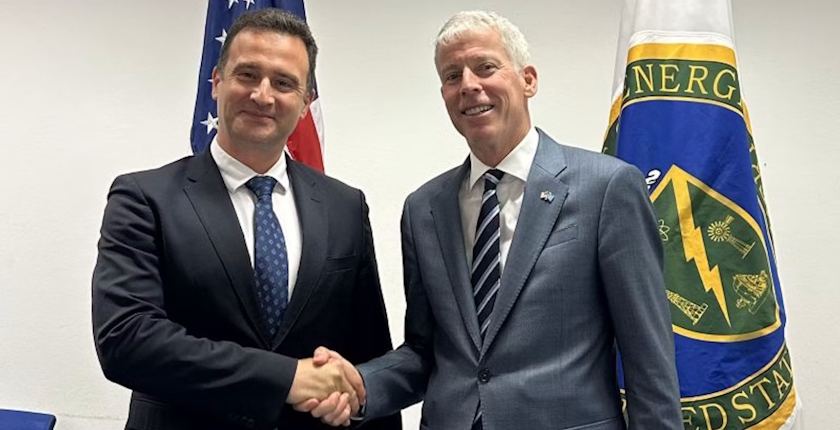
Minister of Energy of Bulgaria Zhecho Stankov said that during his forthcoming visit to Ontario, Canada, he is going to a site where the first four small modular reactors (SMRs) are being built. Last week, he signed a memorandum of understanding with United States Secretary of Energy Chris Wright reaffirming the objectives of the bilateral agreement to strengthen cooperation in civil nuclear energy use.

Bulgaria’s government considers the SMR technology a tool for long-term stability, predictability and affordable low-emission electricity production.

“After signing a joint statement last week with the US Secretary of Energy Chris Wright on that country’s assistance for sites on Bulgarian territory for small modular reactors – it is a new, modern technology, very flexible, which attracts investments in data centers and artificial intelligence centers – the normal next step for the Bulgarian side is to start talks with potential companies that develop this type of technology,” Stankov told reporters in New York City.

US to assist Bulgaria in prefeasibility studies

The memorandum envisages cooperation in the development and deployment of innovative technologies for nuclear reactors, aimed at enhancing Bulgaria’s economic security and energy resilience with the support of the US Department of Energy’s Office of Nuclear Energy.

Minister Stankov called for regional cooperation to reduce vulnerabilities and form a sustainable energy market

The Balkan country would benefit from the expertise of US laboratories in conducting preliminary studies of the feasibility and suitability of potential sites for the deployment of small modular reactors. The US Trade and Development Agency has said it is prepared to fund the assessment of SMR technologies to identify the ones most adequate for Bulgaria, the ministry added.

Speaking in New York City, Stankov also outlined the priorities – new energy corridors, investments in green energy and balancing capacities including pumped storage hydropower plants and battery energy storage systems (BESS), the projects for units 7 and 8 at the Kozloduy nuclear power plant, and regional cooperation for reducing vulnerabilities and forming a sustainable energy market.

Prime Minister Zhelyazkov endorses both rival projects for electricity corridors

Notably, Prime Minister Rosen Zhelyazkov said that he spoke with President of Azerbaijan Ilham Aliyev about the supply of green energy from the Caspian region to Europe. The plans involve 6 GW from Azerbaijan or, potentially, 10 GW if Kazakhstan and Turkmenistan are involved, he added

The proposed subsea power interconnector under the Black Sea is increasingly realistic and so is an onshore corridor from Armenia and Georgia through Turkey, according to Zhelyazkov.

by in News

EDF, Westinghouse complete technical feasibility studies for Krško 2 nuclear power plant

Three reactor projects offered by EDF and Westinghouse have been assessed as technically feasible for the site of the future Krško 2 nuclear power plant, according to technical feasibility studies presented by GEN Energija during the announcement of its 2024 results. GEN Group ended last year with a EUR 186 million profit, down 9% from 2023, when it posted a profit of EUR 204.5 million.

GEN Energija, the parent company of GEN Group, noted that the Krško 2 (JEK2) project is going ahead according to the previously confirmed timeline. In October 2024, Slovenia canceled a referendum on building the second nuclear unit.

In January, it was announced that Westinghouse Electric and EDF would conduct technical feasibility studies for the deployment of their reactor models.

In July, the Ministry of Natural Resources and Spatial Planning initiated the preparation of a spatial plan for the second unit of nuclear power plant Krško and invited the public to submit comments.

GEN Energija has now presented the results of the technical feasibility studies. The reactor projects – EDF’s EPR or EPR1200 and Westinghouse’s AP1000 – were found to be technically feasible for the JEK 2 site.

Planinc: Both technologies include cooling by a natural draft cooling tower

According to Vinko Planinc, head of GEN Energija’s New Nuclear Build Division, the studies confirm that the project enables safe and efficient installation within the existing environment, taking into account flood and earthquake protection requirements.

The expected operational lifespan of both proposed reactors is 60 years, but it could be extended to 80 years if conditions are met, he added.

The location will also allow for the appropriate storage of used nuclear fuel, as well as low- and intermediate-level radioactive waste. Both technologies, he said, use natural draft cooling towers – the most environmentally friendly solution, minimizing the impact on the Sava River and creating the smallest carbon footprint.

The estimated investment from the studies matches the amount in GEN Energija’s study presented in 2024, which projected that JEK 2 would cost at least EUR 9.3 billion for 1,000 MW.

The financing method significantly affects the project’s viability

Regarding an analysis of the JEK2 investment by NGO Mladi za Podnebno Pravičnost (Youth for Climate Justice), Jan Lokar, lead engineer at GEN Energija, said the company estimates the minimum electricity price needed for the project’s economic feasibility at EUR 70.2 per MWh, compared to the NGO’s estimate of EUR 107.

The differences arise primarily from varying assumptions about capital costs, he stressed. GEN Energija expects state support in financing, while the NGO estimate assumes private capital investment.

Paravan: 2024 results exceed planned targets

Photo: GEN Energija

GEN Energija CEO Dejan Paravan presented GEN Group’s business results for 2024. The group had revenues of EUR 2.2 billion, a net profit of EUR 186 million, and added value per employee of EUR 276,000, all exceeding the annual financial targets, he added.

“All our production units operated safely and without major interruptions, reflecting years of investment in knowledge, technology, and maintenance. The important role of GEN Group in Slovenia’s energy supply is confirmed by the fact that in 2024, we reliably supplied Slovenian consumers exclusively with low-carbon electricity at affordable and predictable prices,” Paravan noted.

Alongside the JEK2 project studies, the company said, a small modular reactor (SMR) study is underway, aiming to identify possible locations for this type of reactor in Slovenia.

Photo: GEN Energija
by in News

Serbia, South Korea’s KHNP to cooperate on nuclear energy, hydrogen

Serbia and South Korean company Korea Hydro & Nuclear Power have signed two memorandums of understanding on cooperation in the fields of nuclear energy and hydrogen.

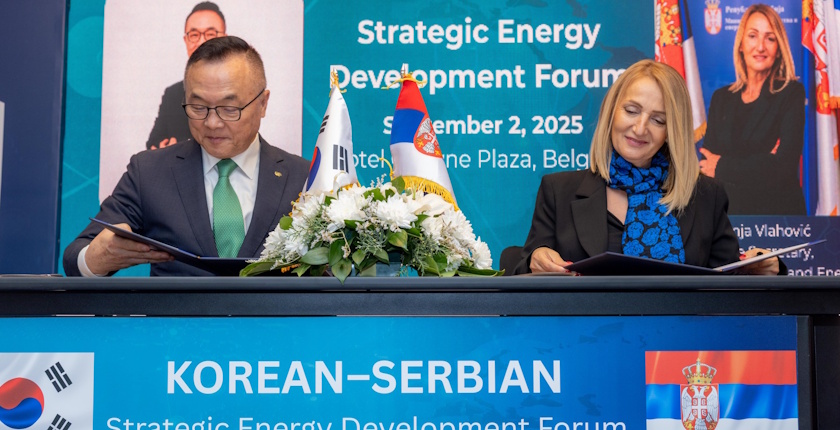
The memorandums were signed by Sonja Vlahović, State Secretary at the Ministry of Mining and Energy, and Joo-ho Whang, President and CEO of Korea Hydro & Nuclear Power (KHNP), a subsidiary of Korea Electric Power Corporation (KEPCO).

Notably, South Korean company Hyundai Engineering is part of Serbia’s largest renewable energy project—the deployment of 1,000 MW of solar power plants with battery storage.

The memorandums were signed during the Korea-Serbia Strategic Energy Development Forum, held in Belgrade and organized by the Ministry of Mining and Energy and the Korea Trade-Investment Promotion Agency (KOTRA).

So far, Serbia has established contacts or started cooperation on nuclear energy with China, France, Russia, Slovenia, and the United States.

Vlahović: We’ll consider pilot hydrogen projects

The main goal of the nuclear energy memorandum is to help the ministry develop and train personnel in Serbia in the field of nuclear technologies, as well as to facilitate the exchange of technical information and expertise.

Photo: Balkan Green Energy News

The second memorandum, on hydrogen cooperation, will enable joint work to assess the potential for developing pilot green hydrogen projects in Serbia. It envisages technical exchanges and support for human resource development, as well as sharing know-how in the full hydrogen cycle and supply chain management.

State Secretary in the Ministry of Mining and Energy Sonja Vlahović noted that Serbia is considering nuclear energy as one of the potential energy sources that could help it achieve energy security while transitioning to clean energy sources.

Joo-ho Whang: Cooperation will enable sustainable growth for Serbia and the company

“For us, it is very important to develop cooperation with countries and companies that are global leaders in nuclear technologies, to exchange knowledge and experience, and to invest in the development of our experts. We are also very interested in the opportunities offered by hydrogen technologies and, together with partners from South Korea, we will explore potential pilot projects,” she said.

According to KHNP President and CEO Joo-ho Whang, the cooperation will enable sustainable growth for both Serbia and the company.

“We particularly expect that demonstration projects in the field of hydrogen will play a key role in developing the hydrogen industry in Serbia. Additionally, the agreement will open new opportunities for cooperation in the clean energy sector,” he added.

KHNP to assist with workforce training

The nuclear energy memorandum calls for KHNP to support the development of training programs for personnel in the ministry and other relevant government institutions, faculties, and companies. The support is expected to cover various aspects of nuclear technologies, safety, and the regulatory framework.

It also includes establishing a mechanism for regular exchange of technical information, research results, and best practices in nuclear energy, the ministry said.

Dimović: Serbia could have a nuclear power plant by 2040

Photo: Ministry of Mining and Energy/Nenad Kostić

The signing was followed by presentations delivered by KHNP, the ministry, state power utility Elektroprivreda Srbije (EPS), the Vinča Institute for Nuclear Sciences, and KOTRA.

Park So-hyun, Senior Manager of Overseas SMR Project Section, presented nuclear power plant projects that the company is developing in South Korea and other parts of the world.

Hydrogen projects and cooperation with Serbia were the theme of a presentation by Kim Su-Jy, Senior Manager of Global KHNP Hydrogen & Energy Business Sector.

EPS is conducting a hydrogen study

Assistant Minister of Mining and Energy Radoš Popadić outlined the main goals and planned activities of Serbia’s Energy Development Strategy through 2040. Aleksandar Latinović, Head of Ancillary Services at EPS, presented the company’s development projects, recalling that EPS is currently conducting a study on possibilities for hydrogen utilization.

The Vinča Institute highlighted its rich history. CEO Slavko Dimović announced a public discussion aimed at explaining nuclear energy to all of Serbia, not just Belgrade. His optimistic yet realistic plan is for Serbia to have a nuclear power plant by 2040.

Milan Rajić, Senior Specialist at KOTRA, highlighted the agency’s results and invited Serbian entrepreneurs to collaborate with Korean companies.

The signing ceremony was also attended by the Ambassador of the Republic of Korea, Kim Hyung Tae, Serbia’s Minister of Science, Technological Development, and Innovation, Bela Balint, and the Director General for KOTRA Europe Headquarters, Kim Hyeon-cheol.

by in News

US firm Aalo starts construction of its first extra-modular nuclear reactor

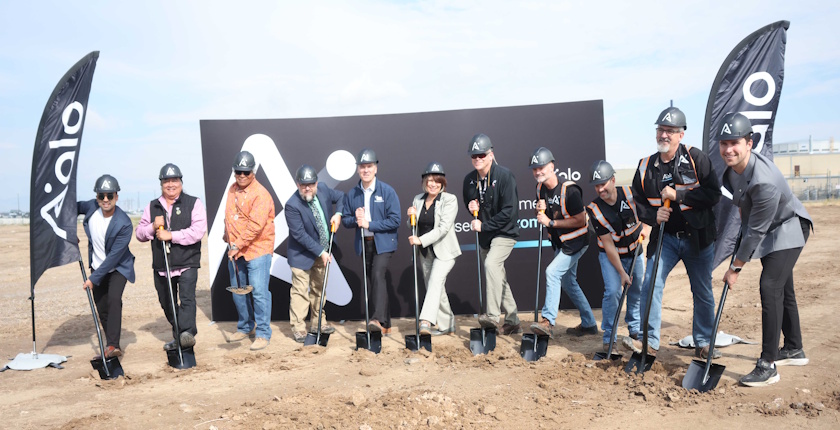
US-based nuclear power startup Aalo has begun construction on its first extra-modular reactor, a type of modular reactor, in Idaho. The company is among 11 developers of micro and small modular reactors selected by the US Department of Energy to participate in its Nuclear Reactor Pilot Program.

Aalo stated that its reactor will mark a significant milestone, becoming the first new sodium-cooled test reactor in the United States to go critical in over forty years—an achievement that builds on its selection for the Department of Energy’s pilot program.

The company noted that the lessons learned from manufacturing, shipping, installing, and licensing Aalo‑X will influence whether advanced reactors like the Aalo Pods can truly be produced at scale.

DOE’s aims to reach criticality for at least three advanced nuclear reactor concepts by July 4, 2026

“Within months, we will have assembled the first XMR at our Idaho site; by July 4, 2026, we will reach criticality, and by July 2027, we will power a collocated datacenter, with next-generation AI chips. Once operational, Aalo‑X will be a tangible proof‑of‑concept that nuclear energy can power the AI revolution rapidly and cost‑effectively,” the firm said in a press release.

Photo: Aalo

DOE’s Nuclear Reactor Pilot Program aims to reach criticality for at least three advanced nuclear reactor concepts located outside of the national laboratories by July 4, 2026.

Groundbreaking in the desert beside Idaho National Laboratory (INL) ensures that Aalo‑X will meet that mandate, the firm said.

According to Aalo, traditional categories of microreactors (<10 MWe) and small modular reactors (SMRs, up to ~300 MWe) leave a gap between tiny reactors that can be delivered to remote sites and larger units that supply cities.

Introducing the first XMR

“We created the extra‑modular reactor (XMR) to fill that gap. It’s a category of modular reactors that is a crossover between microreactors and SMRs. Our product is an Aalo Pod that contains five 10 MWe Aalo‑1 reactors arranged around a single turbine; the resulting 50 MWe plant is purpose-built for power‑hungry data centers,” according to the press release.

The concept of SMR has been gaining traction worldwide for quite a while, as part of a nuclear energy renaissance. However, overall progress in the sector has been modest.

The world’s first SMR-based facility, Russia’s floating nuclear power plant Akademik Lomonosov, commissioned in Chukotka in 2020, remains the only one in commercial operation.

by in News

Google secures 50 MW of nuclear power for data centers

Google has secured a new source of clean energy for its data centers in the US states of Tennessee and Alabama through collaboration with nuclear technology company Kairos Power and public power utility Tennessee Valley Authority (TVA). The deal involves a 50 MW advanced nuclear reactor to feed TVA’s grid, which supplies the tech giant’s data centers.

Kairos Power’s advanced nuclear facility Hermes 2, which is set to go online in 2030, will supply electricity to the grid under a power purchase agreement (PPA) with TVA. It is the first-ever offtake agreement in the United States for a generation IV reactor.

Hermes 2, located in Oak Ridge, is the first facility under Kairos Power’s broader deal with Google to enable 500 MW of new, advanced nuclear capacity to come online by 2035, aimed at supporting Google’s growing energy needs. The long-term agreement, signed in October 2024, involves the deployment of multiple small modular reactors (SMRs), Google recalled.

Google’s long-term deal with Kairos involves deploying 500 MW of nuclear capacity by 2035

Amanda Peterson Corio, Google’s Global Head of Data Center Energy, said the collaboration would speed up the deployment of innovative nuclear technologies and help support the needs of the growing digital economy while also bringing firm carbon-free energy to the electricity system.

As part of efforts to meet its growing energy needs, Google recently signed the world’s largest corporate PPA for hydropower. The agreement, signed with global investment firm Brookfield, involves developing 3 GW of hydropower capacity in the United States.

Google has signed similar deals for hydropower, geothermal, and fusion energy

Google has also signed similar agreements for next-generation geothermal energy as well as for fusion energy. The company recently revealed plans to invest over USD 25 billion in data center and AI infrastructure in the next two years.

Rapid AI development and digitalization are making power supply crucial for tech companies. Goldman Sachs Research forecasts that global power demand from data centers will increase by 165% by 2030 from the 2023 level.

  • 1
  • 2