by in News

Number of electric vehicles in Serbia reaches 6,000

There are about 6,000 registered electric vehicles in Serbia, according to Filip Mitrović, coordinator of the Emobility cluster of the Serbian Chamber of Commerce and Industry (PKS).

The fleet of 6,000 electric vehicles (EVs) in Serbia is small compared to Europe, Filip Mitrović stressed at the Belgrade Energy Days conference, as quoted by Tanjug. He also identified two obstacles to further growth.

First of all, regulatory inconsistencies make it impossible to accurately charge for the electricity consumed by electric vehicles at charging stations. Billing is currently based only on the duration of e-charger use, rather than the actual amount of electricity consumed, he added.

Complex documentation is required to install an electric charger

He underlined that there is no legal way to charge for the electricity consumed per kilowatt-hour. Therefore, a time-based charging method is used for electric vehicles.

“That’s not fair,” he said, and added that anyone who has used an EV knows it is standard to be charged based on the amount of electricity consumed. Mitrović noted that different models of EVs draw varying amounts of energy from the e-charger in the same period.

The second problem, in his words, is the procedure for the installation of EV chargers. Very often, complex documentation is required, which slows down and complicates the entire process, making investors give up on the project, Mitrović stressed.

In recent years, the Government of Serbia has been awarding subsidies for what it officially calls “ecological vehicles.” Last year, it decided to stop subsidizing hybrid (HEVs) and plug-in hybrid (PHEVs) electric vehicles and to provide funding only for 100% EVs or battery electric vehicles (BEVs).

Subsidies were granted for approximately 3,300 vehicles

The criteria remained the same this year. On August 8, the Ministry of Environmental Protection said it ended approving subsidies for the purchase of new EVs for 2025. All the allocated funds have been granted, it explained.

However, the government then secured more money and resumed the procedure on August 28.

In mid-September, the ministry said that the government backed the purchase of 2,834 eco-friendly vehicles since 2020. With the applications received this year, the number has reached 3,305.

by in News

Critics of Serbia’s draft mining strategy barred from public hearing

A public hearing on the draft Strategy for the Management of Mineral and Other Geological Resources in Serbia for the period 2025 to 2040, with projections until 2050, was held at the Serbian Chamber of Commerce. The document outlines a long-term approach to resource exploitation. A group of citizens, environmental activists, and experts critical of the draft held a protest after being denied entry to the event.

The draft Strategy for the Management of Mineral and Other Geological Resources in Serbia for the period 2025 to 2040, with projections until 2050 is a basis for the government’s decisions regarding geological exploration and mining.

Serbia is following European guidelines, including the Critical Raw Materials Act (CRMA), thereby building a system that supports investment predictability, responsible exploitation, and sustainable development, according to the Ministry of Mining and Energy.

The strategy was modeled after those of European countries

“We want our mining industry to be as developed as in Scandinavian countries. We also used Poland as an example, as it is most similar to us in terms of coal and copper production,” said Assistant Minister for Geology and Mining Ivan Janković.

Besides copper and coal, the strategy emphasizes non-metallic and geological resources like stone, sand, clay, and groundwater.

Public consultations on the draft strategy and the environmental report were held from June 13 to July 2. The public hearing was initially scheduled for July 1 but was postponed “in the interest of full transparency,” according to the ministry, to give all stakeholders sufficient time to submit comments and suggestions.

Environmental activists protest outside of venue

The draft strategy would serve the interest of mining companies while disregarding the needs of the country and its citizens, according to Nebojša Petković, an activist from a local group Ne damo Jadar in western Serbia, who spoke to FoNet news agency ahead of the public hearing. Conversely, Ivan Janković from the ministry denied the claim, arguing that the strategy was created solely in Serbia’s interest.

Environmental activists, citizens, and experts gathered in protest outside the venue after being denied entry, despite registering for attendance. Among them were Dragana Đorđević from the Institute of Chemistry, Technology and Metallurgy, and Zoran Stevanović, retired hydrogeology professor from the Faculty of Mining and Geology. He said the ministry scheduled the hearing only one day in advance, adding that the critics were told there is no room for more people even though they applied as soon as they saw the notice.

The strategy prioritizes mining over nature

Professor Stevanović told N1 that the strategy proposes three levels of investment, with the most intensive scenario involving USD 6.8 billion in foreign investments in mining. In his view, it would lead to an enormous expansion of such activity.

The strategy mustn’t prioritize mining in spatial planning over protected natural zones, even ones with vital water resources, Stevanović underscored.

He also criticized linking exploration with future exploitation, pointing out that the government wouldn’t be able to compete in tenders through public bidding. Stevanović added that Serbia has experts capable of conducting in-depth studies on ores for the benefit of citizens, instead of exporting raw materials.

by in News

Serbia adopts first ever rulebook on standards for wood pellets

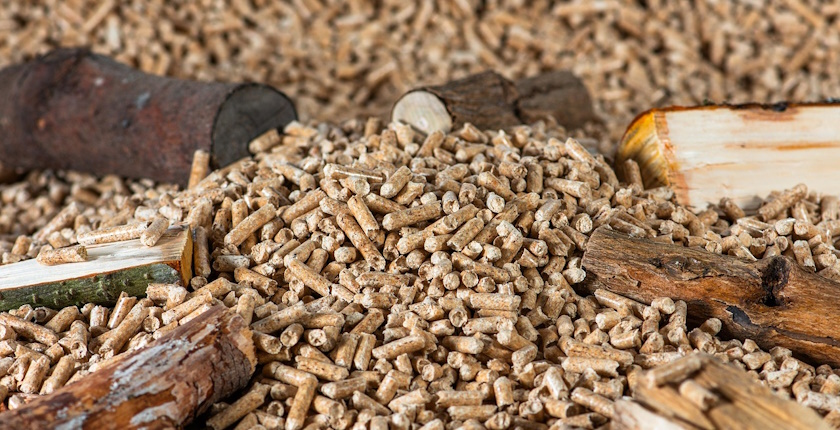
Serbia has adopted the rulebook on solid fuels from wood biomass, which for the first time regulates the quality of pellets and briquettes on the domestic market.

The rulebook on technical and other requirements for solid fuels from wood biomass sold on the Serbian market will enter into force in three months. In the meantime, an institution needs to be established for control, compliance, and corrective measures regarding the new requirements.

The rulebook introduces technical standards and mandatory laboratory analysis, defines rules for assessing compliance, and product labeling. It envisages oversight of the levels of substances affecting health and the environment, according to the Ministry of Mining and Energy.

Ministry: Only high-quality pellets will be sold on the Serbian market, in line with the standards set by the EU

“By adopting the rulebook we want to preserve the competitiveness of the pellet industry in Serbia. This document represents a fine example of the cooperation between the authorities and the businesses,” Minister Dubravka Đedović Handanović stated.

The ministry claims that the rulebook secures that only high-quality pellets can be sold on the Serbian market in line with the standards applicable in the European Union.

For the first time, the physical and chemical characteristics of wood pellets will be controlled

According to the Chamber of Commerce and Industry, only pellets with positive results from laboratory analysis and the kinds that meet strict standards on harmful substances will be allowed on the market in Serbia.

“For the first time our authorities would control physical and chemical characteristics of wood pellets such as size, shape, stability, caloric values, moisture, and ash level,” the association of Serbian firms added.

The same will apply to the substances affecting human health and the environment including heavy metals – arsenic, cadmium, chromium, copper, lead, mercury, nickel, zinc, sulfur, and nitrogen.

The association recalled that the ministry established the working group for the preparation of the rulebook upon its initiative.