by in News

Firms from Croatia, BiH, Serbia to build power line in North Macedonia

Croatia-based Dalekovod, Elnos from Bosnia and Herzegovina, and Serbian Kodar Energomontaža will jointly build electricity transmission infrastructure in North Macedonia.

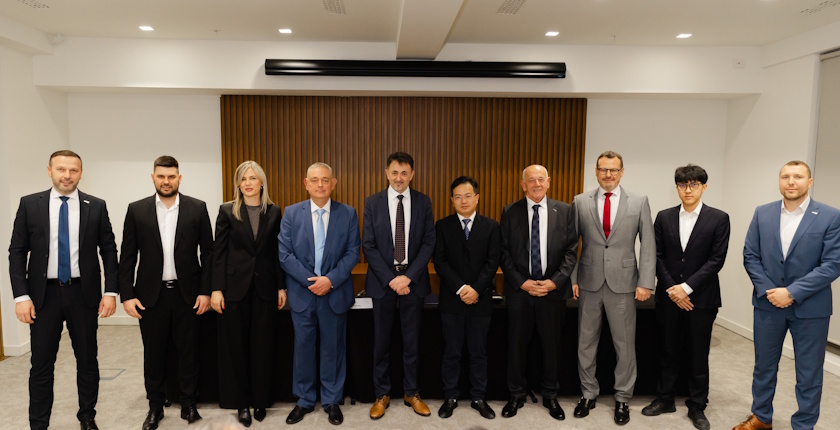
Dalekovod said it signed a EUR 19.7 million contract with MEPSO, the transmission system operator of North Macedonia, as the lead member of a consortium that includes Elnos BL and Kodar Energomontaža.

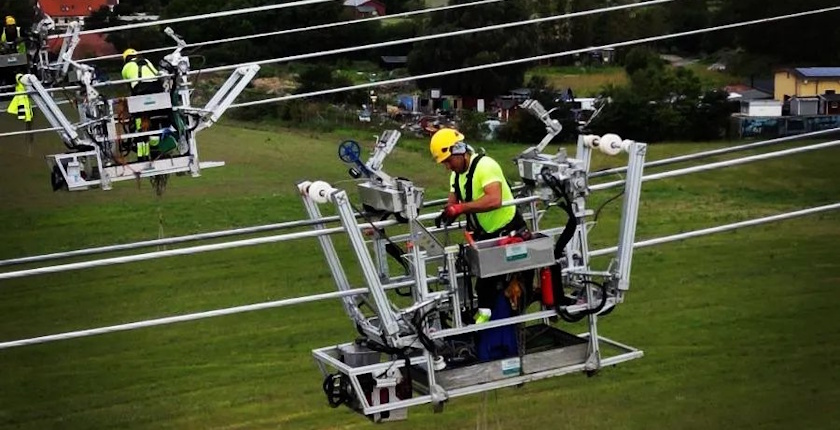
The contracted works include the delivery and construction of a 400 kV power line from the 400/110 kV Bitola 2 substation, via the 400/110 kV Ohrid substation, to the North Macedonia – Albania border.

The project ensures long-term stability of the electricity system in the wider region

The new Ohrid substation is currently under construction, with Končar, another Croatian company, as contractor. Končar is the majority shareholder of Dalekovod since 2022.

The Croatian firm pointed out that the new power line in North Macedonia represents a significant infrastructure project ensuring long-term stability of the electricity system in the wider region.

Dalekovod: Strengthening position in the regional and European market

Construction is scheduled for completion by mid-2028.

Of note, all three companies are active on the territory of former Yugoslavia, as well as across Europe and even worldwide. The owners of Elnos and Kodar are individuals from Bosnia and Herzegovina and Serbia, respectively, while the largest shareholders of Dalekovod are the Government of Croatia and three foreign banks operating in the country.

Operations in the region, Europe, Africa

Dalekovod has subsidiaries in six countries, including Namibia. In October, the company concluded a EUR 100 million deal for the construction of a 400 kV power line in Sweden.

Elnos BL is part of Elnos Group based in Banja Luka, Bosnia and Herzegovina. The company, which recently marked a remarkable dual jubilee – 80 years of tradition and 30 years of modern business development, operates in 18 countries.

A week ago, it signed a contract with Power China Construction Group to build a connection to the transmission grid for the 300 MW Vetrozelena wind farm in Serbia.

Kodar Energomontaža, headquartered in Serbia’s capital Belgrade, has carried out numerous projects across Europe – from southeastern Balkans to Scandinavia, as well as in West Africa.

In March, the company inked a deal with Serbia’s transmission system operator Elektromreža Srbije (EMS) for the construction of a two-system 400 kV transmission line, part of the Trans-Balkan Electricity Corridor.
by in News

Elnos to construct grid connection for wind farm Vetrozelena in Serbia

Elnos Group will build a connection to the transmission grid for the 300 MW Vetrozelena wind farm near the city of Pančevo in Serbia.

Vetrozelena is the largest wind power plant under construction in Serbia. The largest existing one is Čibuk 1, with a capacity of 158 MW. It has been producing electricity since October 2019.

Elnos Group is headquartered in Banja Luka, Bosnia and Herzegovina.

The company said it celebrated its 30th anniversary of modern business operations by signing a contract with the Power China Construction Group to build the largest wind farm in the Balkans.

Elnos will construct the entire infrastructure for connecting the facility to the transmission system

Elnos Serbia has signed an EPC contract with Sinohydro, a subsidiary of Power China Construction Group, for the construction of the Vetrozelena wind farm, the largest single wind project in the Balkans, with a total capacity of 300 MW, according to the update.

The wind farm would comprise 48 turbines with a capacity of 6.25 MW each.

Of note, the region hosts another major wind project – in July, the construction of a 400 MW wind farm kicked off in North Macedonia.

Elnos Serbia, member of Elnos Group, is undertaking the construction of the complete connection to the transmission system operated by Serbia’s transmission system operator (TSO) Elektromreža Srbije (EMS).

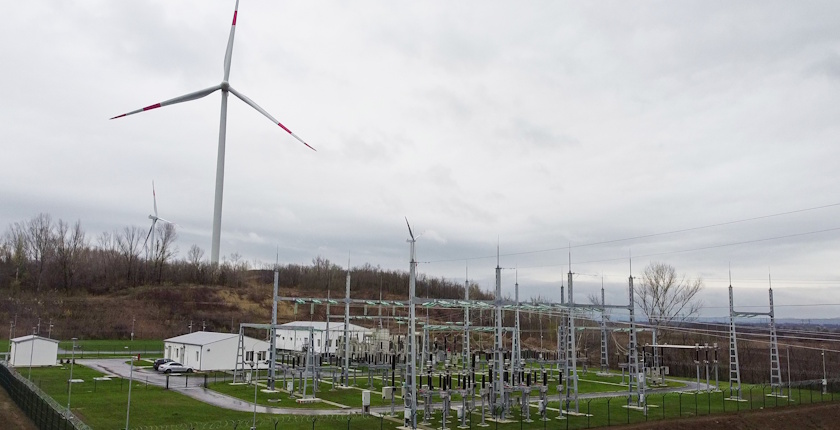
The project includes the construction of a 35/400 kV substation with four transformers of 90 MVA each, a 400 kV switchyard with six fields, a 7.5-kilometer 400 kV dual-system power line, as well as the infrastructure upgrade of the distribution grid and telecommunications network.

Ćulibrk: We will successfully complete the project within the contracted timeframe

This is another contract concluded on an EPC basis under which Elnos Serbia is handling the complete engineering, design, construction of facilities, procurement and installation of equipment, connection to the grid, testing, and commissioning.

“The expertise and dedication of our engineers, technicians, and installers, our comprehensive knowledge and extensive experience on similar projects, along with the company’s financial and organizational stability, give us confidence that we will successfully complete this project within the contracted deadlines,” Elnos Serbia CEO Predrag Ćulibrk underscored.

The project was developed by CWP

The Vetrozelena project was developed by CWP Europe. It is also one of the projects that won the government support in Serbia’s first auctions. However, in April 2023, the company signed an investment contract for the wind farm with PowerChina Resources.

The Chinese company acquired 51% of the project while the remainder stayed in ownership of CWP Europe. PowerChina Resources is PowerChina Group’s overseas investment platform.

The next step in the project’s development occurred in November. Vetrozelena and power utility Elektroprivreda Srbije (EPS) signed agreements on the electricity offtake, balancing services, and market premiums.

by in News

Serbia’s EPS starts trial operation of its first wind park Kostolac

Serbia’s state-owned power utility Elektroprivreda Srbije put the 66 MW Kostolac wind farm into trial operation.

The construction of Kostolac is complete, and Elektroprivreda Srbije’s (EPS) first wind farm has generated its first megawatt-hours, EPS announced.

Upon receiving approval for connecting to the transmission system, the substation was energized and the blades of wind turbine 1 began to spin. It marked the start of the trial operation of the new generation capacity, the company said, and added that the kickoff of the remaining wind turbines is underway.

EPS’s first wind power plant, with 20 generators, is located at sites called Drmno, Petka, Ćirikovac and Klenovnik, at an area of closed open-pit mines of its subsidiary Termoelektrane i kopovi Kostolac (TE-KO Kostolac). It operates coal-fired power plants and open-pit coal mines.

Živković: It is a historic moment for EPS

Closed coal mines are ideal locations for installing wind farms and solar power plants, due to existing infrastructure. The concept has become widespread in Balkan countries.

“This is a historic moment for EPS. In addition to energy from water, coal, and the sun, now the first wind farm is online. This is a big step toward increasing the share of renewable energy and achieving sustainable energy development for EPS and the entire Serbian energy sector,” CEO Dušan Živković underlined.

He pointed out that the wind farm is just the beginning of future intensive development of new green capacities. It is very significant that it was built on the site of an old mining landfill and that the space has been given a completely new, sustainable purpose, he added.

The wind farm is expected to produce 187 million kWh annually

serbia eps wind farm Kostolac trial operation coal mine
Photo: EPS/Zoran Gavrilović

Živković recalled that the construction of the wind farm was a major challenge, but also a real opportunity for experienced engineers and young, new professionals at EPS to gain new knowledge and experience for future projects.

The planned annual production of the wind farm is 187 million kWh, which is enough to supply about 30,000 households with green electricity, according to EPS.

The project is financed by a EUR 110 million loan from Germany’s KfW Development Bank and a EUR 30 million grant from the European Union via the Western Balkans Investment Framework (WBIF), while the company provided a part of the needed funds, EPS said.

Serbia’s Minister of Mining and Energy, Dubravka Đedović Handanović said in January 2024, at the signing of an agreement with the EU for the EUR 30 million grant, that it has completed the financing of the project.

According to WBIF’s update from December 2024, the project was valued at EUR 145.1 million. It comprised EUR 81.8 million from a KfW loan and EUR 31 from WBIF in the form of a grant, while EPS provided EUR 32.3 million.

by in News

Nearly 9 in 10 citizens in Serbia call for deposit return system – survey

Almost 90% of citizens in Serbia support the introduction of a deposit return scheme, according to a survey conducted by Every Can Counts. It is also the highest level of support among all 16 countries where the poll was conducted.

The report titled Global Recycling Habits and Attitudes 2025, based on the survey’s results, represents another confirmation that citizens in Serbia support the introduction of a deposit return scheme (DRS). Similar survey results were published in 2021 and 2022.

Despite officially planning it for many years, the authorities in Serbia haven’t rolled out such a deposit mechanism yet. According to one of the latest announcements, from October 2023, the introduction is set for 2027.

The benefits of a deposit system are well known. Romania is among the countries that introduced it relatively recently.

Following its 2020 and 2022 campaigns, Every Can Counts (ECC) commissioned another global research in 2025 into people’s recycling behaviours and attitudes. The study was designed and analysed by Made with Insight.

It covered 16 countries: Belgium, Brazil, the Czech Republic, France, Greece, Hungary, Ireland, Italy, the Netherlands, Poland, Romania, Serbia, Spain, the United Arab Emirates, the United Kingdom and the United States.

Plastic pollution tops global concerns

world Every Can Counts report 2025 serbia drs plastic pollution

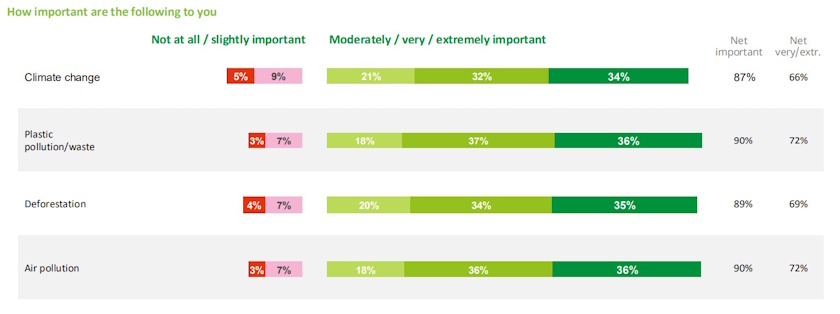
Plastic pollution tops global concerns, matching climate change, deforestation, and air pollution in public priority. Nearly 9 in 10 people worldwide see plastic waste as an important issue and 72% say it is very/extremely important.

The strong consensus highlights growing public demand for action to reduce plastic waste alongside broader climate and environmental goals, according to ECC.

Perceptions of drink cans vary notably by market but remain relatively low across all measures. For recyclability, the highest scores come from the USA (25%), Serbia (24%), and Greece (23%). Sustainability perceptions peak in the UAE (22%) while circularity scores are highest in Greece (23%) and Serbia (22%).

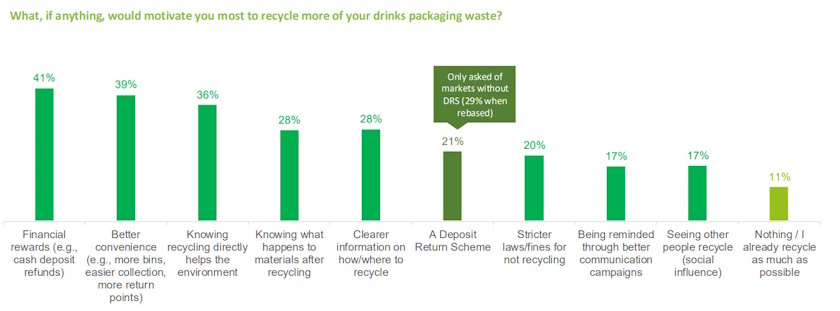
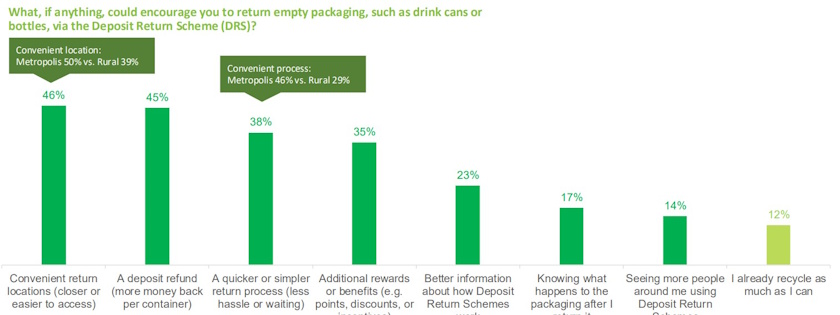
While there is no silver bullet, the strongest motivators for recycling are financial rewards such as deposit refunds (41%) and better convenience (39%), the report reads.

world Every Can Counts report 2025 serbia drs recyclng motivation

Financial incentives resonate most in Romania (53%), and convenience is the strongest in Greece. Brazil is exceptional for environmental impact (55%), followed by Romania, Serbia and the UAE – all with 46%.

Attitudes towards recycling show two clear patterns, according to the report. First, making recycling more engaging through rewards, games or interactive apps could boost participation, particularly in Brazil (83%), Greece (81%) and Serbia (88%), while interest is lower in markets such as the Netherlands (53%) and Belgium (60%).

Second, there is near universal agreement that manufacturers and brands should be required to use fully recyclable or recycled materials, the report underlines.

DRS is less supported in the USA

world Every Can Counts report 2025 serbia drs support

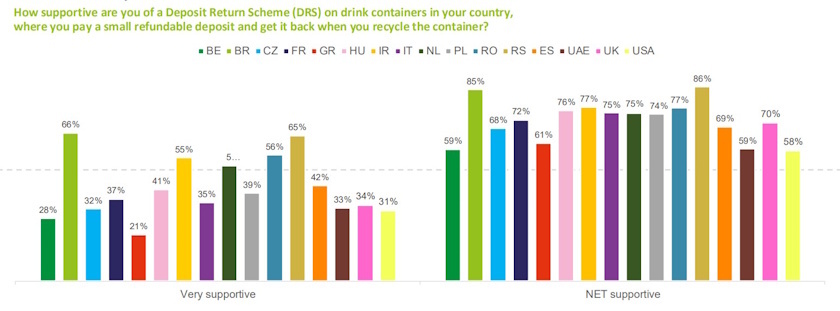
A majority supports DRS in all markets, but the intensity of support varies considerably. Net support ranges from 58% in the USA to 86% in Serbia.

Levels of strong, “very supportive” sentiment show sharper contrasts. Brazil (66%), Serbia (65%), Romania (56%), Ireland (55%) and the Netherlands (51%) stand out as markets with a majority of strong supporters.

At the other end of the spectrum, Greece (21%), Belgium (28%), the USA (31%), the Czech Republic (32%) and the UK (34%) record the lowest intensity.

Convenience and incentives are the top drivers overall while information is generally a weaker motivator, but the mix differs by market, the report reads.


world Every Can Counts 2025 report serbia drs recyclng motivation

Higher deposit refunds are most influential in the Czech Republic and Spain, while Serbia and Greece balance convenience and refunds more evenly.

When looking only at those who “strongly agree,” support levels show sharper contrasts.

Romania and Serbia stand out with strong calls for all one-way packaging to be included (67%). Brazil scores high across most categories but is weaker on personal responsibility for returning cans.

Hungary, Ireland, Romania and Serbia show high trust that returned containers are recycled, while trust is lower in the Czech Republic, Belgium, France or Greece, ECC concluded.

by in News

Serbia’s Vinča Institute, EDF to cooperate in nuclear energy

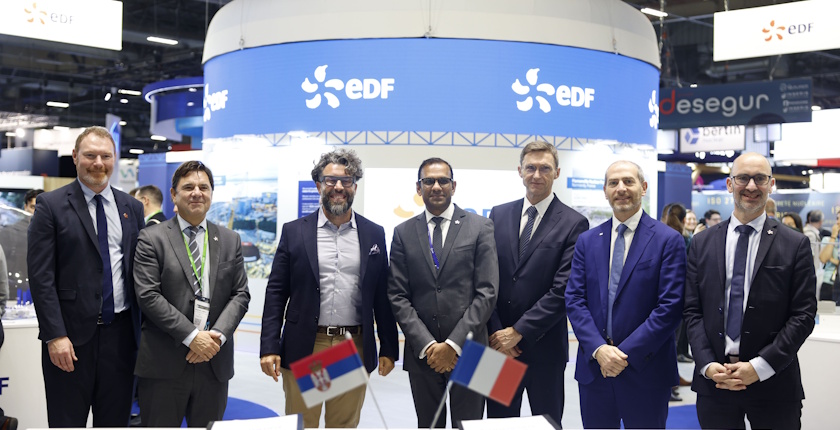
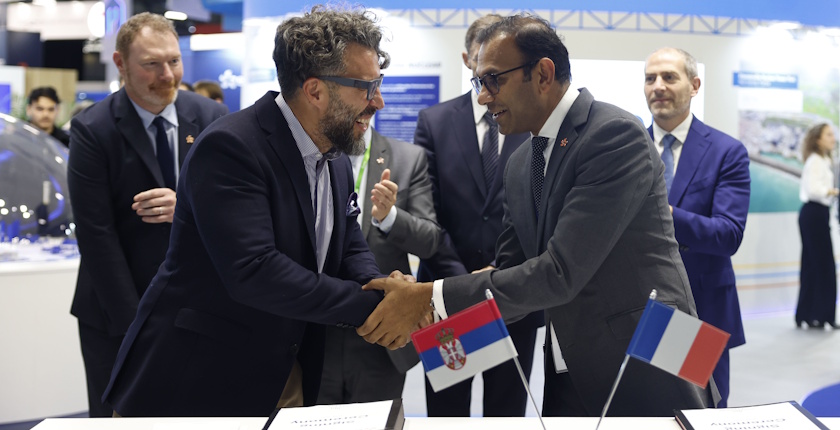
During the World Nuclear Exhibition in Paris 2025, the Vinča Institute of Nuclear Sciences signed a memorandum of cooperation with Électricité de France (EDF).

The Serbian Vinča Institute of Nuclear Sciences said its new memorandum of cooperation with French state-owned energy utility EDF establishes a framework for scientific, technological, and educational cooperation in the nuclear energy sector.

The document was signed by the Vinča Institute’s CEO Slavko Dimović and Vakisasai Ramany, EDF’s Senior Vice President for International Nuclear Development.

Four main sectors of cooperation

The deal envisages joint activities in the areas of scientific research cooperation, professional training and development of employees, international exchange, and public communication on nuclear topics, according to the institute.

The goal is to enhance knowledge, develop expertise, and promote informed public discussion about the potential role of nuclear energy in our country, the Vinča Institute revealed in a social network post.

serbia edf france nuclear energy memoradnum dimovic paris
Slavko Dimović and Vakisasai Ramany (photo: Vinča)

The International Institute of Nuclear Energy I2EN, founded by EDF, will play a key role in implementing the educational programs. It will organize joint academic projects, student exchanges, and research visits.

Dimović: The memorandum is a pledge that we are going to support the growth of young scientists and engineers

The Vinča Institute’s CEO Slavko Dimović stressed that the memorandum represents a continuation of the Serbian-French friendship and an important step toward strengthening the institute’s international cooperation and the exchange of knowledge with one of the world’s leaders in the nuclear energy sector.

The Vinča Institute has long stood as a pillar of scientific and nuclear excellence in Serbia and the region, in his view. EDF brings expertise, experience, knowledge and strong commitment to innovation and the future, Dimović added.

“This memorandum is not just a document, it’s a pledge that we are going to learn from each other, to support the growth of young scientists and engineers, and to promote and help public acceptance of nuclear energy in Serbia,” he underlined.

EDF is active in the region

The Government of Serbia and EDF signed a memorandum of cooperation in April 2024. A few months later, in September, EDF and Egis Industries were awarded a contract for a preliminary technical study for considering the peaceful use of nuclear energy.

France and EDF are very active in the energy sector in the region. The company has established cooperation with the Government of Montenegro, and with the country’s power utility Elektroprivreda Crne Gore (EPCG). France and Slovenia recently signed a declaration on cooperation in the nuclear energy sector, while EDF is in the race to build the new Krško 2 nuclear power plant.

On a bilateral level, Serbia has established contacts or started cooperation in the nuclear energy sphere with China, France, Russia, Slovenia, the United States, and South Korea.

by in News

European Commission: Russian gas ban doesn’t include transit to Serbia, BiH

The proposed ban on importing Russian natural gas to the European Union doesn’t apply to the transit of Russian gas, so it doesn’t affect the supply of Serbia and Bosnia and Herzegovina, the European Commission’s spokesperson Anna-Kaisa Itkonen told Balkan Green Energy News.

After the Council of the European Union on Monday adopted its negotiating position on the European Commission’s draft regulation to phase out imports of Russian natural gas by January 1, 2028, reports emerged that Bulgaria would halt the transit of Russian gas to Serbia from January 1, 2026. The council agreed with the initiative to prohibit imports of Russian gas, starting on January 1, 2026, while maintaining a transition period for existing contracts.

Notably, Bulgaria’s Prime Minister Rosen Zhelyazkov announced in late September that his country would suspend Russian gas transit for short-term contracts in 2026 as part of EU plans to cut off Russian gas imports completely, Reuters reported.

Serbia receives natural gas from Russia via the Balkan Stream. The pipeline is an extension of TurkStream that passes through Bulgaria and Serbia. TurkStream delivers gas from Russia across the Black Sea to Turkey.

Bosnia and Herzegovina and Hungary, Serbia’s neighbors, are also supplied via Balkan Stream.

With regards to transit via EU territory, the EU proposal only requires more transparency on transited volumes to third countries

Balkan Green Energy News asked the European Commission to clarify if the supply of Russian gas to Serbia and BiH via Bulgaria would be halted as of January 1, 2026, but also how the EU could assist Serbia and BiH in that case.

The European Commission’s spokesperson Anna-Kaisa Itkonen noted that its REPowerEU proposal foresees a prohibition of the import of Russian gas into the EU.

“The EU import prohibition doesn’t concern the transit of Russian gas through the EU territory to third countries – including to Serbia and BiH. It doesn’t therefore affect Serbia’s or BiH gas supply,” she stressed.

With regards to transit via EU territory, in her words, the EU proposal only requires more transparency on transited volumes to third countries.

EU candidate countries are expected to progressively align their legislation with the EU acquis and rules

However, EU candidate countries are expected to progressively align their legislation with the EU acquis and rules as part of the accession process, Itkonen pointed out and added that it includes REPowerEU regulation once it becomes EU law.

Of note, the draft regulation to phase out imports of Russian natural gas constitutes a central element of the EU’s REPowerEU roadmap to end the EU’s dependency on Russian energy.

According to Itkonen, as a way to ensure security of supply, candidate countries including Serbia should diversify away from unreliable energy suppliers such as Russia. Following Russia’s war of aggression on Ukraine, it became evident how important this is and what problems it can create for any European country, she asserted.

“The EU is supporting the WB countries for diversifying their energy supplies”

Anna-Kaisa Itkonen (photo: European Commission)

“The EU is supporting the Western Balkan countries for diversifying their energy supplies and for closer integration into the EU’s energy networks, both for electricity and gas, as well as through investments in renewable energy and decarbonization efforts,” Itkonen underlined.

After energy ministers in the Council of the EU have agreed on the institution’s negotiating position on the European Commission’s draft regulation, the next step is the adoption of the European Parliament’s position.

The council and the parliament would then start negotiations on the regulation. When the two institutions approve a regulation, it directly applies to all member states.

The meeting of the so-called Energy Council highlighted several issues and concerns among EU member states about the proposed ban on Russian natural gas.

by in News

GridFlex to install standalone BESS in Serbia

GridFlex plans to install a standalone battery energy storage system with a capacity of 125 MWh near the city of Leskovac, in southern Serbia. The investment is estimated at EUR 17 million.

Serbia doesn’t have any utility-scale batteries, but many are in the project pipeline. GridFlex is one of 11 companies in the process of obtaining approvals from transmission system operator (TSO) Elektromreža Srbije (EMS) for the connection of planned standalone battery energy storage systems (BESS) to the network.

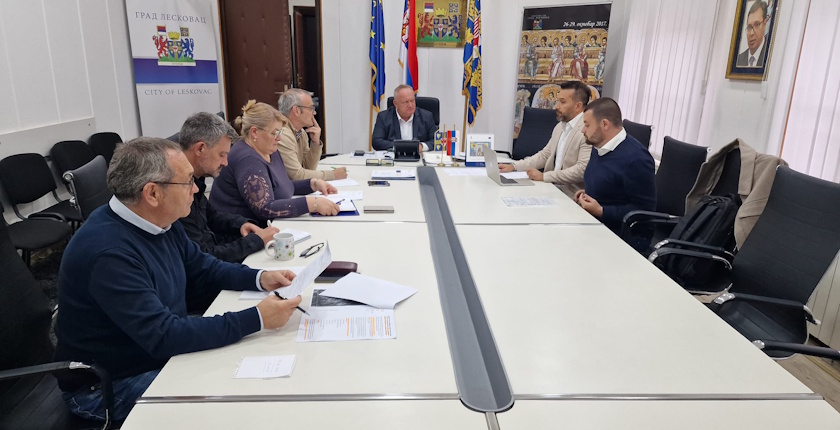
Mayor of Leskovac Goran Cvetanović met with representatives of Turkish company GridFlex, which has an office in Belgrade.

Battery systems provide flexibility to the system

The company is developing a project for a BESS that would provide system flexibility, support the integration of renewable energy sources, and contribute to the local economy, the city authority said.

GridFlex plans to invest EUR 17 million in the installation of an energy storage facility in Leskovac, the update revealed.

Owner and CEO of GridFlex Alkin Yaman participated in the meeting.

The deadline for completing the construction is the end of 2026

The planning and technical documentation for the facility is under development. The deadline for completing the facility is the end of 2026, while commissioning is expected in early 2027, the city stressed.

The battery would be installed on 1.5 hectares of privately owned land that the firm purchased near the Leskovac 2 substation.

The city will provide assistance to GridFlex for project implementation.

Three co-owners

The investment will secure numerous benefits for the city – the possibility of new investments, weakened load and voltage fluctuations in the power system, and an increase in the capacity for connecting new local consumers and producers to the grid, the local authority stressed.

According to data from the Business Registers Agency, the owners of GridFlex are Alkin Sevket Yaman, Sirin Cem, and Denis Severinov Karamov.

Of note, investors in Serbia are in the process of obtaining approvals for connecting their planned BESS facilities of an overall 2,021 MW and 5,899 MWh to the grid. They would be standalone batteries and ones co-located with power plants.

  • 1
  • 2