by in News

North Macedonia receives grant from France for grid modernization

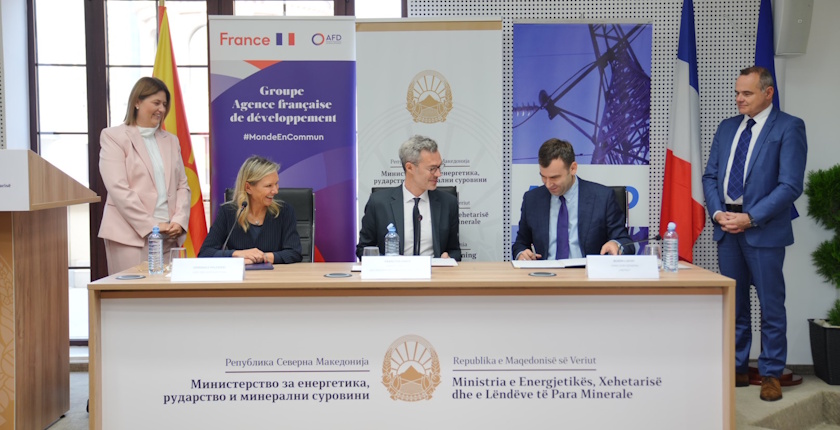
The transmission system operator of North Macedonia – MEPSO, France’s development agency Agence Française de Développement (AFD), and RTE International signed an agreement for a grant intended to support the Balkan country’s transmission system. At the same time, the Ministry of Energy, Mining, and Mineral Resources signed a joint declaration with AFD, officially welcoming the agency as a partner of North Macedonia’s Investment Platform for a Just Energy Transition.

The EUR 600,000 grant is for technical assistance for the modernization and digitalization of the transmission grid in North Macedonia, MEPSO said.

The project focuses on four areas: preparing system adequacy studies using the ANTARES market simulator, sizing system reserves, developing a methodology for calculating transmission losses and producing a feasibility study, and a project for substation digitalization.

Božinovska: AFD’s technical assistance will enable MEPSO to manage variability in the system more efficiently

As part of the project, experts from RTE International, a subsidiary of the French transmission system operator (TSO) RTE, have already held a training course for MEPSO’s engineers on the use of the ANTARES simulator, the Ministry of Energy, Mining and Mineral Resources said.

Minister Sanja Božinovska stressed that AFD‘s technical assistance would enable the company to manage more efficiently the variability resulting from increased participation of renewable sources and market fluctuations.

A more advanced and smarter grid means fewer outages, better use of clean energy, stronger regional connections, and greater system resilience – whether to weather conditions, demand fluctuations, or market instability, Božinovska noted.

Milevski: Pilot project will be launched for the digitalization of a 110 kV substation

According to RTE International CEO Veronika Milevski, the agreement combines advanced power system modeling, innovative reserve forecasting using artificial intelligence (AI), and a pilot project for the digitalization of a 110 kV substation.

This is a decisive step toward a more resilient, transparent, and competitive electricity grid, she pointed out.

MEPSO CEO Burim Latifi explained that the digital transformation pilot project is aimed at developing a fully digital substation with advanced protection, management, and monitoring systems.

Vince: AFD is committed to supporting a just and sustainable energy transition

It is a concrete step toward transforming MEPSO into a smarter, more efficient, and future-oriented TSO, he added.

Of note, AFD and RTE established collaboration with Montenegro’s TSO CGES in November last year. AFD also signed a memorandum of understanding with Albania’s power utility KESH in April.

Regarding the signing of the joint declaration, Sanja Božinovska said the partnership is improving the country’s ability to modernize its electricity system, integrate more renewables, and strengthen security of supply.

AFD is committed to supporting North Macedonia’s just and sustainable energy transition, according to the Deputy Director of the AFD Office for the Western Balkans, François Vince.

The signing of the two agreements was attended by French Ambassador Christophe Le Rigoleur.
Photo: Sanja Božinovska/Facebook
by in News

North Macedonia receives applications for 4.2 GW of battery projects

North Macedonia has received requests for new wind farms, solar parks and gas power plants of 7,100 MW in total capacity, as well as for standalone batteries and ones that would be co-located with power plants, for 4,172 MW in overall operating power, Minister of Energy, Mining and Mineral Resources Sanja Božinovska revealed.

The Ministry of Energy, Mining and Mineral Resources has received an initiative for a 495 MW gas-fired cogeneration plant. Sanja Božinovska said the details are unknown as the submitted documentation is too extensive and is still being analyzed, state news agency MIA reported.

Of note, there were already proposals for gas-fired power plants in the country. The government has signed a memorandum of understanding with Kazancı Holding on projects for such facilities.

Investors intend to install standalone and co-located BESS

Investors submitted initiatives for wind farms of 1,590 MW altogether, as well as for a total of 402 MW and 1,080 MWh in battery energy storage systems (BESS) that would be co-located with wind farms.

So-called initiatives were also received for solar power projects totaling 5,052 MW and accompanying BESS of 1,174 MW in combined capability and 3,018 MWh in capacity. Investors plan to build standalone batteries of an overall 2,596 MW and 3,094 MWh, respectively.

Božinovska said it is great news, though that it’s more important whether the documentation is valid.

She recalled that the recently adopted Law on Energy introduced an annual construction plan for priority energy projects.

October 1 was the deadline for foreign investors to submit their projects

October 1 was the deadline for foreign investors interested in the construction of power plants to submit documentation, Božinovska noted. The ministry received a huge number of documents and it will take time to process them, she stressed.

Batteries became all the rage in the renewable energy sector worldwide. North Macedonia is set for a landmark achievement in its region.

YESS Power plans to commission a 60 MW BESS in the country next month. It would be the first large facility of its kind in the Western Balkans.

by in News

Powering the Future with Sustainable Energy – North Macedonia to host 14-IFESD forum on October 28-30

Over 300 officials, policymakers, experts, business leaders, scholars and civil society representatives are gathering in Skopje on October 28 at the three-day International Forum on Energy for Sustainable Development (14-IFESD). Key topics include energy connectivity, energy security, a just energy transition and international energy cooperation.

The 14th International Forum on Energy for Sustainable Development (14-IFESD) will be held from October 28 to 30 at the Hotel Holiday Inn Skopje in North Macedonia. This year’s theme, From Goals to Action: Powering the Future with Sustainable Energy, will guide discussions among more than 300 participants, including officials, policymakers, energy experts, business leaders, scholars and civil society representatives.

They will discuss critical topics such as energy connectivity, energy security, just energy transition, international energy cooperation and collective efforts to accelerate the implementation of the United Nations 2030 Agenda for Sustainable Development.

The forum will serve as a platform for shaping actionable strategies to accelerate progress toward global sustainable energy goals

The Ministry of Energy, Mining and Mineral Resources is organizing the event in collaboration with the UN Development Programme (UNDP) Country Office in North Macedonia and the five regional commissions: UN Economic Commission for Europe (UNECE), UN Economic and Social Commission for Asia and the Pacific (UNESCAP), UN Economic Commission for Latin America and the Caribbean (UNECLAC), UN Economic Commission for Africa (UNECA) and Economic and Social Commission for Western Asia (ESCWA).

Last year’s IFESD was held in Bangkok.

The speakers list includes Prime Minister Hristijan Mickoski, Minister of Energy, Mining and Mineral Resources Sanja Božinovska, Energy Community Secretariat Director Artur Lorkowski and Minister of Energy and Mining of Montenegro Admir Šahmanović.

The forum will serve as a platform for shaping actionable strategies to accelerate progress toward global sustainable energy goals, the organizers said.

One of the segments on the first day of 14-IFESD is dedicated to opportunities for the mitigation of methane emissions from the coal sector. It will take place in a hybrid format – onsite and online.

by in News

North Macedonia issues first guarantees of origin for renewables

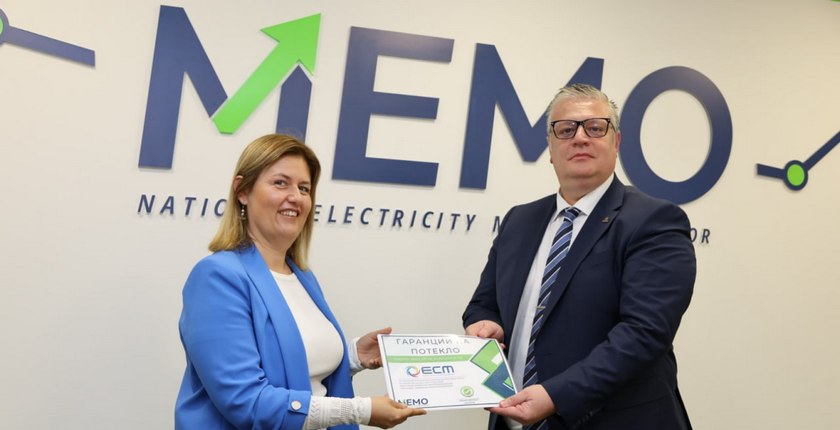
North Macedonia’s National Electricity Market Operator MEMO has issued the country’s first guarantees of origin (GOs), certificates verifying that electricity is generated from renewable energy sources. The guarantees were awarded to state power utility Elektrani na Severna Makedonija (ESM) for electricity produced from hydropower. With this step, North Macedonia joins virtually all other countries in the region, which already have GO schemes in place.

The issuance of the first guarantees of origin represents a step forward in the implementation of the green transition in North Macedonia, in line with European standards and sustainable energy development goals, said Minister of Energy, Mining and Mineral Resources Sanja Božinovska, who handed over the GOs to ESM General Director Lazo Uzunčev.

Božinovska underlined that the GOs would help create a transparent and sustainable energy market in the country.

Earlier this year, MEMO adopted the rules for administering guarantees of origin for electricity in line with the Law on Energy, the guarantees of origin decree, and the standards of the Association of Issuing Bodies (AIB), a Brussels-based organization that standardizes GOs. The operator is responsible for managing the GO registry and issuing and revoking GOs.

MEMO’s GO rules will ensure full acceptance in the European market

The rules are also harmonized with the principles of the European Energy Certificate System (EECS) and will ensure full acceptance in the European market, MEMO said in a press release.

More companies are joining the GO registry

Zoran Gjorgjievski, MEMO’s CEO, said that a large number of other companies are already in the process of joining the GO registry. “As the responsible operator, we are actively working on issuing, recording, and recognizing them,” he stressed.

The management of ESM emphasized that the company is continuing its efforts to increase electricity production from renewable sources, including the construction of new wind farms and photovoltaic power plants, for which it also plans to obtain GOs.

by in News

North Macedonia aims for market coupling with EU by first quarter of 2027

North Macedonia plans to finish market coupling with Greece and the European Union in the fourth quarter of 2026 or in the first quarter of 2027, according to Minister of Energy, Mining and Mineral Resources Sanja Božinovska.

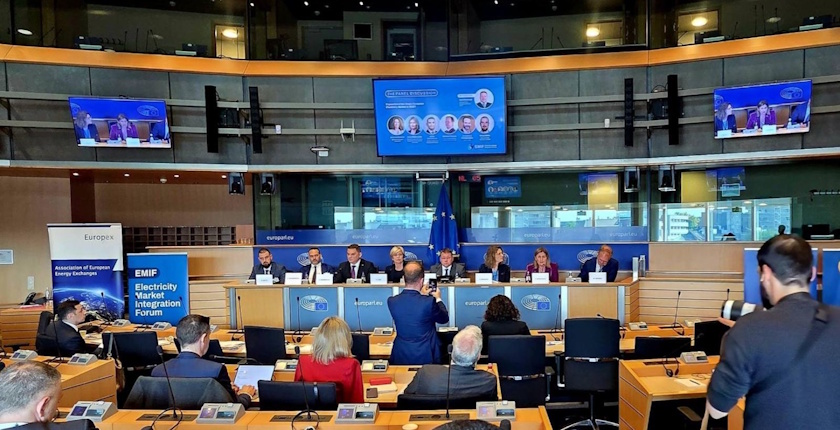
“The integration of the North Macedonian organized electricity market into the Single European Market is of strategic importance for the country,” Sanja Božinovska stressed during the second edition of the Electricity Market Integration Forum – Taking Implicit Electricity Market Coupling Beyond EU Borders, held at the European Parliament in Brussels.

The coupling, in her words, would increase market liquidity and secure competitive prices and greater security of supply. It will directly impact economic stability and predictability, Božinovska added.

Additionally, the minister noted that integration with the European market could provide protection from the financial effects of the EU’s Carbon Border Adjustment Mechanism (CBAM), which would bring significant economic benefits for North Macedonian companies.

The market coupling process began in 2017-2018

She recalled that the market coupling process began back in 2017-2018, adding it is now in a delicate phase, focusing on the transposition of EU legislation and the implementation of the market coupling operator implementation plan (MCO IP) under the jurisdiction of the European Union Agency for the Cooperation of Energy Regulators (ACER).

“Due to uncertainties surrounding the impact of CBAM, it was imperative for market coupling to occur before 2026. Although we are now beyond that timeframe, it is realistic to aim for coupling between the fourth quarter of 2026 and the first quarter of 2027,” Božinovska noted.

During the panel session dedicated to the expansion of the European electricity market by 2026, Božinovska engaged in discussions with high-level representatives from the European Parliament, ACER, regional power exchanges, and institutions from the Western Balkans.

Of note, a week ago North Macedonia adopted the Law on Energy.

It will bring numerous benefits including a liberalized electricity market ensuring fairer prices and more choice for consumers, the introduction of smart meters for more accurate consumption measurement, and daily insight for consumers into their electricity usage, according to the Government of North Macedonia.

Artur Lorkowski, director of the Energy Commnunity Secreatariat , Sanja Božinovska i Zoran Gjorgievski, MEMO CEO
by in News

North Macedonia adopts Law on Energy

With a majority of votes, 62 out of 120, the Assembly of North Macedonia adopted the Law on Energy. The government’s representatives say it is systemic, comprehensive, and reform-oriented legislation laying the foundation for the country’s new energy policy. The act aligns the country’s legal framework with the European Union.

The new Law on Energy will bring numerous benefits to the country and its energy future, according to the Government of North Macedonia. They include a liberalized, transparent and competitive electricity market ensuring fairer prices and more choice for consumers, the introduction of smart meters for more accurate consumption measurement, and daily insight for consumers into their electricity usage.

The law is compatible with the reform agenda for the Western Balkans and with EU directives. Its pillars are:

  • A significant increase in the share of renewable energy sources in final consumption;
  • Greater energy efficiency and reduction of losses;
  • An open energy market in which citizens become active participants – producers, sellers, and members of energy communities.

The law supports new concepts such as citizen energy communities and demand-side management models, increased market liquidity, and broader access to energy sources for the economy, along with equal investment opportunities.

It addresses infrastructure stability through investments in storage systems and their digitalization, as well as providing a stable, transparent, and predictable framework for domestic and foreign investors. The law strengthens the capacities of regulators and operators, creates conditions for greater integration with regional and European energy networks, and enables new investments in solar, wind and other renewable sources, district heating, gasification, storage and digitalized grid infrastructure.

Božinovska: New law paving way for energy sovereignty for Macedonia

Minister of Energy, Mining and Mineral Resources Sanja Božinovska said in parliament ahead of the vote that the Law on Energy is the foundation of the national transformation toward a clean, sustainable and fair energy future.

„This is a law that creates opportunities but also demands responsibility. Energy is not just the engine of the economy; it is the basis for a quality life. With this law, we are opening the door to an energy sovereign, green and European Macedonia. This law is more than a normative act – it is a signpost for the future. A chance we must not miss,” she said.

Transparent, predictable investment framework

The law includes provisions for protecting vulnerable groups, supporting the fight against energy poverty and ensuring fair access to energy for all.

According to the ministry, the law provides a stable, transparent and predictable framework for domestic and foreign investors.

All EU energy directives have been implemented, said President of the Energy, Water Services and Municipal Waste Management Services Regulatory Commission (ERC or RKE) Marko Bislimoski. Of note, yesterday he spoke at the Belgrade Energy Forum – BEF 2025, organized by Balkan Green Energy News.

The drafting process involved institutions, experts, the business community, operators and the national regulator. A total of 61 amendments were adopted.

Unlike the ruling majority, the Left (Levica), an opposition party, claimed the Law on Energy does not protect consumers or national interests. Out of 11 amendments that it submitted, only four were adopted. They include provisions aimed at protecting consumers from unrealistically high electricity bills.

  • 1
  • 2