
City of Pirot in Serbia plans solar power plant on remediated unsanitary landfill
The City of Pirot plans to build a solar power plant on the site of a former unsanitary landfill when it is remediated. The move would strengthen its leadership position in Serbia regarding the use of renewable energy and environmental protection.
In 2013, Pirot opened a regional sanitary landfill, which cost EUR 11 million. It enabled the local authority to shut down an unsanitary landfill on the right bank of the Nišava river. However, the land still hasn’t been remediated and reclaimed.
Now the Ministry of Environmental Protection of Serbia has approved EUR 2 million for the works, Serbia’s public broadcaster RTS reported. With the completion of remediation, the possibility opens up for the six hectares of land in the country’s southeast to be repurposed.
Solar panels would be installed on three hectares
Mayor of Pirot Vladan Vasić said that the documentation for the remediation of the landfill is complete. The city intends to add EUR 500,000 to the EUR 2 million received from the government and complete the first phase. He plans for the second phase to be approved next year, to solve the decades-long issue in an environmentally acceptable way.
Vasić revealed one and a half to two hectares would be allocated for businesses, adding that the purpose of the remaining land is still under consideration.
A photovoltaic plant would be the most cost-effective solution
One idea is to install a 3 MW solar power plant that would supply electricity to the city authority, he pointed out.
Other ideas are a football stadium, a golf course, afforestation, and a park. The photovoltaic plant would be the most cost-effective solution, Vasić added.
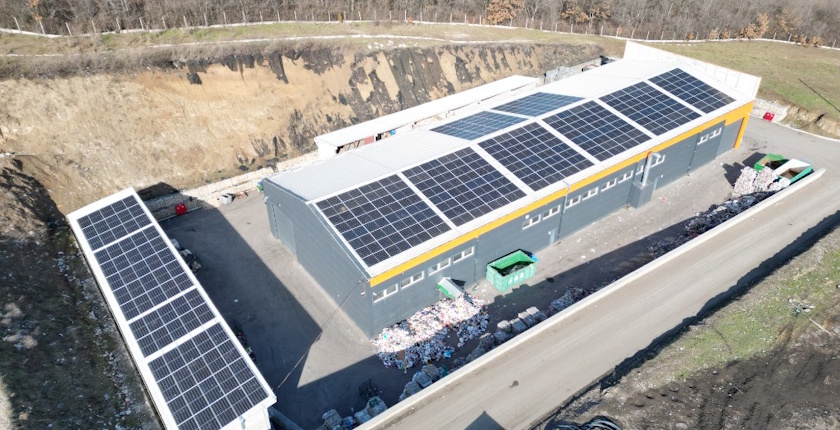
Of note, there is a solar power plant on the roof of the building of public waste utility Regional Landfill Pirot. The 150 kW facility began operating in August last year. The city officials claim it is the largest PV plant in Pirot county.
The first cooperative solar power plants in Serbia are located on the Stara Planina mountain
Pirot is also developing a regional waste management center. In 2022, the city signed a contract for the construction of the second landfill body, a composting plant, and a biogas facility.
The additional segment would extend the operation of the sanitary landfill by 20 years, while the biogas collection system would enable the collection of methane from the landfill.
A system for treating construction waste to enable material recycling is planned as well.
As for solar energy, not far from the city, the Stara Planina mountain is the home of the first cooperative solar power plants in Serbia. The local authority participated in the project. They were put into operation last year.
In mid-2023, PV projects were under development for over 125 MW in total capacity on the city’s territory. Of note, this year Pirot became the 13th local authority to join the Clean Air Regions Initiative, initiated by the Energy Community Secretariat.
