by in News

North Macedonia raising capacity threshold for prosumers, speeding up permitting

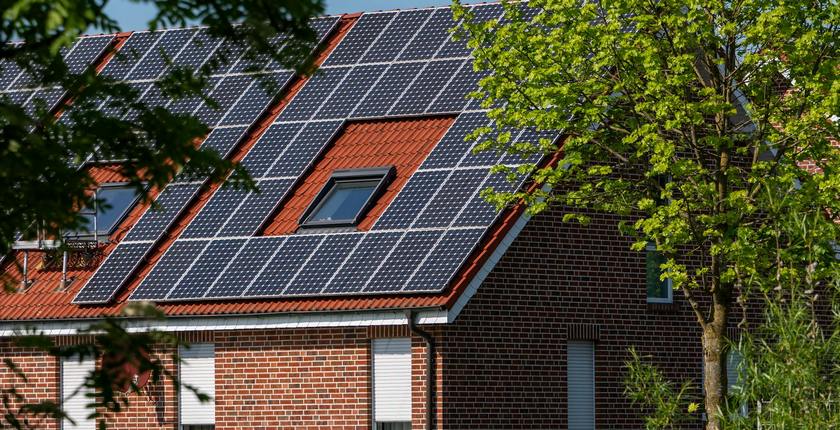
North Macedonia has prepared legislative changes to increase the capacity threshold for prosumers and speed up rooftop solar permitting and grid connection.

Under the proposed amendments to the Law on Energy Efficiency, the capacity threshold for rooftop solar installations would be increased to 10 kilowatts (kW) for households and 70 kW for legal entities, according to a statement from the Ministry of Energy, Mining and Mineral Resources. The current threshold is 6 kW for households and 40 kW for firms.

The threshold should go up to 10 kW for homes and 70 kW for businesses

The amendments should also introduce a one-month deadline for the permitting procedure for installing solar equipment with a capacity of up to 100 kW. This includes prosumers and energy communities, according to a draft law on renewable energy use.

According to the North Macedonian office of law firm CMS, the country’s parliament has already introduced amendments to the rulebook on renewable energy sources, increasing the capacity thresholds for both household and business prosumers, among other things.

One-month deadlines are proposed for rooftop solar permitting and grid connection

The ministry noted that a legal deadline for issuing permits for rooftop photovoltaics for prosumers is being introduced for the first time.

The same deadline is being proposed for grid connection: the distribution system operator would be required to connect the installation to the grid within one month of officially confirming that the submitted documentation is complete.

According to the proposed amendments, if connection to the requested location is not possible, the operator is obliged, within 15 days from the date of submission of the connection request, to notify the applicant in writing and propose an alternative connection point.

Installing solar collectors for hot water in new public buildings will become mandatory

The proposed legislative changes will also make the installation of solar collectors for hot water mandatory in new public buildings, or in cases of significant reconstruction of existing ones, if technically and economically feasible.

Renewable energy sources account for more than half of North Macedonia’s total generation capacity, with over 616 MW of new renewables capacity installed in the past two years, DW reported, citing data from the country’s Energy, Water Services and Municipal Waste Management Services Regulatory Commission (ERC or RKE).
by in News

Grants for public institutions’ solar projects in Romania top EUR 500 million

The Romanian Ministry of Energy has signed 29 more grants to public entities for investments in solar power plants for self-consumption, bringing the total number of projects under the program to 1,046. The latest round of grants is worth EUR 11.3 million, putting the total sum approved so far at EUR 502 million.

The 29 grants, financed from the European Union’s Modernisation Fund, will help build solar power plants with a total installed capacity of 9.13 MW at schools, hospitals, city halls, and other institutions across Romania. It brings the total installed capacity supported under the program to over 403 MW, according to a press release from the Ministry of Energy.

The latest batch of projects puts the total planned capacity at over 403 MW

In many cases, installed renewable capacities cover up to 70% of the energy needs of public institutions, the ministry noted.

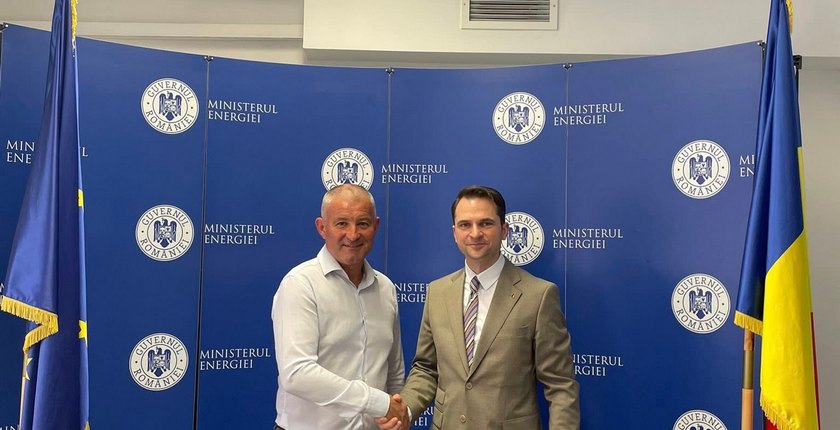
Romania’s outgoing Minister of Energy Sebastian Burduja hailed the program as a “paradigm shift,” noting that Romania was already in a new energy era, with local communities no longer just consumers, but active participants.

“Over the past two years, the Ministry of Energy has consistently provided support to local public authorities that understood the importance of investing in energy production for their own consumption. We have made funds available, simplified procedures, and worked side by side with beneficiaries so that the projects move forward quickly,” Burduja stated in a Facebook post.

The latest round of contracts covers public entities in 18 counties across the country: Arad, Argeș, Bacău, Brăila, Călărași, Constanța, Dâmbovița, Galați, Brașov, Gorj, Hunedoara, Maramureș, Mehedinți, Olt, Sibiu, Suceava, Teleorman, and Timiș.

The number of contracts has increased from 633 in March

In March, the ministry said it had signed 633 contracts, worth a combined EUR 339 million, of which EUR 294 million was from the Modernisation Fund. Total planned capacity at the time was 237.4 MW.

by in News

Federation of BiH launches grants program for prosumers

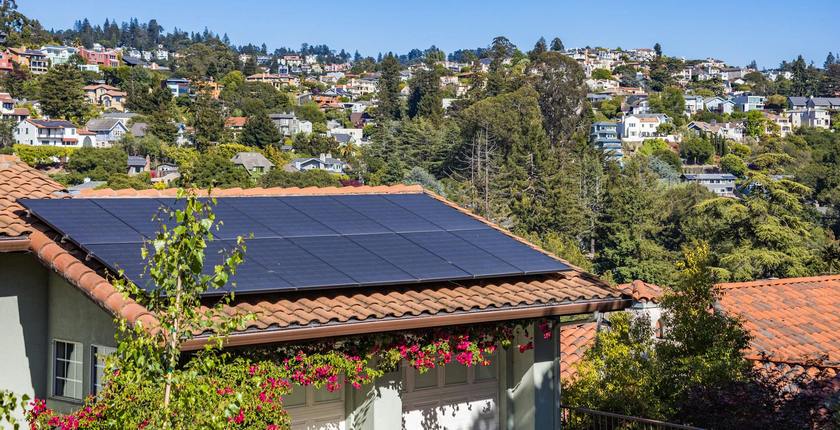
The Federation of BiH, one of the two entities constituting Bosnia and Herzegovina, has launched a grants program to co-finance the installation of rooftop solar power plants, expected to cover around 500 households a year and lead to an increase of 4.2 GWh in renewable electricity production.

Operator for Renewable Energy Sources and Efficient Cogeneration – Operator za OIEiEK estimates that the average installed capacity of the solar power plants will be 6 kW, and that the grants will help reduce greenhouse gas emissions by 3,800 tons a year.

The program will be funded from renewable energy surcharges

The program will be funded from renewable energy surcharges paid through electricity bills by all consumers in FBiH. Grants will be approved for two categories of applicants. The first one is vulnerable households whose annual consumption exceeds 3,500 kWh. The second covers those who consume more than 5,500 kWh a year and whose connection power is equal to or less than the requested installed capacity of the solar installation, according to the decision of the Operator za OIEiEK.

The maximum grant amount per applicant is BAM 7,000 (EUR 3,580), or up to 60% of the investment cost for users in the second category.

Damir Miljević: People in extreme energy poverty will get solar power plants for free

Although the budget and the anticipated scope of the program are modest, one positive aspect is that part of it is intended to fully cover the cost of PV installations for people in extreme energy poverty. They will receive a rooftop system free of charge, eliminating, partially but permanently, some of the concerns about financing their energy needs, according to Damir Miljević, a member of the Board of the Center for Sustainable Energy Transition (RESET), a BiH think tank.

Prosumers were introduced in the FBiH legislation two years ago, with the passage of a set of reform energy bills, including the Law on the Use of Renewable Energy Sources and Efficient Cogeneration.

At the national level in Bosnia and Herzegovina, prosumer regulations have not been adopted yet. According to some estimates, the country could cover half of its electricity consumption by installing solar panels on about a million roofs.