by in News

CWP Europe invests in rooftop solar plant for Henkel Serbia

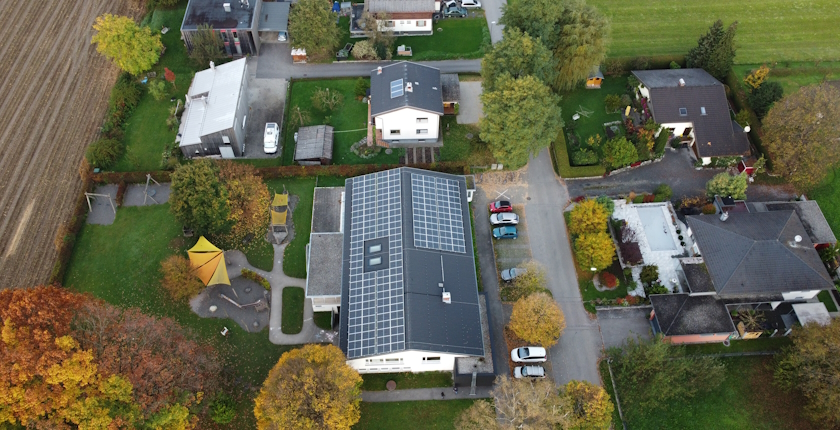
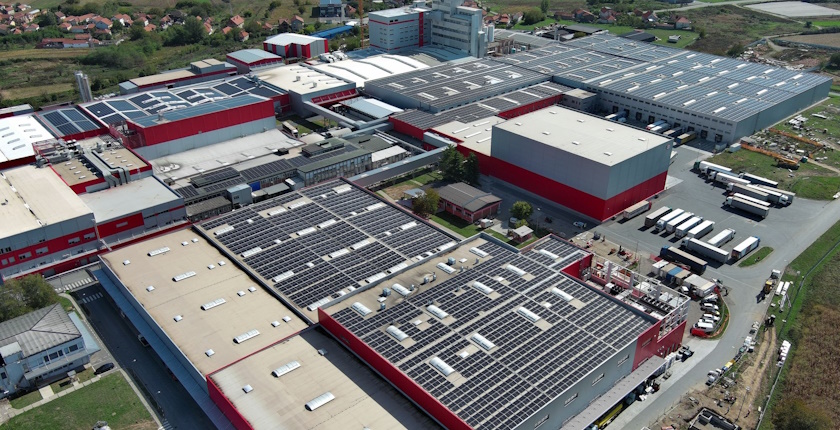
In partnership with Resalta, CWP Europe led the investment in a rooftop photovoltaic system of 6 MW in peak capacity in Kruševac in Serbia. They completed the project under an innovative ESCO model, contributing to the decarbonization efforts of the manufacturer of detergents and other chemical products.

CWP Europe has successfully completed and commissioned a rooftop solar power plant for Henkel Serbia’s facility in Kruševac. The facility has 6 MW in peak capacity. Developed in partnership with Resalta and financed by UniCreditBank, the project was realized under an innovative ESCO (energy services company) model, with CWP Europe as the key investor.

Now fully operational, the photovoltaic plant is producing an estimated 6,278 MWh of green electricity annually, meeting 21% of the facility’s total energy consumption. The solar power plant will ensure optimal performance for the next 15 years.

The new PV system’s operations prevent an equivalent of 5,857 tons of carbon dioxide emissions per year, according to the update.

Special investment in distributed generation segment

While CWP Europe’s core focus remains on large-scale renewable energy assets across the region, this rooftop project represents a targeted engagement in the distributed generation space – undertaken to support a leading industrial partner in advancing its decarbonization and sustainability objectives.

With a proven track record in developing impactful renewable energy projects, the company is proud to have brought its expertise and investment capacity to a project that sets a new benchmark for industrial decarbonization in Serbia, the statement reads.

CWP Europe has more than 10 GW in its project pipeline

CWP Europe is a leading renewable energy project development company in Southeast Europe. Over the past 17 years, CWP has invested in sustainable development and the energy transition, successfully developing the largest wind farms in the region including the largest wind farm in Europe – the 600 MW Fântânele-Cogealac project in Romania.

It is currently developing over 10 GW of renewable energy project capacity. CWP Europe is a joint venture between CWP Global, a leading global renewable energy company, and Mercuria Energy Trading, one of the world’s largest independent energy traders, with over USD 140 billion in revenue.

[wpcc-iframe title=”CWP x Henkel Serbia – 6 MWp Rooftop Solar Plant Cutting 6,000 Tons CO₂ Annually” width=”500″ height=”281″ src=”https://www.youtube.com/embed/5nY4-zq5ckc?feature=oembed” frameborder=”0″ allow=”accelerometer; autoplay; clipboard-write; encrypted-media; gyroscope; picture-in-picture; web-share” referrerpolicy=”strict-origin-when-cross-origin” allowfullscreen=””]
by in News

CWP Europe completes rooftop PV plant for Henkel Serbia

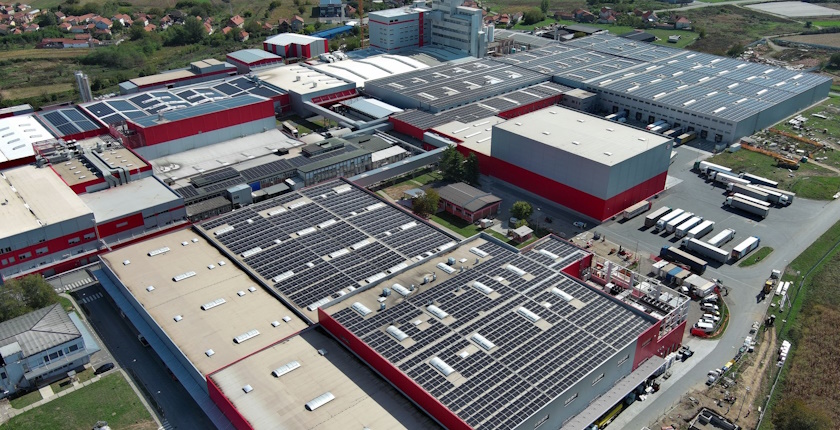
In partnership with Resalta, CWP Europe led the investment in a rooftop photovoltaic system of 6 MW in peak capacity in Kruševac in Serbia. They completed the project under an innovative ESCO model, contributing to the decarbonization efforts of the manufacturer of detergents and other chemical products.

CWP Europe has successfully completed and commissioned a rooftop solar power plant for Henkel Serbia’s facility in Kruševac. The facility has 6 MW in peak capacity. Developed in partnership with Resalta and financed by UniCreditBank, the project was realized under an innovative ESCO (energy services company) model, with CWP Europe as the key investor.

Now fully operational, the photovoltaic plant is producing an estimated 6,278 MWh of green electricity annually, meeting 21% of the facility’s total energy consumption. The solar power plant will ensure optimal performance for the next 15 years.

The new PV system’s operations prevent an equivalent of 5,857 tons of carbon dioxide emissions per year, according to the update.

Special investment in distributed generation segment

While CWP Europe’s core focus remains on large-scale renewable energy assets across the region, this rooftop project represents a targeted engagement in the distributed generation space – undertaken to support a leading industrial partner in advancing its decarbonization and sustainability objectives.

With a proven track record in developing impactful renewable energy projects, the company is proud to have brought its expertise and investment capacity to a project that sets a new benchmark for industrial decarbonization in Serbia, the statement reads.

CWP Europe has more than 10 GW in its project pipeline

CWP Europe is a leading renewable energy project development company in Southeast Europe. Over the past 17 years, CWP has invested in sustainable development and the energy transition, successfully developing the largest wind farms in the region including the largest wind farm in Europe – the 600 MW Fântânele-Cogealac project in Romania.

It is currently developing over 10 GW of renewable energy project capacity. CWP Europe is a joint venture between CWP Global, a leading global renewable energy company, and Mercuria Energy Trading, one of the world’s largest independent energy traders, with over USD 140 billion in revenue.

[wpcc-iframe title=”CWP x Henkel Serbia – 6 MWp Rooftop Solar Plant Cutting 6,000 Tons CO₂ Annually” width=”500″ height=”281″ src=”https://www.youtube.com/embed/5nY4-zq5ckc?feature=oembed” frameborder=”0″ allow=”accelerometer; autoplay; clipboard-write; encrypted-media; gyroscope; picture-in-picture; web-share” referrerpolicy=”strict-origin-when-cross-origin” allowfullscreen=””]
by in News

North Macedonia’s draft law envisages renewable energy auctions for CfDs

North Macedonia drafted the Law on the Use of Energy from Renewable Sources to facilitate a decrease in fossil fuel consumption and a rise in the share of green energy. The legislation introduces market premiums under two-way contracts for difference (CfDs), which would be approved through renewable energy auctions. It also regulates net metering and net billing for prosumers and defines renewable energy communities.

The Ministry of Energy, Mining and Minerals of North Macedonia called on citizens, experts and stakeholders to submit opinions and proposals for the draft Law on the Use of Energy from Renewable Sources. It will regulate the segment separately for the first time, “following the example of a large number of countries in the region and the EU,” the statement adds.

The public debate lasts until August 30. According to the ministry, the most significant novelty is the two-way contract for difference (CfD). It is defined in Macedonian as contract for market settlement of the price difference. The bill envisages awarding such market premiums through renewable energy auctions.

It is a mechanism that guarantees financial stability for renewable energy producers and protects consumers from extreme price fluctuations, the ministry argued. The draft is fully aligned with the European Union’s energy legislation including the Renewable Energy Directive (RED3), the update adds.

Basis for renewables deployment in heating, cooling, transportation

The proposed measures aim to lower the use of fossil fuels and grow the share of renewables in gross energy consumption, the ministry added. They facilitate support for long-term investments and faster deployment of renewable energy in heating, cooling and transportation, it underscored.

Guarantees of origin of electricity are included in the bill, together with a framework for international cooperation and energy markets.

The draft establishes the basis for the establishment of renewable energy communities of citizens and companies and other legal entities such as local authorities. The scope also involves net metering and net billing for prosumers – “consumers-producers.”

Multiapartment structures can become prosumers with units up to 50 kW

While the ministry earlier said it would raise the upper capacity limit for prosumers in the segment of households to 10 kW, the ceiling in the draft law is 10.8 kW for individual homes and 50 kW for multiapartment structures. The draft also introduces the collective prosumer, a group of citizens and commercial entities residing in the same building or apartment complex.

Prosumers with units up to 16 kW would be in the net metering mechanism. Net billing is for 16 kW to 50 kW, and larger facilities are envisaged for a commercial supply scheme.

Notably, prosumers operating power plants of over 300 kW are obligated to cover the balancing expenses, the text reads.

by in News

North Macedonia raising capacity threshold for prosumers, speeding up permitting

North Macedonia has prepared legislative changes to increase the capacity threshold for prosumers and speed up rooftop solar permitting and grid connection.

Under the proposed amendments to the Law on Energy Efficiency, the capacity threshold for rooftop solar installations would be increased to 10 kilowatts (kW) for households and 70 kW for legal entities, according to a statement from the Ministry of Energy, Mining and Mineral Resources. The current threshold is 6 kW for households and 40 kW for firms.

The threshold should go up to 10 kW for homes and 70 kW for businesses

The amendments should also introduce a one-month deadline for the permitting procedure for installing solar equipment with a capacity of up to 100 kW. This includes prosumers and energy communities, according to a draft law on renewable energy use.

According to the North Macedonian office of law firm CMS, the country’s parliament has already introduced amendments to the rulebook on renewable energy sources, increasing the capacity thresholds for both household and business prosumers, among other things.

One-month deadlines are proposed for rooftop solar permitting and grid connection

The ministry noted that a legal deadline for issuing permits for rooftop photovoltaics for prosumers is being introduced for the first time.

The same deadline is being proposed for grid connection: the distribution system operator would be required to connect the installation to the grid within one month of officially confirming that the submitted documentation is complete.

According to the proposed amendments, if connection to the requested location is not possible, the operator is obliged, within 15 days from the date of submission of the connection request, to notify the applicant in writing and propose an alternative connection point.

Installing solar collectors for hot water in new public buildings will become mandatory

The proposed legislative changes will also make the installation of solar collectors for hot water mandatory in new public buildings, or in cases of significant reconstruction of existing ones, if technically and economically feasible.

Renewable energy sources account for more than half of North Macedonia’s total generation capacity, with over 616 MW of new renewables capacity installed in the past two years, DW reported, citing data from the country’s Energy, Water Services and Municipal Waste Management Services Regulatory Commission (ERC or RKE).

by in News

Price of residential battery storage in Europe drops over 50% in two years

The mature residential battery storage markets in Europe are stabilizing, while policy-driven and emerging markets are gaining traction, according to EUPD Research. Its new report showed prices of home batteries slumped more than 50% between the first half of 2023 and the first half of this year.

The European residential battery storage market has remained resilient in 2025, with notable growth across mid-sized and emerging markets, according to EUPD Research’s latest Electrical Energy Storage (EES) Report. It tracked systems of up to 20 kWh.

While mature markets such as Germany and Italy began the year with more subdued figures, the overall market trajectory points to continued expansion, with over one million new residential storage systems expected to be installed across Europe this year. Although the phaseout of subsidies and adjustments to support schemes led to a weaker start in top markets, the outlook for the second half is more optimistic, the firm said.

Home batteries are overwhelmingly intended for storing electricity from household photovoltaic systems, usually installed on roofs, balconies or on canopies next to houses.

Dynamic electricity tariffs, self-consumption fueling residential battery storage push

Increasing interest in dynamic electricity tariffs and enhanced self-consumption is expected to stimulate demand for residential market storage. Mature markets are stabilizing, while policy-driven and emerging markets are gaining traction, the update showed.

The sector continues to benefit from falling battery prices. A significant drop in lithium prices, combined with intensified competition due to the influx of new market players in the past two years, has accelerated price erosion and reduced overall system costs.

The data provider’s price index more than halved between the first half of 2023 and the first half of this year. The current average selling price of residential battery storage, in the second half of 2025, came in at EUR 711 per kWh. It is 46.6% lower than in the first half of 2023.

The segment of newly installed residential battery storage in Germany is in a moderate decline

Despite a moderate decline in residential battery installations during the first half of 2025, Germany remains the strongest market in Europe, with demand expected to stay resilient throughout the year. The projected 6% year-on-year decline is mainly due to slower deployment of photovoltaics, reduced regional incentives, and a growing shift in focus toward commercial and industrial (C&I) and utility-scale storage.

Alongside Italy, Germany is estimated to account for the lion’s share of new residential storage capacity additions through 2028, despite Italy’s current slowdown amid the gradual weakening of the Superbonus scheme.

This year’s residential battery storage additions in Europe’s largest economy are seen at 4.7 GWh, compared to a projected 6.04 GW in home PV installations of up to 20 kW. Italy accounts for an expected 1.24 GWh and 1.44 GW, respectively.

Steady, robust growth in several markets

Markets such as Austria, France, the Netherlands, and the Czech Republic are demonstrating steady and robust growth, driven by rising electricity costs since 2023, increasing PV adoption, stable policy support, and increased awareness of the benefits of energy independence.

Sweden, bolstered by tax rebates and a national push toward energy self-sufficiency, has seen a record number of PV systems being installed with residential storage.

As for equipment providers, BYD maintained its top position in 2024, capturing a 20% market share, which is expected to reach 21% this year.

by in News

Over 20,000 prosumer units connected in Greece in last 18 months

Greece’s distribution system operator HEDNO added more than 20,000 prosumers in the past year and a half, although the new net billing program faces delays.

Last year the government in Athens formally ended the net metering scheme and enacted net billing, aligning with the European Union’s regulations. Any aspiring prosumer with an existing application can switch to the new mechanism for free. The connection charge is EUR 370 per unit.

In the net billing mechanism, the compensation for the prosumer for the electricity delivered to the grid is based on the hourly wholesale price of electricity, instead of a fixed tariff. Projects are limited to a maximum 10.8 kW for households and 100 kW for businesses and energy communities. Virtual billing is also allowed, meaning that production and consumption can be in different locations.

Total capacity almost at 1 GW

According to data from the Hellenic Electricity Distribution Network Operator (HEDNO or DEDDIE), more than 20,000 individual prosumer units have been connected to the grid over the last 18 months, with the majority being connected under net metering.

It brought the overall number of prosumer installations to 35,312, with a total capacity of 995 MW, according to the update.

HEDNO also said 705 applications were in the final stages of the licensing process.

Limited interest from suppliers and aggregators

Despite high interest, progress in adding units within the net billing scheme has been slow. Only two electricity suppliers currently provide such contracts to prosumers and just one of them includes businesses, Energypress reported.

There is limited interest among aggregators to represent corporate net billing installations in the market. As for household units, the Renewable Energy Sources Operator and Guarantees of Origin (DAPEEP) provides the service free of charge.

Market participants are urging improvements in the relevant ministerial decree on net billing, for things to move forward. One of them would be to simplify contracts.

by in News

Serbia’s EPS starts trial operation of its Petka PV plant on coal tailings dump

Serbian state-owned power utility Elektroprivreda Srbije, EPS, connected its first larger photovoltaic unit to the grid. The new solar power plant is called Petka and it has a 10 MW grid connection. It is located in the Kostolac coal mining complex east of Belgrade, next to a wind park that is nearing completion. Each new megawatt is important, according to Minister of Mining and Energy Dubravka Đedović Handanović and the company’s Chief Executive Officer Dušan Živković.

After many years of planning and launching numerous solar power projects, EPS launched the trial operation of its first larger facility of the kind. The Petka PV system has 10 MW in connection capacity. It is located on a former tailings dump of the Ćirikovac open pit coal mine in the Kostolac complex.

“It is another important pioneering milestone in our energy sector. We are now producing clean, green energy on the site of an old mining dump, which is a turning point and the beginning of the energy transition of Elektroprivreda Srbije and an example how we can use old energy for new energy,” Minister of Mining and Energy Dubravka Đedović Handanović stated.

Of note, EPS recently installed solar panels of 948 kW total on the buildings within the Termoelektrana Nikola Tesla A (TENT A) coal power plant and of TENT’s rail transportation arm. Another photovoltaic system is on the Lazići dam in Zaovine, belonging to the state-owned utility’s Bajina Bašta hydropower plant.

EPS to connect adjacent wind park Kostolac to grid next month

There are no big or small projects, as every megawatt is important for Serbia’s energy security and it means greater security, Đedović Handanović pointed out.

“In addition to the Petka solar power plant, wind generators of EPS’s first wind park stand tall today in the mining area. They are also built mainly on recultivated tailings dumps. We expect the connection to the grid in August and a testing phase, when the blades will start spinning. That way we will strengthen our electricity system here in Kostolac by 76 MW of green energy,” the minister said.

The ministry’s priorities are the projects for the Bistrica pumped storage hydropower plant and battery-backed solar power plants of 1 GW in total connection capacity

She recalled that the strategic goal of the Government of Serbia is defined by the Energy Development Strategy, to reach a 45% share of renewable energy sources by 2030.

“We have much more to do and put in maximum efforts, because ahead of us are strategic projects which will change Serbia’s electricity bloodflow to a significant extent. They primarily entail the construction of the Bistrica pumped storage hydropower plant and the project for solar power plants of 1 GW with battery storage units. Energy investments necessary in the next ten years are estimated at about EUR 14 billion. Therefore, we must make up for all the delays and be up to the task, to secure energy tranquility for the future generations”, Đedović Handanović added.

EPS continuing with other green projects in its coal mining areas

EPS’s Chief Executive Officer Dušan Živković said each new megawatt is important for the company and the electricity system, especially in tropical days, when electricity demand is getting higher and higher.

“Not only are we strengthening our green portfolio that way, but also the reliability of the entire energy system, while citizens and companies have a secure supply, the same as until now. Projects like this one are concrete steps toward decarbonization and a sustainable energy development, which are also our goals for the decades to come. We will continue with the similar projects both here in Kostolac and also at dumping and landfilling sites in other parts of EPS,” he asserted.

Petka is one of the first PV facilities in the Western Balkans on former coal exploitation locations.

In addition, the construction of the Kostolac B3 coal plant in the same complex was finished last year. It was EPS’s first big energy production system in more than three decades.

by in News

Impact Report 2024: GGF grows direct lending, committed to energy transition, energy security

In its Impact Report 2024, the Green for Growth Fund outlined how it powers the green transition across Southeast Europe, the Caucasus and beyond – from repurposing coal sites and decarbonizing industries to strengthening energy security and building climate resilience. It ended last year with EUR 1.09 billion in assets under management and an outstanding investment portfolio of EUR 1.03 billion.

Luxembourg-based GGF has become one of the largest green blended-finance funds. It marked its 15th anniversary in 2024 by passing the EUR 1 billion mark in its portfolio.

“To date, we have delivered over EUR 2 billion in green finance through 70+ active financial institutions, companies, and infrastructure projects. This is impact on a systematic level and reflects the dedication of our partners, teams, and investors. We delivered many landmark projects as we continue to grow our direct lending,” the fund said in its 2024 Impact Report: Breaking the billion for lasting green impact.

GGF highlighted its role in transforming legacy energy systems into clean energy sites in North Macedonia. “We are also investing in corporate decarbonization across resource-intensive sectors in Turkey, including the country’s second-largest retail chain. Working with our financial institution partners, Ukraine’s energy security – and the security of the wider region – remains our focus,” the update reads.

Driving the energy transition and strengthening energy security is an urgent task, the fund said and stressed that its commitment remains strong. It ended 2024 with EUR 1.09 billion in assets under management and an outstanding investment portfolio of EUR 1.03 billion.

Energy-intensive sectors in region can decarbonize

The cumulative volume invested in partner lending institutions has reached EUR 2 billion. GGF is active in 18 countries.

“Passing the EUR 1 billion mark brings greater responsibility. We must continue to show the world that energy-intensive sectors in the region can decarbonize and renewables can lead to energy stability and security,” Chairperson of the Board of Directors Simon Gupta stated.

Headline figures include 1.4 million tons of carbon dioxide emission savings per year, which is the equivalent of taking 949,000 cars off the road. GGF supported 1.76 GW of renewable energy capacity through 2024, which is a whopping 36.4% more than one year before. Its activity resulted in 2.16 million cubic meters of water saved or treated per annum, which translates to 865 swimming pools.

GGF strategically manages impact through supporting measures that mitigate climate change and promote sustainable economic growth in Southeast Europe including Turkey, the European Eastern Neighborhood Region, and the Middle East and North Africa.

From coal pit to solar plant

Recognizing the need for energy independence, the Western Balkans are prioritizing projects that support the green energy transition, GGF pointed out.

“But financing is essential to help countries shift to domestic and clean renewable power. We arranged EUR 25.7 million in project financing for a 50 MW solar power generation project on the site of the former Oslomej coal mine in Kičevo, North Macedonia,” it added.

GGF arranged a EUR 25.7 million package for a PV plant on former coal mining land in the REK Oslomej complex in North Macedonia

The region’s reliance on legacy coal-fired power plants has resulted in outages, shortfalls, closures and volatile energy costs, GGF warned. “Governments recognize this and are increasingly prioritizing sustainable power projects aimed at reducing fossil fuel imports, lowering costs and stabilizing energy supply. To fulfill this ambitious agenda, they need support,” the fund stressed.

Oslomej is GGF’s second project finance transaction in North Macedonia, following its investment as a minority shareholder in the 36 MW Bogoslovec wind farm in 2021.

“Our investment in the Oslomej solar project underscores our commitment to North Macedonia’s green energy transition. By reducing reliance on fossil fuels and enhancing energy security, this project aligns with our mission to mitigate climate change and promote sustainable energy solutions,” said Fund Director for GGF at Finance in Motion Borislav Kostadinov.

Of note, he was one of the keynote speakers at this year’s edition of Belgrade Energy Forum (BEF 2025), organized by Balkan Green Energy News. Finance in Motion is GGF’s advisor.

Future-proofing Turkish businesses

The fund provided USD 26 million to Sanko Tekstil, one of the largest yarn producers in Turkey. It financed the full cost of a 20 MW rooftop photovoltaic system and partially covered the construction of a fiber recycling facility in Gaziantep.

Meanwhile, a USD 18 million investment into A101, the country’s second-largest retail chain, is decarbonizing store operations across 81 cities via a large-scale solar installation. It supported a 30 MW solar power project, expected to meet 10% of the company’s electricity needs.

Embedding sustainability

GGF complements its financing with advisory and capacity-building services, and risk-management support. It includes environmental and social due diligence, as well as monitoring, to keep projects aligned with international best practices.

The advisory and capacity-building activities in 2024 focused on embedding sustainability and advancing green finance across partner institutions.

A key highlight was the completion of four Deep Greening Mainstreaming projects, which supported financial institutions in developing strategies in the environmental, social, and governance (ESG) sector, green products, and internal sustainability structures.

by in News

GGF grows direct lending, committed to energy transition, energy security

In its Impact Report 2024, Green for Growth Fund outlined how it powers the green transition across Southeast Europe, the Caucasus and beyond – from repurposing coal sites and decarbonizing industries to strengthening energy security and building climate resilience. It ended last year with EUR 1.09 billion in assets under management and an outstanding investment portfolio of EUR 1.03 billion.

Luxembourg-based GGF has become one of the largest green blended-finance funds. It marked its 15th anniversary in 2024 by passing the EUR 1 billion mark in its portfolio.

“To date, we have delivered over EUR 2 billion in green finance through 70+ active financial institutions, companies, and infrastructure projects. This is impact on a systematic level and reflects the dedication of our partners, teams, and investors. We delivered many landmark projects as we continue to grow our direct lending,” the fund said in its 2024 Impact Report: Breaking the billion for lasting green impact.

GGF highlighted its role in transforming legacy energy systems into clean energy sites in North Macedonia. “We are also investing in corporate decarbonization across resource-intensive sectors in Turkey, including the country’s second-largest retail chain. Working with our financial institution partners, Ukraine’s energy security – and the security of the wider region – remains our focus,” the update reads.

Driving the energy transition and strengthening energy security is an urgent task, the fund said and stressed that its commitment remains strong. It ended 2024 with EUR 1.09 billion in assets under management and an outstanding investment portfolio of EUR 1.03 billion.

Energy-intensive sectors in region can decarbonize

The cumulative volume invested in partner lending institutions has reached EUR 2 billion. GGF is active in 18 countries.

“Passing the EUR 1 billion mark brings greater responsibility. We must continue to show the world that energy-intensive sectors in the region can decarbonize and renewables can lead to energy stability and security,” Chairperson of the Board of Directors Simon Gupta stated.

Headline figures include 1.4 million tons of carbon dioxide emission savings per year, which is the equivalent of taking 949,000 cars off the road. GGF supported 1.76 GW of renewable energy capacity through 2024, which is a whopping 36.4% more than one year before. Its activity resulted in 2.16 million cubic meters of water saved or treated per annum, which translates to 865 swimming pools.

GGF strategically manages impact through supporting measures that mitigate climate change and promote sustainable economic growth in Southeast Europe including Turkey, the European Eastern Neighborhood Region, and the Middle East and North Africa.

From coal pit to solar plant

Recognizing the need for energy independence, the Western Balkans are prioritizing projects that support the green energy transition, GGF pointed out.

“But financing is essential to help countries shift to domestic and clean renewable power. We arranged EUR 25.7 million in project financing for a 50 MW solar power generation project on the site of the former Oslomej coal mine in Kičevo, North Macedonia,” it added.

GGF arranged a EUR 25.7 million package for a PV plant on former coal mining land in the REK Oslomej complex in North Macedonia

The region’s reliance on legacy coal-fired power plants has resulted in outages, shortfalls, closures and volatile energy costs, GGF warned. “Governments recognize this and are increasingly prioritizing sustainable power projects aimed at reducing fossil fuel imports, lowering costs and stabilizing energy supply. To fulfill this ambitious agenda, they need support,” the fund stressed.

Oslomej is GGF’s second project finance transaction in North Macedonia, following its investment as a minority shareholder in the 36 MW Bogoslovec wind farm in 2021.

“Our investment in the Oslomej solar project underscores our commitment to North Macedonia’s green energy transition. By reducing reliance on fossil fuels and enhancing energy security, this project aligns with our mission to mitigate climate change and promote sustainable energy solutions,” said Fund Director for GGF at Finance in Motion Borislav Kostadinov.

Of note, he was one of the keynote speakers at this year’s edition of Belgrade Energy Forum (BEF 2025), organized by Balkan Green Energy News. Finance in Motion is GGF’s advisor.

Future-proofing Turkish businesses

The fund provided USD 26 million to Sanko Tekstil, one of the largest yarn producers in Turkey. It financed the full cost of a 20 MW rooftop photovoltaic system and partially covered the construction of a fiber recycling facility in Gaziantep.

Meanwhile, a USD 18 million investment into A101, the country’s second-largest retail chain, is decarbonizing store operations across 81 cities via a large-scale solar installation. It supported a 30 MW solar power project, expected to meet 10% of the company’s electricity needs.

Embedding sustainability

GGF complements its financing with advisory and capacity-building services, and risk-management support. It includes environmental and social due diligence, as well as monitoring, to keep projects aligned with international best practices.

The advisory and capacity-building activities in 2024 focused on embedding sustainability and advancing green finance across partner institutions.

A key highlight was the completion of four Deep Greening Mainstreaming projects, which supported financial institutions in developing strategies in the environmental, social, and governance (ESG) sector, green products, and internal sustainability structures.

by in News

Public call for funding for energy communities in Western Balkans

The Emilia-Romagna Region in northern Italy is supporting the creation and strengthening of renewable energy communities (RECs) in five countries in the Western Balkans. Ten projects can receive up to EUR 200,000 each, alongside technical and other support.

For-profit and non-profit entities in Albania, Bosnia and Herzegovina, Montenegro, North Macedonia and Serbia are eligible for an open call for the setup, empowerment and potential investment in renewable energy communities (RECs). Within a project funded by the European Commission’s Directorate-General for Regional and Urban Policy (DG Regio), the Emilia-Romagna Region invited expressions of interest.

The initiative is called Better Cohesion through Development of Energy Communities in the Western Balkans. The administration of the northern Italian region is conducting the activity with the support of its consortium ART-ER Attractiveness Research Territory. It includes universities, research institutions, the regional chamber of commerce, local authorities and other stakeholders.

Up to 10 projects, or two per country, would receive a maximum of EUR 200,000, together with support in financial planning and community governance, technical assistance and mentoring and access to a digital energy management tool.

Phase 2 is for existing renewable energy communities

Eligible applicants in phase 1 include municipalities, nongovernmental organizations, associations, cooperatives, small and medium-sized enterprises and informal citizen groups with the capacity to formalize. All project activities must be carried out on a not-for-profit basis, meaning any surplus must be reinvested in the community.

Cross-border projects with partners in Croatia, Greece, Slovenia and Italy are eligible

Phase 1 is for candidates looking to activate a new energy community from the ground up — from stakeholder mobilisation to legal establishment. Existing renewable energy communities can enter in phase 2, to assess feasibility and conduct small-scale energy infrastructure investment.

The Emilia-Romagna Region pointed out that the call is also open for cross-border projects with partners in Croatia, Greece, Slovenia, and Italy – the European Union member states within the EU Strategy for the Adriatic and Ionian Region (EUSAIR).

Second deadline to submit drafts is October 20

Applicants are encouraged to engage with the process even at an early or conceptual stage of their initiative, as technical support and guidance will be provided to strengthen and finalize proposals, according to the documentation. The call will consist of two rounds.

The first draft proposal submission deadline is July 16, followed by the negotiation phase until August 22 and a deadline for final proposals on September 8. The respective dates for the second round are October 20, November 21 and December 5.

Applicants that are not yet ready can participate in the second round. It is also the opportunity to fulfill the quota of two projects per country.

Members of RECs must be located near their projects

The Western Balkans are introducing the legal framework for citizen energy communities (CECs) and renewable energy communities (RECs).

Shareholders or members of a renewable energy community are located in the proximity of the renewable energy project that it owns and develops. They are natural persons, small and medium-sized enterprises and local authorities.

A private enterprise can participate in RECs if it isn’t its primary commercial or professional activity

RECs utilize technology for energy production only from renewable sources, encompassing electricity, gas and heat. Private enterprises can participate in such a community only if it isn’t their primary commercial or professional activity.

CECs are limited to electricity but they can use fossil fuels

Citizen energy communities gather individuals, local authorities including municipalities and small enterprises. They engage in generation, distribution, supply, consumption, aggregation, energy storage, energy efficiency services and charging services for electric vehicles. CECs can also provide other energy services to its members or shareholders.

They can operate on a national scale and have the flexibility to employ both fossil fuel– and renewables-based technologies, but solely for electricity production. The range of activities of CECs is broader than for RECs.