by in News

France, Slovenia sign declaration on nuclear energy

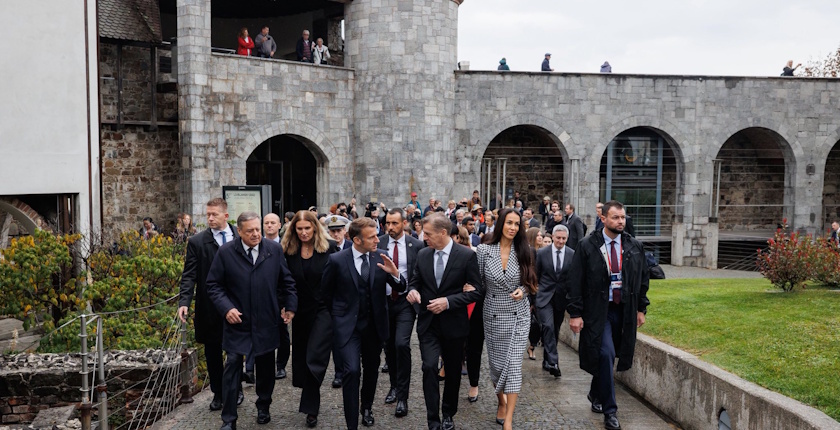
Slovenia and France have signed a declaration on cooperation in the nuclear energy sector. The document was signed during French President Emmanuel Macron’s visit to Slovenia.

Slovenia has been developing a project to build a new unit at the Krško nuclear power plant for several years. In early September, the project’s developer, GEN Energija, said that three reactor projects offered by EDF and Westinghouse had been assessed as technically feasible for the site of the future Krško 2 nuclear power plant.

According to the Slovenia Times, Macron and Slovenian Prime Minister Robert Golob committed to closer cooperation between the two countries, particularly in the economy and energy.

 Golob: France is a European nuclear power

The two countries signed an agreement on cooperation in the field of education and a declaration of intent to establish long-term cooperation in the nuclear energy sector.

According to Golob, France is a European nuclear power that is building its carbon-free future based on the development of this energy source. There is good cooperation between experts from the two countries, he recalled at a joint press conference in Slovenia’s capital, Ljubljana, stressing that the declaration opens up new opportunities.

Golob said he is convinced that between two equally qualified bidders for Krško 2, Slovenia will be able to choose the solution that best serves its long-term interests and that gives regional importance to the project.

The potential new power plant is not intended only for Slovenia

Krško 1 was built using US technology, but Golob also sees certain advantages in the French bidder, EDF. He revealed that the potential new power plant is not intended only for Slovenia, but would also enable Southeastern Europe to meet a significant portion of its electricity needs.

In October 2024, Slovenia canceled a referendum on building its second nuclear unit. However, GEN Energija continued to develop the project.

In July this year, the Ministry of Natural Resources and Spatial Planning initiated the preparation of a spatial plan for the second unit of the Krško nuclear power plant and invited the public to submit comments.
by in News

Slovenia begins preparations for closure of Velenje coal mine

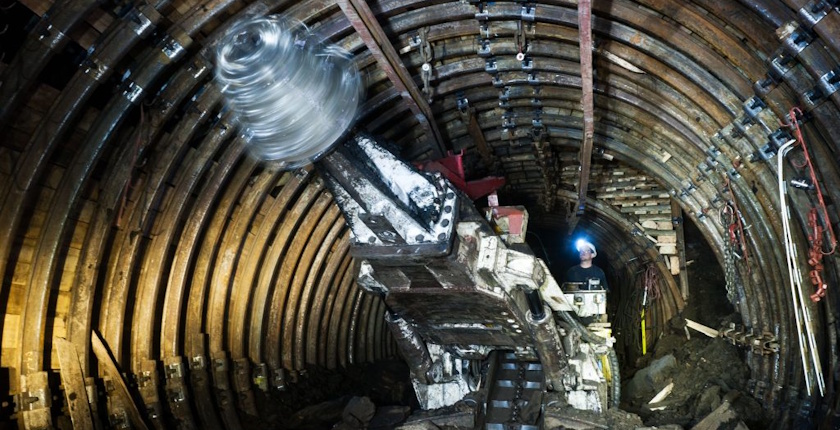
Slovenian Prime Minister Robert Golob visited the Savinja and Šalek region and the Velenje coal mine to present a draft law on the gradual closure of the mine. The event marked the beginning of a public debate on the document. Its implementation is estimated at EUR 1.1 billion. The trade union has raised concerns about the plan.

The Government of Slovenia has initiated a coal phaseout by assuming direct ownership of the Šoštanj coal power plant and coal mine Velenje from state-owned power utility Holding Slovenske Elektrarne (HSE). The first steps towards the closure of Termoelektrarna Šoštanj (TEŠ) have begun, and the decision makers have turned to Premogovnik Velenje.

Slovenia earlier closed the Trbovlje-Hrastnik mine in Zasavje. Zasavje and Savinja and Šalek (in Slovenian language: Savinjsko-šaleška regija – SAŠA) are two of 31 coal regions in the European Union.

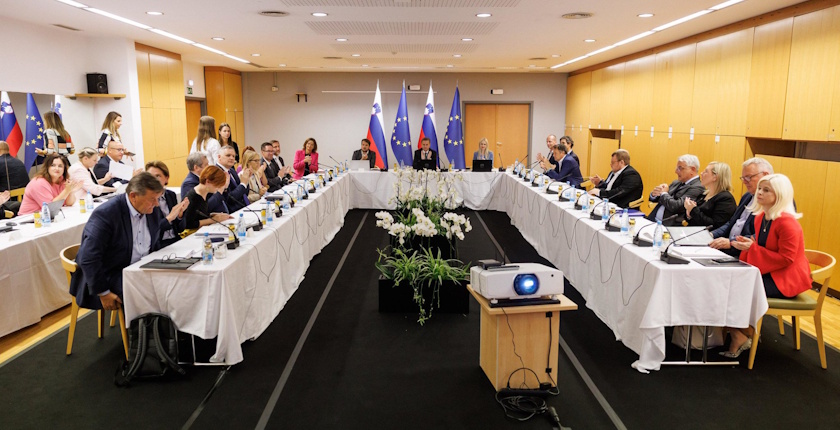
Prime Minister Robert Golob held several meetings with representatives of local authorities in the towns of Šoštanj and Velenje, as well as with the management of the mine, union representatives, and businesspeople.

Golob: We have to take care of you because you took care of us

During the discussions, he emphasized that after the first reading of the draft law in the government, the document would be analyzed by the Economic and Social Council.

“We have to take care of you because you took care of us for so many years,” Golob said, as quoted by his government.

The government will, in his words, strive to protect the social security and jobs of miners and their families. Its goal is to reduce the uncertainty linked with the closure of the coal mine and the restructuring of the region, the prime minister added.

Golob: We have become aware of the workers’ concerns

Golob told workers’ representatives and mine management that the law on the coal mine closure would ensure they have a safe future and security, according to the update. He informed them that the law should enter parliamentary procedure by the end of the year.

“I understand the employees’ concerns, which is why I also attended the meeting with them. We became aware of their concerns before the government adopted the law,” he stated.

Golob claimed that solutions were found for 80% of workers’ demands, and that they would be included in the bill. He expressed confidence that the remaining 20% would be resolved at the Economic and Social Council in the coming weeks.

Trade union: The law must define what happens with employees and associated companies

Minister of Natural Resources and Spatial Planning Jože Novak explained that the government agrees with the management of the coal mine on all key elements, while negotiations with the unions are still ongoing, Naš Stik reported.

The management will prepare a twenty-year program for closure and remediation, Novak noted, and added that EUR 1.1 billion is necessary to implement the law.

According to the General Manager of Premogovnik Velenje Marko Mavec, the technical part of the draft law is appropriate, while the social aspect requires additional coordination.

The SPESS trade union President Simon Lamot pointed to controversial issues including the possibility of selling the HTZ Velenje subsidiary and uncertainties regarding early retirement.

The law must clearly define what happens to employees and associated companies – without that, there can be no talk of a just transition, Lamot stressed.

by in News

Slovenia denies sending offer to Croatia for joint construction of Krško 2 nuclear power plant

Slovenian authorities denied a report that they sent Croatia an offer for the joint construction of the Krško 2 nuclear power plant.

Earlier, Croatian Novi List reported that Slovenia has sent Croatia an official proposal to build a new unit in the existing nuclear power plant Krško.

The model is far less favorable for Croatia than the current management model of the Krško nuclear power plant, the media outlet noted.

However, the office of Slovenia’s Prime Minister Robert Golob, Minister of the Environment, Climate and Energy Bojan Kumer, and GEN Energija, the company in charge of the project, denied proposing such an offer.

Golob has recently informed Plenković about preparations for Krško 2

At the last bilateral meeting with Croatian Prime Minister Andrej Plenković in Vinica, Prime Minister Golob informed him about activities related to preparations for the decision on the construction of a new nuclear power plant in Krško, the prime minister’s office added.

Minister Kumer stressed that Slovenia hasn’t made any offer to Croatia. He noted that Slovenia has only just begun spatial planning for a potential new nuclear power plant.

Kumer: Slovenia must first do its homework

Slovenia first needs to do its homework and set a business model, and then it could begin talks about a joint venture, Kumer added.

According to Novi List, experts called the proposal inappropriate. The Slovenian side allegedly offered Croatia a 25% stake, compared to the current 50% in the Krško nuclear power plant.

Moreover, Croatia would only receive the profit from the sale of electricity equivalent to its ownership in the power plant, according to the article. The country now gets 50% of the electricity produced in the existing Krško nuclear power plant.

Slovenia’s state-owned power company GEN would control 25% of the project, while the Slovenian government would hold 51%, the news website learned.

​ Šušnjar: The country should build a nuclear power plant on its territory

Of note, Croatian Economy Minister Ante Šušnjar repeated last week that his country should build a nuclear power plant on its territory.

He noted that several sites were being considered, and recalled that when Croatia was part of the Socialist Federal Republic of Yugoslavia, which fell apart in the early 1990s, the authorities were examining locations in Ivanić Grad, Erdut, and Vir island.

Also, there is new speculation that the site of the Plomin coal-fired thermal power plant is a potential location for. Šušnjar confirmed that the facility is scheduled to be closed in 2032 or 2033.