by in News

Montenegro’s EPCG signs contract for Otilovići small hydropower plant

Montenegro’s Elektroprivreda Crne Gore signed a contract today with Vigoris Ecotech for the construction of the Otilovići small hydropower plant near Pljevlja, in the northern part of the country.

The agreement between state-owned power utility Elektroprivreda Crne Gore (EPCG) and Vigoris Ecotech is for project design, construction, the delivery and installation of electro-mechanical equipment, testing, and commissioning, on a turnkey basis.

The contract, worth EUR 6.8 million excluding VAT, was concluded following an open tender, according to the update. The project involves the installation of two units with horizontal Francis turbines, with a total installed capacity of 3.2 MW. The planned annual production is 11 GWh.

The Otilovići SHPP is a priority in hydropower development

In July 2023, EPCG obtained urban planning and technical requirements for the project. At the time, the company said it worked two years on the documentation and announced that it would soon launch a tender.
montenegro epcg vigoris shpp otilovici dragas visnjic dam
Photo: EPCG

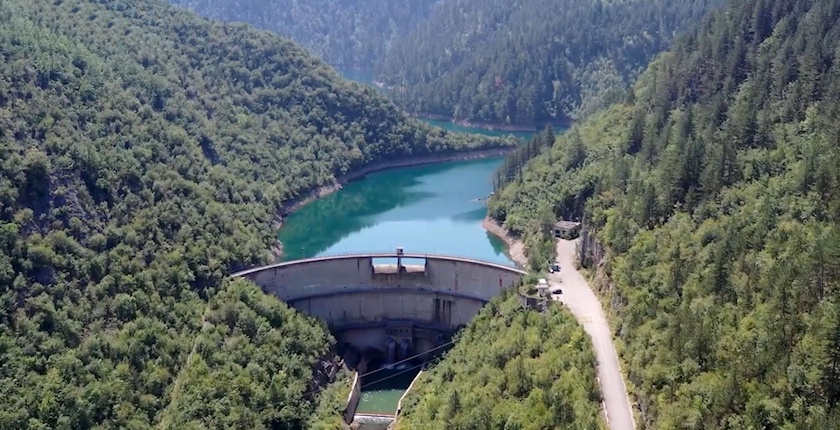
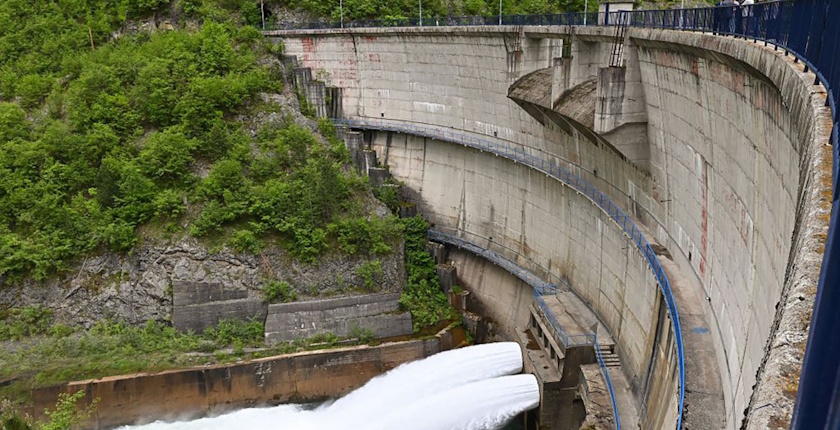
The small hydropower plant (SHPP) will utilize surplus water from an existing reservoir on the Ćehotina river. The facility is used for the needs of the Pljevlja thermal power plant and to supply drinking water to Pljevlja.

EPCG said Otilovići has been recognized as a priority hydropower project within the strategic plans of both the company and Montenegro.

Dragaš: Strengthening production stability and flexibility

EPCG CEO Zdravko Dragaš stressed that SHPP Otilovići represents another step in the company’s investment plan and the strengthening of domestic production capacities.

The contract confirms EPCG’s development orientation toward investing in reliable, sustainable, and domestic energy sources, with the full application of modern standards and procedures, he added.

“The Otilovići SHPP is a project that adds new value to Montenegro’s energy system and strengthens our overall production stability and flexibility,” Dragaš underscored.

Višnjić: We aim to deliver a solution that justifies trust

According to Vigoris Ecotech CEO Siniša Višnjić, the project’s implementation will be guided by high standards of quality and safety, with strictly defined deadlines and obligations.

“Our goal is to deliver a solution that justifies EPCG’s trust, from the main design to the final testing and commissioning,” Višnjić stressed.
by in News

World’s first floating solar power plant with vertical panels comes online

A floating solar power plant with vertically installed panels was commissioned in Germany. Sinn Power, the company that deployed the technology, claims it is the world’s first utility-scale facility of its kind.

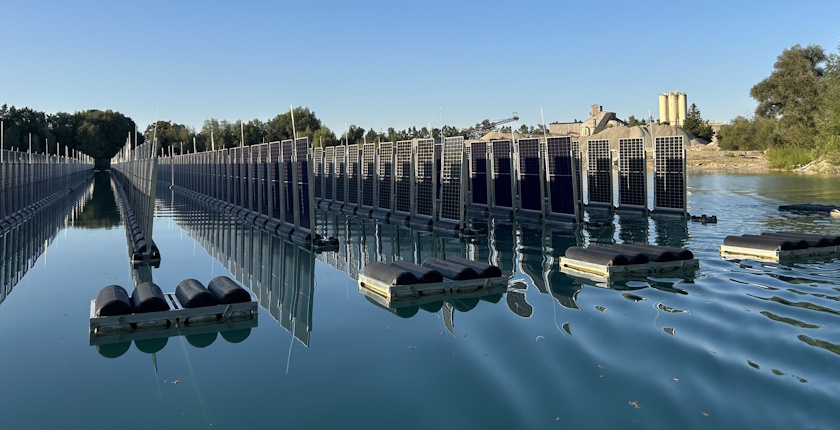
The floating solar power plant featuring vertically mounted panels is situated on artificial lake Jais, created by gravel extraction, in the Starnberg district of Bavaria in southern Germany. With a peak capacity of 1.87 MW, the plant is expected to generate around 2 GWh of electricity annually.

The technology, called SKipp by Sinn Power, is designed for artificial water bodies deeper than 1.6 meters, such as quarry lakes and gravel pits. Floating solar installations on artificial water surfaces are particularly valuable because they provide additional opportunities for solar energy generation without occupying land.

On Jais, arrays of vertical east-west oriented solar panels are separated by at least four meters. The company claims it ensures stable electricity generation throughout the day and increases output during morning and evening hours when conventional solar systems produce less energy.

Each SKipp-Float segment requires only a narrow submerged base, serving as the stabilizing part of the structure. At up to 1.6 meters below the water surface, it ensures a minimal spatial footprint, according to the company’s engineers. The substructure secures the modules and allows controlled movement under wind loads and fluctuating water levels.

Additionally, the plant is connected to the grid via a floating cable and a shore-based feed-in point, enabling smooth energy transfer without disrupting the lake’s ecosystem.

The installation of the floating solar plant has a positive impact on the lake’s ecosystem

The SKipp-Float system was commissioned on August 21 and officially inaugurated last week. Among the speakers at the ceremony was Bavarian Minister-President Markus Söder, who emphasized that the project demonstrates what an innovative energy transition looks like.

“The huge floating solar power plant on the lake generates electricity following the sun’s position. This is an example of Sinn Power’s engineering expertise, perfectly suited to Bavaria – a land of engineers and start-ups, as well as a leader in renewable energy,” said the regional leader, noting that Bavaria contributes 25% to Germany’s overall expansion of new capacity.

During the initial phase of operation, the company managing the gravel pit, Kies- und Quetschwerk Jais, reduced its grid electricity consumption by around 60%, with savings expected to reach up to 70% once production stabilizes, Sinn Power added.

The company said its floating PV plant occupies only 4.65% of the lake’s surface, well below the 15% maximum allowed under the German Federal Water Resources Act. An expansion of 1.7 MW of installed capacity is planned, keeping total lake coverage below 10%.

The company emphasized that the solar power plant has shown no negative ecological impact. On the contrary, the structure itself improves oxygen exchange and allows sunlight to reach deeper water layers, with reports indicating that water quality has improved since commissioning. New waterfowl nests have been observed on the floating sections, while schools of fish gather around the submerged stabilizing part of the platform.

Sinn Power plans to extend its vertical floating solar concept to open sea applications, further advancing renewable energy production at sea.

by in News

Deanovec PV project near Zagreb conditionally passes environmental assessment

Croatia’s Ministry of Environmental Protection and Green Transition has decided that no environmental impact assessment study is required for the 65.7 MW Deanovec solar power plant project. The investment was initiated by Statkraft, which recently sold its entire business in the country to Resalta.

The project is planned on the territory of Ivanić-Grad in Zagreb county, with a peak capacity of 65.7 MW. The Deanovec site covers 73.2 hectares, of which photovoltaic modules would occupy around 28 hectares.

In May, Statkraft OIE, the project firm, submitted a request to the ministry to determine whether a full environmental impact assessment is necessary. It submitted the environmental study, produced by Zagreb-based Eko Invest, revealing that the plant would have a 59 MW grid connection.

The ministry concluded that a full environmental impact assessment is not necessary, but the investor must prevent potential harm.

The prescribed measures include coordination with the local hunting rights holder. Protection of watercourses involves preventing precipitation runoff from access roads into nearby streams. Wherever possible, cable lines must be placed within existing infrastructure corridors. The solar park needs to be divided into four fenced sections, with fencing designed to allow the passage of small animals.

Deanovec solar power project deemed environmentally acceptable

According to the decision, the investor must use anti-reflective PV modules, ensure sufficient spacing between them, and install eco-friendly lighting. Vegetation within the solar park must be mechanically maintained, without herbicides or chemicals, while the removal of invasive plant species is mandatory.

The ministry stated that the project is not expected to have significant negative impacts on biodiversity, soil, watercourses, agricultural land, landscape, or air quality, and that the defined mitigation measures are sufficient to avoid potential harm. All relevant authorities provided positive opinions, and the public consultation process did not result in major objections.

Furthermore, the ministry ruled that a comprehensive assessment under the procedure for the network of nature protection areas is not required. Its purpose is to determine whether a planned project could have a significant negative impact on protected areas, including those within the Natura 2000 network. It was concluded that the Deanovec solar power project does not affect or directly threaten these areas.

Norwegian energy giant Statkraft recently announced it was selling all its operations in Croatia to Resalta. However, it is still listed as the owner of the Deanovec project.

by in News

Heat pump sales in Europe plunge in 2024

The European Union has an ambitious goal to lift the number of heat pumps to 60 million by 2030. Still, total sales of the devices in 19 European countries fell by a combined 22% last year, according to the European Heat Pump Association (EHPA).

As part of its energy transition strategy, the EU aims to have 60 million heat pumps in operation by 2030 at the latest. It would allow at least half of European buildings to be heated, and partly cooled, using renewable energy sources. Gas consumption in buildings would be 40% lower than in 2022, saving EUR 60 billion in energy imports and significantly cutting CO₂ emissions.

More than 25 million heat pumps have already been installed in Europe

The intermediate target of 20 million by 2026 was surpassed before the end of 2024, EHPA data shows. Last year, Europe had more than 25 million heat pumps installed. However, reaching 60 million units in less than six years now appears increasingly challenging.

The report notes that after steady sales growth through 2022, the market declined in both 2023 and 2024. Last year, sales in the observed group of 19 countries fell by 22%. The steepest drops were recorded in the Czech Republic (64%) and Germany (48%).

Photo (EHPA): Number of heat pumps sold every year from 2012 to 2024

The report’s authors warned that if current trends continue, the EU could fall short by about 15 million units in 2030, or 25% below the target.

Leading markets and new data from Southeastern Europe

France and Italy had the strongest sales in 2024, with 546,000 and 348,000 units, respectively. However, looking at the share of households using heat pumps, Scandinavian countries are in the lead.

Scandinavian countries are in the lead in the household heat pump segment

Norway has 632 heat pumps per 1,000 households, followed by Finland, with 524. Sales remained strong in 2024, with 48 and 33 heat pumps per 1,000 households, the highest levels in Europe.

Photo (EHPA): Number of heat pumps sold per 1,000 households in 2024

EHPA published sales estimates for nine additional European countries for the first time, including some that Balkan Green Energy News tracks. Sales in Bulgaria and Croatia amounted to 8,000 units each last year. In Cyprus, 3,000 were bought, compared to 18,000 in Greece, 4,000 in Latvia, 1,000 in Luxembourg, 6,000 in Malta, 10,000 in Romania and 13,000 in Slovenia. There are no historical data for the countries in the group for comparison.

The estimates are based on 2023 sales figures from the EurObserv’ER Heat Pump Barometer 2024, supplemented with 2024 sales estimates provided by heat pump manufacturers.

UK records the largest growth in heat pump sales

The United Kingdom, Ireland, and Portugal were the only countries achieving growth last year. Although the total number of heat pumps in the UK remains relatively small, sales increased by 56% in 2024.

Photo (EHPA): The table shows the number of units sold in 2024, followed by the decrease or increase in sales from 2023 and the total number of heat pumps at the end of 2024 by country

According to EHPA, the progress was driven by a combination of clear and stable policy, the government’s Boiler Upgrade Scheme – offering up to GBP 7,500 per household to replace fossil fuel systems – as well as removing hybrid systems from subsidy schemes, raising public awareness, and increasing the number of trained installers.

Ireland also saw strong sales growth, 19%, underpinned by long-term policy stability and a clear commitment to renewable energy. It ranks fifth in Europe in the share of heat pumps among households. The market initially grew in the new-build sector, where heat pumps have become standard, while the renovation segment is expanding thanks to subsidies and a rising carbon tax.

Additional measures needed

EHPA pointed out that stronger strategic support at the EU level, along with stable legislation and regulations, is crucial for achieving the targets.

“More heat pumps is a win-win for Europe – and it must also be the smart choice for consumers. To get there, electricity prices must be made more competitive, good long-term support schemes put in place and installers trained up, so buying a heat pump is affordable and easy,” said EHPA Executive Director Paul Kenny.

by in News

Maja Maćić: Alcazar Energy expands presence in Western Balkans

Alcazar Energy is an independent sustainable infrastructure fund focused on renewable energy in emerging markets. It has been present in the Balkans since 2022 and is developing projects in Serbia, Montenegro, and North Macedonia. Maja Maćić, Balkans Platform Head of Alcazar Energy, said at Belgrade Energy Forum (BEF 2025) that the company expects to launch construction activities for some of its projects later this year.

Alcazar plays a significant role in the development of the renewable energy sector in MENAT (Middle East, North Africa, and Turkey) and the Balkans, including projects in Montenegro, Serbia, and North Macedonia.

The company’s presence in the Western Balkans began with the Bijela wind farm project in Montenegro, planned at 118.8 MW. According to Maja Maćić, Alcazar Energy is in the final stages of preparing the technical and other required documentation for the construction permit.

The Bijela wind farm will be in operation by the end of 2028.

“We expect to have the fully permitted project in the third quarter of this year and to close financing by the end of the year, to initiate some early construction activities within this year, but to have construction in 2026 and 2027, with the main aim to have the operational project by the end of 2028,” Maćić said.

[wpcc-iframe title=”Maja Macic, Balkans Platfrom Head and Country Manager Serbia, Alcazar Energy at the Belgrade Energy” width=”500″ height=”281″ src=”https://www.youtube.com/embed/X_WsAfo_TwQ?feature=oembed” frameborder=”0″ allow=”accelerometer; autoplay; clipboard-write; encrypted-media; gyroscope; picture-in-picture; web-share” referrerpolicy=”strict-origin-when-cross-origin” allowfullscreen=””]

The Celzijus wind farm project is one of the largest in the region

By acquiring the largest wind power project in North Macedonia, for the Štip wind farm, Alcazar Energy has expanded its regional presence by 400 MW.

According to Maćić, the company expects to secure all required permits by the end of the year and begin construction. “Due to an improved legislation framework, we have made significant progress in North Macedonia and Montenegro, and we are proud that soon we will have construction activities and engage local companies on the sites,” she stated.

Last year, Alcazar Energy acquired the Celsius 1 wind farm project in Serbia, for 200 MW in capacity. It signed a deal with RP Global, which was developing the project before that. Their transaction includes a portfolio of additional wind and solar projects, totaling 768 MW. The investment in Celsius 1 is estimated at USD 300 million, which would make it one of the largest wind farms in the region.

“We believe that we will also manage to make significant progress in Serbia in order to deploy local companies and international companies, fulfilling the highest international standards and our local policies,” Maćić said.

by in News

Workshop on power grid development in Western Balkans held by GIZ, Energy Community Secretariat

The development of grid infrastructure in the Western Balkans is a crucial step in the region’s energy transition. In support of the Green Agenda for the Western Balkans, GIZ, in cooperation with the Energy Community Secretariat, organized a Strategic Workshop on Power Grids, with a focus on a concrete action plan for the entire region.

Without the development of grid infrastructure, large-scale electrification based on clean energy sources is not possible. The process requires significant investments and new solutions for operating the grid. Existing power lines will need to be reinforced, while new infrastructure, especially on low and medium voltage levels, as well as interconnectors, must be built over the next ten years.

The recent large-scale power outage in Southern Europe, and the one in the Western Balkans in 2024, are a stark reminder of the importance of ensuring system stability amid the growing use of renewables and the need for preventive safety measures. A functional and reliable electricity supply is key to gaining broad public support for alternative energy sources and green policies.

The Strategic Workshop on Power Grids, organized by GIZ in Vienna as part of the project Green Agenda: Decarbonization of the Electricity Sector in the Western Balkans, in cooperation with the Energy Community Secretariat, brought together representatives from transmission and distribution system operators, along with experts from the Hrvoje Požar Energy Institute (EIHP), intending to develop the Action Plan for Power Grids in the Western Balkans.

The action plan provides a clear roadmap for grid development in the Western Balkans

Electricity networks in Western Balkan countries were not designed to meet the challenges of the 21st century. Although the countries in the region have adopted very ambitious decarbonization and renewable energy integration targets, around two thirds of electricity generation comes from coal-fired power plants, according to Goran Majstrović, Deputy Director and Head of the Energy Transmission and Distribution Department at EIHP.

“Regional power networks remain constrained by outdated assets, insufficiently utilized interconnection capacities, administrative bottlenecks, and inadequate digitalization. Without urgent and coordinated action, the power network in the Western Balkans will become a serious bottleneck to secure operation and progress rather than a platform for transformation and development,” Majstrović explains.

Without urgent and coordinated action, the electricity network in the Western Balkans could become a serious obstacle to secure operation and progress, instead of being a platform for transformation and development, he warned.

The Western Balkan Action Plan for Power Grids directly addresses the root causes of recent blackouts, including extreme weather events, aging infrastructure, and the growing share of variable renewable energy sources, particularly wind and solar, as their output is sensitive to any changes in weather conditions.

By focusing on grid modernization, regional coordination, and system resilience, the plan offers a concrete roadmap for preventing future outages. It also promotes investment in smart grid technologies, cross-border interconnectors, and digital system monitoring, all of which are essential for adapting to growing demand and fluctuations in electricity production.

The action plan is a strong expression of regional cooperation in the power sector

Crucially, the plan strengthens operational cooperation among system operators across the Western Balkans region, enabling a more flexible and integrated regional grid. In doing so, it lays the foundation for a stable and secure energy transition based on renewables, helping the region become a reliable supplier of clean electricity to Europe.

According to Goran Majstrović, the Action Plan for Western Balkans Grids provides a forward-looking and regionally harmonized strategy to address the challenges. It is built on the vision of the European Union’s Action Plan for Grids and aligns closely with the Sofia Declaration on the Green Agenda for the Western Balkans, the Energy Community framework, and each country’s national energy and climate plan (NECP).

The document is a strong expression of collaboration of the Western Balkans power sector in a matter of high mutual interest – mobilizing attention, human and financial resources for a rapid energy transition, enabled by sustainable, interconnected, and resilient power infrastructure.

by in News

2-in-1: carbon footprint as a quality criterion in the NZIA – solving sustainability and resilience together

By Heike Winkler,EUSEW’s digital ambassador on how fair tendering and sustainability in offshore wind can drive competitiveness and a just energy transition.

We are transitioning from an economy based on fossil energy to an economy based on renewable resources. What could be more obvious than for us to support this development and strengthen our renewable industries, the maritime industry, the circular economy, and the green steel industry? The motto of EUSEW 2025, ‘Powering a fair and competitive green transition’, fits perfectly with the European offshore wind industry.

The motto of this year’s WindEurope Annual Event 2025, which has just taken place in Copenhagen, was ‘Scale up, Electrify, Deliver – Putting wind at the heart of Europe’s competitiveness.’ At the recent WindEurope conference, the offshore wind industry jointly proposed a new Offshore Wind Deal to European governments in order to achieve Europe’s ambitious expansion targets. Resilience and sustainability require close cooperation between business and politics to successfully meet the challenges of the ongoing transformation. Sufficient volume and stable supply chain expansion paths are crucial.

Sustainability requires resilience

For more than two decades, the offshore wind industry has been characterised by an impressively fast-growing know-how, a strong resilience, remarkable innovative power and harmonious synergies from various European industries.

A considerable reduction in the levelised cost of energy (LCOE) of offshore wind energy has been achieved to date, more than the fossil industry has ever had to achieve. This development resulted in permanent cost pressure, which harms the sector.

Decarbonisation of the offshore wind industry itself has been part of the industrialisation process from the very beginning. A current example is the Nordlicht 1 and 2 project in the German North Sea, where a major reduction in CO2 steel emissions is expected to be realised (i.e. by using steel towers).

Level playing field and competitiveness

The level playing field has been repeatedly called into question in recent years due to competitive distortions and discontinuities, e.g. with the thread break (‘Fadenriss’) in Germany starting in 2016, when no more new offshore wind projects were put out to tender, or more recently with the construction stop in the USA. In Germany, many companies went out of business, a lot of experience was lost, thousands of employees lost their jobs and their experience was also lost to the industry. With the current geopolitical uncertainties, particularly regarding energy supply, the sector’s resilience is crucial.

With a level playing field and a robust expansion path, the wind industry would have grown significantly faster.

Net Zero Industry Act and qualitative criteria in tendering processes

At the same time, in line with the Draghi Report on EU competitiveness, the Clean Industrial Deal, together with the Net Zero Industry Act, European competitiveness requires accelerating re-industrialisation and the transformation of energy-intensive companies.

Industrial resilience and sustainability require close cooperation between business and policy, where better procurement practices can advance European interests in the wind sector. For example, the carbon footprint tender criterion should be applied in more than 50% of the coming renewable energy tenders. This is critically important, as it could increase the likelihood of realisation, resilience, while at the same time enhancing the market readiness of European renewable energy industries and thus Europe’s competitiveness.

Every long transport route increases the carbon footprint and reduces the added value of the project in general and where it is to be installed. The EU developed a consultation process to strengthen the net-zero industries, which includes auctions for renewable energies and an implementing law on non-price criteria. The results are currently eagerly awaited.

‘In order to reach a sustainable energy transition that creates added value for European industry, there is no alternative to a sustainable, resilient (2in1) domestic offshore wind supply chain. The carbon footprint criterion in offshore wind tenders is crucial if the transformation of the energy-intensive industry is to deliver climate protection, energy sovereignty and industrial growth at the same time.’ There will be no cost-efficient sustainable energy system in Europe without offshore wind energy.

This opinion editorial is produced in co-operation with the European Sustainable Energy Week (EUSEW) 2025. See ec.europa.eu/eusew for more details.