by in News

GGF ushers in new wave of energy transition investments in Western Balkans with eight deals

The Green for Growth Fund has signed a series of agreements on green lending and support for major solar power and energy storage projects throughout the Western Balkans. The new commitments, backed by an investment from KfW, will lift its green financing portfolio in the region by up to EUR 176 million.

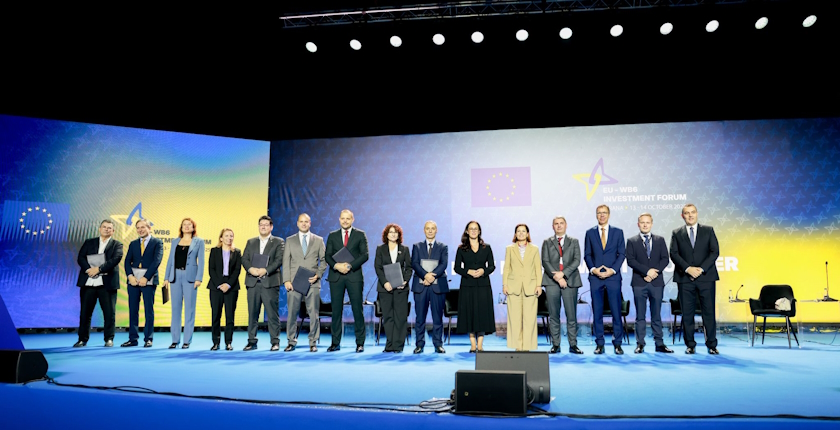
At the EU–Western Balkans Investment Forum in Tirana, held in October, GGF announced the European Union’s EUR 20 million investment in its class C shares, via Germany’s KfW Development Bank. It was accompanied by a EUR 4 million donation to the climate action fund’s capacity building and advisory facility, its advisor Finance in Motion said.

The proceeds are set to mobilize more private capital for renewable energy, energy efficiency and climate resilience across the region, the update revealed.

The Green for Growth fund signed a series of agreements at the forum for green lending, and for financing solar power and battery projects in North Macedonia, Kosovo* and Albania.

Von der Leyen: The time to invest in the Western Balkans is now

The event was attended by European Commission President Ursula von der Leyen and Albanian Prime Minister Edi Rama.

“Your economies are already set to grow rapidly in the coming years. We established the Western Balkans Growth Plan for exactly that. The EU opens sectors of its economy for your business. Together, we work on reforms for a level playing field. And alongside reforms comes investment. The Western Balkans Growth Plan aims at doubling regional GDP in the next decade. So my message to investors today is straightforward: Do not let this opportunity pass by. The time to invest in the Western Balkans is now,” Von der Leyen said.

The commitments signed within a special segment of the Tirana conference are boosting the fund’s cumulative investments into the region to more than EUR 850 million. Earlier it provided over EUR 675 million overall in green finance in the Western Balkans in support of climate action, energy security and sustainable industry.

The new commitments are expected to avoid emissions of some 175,000 tons of CO2. It is equivalent to 400,000 barrels of oil not being burnt.

Trailblazing investments ahead in photovoltaics, BESS

The Green for Growth Fund intends to provide funding for one of the first grid-scale battery projects in North Macedonia and the Western Balkans.

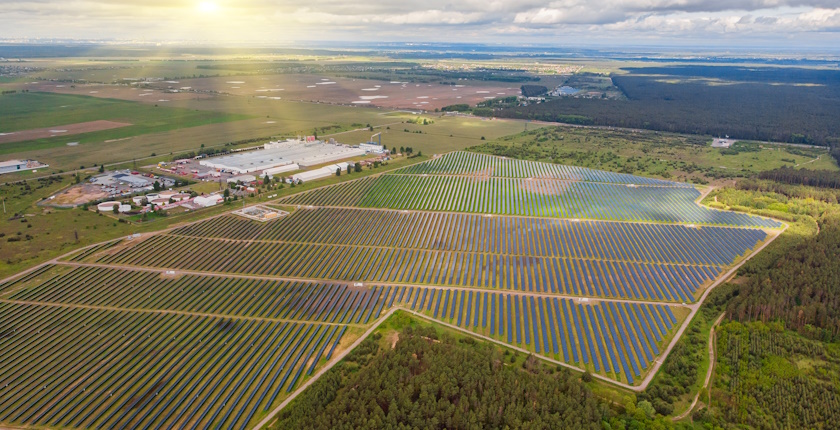
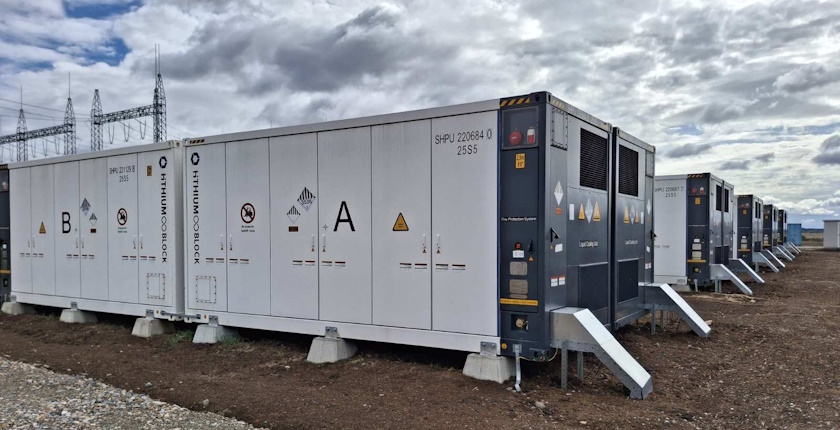
Renalfa IPP is about to expand its 50 MW photovoltaic plant in Oslomej, on the site of a former coal mine, with a 200 MWh battery energy storage system (BESS). GGF has already provided debt financing for the solar installation, and the two sides signed a mandate letter for EUR 24 million for the BESS investment. It is one of the investments for the transformation of the REK Oslomej coal mine and power plant complex.

Renalfa IPP’s pioneering PV plant Oslomej on coal land will get a battery facility

GGF also signed a term sheet for Quant Renewables’ solar power project in Kosovo* for 142.2 MW in peak capacity. It comprises PV plants Tucep (98.5 MW) and Veriq (43.7 MW) on land previously designated for lignite mining.

The Green for Growth Fund would support it with up to EUR 12 million in preferred equity, complementing senior debt financing led by the European Bank for Reconstruction and Development (EBRD). Set to become Kosovo’s* biggest solar park, its estimated annual output would match the electricity needs of 63,000 households.

The facility would save an estimated 168,138 tons of carbon dioxide equivalent per year (22,529 tons prorated to GGF’s investment).

The third renewables project is HD Solar Park in Albania. Through a letter of intent, GGF expressed its goal to provide up to EUR 30 million in senior debt financing. Bindi, the developer, has envisaged 60 MW of peak capacity and a co-located 120 MWh battery system. It would be one of the first large-scale solar-plus-storage initiatives in the country.

Five new deals with financial institutions for as much as EUR 110 million in total

The partner financial institutions that signed agreements with the Green for Growth Fund will channel the financing to their clients for investments in renewables, sustainable mobility, and energy and resource efficiency in buildings and industrial production.

There are five new deals for as much as EUR 110 million in credit lines and subordinated loans.

Two credit lines for partners in Kosovo*

The KRK microfinance institution in Kosovo* aims to utilize a new credit line, of EUR 5 million, for efficiency refurbishments and retrofits of the residential sector as well as small-scale renewable energy. It would be its sixth investment with the Green for Growth Fund since establishing the partnership in 2017.

BpB, the first bank in Kosovo* founded with fully local capital, finances households and small and medium-sized enterprises. Building on a previous partnership, it will channel GGF’s senior credit line of EUR 5 million into energy efficiency and renewable energy.

It will particularly benefit SMEs, including clients in the agricultural sector seeking to upgrade energy systems or invest in low-carbon vehicles, efficient equipment and modern irrigation systems, the fund added.

EUR 95 million in total for Serbian lenders

The Green for Growth Fund signed a loan agreement with UniCredit Bank Serbia for a EUR 50 million senior credit line. The focus is on commercial-scale solar and wind power, helping decarbonize Serbia’s coal-dependent electricity system.

GGF expects it to become one of the fund’s most impactful investments, by avoiding 84,550 tons of emissions in CO2 equivalent terms – equivalent to taking 44,500 cars off the road. The fund has invested EUR 115 million in UniCredit Bank Serbia to decarbonize the country’s electricity system.

Another Serbian lender in the group is AikBank, eligible for a EUR 45 million subordinated loan. The deal is for financing renewables and energy efficiency projects of corporate clients.

The bank will additionally benefit from GGF’s technical assistance for technical due diligence and environmental and social assessments, for the implementation of green energy projects in line with the best practices, the partners stressed.

ProCredit Bank in BiH is eyeing solar power projects

ProCredit Bank in Bosnia and Herzegovina is getting a subordinated loan of up to EUR 5 million, following two such facilities in 2022 and last year. The Green for Growth Fund’s investment is for maintaining the partner’s capital position and supporting the expansion of its green portfolio. The bank especially sees opportunities in solar power, where there is significant potential for BiH to catch up with regional leaders.

“We thank our investors for their continued confidence. This kind of catalytic capital drives tangible impact in Southeast Europe and shows how aligning investment with ambitious climate goals accelerates the green transition,” Finance in Motion said.
* This designation is without prejudice to positions onstatus and is in line with UNSCR 1244/99 and the ICJ Opinion on the Kosovo declaration of independence.
by in News

Trial phase starts for 134 MW solar power plant in Romania

One of the biggest photovoltaic plants in Romania is due to begin commercial operation by the end of the year. China Huadian Corp., which bought 49%, is reportedly acquiring the entire 134 MW facility.

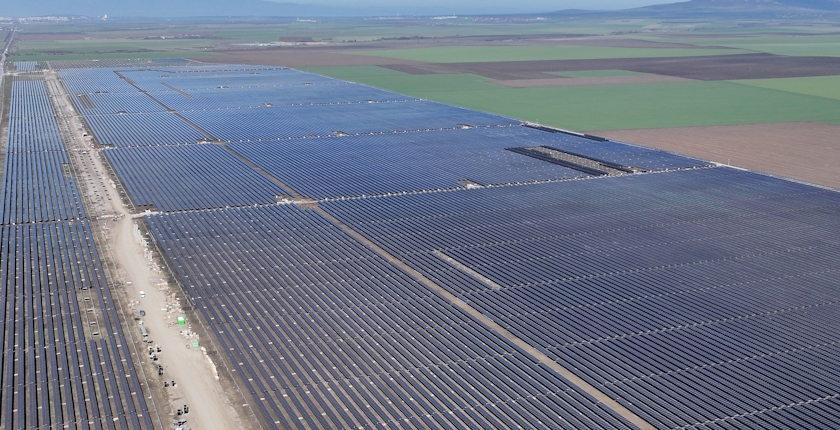
Project firm Grup Blauer București has completed the construction of a solar park in southern Romania. The 134 MW facility in the Studina commune in Olt county is one of the biggest in the country. Profit.ro reported that it is entering trial production.

The deadline for starting commercial operation is the end of 2025. Grup Blauer București is one of four developers of photovoltaic projects that China Huadian Corp. is taking over, the article adds. The conglomerate has 178 GW in operation, generating more than 640 TWh per year.

Grup Blauer București was owned until late 2022 by a group of investors including Bogdan Stelea. The Romanian national soccer team’s former goalkeeper held 21.4%. They sold the firm to CWP Europe.

Founders of Grup Blauer București included Romanian goalkeeper Bogdan Stelea

Next, in the summer of 2023, a subsidiary of Renalfa IPP bought a 50% stake. The news website found that China Huadian Hong Kong Co. currently controls 49% of the solar park. Its parent, established in 2002, is among the five largest state-owned Chinese companies.

Of note, China Huadian was interested in building a coal power plant in Romania, until the country decided to phase out the solid fossil fuel. The company also participated in a tender in 2015 for the revived Tarnița-Lăpuștești pumped storage hydropower project.

Romania’s largest solar park, Rătești, has 155 MW in peak capacity, but there several projects for larger capacities, too.

by in News

Renalfa IPP expands its Tenevo, Kaolinovo PV plants in Bulgaria with batteries

Vienna-based Renalfa IPP commissioned a 65 MW / 260 MWh battery energy storage system within its hybrid power plant project in Tenevo. Also in Bulgaria, the joint venture expanded its Kaolinovo solar power plant to 33 MW and added a BESS of 33 MW in operating power and 110 MWh in capacity.

One of the biggest hybrid power plants in Southeastern Europe is gradually coming together. Renalfa IPP, which last year marked the start of the BESS boom in Bulgaria, said it added a battery system of 65 MW in capability and 110 MWh in capacity to the Tenevo solar power plant.

Project firm Tenevo Solar Technologies is a joint venture with Denmark-based Eurowind Energy. Renalfa IPP, headquartered in Austria’s capital city, is itself a joint venture, established by clean energy and e-mobility company Renalfa Solarpro Group and French renewable energy infrastructure fund manager RGreen Invest.

Ultimately, the plan is to build a 250 MW wind farm at the Tenevo site, in Yambol province in Bulgaria’s southeast. The first 69 MW in peak capacity of the solar power plant came online two months ago, within a 237.6 MW project.

Tenevo BESS to grow to 315 MW

Tenevo is one of the biggest co-located BESS projects in Europe to date, according to Renalfa IPP, which added that it surpassed 1 GWh of energy storage in operation.

The firm aims to increase the battery facility to 315 MW and 760 MWh by early next year, when it expects to complete the solar park as well.

Solarpro Bulgaria builds both battery storage facilities

The project manager for the Tenevo BESS is Solarpro Bulgaria, part of Renalfa Solarpro Group, while Hithium and Kehua supplied the equipment. Solarpro and Hithium established cooperation two years ago and recently expanded it.

The same affiliate was the project manager and engineering, procurement and construction (EPC) contractor for the expansion of the Kaolinovo photovoltaic park in northeastern Bulgaria. Renalfa IPP said it grew to 33 MW in peak capacity from 10 MW, while a BESS of 33 MW and 110 MWh was also added. The facility was built in 2012.

Renalfa IPP is also active in Hungary, Romania, and North Macedonia, where it is about to add batteries to its Oslomej PV plant. In the last update, it said it has 554 MW in operational generating assets, BESS of 455 MW and 1.01 GWh in total, and over 1 GW of projects in late-stage development.

by in News

First part of Tenevo PV plant comes online, batteries are under construction

The largest hybrid power plant in Bulgaria is beginning to take shape – a joint venture of Eurowind Energy and Renalfa IPP commissioned the first segment of a solar park, and it is building a battery energy storage system (BESS). The Tenevo facility is planned to include a wind power plant as well.

Almost two years after the start of construction, a solar park in Yambol province in southeastern Bulgaria is now producing electricity. It has 69 MW in peak capacity. Project firm Tenevo Solar Technologies has a task to expand it to 237.6 MW, making it one of the biggest photovoltaic systems in the country.

Together with a battery system, of 315 MW in operating power and 760 MWh in capacity, and the planned wind farm of 250 MW, it would be the largest and most complex hybrid power plant in Bulgaria. At this moment, it would also be the first such green energy facility that doesn’t consist only of photovoltaics and batteries. The BESS part alone would probably be the biggest in Europe.

Tenevo will likely become the biggest hybrid power plant in Bulgaria and the first one with an additional source besides solar power and BESS

Tenevo operates under Eura IPP, incorporated in Bulgaria. It is an equally owned joint venture of Renalfa IPP and Eurowind Energy. The former of the two is itself a JV, founded by Vienna-based clean energy and e-mobility company Renalfa Solarpro Group, and French renewable energy infrastructure fund manager RGreen Invest.

Renalfa IPP said it has more than 650 MW in operation, over 1 GW of projects in late-stage development and a project pipeline of more than 3 GW. The company is active in Poland, Hungary, Romania, Bulgaria, and North Macedonia.

Eurowind Energy is a Danish investment and project development company in the field of renewable energy and an independent power producer. It has a global portfolio of over 60 GW, of which 1.3 GW in operation.

Second phase of Tenevo PV park to come online early next year

Together with the solar power plant, the 400 kV grid connection system started operating. The second phase of the Tenevo PV park will be put into operation in early 2026, as some of the panels were damaged by the extremely intense hailstorm in May, according to the update.

The BESS facility is under construction, Renalfa IPP revealed. EURA IPP secured a 320 MW connection to the transmission network, of which up to 213.7 MW is for the solar farm.

Raiffeisen, EBRD are main creditors

The European Bank for Reconstruction and Development (EBRD) has committed a senior secured loan of up to EUR 50 million. It includes a full or partial cover by a first loss guarantee under the EBRD InvestEU Framework, the lender’s first in Bulgaria. It valued the project at EUR 158.4 million.

Raiffeisen Bank International provided a financing facility of EUR 53 million.

The entire solar power segment of the hybrid power plant is expected to generate 332 GWh per year. The PV panels are equipped with single-axis trackers, allowing them to turn toward the sun, which boosts efficiency.

Tenevo is on the site of a former airport near an eponymous village in the municipality of Tundzha.

by in News

Bulgaria on track to add 1.5 GW of solar power by mid-2026

The pace of large photovoltaic projects in Bulgaria indicates that total capacity can reach 6 GW by the middle of next year. The expansion isn’t slowing down.

Investors in large solar power plants in Bulgaria don’t seem intimidated by zero and negative wholesale electricity prices eating away at their revenues. One of the factors is a surge in the construction of battery energy storage systems (BESS), which iron out the gap between intraday peak production and the power demand curve. In a new analysis, Capital.bg estimated that the country’s photovoltaic capacity is set to increase by 1.5 GW by the end of the first half of next year, only accounting for big projects.

The total would reach 6 GW. The report lists 14 projects, of which some are benefitting from BESS grants from one of Bulgaria’s past tenders.

Chinese group building largest current PV project

The biggest solar park under construction is Simeonovgrad-Polyanovo, consisting of two units of 250 MW in total. It is located in the Haskovo region in the southern part of the country.

United Energy Group bought the two projects last year. It it the first significant Chinese investment in Bulgaria, the article reads. The PV plant is expected to be put into operation early next year.

The construction of the first phase of the Tenevo hybrid power plant began almost two years ago

Next on the list is Tenevo. Almost two years ago, Eurowind Energy and Renalfa IPP marked the start of the construction of the solar segment of a hybrid power plant near Yambol. The PV park is envisaged with 237.6 MW in peak capacity and a 213.7 MW grid connection.

The largest solar power plant in Bulgaria is called Apriltsi.

St. George coming online before year-end

Czech company Rezolv Energy bought the St. George project for 229 MW two years ago and broke ground at the construction site last autumn. According to the latest data, the investment is worth almost BGN 1 billion (EUR 511 million) and it is coming online by the end of the year. The developer secured a 199 MW connection.

Greek government-controlled utility Public Power Corp. (PPC) is commissionning its Colosseum (Kolizeum) facility of 165 MW in the coming months, the update reveals. The project in Chirpan has an approved network connection of 120 MW. The company is planning to add batteries of 25 MW in capability and a capacity of 55 MWh.

The company is also building an 88 MW in Vedrare near Plovdiv. The contractor for the facility in the municipality of Karlovo is Chint Green Energy of the Chint Group. The power plant is on track to become operational early next year.

A 123 MW system will be on 400 hectares between the villages of Knizhovnik and Dolno Vojvodino in Haskovo. Austria-based Enery said it would install a BESS of 180 MWh next to its solar park.

Electrohold is testing its Maglizh PV plant, the article adds. The project for 100 MW occupies 127 hectares and the estimated investment is almost EUR 90 million. The plan was changed along the way.

Top Energy Solutions has a construction permit for its Loznitsa project in northeastern Bulgaria. The project is for a peak capacity of 115 MW and a grid connection of 99.99 MW, spanning 82.4 hectares. It is located at the villages of Vesselina and Kamenar in the Loznitsa municipality, Razgrad district.