by in News

Why financial risk is the real challenge for battery storage in Europe

As battery energy storage systems (BESS) move from pilot projects to core infrastructure across Europe, the conversation is changing. Technology and costs still matter, but for investors and lenders the decisive question is increasingly financial: how resilient are BESS projects when revenue is delayed, disrupted, or degraded?

Across Central and Eastern Europe as well as mature Western markets, storage projects are entering a phase of tighter margins, more complex financing structures and lower tolerance for uncertainty. In this environment, insurance is no longer just about protecting equipment; it is becoming a central tool for managing financial risk and preserving bankability.

Financial continuity defines bankability

For storage projects, technical performance is only half the equation. The other half, the one that ultimately determines financing terms, is financial continuity. Every phase of a BESS or hybrid PV+BESS project carries exposure to income loss: during transportation, construction, commissioning, and operation.

Even short disruptions can have disproportionate consequences. A damaged transformer during shipping, a fire incident during testing or a commissioning delay before grid connection can postpone the start of revenues, while debt service, contractual obligations, and operating costs continue to accrue.

This is why Renewable Energy Insurance Broker (REIB) structures insurance programs around financial outcomes, not just physical damage. The objective is simple: ensure that delays or performance issues do not automatically escalate into financial stress.

ALOP: From overlooked add-on to financing safeguard

One of the most underestimated insurance covers in the BESS sector today is Advance Loss of Profit (ALOP). Traditionally seen as optional, ALOP is rapidly becoming essential, particularly for large-scale storage and hybrid projects with tight financing schedules.

ALOP protects expected revenues when construction or commissioning is delayed due to insured physical damage. In practice, it bridges the critical gap between construction risk and future cash flow. In 2025, REIB observed multiple projects where even short delays could have triggered penalty clauses, refinancing pressure, or delayed revenue start.

When structured correctly, ALOP ensures that delays do not automatically translate into financial crises. For lenders, it increasingly functions as a bankability safeguard, providing confidence that revenue projections remain protected even if timelines slip.

DSU and logistics: When delays start before construction

Financial risk does not begin on site. For BESS projects, it often starts much earlier – during transport. Batteries, inverters and transformers travel thousands of kilometers before installation, making logistics one of the most exposed phases of the project lifecycle.

A single cargo incident can delay commissioning by months, increasing financing costs and contractual exposure. REIB addresses this risk through Delay in Start-Up (DSU) insurance combined with Cargo coverage, ensuring that if a critical shipment is damaged, stolen, or delayed, the project is compensated not only for the physical loss but also for the income lost during the resulting downtime.

For investors and lenders, this closes one of the most dangerous financial gaps in project planning: the period before operations even begin.

Construction and commissioning: The most fragile phase

The construction and commissioning stage is where technical and financial risks converge. Fires, installation accidents or testing failures can delay grid connection, pushing revenue timelines back while expenses continue.

Many traditional insurance policies either exclude this phase or cover it only partially. REIB structures construction-phase DSU coverage that runs from installation through commissioning, responding not only with repair costs but also with compensation for lost income.

This transforms insurance from a reactive instrument into a strategic financial stabilizer, keeping debt service, investor expectations, and project schedules aligned even when delays occur.

Business Interruption: Insuring the ability to earn

Once operational, BESS and hybrid projects depend on consistent performance to meet financial models. Yet standard Business Interruption (BI) insurance often fails to reflect the complexity of storage revenues.

REIB structures BI coverage around the project’s actual revenue mechanism – whether tolling, profit-sharing or hybrid arrangements. The focus is on protecting total income, not just net profit, with coverage that includes partial degradation and extended indemnity periods of up to 18 months.

In short, insurance protects the project’s ability to earn, because that is what sustains investor confidence and lender support.

Design decisions are financial decisions

Across Europe, particularly in fast-evolving markets, investors often underestimate how deeply design choices affect bankability. Decisions related to battery suppliers, container layouts, or control-system design can materially influence insurance availability, scope and pricing.

REIB’s role is to ensure these risks are identified and addressed early, when corrections are technically simpler, financially cheaper, and far more effective. Projects that integrate insurance expertise from the outset consistently achieve broader coverage and more favorable financing terms. When insurance input comes too late, exclusions, higher deductibles, or gaps in ALOP protection are far more common.

Conclusion: Financial risk will shape Europe’s storage rollout

Battery storage is no longer a technical experiment; it has become a financial asset class. Its success now depends on how effectively revenue risks are managed across the entire project lifecycle.

As Europe accelerates BESS deployment, insurance is evolving from a compliance requirement into a core element of financial structuring. By focusing on income protection, early risk assessment, and coverage aligned with real revenue models, insurance is increasingly influencing which storage projects move forward, and which stall at the financing stage.

For BESS in Europe, managing financial risk is no longer optional; it is the foundation of bankability. In 2025 alone, REIB insured more than 8 GWh of BESS capacity across Europe, demonstrating how revenue-focused risk management can turn financial uncertainty into long-term resilience.


by in News

Why financial risk is the real challenge for battery storage in Europe

As battery energy storage systems (BESS) move from pilot projects to core infrastructure across Europe, the conversation is changing. Technology and costs still matter, but for investors and lenders the decisive question is increasingly financial: how resilient are BESS projects when revenue is delayed, disrupted, or degraded?

Across Central and Eastern Europe as well as mature Western markets, storage projects are entering a phase of tighter margins, more complex financing structures and lower tolerance for uncertainty. In this environment, insurance is no longer just about protecting equipment; it is becoming a central tool for managing financial risk and preserving bankability.

Financial continuity defines bankability

For storage projects, technical performance is only half the equation. The other half, the one that ultimately determines financing terms, is financial continuity. Every phase of a BESS or hybrid PV+BESS project carries exposure to income loss: during transportation, construction, commissioning, and operation.

Even short disruptions can have disproportionate consequences. A damaged transformer during shipping, a fire incident during testing or a commissioning delay before grid connection can postpone the start of revenues, while debt service, contractual obligations, and operating costs continue to accrue.

This is why Renewable Energy Insurance Broker (REIB) structures insurance programs around financial outcomes, not just physical damage. The objective is simple: ensure that delays or performance issues do not automatically escalate into financial stress.

ALOP: From overlooked add-on to financing safeguard

One of the most underestimated insurance covers in the BESS sector today is Advance Loss of Profit (ALOP). Traditionally seen as optional, ALOP is rapidly becoming essential, particularly for large-scale storage and hybrid projects with tight financing schedules.

ALOP protects expected revenues when construction or commissioning is delayed due to insured physical damage. In practice, it bridges the critical gap between construction risk and future cash flow. In 2025, REIB observed multiple projects where even short delays could have triggered penalty clauses, refinancing pressure, or delayed revenue start.

When structured correctly, ALOP ensures that delays do not automatically translate into financial crises. For lenders, it increasingly functions as a bankability safeguard, providing confidence that revenue projections remain protected even if timelines slip.

DSU and logistics: When delays start before construction

Financial risk does not begin on site. For BESS projects, it often starts much earlier – during transport. Batteries, inverters and transformers travel thousands of kilometers before installation, making logistics one of the most exposed phases of the project lifecycle.

A single cargo incident can delay commissioning by months, increasing financing costs and contractual exposure. REIB addresses this risk through Delay in Start-Up (DSU) insurance combined with Cargo coverage, ensuring that if a critical shipment is damaged, stolen, or delayed, the project is compensated not only for the physical loss but also for the income lost during the resulting downtime.

For investors and lenders, this closes one of the most dangerous financial gaps in project planning: the period before operations even begin.

Construction and commissioning: The most fragile phase

The construction and commissioning stage is where technical and financial risks converge. Fires, installation accidents or testing failures can delay grid connection, pushing revenue timelines back while expenses continue.

Many traditional insurance policies either exclude this phase or cover it only partially. REIB structures construction-phase DSU coverage that runs from installation through commissioning, responding not only with repair costs but also with compensation for lost income.

This transforms insurance from a reactive instrument into a strategic financial stabilizer, keeping debt service, investor expectations, and project schedules aligned even when delays occur.

Business Interruption: Insuring the ability to earn

Once operational, BESS and hybrid projects depend on consistent performance to meet financial models. Yet standard Business Interruption (BI) insurance often fails to reflect the complexity of storage revenues.

REIB structures BI coverage around the project’s actual revenue mechanism – whether tolling, profit-sharing or hybrid arrangements. The focus is on protecting total income, not just net profit, with coverage that includes partial degradation and extended indemnity periods of up to 18 months.

In short, insurance protects the project’s ability to earn, because that is what sustains investor confidence and lender support.

Design decisions are financial decisions

Across Europe, particularly in fast-evolving markets, investors often underestimate how deeply design choices affect bankability. Decisions related to battery suppliers, container layouts, or control-system design can materially influence insurance availability, scope and pricing.

REIB’s role is to ensure these risks are identified and addressed early, when corrections are technically simpler, financially cheaper, and far more effective. Projects that integrate insurance expertise from the outset consistently achieve broader coverage and more favorable financing terms. When insurance input comes too late, exclusions, higher deductibles, or gaps in ALOP protection are far more common.

Conclusion: Financial risk will shape Europe’s storage rollout

Battery storage is no longer a technical experiment; it has become a financial asset class. Its success now depends on how effectively revenue risks are managed across the entire project lifecycle.

As Europe accelerates BESS deployment, insurance is evolving from a compliance requirement into a core element of financial structuring. By focusing on income protection, early risk assessment, and coverage aligned with real revenue models, insurance is increasingly influencing which storage projects move forward, and which stall at the financing stage.

For BESS in Europe, managing financial risk is no longer optional; it is the foundation of bankability. In 2025 alone, REIB insured more than 8 GWh of BESS capacity across Europe, demonstrating how revenue-focused risk management can turn financial uncertainty into long-term resilience.
by in News

Power the Balkans: Optimizing Solar & BESS projects with RatedPower – webinar announcement

RatedPower, a leading provider of software for solar plant design and optimization, is organizing a free webinar to present its solutions that boost the efficiency and profitability of PV and battery storage projects. The online event, to be held on October 13 at 3 pm CEST, comes at a time when renewables are gaining momentum in the Balkans, increasing the need for complex planning and engineering and making digital solutions essential for project optimization.

In the upcoming webinar, which you can register for using the REGISTRATION LINK,  experts will showcase how RatedPower solutions automate and streamline the design of solar power plants and battery energy storage systems (BESS), maximize efficiency and return on investment, provide accurate reports for better decision-making, and enable seamless collaboration across teams, according to an announcement from the company.

“Digital solutions are becoming essential to streamline processes – from design and engineering to operations, reporting, and collaboration. By integrating advanced software tools, developers and engineers can save time, reduce costs, and maximize the efficiency and performance of their assets,” reads the statement.

RatedPower’s advanced software tools save time, reduce costs, and maximize performance

RatedPower, part of Enverus, a global software-as-a-service (SaaS) platform for the energy sector, offers a one-stop cloud-based solution for PV plant and BESS design and engineering as well as hybrid systems. Its end-to-end platform offers integrated services that cover design, engineering, procurement, and even operational optimization, ensuring a seamless lifecycle approach.

According to the statement, users have confirmed to have doubled their portfolio, increased their profitability by over 20%, and reduced the levelized cost of energy (LCOE) by 5%.

RatedPower is not limited to traditional solar. Its model adapts to hybrid renewable energy systems, BESS integration, and smart grid optimization, positioning it as a strategic partner for the next generation of sustainable energy solutions.

By harnessing real-world performance data and predictive analytics, it helps developers, investors, and operators make smarter, more profitable decisions, mitigating risk and maximizing ROI, reads the statement. The platform enables renewable energy professionals to automatically design, simulate, and optimize PV plants and storage systems.

Unlocking the Balkans’ renewables potential with RatedPower solutions

Headquartered in Madrid, Spain, RatedPower has a portfolio of thousands of projects across Europe, the Americas, Asia, and Africa, with a client base that includes leading developers, utilities, EPC (engineering, procurement, and construction) companies, and engineering firms.

Serving more than 480 companies and 5,800 users worldwide, RatedPower has designed over 64,000 projects worldwide and produced simulations for a total of 5.1 TW of capacity. The projects are supplying green energy to 13 million households, mitigating 18 million tons of CO₂ emissions.

RatedPower has a global footprint, but it views the Balkans as a key region for renewable energy growth.

“RatedPower is committed to empowering renewable energy professionals worldwide – and the Balkans represent one of the most exciting regions for renewable growth,” said Emil Trepin, Account Executive at RatedPower.

Photo: Emil Trepin, Account Executive at RatedPower

“Our software provides the precision, efficiency, and collaboration tools needed to take PV and BESS projects from concept to completion, helping to unlock the region’s true potential,” he stressed.

by in News

Turning abandoned coal mines into PV plants could boost global solar capacity by 15%

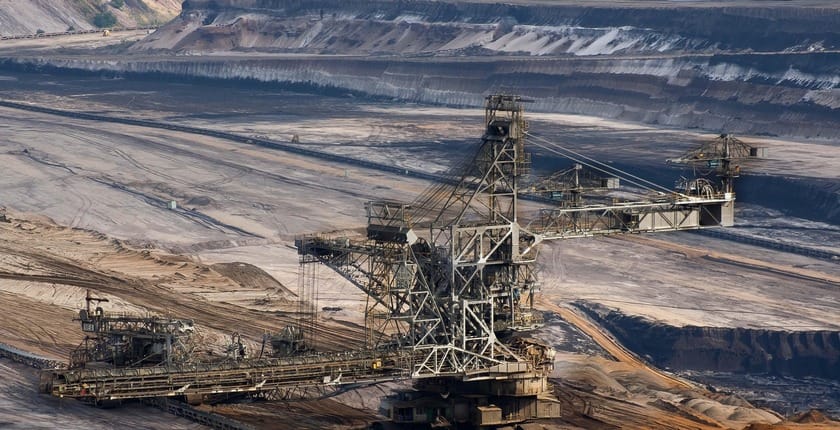
Building photovoltaic plants on abandoned open-pit coal mines could add nearly 300 GW of new solar worldwide, equivalent to 15% of the current global capacity, according to a survey by Global Energy Monitor (GEM). Greece and three Western Balkan countries are among the global leaders in projects to build solar at abandoned coal mines.

It shows that over 300 open-pit coal mines recently out of commission could house around 103 GW of photovoltaic capacity, while upcoming closures of 127 large operations could host an additional 185 GW of solar. Nearly all abandoned coal mines and upcoming closures covered by the survey are in close proximity to existing grid infrastructure, including substations and transmission lines.

The 15% increase in solar capacity could cover the electricity needs of Germany

GEM estimates that this 15% increase in the global solar capacity would be roughly enough to meet the annual electricity consumption of a country like Germany. The report also notes that coal mine to solar conversion is a practice that aligns land reclamation with clean energy goals and local job creation.

GEM recalls that in 2024, total solar capacity additions in the world reached a record 599 GW, with more than 2 TW of utility-scale projects currently under development.

GEM: China is the global leader in coal-to-solar transition

China is the global leader in coal-to-solar conversion, with 90 projects already operational, totaling 14 GW, and 46 more in the pipeline, with a combined capacity of 9 GW, according to GEM’s survey. Australia has 2.7 GW of announced projects, followed by the United States, with about 1.3 GW of announced projects and as much in the pre-construction phase.

In Europe, Greece leads the way, with 1.44 GW of announced projects and 550 MW in the pre-construction phase, while Germany has a total of 868 MW, of which 20% are already operating and 75% are in the pre-construction phase, according to GEM’s data.

In the Western Balkans, North Macedonia has 100 MW of projects under construction and another 100 MW announced, followed by Bosnia and Herzegovina, with 115 MW in the pre-construction phase, and Serbia, with 97 MW of announced projects.

GEM’s survey covered only open-pit coal mines decommissioned in the last five years and those whose closure is expected by the end of 2030.

However, according to announcements from developers and grid operators, several large-scale PV projects on coal land have already been completed in the region tracked by Balkan Green Energy News.

In Greece, the capacity in operation is nearing 1 GW. In North Macedonia, a part of the REK Oslomej coal power complex is now home to three solar power plants, with a total capacity of 140 MW, while in Serbia, the 9.75 MW Petka PV plant is about to go online.