by in News

North Macedonia Launches First-Ever Tender for 150 Electric Buses Worth EUR 51 Million

The Ministry of Transport of North Macedonia has launched a public tender for the procurement of electric buses for urban transport, marking the country’s first such purchase. The authorities expect the move to curb air pollution, enhance the quality of public transport services, and reduce long-term operating costs.

North Macedonia is joining regional peers Croatia and Bosnia and Herzegovina, which are also advancing electric bus procurement processes. Macedonian officials first announced the initiative in December 2024.

150 Electric Buses and 75 Charging Stations Planned

The ministry has issued a public call for the acquisition of 150 eco-friendly electric buses and 75 charging stations. Under the plan, 100 buses will be allocated to the Skopje, while the remaining 50 will serve other municipalities across the country.

Delivery is structured in three phases. The selected supplier will be required to deliver the first 30 buses and 15 charging stations within six months. An additional 60 buses and 30 stations must be supplied within one year, followed by the final 60 buses and 30 stations within 18 months.

The total value of the procurement is estimated at MKD 3.1 billion (EUR 51 million).

Technical Requirements and Warranty Conditions

According to the tender documentation, each bus must offer a minimum driving range of 325 kilometers on a single charge, in line with the SORT II standard. The required minimum battery capacity is 360 kWh.

The supplier must provide a four-year warranty covering both the buses and their batteries, as well as ensure the availability of spare parts for ten years. Each of the 75 charging stations is required to have a capacity of at least 120 kW per charger.

The deadline for bid submissions is March 30, 2026. The main selection criterion will be price, determined through an electronic auction process.

Strategic Investment in Cleaner and More Efficient Transport

The ministry described the procurement as a clear political commitment to environmental protection and to improving the efficiency of public transport in Skopje and other municipalities.

According to the authorities, the investment sends a strong signal in the fight against air pollution while raising the quality of public transport services. In addition to environmental gains, the ministry emphasized the long-term economic viability of the project, citing lower maintenance and energy costs associated with electric vehicles.

The procurement forms part of a broader strategic plan aimed at transforming the urban transport system and enhancing the overall efficiency of the national transport network.

Regionally, Croatia is in the process of purchasing 206 electric buses for its cities, while Bosnia and Herzegovina is acquiring electric vehicles for Sarajevo.

At the EU level, the shift toward cleaner public transport is accelerating. According to Transport & Environment, 60% of all new city buses registered in the European Union last year were powered by electricity or hydrogen, underlining the pace of decarbonization in the sector.
by in News

Zagreb kicks off decarbonization of public transport

Zagreb’s public transport utility ZET has received EUR 21 million from the Government of Croatia to install chargers for electric buses.

Croatia has earmarked EUR 50 million for firms providing public urban and suburban transport services to install chargers for electric buses. Zagreb is also in the process of procuring 70 electric buses.

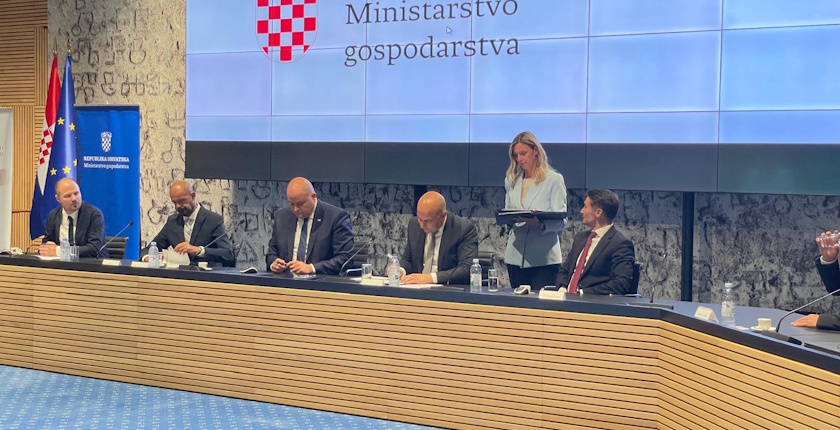
The grant agreement was signed by Minister of Economy Ante Šušnjar, public transport utility ZET’s CEO Marko Bogdanović, and Luka Balen, manager of the Environmental Protection and Energy Efficiency Fund.

The EUR 21 million agreement is from the public call on charging infrastructure for electric buses, according to the Ministry of Economy.

ZET will install 62 dual e-chargers

The funds are from the National Recovery and Resilience Plan 2021-2026.

ZET intends to build the devices at the Podsused location. As part of the project, the company will install 62 dual chargers, providing 124 charging points for low-floor electric buses.

Minister Ante Šušnjar underlined that it is an important step toward decarbonizing public city transportation.

With an investment worth over EUR 21 million, the government is backing the decarbonization and sustainable future of Zagreb, Šušnjar added.

Balen: Other cities and municipalities are also committed to decarbonization through smart city projects

Luka Balen, manager of the Environmental Protection and Energy Efficiency Fund, pointed out that other Croatian cities and municipalities are also committed to decarbonizing transportation. It is evident from the smart city projects co-financed by the fund.

Local authorities, through projects involving smart management, aim to reduce traffic jams and to offer citizens alternative transport options, such as urban bike systems, and cleaner urban transportation, Balen stressed.

ZET CEO Marko Bogdanović highlighted the agreement as a historic step and the start of the decarbonization of public transport in Zagreb.

After purchasing the first electric buses in Croatia, ZET and Zagreb are once again leading the implementation of new technologies in the region by signing the agreement for the installation of chargers for e-buses, Balen said.

ZET is one of 18 pre-selected public transport operators eligible for grants under the public call. The total value of ZET’s project is EUR 27.4 million.

by in News

North Macedonia kicks off project to replace taxis with electric vehicles

North Macedonia plans to subsidize the purchase of 200 electric vehicles for taxi drivers to improve urban transportation and reduce air pollution.

The country’s first move toward electrifying public transportation was announced last year by Prime Minister Hristijan Mickoski, who said 100-120 electric buses would be purchased.

Now, in Skopje, the Ministry of Environment and Spatial Planning and an association of cab drivers have presented a project to subsidize the first 200 electric vehicles for them, as part of efforts for cleaner, quieter, and more efficient urban transportation for the citizens of Skopje and the entire country.

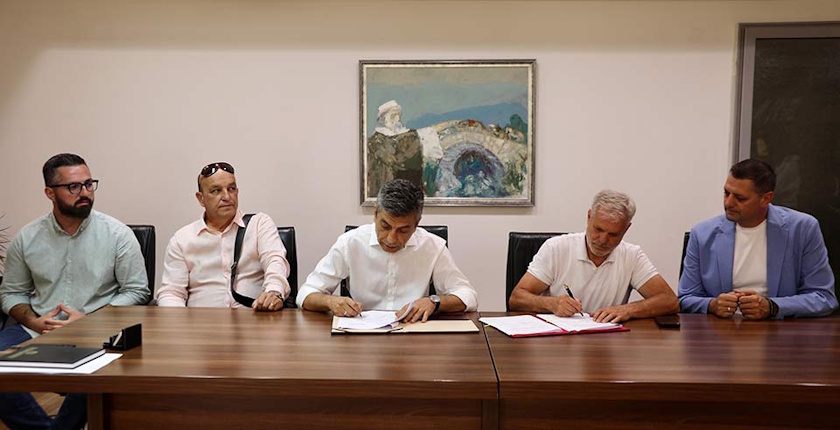
The two sides signed a memorandum of cooperation.

The average price of electric cars in the program would be EUR 28,000

Of note, Skopje is one of the cities with the most polluted air in the world.

According to Izet Mexhiti, First Deputy Prime Minister and Minister of Environment and Spatial Planning, the project represents a concrete and important step toward transforming urban transportation. He added it is part of the strategy to fight air pollution and improve the quality of life in urban areas.

Photo: Ministry of Environment and Spatial Planning

The ministry and the union presented an electric vehicle that meets high environmental standards – without polluting emissions or noise, and with high energy efficiency. Mexhiti stressed that such vehicles would, in several phases, replace the current diesel, petrol, or natural gas vehicles, bringing significant benefits to citizens, taxi drivers, and the environment.

The average price of the said electric cars is EUR 28,000, putting a total cost for 200 vehicles at about EUR 5.6 million. The ministry’s subsidy will be 15% or around EUR 840,000 in total.

There will be a significant reduction in noise pollution

Mexhiti asserted that the replacement of cabs would result in a reduction of more than 2,700 tons of CO2 emissions annually, an effect equivalent to planting over 120,000 trees. He claimed urban noise would be substantially decreased, especially in residential areas.

The official recalled that his ministry has launched a car-sharing system in Skopje with the first 100 electric vehicles and a public system for electric scooters and bicycles in several cities.

In cooperation with the European Union, through the EU for Clean Air program, six electric buses were donated to the City of Skopje, capacities to monitor air pollution have been increased, and tens of thousands of seedlings have been planted across the country, Mexhiti added.

According to Abdullah Rushiti, the president of the union, the greatest benefit of the project is the clean air for the citizens. Three to four thousand taxi drivers operate in Skopje every day, which adds significantly to pollution, he pointed out.