by in News

Croatia launches subsidy call for electric taxi, delivery, car-sharing vehicles

The Government of Croatia has launched a public call to grant subsidies for the purchase of electric vehicles intended for use in taxi, delivery, and car-sharing services.

This is the first public call in Croatia for co-funding for the purchase of electric vehicles for taxi, delivery, and car-sharing services.

The program for the allocation of non-refundable aid was published by the Croatian Ministry of Environment and Green Transition. The call is part of a mechanism for investments in road transport with zero emissions.

The grants were secured via the European Union’s Modernisation Fund.

There is EUR 22 million earmarked for taxi drivers,

From the entire EUR 45 million package, taxi drivers are entitled to EUR 22 million, versus EUR 20 million for delivery vehicles, while EUR 3 million is set for car sharing providers, according to the public call.

The ministry aims to support the purchase of zero-emission vehicles – EVs of categories M1 or N1, to achieve a reduction in greenhouse gas emissions in the transport sector by 20.99% by 2030 from the 2005 level.

In category M1 are passenger vehicles with a maximum of nine seats, and N1 are light commercial vehicles with a maximum permissible weight of 3.5 tons. The maximum subsidy per vehicle is EUR 9,000, meaning the call should co-finance the purchase of at least 5,000 EVs.

North Macedonia is supporting the purchase of EVs for taxi drivers

The submission of applications kicks off on January 15, 2026. It lasts until the funds are exhausted, or at the latest until September 30, 2026.

Three months ago a subsidiy program for taxi services was launched in North Macedonia.

The Ministry of Environment and Spatial Planning and an association of cab drivers are implementing a project to subsidize 200 EVs.

It is a part of efforts for cleaner, quieter, and more efficient urban transportation for the citizens of Skopje and the entire country. It is one of the cities with the most polluted air in the world.

by in News

Croatia launches subsidy call for electric taxi, delivery, car-sharing vehicles

The Government of Croatia has launched a public call to grant subsidies for the purchase of electric vehicles intended for use in taxi, delivery, and car-sharing services.

This is the first public call in Croatia for co-funding for the purchase of electric vehicles for taxi, delivery, and car-sharing services.

The program for the allocation of non-refundable aid was published by the Croatian Ministry of Environment and Green Transition. The call is part of a mechanism for investments in road transport with zero emissions.

The grants were secured via the European Union’s Modernisation Fund.

There is EUR 22 million earmarked for taxi drivers,

From the entire EUR 45 million package, taxi drivers are entitled to EUR 22 million, versus EUR 20 million for delivery vehicles, while EUR 3 million is set for car sharing providers, according to the public call.

The ministry aims to support the purchase of zero-emission vehicles – EVs of categories M1 or N1, to achieve a reduction in greenhouse gas emissions in the transport sector by 20.99% by 2030 from the 2005 level.

In category M1 are passenger vehicles with a maximum of nine seats, and N1 are light commercial vehicles with a maximum permissible weight of 3.5 tons. The maximum subsidy per vehicle is EUR 9,000, meaning the call should co-finance the purchase of at least 5,000 EVs.

North Macedonia is supporting the purchase of EVs for taxi drivers

The submission of applications kicks off on January 15, 2026. It lasts until the funds are exhausted, or at the latest until September 30, 2026.

Three months ago a subsidiy program for taxi services was launched in North Macedonia.

The Ministry of Environment and Spatial Planning and an association of cab drivers are implementing a project to subsidize 200 EVs.

It is a part of efforts for cleaner, quieter, and more efficient urban transportation for the citizens of Skopje and the entire country. It is one of the cities with the most polluted air in the world.
by in News

EPS plans to build solar power plant on TENT A ash dump

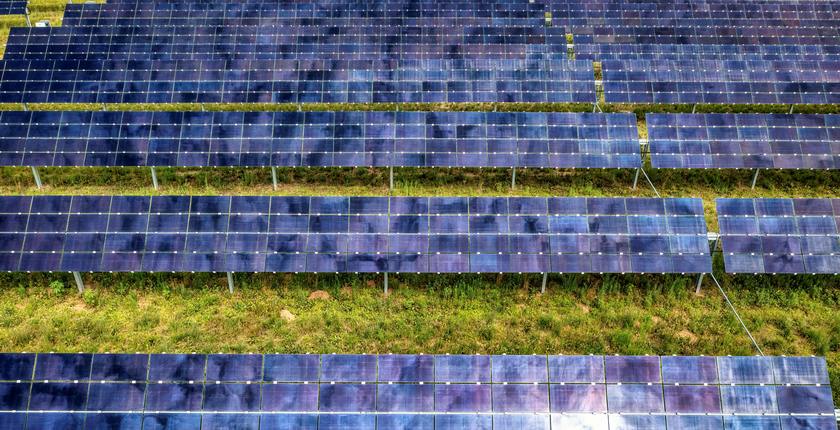
Serbia’s state power utility, Elektroprivreda Srbije (EPS), has invited bids for producing a preliminary feasibility study and conceptual design for a solar power plant on the ash disposal site of the Nikola Tesla A (TENT A) thermal power plant in Obrenovac.

The study should assess the feasibility and viability of the project, as well as the total solar potential of the site. The estimated value of the contract is RSD 14.91 million, and the deadline to submit bids is 23 January 2026.

The document must clearly define the proposed capacity of the planned solar power plant, the grid connection method, and the expected operating regime, according to the public call.

The capacity of the future solar power plant will be determined by the study

The project aims to expand EPS’ renewable energy capacities, reduce dependence on fossil fuels, and remediate the ash disposal site.

In July, EPS connected to the grid its first larger photovoltaic facility, the 10 MW Petka solar power plant. The plant is located in the Kostolac coal mining complex east of Belgrade, next to a 66 MW wind farm, which was put into trial operation in late November.

The design of the planned solar power plant at the TENT A ash disposal site should allow for integration with TENT’s existing safety and SCADA systems, while energy stability should be ensured through backup power sources, including solar panels with battery storage and/or an uninterruptible power supply (UPS) system.

The project should envisage battery energy storage

The photovoltaic panels should have a minimum power of 600 Wp, a minimum efficiency of 24%, and guaranteed production over 30 years of operation, while the efficiency of the inverters must be around 98% by European standards.

The part of the TENT A ash disposal site allocated for the solar power plant is slated for closure, and its usable area is about 67.2 hectares. The exact usable area will be determined following the completion of the study.

The selected bidder will be required to complete the task within six months of receiving all necessary documentation from EPS.

by in News

EPS plans to build solar power plant on TENT A ash dump

Serbia’s state power utility, Elektroprivreda Srbije (EPS), has invited bids for producing a preliminary feasibility study and a conceptual design for a solar power plant on the ash disposal site of the Nikola Tesla A (TENT A) thermal power plant in Obrenovac.

The study should assess the feasibility and viability of the project, as well as the total solar potential of the site. The estimated value of the contract is RSD 14.91 million, and the deadline to submit bids is 23 January 2026.

The document must clearly define the proposed capacity of the planned solar power plant, the grid connection method, and the expected operating regime, according to the public call.

The capacity of the future solar power plant will be determined by the study

The project aims to expand EPS’ renewable energy capacities, reduce dependence on fossil fuels, and remediate the ash disposal site.

In July, EPS connected to the grid its first larger photovoltaic facility, the 10 MW Petka solar power plant. The plant is located in the Kostolac coal mining complex east of Belgrade, next to a 66 MW wind farm, which was put into trial operation in late November.

The design of the planned solar power plant at the TENT A ash disposal site should allow for integration with TENT’s existing safety and SCADA systems, while energy stability should be ensured through backup power sources, including solar panels with battery storage and/or an uninterruptible power supply (UPS) system.

The project should envisage battery energy storage

The photovoltaic panels should have a minimum power of 600 Wp, a minimum efficiency of 24%, and guaranteed production over 30 years of operation, while the efficiency of the inverters must be around 98% by European standards.

The part of the TENT A ash disposal site allocated for the solar power plant is slated for closure, and its usable area is about 67.2 hectares. The exact usable area will be determined following the completion of the study.

The selected bidder will be required to complete the task within six months of receiving all necessary documentation from EPS.

by in News

Montenegro launches second BESS tender but for drastically smaller capacity

Power utility Elektroprivreda Crne Gore has launched its second battery energy storage system procurement tender. The required capacity is drastically lower than in the first call.

The initial public procurement was canceled because state-owned energy company Elektroprivreda Crne Gore (EPCG) didn’t obtain approval from the Government of Montenegro to take a loan for a EUR 58 million project.

The new tender envisages the procurement of a battery between 100 kW and 130 kW, with 200 kWh to 260 kWh in capacity. This is a pilot project, and the procurement is valued at EUR 75,000.

The canceled purchase was for two battery energy storage systems (BESS), at 30 MW and 120 MWh each.

The battery will be used on the distribution network

Potential locations include hydropower plant (HPP) Perućica, EPCG’s steel mill Željezara Nikšić, and the Pljevlja thermal power plant.

In the new call, the winning bidder will be obliged to secure a location for installing and testing the pilot BESS, according to the documentation.

EPCG explained that over the previous three years, its projects Solari 3000+, 500+, and 5000+ enabled a strong pace of the addition of prosumer solar power plants to the low-voltage, distribution network in Montenegro.

Although distributed generation has clear financial and ecological benefits, its rapid growth simultaneously brings a string of technical challenges for the distribution network, which was historically developed solely for supplying consumers and for unidirectional energy flow, according to the tender’s documentation.

EPCG sees the installation of batteries in substations as a solution to technical challenges caused by prosumers

The company sees the installation of BESS units within 10/0.4 kV substations as the solution for these challenges.

These batteries would be charged during the hours when photovoltaic facilities have high output in order to reduce and prevent reverse power flow. The idea is to discharge BESS units during hours of peak consumption and low voltage.

The main goal is to minimize voltage deviations in areas that the substations cover, during periods of production and consumption fluctuations. It would increase the hosting capacity for new prosumers, and enhance the stability of the distribution grid under an increased PV plant integration.

Scalability of the battery is one of the conditions for the bidders set by EPCG.

by in News

Zagreb kicks off decarbonization of public transport

Zagreb’s public transport utility ZET has received EUR 21 million from the Government of Croatia to install chargers for electric buses.

Croatia has earmarked EUR 50 million for firms providing public urban and suburban transport services to install chargers for electric buses. Zagreb is also in the process of procuring 70 electric buses.

The grant agreement was signed by Minister of Economy Ante Šušnjar, public transport utility ZET’s CEO Marko Bogdanović, and Luka Balen, manager of the Environmental Protection and Energy Efficiency Fund.

The EUR 21 million agreement is from the public call on charging infrastructure for electric buses, according to the Ministry of Economy.

ZET will install 62 dual e-chargers

The funds are from the National Recovery and Resilience Plan 2021-2026.

ZET intends to build the devices at the Podsused location. As part of the project, the company will install 62 dual chargers, providing 124 charging points for low-floor electric buses.

Minister Ante Šušnjar underlined that it is an important step toward decarbonizing public city transportation.

With an investment worth over EUR 21 million, the government is backing the decarbonization and sustainable future of Zagreb, Šušnjar added.

Balen: Other cities and municipalities are also committed to decarbonization through smart city projects

Luka Balen, manager of the Environmental Protection and Energy Efficiency Fund, pointed out that other Croatian cities and municipalities are also committed to decarbonizing transportation. It is evident from the smart city projects co-financed by the fund.

Local authorities, through projects involving smart management, aim to reduce traffic jams and to offer citizens alternative transport options, such as urban bike systems, and cleaner urban transportation, Balen stressed.

ZET CEO Marko Bogdanović highlighted the agreement as a historic step and the start of the decarbonization of public transport in Zagreb.

After purchasing the first electric buses in Croatia, ZET and Zagreb are once again leading the implementation of new technologies in the region by signing the agreement for the installation of chargers for e-buses, Balen said.

ZET is one of 18 pre-selected public transport operators eligible for grants under the public call. The total value of ZET’s project is EUR 27.4 million.

by in News

50 MW Trusina wind project in BiH gets fresh start

The Ministry of Energy and Mining of the Republic of Srpska has issued a public call for a concession to build and operate the Trusina wind farm in the municipality of Nevesinje, with an installed capacity of up to 50 MW. The move paves the way for reviving one of the largest wind projects in the Republic of Srpska, which has been stalled for years.

The investment is valued at BAM 130 million (EUR 66.5 million), with a projected annual electricity output of about 160 GWh. The new concession procedure was initiated by Sarajevo-based SDL Energy Company.

Wind farm Trusina would generate 160 GWh of electricity per year

The concession can be granted for a period of up to 50 years, and the produced electricity would be sold on the market, according to the public call. If awarded, the contract will include a one-time concession fee of BAM 650,000 (EUR 332,000), as well as BAM 0.0055 (EUR 0.0028) per kWh of electricity produced.

The deadline to submit bids is 30 days from the publication of the call.

The Republic of Srpska is one of the two entities comprising Bosnia and Herzegovina. The other one is called the Federation of BiH.

Challenges from the very beginning

The first concession agreement for the construction of the Trusina wind farm was signed back in 2012. The firm that was granted the concession, called Eol prvi, was founded by Serbia-based Omega plus, but Croatian firm Kermas energija joined the project and subsequently acquired a majority stake in Eol prvi.

However, the concession agreement was terminated in 2019 due to Kermas’ failure to provide a bank guarantee or make any significant progress in implementing the project.

The first concession was scrapped in 2019

Kermas reportedly threatened arbitration against Bosnia and Herzegovina, claiming BAM 200 million (EUR 102.3 million) in damages. However, in May this year, it expressed willingness to resolve the matter amicably, eKapija reported, citing information from the Office of the Attorney General of BiH.

Another dispute involved a EUR 38.2 million lawsuit filed by Omega plus against Kermas. The lawsuit concerned lost profits from the unrealized project, as well as issues related to the transfer of ownership in Eol prvi.

Initially, Omega was awarded BAM 21.1 million (EUR 10.8 million), but the ruling was later overturned.

by in News

Croatia’s HEP to install 90 solar power plants on rooftops of its facilities

Croatia’s power utility Hrvatska Elektroprivreda intends to install 90 solar power plants on its facilities across Croatia.

HEP ESCO, a subsidiary of Hrvatska Elektroprivreda (HEP), has launched a public procurement for the installation of 90 photovoltaic plants under a design-and-build model and on a turnkey basis.

The firm develops, implements, and finances energy efficiency projects based on the ESCO model.

The investment is estimated at EUR 5.3 million, and the deadline for submitting bids is November 3.

HEP ESCO plans to sign a contract with the best bidder within 90 days after selecting it. The deadline for the completion of works will be 18 months, according to the public call.

Five groups of solar power plants

The public call is divided into five geographical groups in Croatia.

Group 1 is for Zagreb and its surroundings. Solar panels would be installed at ten locations, with an estimated investment of EUR 1.2 million. Group 2 covers hydropower plants Zavrlje, Orlovac, Peruća, and Zakučaci in the coastal region of Dalmatia, as well as power distribution facilities. The works in the segment are valued at EUR 770,000, local media reported.

Four cities in the region of Slavonia make up the third group, with 20 locations. Solar panels would be installed for EUR 1.21 million in Virovitica, Požega, Vinkovci, and Vukovar.

HEP has over 50 solar power plants on the rooftops of its buildings and facilities

A total of 15 locations in the areas of Međimurje and Zagorje and the Sisak-Moslavina county, and including hydropower plant Ozalj, all in northwestern Croatia, are in the fourth group. The estimated value is EUR 1.1 million.

The value of the investment in Istria, Primorje, and Gorski Kotar is EUR 1.03 million. It entails the Fužine hydropower plant, Rijeka, Vinodol, and electricity distribution facilities.

Of note, HEP has more than 50 solar power plants on the rooftops of its buildings and facilities.

HEP Proizvodnja, HEP’s power production arm, has 12 PV plants on administrative buildings, thermal power plants and hydropower plants. The total capacity is about 1.5 MW. HEP ODS, the country’s distribution system operator, has another 44 solar power plants with a total capacity of 1.1 MW on its roofs.

by in News

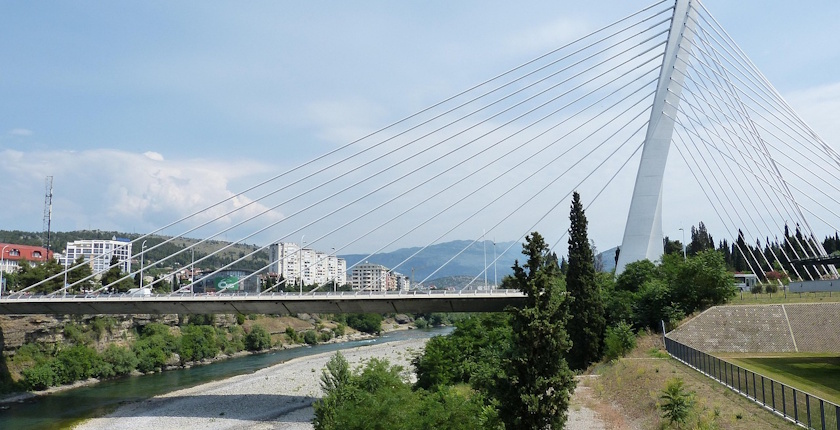
Montenegro’s capital Podgorica preparing feasibility study for waste incinerator

Municipal waste utility Deponija has made the first step towards building a waste-to-energy facility.

Deponija, the utility in charge of waste management in Montenegro’s capital, launched a public call for the production of a feasibility study for the construction of a municipal waste incinerator within the territory of the city of Podgorica.

The task should be implemented in line with the requirements of sustainable waste management, circular economy, and the European Union’s environmental standards, the call reads.

There is only one waste incinerator in the Western Balkans

Of note, in the Western Balkans region, there is only one waste-to-energy plant, located in Belgrade. Utilizing waste to generate energy is a legitimate component of waste management hierarchy. Incinerators are present all over Europe. Croatia and Slovenia are planning to build such facilities, though some citizens oppose it.

Deponija also listed several motives for preparing the study. They include modernization of the municipal waste management system in Podgorica, reduction of the amount of waste that ends up in the landfill, and the production of renewable energy from waste.

The enterprise also aims to align its operations with the European Union’s waste management directives and gather data for potential partners and investors to assess the project.

The main goal of the study is to establish a sustainable and economically justified system for thermal treatment of municipal waste that will contribute to solving waste management problems in Podgorica, the call reads.

Deponija requested an analysis of different thermal treatment technologies

Deponija said that the study would include technological options or comparative analysis of various waste thermal treatment technologies such as incineration, refuse-derived waste, gasification and pyrolysis.

A key part of the future document is the environmental impact assessment (EIA), which will identify potential impacts on air, water, and land, mitigation measures, and monitoring.

Mayor of Podgorica Saša Mujović supported last year the idea of building a waste-to-energy plant. At that time, he was the minister of energy.

by in News

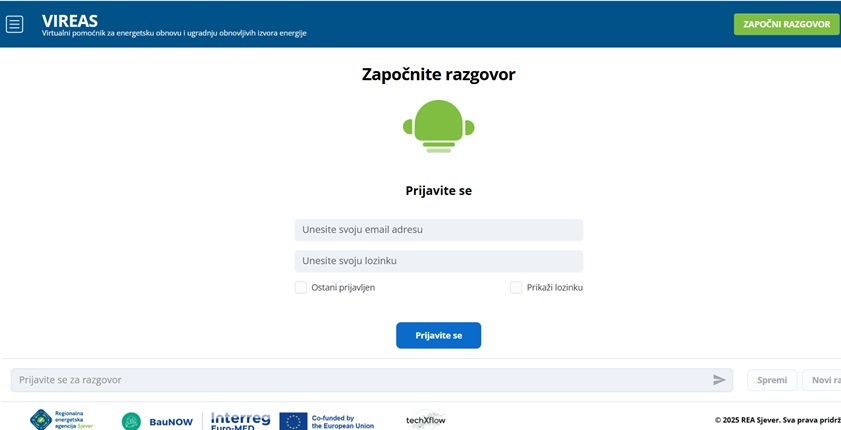
Meet VIREAS: new AI-powered virtual assistant for energy

Croatia’s Regional Energy Agency North has launched VIREAS – a virtual energy assistant powered by artificial intelligence.

VIREAS answers users’ questions about energy renovation and renewable energy sources in real time, provides recommendations tailored to users’ homes and needs, helps identify opportunities to save energy and reduce costs, and explains technical concepts in simple terms, the Regional Energy Agency North (REA North) said.

The VIREAS app is an interactive platform that enables users to engage with an AI assistant on various topics related to energy efficiency and renewable energy.

VIREAS is designed for those who want to save energy and use renewables

The idea behind the chatbot is to help owners of houses and buildings improve energy efficiency or install facilities for the use of renewable energy sources. For example, it assists in renovating the facade, replacing the heating system, or installing a heat pump or solar power plant.

It enables faster, easier, and more secure decision-making processes related to energy renovation, without the need for expert knowledge, the agency claimed.

VIREAS can be used both by people with very little knowledge and by experts

Using VIREAS is simple and user-friendly for everyone, whether you have very little knowledge or you are an expert, according to REA North.

In addition to technical recommendations, VIREAS informs users about available subsidies and public calls from the Environmental Protection and Energy Efficiency Fund or FZOEU, making it easier to access public funds and further reduce investment costs.

The agency warned that VIREAS doesn’t replace a project designer or a certified energy consultant

REA North underlined that VIREAS uses official sources of information. It includes public calls launched by FZOEU, technical rules on thermal protection and heating and cooling systems, and energy certification rulebooks.

The agency stressed that although its chatbot provides useful information and tips, it doesn’t replace a project designer or authorized energy consultant. REA North advised citizens to consult experts to make a final decision and for the preparation of project documentation.

The design of the chatbot was co-financed by the BauNOW project under the Interreg Euro-MED program.

  • 1
  • 2