by in News

Germany seeks Bolivia’s lithium as project Jadar in Serbia stalls

Germany is rushing to secure the supply of lithium from Bolivia in talks with the new government, but also to enable domestic mining operations. At the same time, Rio Tinto’s controversial project Jadar in Serbia seems dormant despite nominal support from Brussels and Berlin.

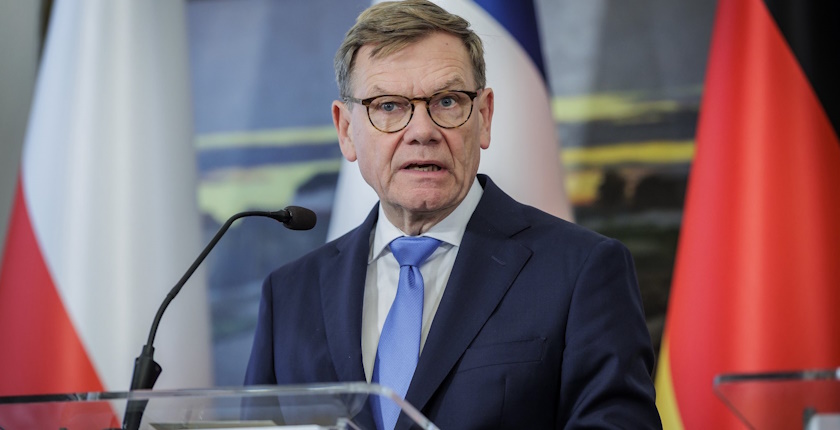
In a statement before his arrival in Bolivia, Germany’s Federal Minister of Foreign Affairs Johann Wadephul didn’t mince words.

“Our potential for cooperation is significant. Bolivia is rich in raw materials, especially lithium, which is indispensable for our energy transition, for electric mobility and for many other sectors in Germany. Bolivia also offers impressive opportunities regarding rare earth elements,” he pointed out.

First in line to speak to Bolivia’s new head of state about lithium

Wadephul noted that he is meeting the Bolivian government under President Rodrigo Paz Pereira on his third day in office “and the first real day of work.” The top German diplomat is inviting the Latin American country to join the upcoming agreement between the European Union and the Southern Common Market (Mercosur).

The race for lithium and rare earths is intensifying amid China’s dominance and the tariff wars that United States President Donald Trump’s administration is pursuing.

In Wadephul’s view, Bolivians want a way out of the ongoing economic crisis. “President Paz has announced plans to open Bolivia to the world. Bolivia has our full support in this,” he added.

Bolivia holds the world’s largest lithium reserves. Before Paz came to power, left-wing governments limited access to foreign miners for two decades.

Rio Tinto’s investment in Serbia slows down amid political turmoil

Germany has signaled that it would use its raw materials fund for support to domestic lithium mining projects that are under review. Notably, there are also investments in the extraction of the alkali metal from underground and geothermal waters, which means without excavation.

The foreign policy chief is in Bolivia at a time when Rio Tinto’s lithium mining project Jadar in western Serbia seems dormant, despite winning a strategic investment status from the European Union five months ago.

Germany was earlier very interested in the endeavor. Former Chancellor Olaf Scholz attended the signing of a memorandum of understanding in July 2024 between the EU and Serbia for a strategic partnership in sustainable raw materials, battery value chains and electric vehicles,

Serbia expects the environmental impact assessment for project Jadar to be completed in a year and a half

Speaker of the National Assembly of Serbia Ana Brnabić recently said the environmental impact assessment for project Jadar would “probably” be completed in 18 months. The next step would be to decide whether to go ahead with it.

Importantly, Serbia is in political turmoil for a whole year now.

Lithium ion batteries are necessary for electric cars, smartphones and laptops, as well as for solar and wind power plants. The demand is steadily growing.

Balkan Green Energy News has published a chronological overview of the key events in the development of the Jadar project since 2001, when Rio Tinto arrived in Serbia.

Rare earths are found in consumer goods such as smartphones and television screens, as well as in electric car engines, semiconductors and turbines.

by in News

Three cities reviving protests against Rio Tinto’s lithium project in Serbia

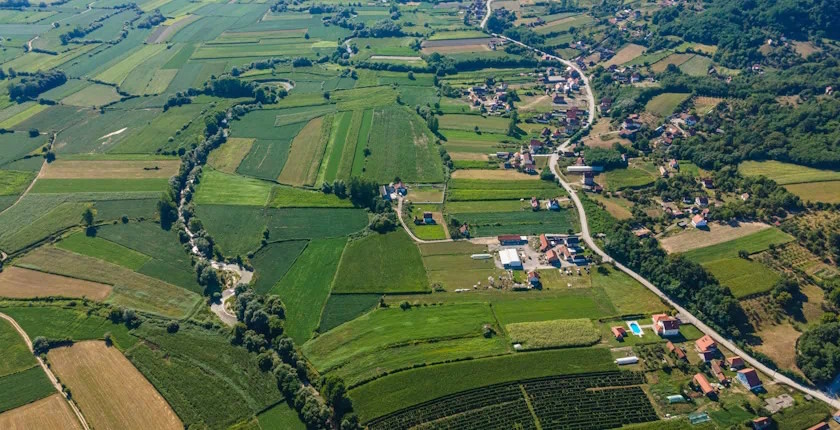
Opponents of Rio Tinto’s plan to mine and process a lithium and boron ore called jadarite in western Serbia held a protest in Loznica. Representatives of local activist group Ne damo Jadar announced that such gatherings would be organized in the nearby cities of Valjevo and Šabac as well.

Several thousand people demonstrated in the western Serbian city of Loznica against Rio Tinto’s project Jadar, marking what could be the start of another in a string of protests, which began in 2021. Activists from the area said rallies would be held in neighboring cities, too, with a possibility of expansion throughout the country.

Marijana Petković from the Ne damo Jadar group accused the authorities of breaking the law by approving new infrastructure to be built for the planned lithium and boron mining operation and a processing facility. Rio Tinto filed in February for connecting a future 110 kV transformer station to the grid. The activists are also upset because of indications that the company expects to get approval for an exploitation field. It would imply priority in mining the unique lithium and boron ore, called jadarite.

The Lotel television station in Loznica never came to the Gornje Nedeljice village nor has it given the opportunity to the opponents of the Jadar project to speak, said Nebojša Petković from local group Ne damo Jadar

At the protest, the building of local media outlet Lotel was spray-painted and a poster saying “disturbing content” was glued onto it.

“They don’t have any big influence, but they do on a part of the population in Loznica. And they never came to Nedeljice to film what we have, those houses of ours that are whole, nor to film the demolished houses. They never produced a single report. They never gave the opportunity to us or to experts, not a single opponent of the Jadar project, to come to their television studio,” Nebojša Petković from Ne damo Jadar told N1 TV.

The village of Gornje Nedeljice, where the activist group is based, is the site of the proposed mine and processing plant.

Nebojša Petković pointed out that national TV stations of France, Italy and Sweden and other countries and even one from Japan have reported about the Jadar project.

Next protest scheduled for July 24 in Valjevo

The next protest is scheduled for July 24 in Valjevo, and one will probably be held in Šabac, according to Nebojša Petković. He stressed that further activities in the three cities would be coordinated. Exploratory drilling has been conducted around Valjevo and Šabac, too, prompting numerous protests.

Petković jokingly called the three cities the Serbian Bermuda triangle and expressed hope that other areas in Serbia would join the resistance.

The planned investment has been countered by some of the biggest and most widespread protests ever held in the country, in several waves. The European Commission approved a strategic status in early June to the Jadar project.

Balkan Green Energy News has a chronological overview of the key events since 2001.

Nearby lithium project across the river Drina, in BiH, also faces resistance

Notably, in a repeated vote held recently in the National Assembly of the Republic of Srpska, a civic initiative to declare Majevica a natural park failed to receive sufficient support from lawmakers. The mountain is near Jadar, on the other side of the Drina river, in Bosnia and Herzegovina. The Republic of Srpska is one of the two political entities making up Serbia’s neigboring country, and the other one is called the Federation of BiH.

Activists are also demanding an urgent moratorium on the approval of concessions for exploration and exploitation of ores and other resources.

Citizens in the area have held multiple rallies against the local lithium mining project, supported by local authorities.

by in News

EU’s strategic status for Rio Tinto’s lithium project risks fueling tensions in Serbia

After the European Commission declared Rio Tinto’s project Jadar a strategic raw materials project, the company and Serbian officials claimed it implies the strictest environmental protection standards and that it would enable the creation of up to 20,000 highly qualified jobs. The opposition and local and environmentalist activists vowed to continue to resist the plan to launch a lithium mine and processing facility, and accused the European Union of colonialism.

The addition of the planned lithium mine near the city of Loznica in Serbia to the EU’s strategic projects for essential raw materials has again stirred up public controversy in the country, after several waves of social unrest. Rio Tinto stressed that it remains committed to dialogue with all stakeholders.

Brnabić: It’s not true that Serbia is a European mining colony

Both the global mining giant and Serbia’s National Assembly Speaker Ana Brnabić claim that project Jadar would enable the creation of up to 20,000 jobs. The environmental standards for similar projects in the EU will need to be completely replicated, she asserted. It also shows that it’s not true that Serbia is a European mining colony, like what certain people said, Brnabić added.

“We won’t be exporting our lithium, but use it for improving the standard of living,” she stated.

Of note, the European Union only endorsed the mining segment of the project as strategic, while Rio Tinto has also published plans for a processing facility for jadarite, a lithium and boron mineral.

Ecological Uprising’s leader Aleksandar Jovanović Ćuta says decision is death sentence

Member of parliament Aleksandar Jovanović Ćuta called on citizens, students and environmentalist organizations to an “all-out mobilization” and added that they wouldn’t allow lithium to be mined. He is the most prominent figure in the Ekološki ustanak (Ecological Uprising) movement. “A death sentence has been signed for everything in the Jadar valley that breathes, lives, moves and flows,” and the population in the affected area in western Serbia was “designated the destiny of becoming environmental refugees,” in his opinion.

“Anyone who includes such projects in their agendas, whether it is the European Union or Russia – such people don’t want anything good for us,” Jovanović said.

The opponents of project Jadar are accusing the EU and Serbian authorities of colonialist relations

The Kreni-promeni (Go-Change) movement, which has representatives in local parliaments in the largest cities, recalled that the Government of Serbia abolished the Jadar project in early 2022, following large environmental protests and blockades. “The latest attempts to revive the project were preceded by the controversial ruling of the Constitutional Court, which Kreni-promeni deems synchronized and contrary to the principles of the rule of law and the constitutional separation of powers,” its statement adds.

The country’s parliament never voted on a people’s initiative, signed by over 38,000 citizens, even though it was legally obligated to.

Assigning the strategic status is a new proof of colonial policy toward Serbia, which is supposed to secure raw materials for the stumbling automotive industry in the EU, according to Novi DSS, a right-wing parliamentary opposition party. There can be no jadarite mining, it stressed in its reaction.

Not enough transparency or local population’s participation in decision making

The EU’s strategic projects lack proper safeguards, transparency, and local involvement – putting human rights, indigenous rights, and environmental protection at serious risk, the EU Raw Materials Coalition (EURMC) said in a statement published by the European Environmental Bureau (EEB), a network of environmentalist groups.

It risks repeating colonial patterns of resource extraction, they warned. Several selected projects from the new list are in countries outside of the EU with weak industrial governance systems, nongovernmental organizations underscored.

Matković: The EU just added fuel to the fire

Endorsing project Jadar despite unresolved legal, environmental, and social issues suggests a troubling disregard for public opposition and due process, EEB said. The move risks reigniting tensions on the ground, it warned.

“The EU just added fuel to fire. It backed an authoritarian regime and a corporation against whom 63% of the population now stand to fight at a time when the entire country is under blockade and violence. The EU will thus lose support in Serbia and the region and probably cause further social unrest. The fact that the Serbian President Aleksandar Vučić announced the board’s decision more than a week before it was public, also raises questions of legitimacy behind the decision,” said Aleksandar Matković, a research associate from the Institute of Economic Sciences in Belgrade, Serbia.

EU fueling euroscepticism

Berlin-based Heinrich Böll Stiftung – Foundation argued that with its new move, the EU ignored the lack of rule of law in Serbia and intense domestic opposition to Rio Tinto’s investment in Serbia.

“Activists and students involved in the pro-democracy movement argue that the EU’s endorsement undermines democratic voices and risks fueling Euroscepticism in the region. With Serbia’s government under pressure from ongoing protests and corruption allegations, the EU’s move is seen as politically damaging and potentially destabilizing,” it said.

The foundation is in close relations with German opposition party Alliance 90/The Greens.

Balkan Green Energy News has published a chronological overview of the key events since 2001, when Rio Tinto arrived in Serbia.