by in News

Greece adds 340 MW of wind farms in 2025, acceleration seen for this year

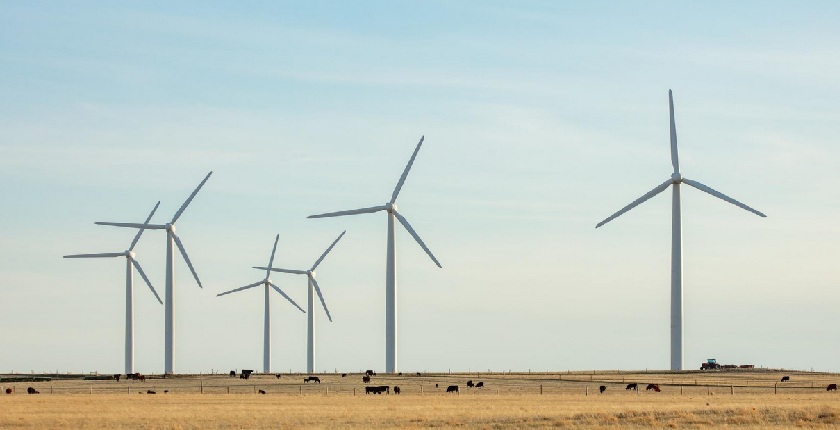
New wind capacity came in at 340 MW in Greece last year, with 76 onshore turbines installed, according to the Hellenic Wind Energy Association (HWEA or ELETAEN).

Installations increased by 6.4% on an annual scale and represented EUR 420 million in investment. Total wind capacity reached 5,695 MW in the country, with HWEA expecting a 900 MW rise in 2026.

Papastamatiou: 2 GW await connection

Based on these numbers, the wind sector appears to be going through rebirth, after several years of low to average installations. Currently, 1.1 GW of new projects are under construction or contracted and the majority is expected to come online within the next 18 months.

Added on top are 200 MW from previous auctions, which took place during the period 2018-2022. HWEA said that even though 1,592 MW was awarded, only 852.4 MW managed to connect to the grid by the end of 2025.

“Right now, about 2 GW of wind farms have an installation license, but have not been completed. Half of those are under construction or contracted. There are also 3 GW who have completed environmental licensing and await grid connection terms. Naturally, there are even more projects that go through the licensing jumble. All of them – especially the most efficient – constitute national wealth and can reduce energy costs for consumers,” said HWEA’s General Director, Panagiotis Papastamatiou.

Terna Energy and Vestas top the charts

The top 5 operators by capacity in Greece are Terna Energy (18.2%), MORE (13.6%), Iberdrola Rokas (7.2%), Principia (6.5%) and PPC Renewables (5.6%).

Vestas has the highest share among manufacturers, 44%. Enercon accounts for 25%, followed by Siemens Gamesa with 15.8% and Nordex, which is at 9.2%.

Notably, the day with the highest hourly wind share in power production was April 28, 2025, when wind farms supplied 97.2%. In total, these units covered more than 50% of the demand for 616 hours of the year.

by in News

Greece adds 340 MW of wind farms in 2025, acceleration seen for this year

New wind capacity came in at 340 MW in Greece last year, with 76 onshore turbines installed, according to the Hellenic Wind Energy Association (HWEA or ELETAEN).

Installations increased by 6.4% on an annual scale and represented EUR 420 million in investment. Total wind capacity reached 5,695 MW in the country, with HWEA expecting a 900 MW rise in 2026.

Papastamatiou: 2 GW await connection

Based on these numbers, the wind sector appears to be going through rebirth, after several years of low to average installations. Currently, 1.1 GW of new projects are under construction or contracted and the majority is expected to come online within the next 18 months.

Added on top are 200 MW from previous auctions, which took place during the period 2018-2022. HWEA said that even though 1,592 MW was awarded, only 852.4 MW managed to connect to the grid by the end of 2025.

“Right now, about 2 GW of wind farms have an installation license, but have not been completed. Half of those are under construction or contracted. There are also 3 GW who have completed environmental licensing and await grid connection terms. Naturally, there are even more projects that go through the licensing jumble. All of them – especially the most efficient – constitute national wealth and can reduce energy costs for consumers,” said HWEA’s General Director, Panagiotis Papastamatiou.

Terna Energy and Vestas top the charts

The top 5 operators by capacity in Greece are Terna Energy (18.2%), MORE (13.6%), Iberdrola Rokas (7.2%), Principia (6.5%) and PPC Renewables (5.6%).

Vestas has the highest share among manufacturers, 44%. Enercon accounts for 25%, followed by Siemens Gamesa with 15.8% and Nordex, which is at 9.2%.

Notably, the day with the highest hourly wind share in power production was April 28, 2025, when wind farms supplied 97.2%. In total, these units covered more than 50% of the demand for 616 hours of the year.

by in News

Greek authorities launch electricity market probe

The Hellenic Competition Commission (HCC) and the Regulatory Authority for Energy, Waste and Water (RAAEY or RAEWW) began a double probe into the Greek electricity market.

The move follows a report by the European Union Agency for the Cooperation of Energy Regulators (ACER) concerning the formation of wholesale prices during the period between July and September 2024.

The body focused on Greece, since it is the only country in the region of Southeast Europe for which detailed market data was available from the power exchange about the offers from producers and the supply-demand curves.

ACER has called national authorities to conduct a market probe to find out whether manipulation and capacity withholding took place during the hours with the most extreme prices.

In its announcement, HCC said it was looking into possible horizontal deals or harmonized practices between companies, with the goal of preventing, limiting or degrading competition. It is focusing especially on capacity withholding and dominant market position abuse. It explained, however, that the checks do not predetermine the outcome of the procedure.

RAAEY pointed out that the goal of its probe is to protect consumers and enforce the Regulation on Wholesale Energy Market Integrity and Transparency (REMIT).

Investigation follows industry suggestions

According to Energypress, HCC conducted raids and collected data from three particular companies, namely Public Power Corporation (PPC), Heron and Enerwave (formerly Elpedison).

In fact, authorities are examining not just the three-month period of last year, but also market operations in 2025.

Industrial consumers in Greece have been claiming for the past year that there is manipulation in the market, leading to inflated prices. They have called for an investigation and interventions to restore transparency.

“ACER‘s findings are not compatible with normal market player behavior as part of the Target Model,” commented the Chairman of the Hellenic Union of Industrial Consumers of Energy (UNICEN), Antonis Kontoleon.

by in News

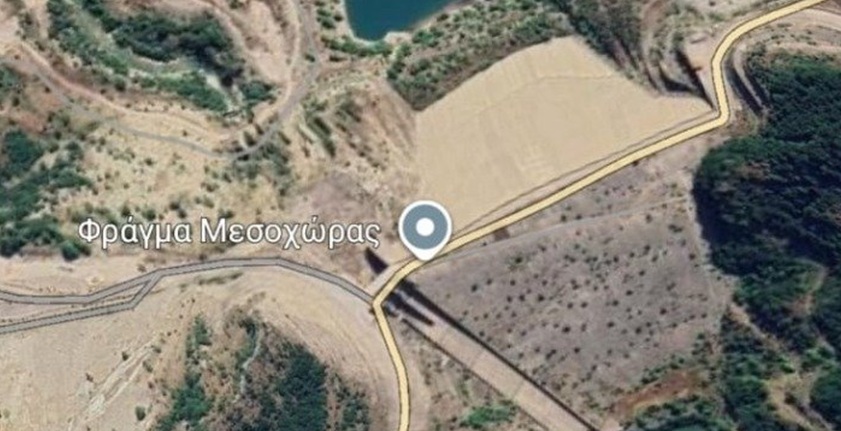
PPC receives funds for stalled Mesochora hydropower project 

Public Power Corporation has received funds to speed up its Mesochora hydropower project, stalled for 24 years.

The Greek Ministry of Environment and Energy announced that the procedures to complete the Mesochora hydropower plant (HPP) in Trikala would be significantly accelerated, ending a 24-year period of judicial deadlock and construction suspension.

Of note, the project was revived in 2021–2022.

The ministry said it signed an agreement with government-controlled Public Power Corporation (PPC or DEI), the project’s developer and operator, on the necessary studies required to finalize the 161.6 MW facility.

PPC is now responsible for commissioning the necessary relocation studies

The deal directly addresses the most sensitive issue: the relocation of residents from the affected settlement of Mesochora, the announcement revealed.

PPC is now responsible for commissioning the necessary relocation studies, with a budget of EUR 1,313,160.00, the update reads.

The ministry claimed that the government is committed to ensuring the safe relocation of the population with full compensation for property owners.

It recalled that the construction of the Mesochora HPP, located on the upper Acheloos River, started in 1986 and that the dam structure was largely finished by 2001. However, its operation was halted due to repeated appeals and long-standing legal battles at the Council of State, the country’s supreme administrative court, initiated by environmental groups and affected local communities.

Over EUR 300 million has already been invested in the project

Now a task force has been established to push forward the project and start the final construction activities by the end of 2026. The expropriation process for all necessary areas will also begin to ensure the safe and efficient functioning of the dam, the ministry underlined.

Of note, over EUR 300 million has already been invested in the project or EUR 500 million in current value.

Once operational, the plant is expected to generate approximately 360 GWh of renewable energy annually, contributing substantially to the country’s energy mix and the targets set by the revised National Energy and Climate Plan (NECP), according to the ministry.

The HPP would also provide balancing for renewable energy generation.

The meeting was attended by Minister of Environment and Energy Stavros Papastavrou, Minister of Digital Governance Dimitris Papastergiou, Mayor of Pyli Konstantinos Maravas, members of Parliament representing Trikala – Konstantinos Skrekas, Thanasis Lioutas and Katerina Papakosta-Palioura, the ministry’s General Secretary of Spatial Planning and Urban Environment Efthimios Bakogiannis and the PPC’s President and CEO Georgios Stassis and Deputy CEO Alexios Paizis.

greece Mesochora hydropower ppc relocation study
Photo: Ministry of Environment and Energy
by in News

PPC building three battery storage facilities in Greece

PPC Group has launched the construction of a battery energy storage system in the area of its Amyntaio coal plant. The company is also building BESS facilities at its thermal power plants Kardia and Meliti, as it is preparing to end coal use in Greece. One BESS unit is under construction in Bulgaria, as well. In Romania, PPC is expanding its wind park project Deleni, which would bring its operational portfolio in the country to over 1.5 GW.

Public Power Corp. – PPC Group is investing in energy storage in Greece and surrounding countries, complementing its solar and wind power investments and contributing to the transformation of coal regions. The government-controlled utility revealed that its future battery energy storage system near the Amyntaio coal plant in the Western Macedonia region is under construction.

The new station will consist of batteries with 50 MW in operating power and a duration of four hours, translating to a capacity of 200 MWh. Wholly-owned subsidiary PPC Renewables is responsible for the project. It is for liquid-cooled batteries of the LFP (lithium iron phosphate) technology.

The construction of two more electrochemical storage stations is already underway in the same northern region, in the areas of the Kardia and Meliti thermal power plants, the company pointed out. Their combined capability would be 98 MW, for 196 MWh in capacity.

Western Macedonia region to host 860 MW of energy storage

The role of energy storage units for the system is critical, as they aim to support the operation of adjacent photovoltaic power plants and contribute to the stability of the electricity system, PPC Group added. It is planning 860 MW of energy storage in the Western Macedonia coal region. The company said it would create 1,300 jobs in the construction phase and hundreds during operation.

Two pumped storage hydropower projects are included in the portfolio. The one that would transform the Kardia mine is for 320 MW and eight hours, and the facility at the South Field mine would have 240 MW and a 12-hour duration. PPC Group said it has completed the permitting process for the latter.

Solar power plants of 2.13 GW in northern Greece nearing completion

Earlier this month, the utility said its solar power projects in Western Macedonia of 2.13 GW overall are moving ahead at a fast pace and within schedule, in areas around coal plants Ptolemaida, Kardia, Agios Dimitrios and Amyntaio. Overall, upon their completion, the photovoltaic clusters in the region, largest ones in the entire Europe, will generate almost 3.15 TWh of electricity per year, the company added.

Coal land in the Western Macedonia region is turning into endless solar parks

It is equivalent to over 6% of the annual energy consumption in the Greek mainland. Utilising the land of the former lignite mines of Ptolemaida, Kardia, and Agios Dimitrios, PV plants totaling 1.19 GW are being installed, of which 90% is complete and some is in operation.

The clusters include PPC Group’s flagship project, of 550 MW. It would be the biggest facility of its kind in Southeastern Europe excluding Turkey.

In cooperation with the German company RWE, the construction of photovoltaic plants in Amyntaio of 940 MW overall is also advancing rapidly toward completion, the latest update reads.

Advancing investments in Bulgaria, Romania

In addition, the company said it is building a BESS unit of 25 MW and 55 MWh in neighboring Bulgaria.

As for other recent news, PPC said it is expanding its Deleni wind park project in Vaslui county in northwest Romania. The first phase, 140 MW, is supposed to be completed by the end of the year. The addition would amount to 85 MW, consisting of 14 turbines, the Greek company added.

The site is at the Bogdănița commune. With the 225 MW in Deleni, PPC in Romania would reach 1.5 GW in operational capacity.

by in News

Greek offshore wind farm program at standstill for more than one year

More than three years after the first offshore wind law, Greece made little progress toward achieving the national goal.

According to the National Energy and Climate Plan (NECP), the country should have its first 1.9 GW of offshore wind farms by 2030.

However, the entire program seems to be on hold. No government official has mentioned it within the past year.

The next steps in the process should be the approval of the National Offshore Wind Program through a joint ministerial decree. According to Insider.gr, the decree has been ready for more than a year now, waiting for the signature. It sent a message to investors that the pace is slow.

Companies selected in the initial auctions would conduct exploration in each allocated offshore zone. The main auctions would follow, for the winners to install the wind power plants.

Exploration permits have so far been provided only to Public Power Corporation (PPC), Terna Energy and Motor Oil Hellas, for a zone in the northeast, offshore Alexandroupolis. It is for pilot projects totaling 600 MW. The wind parks are supposed to become operational by 2029, but the Ministry of Environment and Energy has not yet requested approval from the European Commission for a support mechanism through contracts for difference (CfDs).

More wind needed for the energy mix

It should be noted that the government has acknowledged the need for more wind energy in the country’s renewables mix. Currently, it is dominated by photovoltaics, leading to an imbalance and ever-higher curtailments.

Offshore wind farms are seen more as a source of baseload electricity than solar and onshore wind power, given their high capacity factor, at around 50%.

Advisory firm Ricardo said recently that the Greek NECP is likely going to fail, partly as a result of missing its offshore wind goal.

by in News

Race against time to secure EU funding for waste-to-energy plants in Greece

Hostile reactions from citizens and the opposition by municipal authorities threaten to derail Greece’s efforts to build six waste-to-energy plants. Moreover, time is running out to secure EUR 800 million in European funding.

The Ministry of Environment and Energy is expected to publish a call for waste-to-energy projects planned in Attica, Western Macedonia, Rodopi, Peloponnese, Boeotia (Viotia) and Crete. Total investment would amount to EUR 1 billion, for 1.19 million tons in capacity. However, time is running out to secure EUR 800 million in European funding set aside for them and the accompanying recycling plants.

Greece has been warned several times by the European Commission and fined for failing to fulfil its obligations in waste management. The country still relies mostly on landfills to handle municipal waste, instead of modern solutions. Ideally, useful materials should be sorted for recycling before the waste gets burned in incinerators to produce energy.

Two of the proposed units, the ones in Rodopi and Western Macedonia, are expected to provide district heating. The Ptolemaida 5 lignite-fired plant supplies district heating in the coal region of Western Macedonia in the country’s north, but it is scheduled to be decommissioned by 2028 at the latest.

Its owner, Public Power Corporation (PPC or DEI) aims to complete a waste-to-energy plant by then. Other prospective investors include GEK Terna, Metlen, Aktor and Motor Oil Hellas, all big players in the country’s energy market.

High fees and pollution worry municipalities

Many local authorities have expressed their objections to hosting these plants, fearing a rise in municipal fees and pollution. A discussion is underway in numerous municipal councils. They could lodge appeals to the Supreme Court and delay the process.

Amanatidis: Cancel all waste-to-energy plans

The regional council of Western Macedonia recently voted overwhelmingly to reject the plan for PPC’s planned unit from the ministry’s strategic environmental assessment (SEA). Governor Giorgos Amanatidis called on the government to withdraw the study and cancel the project. Municipalities in the same region and other institutions are also against an incinerator.

European funding through the National Strategic Reference Framework (NSRF) ends in 2027. The government and investors have until mid-2026 for implementation, Newmoney reported, adding that waste-to-energy projects take two to three years to complete.

Recently, another initiative, the Apollo program, for investments in renewable energy to lower energy costs for vulnerable consumers, lost EUR 100 million from the EU’s Recovery and Resilience Facility (RRF).

by in News

Agios Efstratios becomes Greece’s first energy-autonomous island

A hybrid energy project transforming Agios Efstratios into the first energy-autonomous island in Greece is in trial operation. The system consists of a wind turbine, solar power plant, batteries, electric boilers and a district heating network.

It is a benchmark for the non-interconnected islands that won’t be connected to the mainland grid with undersea power cables.

Agios Efstratios is no longer renowned only for its history and natural beauty. It is an example of energy autonomy and sustainability. The island, also known as Ai Stratis, became the first non-interconnected Greek island with a 100% electricity supply from renewables. And more.

A pioneering energy complex is in trial operation. Agios Efstratios, which has only some 250 permanent residents, is in a group of small islands undergoing transformation through projects launched at the national level and benefiting from European Union funding.

Terna Energy completed hybrid energy system in Agios Efstratios

The Centre for Renewable Energy Sources and Saving (CRES or KAPE), an independent public entity, is responsible for the endeavor, on behalf of the Municipality of Agios Efstratios. Terna Energy, owned by Masdar, is the contractor for the works in the small North Aegean island.

The new hybrid energy system includes a 900 kW Enercon E44 wind turbine and a solar power unit of 225 kW. Their combined annual output is estimated at above 3 GWh.

Excess electricity is stored. One unit is a Tesla Megapack battery energy storage system (BESS) of 1.25 MW in operating power and a two-hour duration. It means the capacity is 2.5 MWh. There is also an electric boiler facility of 1 MW with hot water storage tanks that can hold 500 cubic meters of water at 120 degrees Celsius. It corresponds to 25 MWh.

The district heating network in Agios Efstratios is four kilometers long. It will be tested in the winter.

An oil-fired generator operated by state-controlled Public Power Corp. (PPC) remains as backup. It can work alongside the hybrid power plant.

Greece is connecting many islands to mainland power grid

The solutions from Agios Efstratios can be applied in other islands or in microgrids, CRES noted and said residents are getting cheaper energy.

The government launched its Islands Decarbonization Fund last year, with financing from the European Investment Bank (EIB). Together they aim to provide at least EUR 1.6 billion, and mobilize total investments of EUR 3 billion to EUR 5 billion.

In the hot summer months, there are many non-interconnected islands that can’t meet their power demand, especially because of the tourist season. Some are also struggling with water supply, prompting the need for desalination, which requires electricity. They rely on fuel oil generators.

The country’s Independent Power Transmission Operator (IPTO or, in Greek, Admie) is investing in major interconnection projects. A link to the mainland grid has improved the living conditions in the Cyclades islands of Syros, Paros and Mykonos. Together with a project for the western part of the archipelago, the transmission system operator is planning subsea cables to the Dodecanese and the Northeast Aegean.

by in News

PPC launches first tender for pumped storage hydropower plant in former lignite mine

Greek Public Power Corporation (PPC or DEI) is moving forward with a pumped storage hydroelectric project at the site of its former open pit lignite mine Kardia, in a coal region in Western Macedonia.

The government-controlled power utility is seeking a design, supply, construction and commissioning contractor.

PPC announced that another tender would take place as part of the EUR 430 million project, for the ground works and civil engineering.

The criteria are strict. The company said eligible firms have completed at least one pumped storage hydropower station in the European Union within the last ten years, with a capacity of at least 70 MW and a water head of 90-450 meters. Alternatively, the requirement is at least three facilities of the same size in the last 20 years.

Interested parties can submit their proposals until October 20.

PPC’s project in Kardia received an environmental license in May from the Ministry of Environment and Energy. According to the document, there would be one upper and one lower reservoir with tunnels and a 400 kV substation. The ministry approved an “average” 130 MW capacity with an eight-hour duration, and a “maximum” of 148 MW, without defining the two features.

However, the tender sets the capacity at 320 MW, consisting of four 80 MW reversible turbines.

Apart from Kardia, PPC is planning a pumped storage hydropower system in the South Field lignite mine of Kozani, also in the country’s north, with a capacity of 227 MW and a budget of EUR 310 million. The project has also received an environmental license.

The company unveiled a EUR 5.8 billion investment program in April for both coal regions in Greece. It includes 300 MW of battery storage, 2.1 GW in photovoltaics and a 300 MW data center.

by in News

Greek coal region of Megalopolis opens new chapter after lignite

Last year, for the first time in decades, no smoke rose out of coal plants in the Peloponnese peninsula. The last two units had 500 MW together. Megalopolis is one of the two coal regions in Greece, along with Western Macedonia in the country’s north.

According to Public Power Corporation (PPC or DEI) the units Megalopolis-3 and Megalopolis-4 have now been permanently retired. Under the government-controlled utility’s plan to phase out coal completely next year, all such power plants stopped operating by now, with the exception of Ptolemaida 5, of 660 MW, which entered into operation last year. To maintain the security of supply, two units are kept in reserve, also in Western Macedonia in northern Greece.

PPC has produced a study for the reconstruction of the Megalopolis thermal power station, intending to accommodate other activities. Similar works are already underway in the local lignite mine.

New energy investments underway

The group’s investment plan involves various renewable energy and storage projects in Megalopolis to support the area’s energy transition. It is building two photovoltaic farms of 125 MW each, as part of a 490 MW cluster in the area.

The plan includes a 181 MW pumped storage hydropower station in the former lignite mine.

Based on the government’s Just Transition Development Program, Megalopolis will also host a battery factory, by Enercells, as well as two data centers, by Eunice and Kiefer, of 5 MW each. The investments have been approved by the Ministry of Economy and Finance, to seek funding from the European Union’s Just Transition Fund (JTF).

PPC expressed the belief that data centers are important for coal regions. Earlier this year, the group’s CEO George Stassis said they are ideal for such investments as the land and grid connections are already available. PPC is planning a 300 MW data center in Western Macedonia, but it hasn’t announced anything similar for Megalopolis yet.