by in News

MORE puts 43.2 MW wind park in northern Greece into regular operation

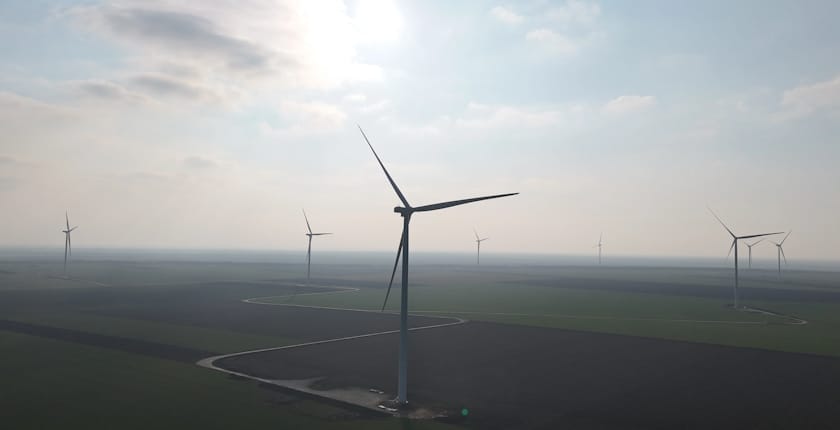
Motor Oil Renewable Energy (MORE) received the operating license for its 43.2 MW wind power plant near the border with North Macedonia. The facility was in test operation since the fourth quarter of 2023.

MORE has 839 MW in renewable electricity plants in operation, aiming to reach 2 GW by 2030. There is already almost 3 GW in the project pipeline. The subsidiary of oil refiner Motor Oil Hellas recently received the operating license for its Kellas (Kella) wind park in Amyntaio in the Western Macedonia region.

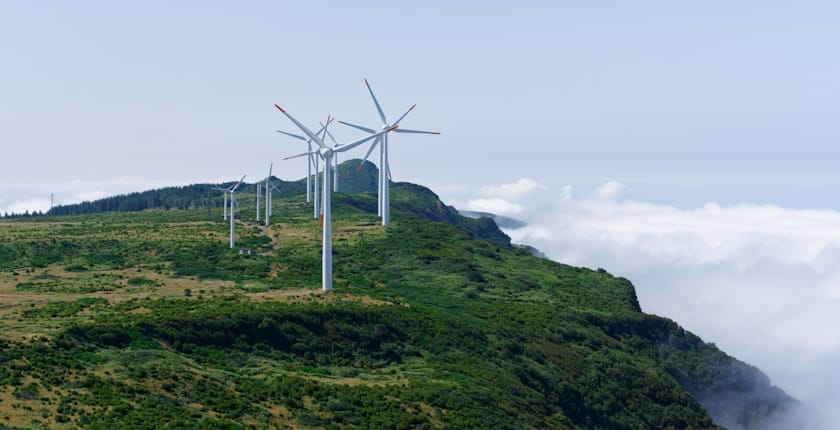
The facility was in test operation since the fourth quarter of 2023. It has 43.2 MW in nominal capacity, while the maximum is 40 MW. The wind power plant, consisting of nine Nordex N-149 turbines, is near the border with North Macedonia.

The parent company financed the endeavor by buying a EUR 41.3 million bond that a project firm issued. In 2023 it refinanced it with EUR 47 million. MORE said that it recently also completed a wind farm in Phocis (Fokida). The combined capacity with the one in Amyntaio is 65 MW.

Partnership with Terna Energy for Greece’s first offshore wind park

The renewable energy company is planning floating and conventional wind farms as well. Its joint venture with Masdar’s Terna Energy, called Aioliki Provata Traianoupoleos, is developing a 400 MW project for a site on the Ionian Sea between Alexandroupolis and the island of Samothrace. It would be Greece’s first offshore wind power plant.

MORE’s solar power joint venture with PPC Renewables, the green energy branch of government-controlled Public Power Corp., has received final connection offers earlier this month for 882.4 MW. Six locations, for 742.4 MW altogether, are in the Kozani region, a 92 MW project is in Kilkis and another one, of 48 MW, is in Serres, all in northern Greece.

The idea is to sell the electricity to the Greek industry through bilateral power purchase agreements (PPAs), as well as to support farmers participating in the GAIA program, with a special tariff.

The two renewable energy companies already have final connection offers for 300 MW and they expect another 311 MW soon. Separately, PPC and Motor Oil are planning a 50 MW hydrogen production facility, as Hellenic Hydrogen.

MORE invested over EUR 1.6 billion in past two years

MORE said it invested over EUR 1.6 billion in the past two years. It entered a partnership in 2024 in Romania with Premier Energy for solar power plants with storage. MORE’s battery projects are underway in Greece, too.

GEK Terna and Motor Oil have built an 877 MW gas power plant in Komotini, in the region of East Macedonia and Thrace. The facility is about to enter regular operation, Energypress reported.
by in News

Italy mulls keeping its last coal plants on standby

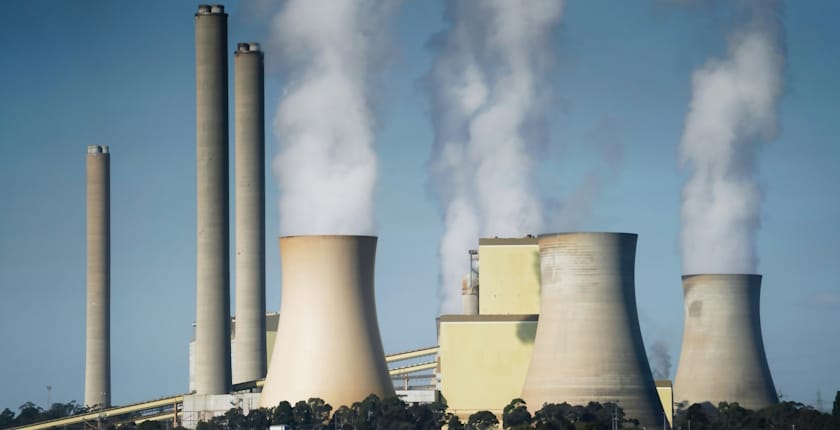
After retiring the two remaining mainland coal power plants, scheduled for this year, Italy’s government intends to switch the facilities to standby instead of dismantling them. Two others are on the island of Sardinia, which is waiting for another subsea interconnection to complete the coal phaseout.

Italy has 4.7 GW in coal power capacity left, following the recent retirement of A2A’s plant in Monfalcone, on the border with Slovenia. The two facilities that remained on the mainland are only marginally active and they are officially set to be closed this year. However, Minister of the Environment and Energy Security Gilberto Pichetto Fratin expressed the belief that they should be kept on standby.

“Therefore, not producing, because it is not economically suitable. But the geopolitics are still in a state where no one can guarantee us that gas will not reach EUR 70 per MWh or that there will be no malfunctions in the pipelines that supply us,” he argued. The said facilities, already dormant as they are not cost-effective, should be kept just in case, in the view of the minister. He didn’t address the pollution issue.

Provisional data showed that coal power output nosedived 71% in 2024 to 3.5 TWh. It translated to a share of 1.3% in electricity production and 1.1% in consumption.

On the one hand, the capacities would be valuable in case of gas and power supply disturbances. But it comes at the cost of maintaining a complex system idle.

Sardinia may remain dependent on coal by 2029

The two mainland coal plants are Enel’s Torrevaldaliga Nord in Civitavecchia and Brindisi Sud.

There are two more, in Sardinia, scheduled to be phased out by January 2029. By then, the island’s interconnection with the main grid should be strengthened with the proposed Tyrrhenian Link. The Sulcis coal plant is also Enel’s, and the other one is EP Produzione’s Fiume Santo power plant. Together, they have 1.1 GW in nominal capacity.

Speaking at the same event, Chief Executive Officer of Enel Flavio Cattaneo warned of the expected surge in power consumption, suggesting the coal exit be reconsidered. The “perfectly functioning” plants, which “saved” Italy during the gas crisis, will be closed by August, he stressed. The company is open to selling its coal assets, Cattaneo said and hinted at the possibility that the government buys them.

AI, data centers bolstering demand for nuclear energy, gas, coal

Eni’s CEO Claudio Descalzi said it was “pure madness” to close coal-fired power plants “in a situation of high costs or low energy availability.” He cited the rise of artificial intelligence and data centers, boosting energy demand, and the need to keep costs low. “It is only possible with nuclear, gas and coal,” Descalzi claimed.

Closing coal plants is not in the country’s interest, said Deputy Prime Minister of Italy and Minister of Infrastructure and Transport Matteo Salvini.

A group of environmental organizations called it unacceptable in 2025 to propose coal to be part of the energy mix.

Italy is no longer buying Russian gas

Minister Pichetto Fratin also said Italy has stopped buying gas from Russia at the end of last year. It turned to alternatives like liquefied natural gas (LNG) from the United States, he added.

The country needs to rapidly deploy renewables, in his view, and decouple the prices of electricity and gas. Pichetto Fratin said gas accounts for 40% of power but that it determines 70% of the final price, and criticized the pricing system based on the Netherlands’ TTF benchmark.

The government is considering support for long-term power purchase agreements (PPAs) and contracts for difference (CfD), to stabilize prices and become competitive with Germany. It is also the European Union’s policy, under the latest electricity market redesign.

by in News

Belgrade Energy Forum 2025 – 50 speakers at eight panels to track pace of SEE energy transition

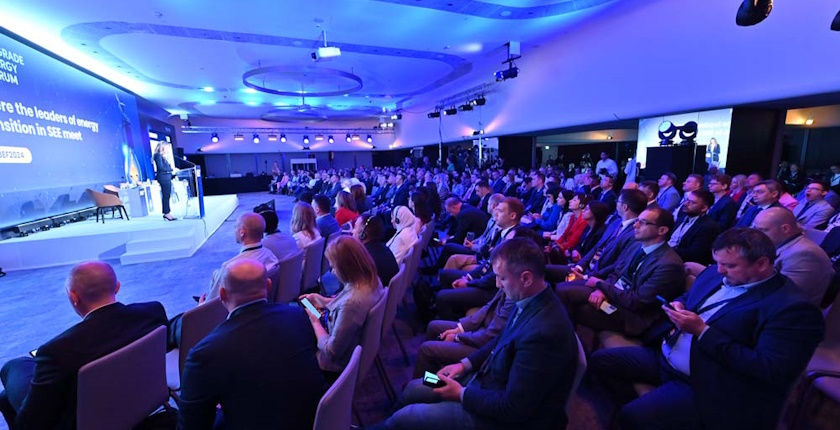
The agenda of the third Belgrade Energy Forum, taking place on May 14-15, has been finalized with the addition of further prominent energy experts and companies. The conference, organized by Southeast Europe’s leading energy news portal, Balkan Green Energy News, will feature eight panels covering key topics in the energy sector, with an impressive lineup of speakers. Make sure you register on time via this link.

The Belgrade Energy Forum will once again be a meeting place for representatives of regional and international institutions and organizations, as well as the business community from across the region, Europe, and the world.

Eight panels featuring more than 50 speakers will offer an overview of the current challenges in the energy sector. Conference participants will hear in-depth analyses of the current situation, but also projections for the future. The thread that connects everything at this year’s BEF is digitalization – it permeates energy production, consumption, and storage and allows enough flexibility for the stable functioning of the energy systems of the future, where renewable energy will dominate.

Chikán: Electricity knows no borders

One of the key speakers at the conference, Alteo Group CEO Chikán Attila, will lead the company’s high-level delegation. Alteo has recently launched a regional expansion drive, aiming to establish a green platform of up to 2 GW in energy production, including operation, software, maintenance, storage, and waste management.

The Hungarian company primarily targets its home market, Slovakia, Croatia, and Serbia.

“Electricity knows no borders, therefore partnerships and collaborations among energy market players are essential, even at the regional level. Such cooperation is vital to ensuring the security and reliability of electricity supply, facilitating the integration of renewable energy sources, and providing essential digital solutions, supported by expertise and professional know-how,” Chikán stressed.

Decarbonization strategies for power generation in Southeast Europe 2040/2050

  • Dejan Paravan, CEO, GEN Energija
  • Dušan Živković, CEO, EPS
  • Eric Scotto, CEO, AKUO
  • Milutin Đukanović, Chairman, EPCG Board of Directors
  • Neda Lazendić, Country Manager, WV-International

Although at the heart of national energy systems, state-owned power utilities are faced with an environment that has changed and continues to change rapidly. The key shift is the entry of private capital into electricity production through the construction of solar power plants and wind farms.

The energy transition, at this stage, requires cooperation between state power utilities and private companies. With decarbonization as the main objective, the key challenge lies in choosing appropriate strategies and electricity generation technologies.

Moderating the panel will be Dražen Jakšić, Director of the Energy Institute Hrvoje Požar (EIHP).

“The transition to a low-carbon energy system is a key challenge for our region, demanding innovation, investment, and cooperation. As a sponsor of the Belgrade Energy Forum, EIHP is committed to fostering dialogue and driving sustainable energy solutions. I look forward to an insightful discussion,” he stressed.

Jakšić: The transition to a low-carbon energy system is a key challenge for our region, demanding innovation, investment, and cooperation

In recent years, nuclear energy has emerged as a possible alternative. There is hardly a better interlocutor on this topic in the region than Dejan Paravan, the top man of GEN Energija, the Slovenian company developing the Krško 2 nuclear power plant project.

Dušan Živković, CEO of Elektroprivreda Srbije (EPS), will tell us about the Serbian power utility’s plans when it comes to nuclear energy.

Živković: Without decarbonization, the region’s energy sector has no future

“Without decarbonization, there is no future for the region’s energy sector, and that is the biggest challenge ahead of us. It is essential to accelerate decisions and ensure sustainable project financing mechanisms that will provide energy security for every country and power utility in the decades to come. By investing in existing capacities and new renewable energy projects, EPS, as the biggest utility in the region, will make its own contribution to energy security. That’s why we have initiated a transformation process – because we need to be more profitable, more efficient, and fully prepared to tackle any challenge,” Živković pointed out.

The energy transition, in his words, is the path EPS has chosen, and all its plans will align with that goal, based on the belief that the diversification of energy sources and new technologies are essential for achieving it. “These are just some of the key messages I will share with the participants of this year’s BEF,” said Živković.

Eric Scotto, co-founder and CEO of French company Akuo, will share the latest information on the energy transition from across the globe.

The company’s portfolio consists of 1.9 GW of power plants in operation and under construction, with a further 12 GW in the pipeline in more than 20 countries around the world, including a number of countries in the Southeast Europe region.

Integration of Western Balkans electricity markets into internal European market through market coupling

  • Anže Predovnik, Director, ADEX Group
  • Ivan Asanović, Executive Director, CGES
  • Marko Bislimoski, President, Energy, Water Services and Municipal Waste Management Services Regulatory Commission of the Republic of North Macedonia
  • Zoran Vujasinović, Policy Officer, ACER

The integration of the Western Balkans’ electricity markets with the European Union (EU) markets is a process that deserves much greater public attention than it currently receives. It is safe to say that its true importance will become evident only once it is completed.

Full integration will unlock significant synergies, maximizing the benefits of a unified market by enhancing supply security, accelerating the integration of renewable energy sources, and fostering greater competition and transparency.

Moderator Dejan Stojčevski, CTO of the SEEPEX power exchange, says the panel seeks to encourage dialogue on the importance of cross-border collaboration and market efficiency in bolstering energy security and sustainability in the region.

Bislimoski: The time for inspiring speeches is over. Geopolitical developments demand action – now!

Since market integration is largely the job of regulators, the challenges they face will be analyzed by Marko Bislimoski, president of North Macedonia’s Energy and Water Services Regulatory Commission (RKE).

He says that three things are essential for the regional integration of electricity markets into a single European market: investment, investment, and nothing but investment. In his words, the energy crisis demonstrated that limitations become a reality when governments fail to prioritize the implementation of key energy infrastructure capacities in their budgets.

“This past winter, the region faced the highest electricity prices compared to the rest of Europe. Why? Because the implementation of energy investments is not just a ribbon-cutting ceremony. Today, more than ever before, the countries of the former Yugoslavia must demonstrate maturity. These are the years when energy independence will be built through action. The time for inspiring speeches is over. Geopolitical developments demand action – now!” he stressed.

Energy revolution underway – uniting efforts to deliver green, intelligent and sustainable energy solutions

  • Aleš Prešern, VP, Head of Southeast Europe, Siemens Energy
  • Maja Turković, SVP, CWP Europe
  • Ann-Catherine de Tourtier, Managing Director Mediterranean, Nordex Group

As much as contesting the energy transition may be futile, there are still those who find such a view meaningful, especially in light of certain global political developments. That’s why it is important to give the floor to some of the transition leaders and let them testify that an energy revolution is indeed underway in the region.

The panel’s moderator Mirza Kušljugić – professor, energy expert, and one of the founders of Bosnia and Herzegovina’s Centre for Sustainable Energy Transition Centre (RESET) – goes one step further to show that change is not only happening but also accelerating.

“The key words are a new energy paradigm driven by the four Ds – decarbonization, digitalization, decentralization, and democratization. But now we also have another D: disruption, or radical change in the industry and market caused by technological innovation. Of course, we must focus the discussion – from global processes (China, the US, the EU, the Global South) to where the region stands in all of this,” Kušljugić points out, providing a perfect introduction to the panel.

Turković: It’s more important than ever to have open discussions about real solutions

Aleš Prešern, Vice President and Head of Southeast Europe at Siemens Energy, has worked in the energy sector for more than 20 years. He recalls that digitalization is key, along with grid resilience and electricity transmission.

With nearly 100,000 employees in more than 90 countries, Siemens Energy develops the energy systems of the future, ensuring that the growing energy demand of the global community is met reliably and sustainably. The technologies created in the company’s research departments and factories drive the energy transition and provide the base for one sixth of the world’s electricity generation.

As a leader in renewable energy development, CWP is actively working on several large-scale projects across the SEE region with a total capacity exceeding 7 GW, positioning the company at the forefront of the region’s energy transition. Given its global expertise and insights into the regional energy market, CWP’s contribution to this year’s conference will be invaluable.

Maja Turković, Executive Vice President of CWP Europe, says that BEF 2025 is a key gathering of leading experts driving the energy transition in Southeast Europe.

“As this shift gains momentum, it’s more important than ever to have open, action-driven discussions about real solutions to the challenges and opportunities ahead,” says Turković.

PPAs as a key to renewable energy growth in SEE

  • Nikola Gazdov, Chairman, Association for production, storage and trading of electricity – APSTE
  • Natalija Ljubić, Manager PPA & BESS Transactions, Pexapark
  • Ivana Đurović, Category Manager Renewable Energy, Knauf Group

Power Purchase Agreements (PPAs) are, like flexibility, a tool for fixing the imperfections of renewable energy sources, and they are recognized as a key mechanism within the new electricity market design. They ensure price stability, attract new investment, and accelerate the decarbonization of industry.

Is the region ready for PPAs? What are the dominant models? What is the current market practice? How are PPAs viewed by financial institutions? What do they offer to end consumers and what to investors in new power plants? Answers to these questions will be sought at the panel moderated by Mislav Slade-Šilović, Energy, Utilities & Resources Consulting Leader for Southeast Europe and member of the core PPA team at consultancy PwC.

Experience with PPAs for more than 500 GWh of electricity

Slade-Šilović’s experience in concluding PPAs for the production and consumption of over 500 GWh of electricity per year in the SEE region will certainly be of help.

Nikola Gazdov, Chairman of Bulgaria’s association for electricity production, storage, and trading (APSTE) and member of the Board of Directors of the European solar industry association SolarPower Europe, has no shortage of experience either. As CEO of three companies – Enery Element GmbH, Element Power Group, and Renergy – he is involved in the development of a large number of projects.

Pexapark, a company that provides logistics to businesses in the renewable energy market, is synonymous with PPAs in Europe. Natalija Ljubić is the Manager for PPA and BESS Transactions at Pexapark, which has helped conclude contracts for facilities with a combined capacity exceeding 35 GW.

The views of electricity buyers – without whom there would be no PPAs – will be conveyed by Ivana Đurović, Category Manager for Renewable Energy at Knauf Group.

Market flexibility: the backbone of a resilient energy system

  • Roman Bernard, CEO, NGEN
  • Luka Renko, COO, KOER
  • Alteo Group representative
  • Nikolaj Candellari, Project Manager and Market Intelligence, CyberGrid
  • Marko Zarić, EMS

Moderating the panel will be Elena Boškov Kovač, co-founder and CEO of Blueprint Energy Solutions, and a leading voice on market flexibility in Europe.

She will host representatives of the sector’s leading companies: NGEN, Alteo, KOER, CyberGrid, as well as Serbia’s transmission system operator Elektromreža Srbije (EMS).

“Excited to moderate a high-impact panel on ‘Market Flexibility: The Backbone of a Resilient Energy System’ at the Belgrade Energy Forum 2025,” says Boškov Kovač, whose work has shaped smart grid strategies and digitalization innovation agendas across the EU and under ETIP SNET.

As Europe accelerates its shift to renewables, market flexibility is emerging as the cornerstone of reliable, affordable, and decarbonized energy systems. With the European flexibility market promising to unlock over EUR 20 billion in savings, this session will explore how digital tools, flexible assets, and new market designs are unlocking value and resilience across the grid.

Slovenia’s NGEN is the technology sponsor of BEF 2025

Slovenian energy company NGEN, the technology sponsor of the conference, has managed to establish itself as a significant player in European markets in just five years of operation and is now ready to enter the Western Balkans’ markets.

Specializing in premium battery storage systems and smart energy solutions, the company is developing systems with a total capacity of 1.6 GWh in European countries. Its founder, Roman Bernard, will be speaking at the panel.

Also taking part in the panel will be Luka Renko, COO of KOER, a pioneer in virtual power plants in the region.

Rounding off the lineup of exceptional panelists will be Nikolaj Candellari, who is responsible for project management at CyberGrid. The software company was acquired a few years ago by Austria’s EVN, one of the first to demonstrate that greater integration of renewable energy sources, battery storage, and prosumers is not possible without digitalization and software solutions.

In a nutshell, this innovative company stands for the digitalization of the energy sector, with a focus on virtual power plants.

by in News

Kosovo* signs three agreements for 105 MW solar project

The Ministry of Economy has signed three agreements with the winners of the first renewable energy auction in Kosovo*, for a photovoltaic project with a grid connection of up to 105 MW.

Minister of Economy Artane Rizvanolli has signed an agreement with newly-founded Lindja Solar on the development of the solar power project selected in the first renewable energy auction.

The firm was founded by the winning consortium, led by Groupe Orllati. The remaining members are Holdigaz from Switzerland, ZPV from Germany and domestic solar panel producer and engineering, procurement, and construction (EPC) firm Jaha Solar, the ministry said.

KOSTT signed a PPA with the investors

Rizvanolli said the ministry also signed a land lease agreement with Lindja Solar. In addition, Transmission, System and Market Operator (KOSTT) signed a power purchase agreement (PPA) with the project firm.

The consortium led by Switzerland-based construction company Orllati was selected in early April to build and operate a solar park of up to 105 MW in connection capacity for 30 years, including a 15-year contract for difference (CfD).

The group won the first renewable electricity auction in Kosovo* with a bid of EUR 48.88 per MWh.

Officials stressed at the time that Orllati is run by businesspeople from the Kosovar diaspora.

The investment in the PV facility is estimated at EUR 70 million

Artane Rizvanolli now said that the successful auction would be the first of many that Kosovo* is preparing.

Orllati Chief Financial Officer Destan Orllati stressed that the project, covering 117 hectares, is part of the country’s push to boost renewable energy production. In addition to the production of clean energy, it will create jobs and stimulate the regional economy, he asserted.

According to the ministry, the four companies plan to invest a total of EUR 70 million in the project.

The agreements were signed by Orllati Managing Director Avni Orllati, Holdigaz Chairman and Managing Director Philippe Petitpierre, Chief Executive Officer of Jaha Solar Fadil Hoxha, CEO of ZPV  Peter Zehendner, Director of Lindja Solar Luisa Helms and the CEO of KOSTT Evetar Zeqiri.

* This designation is without prejudice to positions onstatus and is in line with UNSCR 1244/99 and the ICJ Opinion on the Kosovo declaration of independence.
by in News

Kosovo* invites firms to qualify for 100 MW wind power auction

The Ministry of Economy of Kosovo* started the first phase of the first of two planned auctions for wind power. The target capacity for the first round is 50 MW to 100 MW, out of a total of 150 MW.

Qualified companies can submit documentation for the first wind power auction in Kosovo*. They will bid for power purchase agreements (PPAs) and contracts for difference (CfDs) with a duration of 15 years.

The Ministry of Economy said the target capacity in the first round is 50 MW to 100 MW. The auction plan envisages two auctions of an overall 150 MW.

At the presentation, officials announced that it is receiving prequalification documentation by February 20. The ministry aims to publish the list of eligible firms in March. The schedule showed that final bids would be opened in August and the winners declared in September.

Maximum bidding price is EUR 80.2 per MWh

Companies will be obligated to design, build, operate, maintain and decommission wind parks. The maximum price is EUR 80.2 per MWh and the lowest bid, submitted excluding value-added tax, shall win.

According to an earlier brochure, the accepted price will be adjusted every 12 months, based on the inflation rate for the sector.

The Law on Renewable Energy Sources stipulates that the contracts would be converted into CfDs twelve months after the establishment of a day-ahead electricity market price in Kosovo*, the document reads. In addition, balancing responsibility is limited to imbalance volumes greater than 10%. Curtailment is subject to financial compensation.

Kosovo* has extraordinary wind energy potential, Minister of Economy Artane Rizvanolli said. Around 17% of the territory has winds of above six meters per second, while in mountainous areas they reach eight meters per second, she added.

Wind capacity factors range between 28.2% and 32.2%, translating to as much as 2.82 GWh in annual output per 1 MW of installed capacity, the ministry said.

Wind power auction winners to establish public-private partnership with government

Other earlier documents reveal that individual wind projects would be run by special purpose vehicles (SPVs), firms where the government would have a share of up to 49%. The Ministry of Economy intends to use the funds from the International Monetary Fund’s Resilience and Sustainability Facility (RSF) in the development of the 150 MW. The purpose of the public-private partnership scheme is to reduce risk for private investors.

Applicants are required to provide a guarantee of EUR 7,000 per MW of proposed capacity. Winners will be obligated to submit guarantees of EUR 70,000 per MW.

Eligible companies have a net worth of at least EUR 30,000 over the last three calendar years and a minimum annual turnover of EUR 25,000 in the same period.

Kosovo* hosts just three wind power facilities: Selac, also known as Bajgora (104.1 MW), Kitka (32.4 MW) and Golesh (1.35 MW).

Of note, Millennium Challenge Account Kosovo has just invited qualified companies to respond to the prequalification call for a battery storage project. The government earlier said it was planning auctions for 950 MW including battery storage within two years.

The first solar power auction was completed in April.

* This designation is without prejudice to positions onstatus and is in line with UNSCR 1244/99 and the ICJ Opinion on the Kosovo declaration of independence.
by in News

Wind farms Alibunar 1, Alibunar 2 secure market premiums in Serbia’s renewable energy auctions

Wind power projects Alibunar 1 and Alibunar 2, majority-owned by SANY Renewable Energy, a leading global wind turbine manufacturer based in China, have ranked second and third, respectively, in Serbia’s latest renewable energy auction for market premiums in the wind power segment. The auction was organized by the Ministry of Mining and Energy as part of the country’s ongoing efforts to boost renewable energy production.

Alibunar 1, with a capacity of 96.6 MW, and Alibunar 2, with a capacity of 71.4 MW, were recently acquired by SANY Renewable Energy. The projects were originally developed by WV-International, a Dutch renewable energy firm known for its pioneering role in Serbia’s green energy sector, in collaboration with Norwegian developer Emergy.

Following their success in the auction, the company announced that preparations for the construction of both wind farms are underway, with work set to commence in the fourth quarter of 2025. The wind farms will feature SANY Renewable Energy’s S168 wind turbines, each with a capacity of 4.2 MW.

Serbia’s EPS to offtake entire output via 15-year PPA

Upon completion of construction and grid connection, the electricity generated by Alibunar 1 and Alibunar 2 will be sold to Serbia’s state-owned power utility Elektroprivreda Srbije (EPS) under a previously signed 15-year power purchase agreement (PPA). The two wind farms are expected to generate approximately 480 GWh of electricity annually, significantly contributing to Serbia’s transition towards a greener energy mix.

WV-International and Emergy remain committed to expanding their renewable energy footprint in Serbia. The partners are developing an additional portfolio of wind farms totaling 571 MW under the Banat project complex. Furthermore, they are advancing plans for a 125 MW hybrid power plant that will integrate wind and solar energy.

SANY Renewable Energy was listed on Shanghai Stock Exchange in 2022

SANY Renewable Energy Co., Ltd was founded in 2008. It is committed to becoming the global leader in the field of clean energy equipment supply and services.

It was officially listed and traded on the STAR Market of the Shanghai Stock Exchange on June 22, 2022, with the stock code 688349. SANY Renewable Energy’s market share has increased significantly and the company ranked among the top 7 global wind power manufacturers in 2023.

by in News

Alcazar Energy, EPCG open talks on PPA for Montenegro’s biggest wind farm

Renewable energy investor Alcazar Energy Partners has signed a memorandum of understanding with Montenegrin state power utility Elektroprivreda Crne Gore (EPCG), initiating negotiations on a power purchase agreement (PPA) for electricity that will be produced by Alcazar’s future 118.8 MW Bijela wind farm.

Alcazar Energy acquired the rights to the Bijela wind farm project in September 2023. A year later, it signed a contract for the construction of infrastructure for connecting the facility to the grid.

A key component of the government’s 2040 National Development Strategy, Bijela will support Montenegro’s commitment to reducing greenhouse gas emissions, Alcazar said in a press release. The largest wind farm in Montenegro will provide clean energy to more than 16,000 households while preventing the release of up to 230,000 tons of CO2 annually, according to the statement.

The wind farm will provide green energy to more than 16,000 homes

The development of Bijela, backed by the European Bank of Reconstruction and Development (EBRD), will support Alcazar’s strategic expansion in the Western Balkans and it target of developing 1GW of renewable energy in the region, according to the statement.

“This partnership is continued evidence of our commitment to developing the largest renewable energy platform in the Western Balkans,” said Daniel Calderon, Co-Founder and Managing Partner of Alcazar Energy Partners.

The Bijela project supports Alcazar’s ambition to develop 1 GW of renewables in the Western Balkans

Ivan Bulatović, the executive director of EPCG, described the memorandum of understanding as “a crucial step in strengthening Montenegro’s energy stability.”

“Cooperation with renowned international partners, such as Alcazar Energy Partners, not only enables the modernization of the sector but also accelerates the transition to cleaner and more sustainable energy sources,” he added.

Alcazar Energy Partners is an independent sustainable investment manager with a strong track record in developing utility-scale renewable energy projects in emerging and growth markets since 2014, reads the press release.

by in News

Eurowind Energy signs virtual PPA in Romania with automotive manufacturer

Denmark-based Eurowind Energy signed a 12-year virtual power purchase agreement (PPA) with Autoliv in Romania, for the supply of electricity from the Pecineaga wind park. The automotive manufacturer headquartered in Stockholm also signed one such deal for a solar park in Finland.

The strongest wind turbines in Romania will generate electricity for Autoliv, which makes safety systems for vehicles including airbags and seatbelts, as well as steering wheels and other components. Eurowind Energy will supply the energy from its Pecineaga wind power plant for 12 years under a virtual PPA. In addition, the Swedish automotive manufacturer has another new contract in Finland.

Eurowind Energy recently completed the construction of all eight SG 6.6-170 turbines at the site in Northern Dobruja (Dobrogea in Romanian). However, the 48 MW wind farm is expected to become operational by 2027, according to an update from Autoliv.

PPAs essential for project development for Eurowind Energy

Estimated annual output is 176 GWh, equivalent to the electricity needs of 48,000 Romanian households. The investment is worth EUR 79 million. Eurowind Energy, based in Hobro, Denmark, is one of the biggest wind and solar power developers in Romania.

The company is also a partner in the construction of a giant photovoltaic plant in Bulgaria. The Tenevo facility is planned to be combined with a future wind park and a battery energy storage system into a hybrid power plant.

“PPAs are essential in developing new energy parks. Power purchase agreements with large, ambitious companies like Autoliv ensure the continuous development of new parks and a cleaner future for all of us,” Commercial Director Jesper Schaumburg-Düring said. Eurowind Energy is 50% owned by EWE Holding while Norlys Holding controls the other half.

Autoliv is combining wind with solar in different countries to optimize electricity production

Autoliv’s other new virtual PPA, also for 12 years, is with Alight, for a proposed solar power plant of 100 MW in peak capacity. The two deals are important for ensuring a consistent and reasonably priced energy supply for the manufacturer’s activities in Europe, reducing the risks associated with potential future energy price fluctuations, the announcement reads.

“The innovative approach of combining solar and wind technologies ensures optimal energy generation during both day and night. This approach and the fact that the facilities are located in two different European countries provides flexibility in Autoliv’s physical operations and electricity procurement,” the company added.

The PV park in Eurajoki, Finland is supposed to come online in 2026. Autoliv revealed that it intends to “contract a majority of the clean electricity produced.” Construction is set to start during the spring, the statement adds.

“Through these initiatives, we support our ability to supply customers seeking sustainable products and we take a significant step forward in achieving our climate targets for the European operations,” said Autoliv Europe’s President Magnus Jarlegren. The company aims to achieve carbon neutrality in own operations by 2030 and net zero emissions across the supply chain by 2040.