by in News

Three types of deals emerge in new PPA era – Pexapark

Hybrid power purchase agreements from co-located projects, battery offtake agreements, and stand-alone PPAs are beginning to dominate the renewable energy market, according to Luca Pedretti, Co-Founder & COO of Pexapark.

The power purchase agreement (PPA) market is going through a turbulent period. Two days ago, RE-Source Platform noted that the number of PPAs in Europe had decreased by 60% compared with the same period last year. The figure was consistent with Pexapark’s July report, which stated that the number fell 31% in the first six months of the year.

Over recent months, the analytics and advisory firm has spoken with a number of executives at independent power producers.

“Their message was consistent. The period dominated by straightforward, conventional power purchase agreements (PPAs) is transitioning into a new era,” Luca Pedretti wrote in a piece for Pexapark’s website.

While the initial phase centered on PPAs, the focus now is on more structured deals and the integration of new asset classes, such as battery energy storage systems (BESS), he noted.

Battery offtake agreements can take various forms

One of the models involves hybrid PPAs from co-located projects. Co-location is the deployment of multiple technologies at a single site. Most often, it is wind and solar, or solar with battery energy storage systems.

Previously, this kind of project included pricing based solely on energy delivered, but that has now changed.

Today, it is necessary to evaluate and price the marginal value added by co-location, the interactions between different resources, and the premium associated with reduced curtailment and improved grid capacity utilization, Pedretti wrote.

Battery offtake agreements include tolling contracts, merchant sharing agreements, and capacity-based deals. Valuation and pricing in these deals vary a lot from those used in pure energy agreements.

Stand-alone PPAs are still standing

The third model is the stand-alone PPA. These deals have managed to maintain their share of the market. However, there have been some changes in approach.

The number of “plain vanilla PPAs” has decreased, while transaction price ranges have expanded. In the new circumstances, understanding the impact of negative prices and curtailments on price and value has become crucial.

Additionally, in many markets, the balancing risk is now handled completely differently than it was just 12 months ago, according to Pedretti.

He stressed that the Pexapark Renewable Valuation Framework for PPAs continues to provide a solid foundation.

“However, the importance of the ‘middle part’– understanding risk and projecting future realized prices – has increased substantially,” he noted.

by in News

RE-Source Platform: Number of PPAs in Europe drops by 60%

The number of power purchase agreements in Europe decreased by 60% compared to the same period last year, while contracted capacity has dropped by 40%, according to RE-Source Platform.

Europe’s power purchase agreement (PPA) market is facing headwinds in grid development, permitting and electrification and from negative electricity prices, RE-Source Platform warned.

RE-Source Platform facilitates corporate renewable energy sourcing in Europe. It was founded by WindEurope, SolarPower Europe, Climate Group RE100, and World Business Council for Sustainable Development, and steered by a group of corporate buyers and developers.

There are four main problems

“This slowdown is very paradoxical. Europe has no path to energy security and competitiveness unless it electrifies its economy – shielding itself from energy shocks and leveraging large scale deployment of wind and solar energy. But the market is facing headwinds,” the update reads.

The platform identified four main problems.

Europe is not expanding its grid infrastructure quickly enough. The main bottleneck is grid permitting with hundreds of gigawatts of projects awaiting grid connection.

The permitting process for renewables remains too slow. The Renewable Energy Directive has set permitting rules for acceleration, but EU member states have not implemented them.

The Clean Industrial Deal rightly names PPAs as a key solution

Direct electrification is the cheapest and most efficient way to decarbonize. It could also improve competitiveness and energy security, however Europe’s electrification rates are stagnating.

The increase of the negative price hours is making PPA negotiations harder. The way out are energy storage solutions.

The platform stressed the importance of PPAs.

“The Clean Industrial Deal rightly names PPAs as a key solution. Without them, we risk losing industrial competitiveness – and missing our climate targets. PPAs are a cornerstone of Europe’s industrial decarbonization,” the platform added.

They also give companies price certainty, help new wind and solar projects get financed and cut buyers’ exposure to volatile energy markets, according to the update.

by in News

CEE Energy Conference to be held in London on October 7

Featuring a series of expert-led presentations and panel discussions, the second edition of the annual CEE Energy Conference, taking place in London on October 7, will explore the rapid evolution of the energy sector in Central and Southeast Europe.

CEE Energy Conference 2025: From Generation to Stability – Accelerating the Energy Transition in CEE is organized by international law firm CMS and is free of charge. It will bring together speakers from CMS offices across the CEE/SEE region and the UK, alongside representatives from transmission system operators (TSOs), regulators, and leading energy companies.

The conference will feature country spotlights and two panels, with speakers presenting key developments and innovations from the Czech Republic, Romania, Poland, Bulgaria, Hungary, Ukraine, Slovakia, Croatia, and Austria.

A panel titled BESS, Balancing & Grid Stability will include case studies from across the region, as the BESS market continues to attract international investors. At the second panel, PPAs & Tolling Agreements, participants will share insights into emerging and maturing markets, with perspectives from developers, investors, and legal experts.

One of the key speakers is Thomas Hamerl, an expert in renewables, energy storage, and infrastructure

One of the key speakers is Thomas Hamerl, an expert in renewables, energy storage, and infrastructure and Head of the Energy and Climate Change Group at CMS Reich-Rohrwig Hainz. He will speak at the event on regulatory developments and investment possibilities in Austria, Croatia, Montenegro and Serbia.

Participants in the second annual CMS CEE Energy Conference will have the opportunity to join industry leaders in exploring the latest trends, investment opportunities, and challenges, as well as sector developments, according to Hamerl. “On top of that, market-specific developments will be presented for Bulgaria, the Czech Republic, Croatia, Hungary, Serbia, Poland, Austria, and many more,” he stressed.

Thomas Hamerl is an attorney-at-law and a specialist in infrastructure projects, including public-private partnerships (PPP) and concessions. He is also a leading expert in energy law, public procurement law, and construction and infrastructure-related dispute resolution. CMS Reich-Rohrwig Hainz, based in Vienna, operates in Austria and the Western Balkans.

by in News

Enery, Teva sign 15-year virtual PPA for solar, BESS in Bulgaria

Renewable energy firm Enery and Teva Pharmaceutical Industries have signed a 15-year hybrid power purchase agreement.

Under a financial or virtual power purchase agreement (PPA), a future solar power plant with two battery energy storage systems (BESS) will supply 60,000 MWh of electricity annually to Teva’s two plants in Bulgaria.

The landmark agreement is the first of its kind in the region to include green electricity supply from a newly built solar power plant with BESS and the longest one in Bulgaria so far, Enery said.

It is the Austrian company’s 15th PPA signed in the last four years across Central and Eastern Europe and the second one involving a Bulgaria-based offtaker.

The PPA sets a precedent for integrating storage within virtual PPA structures

Over the 15 years, the project is expected to avoid emissions of 15,840 metric tons of CO2 equivalent per year, supporting Teva’s goal to reduce scope 1 and 2 emissions by 46.2% by 2030.

The hybrid PPA also sets a precedent for integrating energy storage within virtual PPA (vPPA) structures, enhancing grid resilience and the value of renewable energy procurement, Enery stressed.

According to the company, the agreement will facilitate the construction of a photovoltaic park of 122 MW in peak capacity, equipped with two BESS installations at the site — one with a capacity of 70 MWh and another of 130 MWh. Located on non-arable land in the villages of Knizhovnik and Dolno Voyvodino in the Haskovo municipality, south Bulgaria, the Knizhovnik solar park is projected to produce 200 GWh of clean electricity per year.

Decktor: Teva is not only securing clean energy but also enhancing grid resilience and flexibility

“This agreement represents another significant step forward in our decarbonization journey,” said Josh Decktor, Teva’s Vice President and Global Head of Environment, Health, Safety and Sustainability.

By investing in a newly built solar asset with integrated storage, Teva is not only securing clean energy but also enhancing grid resilience and flexibility – key components of its strategy to meet its science-based targets, he added.

“We are proud that our projects are being realized thanks to an innovative partnership with companies that are proven leaders in their market niche, such as Teva, and demonstrate a strong commitment to the environment and society,” Enery’s Chief Commercial Officer Severin Vartigov stated.

by in News

RES Croatia to Brussels: Renewables have no future in Croatia

RES Croatia, together with SolarPower Europe and WindEurope, has sent a letter to the European Commission to raise concerns about the crisis in Croatia’s renewable energy sector.

The three associations emphasized that for several years, 60 projects for investments in solar, wind, geothermal, and batteries have been blocked, and that if nothing is done, many of them would soon be abandoned.

Without urgent deblocking of renewable energy projects, Croatia will lose investments, increase fossil fuel imports, which already exceed 25%, and miss the European Union’s and national target of at least 42.5% of energy consumption coming from renewables by 2030, according to Renewable Energy Sources of Croatia (RES Croatia), SolarPower Europe and WindEurope.

The national organization warned that the government is gradually phasing out subsidies for electricity prices for citizens and entrepreneurs. At the same time, the development of renewable energy sources as the only sustainable solution for lower bills and lowering imports is at a complete standstill, it added.

Projects with a total capacity of 3.5 GW and investments of EUR 3 billion are blocked

Croatia is currently subject to infringement proceedings due to delays in implementing the European Union’s RED II and RED III directive. They aren’t just a piece of paper, but a mechanism to ensure energy security and independence, which is of strategic interest for Croatia and its citizens, RES Croatia underscored.

The organizations are urging the European Commission to use its tools to demand from the government to determine the grid connection fee, but at EUR 0 per kWh, open up the balancing market for renewable energy producers, and integrate battery energy storage systems (BESS) and electrification into national planning.

Currently, 60 projects for solar power plants, wind farms, geothermal power plants, and batteries with a total capacity of 3.5 GW and investments of EUR 3 billion are blocked, according to the letter, accompanied by an annex.

The domestic industry is unable to sign long-term PPAs

For these projects, the state has already charged EUR 25 million through energy approvals— the first in a series of documents that requires payment to the state, which, due to the blockage, are beginning to expire at the end of this year.

Organizations stressed that these projects are permanently losing the paid money, while local communities are losing significant revenues that would have been allocated to them from the implementation of renewable energy projects.

They also drew attention to the domestic industry’s inability to sign long-term power purchase agreements (PPAs) with renewable energy producers, securing more favorable market conditions and thereby increasing its competitiveness in European and global markets.

Of note, the European Commission advised Croatia in June to speed up the installation of renewable energy capacities.

If nothing is done, projects of as much as 2.5 GW overall will be abandoned as early as next week

The associations pointed out that the development of new projects larger than 10 MW has stalled since 2022 because the Croatian Energy Regulatory Agency (HERA) has not set a transmission network connection fee for renewable power plants.

Instead, they added, Croatia’s transmission system operator (TSO) HOPS is trying to shift the costs of network modernization – planned over ten years ago and not related to new projects – to new renewable energy projects.

The minister of economy said in March that the upcoming connection fee would be EUR 0 per kW

It is increasing the project cost by 30% to 40%, making them unprofitable, RES Croatia said.

Such a model for financing the network is not from European practice, because 80% of member states rely on EU funds and their national budgets, rather than on producers.

They also recalled that the minister of economy announced in March that a connection fee would be set at EUR 0 per kW and that developers would be offered flexible contracts to encourage investment in battery storage. But that promise has not yet been fulfilled.

The three organizations warn that if nothing is done, projects of up to 2.5 GW altogether would be abandoned as early as next week after HOPS’s decision,. It means companies would withdraw from the Croatian market and lose millions in investments that would have permanently lowered energy prices in the country, RES Croatia claimed.

The balancing market is not functional

An additional problem is the non-functional balancing market, according to the letter.

HEP Proizvodnja, a subsidiary of state-owned utility Hrvatska Elektroprivreda (HEP), is the dominant provider of balancing services, and often the only one. HOPS is legally obliged to ensure market-based procurement of these services, yet it is itself a wholly owned subsidiary of HEP.

It creates an obvious conflict of interest and undermines market competition, the signatories underlined.

“Despite the demonstrated technical ability of solar and wind power plants to provide balancing services, HOPS doesn’t allow these plants to participate in balancing markets. As a result, HOPS frequently activates extremely expensive balancing resources, often at maximum regulated prices even during hours of high renewable generation and positive market prices,” the letter reads.

Croatia has no serious electrification plan

The organizations pointed out that such pricing constitutes a clear violation of the EU principle that balancing services must reflect only the actual costs incurred by the TSO.

They also stressed that Croatia lacks a concrete electrification plan. In 2022, renewable energy accounted for only 2.4% of final energy consumption in transport, with electricity from renewables contributing just 0.2%.

The target for renewable electricity in transport by 2030 is only 5.8%, reflecting limited ambition compared to the EU ambitions, according to the letter.

Electrification of railways could significantly reduce emissions and accelerate the transition, however, it remains an untapped potential, the signatories organizations noted.

by in News

Energy Traders Europe calls for clear rules before CBAM implementation

Energy Traders Europe has sent proposals to the European Commission on how to ensure that the Carbon Border Adjustment Mechanism puts a fair price on carbon-intensive electricity imports and facilitates low-carbon flows.

On July 1, the European Commission’s Directorate-General for Taxation and Customs Union launched a public consultation on the potential downstream extension of the Carbon Border Adjustment Mechanism (CBAM), as well as additional anti-circumvention measures and rules for electricity as a CBAM good.

Energy Traders Europe participated in the call for evidence, which was open until August 26. The organization pointed out that the CBAM application to electricity imports shouldn’t start without a thorough impact assessment and a clear legislative framework.

Clarity is urgently needed for contracts for the delivery year 2026

Contracts for the delivery year 2026 are already traded on electricity markets, so clarity about how these will be treated from a customs perspective is urgently needed, the trade association stressed.

In its reaction, Energy Traders Europe argued that the inclusion of electricity imports within the scope of CBAM should respect the principle of proportionality, ensuring that European businesses face no excessive costs or administrative burdens and that a proportionate carbon price is applied.

For the calculation of the carbon price, default emission factors should reflect the actual carbon intensity of the electricity mix imported from a third country, as accurately and as close to real-time as possible.

Therefore, Energy Traders Europe insists that:

  • All generation technologies are taken into account to calculate the emission factor of third countries from which electricity is imported
  • The carbon intensity of electricity imports should be measured with an hourly granularity.

The association also proposes improvements for the utilization of the actual embedded emissions of imported electricity, to reflect the reality of electricity trading:

  • Power purchase agreement (PPA) – The definition should recognise PPAs concluded via intermediaries, such as when a CBAM declarant is reporting via an indirect representative, as well as both physical and virtual PPAs
  • Physical network congestion – Once an importer can prove the hourly matching between electricity production and capacity nomination, and that guarantees of origin (GOs) eventually issued are immediately cancelled, this criterion becomes redundant and hence should be removed
  • Capacity nomination and electricity production – Imports should be reported (and accounted for) based on the hourly confirmed scheduled quantities provided by the TSOs to each market participant, to be linked back to the hourly data of the generation plant underpinning the PPA.

According to Energy Traders Europe, the listed improvements are crucial to ensure that CBAM is fit for purpose for electricity imports, leading to more efficient use of cross-border interconnections between the EU and third countries, preventing renewable curtailments, and promoting the uptake of low-carbon electricity production in third countries.

by in News

RP Global gets EUR 12.2 million loan for Novalja solar project

RP Global has secured a EUR 12.2 million loan to build its Novalja solar power plant in Croatia.

In late April, Austrian company RP Global began the construction of the Novalja photovoltaic plant at the Zaglava site on the island of Pag.

The European Bank for Reconstruction and Development (EBRD) said it approved a senior non-recourse project finance loan of up to EUR 12.2 million to RP Global Novalja d.o.o., owned by RP Global Energy GmbH, for the development and construction of the 21 MW Novalja PV plant in Croatia.

The project has been approved under the EBRD InvestEU Framework for Sustainable Transition.

The loan is divided into two tranches

The loan is split into two tranches: one amounting to a maximum of EUR 7.2 million, and the second of up to EUR 5 million, benefiting from a 20% first loss coverage under the EBRD InvestEU Framework for Sustainable Transition, the bank’s decision reads.

The total project cost is estimated at EUR 16.3 million.

The endeavor includes the installation of 35,776 photovoltaic panels. The expected annual electricity production is around 31,000 MWh, enough to supply about 12,000 households.

According to the EBRD, the project supports innovative offtake arrangements. It will combine a national renewables support with a merchant exposure in later years.

RP Global won premiums for its project at auctions

Last July, the Croatian Energy Market Operator (HROTE) awarded premiums for solar and hydropower plants with a total capacity of 420 MW. RP Global’s Novalja was among them, with 15 MW.

Back in 2022, the company said it intended to build wind farms and solar parks of 500 MW overall in Croatia over the next five years.

RP Global has completed two renewable energy projects in Croatia: the Danilo wind farm near Šibenik and the Rudine wind park near Dubrovnik.

Of note, the island town of Novalja could become one of the first in Croatia to begin the production of green hydrogen, and a rare example in the region. A project was launched in May.

by in News

Google signs world’s largest corporate power purchase agreement for hydropower

Global investment firm Brookfield and tech giant Google signed an agreement to deliver up to 3,000 MW of carbon-free hydropower capacity in the United States.

Brookfield said the Hydro Framework Agreement (HFA) is the first of its kind and “the world’s largest corporate clean power deal for hydroelectricity.”

Brookfield Asset Management, together with Brookfield Renewable, and Google said the deal is for 3,000 MW of carbon-free hydroelectric capacity across the US.

Fast development of AI and digitalization is making power supply crucial for tech companies. Goldman Sachs Research forecasted that global power demand from data centers would increase 165% by 2030 from the 2023 level.

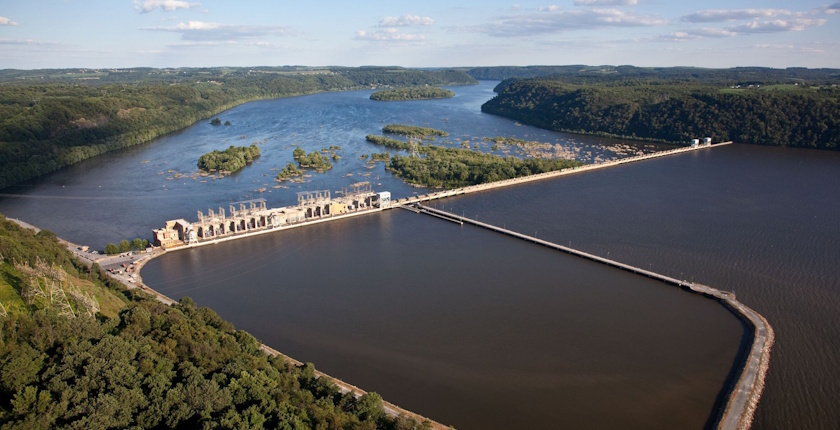
The first contracts include Brookfield’s Holtwood and Safe Harbor hydropower plants in Pennsylvania

Google has recently signed similar first-of-kind agreements for advanced nuclear and next-generation geothermal energy as well as for fusion energy.

Under HFA, the first contracts are for Brookfield’s Holtwood and Safe Harbor hydropower plants in Pennsylvania, representing more than USD 3 billion of power and 670 MW of capacity.

The 20-year power purchase agreements (PPAs) for the two facilities will support Google’s operations across PJM. The transaction structure allows Brookfield to maintain existing commitments to power consumers, such as Amtrak, from the Safe Harbor facility.

Brookfield said HFA is a significant step forward in its strategy to deliver flexible, dispatchable clean energy solutions to the technology sector and that the deal supports Google’s ambition to power its operations with 24/7 carbon-free energy.

Google can procure carbon-free electricity from up to 3,000 MW of HPPs

According to Brookfield, under the HFA, Google can procure electricity from up to 3,000 MW of hydropower assets that will be relicensed, overhauled, or upgraded to extend their useful life and continue adding power to the grid.

Amanda Peterson Corio, Google’s Head of Data Center Energy, said the collaboration with Brookfield is a significant step forward, ensuring clean energy supply in the PJM region (parts of 13 states and the District of Columbia) where her company operates. Hydropower is a proven low-cost technology, offering dependable, homegrown, carbon-free electricity that creates jobs and builds a stronger grid for all, she added.

According to Connor Teskey, President of Brookfield Asset Management, the partnership with Google demonstrates the critical role that hydropower can play in helping hyperscale customers meet their energy goals.

Delivering power at scale and from a range of sources will be required to meet the growing electricity demands from digitalization and artificial intelligence, he pointed out.

Of note, Brookfield owns power plants with a combined capacity of almost 46,000 MW.

Google to invest over USD 25 billion in data center and AI infrastructure

The deal is part of Google’s planned investments in the area in data center and artificial intelligence (AI) infrastructure. At the Pennsylvania Energy & Innovation Summit in Pittsburgh, the company revealed that it earmarked more than USD 25 billion for the next two years.

President and Chief Investment Officer of Alphabet and Google Ruth Porat joined President Donald Trump, Senator Dave McCormick and government and business leaders at the summit.

To support the investment, Google is expanding energy capacity and innovation in three ways, the company said.

by in News

BEF 2025: Corporates’ education, product diversification crucial to speed-up PPA uptake

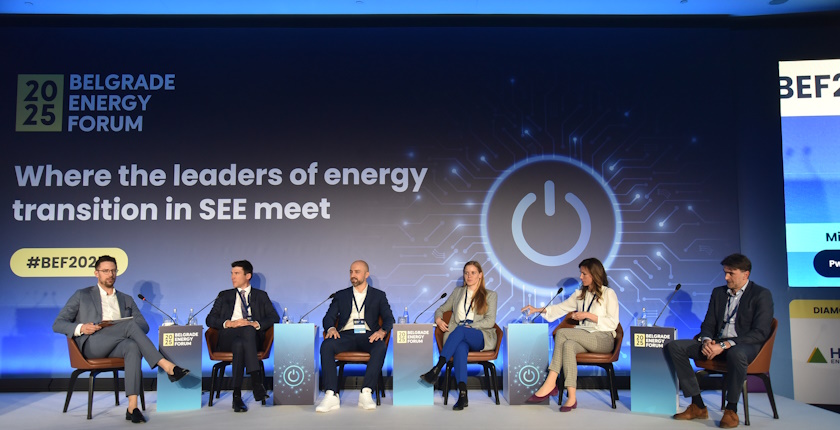
Capacity building and education for corporates, together with product diversification and an upgrade of the regulatory framework, could clear the obstacles for power purchase agreements in the Western Balkans, which are lagging behind the other countries in Southeast Europe. In addition to their other benefits, such contracts could contribute to securing baseload energy from hybrid facilities, given that baseload is a key issue for the decarbonization of the region, according to the participants of a panel on power purchase agreements, held at Belgrade Energy Forum 2025 (BEF 2025).

BEF 2025 has gathered four hundred participants from more than 30 countries in the region, Europe, and beyond.

The panel PPAs as a key to renewable energy growth in SEE featured stakeholders from all segments of the PPA market: developers, corporates, utilities and consultants. The discussion comprised five segments – the global trends, main drivers, the region’s specifics, challenges and trends, and the implications of the model.

The panel’s moderator was Mislav Slade-Šilović, Energy, Utilities & Resources Consulting Leader for Southeast Europe and member of the core PPA team at the consultancy PwC.

Global trends: PPAs are hot, but the solar capture rate is becoming an issue

Mislav Slade-Šilović, Joffroy Beckers and Nikola Gazdov

According to Natalija Ljubić, Manager of PPA & BESS Transactions at Pexapark, PPAs are still hot in Europe. On a monthly basis, between 500 MW and 2,000 MW of new PPAs are signed (15 to 30 deals). She referred to long-term, fixed-price PPAs considered bankable and publicly announced. There is much more together with short-term PPAs, for two to three years.

There is an impression that everything comes down to corporate PPAs, but there are many utility PPAs that aren’t always made public, she added.

The majority are physical PPAs but Pexapark is registering more and more financial PPAs. In 2025, almost 20% of all the announced PPAs were financial, whereas a couple of years ago, they made up 5% to 10%. There are more pay-as-produced contracts than the monthly ones for baseload energy.

Mislav Slade-Šilović (PwC) added that 70% of PPAs in SEE are virtual or financial.

It’s quite challenging in the region to find a creditworthy counterparty on the consumer side

For developer Joffroy Beckers, Head of PPA at DRI, it’s quite challenging to find a creditworthy counterparty on the consumer side of the market in the region comprising Greece, Bulgaria and Romania. So when the firm wants to speed things up with selling its electricity, it goes to utilities or traders.

Negative prices are emerging in the region, with much more cannibalization for solar in the long term, he added.

According to Bulgaria’s Association for Production, Storage, and Trading of Electricity – APSTE, the situation in the region is different than five years ago. “There were zero PPAs in the region, but now they start to get common. Paradoxically, the conditions start getting much more and more complex,” chairman Nikola Gazdov said.

Mislav Slade-Šilović (PwC) pointed to the decline in the solar capture rate – the ratio of the price of solar power and wholesale price. It is spilling over to the PPA price and increasing its complexity, and solar PPAs are generally more complex than the ones for wind power, he added.

Main drivers: Different priorities ask for different PPA models

Natalija Ljubić, Ivana Đurović and Davor Pupovac

For Ivana Đurović, Category Manager Renewable Energy at Knauf Group, PPAs are a game changer in energy procurement because essentially it’s no longer just about buying energy or hedging. “Now corporate PPAs bring the long-term deal, so they even extend the tenure for those hedging, and they also allow us to achieve our sustainability targets,” she explained.

PPAs aren’t for companies with consumption below 30 GWh or 40 GWh per year, while branding and cost savings are often the reasons for companies to sign them.

Such factors determine the PPA product that the offtaker opts for, Mislav Slade-Šilović (PwC) stressed.

According to Nikola Gazdov (APSTE), in the region comprising Bulgaria, Romania, and Greece, PPAs are usually signed by corporates that have some ESG commitments or want to show their clients and customers that they are thinking green.

The key feature of a PPA is the partnership between two companies

As examples of the various kinds of deals, he mentioned a physical PPA with an electricity-intensive consumer, virtual PPA with a telecom and a PPA with a big international company producing tires, combining the two types.

As a developer, DRI is modifying its strategy toward a mixed portfolio. Instead offering a solar asset for a PPA, it adds wind power plants and combines different technologies into a single contract. “It allows us to capture a better price, and this is also usually more beneficial for the off-taker. The second thing is that we’re trying to keep this upside in our PPA by entering a floor price instead of a fixed price,” Joffroy Beckers (DRI) revealed.

For Mislav Slade-Šilović (PwC) the key characteristic of a PPA is the partnership between two companies. It needs to be balanced, to ensure that both parties can fulfill throughout the tenure. If one goes bankrupt, then it doesn’t make sense for both parties, he underlined.

The specifics in the region: Corporates need to learn, PPAs should be more diverse

Nikola Gazdov, Natalija Ljubić and Ivana Đurović

Serbia’s state-owned power utility Elektroprivreda Srbije (EPS) has been signing a lot of PPAs. However, the difference from the conventional deals is that they are based on premiums. But according to Davor Pupovac, head of the company’s market analysis and risk management, it is interested in corporate PPAs that don’t include government support. There is not much interest among consumers for corporate PPAs with EPS, he revealed.

Mislav Slade-Šilović (PwC) said the role of EPS and big power utilities is very important in developing the PPA market. A dominant supplier in a market has a critical role, either as a sleever or as someone that will provide B2B products to off-takers and developers or producers for entering the market, he said.

Joffroy Beckers (DRI) agreed with him about the role of big utilities in facilitating PPAs and expressed the belief that in the near future, they would get a larger share as intermediaries.

Asked if corporate PPAs are coming anytime soon in Serbia, Davor Pupovac (EPS) said: “Not so soon.” However, he claimed EPS wouldn’t lose consumers regardless of the fact that it has no such product.

Corporates aren’t super ready for PPAs because they are seeking stability when it comes to the energy price

In Ivana Đurović’s (Knauf) view, there are several reasons for the slow uptake of corporate PPAs in the Western Balkans. Corporate buyers aren’t super ready for PPAs because they are seeking stability when it comes to the energy price, but the pay-as-produced PPA model is dominant in the market, which doesn’t ensure price stability. Monthly baseload deals would enable more price stability.

A bigger offtake through PPAs requires corporates to build their capacity for closing such deals and for the offer to be more diverse, she stressed.

Natalija Ljubić (Pexapark) agreed with her and suggested that companies need to understand more about the risks and accounting. Also, not many corporates are willing to enter five- to ten-year agreements as they don’t know their demand or costs that far ahead, Ljubić underlined.

Challenges, risks: Management boards are delving into energy-related topics in detail

Ivana Đurović and Davor Pupovac

Creditworthiness is one of the key challenges, Joffroy Beckers (DRI) said. As he sees it, credit insurance could be key, providing a kind of a state guarantee. Nikola Gazdov (APSTE) again stressed education. He also recalled that all European countries needed time to get along with PPAs.

“But coming to credit risk, I think that now we also see the European Commission taking note of the situation,” Gazdov noted.

As for education, Mislav Slade-Šilović (PwC) said it requires one to two years. Management boards of companies from different industries on the offtake side are forced to delve into energy-related topics in detail, he noted.

There are practically no obstacles for PPAs in Serbia

Slade-Šilović asked EPS’s representative whether the utility is prepared to offer B2B products, arguing that they go hand-in-hand with PPA market development.

Davor Pupovac (EPS) responded that there are practically no obstacles to PPAs in Serbia. Namely, there is an electricity exchange, EPS is willing to sign contracts with developers for sleeving or balancing, the guarantees of origin (GO) system is in place, and EPS is active on power exchanges in the region as a producer and supplier.

“EPS could also offer a route to market to the off-taker. However, currently, it cannot offer access to the spot or forward market,” he explained.

Coming from a corporate electricity consumer, Ivana Đurović (Knauf) was curious what EPS could offer to a perfect corporate off-taker asking for a physical PPA. Pupovac answered that currently it would be a pay-as-produced deal.

What does the implementation bring us: hybrid combinations open the room for innovative deals

Joffroy Beckers, Nikola Gazdov and Natalija Ljubić

Mislav-Slade Šilović (PwC) summarized the landscape. “If you look at the broader EU situation and challenges, especially with solar capture rates, negative prices, we are now already discussing technology advanced structures including batteries and other hybrid solutions on the PPA side,” he underlined.

Natalija Ljubić (Pexapark) pointed out that last month in Germany the solar capture rate was just 40%, calling it almost unbearable for photovoltaic projects. All developers or energy producers, especially in the solar power sphere, are seriously considering adding batteries, while projects for standalone battery storage facilities are appearing, in her words.

She and Nikola Gazdov (APSTE) agreed that the outcome is a lot of interesting innovative structures, room for different solutions.

BESS with solar reduces cannibalization and increases capture rates

Ljubić said it is a challenge to maximize revenues from a battery system and make it bankable. Gazdov pointed to the dilemmas of a single company owning different assets versus a big utility combining and aggregating everything, and whether the producers or optimizers manage the revenue streams.

When it comes to standalone storage units, he sees a perspective only in arbitrage and, perhaps, system services further down the road.

Joffroy Beckers (DRI) explained the main purpose of a battery energy storage system (BESS) in Romania, from the point of view of a developer and power producer. A BESS combined with solar power reduces cannibalization and increases capture rate, whereas wind lowers the balancing cost, he stressed.

“If you co-locate a battery next to solar, you will be in a position to negotiate a higher price on the off-take side,” he pointed out.

A combination of wind, solar and batteries is equivalent to a new power plant

In the future, he anticipates more PPAs with a pay-as-nominated structure rather than pay as produced, arguing that it enables more flexibility for monetizing batteries on different markets.

“With those combinations of wind, solar, and battery, basically you have a new power plant, baseload structure,” Mislav Slade-Šilović (PwC) stated.

That way PPAs fit into the broader discussion on the energy transition and decarbonization. EPS is decarbonizing its production through its role as a renewable energy offtaker.

“Hybrid combinations are partly addressing the baseload needs. So, many different technologies, including storage, can provide a part of the answer this region heavily needs, and this is the baseload substitution problem,” Slade-Šilović concluded.

by in News

Everything is ready for Belgrade Energy Forum 2025 – welcome!

Everything is ready for the third Belgrade Energy Forum – BEF 2025. On May 14 and 15, the conference will gather four hundred participants from more then 30 countries from the region, Europe, and beyond.

Participants of the Belgrade Energy Forum 2025 (BEF 2025) will have the opportunity to hear from speakers from the European Union and five countries in the region and exchange views. Eight panels featuring more than 50 officials, executives and prominent energy experts will try to untangle the currently most important issues in the energy sector.

Representatives of governments, regulatory agencies, regional and international institutions and organizations as well as the business community will outline their future moves, which is invaluable information given the new reality of a turbulent geopolitical landscape.

Latest information on the largest project for the installation of solar power plants in the region and beyond

Energy Community Secretariat Director Artur Lorkowski and Serbian Minister of Mining and Energy Dubravka Đedović Handanović will open the event. One of the key speakers is Christian Zinglersen, director of the EU Agency for the Cooperation of Energy Regulators (ACER).

The ministerial panel consists of ministers and other officials from Montenegro, Croatia, Hungary, Serbia, and the Republic of Srpska, which is one of the two entities making up Bosnia and Herzegovina.

Representatives of the Hyundai Engineering – UGT Renewables consortium will summarize the next steps in the largest solar power project in the region and beyond. The consortium is the diamond sponsor of the event this year as well.

It entails solar power plants with a total connected power of 1,000 MW, and battery energy storage systems (BESS) of 200 MW in overall capability and 400 MWh in capacity.

It is a joint project with Serbian state-owned power utility Elektroprivreda Srbije. The partners took another important step this week by signing a grid connection contract with the country’s transmission system operator Elektromreža Srbije.

Hitachi’s cutting-edge technological solutions are indispensable in Southeast Europe

Keynote speakers Seung-Won Lee, Vice President of Hyundai Engineering, and Chan Wo Park, Global Executive Advisor at UGT Renewables, will present the project.

Hitachi Energy‘s cutting-edge technological solutions are indispensable in Southeast Europe. Some examples of its contribution to the energy transition of the region are the largest solar power plant in the Balkans – Apriltsi in Bulgaria, of 250 MW, as well as the second wind farm in North Macedonia – Bogoslovec, with a capacity of 36 MW.

Together with the Association of Serbian Energy Intensive Industry, Hitachi Energy is in the group of silver sponsors of BEF 2025.

The association was founded by Metalfer Group, Elixir Group, Lafarge Serbia, Moravacem (part of CRH) and TITAN Cementara Kosjerić. They are producers of steel, fertilizers and cement driven by a vision of sustainable development, industrial innovation and regulatory clarity.

Zečević: Decarbonization must be shaped by strategy, not imposed by circumstance

BEF 2025 will be attended by the association’s manager Stanislava Simić, Metalfer Group president, Branko Zečević and Lafarge Serbia CEO Dimitrije Knjeginjić.

“As Europe enforces carbon accountability through CBAM, Serbia and the Western Balkans must not remain a regulatory blind spot. Without our own regionally adapted carbon border policy, we risk being overwhelmed by carbon-intensive imports, eroding both our industry and climate goals,” Zečević stressed.

The association calls for a regional, synchronized approach – one that levels the playing field, accelerates innovation, and positions the Western Balkans as a credible partner in Europe’s green transition, he added. Decarbonization must be shaped by strategy, not imposed by circumstance, according to Zečević.

Batteries are the stars of BEF 2025

The panel ‘Energy storage system market in SEE: trends and forecasts’ has attracted great interest.

One of the panelists is Ioanna Barouni, Research Associate in Aurora Energy Research, a reliable energy market analyst and a knowledge partner of the forum. The company’s analysis unveils answers to questions that everybody asks – politicians, investors and regulators alike. For instance, one burning issue is the effect of cannibalization in solar power on wholesale power prices.

Aurora recently presented its first forecast for the Western Balkans, based on investment activity. The firm now provides forecasting services for Albania, Kosovo*, North Macedonia, Montenegro, and Bosnia and Herzegovina.

Cerović: BEF is a key event bringing together industry experts

Financing battery energy storage systems is a job banks such as UniCredit Bank Serbia, a bronze sponsor of the conference.

“I’m delighted to once again represent UniCredit Bank Serbia, in BEF, a key event that brings together industry experts and leaders in the energy transition in Southeast Europe. As the global market moves towards decarbonization and greater use of renewable sources, the role of energy storage systems becomes increasingly important,” said Svetlana Cerović, Head of Specialized Lending at UniCredit Bank Serbia.

She is also last year’s winner of the Female Leader in Sustainable Energy award.

Fortis brings its vast experience in investments in energy storage

Fortis is bringing its vast experience in investments in energy storage. In February, the firm inked a deal for batteries for North Macedonia’s largest PV plant, Oslomej, while a 36 MWh battery in Serbia is in the pipeline. Fortis has also signed a framework agreement with PowerChina on joint investments in renewable energy projects.

Nikola Oklobdžija, CEO of Fortis Energy for Eastern Europe, will present the company’s vision.

Renewable Energy Insurance Broker, a bronze sponsor, was one of the key factors for the largest photovoltaic plant in Romania. It provided insurance packages for every phase of development of the 155 MW Rătești facility. REIB is a specialized insurance intermediary focused exclusively on the renewable energy sector.

Tailored insurance solutions improve project bankability and long-term security, according to the firm.

Four companies are exhibitors

BEF 2025 has an exhibition segment, too. One of the companies showcasing its activities is ScadaWatt, which develops smart and reliable solutions for power plants. The company provides remote monitoring, real-time control, and AI-powered analytics to improve efficiency and reduce losses.

SciEngineer and Zarja Elektronika will also present their services and solutions. SciEngineer is the exclusive representative of MathWorks, COMSOL, and Speedgoat in Central and Eastern Europe. Their solutions reduce development time, cut costs, improve reliability, and accelerate time-to-market.

Zarja Elektronika is a leading Slovenian company specializing in advanced fire detection and alarm systems. With over 40 years of experience, it provides innovative, reliable, and tailor-made safety solutions for industrial, commercial, and residential environments.

DRI and YEO are friends of the conference

The Chinese company SANY Renewable Energy, which owns the Alibunar 1 and Alibunar 2 wind farms, will also have an exhibition stand.

DRI and YEO are joining the group of the friends of the conference. DRI is an Amsterdam-headquartered renewables developer and a subsidiary of the DTEK Group, one of the biggest private investors in Ukraine’s energy sector.

Joffroy Beckers, Head of PPA, will speak at a panel dedicated to the topic.

In January, DRI said it planned to start building the 120 MW Ljubovo wind power plant in Croatia in 2027. It revealed it right after it completed a 60 MW solar power plant in Romania.

Turkey-based YEO is active in more than 30 countries, delivering turnkey solutions in energy and industrial systems. In the Balkans, in addition to its energy expertise role, the company invests in renewable energy projects.

* This designation is without prejudice to positions onstatus and is in line with UNSCR 1244/99 and the ICJ Opinion on the Kosovo declaration of independence.