by in News

Severe electricity price spikes in SEE in summer 2024 could have been avoided – report

If 70% of the physical capacity of all power lines had been offered for cross-zonal trade by transmission system operators, half of the most severe price spikes or 147 spikes could have been avoided in South-East Europe in the summer of 2024, according to the latest report of the EU Agency for the Cooperation of Energy Regulators (ACER).

The 2025 Monitoring Report examines the role of cross-zonal electricity trade in shaping a more integrated and efficient European Union electricity market. It also tracks progress, challenges and benefits in the implementation of the 70% requirement.

During the summer of 2024, the EU saw a significant increase in electricity prices, affecting mostly bidding zones in central and south-eastern Europe. Some countries experienced an unseen price increase on power exchanges, from 50% to 170%.

ACER noted that prices particularly spiked during the evening hours, reaching up to EUR 1,000 per MWh.

The prices were highest in Hungary, Romania, Bulgaria and Greece

Prices were the highest in Hungary, Romania, Bulgaria and Greece. At the time, Prime Minister of Greece Kyriakos Mitsotakis wrote to European Commission President Ursula von der Leyen. Greece, Romania and Bulgaria were preparing a proposal for an intervention mechanism.

According to ACER’s report, during the high-price events, spreads at several bidding zone borders in central Europe rose to unprecedented levels, signalling insufficient availability of cross-zonal capacity to accommodate the market’s need for cross-zonal exchanges.

The 70% requirement would have enabled an average reduction of peak prices by up to EUR 78 per MWh

The authors’ comparison of the average realized day-ahead prices during the evening peaks with the counterfactual scenario showed a considerable mitigation of prices.

It revealed that the implementation of the 70% requirement would have enabled an average reduction of peak prices by up to EUR 78 per MWh in central and south-east bidding zones, underlining the dampening effect of cross-zonal trade, the document reads.

According to ACER, higher availability of cross-zonal capacities in central Europe would have mitigated both the frequency and the severity of the high price events, as cross-zonal trade provides flexibility to the system.

End-2025 deadline is at risk

The 2019 Clean Energy Package introduced a legal requirement on EU electricity transmission system operators (TSOs) to offer at least 70% of their physical capacity on all lines of relevance for cross-zonal trade.

The obligation is intended to maximise cross-zonal trade and mitigate its discrimination over internal trade, ACER explained.

The 70% requirement ensures that domestic electricity flows are not prioritized over cross-border trade, mitigates price spikes, such as those seen in summer 2024 across South-East Europe, and brings significant additional welfare to EU electricity markets, it added.

The agency stressed that the end-2025 deadline is at risk.
by in News

Bosnia and Herzegovina could set up power exchange in second half of 2026

Bosnia and Herzegovina is not expected to set up a power exchange before the second half of next year, according to economist Vjekoslav Domljan.

In April, after about ten years of discussions, Bosnia and Herzegovina (BiH) finally finished drafting a bill on the electricity regulator, transmission, and power exchange. The regulation is a prerequisite for the country – the last in the Western Balkans – to establish a power exchange, but that does not mean that it will happen soon.

The Council of Ministers of BiH adopted the bill in July. However, the regulation has not yet reached the BiH parliament, economist and university professor Vjekoslav Domljan has told Dnevni avaz.

A power exchange is important for managing electricity surpluses and shortages

It is not certain the law will be passed by the end of the year, he said, adding that, at best, Bosnia and Herzegovina could set up a power exchange in the second half of next year.

He recalled that Croatia’s power exchange, CROPEX, was established in 2014, and Serbia’s SEEPEX in 2016, while Albania, Montenegro, Kosovo*, and North Macedonia followed suit two years ago. A power exchange, he explained, plays a key role in managing electricity surpluses and shortages and, based on supply and demand, in setting electricity prices.

Once an electricity exporter, BiH is becoming an importer

Domljan is convinced that Bosnia and Herzegovina will need foreign assistance to establish a power exchange, as was the case with setting up the Sarajevo exchange, SASE.

In his opinion, citizens will not benefit directly from the power exchange, but they could benefit indirectly. However, he stressed that this will only be possible if citizens are enabled to become prosumers and aggregators are allowed to pool their generation surpluses.

However, there are no prosumers in BiH – or rather, they exist in one political entity, the Republic of Srpska, but not in the other, the Federation of BiH, according to Domljan.

He pointed out that misguided policies are turning BiH from an electricity exporter into an importer. In the first six months of 2025, he added, the country imported four times as much electricity as it did in the same period of 2024.

by in News

Romanian bourse BRM joins power auctions within European Single Intraday Coupling

The Romanian Commodities Exchange – Bursa Română de Mărfuri (BRM), the country’s second nominated electricity market operator (NEMO), has joined intraday auctions (IDAs) under the European Single Intraday Coupling (SIDC) framework. With this move, BRM becomes part of the operational IDA system, launched across Europe in June 2024, according to a press release from European power exchange EPEX Spot.

Other partners involved in the Regional Integration Project (RIP) are the Hungarian Power Exchange (HUPX), the Independent Bulgarian Energy Exchange (IBEX), the Romanian Electricity and Gas Market Operator (OPCOM), Bulgaria’s Electricity System Operator (ESO), Hungary’s Independent Transmission Operator Company (MAVIR), and Romanian transmission system operator Transelectrica, said EPEX Spot.

BRM’s integration marks the second wave of the European IDA rollout, which began on June 13, 2024, when NEMOs and transmission system operators (TSOs) introduced the pricing of intraday cross-zonal capacity through three pan-European auctions, it added.

It is another key milestone in enhancing Europe’s single power market

By integrating BRM, the SIDC framework has reached another important milestone, increasing the efficiency of the single European electricity market, EPEX Spot said. The market has become more liquid and increasingly competitive, in line with its core objectives of ensuring efficient, fair, and non-discriminatory functioning.

Future waves of the IDA rollout will expand its geographic scope

The European power exchange added that future waves of the IDA rollout would continue to expand its geographic coverage and product scope, further enhancing the EU’s internal electricity market.

The SIDC is a market mechanism within the intraday timeframe based on continuous trading and complemented by three intraday auctions, or IDAs. It enables market participants to trade electricity continuously across Europe on the day it is needed. Additionally, IDAs enable pricing cross-border capacity within the intraday timeframe, according to the press release.

by in News

North Macedonia aims for market coupling with EU by first quarter of 2027

North Macedonia plans to finish market coupling with Greece and the European Union in the fourth quarter of 2026 or in the first quarter of 2027, according to Minister of Energy, Mining and Mineral Resources Sanja Božinovska.

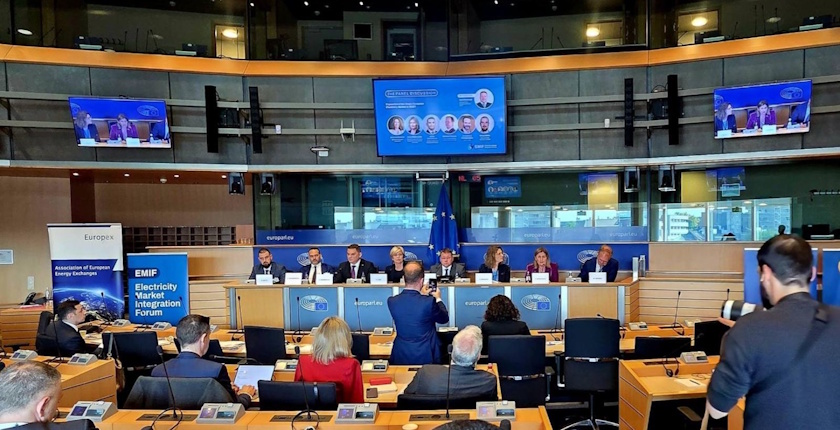
“The integration of the North Macedonian organized electricity market into the Single European Market is of strategic importance for the country,” Sanja Božinovska stressed during the second edition of the Electricity Market Integration Forum – Taking Implicit Electricity Market Coupling Beyond EU Borders, held at the European Parliament in Brussels.

The coupling, in her words, would increase market liquidity and secure competitive prices and greater security of supply. It will directly impact economic stability and predictability, Božinovska added.

Additionally, the minister noted that integration with the European market could provide protection from the financial effects of the EU’s Carbon Border Adjustment Mechanism (CBAM), which would bring significant economic benefits for North Macedonian companies.

The market coupling process began in 2017-2018

She recalled that the market coupling process began back in 2017-2018, adding it is now in a delicate phase, focusing on the transposition of EU legislation and the implementation of the market coupling operator implementation plan (MCO IP) under the jurisdiction of the European Union Agency for the Cooperation of Energy Regulators (ACER).

“Due to uncertainties surrounding the impact of CBAM, it was imperative for market coupling to occur before 2026. Although we are now beyond that timeframe, it is realistic to aim for coupling between the fourth quarter of 2026 and the first quarter of 2027,” Božinovska noted.

During the panel session dedicated to the expansion of the European electricity market by 2026, Božinovska engaged in discussions with high-level representatives from the European Parliament, ACER, regional power exchanges, and institutions from the Western Balkans.

Of note, a week ago North Macedonia adopted the Law on Energy.

It will bring numerous benefits including a liberalized electricity market ensuring fairer prices and more choice for consumers, the introduction of smart meters for more accurate consumption measurement, and daily insight for consumers into their electricity usage, according to the Government of North Macedonia.

Artur Lorkowski, director of the Energy Commnunity Secreatariat , Sanja Božinovska i Zoran Gjorgievski, MEMO CEO
by in News

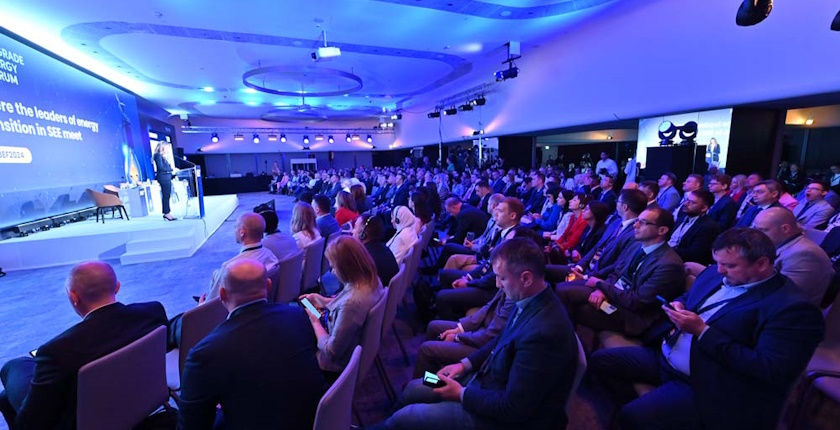
Belgrade Energy Forum 2025 – 50 speakers at eight panels to track pace of SEE energy transition

The agenda of the third Belgrade Energy Forum, taking place on May 14-15, has been finalized with the addition of further prominent energy experts and companies. The conference, organized by Southeast Europe’s leading energy news portal, Balkan Green Energy News, will feature eight panels covering key topics in the energy sector, with an impressive lineup of speakers. Make sure you register on time via this link.

The Belgrade Energy Forum will once again be a meeting place for representatives of regional and international institutions and organizations, as well as the business community from across the region, Europe, and the world.

Eight panels featuring more than 50 speakers will offer an overview of the current challenges in the energy sector. Conference participants will hear in-depth analyses of the current situation, but also projections for the future. The thread that connects everything at this year’s BEF is digitalization – it permeates energy production, consumption, and storage and allows enough flexibility for the stable functioning of the energy systems of the future, where renewable energy will dominate.

Chikán: Electricity knows no borders

One of the key speakers at the conference, Alteo Group CEO Chikán Attila, will lead the company’s high-level delegation. Alteo has recently launched a regional expansion drive, aiming to establish a green platform of up to 2 GW in energy production, including operation, software, maintenance, storage, and waste management.

The Hungarian company primarily targets its home market, Slovakia, Croatia, and Serbia.

“Electricity knows no borders, therefore partnerships and collaborations among energy market players are essential, even at the regional level. Such cooperation is vital to ensuring the security and reliability of electricity supply, facilitating the integration of renewable energy sources, and providing essential digital solutions, supported by expertise and professional know-how,” Chikán stressed.

Decarbonization strategies for power generation in Southeast Europe 2040/2050

  • Dejan Paravan, CEO, GEN Energija
  • Dušan Živković, CEO, EPS
  • Eric Scotto, CEO, AKUO
  • Milutin Đukanović, Chairman, EPCG Board of Directors
  • Neda Lazendić, Country Manager, WV-International

Although at the heart of national energy systems, state-owned power utilities are faced with an environment that has changed and continues to change rapidly. The key shift is the entry of private capital into electricity production through the construction of solar power plants and wind farms.

The energy transition, at this stage, requires cooperation between state power utilities and private companies. With decarbonization as the main objective, the key challenge lies in choosing appropriate strategies and electricity generation technologies.

Moderating the panel will be Dražen Jakšić, Director of the Energy Institute Hrvoje Požar (EIHP).

“The transition to a low-carbon energy system is a key challenge for our region, demanding innovation, investment, and cooperation. As a sponsor of the Belgrade Energy Forum, EIHP is committed to fostering dialogue and driving sustainable energy solutions. I look forward to an insightful discussion,” he stressed.

Jakšić: The transition to a low-carbon energy system is a key challenge for our region, demanding innovation, investment, and cooperation

In recent years, nuclear energy has emerged as a possible alternative. There is hardly a better interlocutor on this topic in the region than Dejan Paravan, the top man of GEN Energija, the Slovenian company developing the Krško 2 nuclear power plant project.

Dušan Živković, CEO of Elektroprivreda Srbije (EPS), will tell us about the Serbian power utility’s plans when it comes to nuclear energy.

Živković: Without decarbonization, the region’s energy sector has no future

“Without decarbonization, there is no future for the region’s energy sector, and that is the biggest challenge ahead of us. It is essential to accelerate decisions and ensure sustainable project financing mechanisms that will provide energy security for every country and power utility in the decades to come. By investing in existing capacities and new renewable energy projects, EPS, as the biggest utility in the region, will make its own contribution to energy security. That’s why we have initiated a transformation process – because we need to be more profitable, more efficient, and fully prepared to tackle any challenge,” Živković pointed out.

The energy transition, in his words, is the path EPS has chosen, and all its plans will align with that goal, based on the belief that the diversification of energy sources and new technologies are essential for achieving it. “These are just some of the key messages I will share with the participants of this year’s BEF,” said Živković.

Eric Scotto, co-founder and CEO of French company Akuo, will share the latest information on the energy transition from across the globe.

The company’s portfolio consists of 1.9 GW of power plants in operation and under construction, with a further 12 GW in the pipeline in more than 20 countries around the world, including a number of countries in the Southeast Europe region.

Integration of Western Balkans electricity markets into internal European market through market coupling

  • Anže Predovnik, Director, ADEX Group
  • Ivan Asanović, Executive Director, CGES
  • Marko Bislimoski, President, Energy, Water Services and Municipal Waste Management Services Regulatory Commission of the Republic of North Macedonia
  • Zoran Vujasinović, Policy Officer, ACER

The integration of the Western Balkans’ electricity markets with the European Union (EU) markets is a process that deserves much greater public attention than it currently receives. It is safe to say that its true importance will become evident only once it is completed.

Full integration will unlock significant synergies, maximizing the benefits of a unified market by enhancing supply security, accelerating the integration of renewable energy sources, and fostering greater competition and transparency.

Moderator Dejan Stojčevski, CTO of the SEEPEX power exchange, says the panel seeks to encourage dialogue on the importance of cross-border collaboration and market efficiency in bolstering energy security and sustainability in the region.

Bislimoski: The time for inspiring speeches is over. Geopolitical developments demand action – now!

Since market integration is largely the job of regulators, the challenges they face will be analyzed by Marko Bislimoski, president of North Macedonia’s Energy and Water Services Regulatory Commission (RKE).

He says that three things are essential for the regional integration of electricity markets into a single European market: investment, investment, and nothing but investment. In his words, the energy crisis demonstrated that limitations become a reality when governments fail to prioritize the implementation of key energy infrastructure capacities in their budgets.

“This past winter, the region faced the highest electricity prices compared to the rest of Europe. Why? Because the implementation of energy investments is not just a ribbon-cutting ceremony. Today, more than ever before, the countries of the former Yugoslavia must demonstrate maturity. These are the years when energy independence will be built through action. The time for inspiring speeches is over. Geopolitical developments demand action – now!” he stressed.

Energy revolution underway – uniting efforts to deliver green, intelligent and sustainable energy solutions

  • Aleš Prešern, VP, Head of Southeast Europe, Siemens Energy
  • Maja Turković, SVP, CWP Europe
  • Ann-Catherine de Tourtier, Managing Director Mediterranean, Nordex Group

As much as contesting the energy transition may be futile, there are still those who find such a view meaningful, especially in light of certain global political developments. That’s why it is important to give the floor to some of the transition leaders and let them testify that an energy revolution is indeed underway in the region.

The panel’s moderator Mirza Kušljugić – professor, energy expert, and one of the founders of Bosnia and Herzegovina’s Centre for Sustainable Energy Transition Centre (RESET) – goes one step further to show that change is not only happening but also accelerating.

“The key words are a new energy paradigm driven by the four Ds – decarbonization, digitalization, decentralization, and democratization. But now we also have another D: disruption, or radical change in the industry and market caused by technological innovation. Of course, we must focus the discussion – from global processes (China, the US, the EU, the Global South) to where the region stands in all of this,” Kušljugić points out, providing a perfect introduction to the panel.

Turković: It’s more important than ever to have open discussions about real solutions

Aleš Prešern, Vice President and Head of Southeast Europe at Siemens Energy, has worked in the energy sector for more than 20 years. He recalls that digitalization is key, along with grid resilience and electricity transmission.

With nearly 100,000 employees in more than 90 countries, Siemens Energy develops the energy systems of the future, ensuring that the growing energy demand of the global community is met reliably and sustainably. The technologies created in the company’s research departments and factories drive the energy transition and provide the base for one sixth of the world’s electricity generation.

As a leader in renewable energy development, CWP is actively working on several large-scale projects across the SEE region with a total capacity exceeding 7 GW, positioning the company at the forefront of the region’s energy transition. Given its global expertise and insights into the regional energy market, CWP’s contribution to this year’s conference will be invaluable.

Maja Turković, Executive Vice President of CWP Europe, says that BEF 2025 is a key gathering of leading experts driving the energy transition in Southeast Europe.

“As this shift gains momentum, it’s more important than ever to have open, action-driven discussions about real solutions to the challenges and opportunities ahead,” says Turković.

PPAs as a key to renewable energy growth in SEE

  • Nikola Gazdov, Chairman, Association for production, storage and trading of electricity – APSTE
  • Natalija Ljubić, Manager PPA & BESS Transactions, Pexapark
  • Ivana Đurović, Category Manager Renewable Energy, Knauf Group

Power Purchase Agreements (PPAs) are, like flexibility, a tool for fixing the imperfections of renewable energy sources, and they are recognized as a key mechanism within the new electricity market design. They ensure price stability, attract new investment, and accelerate the decarbonization of industry.

Is the region ready for PPAs? What are the dominant models? What is the current market practice? How are PPAs viewed by financial institutions? What do they offer to end consumers and what to investors in new power plants? Answers to these questions will be sought at the panel moderated by Mislav Slade-Šilović, Energy, Utilities & Resources Consulting Leader for Southeast Europe and member of the core PPA team at consultancy PwC.

Experience with PPAs for more than 500 GWh of electricity

Slade-Šilović’s experience in concluding PPAs for the production and consumption of over 500 GWh of electricity per year in the SEE region will certainly be of help.

Nikola Gazdov, Chairman of Bulgaria’s association for electricity production, storage, and trading (APSTE) and member of the Board of Directors of the European solar industry association SolarPower Europe, has no shortage of experience either. As CEO of three companies – Enery Element GmbH, Element Power Group, and Renergy – he is involved in the development of a large number of projects.

Pexapark, a company that provides logistics to businesses in the renewable energy market, is synonymous with PPAs in Europe. Natalija Ljubić is the Manager for PPA and BESS Transactions at Pexapark, which has helped conclude contracts for facilities with a combined capacity exceeding 35 GW.

The views of electricity buyers – without whom there would be no PPAs – will be conveyed by Ivana Đurović, Category Manager for Renewable Energy at Knauf Group.

Market flexibility: the backbone of a resilient energy system

  • Roman Bernard, CEO, NGEN
  • Luka Renko, COO, KOER
  • Alteo Group representative
  • Nikolaj Candellari, Project Manager and Market Intelligence, CyberGrid
  • Marko Zarić, EMS

Moderating the panel will be Elena Boškov Kovač, co-founder and CEO of Blueprint Energy Solutions, and a leading voice on market flexibility in Europe.

She will host representatives of the sector’s leading companies: NGEN, Alteo, KOER, CyberGrid, as well as Serbia’s transmission system operator Elektromreža Srbije (EMS).

“Excited to moderate a high-impact panel on ‘Market Flexibility: The Backbone of a Resilient Energy System’ at the Belgrade Energy Forum 2025,” says Boškov Kovač, whose work has shaped smart grid strategies and digitalization innovation agendas across the EU and under ETIP SNET.

As Europe accelerates its shift to renewables, market flexibility is emerging as the cornerstone of reliable, affordable, and decarbonized energy systems. With the European flexibility market promising to unlock over EUR 20 billion in savings, this session will explore how digital tools, flexible assets, and new market designs are unlocking value and resilience across the grid.

Slovenia’s NGEN is the technology sponsor of BEF 2025

Slovenian energy company NGEN, the technology sponsor of the conference, has managed to establish itself as a significant player in European markets in just five years of operation and is now ready to enter the Western Balkans’ markets.

Specializing in premium battery storage systems and smart energy solutions, the company is developing systems with a total capacity of 1.6 GWh in European countries. Its founder, Roman Bernard, will be speaking at the panel.

Also taking part in the panel will be Luka Renko, COO of KOER, a pioneer in virtual power plants in the region.

Rounding off the lineup of exceptional panelists will be Nikolaj Candellari, who is responsible for project management at CyberGrid. The software company was acquired a few years ago by Austria’s EVN, one of the first to demonstrate that greater integration of renewable energy sources, battery storage, and prosumers is not possible without digitalization and software solutions.

In a nutshell, this innovative company stands for the digitalization of the energy sector, with a focus on virtual power plants.

by in News

BiH entities agree on electricity market law – power exchange to be established in Mostar

After ten years of negotiations, the Republic of Srpska and Federation of Bosnia and Herzegovina, the two entities of BiH, have finally agreed on a law on the electricity regulator, transmission, and market. The important piece of legislation should enable the establishment of an electricity exchange, which is one of the conditions for BiH’s exemption from the Carbon Border Adjustment Mechanism (CBAM) on electricity exports to the European Union.

The breakthrough was announced by Staša Košarac, Minister of Foreign Trade and Economic Relations of BiH and Deputy Chairperson of the Council of Ministers.

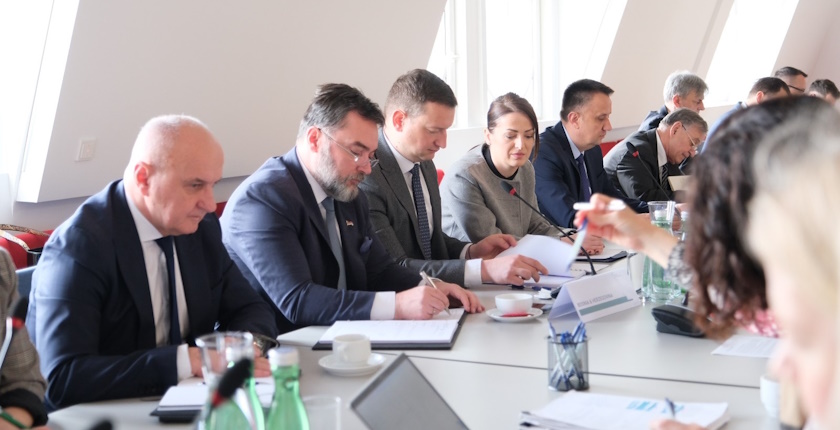
The law on the electricity regulator, transmission, and market has been agreed, Košarac said after a meeting in Vienna with Energy Community Secretariat Director Artur Lorkowski.

The meeting was attended by Minister of Energy and Mining of the Republic of Srpska Petar Đokić and the Minister of Energy, Mining and Industry of the Federation of Bosnia and Herzegovina (FBiH) Vedran Lakić.

Košarac: A serious step towards fulfilling obligations in the energy sector

“After several years of attempts, since 2017, we have finally agreed on the law,” Košarac noted.

He recalled that the said legislation is one of the conditions for the exemption of BiH from the EU’s carbon border tax.

“We made a serious step towards fulfilling our obligations in the energy sector. I am truly grateful to Ministers Đokić and Lakić, and to the Energy Community Secretariat for cooperation,” Košarac stressed.

Lakić: BiH will no longer be the only country without a law and an electricity exchange

The Ministry of Energy, Mining and Industry of the Federation of BiH pointed out that the negotiations on the law lasted ten years.

“We have reasons to be extremely satisfied with the agreement, especially related to the current circumstances in BiH, because this is an important step in the process of exempting the country from CBAM. Now we will be able to protect exporters to the EU in all parts of BiH, and to use the funds collected from the CO2 tax for projects in the country,” Lakić explained.

In his view, the law also sets an environment for the establishment of an electricity exchange, based in Mostar. BiH is no longer the only country that does not have its own law on the electricity market and power exchange, he noted.

Đokić: The key reason for the agreement is the CBAM

The Minister of Energy and Mining of the Republic of Srpska Petar Đokić recalled that the law has been discussed for more than ten years. He noted that it only legalized the current practice established by existing laws.

Elektroprenos BiH, the Independent System Operator in Bosnia and Herzegovina (NOSBiH) and the State Electricity Regulatory Commission (SERC or DERK) are already operational in line with the laws.

CBAM has been postponed for a year

The key reason for the harmonization is the establishment of the electricity exchange because it is a prerequisite for BiH to submit a request for exemption from the cross-border CO2 tax, the minister stressed.

Without the exemption, BiH would pay a tax on its electricity exports to the EU and into the EU budget, said Đokić, who will be among the speakers at Belgrade Energy Forum 2025 (BEF 2025). The entity minister recalled that the EU postponed the CBAM implementation from January 2026 to January 2027. Of note, BiH previously asked for CBAM to be postponed.

The implementation of CBAM would make companies in BiH exporting electricity uncompetitive. It would jeopardize the financial stability of government-controlled power utility Elektroprivreda Republike Srpske (ERS) in the Republic of Srpska, according to the minister.

Đokić noted that the power exchange would be established by three power companies in BiH – ERS, Elektroprivreda BiH (EPBiH) and Elektroprivreda HZHB, with the transmission system operator – NOSBiH.

by in News

Power exchanges to test cross-border day-ahead trading in 15-minute intervals

Nominated electricity market operators in Europe are starting joint member testing on April 7 for cutting the cross-zonal day-ahead power trading interval to 15 minutes. The switch is expected to improve the integration of renewable energy sources.

The European wholesale electricity market is preparing to switch its market time unit (MTU) from 60 to 15 minutes within the Single Day-Ahead Coupling (SDAC) mechanism. The move is significant in competition terms as well as for liquidity and the optimization of power production resources. The Market Coupling Steering Committee, MCSC, said joint member testing is kicking off on April 7 with a plan to complete it on May 15.

It scheduled the go-live for 15-minute products for June 11, for delivery on June 12.

“Testing will allow us to fine-tune processes, validate key scenarios and ensure everything is in place for a smooth launch. Our teams are committed to rigorous testing to guarantee the system’s efficiency and reliability from day one. TSOs will provide production-like capacities,” the body added.

Intermittent renewables require shorter market time units

The Single Intraday Coupling (SIDC) and SDAC projects merged and formed MCSC three years ago. It consists of exchanges, formally called nominated electricity market operators or NEMOs, and transmission system operators (TSOs).

SDAC allocates scarce cross-border transmission capacity by coupling wholesale electricity markets from different regions through a common algorithm. It simultaneously takes into account cross-border transmission constraints. The aim is to create a single pan-European cross-zonal day-ahead electricity market.

The market is experiencing a surge in intermittent sources – wind and solar energy, completely exposed to unexpected weather changes. The 15-minute MTU could eventually be cut to five minutes or even less.

“This new development will refine market operations by enhancing precision, improving the integration of renewable energy sources, and increasing overall efficiency and flexibility. By enabling better adaptation to fluctuations in energy supply and demand, it will support more accurate pricing and scheduling, delivering significant benefits to market participants,” the announcement reads.

NEMOs, TSOs to monitor as exchange members test new system

NEMOs and TSOs are responsible for monitoring as market participants test the shorter interval. The two sides will collaborate to further enhance process stability, MCSC said.

The tests include full decoupling with a shadow auction and the simulations of bidding errors and a lack of liquidity. The switch implies checking functional and simulation integration, among other elements.

JAO, the single allocation platform (SAP) for all the TSOs for cross-border transmission capacity, said it would conduct shadow auctions on April 7, 8 and 9.

As for power exchanges region that Balkan Green Energy News covers, the Romanian Gas and Electricity Market Operator (OPCOM), Independent Bulgarian Electricity Exchange (IBEX), Croatian Power Exchange (CROPEX) and Greece’s Hellenic Energy Exchange (EnEx or HEnEx) updated their members on joint testing ahead.

Of note, Greece and Bulgaria recently achieved another step in power market integration. Both connected to the Platform for the International Coordination of Automated Frequency Restoration and Stable System Operation (PICASSO). It enables them to trade balancing energy.

The Western Balkans aren’t coupled yet with the single European electricity market.

by in News

WB6 electricity report: Slow progress in establishing day-ahead markets

The Western Balkan Six (WB6) countries have been progressing in developing their electricity markets at different pace, while the regional market is still to take shape, the Energy Community Secretariat assessed in its WB6 Electricity Monitoring Report.

Spot Market Development (status 07/2017)

Spot Market Development (status 07/2017)

The report was presented at the WB6 Summit in Trieste on July 12. It analyses progress made at national and regional level in the implementation of energy soft measures since last year’s Summit in Paris.  Those measures were agreed in 2015 within the WB6 initiative which aims to enhance cooperation between the countries in the region. Since then, the Western Balkan countries have implemented more than half of the energy soft measures, the report says.

“To speed up the process, governments will have to adopt decisions that will remove the remaining blocking points, as well as to step up regional cooperation of both Western Balkan 6 parties and EU Member States towards an efficient integration of their day-ahead and balancing markets”, the report concludes.

SEEPEX only functional day-ahead market in region

Cross-border Balancing (status 07/2017)

Cross-border Balancing (status 07/2017)

Western Balkans countries have been still slowly progressing in establishing day-ahead markets and their coupling.

The report states that the power exchange SEEPEX in Serbia remains the only functional day-ahead market in the Western Balkan 6 although other countries have taken activities for starting a day-ahead market. Montenegro stands out in this regard with the establishment of the power exchange company in June 2017.

The report notes that countries have mainly opted for the establishment of national power exchanges in spite of the fact that their markets are small in size, rather than to look for adhering to existing power exchanges.

The Energy Community recommends to the countries to carefully consider financial viability of the future power exchanges and measures that will contribute to boosting their liquidity, including through an efficient market coupling process.

Further steps needed towards balancing cooperation

The Energy Community estimated that truly regional balancing cooperation has still not taken off in the Western Balkans. The countries in the region have been developing models for cross-border exchange of balancing energy, but the activities are limited to bilateral cooperation, or within control blocks, such as trilateral cooperation of transmission system operators of Bosnia and Herzegovina, Croatia and Slovenia.

Serbia still not participate in regional capacity allocation

Regional Capacity Allocation (status 07/2017)

Regional Capacity Allocation (status 07/2017)

The progress in regional capacity allocation has also been slow. The only improvement is the inclusion of the cross-border capacities on the interconnection between Macedonia and Greece into the common regional auctioning performed by SEE CAO.

Serbia remains the only WB6 country that is not allocating any of its cross-border capacities through the regional auction office.

No initiative was taken towards Bulgaria’s membership of SEE CAO, for the purpose of allocation of capacities on the interconnection with Macedonia.

Progress achieved in unbundling

Cross-cutting Measures (status 07/2017)

Cross-cutting Measures (status 07/2017)

The most prominent progress since the Paris Summit was made in the area of price deregulation and unbundling of system operators. In four of the Western Balkan 6 countries, the transmission system operators applied for certification. The process was finalized successfully in Albania, where the transmission system operator was certified and subsequently became a member of ENTSO-E.

The report reminds that Serbian transmission system operator had not fulfilled the unbundling requirements of the Third Package.

Overall Implementation of Soft Measures (status 07/2017)

Overall Implementation of Soft Measures (status 07/2017)

Legal unbundling of the distribution system operator has still not been finalized in Albania and Bosnia and Herzegovina while functional unbundling is not yet complete in Macedonia, Montenegro and Serbia.

In Kosovo, price regulation was terminated for generation prices as well as the supply price for high voltage customers and the price for network losses.

For more information go to full report.

  • 1
  • 2