Fuel Importers Warn of Supply Disruptions as Government Price Caps Fall Below Cost in Albania
Following yesterday’s decision by the Transparency Board, which set retail fuel prices in the country at 203 lek per liter for diesel and 175 lek per liter for gasoline, down from 214 and 199 lek respectively, and wholesale prices at 191 and 163 lek per liter, major fuel importers have responded.
They have warned the Ministry of Finance and Economy and the Ministry of Infrastructure and Energy that, in order to avoid selling below cost and suffering very large losses, they are forced to take temporary measures, specifically:
- Suspending and limiting wholesale sales of diesel and gasoline;
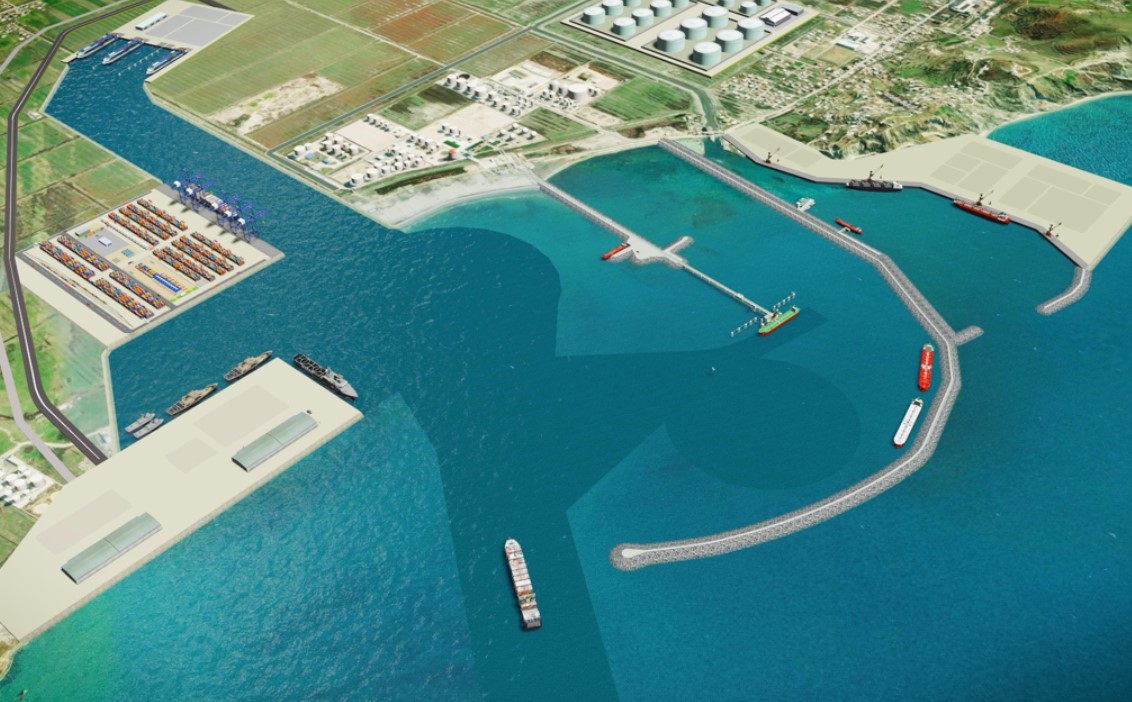
- Slowing down and restricting the customs clearance process for fuel in Porto Romano until further notice.
Monitor is in possession of at least two letters that the importing companies sent today to the Ministry of Finance and Economy and the Ministry of Infrastructure and Energy.
The importers justify this decision by arguing that the retail prices set by the Transparency Board are below cost.
In the letter, they explain that following the latest publication of prices by the Transparency Board on March 26, 2026, which set the ceiling wholesale price for diesel at 191 lek/liter and for gasoline at a maximum of 163 lek/liter, they wish to inform the authorities of the significant issues related to the method used to calculate these prices.
According to the importers, the calculation is based on the formula used in 2022, which does not reflect current market conditions and, in particular, the contracts currently in force with our suppliers. As a result, the prices set do not reflect the actual costs that currently determine the price of one liter of diesel and gasoline for wholesale trade.
Market close on March 26, 2026:
Diesel = $1,402.5/ton, up by $134.75/ton
Gasoline = $1,037.25/ton, up by $49.25/ton
Based on the current premiums we have:
Diesel = CIF + $55/ton
Gasoline = CIF + $75/ton
Today’s costs are:
Diesel = 206.2 lek/liter
Gasoline = 169.7 lek/liter
With a gross margin of 3 lek/liter, today’s wholesale selling prices should be:
Diesel = 209.2 lek/liter
Gasoline = 172.7 lek/liter
Therefore, there is a very large gap between the prices that should apply today and the selling prices set by the Transparency Board. Specifically, diesel is 18.2 lek/liter higher, while gasoline is 9.7 lek/liter higher, the importers state in the letter obtained by Monitor.
In their letters, the importers have requested that the “Transparency Board for the temporary limitation of wholesale/retail prices of petroleum subproducts and gas” be convened as soon as possible to approve new selling prices for gasoil and gasoline.
They also call for a revision of the calculation methodology, so that the price is applied under CIF Med conditions, with the premium for gasoil calculated at +$50/ton and for gasoline at +$75/ton.
2- Gross margins should be calculated as follows: for gasoil, +3.5/liter wholesale and +15/liter retail; for gasoline, +4.5/liter wholesale and +16/liter retail.
Retail prices were reduced today
Earlier today, following the Transparency Board’s decision, retail diesel prices at fuel stations fell by 11 lek per liter. From 214 lek per liter, diesel is now being sold at 203 lek per liter. A price drop was also recorded for gasoline: from 199 lek per liter previously, the price today has fallen to 175 lek per liter.
Earlier, importers had warned that if prices were reduced to cost, they would suspend supply, since the government cannot pass on all the costs of the war to them. “Cost cannot be what is determined by a board, but what is actual, proven by contract, supplier invoice, and therefore by the value of the transaction, and this value is used as a reference by customs for VAT purposes. No board or entity has the legitimacy to order a business to sell below cost,” said Luigj Aliaj of the Association of Hydrocarbon Companies.
In Albania, fuel prices are 30–40% higher than in neighboring countries, but according to importers this is explained by the heavy tax burden applied to fuel prices. In total, an Albanian currently pays 1.16 euros in taxes per liter of diesel, or 53% of the final price; a Macedonian citizen pays 0.58 euros per liter, or 36% of the final price; a Montenegrin pays 0.55 euros, or 35%; and a citizen of Kosovo pays 0.67 euros, or 38.5% of the final price. Importers also say that the 20% excise tax reduction, which was expected to lower diesel prices by 8–10 lek per liter, has not yet entered into force.
This has led many vehicle users to refuel in neighboring countries, spending up to 1 million euros per day.