by in News

Environmental monitoring in 2026 put to the test: Albania has 59 stations on paper, only 9 operational

The government-approved National Environmental Monitoring Program for 2026 promises a nationwide network of measurement stations for air, water, soil and biodiversity but the gap between design and reality is stark. On paper the plan foresees 59 urban air-quality monitoring stations; in practice only nine are currently functioning, concentrated mainly in Tirana and a handful of other major cities. That shortfall makes 2026 a decisive year for whether the monitoring system will deliver real, transparent environmental data to the public and policy-makers.

Map of the distribution of monitoring stations for environmental indicators in the territory of Albania

Under the Program, urban air monitoring is to cover the principal pollutants: PM10 and PM2.5 (particulate matter), benzene, nitrogen oxides, sulfur dioxide, ozone and carbon monoxide, along with priority heavy metals such as lead and arsenic. Noise monitoring is also a component: a planned national network of 67 noise-monitoring stations contrasts with current coverage of 43 stations across 11 urban centers; noise measurements will follow 14-day and continuous 24-hour cycles to assess daytime and nighttime population exposure.

Surface-water monitoring (rivers, lakes, lagoons, coastal waters) and groundwater are included in the Program with standard indicators — total suspended solids, dissolved oxygen, total phosphorus, heavy metals and other priority substances and a monitoring frequency calibrated to basin and water-type characteristics. The Program also calls for an annual emissions inventory by economic sector (industry, energy, transport, services) following international methodologies under the Convention on Long-Range Transboundary Air Pollution, plus greenhouse-gas emission tracking for 2020–2030. Biodiversity and forest monitoring components list systematic sampling plots for threatened species, migration monitoring for key bird species, wildlife surveillance in protected areas and targeted monitoring where chemical or heavy-metal concentrations are high.

Crucially, the Program states that collected data will be processed and incorporated into an annual State of the Environment Report to serve both national policy formulation and reporting obligations to the European Environment Agency. Whether the monitoring network can be brought up to its planned capacity and whether the resulting data will be published with full transparency and timely accessibility remains the central test for 2026
by in News

More than 330,000 Europeans died due to air pollution in 2023

Air pollution remains one of the greatest threats to the health of Europeans. According to the latest report by the European Environment Agency (EEA), 333,000 cases of premature death in 2023 were linked to exposure to particulate matter, ozone, and nitrogen dioxide. The Western Balkans are among the most affected regions, with more than 22,000 premature deaths caused by air pollution, despite an average 50% decrease in PM2.5-related mortality between 2005 and 2023.

The European Environment Agency has published the report Harm to human health from air pollution in Europe: burden of disease status, 2025.

The report analyses three pollutants—particulate matter (PM2.5), nitrogen dioxide (NO2), and ozone (O3)—and their contribution to premature mortality and health impacts in 41 European countries.

In 2023, Europeans were exposed to concentrations of these pollutants far exceeding the levels recommended by the World Health Organization (WHO). Recommended maximum concentrations are 5 micrograms of PM2.5 per cubic metre of outdoor air, 60 micrograms for O3, and 10 micrograms per cubic metre for NO2.

The number of premature deaths in the EU linked to fine particulate matter decreased by 57% between 2005 and 2023

The number of premature deaths associated with fine particulate matter in the EU fell by 57% between 2005 and 2023, surpassing the EU Zero Pollution Action Plan target for 2030, set at 55%. The revised Ambient Air Quality Directive (AAQD), which entered into force last year, brings the EU’s limit values more in line with WHO recommendations.

Still, 95% of residents in European cities remain exposed to levels above these guidelines.

At the EU level alone, compliance with WHO guidelines in 2023 would have prevented 182,000 deaths linked to PM2.5, another 63,000 caused by ozone, and 34,000 resulting from NO2 exposure.

Across the 40 countries covered by the report, 206,000 deaths were attributed to PM2.5 concentrations above recommended levels. Turkey was excluded because the number of monitoring stations with available data was too low to create concentration maps. O3 exposure caused 71,000 deaths, and nitrogen dioxide caused 56,000.

Across the whole of Europe, a total of 333,000 people died prematurely.

People in Southeastern Europe suffer the greatest health impacts due to high pollution levels

Across all 40 countries, the highest number of PM2.5-related deaths in 2023 occurred in Italy, Poland, and Germany. However, the highest relative impact—measured in years of life lost per 100,000 inhabitants over 30 years—was recorded in Southeastern Europe. Years of life lost represent the estimated average number of additional years people would statistically live if they did not die before reaching life expectancy.

Residents of North Macedonia, Bosnia and Herzegovina, and Albania lost the most years of life. Among EU member states, Bulgaria ranked first, followed by Greece and Romania.

The highest absolute number of NO2-related deaths in 2023 was recorded in Turkey, Italy, and Germany. In terms of years of life lost, the greatest burden fell on populations in Turkey, Cyprus, Greece, Serbia, and Italy.

Germany, Italy, and France recorded the highest number of deaths linked to O3 emissions. The highest number of years of life lost per 100,000 inhabitants over 25 years occurred in Bosnia and Herzegovina, Montenegro, Albania, Croatia, and Hungary.

In the Western Balkans, particulate matter caused 22,426 premature deaths

In the Western Balkans, exposure to particulate matter caused 22,426 premature deaths. The highest number was recorded in Serbia (8,735), followed by Bosnia and Herzegovina (4,783), Albania (3,551), North Macedonia (2,667), Kosovo* (2,135), and Montenegro (555).

However, significant progress has been recorded since 2005. Mortality linked to PM2.5 fell the most in North Macedonia (57.2%), followed by Kosovo* (55.3%), Montenegro (53.6%), Albania (53.2%), and Serbia (50.2%). The smallest improvement was observed in Bosnia and Herzegovina (34.8%). On average, across all six Western Balkan countries, mortality associated with PM2.5 decreased by 50.72% during this period.

Air pollution can cause dementia

In addition to premature mortality, the report analyses diseases linked to air pollution and their impact on quality and length of life.

According to the findings, PM2.5 contributes the most to the burden of ischaemic heart disease, stroke, diabetes, lung cancer, chronic obstructive pulmonary disease (COPD), and childhood asthma. For NO2, the greatest health impacts occur in diabetes, followed by stroke, COPD, and asthma in both children and adults. Ozone exposure is linked to 7,000 deaths from COPD—the only disease included in the analysis for this pollutant.

Each additional 10 micrograms of PM2.5 per cubic metre increases the risk of dementia by 17%

For diseases caused or worsened by pollution, such as asthma, the primary impact is reduced health and well-being. For others, such as ischaemic heart disease and lung cancer, the result is premature death.

New evidence shows that air pollution may also cause dementia, whose burden is estimated to be greater than that of other relevant diseases. Research conducted this year by scientists at the University of Cambridge found that the risk of dementia increases by 17% for every additional 10 micrograms of PM2.5 per cubic metre of air.

* This designation is without prejudice to positions onstatus and is in line with UNSCR 1244/99 and the ICJ Opinion on the Kosovo declaration of independence.
by in News

More than 330,000 Europeans died due to air pollution in 2023

Air pollution remains one of the greatest threats to the health of Europeans. According to the latest report by the European Environment Agency (EEA), 333,000 cases of premature death in 2023 were linked to exposure to particulate matter, ozone, and nitrogen dioxide. The Western Balkans are among the most affected regions, with more than 22,000 premature deaths caused by air pollution, despite an average 50% decrease in PM2.5-related mortality between 2005 and 2023.

The European Environment Agency has published the report Harm to human health from air pollution in Europe: burden of disease status, 2025.

The report analyses three pollutants—particulate matter (PM2.5), nitrogen dioxide (NO2), and ozone (O3)—and their contribution to premature mortality and health impacts in 41 European countries.

In 2023, Europeans were exposed to concentrations of these pollutants far exceeding the levels recommended by the World Health Organization (WHO). Recommended maximum concentrations are 5 micrograms of PM2.5 per cubic metre of outdoor air, 60 micrograms for O3, and 10 micrograms per cubic metre for NO2.

The number of premature deaths in the EU linked to fine particulate matter decreased by 57% between 2005 and 2023

The number of premature deaths associated with fine particulate matter in the EU fell by 57% between 2005 and 2023, surpassing the EU Zero Pollution Action Plan target for 2030, set at 55%. The revised Ambient Air Quality Directive (AAQD), which entered into force last year, brings the EU’s limit values more in line with WHO recommendations.

Still, 95% of residents in European cities remain exposed to levels above these guidelines.

At the EU level alone, compliance with WHO guidelines in 2023 would have prevented 182,000 deaths linked to PM2.5, another 63,000 caused by ozone, and 34,000 resulting from NO2 exposure.

Across the 40 countries covered by the report, 206,000 deaths were attributed to PM2.5 concentrations above recommended levels. Turkey was excluded because the number of monitoring stations with available data was too low to create concentration maps. O3 exposure caused 71,000 deaths, and nitrogen dioxide caused 56,000.

Across the whole of Europe, a total of 333,000 people died prematurely.

People in Southeastern Europe suffer the greatest health impacts due to high pollution levels

Across all 40 countries, the highest number of PM2.5-related deaths in 2023 occurred in Italy, Poland, and Germany. However, the highest relative impact—measured in years of life lost per 100,000 inhabitants over 30 years—was recorded in Southeastern Europe. Years of life lost represent the estimated average number of additional years people would statistically live if they did not die before reaching life expectancy.

Residents of North Macedonia, Bosnia and Herzegovina, and Albania lost the most years of life. Among EU member states, Bulgaria ranked first, followed by Greece and Romania.

The highest absolute number of NO2-related deaths in 2023 was recorded in Turkey, Italy, and Germany. In terms of years of life lost, the greatest burden fell on populations in Turkey, Cyprus, Greece, Serbia, and Italy.

Germany, Italy, and France recorded the highest number of deaths linked to O3 emissions. The highest number of years of life lost per 100,000 inhabitants over 25 years occurred in Bosnia and Herzegovina, Montenegro, Albania, Croatia, and Hungary.

In the Western Balkans, particulate matter caused 22,426 premature deaths

In the Western Balkans, exposure to particulate matter caused 22,426 premature deaths. The highest number was recorded in Serbia (8,735), followed by Bosnia and Herzegovina (4,783), Albania (3,551), North Macedonia (2,667), Kosovo* (2,135), and Montenegro (555).

However, significant progress has been recorded since 2005. Mortality linked to PM2.5 fell the most in North Macedonia (57.2%), followed by Kosovo* (55.3%), Montenegro (53.6%), Albania (53.2%), and Serbia (50.2%). The smallest improvement was observed in Bosnia and Herzegovina (34.8%). On average, across all six Western Balkan countries, mortality associated with PM2.5 decreased by 50.72% during this period.

Air pollution can cause dementia

In addition to premature mortality, the report analyses diseases linked to air pollution and their impact on quality and length of life.

According to the findings, PM2.5 contributes the most to the burden of ischaemic heart disease, stroke, diabetes, lung cancer, chronic obstructive pulmonary disease (COPD), and childhood asthma. For NO2, the greatest health impacts occur in diabetes, followed by stroke, COPD, and asthma in both children and adults. Ozone exposure is linked to 7,000 deaths from COPD—the only disease included in the analysis for this pollutant.

Each additional 10 micrograms of PM2.5 per cubic metre increases the risk of dementia by 17%

For diseases caused or worsened by pollution, such as asthma, the primary impact is reduced health and well-being. For others, such as ischaemic heart disease and lung cancer, the result is premature death.

New evidence shows that air pollution may also cause dementia, whose burden is estimated to be greater than that of other relevant diseases. Research conducted this year by scientists at the University of Cambridge found that the risk of dementia increases by 17% for every additional 10 micrograms of PM2.5 per cubic metre of air.

* This designation is without prejudice to positions onstatus and is in line with UNSCR 1244/99 and the ICJ Opinion on the Kosovo declaration of independence.
by in News

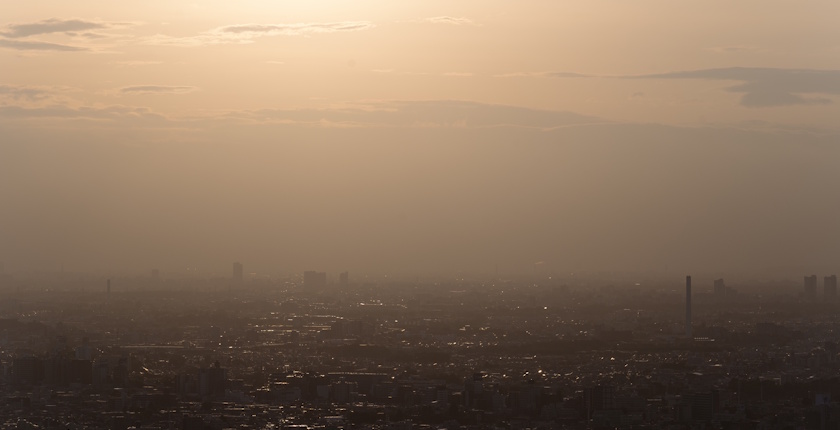
Air pollution spikes throughout Croatia

The Croatian Ministry of the Environment and Green Transition has warned of air pollution across most of the country in previous days. It expects improvement over the weekend.

“In recent days, with the arrival of colder weather and the start of the heating season, a significant increase in the concentrations of air pollutants has been recorded, especially particulate matter (PM10 and PM2.5) across most of Croatia,” the Ministry of Environmental Protection and Green Transition said.

Measuring stations of the State Network for Continuous Monitoring of Air Quality, as well as local stations in most of Croatia’s mainland, are recording a significant increase in the concentrations of air pollutants, including PM10 and PM2.5 particles.

Especially in Zagreb, Sisak, Kutina, Koprivnica, Bjelovar, and Slavonski Brod, monitoring stations registered levels as high as 100 micrograms per cubic meter at times. It is several times above the limit defined by the regulations, the update reads.

The increase in concentrations is primarily driven by emissions from household heating

Two to three times higher values than usual were also recorded at the station in the village of Desinić, on the border with Slovenia. It demonstrates that PM particulate air pollution in Croatia is not exclusively a local or urban issue, but a regional challenge, the ministry stressed.

The cause of the increase in concentrations are primarily emissions from household heating, particularly fueled by solid fuels: wood and coal, the update underlines. The situation is further aggravated by stable weather conditions, the lack of wind, and the occurrence of a temperature inversion.

An additional contribution to air pollution comes from traffic

In urban areas, especially in Zagreb, transportation enhances air pollution. Its impact has intensified in recent years due to the constant growth in the number of vehicles, according to the ministry.

Although wood heating remains the most significant source of PM, all emission sources, including traffic and industry, are amplified in such stable meteorological conditions, the ministry added.

Wind and warmer weather are expected to improve air quality

The ministry claims that current concentrations aren’t causing acute health problems. However, long-term exposure to excessive concentrations of PM increases the risk of respiratory and cardiovascular diseases and shortens life expectancy.

Particularly vulnerable are sensitive population groups such as the elderly, children, adolescents, pregnant women, and people suffering from respiratory and cardiovascular diseases.

The ministry advised citizens to monitor the air quality forecasts of the Croatian Meteorological and Hydrological Service (DHMZ) and the information on the Air Quality Portal. The portal offers an overview of the current air quality situation in the country with real-time data.

The ministry also recommended that citizens, particularly people with chronic illnesses, the elderly, and children, reduce outdoor activities during periods of such excessive concentrations.

In cooperation with the state institutions and local authorities, the ministry is implementing measures defined in air quality action plans to reduce emissions. DHMZ is currently implementing several projects on air protection and is preparing new ones.

An improvement in air quality is expected over the weekend, when temperatures will rise and the southwesterly wind will strengthen, the ministry said.