by in News

Montenegro’s EPCG signs contract for Otilovići small hydropower plant

Montenegro’s Elektroprivreda Crne Gore signed a contract today with Vigoris Ecotech for the construction of the Otilovići small hydropower plant near Pljevlja, in the northern part of the country.

The agreement between state-owned power utility Elektroprivreda Crne Gore (EPCG) and Vigoris Ecotech is for project design, construction, the delivery and installation of electro-mechanical equipment, testing, and commissioning, on a turnkey basis.

The contract, worth EUR 6.8 million excluding VAT, was concluded following an open tender, according to the update. The project involves the installation of two units with horizontal Francis turbines, with a total installed capacity of 3.2 MW. The planned annual production is 11 GWh.

The Otilovići SHPP is a priority in hydropower development

In July 2023, EPCG obtained urban planning and technical requirements for the project. At the time, the company said it worked two years on the documentation and announced that it would soon launch a tender.
montenegro epcg vigoris shpp otilovici dragas visnjic dam
Photo: EPCG

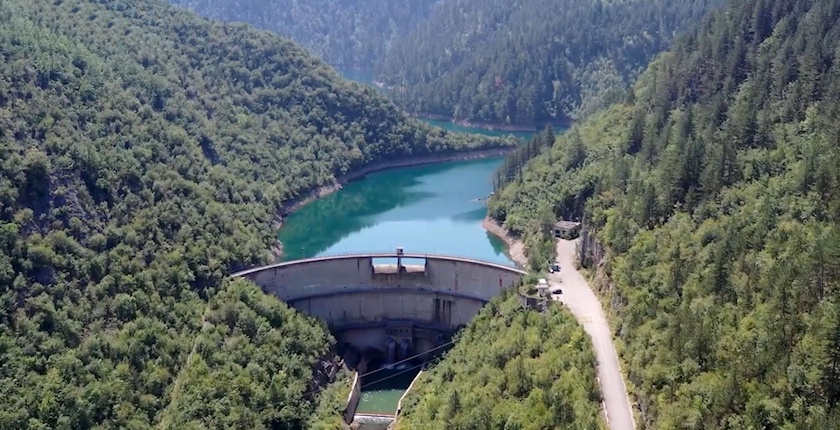
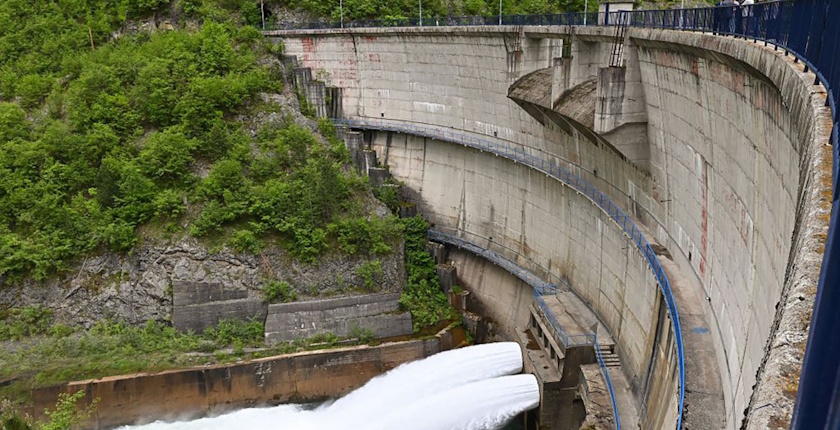
The small hydropower plant (SHPP) will utilize surplus water from an existing reservoir on the Ćehotina river. The facility is used for the needs of the Pljevlja thermal power plant and to supply drinking water to Pljevlja.

EPCG said Otilovići has been recognized as a priority hydropower project within the strategic plans of both the company and Montenegro.

Dragaš: Strengthening production stability and flexibility

EPCG CEO Zdravko Dragaš stressed that SHPP Otilovići represents another step in the company’s investment plan and the strengthening of domestic production capacities.

The contract confirms EPCG’s development orientation toward investing in reliable, sustainable, and domestic energy sources, with the full application of modern standards and procedures, he added.

“The Otilovići SHPP is a project that adds new value to Montenegro’s energy system and strengthens our overall production stability and flexibility,” Dragaš underscored.

Višnjić: We aim to deliver a solution that justifies trust

According to Vigoris Ecotech CEO Siniša Višnjić, the project’s implementation will be guided by high standards of quality and safety, with strictly defined deadlines and obligations.

“Our goal is to deliver a solution that justifies EPCG’s trust, from the main design to the final testing and commissioning,” Višnjić stressed.


by in News

Šahmanović: Montenegro is facing its most challenging year for energy sector

Montenegro is facing its most challenging year for the energy sector, Minister of Energy and Mining Admir Šahmanović stressed.

State-owned power utility Elektroprivreda Crne Gore (EPCG) will suffer a loss of around EUR 80 million given that the Pljevlja coal power plant is offline, while electricity consumption is rising amid increases in prices of other energy sources, Admir Šahmanović told TV Vijesti.

He explained that development is focusing on the reconstruction of the thermal power plant, addressing delays in connecting solar power plants to the grid, and plans for projects including within cooperation with the UAE and an agreement with Italy on a second subsea cable.

Šahmanović: We entered this year quite wounded

The priority will be price stability and increasing the use of renewable sources, along with strengthening Montenegro’s position as an energy hub between the region and the European Union, he added.

“I can freely say that, regarding this year, it is perhaps the most challenging year in the modern history of Montenegro, exactly for the energy sector. We entered this year quite wounded given the fact that last year the hydrological conditions were the worst in the country’s history,” he asserted.

Šahmanović added the electricity demand in Montenegro has jumped 6%.

Climate change is playing its part

One of the reasons is the increase in the price of energy sources such as wood and coal, according to the minister.

He pointed to climate change as another factor. There is a growing need to install air conditioning units even in northern Montenegro, where there was previously no need for it, he added.

Therefore, in the minister’s words, the construction of other production facilities is inevitable.

Of note, EPCG’s executive manager of supply Jovan Kasalica said in April that electricity consumption in Montenegro has risen by 25% over the previous four years.

by in News

Montenegro’s EPCG to develop floating solar, thermal batteries, high-altitude wind turbines

Montenegrin state-owned power utility Elektroprivreda Crne Gore has signed memoranda of understanding with Akuo, E2S Power AG, and wind fisher for a floating solar power plant, thermal batteries, and a pilot project for high-altitude wind turbines, respectively.

Memoranda of understanding (MoUs) were signed within the framework of the European Union – Montenegro Investment Conference. Domestic and European companies initiated 14 projects, including for wind and solar power, energy storage, and the electricity grid.

The two-day conference Smart Growth, Green Future: Accelerating Investment in Montenegro, held earlier this week in Luštica, near Tivat, was opened by European Commission President Ursula von der Leyen and Prime Minister of Montenegro Milojko Spajić.

Bulatović: We will develop three projects with Akuo

Ivan Bulatović, CEO of government-controlled Elektroprivreda Crne Gore (EPCG), told Balkan Green Energy News that the memorandum with French renewable energy company Akuo includes a 36 MW floating solar power plant on Slano lake.

The investment is estimated at EUR 60 million.

It is an innovative technology and it helps the environment by reducing water evaporation, Bulatović explained.

Scotto: Montenegro has everything it needs for the development of renewables

Another project within the deal is for a solar power plant, and the third one is for energy storage. On behalf of Akuo Energy, the memorandum was signed by CEO Eric Scotto.

He stressed that floating solar saves water and space while providing energy. Scotto revealed the possibility for the proposed onshore photovoltaic plant to be agrisolar.

Montenegro has everything it needs for the development of renewable energy sources – sun, wind and space, Scotto stressed.

Thermal batteries at TE Pljevlja

Photo: EPCG

EPCG signed its second memorandum with E2S Power AG, based in Switzerland, for the joint development, production, and application of thermal energy storage. The ceremony was attended by Montenegrin Prime Minister Milojko Spajić.

The aim of the project is to lower the domestic utility’s CO2 emissions, primarily from the Pljevlja coal power plant.

Electricity would be purchased on the market when it’s cheap, to charge the energy storage facility and later produce steam to drive the turbine and generate electricity, Bulatović explained.

He stressed that the cooperation opens up the possibility for the application of advanced technologies enabling more efficient energy use and a reduction in CO2 emissions.

Wind fisher is developing innovative high-altitude wind turbines

“Our thermal energy storage technology, TWEST, provides concrete solutions for decarbonizing thermal power plants and stabilizing power systems that are increasingly reliant on renewable sources,” E2S Power AG CEO Saša Savić said.

The memorandum with French innovative solutions firm wind fisher envisages the development of a joint pilot project for high-altitude wind turbines. Bulatović signed it with the company’s CEO Stéphane Vidaillet.

It is an innovative idea that should take off in the future, and this is a pilot project in the testing phase, Bulatović revealed.

The company, in his words, has the technology, and Montenegro has the space where it can be tested.

Photo: EPCG
by in News

Montenegro to produce coal until 2050

The Pljevlja coal mine has been granted a concession for coal production for 24.5 years, extending the extraction of the solid fossil fuel until 2050.

Admir Šahmanović, Minister of Energy and Mining, and Nemanja Laković, CEO of coal mine operator Rudnik uglja Pljevlja (RUP), exchanged concession agreements for the period up to 2050.

They spoke at a ceremony in Pljevlja marking Miner’s Day, September 24, and the 73rd anniversary of the mine’s operation.

The signing of the concession agreement enables the long-term use of significant coal reserves in the Pljevlja municipality, which is one of the key steps in further valorizing the mining potential of northern Montenegro, according to the Ministry of Mining and Energy.

The coal extraction concession is granted for 24.5 years

“Our joint mission is for mining in Montenegro to continue developing responsibly, and in line with the highest standards. Our special focus will be on the development and future of this sector, having in mind the changes introduced by a just transition,” Šahmanović stated.

In late June, the Government of Montenegro decided to grant the concession to the mine for the excavation of lignite deposits at the sites Potrlica, Kalušići, Grevo, and Rabitlje in the Pljevlja coal basin.

The duration of the contract is 24.5 years, the government said. The mine is obliged to produce at least 1.65 million tons of lignite annually.

The Pljevlja coal power plant is planned for closing in 2041

The concession fee amounts to 4% of the market value of the excavation reserves.

Of note, almost the entire production of the mine is for the Pljevlja thermal power plant – the country’s only coal plant and the largest electricity producer.

The draft National Energy and Climate Plan (NECP) of Montenegro proposes 2041 as the provisional date for closing the Pljevlja coal plant.

The timeline primarily depends on the success of the just transition process and maintaining the security of the electricity supply, the document reads.

by in News

Montenegro’s state power utility posts EUR 24.5 million loss in H1 2025

Montenegro’s state-owned power utility, Elektroprivreda Crne Gore, posted a EUR 24.5 million loss in the first half of 2025, a 620% increase compared to the same period last year.

The main reasons for the poor results were a production halt at the Pljevlja coal power plant and a wide gap between the purchase price of imported electricity and the selling price for consumers connected to the distribution network, according to Elektroprivreda Crne Gore (EPCG).

EPCG’s total revenue in the first half of 2025 amounted to EUR 208.1 million, while total expenses reached EUR 234.7 million.

The operating result was a EUR 24.5 million loss, which is EUR 21 million more than in the first half of 2024, when the loss was EUR 3.5 million. This represents a 620% increase compared to the same period in 2024, according to EPCG’s half-year report.

Total electricity production was nearly 25% lower year-on-year

A significant factor affecting the business result was the halt in production at the Pljevlja thermal power plant from March 31 this year due to final works on environmental reconstruction and the regular annual overhaul. As a result, the plant’s utilization rate for the first six months was only 48.8%.

In the first half of 2025, TPP Pljevlja produced nearly 400 GWh of electricity, 7.9 GWh or 2.02% above the plan, but almost 18%, or around 87 GWh, less than in the same period in 2024.

The total output at hydropower plants – Piva, Perućica, and small hydropower plants (SHP) – was 658 GWh, which is 22% or 159 GWh less than in 2024.

The company spent EUR 35.8 million more on electricity imports

The total output of all power plants was 1,058 GWh, or 78.8% of the plan, according to the report. This also represents a decrease of 26%, or 278 GWh.

During the first half of 2025, EPCG imported 656 GWh of electricity for EUR 62.4 million. The average price was EUR 95.09 per MWh. In the same period last year, imports totaled 430.3 GWh, at an estimated cost of EUR 26.6 million, according to the report. This marked a 52% increase in the volume of imports.

The company has received consent to borrow EUR 50 million to finance electricity imports.

The report underlined that the price charged to consumers on the distribution grid is significantly lower than the purchase price of imported electricity. The gap has a major negative impact on EPCG’s results, the company noted.

Electricity is imported at above EUR 100 per MWh and supplied to distribution consumers at an average price of around EUR 45 per MWh, according to the report.

by in News

Montenegro publishes NECP for public consultation – sole coal plant planned for shutdown in 2041

State institutions, companies, organizations, and individuals have until August 6 to deliver their suggestions and comments about the draft National Energy and Climate Plan of Montenegro. It sets the provisional date for taking the Pljevlja coal power plant, the only one in the country, at 2041, but the authors pointed out that it primarily depends on a just transition and the security of electricity supply.

Montenegro’s long-awaited draft National Energy and Climate Plan (NECP) sets out the key 2030 targets for greenhouse gas emission cuts, share of renewable energy sources in gross final energy consumption, and energy efficiency.

The document, also known for its acronym INECP, in which the first letter stands for integrated, was published for the public consultation phase. It lasts until August 6. The Ministry of Energy and Mining called on the interested public – local authorities and other state institutions, the expert and scientific communities, associations, organizations, companies and individuals, to send their comments and suggestions.

“The energy and climate policy isn’t just a task for the government – it is a joint responsibility. That is why I am inviting all stakeholders, and especially nongovernmental organizations, to use this opportunity and contribute to the creation of a realistic, ambitious and just plan,” Minister Admir Šahmanović stated.

Renewables target can be surpassed

National goals match the ones adopted within the Energy Community. The targeted primary energy consumption in 2030 amounts to 0.92 million tons of oil equivalent. Under the business-as-usual scenario (with existing measures – WEM), the benchmark is expected to land at 1.04 million. With additional measures (WEM), the trajectory moves closer to the objective, projected at 0.97 million tons of oil equivalent.

The goal for final energy consumption is 0.73 million tons of oil equivalent. Existing measures result in 0.82 million, and added ones in 0.77 million tons of oil equivalent.

The share of renewable sources in transportation could reach 24.4% instead of only 7.2%

Montenegro fares better with its expected share of renewables in gross final energy consumption, against the 50% target. In the WEM scenario, it reaches 42.5%, and the WAM projection is 53.3%.

Without additional measures, renewable sources have a 66.3% share in electricity production. The document’s authors calculated that it could grow to 79.4%. As for transportation, the range is from 7.2% to 24.4%. In heating and cooling, the possible progress from the results of current measures is only 0.4 percentage points, reaching 49.2%.

The targeted reduction in emissions is 55%, the same as in the European Union. It translates to 2.42 million tons of carbon dioxide equivalent in the final year of the current decade. With existing measures, the curve touches 3.06 million in 2030, and with added ones the result is 2.4 million tons of CO2 equivalent.

Retirement of Pljevlja coal plant depends on socio-economic situation in northern region

Oil derivatives, which are all imported, participated in the 2022 final energy consumption with 47.3%, followed by electricity, 33.3%. Wood fuel is the next item, with 18.7%. The share of coal is only 0.7%, because almost the entire output goes to thermal power plant Pljevlja, the only such facility in Montenegro.

The overall electricity production capacity at the end of 2023 was 1.07 GW. The Pljevlja coal plant, which is currently under reconstruction, has 225 MW.

According to the projection, the Pljevlja coal plant is in cold reserve after 2040

The provisional date for its shutdown is 2041, but it primarily depends on the success of the just transition process and maintaining the security of electricity supply, the NECP reads. It also shows the Pljevlja coal plant in cold reserve after 2040.

In addition, taking it offline requires supplying end consumers under favorable conditions, while minding the overall socio-economic situation in the country’s northern region, where the coal mines and the power plant are, the authors explained. They noted as well that an energy storage pilot project is under consideration for the site of the Pljevlja facility.

Electricity sector’s self-sufficiency varying due to dependence on hydrological conditions

The country’s two large hydropower plants Piva and Perućica have 342 MW and 307 MW in capacity, respectively.

There are 38 other hydroelectric units in Montenegro, of which the smallest one is 200 kW. The biggest facility, Vrbnica (6.75 MW), is owned by a firm with the same name, registered in the capital Podgorica.

The high share of hydropower plants in electricity production, implying dependence on hydrology, is the main reason of the variability of the level of self-sufficiency of the national energy balance year after year, the NECP says.

There are two wind power plants on the grid: Krnovo (72 MW) and Možura (46 MW), while the third one, called Gvozd, is under construction. The project envisages 54.6 MW in the first phase.

There are only five independent solar power plants. The biggest one, Čevo, has 4.4 MW in nominal capacity and a 3.25 MW connection. Nevertheless, units operated by prosumers reached 75 MW altogether, according to one entry, though the numbers are lower in other parts of the NECP.

by in News

Western Balkan coal plants cut harmful emissions in 2024 but breaches remain extreme

In 2024, Western Balkan governments’ chronic law enforcement failures allowed sulphur dioxide (SO2) pollution from the region’s antiquated coal power plants to exceed legal limits by six times, according to the Comply or Close report. The overall particulate matter (PM or dust) and nitrogen oxides (NOx) pollution from coal plants continued to exceed legal limits.

Emissions of the three pollutants were actually the lowest since at least 2018, altogether, but the legal upper limits were reduced as well. Serbian coal plants released almost a third less SO2 than in 2023 thanks to desulfurization units. The drop was greater than the total decrease in the region.

Seven years since pollution control rules came into force under the Energy Community Treaty, SO2 emissions from coal plants included in the national emission reduction plans (NERPs) of Bosnia and Herzegovina, Kosovo*, North Macedonia and Serbia were still collectively six times as high as allowed, Bankwatch said in its Comply or Close annual report.

Region-wide, SO2 emissions decreased 12.1% year over year, to 518,248 tons, but it’s only 14.5% down from 2018. The limits were more stringent in 2024 than in previous years, as is the case with PM pollution and NOx, which widened the compliance gap.

BiH becomes biggest SO2 polluter in Western Balkans

For the first time, Bosnia and Herzegovina’s NERP coal plants were the highest SO2 emitters, with 212,840 tons altogether – an increase of 17.1% from the previous year – and 11.3 times as high as allowed. The group excludes the Stanari facility, built in 2016. It has complied with the European Union’s Large Combustion Plants Directive since the start.

Serbia followed, with 205,925 tons, or 4.6 times as high as allowed. The total amount of SO2 emissions fell 30.1% on an annual basis, landing at the lowest level since at least 2018. The decrease in the country was higher than in the whole region. Of note, Serbia has a new coal plant, too – Kostolac B3.

The Kostolac B coal plant has a desulfurization unit, but its SO2 emissions in 2024 were 2.3 times more than allowed

The (insufficient) drop in SO2 emissions from the NERP facilities in the country is due to desulfurization units. Some of the other improvements in the region regarding air pollution came from a decrease in production.

Kostolac B finally started to decrease its emissions in 2024 with its desulfurization system, but it still emitted 2.3 times as much as allowed.

In April 2024, the EUR 215 million desulfurisation system at Termoelektrane Nikola Tesla (TENT) A3-A6 was commissioned. It was 13 years after securing funding. The units still emitted more than twice as much sulphur dioxide as allowed in 2024. Another desulfurization facility, at TENT B, was 91% complete at the end of the year.

Ugljevik accounts for over one fifth of SO2 emissions in region as desulfurization unit is idle

For the fifth time since 2018, the biggest individual SO2 polluter in the Western Balkans was Ugljevik in BiH, with 112,943 tons – more than the previous year. It includes a desulfurization unit since 2020, but it hasn’t been working as the operator considers it an “economic burden.”

In 2024, the only potentially significant development regarding pollution control in the region was the signing of a contract for the construction of a desulfurisation unit at Kakanj 6 and 7, the report notes. It is projected to cost just under EUR 63 million. But the authors of Comply and Close pointed to the slow progress in the reconstruction of the Pljevlja coal power plant in Montenegro, which is also conducted by a consortium of China-based Dongfang.

Five coal units operating illegally

Pljevlja is the only coal plant in Montenegro. The facility isn’t under NERP rules, but under a so-called opt-out mechanism. The deadlines have expired for closing the smallest and oldest plants under the opt-out limited lifetime derogation.

Pljevlja has been running illegally since late 2020, and in 2022 was joined by Tuzla 4 and Kakanj 5 in Bosnia and Herzegovina and Morava in Serbia. The Kolubara A plant, also in Serbia, failed to stop operating at the end of 2023.

The Energy Community Secretariat has opened several infringement-type cases against the three countries, but not a single government has imposed penalties on the coal plants in question. Nor do they have clear, updated and realistic plans for compliance or closure.

Montenegro, Serbia and BiH have no clear plans for the coal plants that operate after ther their opt-out deadlines expired

“In six months, the EU’s Carbon Border Adjustment Mechanism (CBAM) will finally limit exports of Western Balkan countries’ carbon-intensive electricity by imposing fees on imports to the EU. This will make their ageing, inefficient coal plants even less economic. But the Balkan governments and utilities seem oblivious, as if they have all the time in the world. Clear, workable plans are urgently needed,” said Balkan Energy Coordinator at Bankwatch Davor Pehchevski.

Six units exceeded their individual ceilings for sulfur dioxide emissions by more than ten times – Ugljevik, Gacko, Tuzla 6 and Kakanj 7 in Bosnia and Herzegovina; Kostolac A2 in Serbia; and Bitola B1 and B2 in North Macedonia.

In 2024, Pljevlja’s SO2 emissions dropped 11.1% to 39,140 tons, the lowest level since at least 2018. Dust emissions decreased to 793 tons from a record high of 1,130 tons, but this was still higher than any other year since the beginning of the period. NOx emissions – 3,682 tons, the second-lowest result, compare to 3,982 tons registered in 2023.

Gacko coal plant tops chart in particulate matter emissions

Dust pollution from NERP coal plants in the region was 1.9 times higher than allowed last year. It dropped slightly from 2023 but remained similar to 2018 levels.

The highest emitter was Gacko in Bosnia and Herzegovina. It emitted 3,339 tons – 13.7 times above the limit. After protests by local people, improvements were announced in autumn 2023, however the plant’s pollution grew last year. Overall, dust in BiH decreased for the third time in a row, landing at 4,146 tons. The emissions in the segment peaked in 2021 at 6,040 tons.

Serbia is the only country in the region with emissions of PM particles within legal limits

Nitrogen oxides pollution in the region totaled 1.4 times above the limit, after 1.3 times more than allowed in 2023. BiH, Kosovo* and Serbia all continued to breach their NOx limits, with TENT B in Serbia emitting the most – 12,418 tons.

Kosovo* had the highest exceedance – 3.1 times as high as its ceiling. The reconstruction and modernization of one of the two units in the Kosovo B coal power plant started recently.

North Macedonia is the only country complying with the rule on nitrogen oxides. Serbia is the only one below the limit for PM particles.

“EU enlargement is back on the agenda, but the harsh reality is that Western Balkan governments are showing no interest in people’s health or the environment. Instead of a robust response to these chronic breaches, the European Commission recently prioritised the Jadar lithium mine in Serbia as strategic, rewarding the regime’s failure to uphold the rule of law. This has to change, and fast,” said Bankwatch’s Southeast Europe Energy Policy Officer Pippa Gallop.

* This designation is without prejudice to positions onstatus and is in line with UNSCR 1244/99 and the ICJ Opinion on the Kosovo declaration of independence.
by in News

Decarbonization of Southeastern European region: both renewables and nuclear are speeding up

Energy transition in Southeastern Europe is accelerating, and the progress depends on individual countries’ strategies and legal frameworks. At the Belgrade Energy Forum (BEF 2025), representatives of state-owned power utilities and private producers discussed the different approaches to decarbonization. The domination of investments in renewable energy is unquestionable, but there are also ambitions to develop nuclear capacities, spearheaded by Slovenia. The country is already operating one nuclear reactor and is developing a project for another one.

The electricity sector in Southeast Europe still depends for a large part on thermal power plants that burn fossil fuels. In 2023, they accounted for 43% of overall output, of which two-thirds were from lignite and the rest from gas. There is a need for accelerated decarbonization, and the speed of the transition will depend on financial possibilities and the political will and decisions, said the panel’s moderator and Director of Zagreb-based Energy Institute Hrvoje Požar Dražen Jakšić.

The acceleration trend in decarbonization is also evident in the electricity market projections for the region until 2030. The plans for the period until the end of the decade include shutting down 6.2 GW of thermal power plant capacity and installing 42.3 GW from renewable sources. Greece, Romania, Serbia and Bulgaria are expected to add the most.

Top executives of state-owned utilities in Serbia, Slovenia and Montenegro and independent power producers that invest in renewables in the region gathered at a panel called Decarbonisation strategies for power generation in Southeast Europe 2040/2050 at Belgrade Energy Forum 2025.

They agreed that decarbonization is well underway and an unstoppable process already speeding up significantly. The participants in the discussion presented the different strategies their companies will act upon in the following years and decades, leading the process to fulfilment.

Among the messages that they shared is that they expect each government to promote investments and make the legal framework clear and certain, while the countries strengthen their ties and exchange experiences. Green energy is the pillar of the energy transition and decarbonization in the region, but several states are also interested in building their first nuclear power plants—conventional ones or small modular reactors (SMRs)—or expanding the existing capacity.

EPS’s Živković: Decarbonization requires energy storage, nuclear plants

Chief Executive Officer of Serbia’s Elektroprivreda Srbije (EPS) Dušan Živković pointed out that the state-controlled electricity producer is committed to its goals regarding green energy and emission reductions as well as to the country’s targets. “We will work on that, of course, believing in these objectives, but without compromising energy security and the energy sovereignty of Serbia. It was proven to be the only sustainable path,” he asserted.

The company particularly counts on the project for solar power plants with a total connection capacity of 1 GW, with batteries of 200 MW in combined capability. The investment is conducted through a strategic partnership with Hyundai Engineering and UGT Renewables (UGTR).

A study is underway in Serbia on the potential for the construction of large nuclear power plants and small modular reactors

The decarbonization process won’t be easily feasible without serious energy storage capacity, Živković warned and added that nuclear energy wouldn’t be unrealistic. A study is underway on the possibilities of building large nuclear plants and small modular reactors in Serbia.

The head of EPS expressed the belief that “the quality of that energy needs to be visualized” for citizens of every country and that they should be explained that it is necessary to provide energy for the economy and its security.

CEOs Dejan Paravan of GEN energija, Dušan Živković of EPS and Eric Scotto of Akuo

No dilemma in Serbia about energy transition

Country Manager of WV-International in Serbia Neda Lazendić highlighted the said strategic partnership for solar power plants with battery energy storage systems (BESS), saying Hyundai Engineering is a world-renowned company.

In her view, the endeavor will be a milestone for the entire region and it is exceptionally important for gaining experience at the domestic level.

The recent second round of auctions for electricity from renewable sources showed that Serbia opted for the energy transition “and there is not any dilemma about it anymore,” Lazendić stressed and said the country is an example for the region. The prices from the bidding that were accepted are appealing and they match European trends, she noted.

Country Manager of WV-International Neda Lazendić

Lignite is highly unprofitable

Slovenia and GEN energija, one of the state-owned power utilities, are relying on both renewable sources and nuclear energy in their decarbonization investments, the company’s CEO Dejan Paravan pointed out.

“We want to get rid of coal as soon as possible. And in the short term, renewables are the only option. Why get rid of coal? The current production of domestic lignite is highly unprofitable, and because of climate goals,” he explained.

Nevertheless, it is exceptionally complicated to get permits for renewables and place them in the environment, Paravan added. On the other hand, nuclear energy is emissions-free and very stable and reliable, he asserted. The technology takes up the least space and enables the production of huge amounts of electricity, the head of GEN energija said.

Nuclear power plant Krško 2 could come online in 2040

Paravan recalled that two years ago nuclear power plant Krško marked four decades since it was commissioned and that its operating life was extended by 20 years. GEN energija is working on the Krško 2 project. The chief executive expects construction to begin in 2022 or 2023 and that the reactor could be connected to the grid in 2040.

In parallel, the company is studying SMRs. Still, the development of the technology will take a long time and, importantly, such facilities won’t have the advantage of scale like large reactors, he said. One who expects electricity from SMRs to be cheaper than from big nuclear plants is wrong, in Paravan’s view.

As for the dilemma between renewable sources and nuclear energy, he expressed the belief that they are not mutually exclusive. “We need renewables and they can provide us a lot of CO2-free electricity in the short run. But let’s make it clear that once we come to 70%, 80%, 90% based on renewables, that we have a problem of seasonal storage, that things will get very difficult,” Paravan stated.

Batteries are ten times cheaper than ten years ago

Conversely, Akuo Energy’s CEO Eric Scotto pointed out that nuclear power is expensive. “It’s over. We won the race. Renewable is the cheapest way to produce energy,” he underscored.

The price of energy storage capacity is ten times lower than ten years ago, the head of the French company noted. Moreover, operating power of a battery system in a standard TEU container, twenty feet or 6.1 meters long, now reaches 6 MW, which is three times more than three years ago, according to Scotto.

To attract investments, stability is necessary, he stressed. Scotto went on to highlight some “simple things” that could help Akuo, which was one of the winners at the last auction round in Serbia, to materialize its projects for two wind parks. He mentioned the speed of permitting for telecommunication systems and road construction, for power plants.

Turning to the slowness of the energy transition in Balkan countries, he emphasized its positive side. “We are late. Then we will benefit from the cheapest resource, the cheapest way to produce energy,” Scotto concluded.

EPCG’s Solari project kicked off energy transition in Montenegro

Technical Director of Elektroprivreda Crne Gore (EPCG) Ljubiša Đurković called the state-owned power utility’s projects Solari 3000+ and Solari 500+ the start of the energy transition in Montenegro. Since the beginning of 2023 and including Solari 5000+, launched later, the company set up photovoltaic systems on 7,380 structures, he revealed.

Total peak capacity reached 76 MW and another 125 MW will be installed by the end of the year, EPCG’s official said.

Among its projects, the company is building the Gvozd wind farm, and the Kapino polje solar park near Nikšić.

Technical Director of EPCG Ljubiša Đurković

There is already 10 MW on roofs in the former Željezara steel plant in Nikšić, and before the end of the year another 15.5 MW will be connected to the grid, Đurković said. A contract has been signed for the construction of the eighth generator in the Perućica hydropower plant, of 58 MW. It is scheduled for completion in 2027.

Đurković: A realistic date for the closure of the Pljevlja thermal power plant is between 2045 and 2050

The energy transition is about a single and connected system, including storage capacities and measures to improve energy efficiency, he underscored. “You have to create the conditions for a swift integration of renewable energy sources into the distribution and transmission networks. We were supposed to do that already. We didn’t do it, particularly in the Western Balkans. We didn’t reconstruct the distribution and transmission networks,” he stated.

As for the current reconstruction of the coal-fired Pljevlja thermal power plant, the only one in Montenegro, Đurković said the project wouldn’t make sense if the facility were to keep operating only for a short while longer.

žAccording to the National Energy and Climate Plan (NECP), which is almost complete, it will remain active at least until 2041, although the realistic date for its closure is only between 2045 and 2050, in the opinion of EPCG’s technical director. The main phase of the reconstruction began at the end of March.

by in News

Montenegro’s power consumption grows 25%

Electricity consumption in Montenegro has risen by 25% over the past four years, driven, among other factors, by solar power expansion. The installed capacity of photovoltaic plants amounts to around 80 MW, and it is expected to exceed 100 MW by the end of the year.

Jovan Kasalica, executive manager of the supply department in power utility Elektroprivreda Crne Gore (EPCG), attributed the surge in electricity consumption both to a low price of electricity and the growing contribution of solar power plants.

“The majority of this increase is linked to the heating sector, especially in central and northern Montenegro. We are making a significant contribution to decarbonization in the region, which we will document with precise data,” Kasalica noted at the international conference Energy 2025, held in the Zlatibor mountain in Serbia.

Rooftop solar is capacity is increasing

He said the development of the solar power segment was successful. Currently, nearly 80 MW of solar capacity is operational in Montenegro.

The Solari 3000+ and 500+ project brought online 30 MW of solar panels, and the second project, Solari 5000+, which aims for another 70 MW, is currently in advanced stages.

The initiatives focus on installing photovoltaics on the roofs of households and businesses, enabling citizens and entrepreneurs to produce electricity for self-consumption and become prosumers.

The Gvozd wind farm is set to be connected to the grid by the of the year

By the end of the year, it is anticipated that the total capacity of PV facilities in Montenegro will surpass the planned 100 MW, according to Kasalica.

He further noted that the company didn’t have any additional costs for the Solari 3000+ project, because the loans for the installation were switched to the funding facilities and consumers. The project has resulted in lower bills and greater energy efficiency, Kasalica said.

Additionally, he announced plans to connect the 54 MW Gvozd wind farm to the grid by the end of the year.

In addition to increasing the number of prosumers in Montenegro, EPCG plans to install ground-mounted solar power plants and to put online a total capacity of 200 MW within the next three years.

The company has also recently kicked off the main phase of the so-called ecological reconstruction of the Pljevlja thermal power plant. The only coal-fired facility in Montenegro won’t produce electricity until November.

by in News

Montenegro labels 15 energy projects as infrastructure priorities

The most valuable priority infrastructure projects in the energy sector of Montenegro are the Komarnica and Kruševo hydropower plants, the Trans-Balkan Electricity Corridor and the Ionian-Adriatic pipeline.

The Government of Montenegro has adopted a list of priority infrastructure projects for the energy sector to fulfill the final criteria of chapter 21 – Trans-European Network, of the country’s negotiations on the accession to the European Union.

The list consists of 15 projects with a total estimated value of around EUR 1.38 billion, according to the announcement.

The EU will use list to consider financial support from the Western Balkans Investment Framework

The list was updated in line with the Western Balkans Investment Framework (WBIF) methodology. In line with priorities defined at the state level, the list is for the European Commission to select projects for financial support from the scheme.

WBIF is the main mechanism for the EU’s financial support in the region in the period from 2024 to 2027, the government noted.

The following projects are on the list:

  • HPP Komarnica – EUR 315 million
  • Ionian-Adriatic Pipeline for natural gas (IAP) – EUR 210 million
  • interconnection Italy – Montenegro – Serbia – Bosnia and Herzegovina (Trans-Balkan Electricity Corridor) – EUR 163 million
  • HPP Kruševo – EUR 160 million
  • energy efficiency in public and residential buildings – EUR 104 million
  • improving the quality of power supply in tourist regions – EUR 78 million
  • creation of conditions for the integration of renewables and the construction of a new power interconnection – EUR 73.6 million
  • solar power project Solari 10,000+ – EUR 66 million
  • Slano floating solar power plant – EUR 60 million
  • Krupac photovoltaic plant – EUR 40 million
  • smart grid and smart metering system for electricity distribution system operator CEDIS – EUR 35 million
  • A8 unit at HPP Perućica – EUR 24 million
  • smart grid program of electricity transmission system operator CGES – EUR 21 million
  • decarbonization – EUR 21 million
  • reconstruction of oil storage tanks – EUR 10 million.

Montenegro also has a list of priority infrastructure projects, including energy. It was introduced in 2018 and updated in the meantime.

Compared to the list from 2021, the Gvozd wind farm and the ecological reconstruction of the Pljevlja thermal power plant were erased, while the following projects were added: HPP Kruševo, Krupac solar power plant, decarbonization and the reconstruction of oil storage tanks.

  • 1
  • 2