by in News

Serbia, North Macedonia seek to build gas interconnector by end-2027

Serbia and North Macedonia aim to complete the construction of a gas interconnector in late 2027 and put it into operation in early 2028, Serbian Minister of Mining and Energy Dubravka Đedović Handanović said following a meeting with North Macedonia’s Minister of Energy, Mining and Mineral Resources Sanja Božinovska. The pipeline’s projected annual capacity is 1.5 billion cubic meters of natural gas.

Following the construction of the interconnector with Bulgaria, Serbia continues to diversify its supply routes, and the gas link with North Macedonia is a priority in that context, according to Đedović Handanović.

Serbia’s portion of the interconnector with North Macedonia will be 144 kilometers long and will cost an estimated EUR 153 million to build, she said. The plan is to obtain a construction permit in mid-2026 and launch works immediately afterward, she added.

Serbia’s portion of the pipeline will cost EUR 153 million

The planned route on Serbia’s territory is Orljane – Leskovac – Vranje – the North Macedonian border, according to her.

Đedović Handanović: Serbia’s goal is a fully diversified gas supply

“The capacity of the gas interconnector with Bulgaria is 1.8 billion cubic meters per year, and with the completion of the interconnector with North Macedonia, as well as the planned interconnector with Romania, whose capacity will be between 1.6 and 2.5 billion cubic meters, we will have a fully diversified gas supply within the next few years,” said Đedović Handanović.

serbia north macedonia gas pipeline interconnection djedovic bozinovska

Photo: Ministry of Mining and Energy/Nenad Kostić

The goal is to have as many supply options as possible, not to depend on a single supplier, and to ensure greater security and a better negotiating position in terms of prices and capacity, she added.

Božinovska, for her part, said the interconnector with Serbia would ensure new gas sources for North Macedonia and strengthen regional energy stability.

Božinovska: The gas link is one of the most important regional infrastructure projects

“This is also one of the most important regional infrastructure projects – important not only for North Macedonia and Serbia, but for all of Europe. With this new energy link, both countries will gain access to alternative sources and routes, and Europe will get a stronger and better connected Balkans,” Božinovska asserted.

The two countries have completed the necessary studies, agreed on the route, ensured the European Union’s support, and defined a clear implementation timeline, according to her.

Joint efforts to secure a postponement of CBAM

The meeting also addressed the coordinated approach to the EU’s Carbon Border Adjustment Mechanism (CBAM), which is scheduled to take effect on January 1, 2026.

According to Đedović Handanović, the two sides agreed to act jointly on this issue and to request a postponement of the mechanism’s implementation.

“Letters from all contracting parties to the Energy Community will be sent next week so that we can continue the dialogue with the European Commission, which is important not only for Serbia and North Macedonia, but also for the other contracting parties,” she said.

The two sides also discussed the possibility of North Macedonia covering part of Serbia’s demand for oil derivatives, primarily in the country’s south, the Serbian Ministry of Mining and Energy said in a statement.
by in News

Serbia plans hydrogen transport through gas pipelines

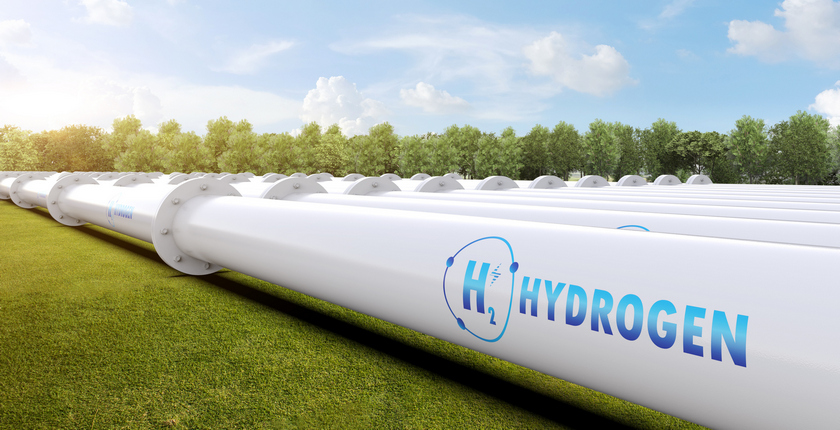
Serbia’s natural gas transmission system operator, Transportgas Srbija, has invited bids for the preparation of a study on the technical feasibility of transporting hydrogen through the gas network. The study should assess the quantities of hydrogen that can be transported, as well as the impact of blending hydrogen with natural gas on the transmission system and key consumers. The goal is to determine the technical, investment, and regulatory measures necessary for integrating hydrogen into Serbia’s gas infrastructure.

Transportgas notes that hydrogen, as an alternative fuel, is becoming increasingly important in the context of decarbonization and energy security. It also recalls that the Energy Community has set goals for defining natural gas quality for all transmission system operators in Southeast Europe, with special emphasis on the introduction and application of hydrogen.

Serbia would transport hydrogen by blending it with natural gas. Transportgas recalled that gas pipelines built in recent years or currently under construction in Europe are capable of transporting 100% pure hydrogen.

Transportgas: New gas pipelines in Europe can transport pure hydrogen

The study should, among other things, determine the maximum percentage of hydrogen that can be blended with natural gas, as well as the impact on equipment and transmission system losses.

The selected consultant will also be required to determine the chemical composition of the hydrogen-natural gas blend, define the blending procedure, and identify the optimal blending points within the transmission system, as well as suitable sites for hydrogen production and storage in Serbia.

The study should also assess how much hydrogen blended with natural gas can be transported through existing gas pipelines, taking into account the varying qualities of natural gas from different supply routes. The construction of the Balkan Stream gas pipeline and the interconnector with Bulgaria near Dimitrovgrad has enabled Serbia to diversify its gas supplies, Transportgas pointed out.

The study should also identify suitable sites for hydrogen production and storage in Serbia

The study must include an assessment of the impact of the chemical composition and quality of the hydrogen-natural gas blend on major gas consumers in Serbia – steelworks Železara Smederevo, asphalt plants, compressed natural gas (CNG) filling stations, oil refinery Rafinerija nafte Pančevo, cogeneration plants TE-TO Pančevo and TE-TO Novi Sad, petrochemical plant HIP-Petrohemija Pančevo, methanol producer MSK Kikinda, and district heating plants in Belgrade and Zrenjanin.

The consultant will be required to recommend investments needed to introduce hydrogen, such as installing gas analyzers, building new gas pipelines, and upgrading existing infrastructure.

The consultant will be expected to recommend necessary regulatory changes

The consultant’s obligation will also be to propose regulatory changes to enable the introduction of hydrogen into the gas infrastructure, the invitation states, noting that the regulations in question include the Law on Energy and the government decree on terms of natural gas delivery and supply.

The deadline to submit bids is July 23, and the selected consultant will have 180 days to complete the work.

by in News

Works beginning on North Macedonian side of gas interconnector with Greece

The North Macedonian section of the gas interconnector with Greece is expected to be completed by early 2027. The construction contract was signed by the Ministry of Energy, Mining and Mineral Resources, domestic contractor Rapid Build and the country’s gas transmission system operator Nomagas.

The construction of the gas pipeline connecting North Macedonia with Greece is set to begin in a month, according to officials. Land expropriation is 90% complete. The initial capacity of the interconnector would be 1.5 billion cubic meters per year, with a potential to double it. The works are expected to be completed within 22 months.

„With the signing of the contract for the construction of the Macedonian section of the gas interconnector with Greece, we are marking the beginning of the largest energy investment in North Macedonia in the last ten years. The interconnector is proof that when there is political will, regional trust, and professional dedication – the results are real and tangible,” said Minister of Energy, Mining and Mineral Resources Sanja Božinovska.

The contract was signed by the ministry, contractor Rapid bild, based in Kumanovo in North Macedonia, and the country’s gas transmission system operator Nomagas. The future pipeline would be able to carry both natural gas and hydrogen.

Repeated tender slashes price by EUR 12 million

The winning bid was EUR 59.9 million or EUR 12 million less than in the initial tender, which was annulled.

The project is worth over MKD 5.1 billion (EUR 82.9 million). It is financed by the European Investment Bank (EIB) and the European Bank for Reconstruction and Development (EBRD). It includes grants of EUR 2.5 million for technical assistance and another EUR 9.9 million via the Western Balkans Investment Framework (WBIF).

The project is financed by the EIB and EBRD

„This contract ensures diversification and access to a greater number of natural gas sources, enables economic development, progress and environmental protection, and contributes to the security of energy supply,” said Executive Director of Nomagas Muhamet Elmazi.

Gasification would significantly improve air quality, especially in areas where wood and fuel oil are currently used for heating.

Greek section of interconnector under construction since February

On the North Macedonian side, the interconnector route is 68 kilometers long, out of a total of 123 kilometers. It will run from Nea Mesimvria in Greece through Evzoni (Mačukovo) and Gevgelija at the border, to Negotino. The next phase involves building gas links from Gostivar to Kičevo (34 kilometers) and from Sveti Nikole to Veles (28 kilometers).

Greek company Terna began constructing its country’s section of the pipeline in February.

Nomagas and Greece’s National Natural Gas System Operator (DESFA) made their final investment decision a year and a half ago.

The companies leaned the investment on the project for the Alexandroupolis LNG Terminal. The liquefied natural gas facility in northeastern Greece was opened on October 1. However, due to a malfunction, it has been out of operation for more than three months. According to the latest update, gradual reactivation is expected to begin by the end of May.

by in News

Project for first gas power plant in Albania enters next stage

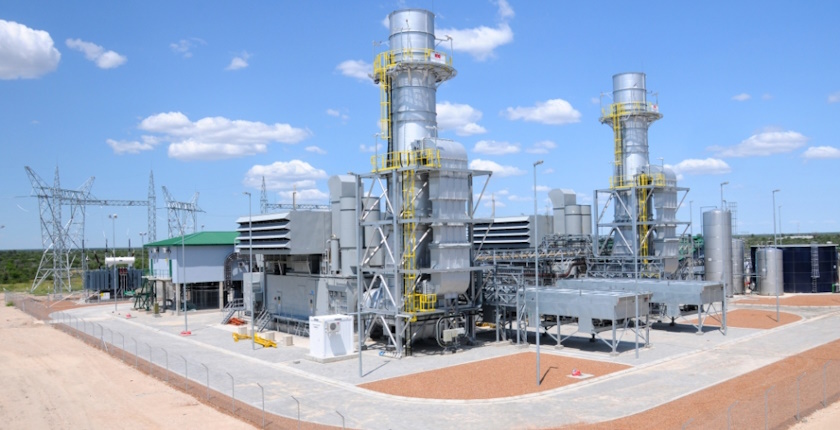
In partnership with domestic company Gener 2, Greece-based GEK Terna and DEPA Commercial are preparing to build the first gas power plant in Albania. The current phase involves seeking financing. Separately, Azerbaijan’s SOCAR is expected to start installing the first gas distribution network in Albania, in the city of Korça.

Albania is almost 100% dependent on hydropower plants in domestic electricity production. Efforts are underway to diversify the mix with solar and wind energy and introduce storage capacities. Actually, not a single wind turbine has been built yet, but there is another opportunity for strengthening the energy supply: with gas from the Trans Adriatic Pipeline – TAP. Greek conglomerate GEK Terna and state-owned gas supplier, importer and trader DEPA Commercial intend to build the first gas power plant in Albania, with a local partner.

Late last year, the Council of Ministers, the country’s government, approved the project and determined a three-year deadline for completion. The site for the gas plant is in the municipality of Roskovec in Fier in western Albania. Notably, the county attracts most solar power projects in the country.

Gas facility in western Albania reportedly to have 147 MW in capacity

In the current project development phase, Fier Thermoelectric, the joint venture, is seeking financing, Insider.gr reported. The facility is envisaged to have 147 MW in capacity, according to the article. The government’s decision was for 170 MW.

DEPA Commercial, also known as DEPA Emporias (in Greek), DEPA Commerce and DEPA Trading, entered the project in 2023. It took over a 35% stake from GEK Terna and signed a seven-year gas supply contract for the proposed facility.

They have equal ownership, while Albanian company Gener 2 holds the remaining 30%. It is active in construction, infrastructure, civil works, energy, real estate development, telecommunications and retail in Albania and the broader region.

Both GEK Terna and Gener 2 have solar power projects in Albania as well

Gener 2 has submitted a 50 MW solar power project to the government a year ago. The location is in Bistrica in Finiq municipality, Vlora district.

The government’s approval is not for a concession, but the operator is obligated to either deliver 2% of electricity it produces, as royalty – royal right, or give an equivalent sum for the state budget. The permit is for 49 years since the entry of the decision into force. The firm also needs to sell a share of output to the public power supplier, in accordance with the country’s law.

A group of residents of surrounding villages has repeatedly protested against the investment, arguing that they weren’t consulted. The locals even filed a criminal complaint against Roskovec Mayor Majlinda Bufi.

They claim that the gas facility would pollute the area and jeopardize public health while exporting 90% of the produced electricity.

GEK Terna to benefit from synergies with its gas power plants in Greece

GEK Terna has three gas-fired power plants in Greece. The group’s other energy investment in Albania, through its subsidiary Heron, isn’t without controversy either.

The project is for a 93 MW photovoltaic plant in Libohova, near the Greek border, in Gjirokastër county. Project firm Faethon won approval from the Council of Ministers in Tirana in early 2024. It would be valid for up to 49 years.

GEK Terna’s solar power plant project in Gjirokastër was disrupted last year over fake documentation

Local press wrote last summer that some land documentation for the 122-hectare area was forged, prompting a raid and arrests in the cadastral office in Gjirokastër. The operator of the Libohova plant is obligated to deliver 2% of its electricity for free, too.

First gas distribution network in Albania about to be built in Korça

Albania aims to become a net electricity exporter before the end of the decade. There is also a project for a liquefied natural gas (LNG) terminal in the port city of Vlora, where a gas-fired power plant is planned to be built.

A long-awaited project called Nur, for the gasification of Korça, was presented last week. It would be the first city in Albania with gas.

The final investment decision is expected this year. State Oil Company of Azerbaijan (SOCAR) would be tasked with implementation, with financing from its government. The estimated cost is EUR 21 million. The idea is to then expand the local gas distribution network to nearby Pogradec and Erseka.

Fier and Elbasan are next on the schedule. Azerbaijan and its company are also interested in the project for the LNG terminal in Vlora and to connect the facility with TAP.

by in News

Bulgaria aims to make Europe’s biggest energy community

The Ministry of Energy, Electricity System Operator (ESO) and the Bulgarian Development Bank (BDB) are launching a solar power program for municipalities, schools, kindergartens, hospitals and small businesses. There are no upfront costs and the installations become the beneficiary’s ownership within eight years.

Minister Zhecho Stankov said the goal is to create the largest energy community in Europe and hinted that the government would finance the scheme with a green bond. He also declared the start of the regional Vertical Gas Corridor project in Bulgaria as the first pipes were delivered.

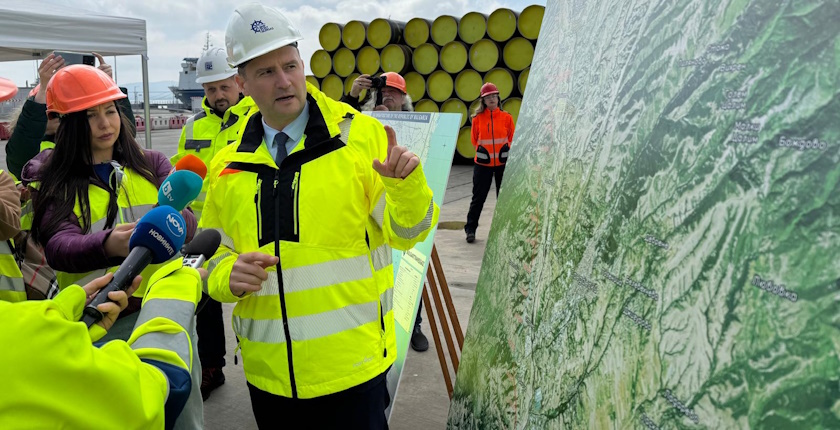
Every school and hospital in Bulgaria can become an electricity producer, Minister of Energy Zhecho Stankov stressed as he presented a financial support mechanism designed with the ambition to create the largest energy community in Europe. The model will benefit both the public sector and private business, he pointed out in the port city of Burgas at a ceremony marking the arrival of the first 4,000 pipes for the Bulgarian sections of the regional Vertical Gas Corridor.

The joint initiative with the country’s power transmission system operator ESO and the Bulgarian Development Bank is for the installation of solar panels with no upfront costs. Beneficiaries – municipalities, schools, kindergartens, hospitals and small businesses – would pay through energy savings and become owners in six to eight years, Stankov claimed.

Bulgaria mulls issuing green bond to finance sustainable energy

The minister also said the project could lead to the government’s first green bond to finance clean and locally produced energy available to a wide range of consumers.

For example, Burgas Municipality can equip all schools, hospitals, kindergartens and other facilities with photovoltaic panels without spending a penny from the local budget, Stankov explained.

Government to invest EUR 57 million in Vertical Gas Corridor

The Vertical Gas Corridor is envisaged to connect Greece, Bulgaria, Romania, Moldova and Ukraine. They plan to transport the fuel from liquefied natural gas (LNG) terminals Alexandroupolis and Revithoussa in Greece, and from the Caspian region, via the Southern Gas Corridor.

The government is fully funding the first stage of the project on Bulgarian territory, with EUR 57 million. The pipes for the pipelines came from India.

Stankov: Bulgaria will never again be left without natural gas

“Bulgaria will never again be left without natural gas,” said Minister Stankov. The capacity of the line between Kulata, on the border with Greece, and Kresna will be increased to 3.6 billion cubic meters per year from 2.3 billion, he added. The distance is 48.5 kilometers.

The most difficult part is between Mikrevo and Ribnik, where three kilometers will be built by horizontal drilling, the minister revealed. He explained there would be no aboveground work, so that nature and infrastructure wouldn’t be affected.

Another section, 80 kilometers, is from Rupcha to Vetrino. The purpose of the investment is to double the maximum annual flow toward Romania to 10 billion cubic meters, Stankov stressed. The last one, Tarnik-Piperovo, is 51 kilometers long.

The compressors on the corridor are reversible, allowing gas supply in both directions, the minister noted.