by in News

Electricity Production and Exports Rise Sharply in Albania in Q1 2026

Electricity production and exports increased significantly in the first quarter of 2026, while imports fell by more than half, according to data published by INSTAT on the country’s electricity balance.

Net domestic electricity production reached 3,647 GWh in the first three months of the year, compared with 2,234 GWh in the same period a year earlier, marking an increase of 63.2%. The growth was driven mainly by public hydropower plants, as well as private and concessionary hydropower producers, which together accounted for more than 93% of domestic production. Other producers, mainly photovoltaic plants, represented around 7% of total generation.

Gross electricity exports, including exchanges, rose to 1,503 GWh, up from 732 GWh in the first quarter of 2025, representing a year-on-year increase of 105.4%. At the same time, gross imports fell to 327 GWh, from 767 GWh, reflecting a decline of 57.4%.

As a result, the electricity exchange balance was positive at 1,177 GWh, while domestic production covered most of the country’s demand.

Public hydropower plants generated 1,667 GWh during the period, up 63% compared with the same quarter of the previous year. Production from private and concessionary hydropower plants reached 1,726 GWh, an annual increase of 66.8%. Meanwhile, other electricity producers, including photovoltaic plants, generated 254 GWh in the first quarter, compared with 176 GWh a year earlier, recording growth of 44%.

Electricity available for consumption increased by 8.9% compared with the first quarter of 2025, while final consumption reached 1,954 GWh, up 9.1% year-on-year.

Household electricity consumption increased by 8.8%, while consumption by businesses and other non-household consumers expanded by 9.5%. INSTAT also reported that network losses reached 516 GWh, or 8% higher than a year earlier. However, the share of losses in relation to electricity available for consumption declined slightly to 20.9%, from 21.1% in the first quarter of 2025.

Transmission losses increased by 31.9%, while distribution losses rose by 5.1%, according to official data.

TAB. 1 Electricity Energy Balance
MWh
Indicators Q1 2025 Q1 2026
A Available energy (A=1+2-3) 2.269.259 2.470.192
1 Domestic net production (1=1.1+1.2+1.3) 2.233.905 3.646.805
1.1 Thermal power plants 0 0
1.2 Hydropower plants (1.2=a+b) 2.057.523 3.392.739
a Public (a=a.1-a.2) 1.022.784 1.666.663
a.1 Gross production of public hydropower plants 1.032.261 1.679.355
a.2 Losses and own consumption 9.477 12.693
b Independent private and concessionary producers 1.034.740 1.726.076
1.3 Other producers — other renewable energy sources 176.381 254.066
2 Gross imports — energy received 767.187 326.815
3 Gross exports — energy delivered 731.833 1.503.429
B Electricity consumption (B=1+2) 2.269.259 2.470.192
1 Network losses (1.1+1.2) 477.816 515.817
1.1 Losses and own consumption in transmission 51.088 67.361
1.2 Distribution losses (1.2=a+b)1 426.728 448.456
a Technical losses in distribution 312.071 336.635
b Non-technical losses in distribution2 114.657 111.821
2 Use by consumers (2=2.1+2.2) 1.791.443 1.954.375
2.1 Household consumers 1.064.956 1.158.522
2.2 Non-household consumers 726.487 795.853
1 The breakdown of technical and non-technical losses consists of estimates carried out by operators active in the electricity sector.
2 Non-technical losses also include statistical differences arising from non-declarations of production and changes resulting from the timing of production measurement, which is shifted in relation to sales or consumption data.
⚡ Albania Electricity Balance · Q1 2026

Electricity Production and Exports Surge in Q1 2026

Official INSTAT data show that Albania’s electricity available for consumption increased by 8.9% year-on-year, supported by a strong rise in domestic generation and a sharp increase in exports.

Energy available 2,470 GWh ▲ +8.9% vs Q1 2025
🏭
Net domestic production 3,647 GWh ▲ +63.2% vs Q1 2025
🔌
Gross exports 1,503 GWh ▲ +105.4% vs Q1 2025
⬇️
Gross imports 327 GWh ▼ -57.4% vs Q1 2025

Q1 2025 vs Q1 2026: Electricity Balance

Indicator Q1 2025 Q1 2026 Change
by in News

Fortis Energy and EBRD Partner to Finance Landmark 270 MW Solar-plus-Storage Project in Serbia

Fortis Energy and EBRD Partner to Finance Landmark 270 MW Solar-plus-Storage Project in Serbia

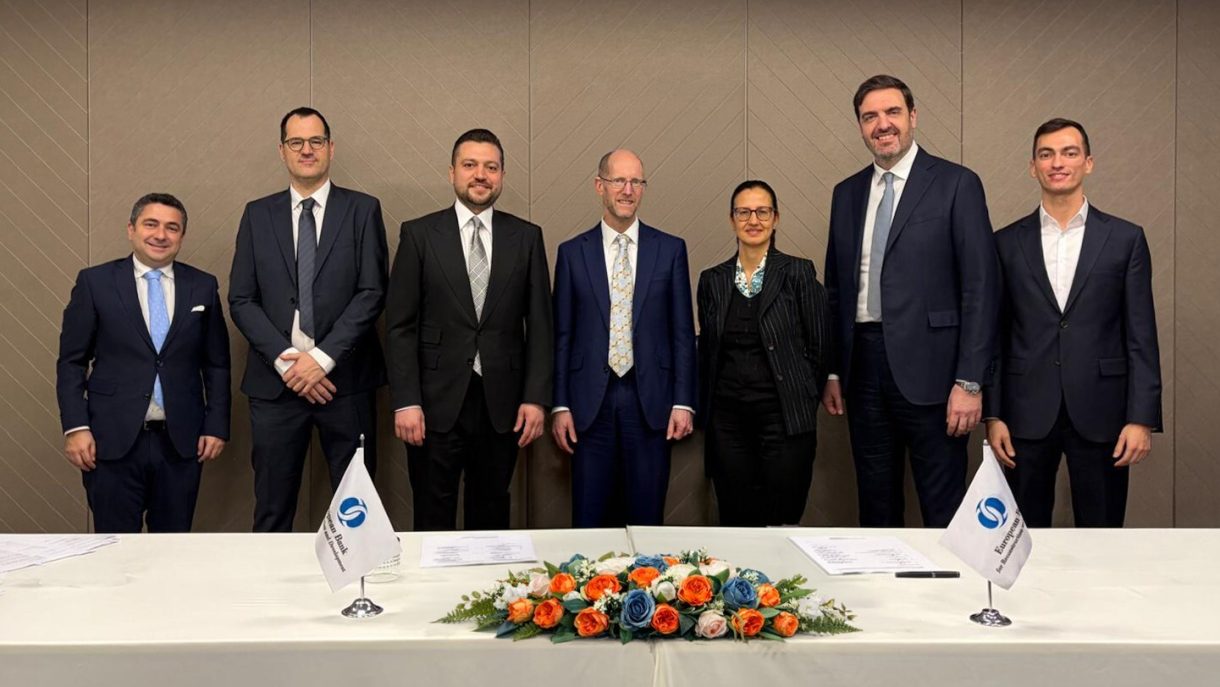
In a significant move for the Western Balkans’ energy transition, Fortis Energy has formalized a mandate letter with the European Bank for Reconstruction and Development (EBRD). The agreement initiates due diligence and structured negotiations for the long-term financing of a 270 MW solar photovoltaic (PV) plant, integrated with a 72 MWh battery energy storage system (BESS).

Located in the city of Sremska Mitrovica, west of Belgrade, the project is set to become the largest solar facility in both Serbia and the broader region.

Strategic Importance and Regional Impact

The mandate letter, signed by Fortis Energy’s leadership and the EBRD’s Sustainable Infrastructure Group, establishes the preliminary terms for a project aimed at bolstering Serbia’s national grid. According to Fortis Energy, the facility is a “demonstration of bankability,” signaling that large-scale renewable assets in Southeast Europe can meet rigorous international environmental and social sustainability standards.

The Sremska Mitrovica plant is expected to deliver substantial environmental and social benefits:

  • Annual Output: Estimated at over 365 GWh of clean electricity.

  • Household Impact: Capable of powering more than 105,000 households annually.

  • Carbon Mitigation: Forecasted to avoid approximately 182,000 tons of emissions per year.

Construction is scheduled to begin in the third quarter of 2026, with full commissioning targeted for the first quarter of 2028.

Technical Breakdown and EPC Partnerships

The development is being executed in phases. Earlier this year, Fortis signed an Engineering, Procurement, and Construction (EPC) contract with Kontrolmatik Technologies for the first phase, known as Noćaj 1.

Phase/Project Solar Capacity (MWp) Grid Connection (MW) Storage Capacity (BESS)
Noćaj 1 135 MW 90 MW 36 MWh
Full Sremska Mitrovica 270 MW 72 MWh
Erdevik (Proposed) 100 MW 74 MW 30 MWh

Fortis Energy and EBRD Partner to Finance Landmark 270 MW Solar-plus-Storage Project in Serbia

In a significant move for the Western Balkans’ energy transition, Fortis Energy has formalized a mandate letter with the European Bank for Reconstruction and Development (EBRD). The agreement initiates due diligence and structured negotiations for the long-term financing of a 270 MW solar photovoltaic (PV) plant, integrated with a 72 MWh battery energy storage system (BESS).

Located in the city of Sremska Mitrovica, west of Belgrade, the project is set to become the largest solar facility in both Serbia and the broader region.

Strategic Importance and Regional Impact

The mandate letter, signed by Fortis Energy’s leadership and the EBRD’s Sustainable Infrastructure Group, establishes the preliminary terms for a project aimed at bolstering Serbia’s national grid. According to Fortis Energy, the facility is a “demonstration of bankability,” signaling that large-scale renewable assets in Southeast Europe can meet rigorous international environmental and social sustainability standards.

The Sremska Mitrovica plant is expected to deliver substantial environmental and social benefits:

  • Annual Output: Estimated at over 365 GWh of clean electricity.

  • Household Impact: Capable of powering more than 105,000 households annually.

  • Carbon Mitigation: Forecasted to avoid approximately 182,000 tons of emissions per year.

Construction is scheduled to begin in the third quarter of 2026, with full commissioning targeted for the first quarter of 2028.

Fortis Energy’s Growing Regional Footprint

Headquartered in the Netherlands with key operational hubs in Istanbul and Belgrade, Fortis Energy is aggressively pursuing its goal of becoming a premier Green Baseload Independent Power Producer (IPP).

Beyond Sremska Mitrovica, the company is advancing a robust pipeline:

  • Erdevik, Serbia: A planned 100 MW hybrid plant with 30 MWh of storage.

  • Erseka, Albania: A 75 MW solar project with 25 MWh of storage, currently under construction.

  • Portfolio Growth: Fortis currently operates over 200 MW of renewable assets, with an additional 500 MW slated for deployment through 2027.

By integrating storage with solar and wind assets, Fortis is positioning itself to provide stable, renewable energy across Southeast Europe, supporting the region’s broader decarbonization objectives.

by in News

Adolf Goetzberger Award 2026: Apply with innovative solar solutions and win EUR 25,000

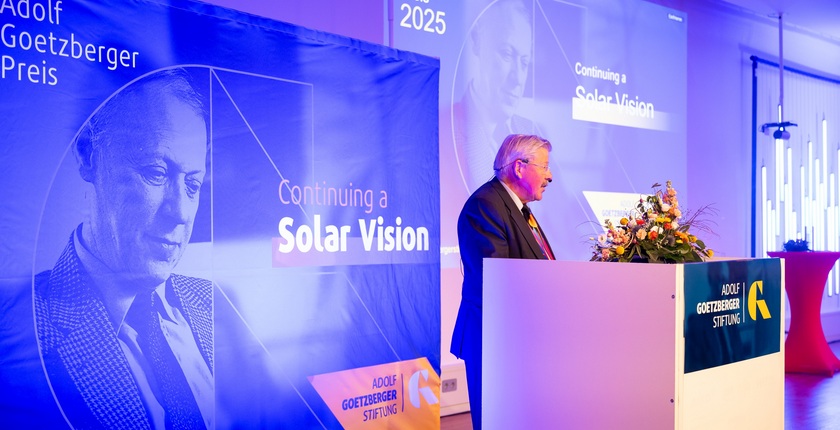
The Adolf Goetzberger Award, which recognizes innovation in solar, energy storage, smart grids, and power system efficiency, has invited applications for 2026, following a successful debut in 2025. The award once again spotlights developments that combine technological excellence with practical value and societal impact, according to the organizers.

The EUR 25,000 Adolf Goetzberger Award, named after German physicist and solar energy pioneer Adolf Goetzberger, honors individual contributions to forward-looking concepts, prototypes, or processes in photovoltaics, solar thermal energy, energy storage, smart grid integration, and system efficiency. Systemic and cross-disciplinary solutions are expressly welcome, the Adolf Goetzberger Foundation said.

The innovations should make a tangible contribution to sustainable energy system transformation

What matters is that the innovations address real-world technical and economic challenges and make a tangible contribution to the sustainable transformation of the energy system, reads a press release from the foundation, which is dedicated to promoting science and research, environmental protection, and climate action, with a particular focus on solar energy.

The inaugural Adolf Goetzberger Award was handed out in March 2025 to Heribert Schmidt for developing the HERIC® (highly efficient and reliable inverter concept) topology. The 2026 award ceremony will be held next spring.

Awarding innovation that makes the world a better place

“Innovation starts with a clear goal: making the world a better place. That’s the mission behind the Adolf Goetzberger Award. We aim to spotlight solutions that truly move the needle – technologically sound and socially relevant,” said Thomas Nordmann, Chair of the Adolf Goetzberger Foundation Board of Trustees.

This year’s award has an expanded scope

In addition to traditional entries from photovoltaics and solar thermal energy, the award now also invites cross-sectoral approaches, such as the smart combination of multiple technologies, advanced control and automation systems, innovative storage solutions (including power-to-X), the integration of heat pumps, or efficiency improvements in hybrid systems.

The award primarily targets applicants from Europe but is open to international individuals as well. In addition to the EUR 25,000 cash prize, recipients will receive a certificate recognizing their contribution to the energy transition. Applications can be submitted online at Goetzbergerstiftung.de.