by in News

HEP plans to build 91 MW solar power plant on Adriatic coast

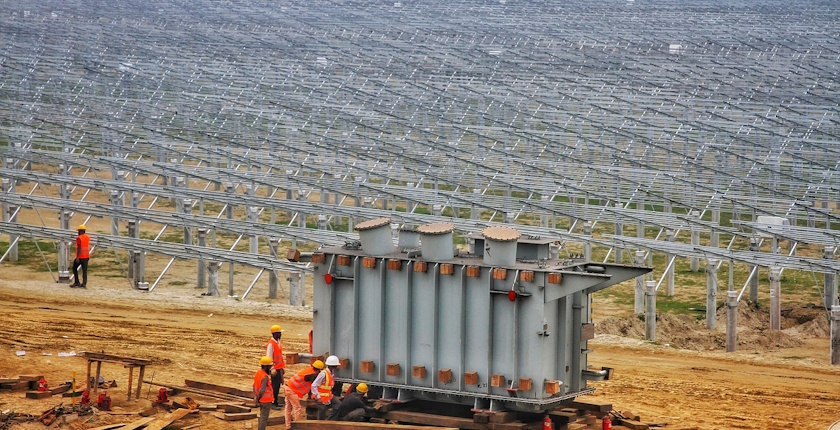
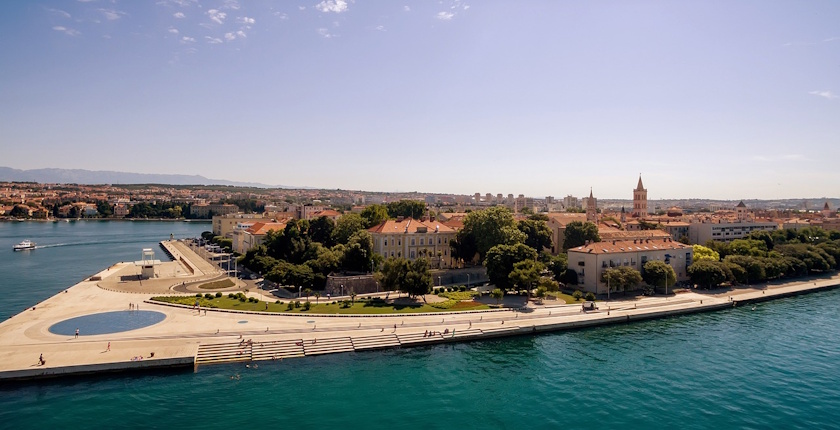
Croatian state-owned power utility Hrvatska Elektroprivreda (HEP) is planning to build a 91 MW solar power plant near the city of Zadar, on the Adriatic coast.

The photovoltaic facility will be slightly smaller than the 99 MW Korlat system – HEP’s largest, which it is building in nearby Benkovac. The company’s biggest two solar power plants will be located just a few dozen kilometers apart.

HEP plans to install the solar panels in the Crno area, eZadar reported. It is approximately six kilometers east of Zadar. The site is located within the planned Crno business zone.

Eleven solar power plants are planned near the Crno location

The power plant would span approximately 93 hectares. Its estimated annual electricity production is 119.8 GWh. HEP’s facility in Crno would consist of roughly 139,800 photovoltaic modules.

The news website pointed out that there are projects for 11 PV plants at locations within a ten-kilometer radius. They are intended to cover an area of about 483 hectares. None have been installed so far.

Neoen Renewables Croatia developed one of the projects, Vlaka, for 62.5 MW in peak capacity.

HEP is also planning 90 rooftop solar plants

The Korlat solar power plant, which will be the largest in Croatia, is being built by Chinese companies Shandong Electric Power Engineering Consulting Institute Corporation (SDEPCI) and Norinco International Cooperation.

Together with HEP’s first wind farm, commissioned in 2021, the Korlat solar plant is about to form the country’s first renewable hybrid energy park.

In addition to large ground-mounted PV facilities, HEP is planning to set up 90 solar power plants on its buildings across Croatia. Its subsidiary HEP ESCO is carrying out the project.

by in News

HEP plans to build 91 MW solar power plant on Adriatic coast

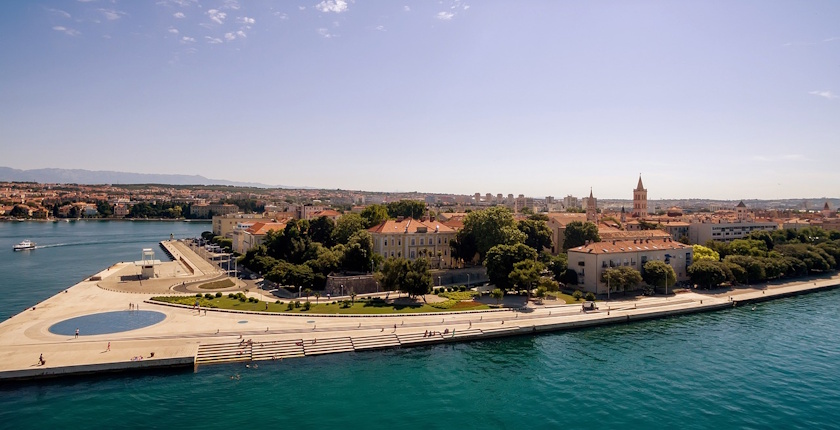
Croatian state-owned power utility Hrvatska Elektroprivreda (HEP) is planning to build a 91 MW solar power plant near the city of Zadar, on the Adriatic coast.

The photovoltaic facility will be slightly smaller than the 99 MW Korlat system – HEP’s largest, which it is building in nearby Benkovac. The company’s biggest two solar power plants will be located just a few dozen kilometers apart.

HEP plans to install the solar panels in the Crno area, eZadar reported. It is approximately six kilometers east of Zadar. The site is located within the planned Crno business zone.

Eleven solar power plants are planned near the Crno location

The power plant would span approximately 93 hectares. Its estimated annual electricity production is 119.8 GWh. HEP’s facility in Crno would consist of roughly 139,800 photovoltaic modules.

The news website pointed out that there are projects for 11 PV plants at locations within a ten-kilometer radius. They are intended to cover an area of about 483 hectares. None have been installed so far.

Neoen Renewables Croatia developed one of the projects, Vlaka, for 62.5 MW in peak capacity.

HEP is also planning 90 rooftop solar plants

The Korlat solar power plant, which will be the largest in Croatia, is being built by Chinese companies Shandong Electric Power Engineering Consulting Institute Corporation (SDEPCI) and Norinco International Cooperation.

Together with HEP’s first wind farm, commissioned in 2021, the Korlat solar plant is about to form the country’s first renewable hybrid energy park.

In addition to large ground-mounted PV facilities, HEP is planning to set up 90 solar power plants on its buildings across Croatia. Its subsidiary HEP ESCO is carrying out the project.

by in News

Semi-transparent solar systems not cost-efficient if transparency is above 50%

Semi-transparent solar systems are often presented as innovative and aesthetically appealing solutions. However, scientists from Spain warn that they are economically viable only up to a certain level of transparency. Levels above 50% have significantly lower system efficiency per unit area, resulting in higher electricity generation costs.

Researchers from the University of Jaén in Spain conducted a technical and economic analysis to assess the cost competitiveness of semi-transparent photovoltaic technologies (STPV). The study titled ‘Assessment of cost-competitiveness of semi-transparent photovoltaic systems’ and published in the journal Renewable Energy, shows that the costs are closely linked to the level of transparency.

“The paper introduces a cost framework that explicitly links transparency to module cost, structural cost, and system capex, using reference values from real utility-scale PV projects in Spain rather than idealized assumptions. The results explain why many STPV concepts look attractive on paper but struggle commercially, and where targeted policy instruments can realistically help without creating false expectations,” said the study’s lead author João Gabriel Bessa, in a statement to pv magazine.

The researchers analyzed a 1 MW semi-transparent ground-mounted solar system in Spain. The analysis examined total system costs, changes in module efficiency at different transparency levels, as well as the impact of increasing required surface area on the cost per watt and the levelized cost of electricity (LCOE).

Semi-transparent photovoltaic systems are commercially viable only with transparency of up to around 50%

LCOE represents the average cost of producing one unit of electricity over the entire lifetime of a power plant. It accounts for all project costs, from construction and financing to operation and maintenance, relative to total electricity generation, and is used as a key indicator for comparing the cost-effectiveness of different power generation technologies.

The researchers found that STPV remains commercially viable only up to transparency levels of about 50%. As transparency increases, the active solar cell area decreases, leading to lower electricity generation without a proportional reduction in the costs of non-cell materials.

The study’s authors also point out that balance-of-system (BOS) costs—which include all equipment, works, and infrastructure required for a photovoltaic plant to operate, excluding the solar modules themselves—increase with higher transparency levels. This is because the costs of mounting structures and direct current (DC) cabling scale with the physical area of the photovoltaic generators. By contrast, the costs of inverters, alternating current (AC) cabling, transformers, and other electrical equipment are largely independent of transparency levels.

Higher transparency, higher costs

To determine which financial and technical parameters have the greatest impact on LCOE, the researchers also conducted a sensitivity analysis.

Both analyses confirmed that total system costs rise as transparency increases. According to the study, a fully opaque system with zero transparency would have an installation cost of EUR 0.628 per W. As transparency increases, however, module efficiency declines, requiring a much larger area covered by photovoltaic modules to reach the same installed capacity.

At 50% transparency, module efficiency drops to around 10%, doubling the required surface area and increasing total system costs to EUR 0.904 per W. When transparency reaches 90%, efficiency falls to just 2%, requiring a fivefold increase in surface area and raising system costs to EUR 3.110 per W.

Bessa notes that with transparency above a band of 45% to 50%, LCOE rises sharply and exceeds typical market electricity prices, even in regions with high levels of solar irradiation, such as southern Spain.

“As transparency increases, power density declines faster than module costs, because non-cell components such as glass, encapsulation, framing, and logistics dominate the cost structure. This leads to a strong increase in EUR/W module costs, even when less silicon is used,” Bessa said.

The sensitivity analysis also showed that annual specific yield, expressed in kilowatt-hours per kilowatt of installed capacity, is the single most influential parameter affecting LCOE, outweighing even capital expenditure and financing conditions.

by in News

Semi-transparent solar systems not cost-efficient if transparency is above 50%

Semi-transparent solar systems are often presented as innovative and aesthetically appealing solutions. However, scientists from Spain warn that they are economically viable only up to a certain level of transparency. Levels above 50% have significantly lower system efficiency per unit area, resulting in higher electricity generation costs.

Researchers from the University of Jaén in Spain conducted a technical and economic analysis to assess the cost competitiveness of semi-transparent photovoltaic technologies (STPV). The study titled ‘Assessment of cost-competitiveness of semi-transparent photovoltaic systems’ and published in the journal Renewable Energy, shows that the costs are closely linked to the level of transparency.

“The paper introduces a cost framework that explicitly links transparency to module cost, structural cost, and system capex, using reference values from real utility-scale PV projects in Spain rather than idealized assumptions. The results explain why many STPV concepts look attractive on paper but struggle commercially, and where targeted policy instruments can realistically help without creating false expectations,” said the study’s lead author João Gabriel Bessa, in a statement to pv magazine.

The researchers analyzed a 1 MW semi-transparent ground-mounted solar system in Spain. The analysis examined total system costs, changes in module efficiency at different transparency levels, as well as the impact of increasing required surface area on the cost per watt and the levelized cost of electricity (LCOE).

Semi-transparent photovoltaic systems are commercially viable only with transparency of up to around 50%

LCOE represents the average cost of producing one unit of electricity over the entire lifetime of a power plant. It accounts for all project costs, from construction and financing to operation and maintenance, relative to total electricity generation, and is used as a key indicator for comparing the cost-effectiveness of different power generation technologies.

The researchers found that STPV remains commercially viable only up to transparency levels of about 50%. As transparency increases, the active solar cell area decreases, leading to lower electricity generation without a proportional reduction in the costs of non-cell materials.

The study’s authors also point out that balance-of-system (BOS) costs—which include all equipment, works, and infrastructure required for a photovoltaic plant to operate, excluding the solar modules themselves—increase with higher transparency levels. This is because the costs of mounting structures and direct current (DC) cabling scale with the physical area of the photovoltaic generators. By contrast, the costs of inverters, alternating current (AC) cabling, transformers, and other electrical equipment are largely independent of transparency levels.

Higher transparency, higher costs

To determine which financial and technical parameters have the greatest impact on LCOE, the researchers also conducted a sensitivity analysis.

Both analyses confirmed that total system costs rise as transparency increases. According to the study, a fully opaque system with zero transparency would have an installation cost of EUR 0.628 per W. As transparency increases, however, module efficiency declines, requiring a much larger area covered by photovoltaic modules to reach the same installed capacity.

At 50% transparency, module efficiency drops to around 10%, doubling the required surface area and increasing total system costs to EUR 0.904 per W. When transparency reaches 90%, efficiency falls to just 2%, requiring a fivefold increase in surface area and raising system costs to EUR 3.110 per W.

Bessa notes that with transparency above a band of 45% to 50%, LCOE rises sharply and exceeds typical market electricity prices, even in regions with high levels of solar irradiation, such as southern Spain.

“As transparency increases, power density declines faster than module costs, because non-cell components such as glass, encapsulation, framing, and logistics dominate the cost structure. This leads to a strong increase in EUR/W module costs, even when less silicon is used,” Bessa said.

The sensitivity analysis also showed that annual specific yield, expressed in kilowatt-hours per kilowatt of installed capacity, is the single most influential parameter affecting LCOE, outweighing even capital expenditure and financing conditions.

by in News

Global solar installations soar 64% in the first half of 2025

The world’s total capacity of solar power plants has increased by 380 MW in the first half of 2025. It is a 64% increase compared to the same period last year, according to Ember.

In the first six months of 2024 the world added 232 GW. It took until September that year for new solar capacity to surpass 350 GW – a result for the entire 2023. This year the milestone of 350 GW was reached in June, according to the energy think tank Ember.

The total global cumulative installed capacity reached 2.2 TW by the end of 2024.

The rapid expansion of solar capacity in recent years has made it the fastest growing source of new electricity generation. In 2024, global solar output rose by 28% (+469 TWh) compared to 2023, more than any other source, Ember noted.

China continues to lead the world in solar growth. Global Energy Monitor said in July that three quarters of global solar, wind capacity under construction is in China.

From January until the end of June, the country’s photovoltaic installations were more than 100% higher year-over-year.”

China accounted for 67% of the global new installations – up from 54% in the first half of 2024, according to the think tank.

The result was partly driven by the developers’ intention to finish projects before new rules on wind and solar compensation came into effect in June this year.

This situation could lead to lower installation in the rest of the year, however Ember stressed new clean power procurement requirements for industry and higher full-year deployment expectations from China’s solar PV association (CPIA) as evidence that a new record volume of solar power plants would be recorded in 2025.

India follows China

All other countries together installed an estimated 124 GW in the first half of 2025 – 15% higher than the first half of 2024.

India won second place with 24 GW, a 49% increase over the already strong 16 GW added in deployment in H1-2024. The United States ranked third with 21 GW, up 4% year-on-year, despite recent moves by the US government to restrict clean power deployment.

The remaining countries added 65 GW in H1-2025, 22% more than in H1-2024. Ember pointed out data for Africa in which imports from China rose 60% in the last 12 months. But, the effects on the ground are still not unknown.

2025 is on track to become another historic year for solar power

Solar became the EU’s largest source of electricity for the first time in June 2025. However, the EU is set to install less new solar capacity in 2025 than it did last year – the first annual drop in a decade.

Ember estimated that 2025 is on track to become another historic year for solar power.

“These latest numbers on solar deployment in 2025 defy gravity, with annual solar installations continuing their sharp rise. In a world of volatile energy markets, solar offers domestically produced power that can be rolled out at record speed to meet growing demand, independent of global fossil fuel supply chains,” Senior Energy Analyst of Ember Nicolas Fulghum noted.

by in News

Elektrohertz gets concession for solar project in Republic of Srpska

Republic of Srpska, one of the two entities constituting Bosnia and Herzegovina, is set to host another solar power plant. It would be one of the largest ones, with a capacity of 150 MW.

In late May, construction began on Bosnia and Herzegovina’s largest solar power plant so far, with a capacity of 125 MW. The most recently inaugurated large photovoltaic facility was Stolac, with a capacity of 64 MW.

Now the Ministry of Energy and Mining of the Republic of Srpska signed a concession agreement for the construction and operation of the Javor photovoltaic plant in the municipality of Rogatica.

In May, the entity government granted the concession to Elektrohertz, based in the same town in the country’s east, for the construction and operation of the facility, of 150 MW.

The concession has been granted for 30 years

The estimated annual production of the solar park is 197 GWh, and the concession was granted for a period of 30 years. The total investment value is BAM 194.4 million (EUR 99.4 million). It is scheduled to go online within the next four years, the ministry said.

Before finalizing the concession contract, the concessionaire, private developer Elektrohertz, delivered a one-off payment to the budget of the Republic of Srpska, of BAM 971,932 (EUR 497,000).

The Rogatica municipal budget is entitled to 95% of the concession fee

When the facility becomes operational, the concessionaire will be obligated to pay a fee of BAM 0.0055 (EUR 0.0028) per kWh of generated electricity to the budget of the Republic of Srpska. A 95% share is allocated for the Rogatica municipal budget.

The most recent concession granted by the entity Ministry of Energy and Mining went to state-owned power utility Elektroprivreda Republike Srpske (ERS) for the proposed Trebinje 3 solar power plant. It was in late April.

It is ERS’s third concession for photovoltaic plants.

by in News

Project underway for 99 MW Bokšić solar plant with battery storage

The Croatian Ministry of Environmental Protection and Green Transition has initiated a procedure to determine the need for an environmental impact assessment for the planned 99 MW solar power project Bokšić, which includes a battery energy storage system.

The annual electricity production of the Bokšić solar power plant is estimated at just under 120 GWh. The facility, with a planned connection power of 89 MW, would be connected to the grid through a new 110/33 kV transformer station, and then to the existing 110 kV Našice-Slatina transmission line.

The annual electricity output is estimated at just under 120 GWh

The project also includes a battery energy storage system (BESS), according to the environmental impact assessment report prepared in February and updated in June. It would be designed for an operating power of 38 MW and a capacity of 70.8 MWh, with an expected lifespan of 20 years.

Solar power plant Bokšić will have a 70.8 MWh battery system

The assessment procedure is necessary because the developer, Zagreb-based Funicula, intends to build a stand-alone photovoltaic plant, according to the ministry. The project’s site is near Bokšić, in the Đurđenovac municipality in Osijek-Baranja County.

The solar power plant is planned to occupy ​​about 123.8 hectares of land, with photovoltaic panels covering about 46 hectares. The site will be enclosed by a protective masonry fence up to two meters high, raised at least 15 centimeters above the ground to allow small animals to pass underneath, according to the ministry.

Bokšić is among the largest solar projects in Croatia

Few solar projects in Croatia are for a larger capacity than Bokšić. State power utility Hrvatska elektroprivreda (HEP) is working on the Korlat endeavor, also of 99 MW. At an auction last year, two major solar power projects were awarded market premiums – Promina, with a planned installed capacity of around 189 MW, developed by Spain-based Acciona Energia, and Obrovac Sinjski, for 144 MW, to be built by Aurelis Solis.

by in News

Greenpeace maps Croatia’s path to 100% renewable power by 2030

Croatia can fully transition to using only renewable electricity by 2030, according to Greenpeace. The organization presented its study: 100% Renewable by 2030 – A Plan for the Green Transition of Croatian Power Sector in the country’s capital Zagreb. Political will is the precondition for materializing the goal, it said.

The study was conducted by an expert team led by Professor Goran Krajačić from the Faculty of Mechanical Engineering and Naval Architecture in Zagreb. Of note, at the end of 2023, the share of electricity produced from renewables in total power consumption in the country exceeded 55%.

Greenpeace Croatia said the climate crisis, fueled by the fossil fuel industry, affects the entire world, including Europe and Croatia. The results are lost human lives and increasing material damage caused by extreme weather conditions, the organization noted.

Its ambitious goal for Croatia, to source all electricity from renewables by 2030, is based on a shift to solar and wind energy, as well as investments in the transmission network. The study puts the necessary solar power capacity at 5 GW, compared to 4.2 GW from wind.

In just five years, Greece, installed 7 GW of solar capacity, and Hungary added 5.5 GW

Greenpeace cites examples from the region. Croatia has five years until 2030, and the same period was enough for Greece to install 7 GW of solar capacity, while Hungary added 5.5 GW. Croatia has only recently reached 1 GW from photovoltaic system, despite ranking among the top countries in Europe in terms of solar potential, Greenpeace said.

According to Professor Goran Krajačić, the results of the study indicate that a firm political decision is needed to achieve 100% renewable electricity consumption in Croatia.

Andrić: A strong shift toward renewable energy is a strategic move for energy security, reduced dependence on fossil fuels, and economic opportunities

“Such a decision should include clear signals toward improving the power system, building and strengthening the grid and ensuring energy storage. Renewables also promote the democratization of society by involving citizens in energy communities to produce, store, and share energy,” Krajačić said.

Petra Andrić, program lead at Greenpeace in Croatia, stressed that a strong shift toward renewable energy as an ecologically sound decision. But it is also a strategic move for strengthening energy security, reducing dependence on fossil fuels, and creating economic opportunities, she added.

Calculation: large investments but even greater savings


Power generation mix

The authors estimate the costs of building facilities and underwater cables and strengthening cross-border grid capacities at EUR 12.2 billion by 2030. If it were financed through commercial loans at a 5% interest rate with a 25-year repayment period, the annual payment would be EUR 864 million, according to the calculation.

The repayment would be financed from savings and additional revenues, the study revealed.

Savings from allowances for CO2 emissions from electricity production, using 2023 as a reference year with a CO2 price of EUR 83 per ton, would amount to EUR 198 million by 2030.

The presentation of the study also featured a panel discussion

Fuel cost savings for electricity production were estimated at EUR 231.2 million in 2030, and profits from net exported electricity would bring in EUR 360 million.

The savings and profits would cover the annual repayments of loans needed to build the facilities, making them financially viable under commercial terms, the study claimed.

The event also hosted a panel discussion featuring Professor Krajačić, member of the Croatian Parliament Dušica Radojčić, Mario Stipetić (Ministry of Environmental Protection and Green Transition), Davor Škrlec (Faculty of Electrical Engineering and Computing – FER), Melani Furlan (Green Energy Cooperative – ZEZ), and Nina Domazet (Croatian Chamber of Commerce – HGK). It was moderated by Robert Pašičko from the United Nations Development Programme (UNDP).