by in News

Semi-transparent solar systems not cost-efficient if transparency is above 50%

Semi-transparent solar systems are often presented as innovative and aesthetically appealing solutions. However, scientists from Spain warn that they are economically viable only up to a certain level of transparency. Levels above 50% have significantly lower system efficiency per unit area, resulting in higher electricity generation costs.

Researchers from the University of Jaén in Spain conducted a technical and economic analysis to assess the cost competitiveness of semi-transparent photovoltaic technologies (STPV). The study titled ‘Assessment of cost-competitiveness of semi-transparent photovoltaic systems’ and published in the journal Renewable Energy, shows that the costs are closely linked to the level of transparency.

“The paper introduces a cost framework that explicitly links transparency to module cost, structural cost, and system capex, using reference values from real utility-scale PV projects in Spain rather than idealized assumptions. The results explain why many STPV concepts look attractive on paper but struggle commercially, and where targeted policy instruments can realistically help without creating false expectations,” said the study’s lead author João Gabriel Bessa, in a statement to pv magazine.

The researchers analyzed a 1 MW semi-transparent ground-mounted solar system in Spain. The analysis examined total system costs, changes in module efficiency at different transparency levels, as well as the impact of increasing required surface area on the cost per watt and the levelized cost of electricity (LCOE).

Semi-transparent photovoltaic systems are commercially viable only with transparency of up to around 50%

LCOE represents the average cost of producing one unit of electricity over the entire lifetime of a power plant. It accounts for all project costs, from construction and financing to operation and maintenance, relative to total electricity generation, and is used as a key indicator for comparing the cost-effectiveness of different power generation technologies.

The researchers found that STPV remains commercially viable only up to transparency levels of about 50%. As transparency increases, the active solar cell area decreases, leading to lower electricity generation without a proportional reduction in the costs of non-cell materials.

The study’s authors also point out that balance-of-system (BOS) costs—which include all equipment, works, and infrastructure required for a photovoltaic plant to operate, excluding the solar modules themselves—increase with higher transparency levels. This is because the costs of mounting structures and direct current (DC) cabling scale with the physical area of the photovoltaic generators. By contrast, the costs of inverters, alternating current (AC) cabling, transformers, and other electrical equipment are largely independent of transparency levels.

Higher transparency, higher costs

To determine which financial and technical parameters have the greatest impact on LCOE, the researchers also conducted a sensitivity analysis.

Both analyses confirmed that total system costs rise as transparency increases. According to the study, a fully opaque system with zero transparency would have an installation cost of EUR 0.628 per W. As transparency increases, however, module efficiency declines, requiring a much larger area covered by photovoltaic modules to reach the same installed capacity.

At 50% transparency, module efficiency drops to around 10%, doubling the required surface area and increasing total system costs to EUR 0.904 per W. When transparency reaches 90%, efficiency falls to just 2%, requiring a fivefold increase in surface area and raising system costs to EUR 3.110 per W.

Bessa notes that with transparency above a band of 45% to 50%, LCOE rises sharply and exceeds typical market electricity prices, even in regions with high levels of solar irradiation, such as southern Spain.

“As transparency increases, power density declines faster than module costs, because non-cell components such as glass, encapsulation, framing, and logistics dominate the cost structure. This leads to a strong increase in EUR/W module costs, even when less silicon is used,” Bessa said.

The sensitivity analysis also showed that annual specific yield, expressed in kilowatt-hours per kilowatt of installed capacity, is the single most influential parameter affecting LCOE, outweighing even capital expenditure and financing conditions.

by in News

Semi-transparent solar systems not cost-efficient if transparency is above 50%

Semi-transparent solar systems are often presented as innovative and aesthetically appealing solutions. However, scientists from Spain warn that they are economically viable only up to a certain level of transparency. Levels above 50% have significantly lower system efficiency per unit area, resulting in higher electricity generation costs.

Researchers from the University of Jaén in Spain conducted a technical and economic analysis to assess the cost competitiveness of semi-transparent photovoltaic technologies (STPV). The study titled ‘Assessment of cost-competitiveness of semi-transparent photovoltaic systems’ and published in the journal Renewable Energy, shows that the costs are closely linked to the level of transparency.

“The paper introduces a cost framework that explicitly links transparency to module cost, structural cost, and system capex, using reference values from real utility-scale PV projects in Spain rather than idealized assumptions. The results explain why many STPV concepts look attractive on paper but struggle commercially, and where targeted policy instruments can realistically help without creating false expectations,” said the study’s lead author João Gabriel Bessa, in a statement to pv magazine.

The researchers analyzed a 1 MW semi-transparent ground-mounted solar system in Spain. The analysis examined total system costs, changes in module efficiency at different transparency levels, as well as the impact of increasing required surface area on the cost per watt and the levelized cost of electricity (LCOE).

Semi-transparent photovoltaic systems are commercially viable only with transparency of up to around 50%

LCOE represents the average cost of producing one unit of electricity over the entire lifetime of a power plant. It accounts for all project costs, from construction and financing to operation and maintenance, relative to total electricity generation, and is used as a key indicator for comparing the cost-effectiveness of different power generation technologies.

The researchers found that STPV remains commercially viable only up to transparency levels of about 50%. As transparency increases, the active solar cell area decreases, leading to lower electricity generation without a proportional reduction in the costs of non-cell materials.

The study’s authors also point out that balance-of-system (BOS) costs—which include all equipment, works, and infrastructure required for a photovoltaic plant to operate, excluding the solar modules themselves—increase with higher transparency levels. This is because the costs of mounting structures and direct current (DC) cabling scale with the physical area of the photovoltaic generators. By contrast, the costs of inverters, alternating current (AC) cabling, transformers, and other electrical equipment are largely independent of transparency levels.

Higher transparency, higher costs

To determine which financial and technical parameters have the greatest impact on LCOE, the researchers also conducted a sensitivity analysis.

Both analyses confirmed that total system costs rise as transparency increases. According to the study, a fully opaque system with zero transparency would have an installation cost of EUR 0.628 per W. As transparency increases, however, module efficiency declines, requiring a much larger area covered by photovoltaic modules to reach the same installed capacity.

At 50% transparency, module efficiency drops to around 10%, doubling the required surface area and increasing total system costs to EUR 0.904 per W. When transparency reaches 90%, efficiency falls to just 2%, requiring a fivefold increase in surface area and raising system costs to EUR 3.110 per W.

Bessa notes that with transparency above a band of 45% to 50%, LCOE rises sharply and exceeds typical market electricity prices, even in regions with high levels of solar irradiation, such as southern Spain.

“As transparency increases, power density declines faster than module costs, because non-cell components such as glass, encapsulation, framing, and logistics dominate the cost structure. This leads to a strong increase in EUR/W module costs, even when less silicon is used,” Bessa said.

The sensitivity analysis also showed that annual specific yield, expressed in kilowatt-hours per kilowatt of installed capacity, is the single most influential parameter affecting LCOE, outweighing even capital expenditure and financing conditions.

by in News

Why nobody in Slovenia bothers to remove snow from solar panels

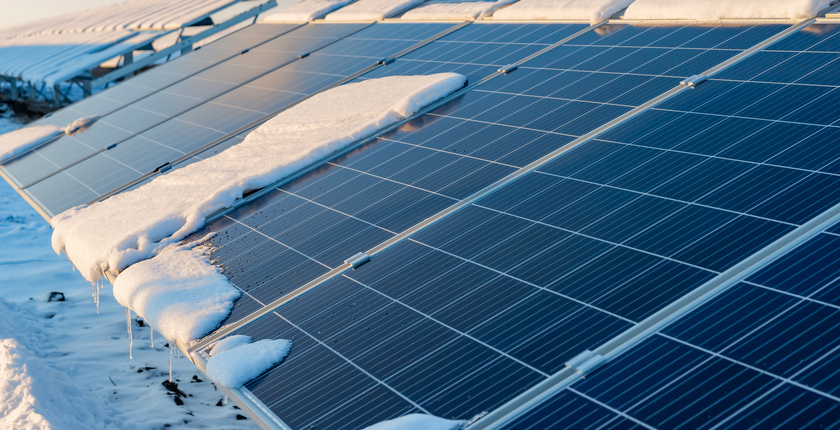
The snow that has blanketed much of Europe over the past few days has also covered solar panels, preventing the absorption of sunlight and, consequently, electricity production. However, Slovenian solar power plant operators are not attempting to remove the snow, as doing so would cause more harm than good.

The main reason for not clearing the snow is the risk of damage to solar panels. Primož Tručl, CEO of solar power plant operator Moja elektrarna and a member of the board of the Slovenian Photovoltaic Association (ZSFV), told Naš stik that removing snow from solar modules while avoiding scratching their surface would be time-consuming and expensive. It would outweigh the benefits of potential production given the low levels of sunshine in winter, according to him.

Removing snow without damaging solar panels would cost more than the electricity generated at this time of year

Stellar, the operator of a hybrid solar power plant near Črnomelj, also considers such an intervention economically unjustified, as production losses due to temporary snow cover are relatively small and short-lived.

In most cases, snow melts or slides off the surface quickly thanks to the inclination of the panels and the heating of the modules under sunlight, Naš stik was told at the company.

Snow slides off on its own very quickly and outages are short-lived

In addition, manually removing snow with shovels, brooms, scrapers, or other equipment can damage the glass on solar panels. Even softer tools can cause micro-scratches, reducing the efficiency of the panels.

“Any damage to the glass also means an increased risk of moisture ingress and, consequently, module failure,” the company explained.

State-owned energy utility GEN energija has told Naš stik that most of its solar power plants are built on slopes, allowing snow to slide off the modules relatively quickly when the sun shines.

Letting snow slide off on its own also has an upside, as it helps clean solar panels by carrying away most of the dirt accumulated on the surface, according to GEN energija.

by in News

Why nobody in Slovenia bothers to remove snow from solar panels

The snow that has blanketed much of Europe over the past few days has also covered solar panels, preventing the absorption of sunlight and, consequently, electricity production. However, Slovenian solar power plant operators are not attempting to remove the snow, as doing so would cause more harm than good.

The main reason for not clearing the snow is the risk of damage to solar panels. Primož Tručl, CEO of solar power plant operator Moja elektrarna and a member of the board of the Slovenian Photovoltaic Association (ZSFV), told Naš stik that removing snow from solar modules while avoiding scratching their surface would be time-consuming and expensive. It would outweigh the benefits of potential production given the low levels of sunshine in winter, according to him.

Removing snow without damaging solar panels would cost more than the electricity generated at this time of year

Stellar, the operator of a hybrid solar power plant near Črnomelj, also considers such an intervention economically unjustified, as production losses due to temporary snow cover are relatively small and short-lived.

In most cases, snow melts or slides off the surface quickly thanks to the inclination of the panels and the heating of the modules under sunlight, Naš stik was told at the company.

Snow slides off on its own very quickly and outages are short-lived

In addition, manually removing snow with shovels, brooms, scrapers, or other equipment can damage the glass on solar panels. Even softer tools can cause micro-scratches, reducing the efficiency of the panels.

“Any damage to the glass also means an increased risk of moisture ingress and, consequently, module failure,” the company explained.

State-owned energy utility GEN energija has told Naš stik that most of its solar power plants are built on slopes, allowing snow to slide off the modules relatively quickly when the sun shines.

Letting snow slide off on its own also has an upside, as it helps clean solar panels by carrying away most of the dirt accumulated on the surface, according to GEN energija.

by in News

EPS plans to build solar power plant on TENT A ash dump

Serbia’s state power utility, Elektroprivreda Srbije (EPS), has invited bids for producing a preliminary feasibility study and conceptual design for a solar power plant on the ash disposal site of the Nikola Tesla A (TENT A) thermal power plant in Obrenovac.

The study should assess the feasibility and viability of the project, as well as the total solar potential of the site. The estimated value of the contract is RSD 14.91 million, and the deadline to submit bids is 23 January 2026.

The document must clearly define the proposed capacity of the planned solar power plant, the grid connection method, and the expected operating regime, according to the public call.

The capacity of the future solar power plant will be determined by the study

The project aims to expand EPS’ renewable energy capacities, reduce dependence on fossil fuels, and remediate the ash disposal site.

In July, EPS connected to the grid its first larger photovoltaic facility, the 10 MW Petka solar power plant. The plant is located in the Kostolac coal mining complex east of Belgrade, next to a 66 MW wind farm, which was put into trial operation in late November.

The design of the planned solar power plant at the TENT A ash disposal site should allow for integration with TENT’s existing safety and SCADA systems, while energy stability should be ensured through backup power sources, including solar panels with battery storage and/or an uninterruptible power supply (UPS) system.

The project should envisage battery energy storage

The photovoltaic panels should have a minimum power of 600 Wp, a minimum efficiency of 24%, and guaranteed production over 30 years of operation, while the efficiency of the inverters must be around 98% by European standards.

The part of the TENT A ash disposal site allocated for the solar power plant is slated for closure, and its usable area is about 67.2 hectares. The exact usable area will be determined following the completion of the study.

The selected bidder will be required to complete the task within six months of receiving all necessary documentation from EPS.

by in News

EPS plans to build solar power plant on TENT A ash dump

Serbia’s state power utility, Elektroprivreda Srbije (EPS), has invited bids for producing a preliminary feasibility study and a conceptual design for a solar power plant on the ash disposal site of the Nikola Tesla A (TENT A) thermal power plant in Obrenovac.

The study should assess the feasibility and viability of the project, as well as the total solar potential of the site. The estimated value of the contract is RSD 14.91 million, and the deadline to submit bids is 23 January 2026.

The document must clearly define the proposed capacity of the planned solar power plant, the grid connection method, and the expected operating regime, according to the public call.

The capacity of the future solar power plant will be determined by the study

The project aims to expand EPS’ renewable energy capacities, reduce dependence on fossil fuels, and remediate the ash disposal site.

In July, EPS connected to the grid its first larger photovoltaic facility, the 10 MW Petka solar power plant. The plant is located in the Kostolac coal mining complex east of Belgrade, next to a 66 MW wind farm, which was put into trial operation in late November.

The design of the planned solar power plant at the TENT A ash disposal site should allow for integration with TENT’s existing safety and SCADA systems, while energy stability should be ensured through backup power sources, including solar panels with battery storage and/or an uninterruptible power supply (UPS) system.

The project should envisage battery energy storage

The photovoltaic panels should have a minimum power of 600 Wp, a minimum efficiency of 24%, and guaranteed production over 30 years of operation, while the efficiency of the inverters must be around 98% by European standards.

The part of the TENT A ash disposal site allocated for the solar power plant is slated for closure, and its usable area is about 67.2 hectares. The exact usable area will be determined following the completion of the study.

The selected bidder will be required to complete the task within six months of receiving all necessary documentation from EPS.