by in News

Đedović Handanović: Construction of 1 GW solar project to start in 2026

The start of construction of solar power plants in a project for a total capacity of 1 GW is expected in 2026, Minister of Mining and Energy of Serbia Dubravka Đedović Handanović said.

State-owned power utility Elektroprivreda Srbije (EPS) announced that its shareholders’ assembly adopted the Three-Year Business Plan for the period 2026-2028.

Dubravka Đedović Handanović pointed out that the company had good production and financial results for three consecutive years. According to the adopted three-year business plan, this trend will continue in 2026, she added.

EPS will invest EUR 1 billion in 2026

The minister recalled that in 2025 EPS built its first wind farm – Kostolac, and the Petka solar power plant, with a combined capacity of 76 MW. The company also finished the construction of the desulfurization facility at its coal-fired power plant Nikola Tesla B (TENT B), allowing the reduction of sulfur dioxide (SO2) emissions by 20 to 40 times, she added.

“Investments this year have also been at a high level, 97% in fact, considering that due to the scope and complexity of preparatory activities, the start of materialization of the project for the construction of solar power plants of 1 GW is expected in 2026. The focus of investments of around EUR 1 billion in 2026 will be on maintenance and improvement of the reliability of the power system and, primarily, on increasing the share of renewable energy sources in EPS’s energy mix,” Đedović Handanović stressed.

The company will build new solar power plants as well

The largest portion of the investments, in her words, is planned for new renewable energy plants, such as the construction of solar power plants totaling GW and pumped storage hydropower plant Bistrica, as well as the development of a larger number of solar power plants on land owned by EPS.

Of note, the company is developing the 1 GW solar project, which includes batteries, in collaboration with a consortium comprising Hyundai Engineering and UGT Renewables.

EPS yesterday invited bids for a preliminary feasibility study and conceptual design for a solar power plant on the ash disposal site of TENT A.

The minister revealed that next year’s plan includes an increase in employees’ salaries.

The company will continue its transformation activities, she added. Đedović Handanović welcomed the fact that EPS didn’t take out liquidity loans this year.
by in News

Đedović Handanović: Construction of 1 GW solar project to start in 2026

The start of construction of solar power plants in a project for a total capacity of 1 GW is expected in 2026, Minister of Mining and Energy of Serbia Dubravka Đedović Handanović said.

State-owned power utility Elektroprivreda Srbije (EPS) announced that its shareholders’ assembly adopted the Three-Year Business Plan for the period 2026-2028.

Dubravka Đedović Handanović pointed out that the company had good production and financial results for three consecutive years. According to the adopted three-year business plan, this trend will continue in 2026, she added.

EPS will invest EUR 1 billion in 2026

The minister recalled that in 2025 EPS built its first wind farm – Kostolac, and the Petka solar power plant, with a combined capacity of 76 MW. The company also finished the construction of the desulfurization facility at its coal-fired power plant Nikola Tesla B (TENT B), allowing the reduction of sulfur dioxide (SO2) emissions by 20 to 40 times, she added.

“Investments this year have also been at a high level, 97% in fact, considering that due to the scope and complexity of preparatory activities, the start of materialization of the project for the construction of solar power plants of 1 GW is expected in 2026. The focus of investments of around EUR 1 billion in 2026 will be on maintenance and improvement of the reliability of the power system and, primarily, on increasing the share of renewable energy sources in EPS’s energy mix,” Đedović Handanović stressed.

The company will build new solar power plants as well

The largest portion of the investments, in her words, is planned for new renewable energy plants, such as the construction of solar power plants totaling GW and pumped storage hydropower plant Bistrica, as well as the development of a larger number of solar power plants on land owned by EPS.

Of note, the company is developing the 1 GW solar project, which includes batteries, in collaboration with a consortium comprising Hyundai Engineering and UGT Renewables.

EPS yesterday invited bids for a preliminary feasibility study and conceptual design for a solar power plant on the ash disposal site of TENT A.

The minister revealed that next year’s plan includes an increase in employees’ salaries.

The company will continue its transformation activities, she added. Đedović Handanović welcomed the fact that EPS didn’t take out liquidity loans this year.
by in News

Serbia’s power utility EPS adopts Decarbonization Action Plan

Power utility Elektroprivreda Srbije has developed its Decarbonization Action Plan, said Executive Director for Investments and Development Aleksandar Jakovljević.

The Decarbonization Action Plan of Elektroprivreda Srbije (EPS) involves the gradual reduction of electricity production from coal, the construction of pumped storage hydropower plants, and over 20 GW of new capacity from renewable energy sources, Aleksandar Jakovljević explained.

For EPS, the energy transition is not only a challenge but also a great opportunity to improve the company in the process of Serbia’s industrial and technological transformation, in Jakovljević’s view.

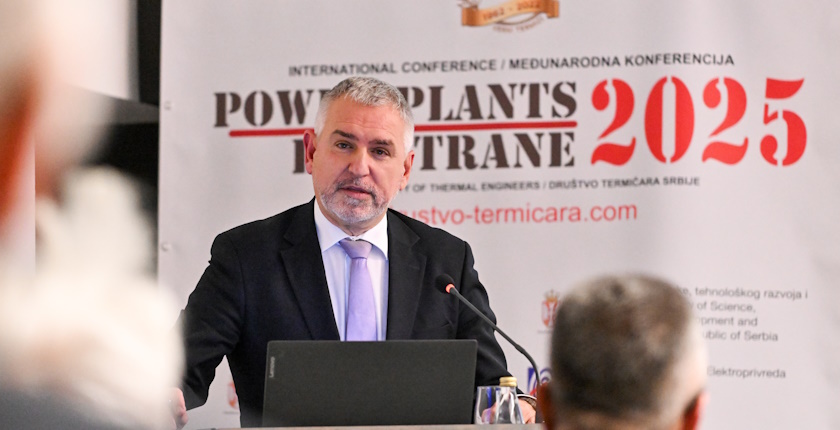
The energy transition isn’t just a matter of adaptation and transformation of one company, but the entire energy sector, the economy, as well as society, he said at the Power Plants 2025 conference, organized by the Society of Thermal Engineers of Serbia.

Jakovljević: It is important to analyze the experiences of other countries that started the energy transition before us

Jakovljević noted that it is important to analyze the experiences of countries that started the energy transition before Serbia, to apply proven solutions and avoid mistakes. However, in his words, it is also necessary to consider the characteristics of Serbia’s power sector.

Photo: EPS/Danilo Mijatović

​The decarbonization of EPS is already underway with various projects, he asserted and added that by the end of the year, the company’s green portfolio would increase by 76 MW.

The 10 MW Petka solar power plant has been completed, and soon the trial operation of EPS’s first wind farm – Kostolac, with a capacity of 66 MW, will kick off.

Jakovljević recalled that the company is preparing to build pumped storage hydropower plant Bistrica, with a capacity of 650 MW, saying it is a key facility for the integration of renewable sources and for energy stability. He added it is also developing photovoltaic projects, including one for 1 GW and a 200 MW battery energy storage system (BESS).

From 2026, every ton of CO2 produced in EPS’s plants will be priced

EPS is developing renewable energy projects at locations near mines and coal power plants, where existing infrastructure can be utilized, and connections to transmission and distribution networks are available, Jakovljević explained.

He noted that Europe has set the climate neutrality goal for 2050, and that Serbia has committed to reducing carbon dioxide emissions by at least 33% and to produce 45% of its electricity from renewable sources by 2030.

From 2026, every ton of CO2 produced in EPS plants will be priced, exposing coal production to additional challenges, Jakovljević stressed.

However, in his words, EPS’s goal remains clear – reliable and sustainable energy for Serbia and a profitable EPS as a secure support for consumers, and energy independence in the future.

by in News

Serbia’s power utility to take no loans in 2025, fund coal projects on its own

For the first time, Elektroprivreda Srbije (EPS) will not take out loans this year, but will finance all investments from its own resources, according to General Manager Dušan Živković. However, it has affected the financial performance of Serbia’s state-owned power utility, with profit in the first half of 2025 coming in lower than in the same period last year.

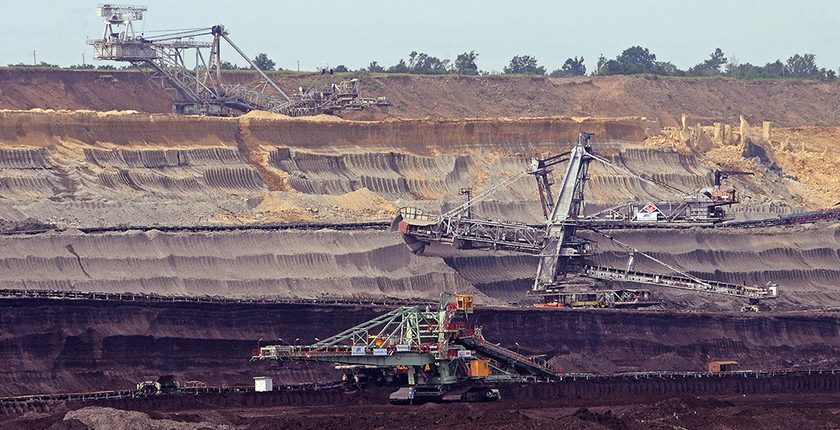
One of the major investments underway is in coal mining, including the construction of several systems needed to enable the opening of the Radljevo open pit mine in the Kolubara mining basin. However, since financial institutions are unwilling to finance fossil fuels, EPS must rely entirely on its own funds, Živković told national broadcaster RTS.

EPS is financing the coal mine on its own, as financial institutions are unwilling to invest in fossil fuels

To ensure sufficient coal supplies, EPS has contracted imports from Indonesia, which Živković explained as a strategy to diversify sources. He described it as the best way to ensure the security of supply.

He said that the installation of machinery at Radljevo is underway and that EPS expects the mine to start producing overburden and coal early next year.

EPS posted a RSD 27.4 billion (EUR 233.8 million) profit in the first half of 2025, compared to RSD 32.8 billion (EUR 280.3 million) in the same period last year.

Kostolac wind farm set to begin operation

Speaking about other key projects, Živković revealed that the commissioning of the 66 MW Kostolac wind power plant is in the final phase and expressed hope that electricity production would begin within a month. He also recalled that the 10 MW Petka solar power plant, built at the tailings dump in the Kostolac coal complex, was put into trial operation about a month ago.

He also said pumped storage hydropower plant Bistrica and the planned 1 GW of solar facilities could come online in the medium term.

Commenting on the announced 7% electricity price increase in October, Živković stressed the process has been initiated and that he expects it to be completed within one to one-and-a-half months.

Electricity consumption during the summer is lower than last year

On the surge in electricity consumption during the summer months, he said the situation this year has been “calmer” than in 2024, with consumption at around 90 GWh, compared to 114 GWh in 2024. It means total demand can be covered from EPS’s own capacities, according to him.