by in News

OMV Petrom, CE Oltenia building solar parks of 550 MW in total

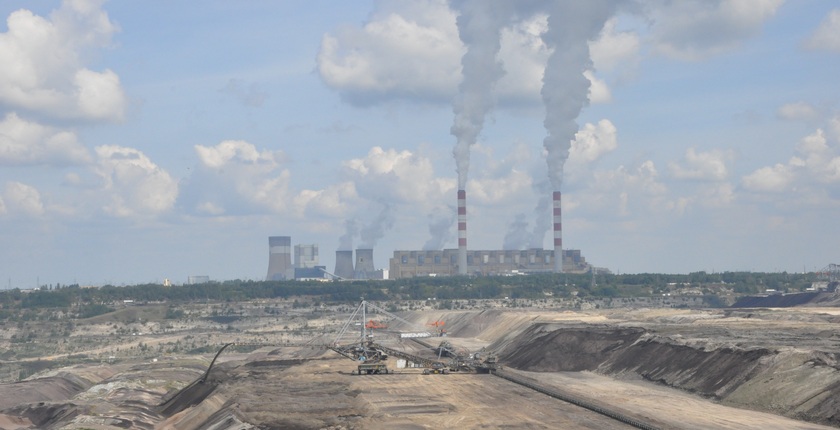
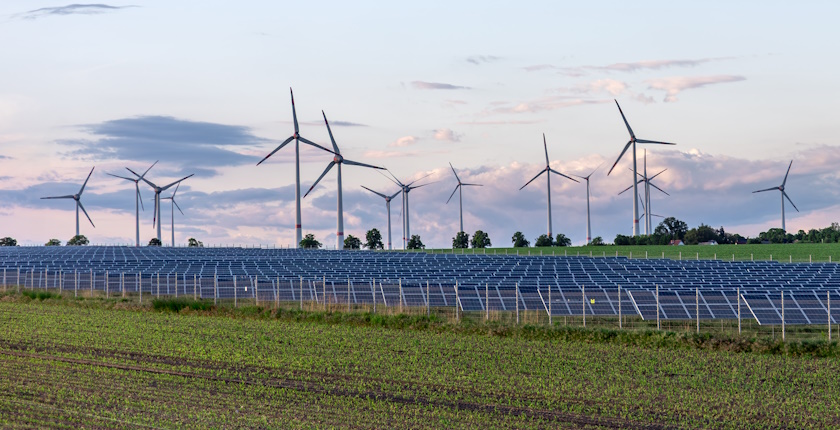
Coal land of Romanian state-owned CE Oltenia is undergoing transformation with the beginning of construction of four photovoltaic plants. The projects, which the company is conducting with OMV Petrom, are for 550 MW in combined capacity. In a separate partnership, with Tinmar Energy, 280 MW more is in development.

Almost four years after the European Union approved the grants from the Modernisation Fund and the start of negotiations between Complexul Energetic Oltenia (CE Oltenia) and OMV Petrom about a partnership, their four solar power projects of 550 MW in total peak capacity reached the construction phase. They would cover the equivalent of an estimated 410,000 Romanian households’ annual consumption, the update adds.

The largest integrated energy company in Southeastern Europe and Romania’s main coal power producer are building the photovoltaic systems in Ișalnița, Tismana, and Rovinari in the coal region in the counties of Dolj and Gorj. CE Oltenia and OMV Petrom expect the facilities to become operational next year.

OMV Petrom, CE Oltenia partnership receives first tranche of EU funding

Total investment is over EUR 400 million, with 70% financed through the Modernisation Fund. There are four joint ventures, in which the partners hold 50% each. Just this month, they received the first EUR 16 million, the announcement reveals.

The locations are on CE Oltenia’s coal land. They are aimed at partly substituting the power plants there, as Romania is heading for a coal exit by 2032.

“Through these projects, OMV Petrom reaffirms its commitment to a low-carbon energy future, contributing to Romania’s and the EU’s climate objectives. We are transforming a region with a long-standing tradition in coal-based energy into a renewable energy hub,” said Franck Neel, member of OMV Petrom’s Executive Board responsible for Gas and Power.

Ameresco and Sunel won three contracts together, and Turkey-based Girişim is in charge of the fourth one

Following tenders, contractors for the design and execution were picked in April. The consortium of United States–based Ameresco and Sunel is tasked with the projects Rovinari Est, Tismana 1, and Tismana 2. The latter company is registered in the United Kingdom, but its operational headquarters are in Athens, Greece. The capacity amounts to 460 MW.

Turkish company Girişim Elektrik is in charge of the fourth endeavor. The site is a slag deposit at the CE Ișalnița coal-fired power plant. Per earlier documentation, the contractors will operate the solar power systems for three years and transfer them to the owners.

Coal miners becoming PV installers

OMV Petrom said it is supporting the RenewAcad program in the nearby city of Târgu Jiu, where CE Oltenia is seated.

In the past two years, over 200 mining technicians have been retrained as photovoltaic system installers. The initiative is part of a broader effort. It involved training over 10,000 professionals for Romania’s energy transition, the company added.

Another 280 MW of solar power is in pipeline

CE Oltenia, also known as CEO, runs another four PV projects totaling 280 MW in planned peak capacity with its partner Tinmar Energy. They received 13 bids and the procedure is ongoing.

The partnership model is the same, and so is the share of investment that the Modernisation Fund covers. The locations are slag and ash deposits at coal plants Rovinari and Turceni, and external dumps Pinoasa and Bohorelu.

The fifth partnership between CE Oltenia and Tinmar is for a CCGT (combined-cycle gas turbine) power plant of 475 MW in Turceni. It is suffering heavy delays. The Modernisation Fund has approved a grant for 50% of the investment.
by in News

CE Oltenia to set up subsidiary to take over coal power plants slated for closure

Romanian state-controlled coal power utility Complexul Energetic Oltenia (CE Oltenia) is preparing to establish a subsidiary to take over its lignite-fired thermal power plants slated for closure and the coal mining operations that supply them.

CE Oltenia’s “lignite subsidiary” is envisaged under a restructuring and decarbonization plan approved by the European Commission, according to Profit.ro.

The subsidiary will incorporate and operate the existing lignite-based power generation units and related assets that are not planned to switch to natural gas or renewable energy sources, according to the European Commission’s decision from 2022 approving state aid for CE Oltenia’s restructuring.

The state aid Romania planned to grant CE Oltenia amounted to EUR 2.66 billion.

The subsidiary will operate coal-fired plants that are not planned to switch to gas or renewables

CE Oltenia’s decision to start the separation of lignite-related activities into a separate subsidiary was adopted as early as 2023, but nothing has been done since then.

Now, the company has launched a procedure to select a consultant and intends to award a contract by winter, with a deadline of about six months for the delivery of services.

The new firm is to be created before the end of CE Oltenia’s restructuring period, i.e. before the end of 2026, according to the commission’s decision. It further states that the lignite capacities in question should decrease over time and eventually be phased out, in accordance with the national coal phase-out timetable.

CE Oltenia is building 550 MW of solar power plants at former coal mines

Earlier this year, a joint venture between CE Oltenia and oil and gas company OMV Petrom signed an agreement with contractors to design and install four solar power plants at former coal mines, with a combined capacity of about 550 MW.

According to Profit.ro, Romanian Energy Minister Bogdan Ivan said last month that Romania was in talks with Brussels on a 5-year postponement of the deadline for closing lignite-fired power plants, envisaged by the country’s National Recovery and Resilience Plan.

by in News

Romania completes second round of renewable energy auctions – third of wind quota unallocated

Companies that participated in the second round of auctions in Romania for contracts for difference (CfDs) for wind and solar power projects received the ranking list. The target quota for photovoltaics was slightly surpassed, with 1.49 GW approved. Conversely, only 1.26 GW was allocated in the wind project segment, against the available 2 GW. Average winning prices were EUR 40.35 per MWh and EUR 73.89 per MWh, respectively.

Winners include Rezolv Energy’s Dama Solar, which at 1.04 GW in total would currently be by far the largest PV system in Europe, excluding Turkey.

Romania’s Ministry of Energy and transmission system operator Transelectrica have conducted the country’s second wind and solar power auctions for government support in the form of CfDs. They imply fixed prices for beneficiaries for 15 years. If the producer sells its electricity in the market at a higher price, the government receives the difference. It works the other way around as well. The average winning price for wind power was EUR 73.89 per MWh, compared to EUR 40.35 per MWh for photovoltaics.

There was 2 GW available for wind power projects, but the authorities selected only 1.26 GW, within 23 qualified projects. It means their bids were lower than the ceiling of EUR 80 per MWh. Romanian media learned most of the details, while the official report is yet to be issued.

Rezolv, OX2, OMV Petrom, among winners in wind power segment

In the wind power auction, the participants secured less than two thirds of the quota. There are 23 projects of 21 companies on the list, with 1.26 GW accepted overall of the available 2 GW.

Midmar Callatis passed with the lowest bid, EUR 65.17 per MWh, for the Dunărea East project in Constanța county. The entity, controlled by Rezolv Energy, is eligible for a CfD for 211.2 MW. It is the largest proposed capacity that participated in the auction. The Dunărea East and West project is for 600 MW altogether.

The firm signed the grid connection contract last year. It expects to complete the wind park in 2030, to meet the deadline, like almost all other auction winners in both segments.

OX2 has split its project and won three contracts

The second winner by size is the Cerchezu wind power project. The owner, OX2, has split it into chunks, so 128 MW, 25.6 MW and 25.6 MW earned entry into the market incentives scheme. The special purpose vehicle (SPV), called South Wind, has bid EUR 69.87 per MWh, EUR 74.5 per MWh and EUR 76.5 per MWh, respectively, for a combined capacity of 179.2 MW.

Coming in third in terms of selected capacity, with 111.6 MW, is the future Poiana wind power project. The developer is Green Labs, which operates under Electrocentrale Borzești, part of the Renovatio group, under OMV Petrom.

Through its project firm CEF Pelicanu, Renovatio also won a CfD for 103.7 MW for its Alexandru Odobescu project. It bid EUR 76.9 per MWh.

Winning prices in second wind power auction higher amid demand drop

Ecoener Carpatica’s Miroslovești project in Iași county can sign a contract for 54.4 MW, at a price of EUR 68.75 per MWh. The Urleasca project passed with EUR 71.93 per MWh for 31 MW.

Eurowind Energy’s Cheap Energy Company was successful with a bid of EUR 78.5 per MWh for the Pecineaga Northeast (Nord Est or NordEst) endeavor. It applied for 48 MW.

Engie Romania passed with its Falcon wind power project

Falcon Wind of Engie Romania secured a CfD for 52.4 MW with a price of EUR 72.7 per MWh. It was the first under the line in the first round, with a bid that was EUR 5 higher. The location is in Mereni in Constanța county.

The accepted prices in the wind power auction are between EUR 65.17 per MWh and EUR 79.5 per MWh, compared to a range of EUR 54.59 per MWh to EUR 77.33 per MWh in the first round.

Accepted bids for solar power projects significantly lower than in first round

Conversely, solar power prices were much lower than last time. They landed at EUR 35.77 per MWh to EUR 45.2 per MWh, against a range of EUR 45.05 per MWh to EUR 54.19 per MWh in December. This time, the ceiling was EUR 73 per MWh. The commission accepted 26 bids of 1.49 GW in total, extending the quota by 16 MW.

The largest capacity, 520 MW, was awarded to special purpose vehicle West Power Investments for its Dama Solar project. It is for 1.04 GW in total peak capacity, which would make it the biggest solar power plant in Europe excluding Turkey. Rezolv Energy developed the project, together with Monsson. It won the incentives through two equal lots, with bids of EUR 42.2 per MWh each, on a rounded basis.

Enery Element gets almost 460 MW for its two PV projects

Other companies also partitioned their projects for the auction. Enery Element won 11 out of the 26 contracts, for its proposed Baboia PV plant, also called Ogrezeni. The bids were between EUR 35.77 per MWh and EUR 42 per MWh.

In the previous round, it failed to make the quota with EUR 56.82 per MWh. The combined capacity is 350.1 MW. According to Economica.net, the developer may have opted for splitting the PV plant to avoid surpassing the 50-hectare threshold per lot. The Ogrezeni project in Giurgiu county is for more than 500 MW overall, the media outlet noted.

The company also succeeded with four lots of its Dumbrava 2 project. Enery Element’s subsidiary Siret Solar Plant has bid EUR 38.76 per MWh to EUR 38.79 per MWh. The combined capacity is 108.6 MW.

Engie Romania is now eligible for a CfD for 170 MW in peak capacity, for its proposed Cornățelu photovoltaic facility. Its bid was the highest on the list, EUR 45.2 per MWh. The site is in Dâmbovița county

Of note, the government has so far signed contracts with 21 firms that won in the first solar and wind power auctions.

by in News

Romania preparing EUR 300 million in subsidies for geothermal heating, cooling

The Romanian Government has drafted a state aid mechanism for the production and transport of geothermal energy for district heating or cooling systems. The proposed scheme would be worth EUR 300 million, sourced from the European Union’s Modernisation Fund.

In addition to solar and wind energy, hydropower and battery energy storage systems, Romania is increasingly counting on geothermal potential for its energy transition and decarbonization efforts. The government in Bucharest is preparing EUR 300 million in subsidies for geothermal district heating or cooling systems, Profit.ro reported.

It drafted a state aid package that would be covered from the Modernisation Fund. It is a tool for supporting investments in renewables, energy efficiency, storage and networks and a just transition in 13 European Union member states with lower incomes. The funds are from the proceeds of the sales of greenhouse gas emission certificates within the EU Emissions Trading System (EU ETS).

The proposed subsidies are aimed at the production and transport of heat from geothermal energy, including modernization projects, to the points of connection with the district heating network, according to the document.

No need for auction as budget is sufficient for all mature projects

The budget would be divided into EUR 50 million per year through 2030. The funds are intended to cover the net additional costs of the projects – funding gaps. Typically, they are determined as the difference between the net present value of the factual scenario and the counterfactual scenario over the life of the project, the update reveals.

The government estimated that nine projects would split the available funds

There would be nine beneficiary projects, translating to EUR 33.3 million each, the government estimated. Eligible are thermal energy producers and municipal authorities and their units.

There won’t be a competitive bidding process for allocating the state aid, as the Ministry of Energy received too few mature proposals since 2023, within its exploratory public call, the document adds. The government has concluded the budget would cover the potential demand.

Bucharest, Timișoara among potential beneficiaries

State-owned Electrocentrale București (ELCEN), which produces thermal energy for the district heating system in the capital Bucharest, and National Company Bucharest Airports (CNAB), are among the entities interested in the subsidies.

Bucharest’s Sector 1 administrative authority and the Municipality of Timișoara are in the group as well. The latter, Romania’s fifth-largest city, established cooperation last year with OMV Petrom for district geothermal heating.

The article noted that Green Tech International, listed on the Bucharest Stock Exchange (BSE or BVB), is on the list. It operates geothermal wells in Călimănești-Căciulata in the country’s south. The company also supplies heat and sanitary hot water in Nădlac in Arad county in the northwest.

One other company interested in the state aid scheme is Transgex. The city of Oradea, where it is based, inaugurated an 18 MW geothermal district heating plant two months ago.

The government recently launched a EUR 56 million grant program for municipal authorities for geothermal energy projects.

In other relevant news from Southeastern Europe, Slovenia launched a EUR 51.2 million cofunding package for green district heating and cooling ten days ago, for companies and cooperatives.

by in News

OMV Petrom enters Bulgarian solar power market as partner in one of biggest projects

As part of its decarbonization efforts, Romanian hydrocarbons producer OMV Petrom is strengthening its presence in neighboring Bulgaria. It agreed to buy 50% of the Gabare solar power project, of 400 MW, from its developer Enery Element.

The solar power investment frenzy in most of Southeastern Europe is continuing despite rising curtailments and the frequent occurrence of negative power prices. Major developers and operators are counting on battery storage to gradually close the still widening gap between intraday peak production and consumption in spring and autumn.

Romanian oil and gas company OMV Petrom – a subsidiary of OMV – is acquiring a 50% stake in Bulgarian firm Dunav Solar Plant. It is developing the 400 MW Gabare photovoltaic project in Byala Slatina near Sofia.

Until now, the sole owner was Enery Element, a joint venture between Austrian renewable energy company Enery Development and its Bulgarian partner Element Power Group. The two sides didn’t disclose the amount. They expect to close the transaction later this year, after fulfilling certain conditions.

Partners to invest EUR 200 million in total by production launch in 2027

The solar park is expected to enter commercial operation in 2027. By then, OMV Petrom and Enery plan to invest EUR 200 million, including from external financing. They are targeting their final investment decision before the end of 2025.

Solar trackers will maximize output, which will be equivalent to the consumption of 150,000 domestic households, the Romanian company pointed out. A battery energy storage system (BESS) of up to 600 MWh in capacity is an option for future consideration, OMV Petrom added.

Neel: Natural gas and renewables complement each other

“By investing in one of the largest photovoltaic projects in Bulgaria, we are strengthening our presence on this neighbouring market and are supporting the region’s energy transition. We believe that natural gas and renewables complement each other and play a key role in reducing emissions while ensuring energy stability,” said member of the Executive Board of OMV Petrom Franck Neel, responsible for the Gas and Power division.

He added that the company would also offtake 50% of the generated electricity, through a power purchase agreement (PPA), without revealing further details.

Enery currently generates almost 700 GWh of clean electricity per year from 490 MW in installed capacity. It has 8 GW in the project pipeline in 11 countries.

Permits for PV park secured

The construction permits and the grid connection have already been secured, according to the update. At 400 MW in peak capacity, Apriltsi is the largest solar power plant in the Balkans and Eastern Europe, excluding Turkey.

However, a PV system of 550 MW in Greece is about to be completed.

OMV Petrom is the largest integrated energy producer in Southeastern Europe, with an annual group hydrocarbon production of 40 million barrels of oil equivalent in 2024. In addition, it is expanding in the segments of wind power and photovoltaics, energy storage, alternative fuels including green hydrogen, and chargers for electric vehicles.

OMV earlier expressed interest in renewables in Serbia and Hungary as well

The group has a refining capacity of 4.5 million tons. It operates an 860 MW high-efficiency gas-fired power plant. The group is present in Romania and neighbouring countries through 780 filling stations under the brands OMV and Petrom, of which 93 in Bulgaria.

At the end of last year, Austrian energy giant OMV had a 51.2% stake in OMV Petrom. The Romanian Ministry of Energy controlled 20.7% and pension funds in the country participated with 23.7% in total.

In Bulgaria, OMV Petrom started supplying natural gas to business customers last year. Following the discovery of gas resources in Romania’s Neptun Deep block in the Black Sea, it is now exploring the gas potential in Bulgaria’s Han Asparuh block. In April, the company said it approved an investment budget of EUR 1.6 billion for 2025, or over 20% more than in 2024.

Pparent company OMV, headquartered in Vienna, expressed interest last summer in the wind and solar power potential of Romania, Serbia, Bulgaria and Hungary.

by in News

OMV Petrom, CE Oltenia pick contractors for four solar power plants

Oil and gas company OMV Petrom and coal power utility Complexul Energetic Oltenia (CE Oltenia) have signed design and installation contracts for four solar power plants.

In October 2022, OMV Petrom and Complexul Energetic Oltenia said they would build four photovoltaic parks with a combined capacity of 450 MW at former coal mining locations using European Union funds. The two companies are equal partners in the joint venture, each holding a 50% stake.

Now OMV Petrom announced that the four projects would have a total installed capacity of approximately 550 MW, higher than initially planned.

The capacity increase is a result of innovative solutions maximizing power production capability

The increase is a result of innovative solutions that the contractors proposed, to maximize the power production capability, according to the company.

The design and execution of three of the four photovoltaic parksRovinari, Tismana 1, and Tismana 2with a combined capacity of around 460 MW, was awarded to a consortium formed by US-based Ameresco and Sunel, reads the press release. The latter is registered in the United Kingdom, but its operational headquarters are in Athens, Greece. 

The consortium is already active in the region, and recently it launched construction of a giant solar power plant in Greece.

Girisim Elektrik installed the  largest solar power plant in Serbia

Turkish company Girişim Elektrik is in charge of the fourth photovoltaic park, with a capacity of around 90 MW. The site is at the former CE Ișalnița power plant, on its slag deposit.

The latest project in the surrounding region that was completed by the contractor is thelargest solar power plant in Serbia. Girişim also installed one of the first utility-scale solar power plants in the Western Balkans – the 10 MW Oslomej unit in North Macedonia.

Of note, tenders for contractorsattracted investors from China, Turkey, the United States, Germany, and Ukraine.

EUR 400 million investment

OMV Petrom estimates the total investment for the four solar projects at over EUR 400 million, of which approximately 70% is financed through the European Union’s Modernisation Fund.

According to Frank Neel, member of the company’s executive board responsible for gas and power, the new contracts are a firm step in strengthening its position in the renewable power sector.

“Through our Strategy 2030, we aim to be a key player in Romania’s energy transition, with the ambitious target of developing 2.5 GW of capacity, including partnerships, from renewable sources – wind and solar,” he added.

The projects will be built on land owned by CE Oltenia, in the Gorj and Dolj counties.

The generated electricity would be delivered to the national power grid and it is expected to cover the annual electricity consumption equivalent of approximately 410,000 households in Romania, OMV Petrom said.