by in News

Offshore wind turbines create conditions for richer marine ecosystems

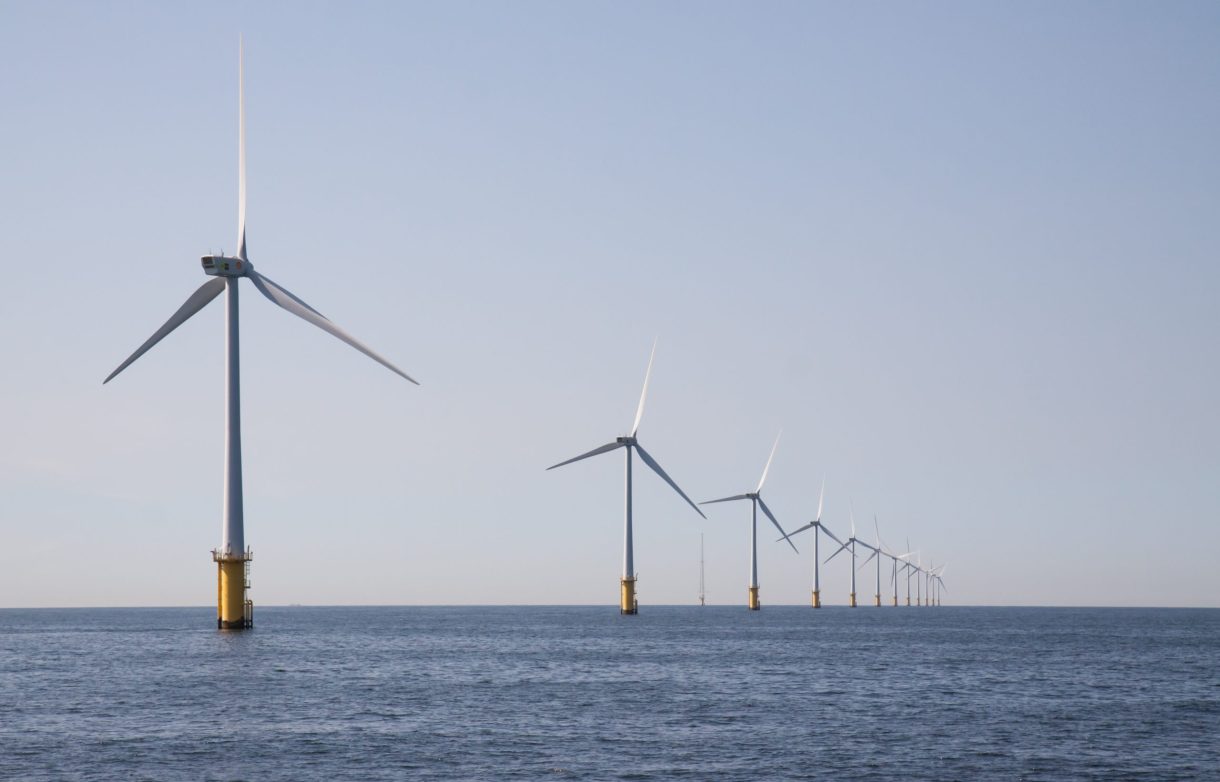
In addition to contributing to the energy transition, offshore wind power plants have a positive impact on marine life. A new study, conducted by researchers from Murdoch University in Australia and Dalian Ocean University in China, shows that offshore wind farms enhance marine ecosystems and contribute to greater diversity in aquatic food chains.

The massive steel towers of offshore wind turbines are new solid and rough surfaces on an otherwise sandy seabed and they function as artificial reefs. Together with submarine cables, they enable the formation of habitats for sessile organisms.

Sessile organisms, such as sponges, corals, sea anemones and shellfish, are permanently attached to a surface and cannot move independently. They feed by filtering particles from the water or by waiting for prey to pass by.

“These organisms act as critical food sources and habitat for other species, and this has flow-on effects for overall ecosystem diversity and health,” explained James Tweedley, one of the researchers.

Scientists from Murdoch University and Dalian Ocean University compared data collected in 2023 and 2024 at the Zhuanghe offshore wind farm in the northern Yellow Sea in China with data from a control area without wind turbines, located about six kilometers to the east.

Built between 2019 and 2021, it is the largest wind farm off the coast of northeastern China, at 1.35 GW. The researchers used the Ecopath with Ecosim software, into which they input biological and environmental data.

The results showed a greater number of functional groups and increased complexity of the marine food web in the wind farm area, particularly among macroinvertebrates and fish.

Fish in wind farm area are up to three times larger

According to the study, published in the journal Global Ecology and Conservation, more than 50% of the total biomass around wind turbine foundations consists of sessile organisms, such as blue mussels (Mytilus edulis) and other filter-feeding invertebrates.

“These benthic-dominated ecosystems are critical for nutrient cycling, diversifying food webs and even storing carbon,” said Neil Loneragan, one of Western Australia’s leading experts on fish and marine biology. According to him, these findings provide a foundation for understanding how offshore wind farms interact with ecosystem energy dynamics and fisheries resources in coastal waters.

Most fish groups exhibited significantly higher biomass in the wind farm area, particularly species that live and feed closer to the seabed. This finding is consistent with the results of other studies suggesting that offshore wind farms act as fish aggregation devices, the paper notes.

Estimates showed that the fish Hexagrammos otakii was up to twice as large in the wind farm area than outside it, while Sebastes schlegelii was more than three times larger, as was the predatory Asian rapa whelk.

While acknowledging the risks associated with exploration and construction, including habitat destruction and disturbance to birds, marine mammals, and fish, the authors pointed out that seabed disturbance can increase food availability as well.
by in News

Offshore wind turbines create conditions for richer marine ecosystems

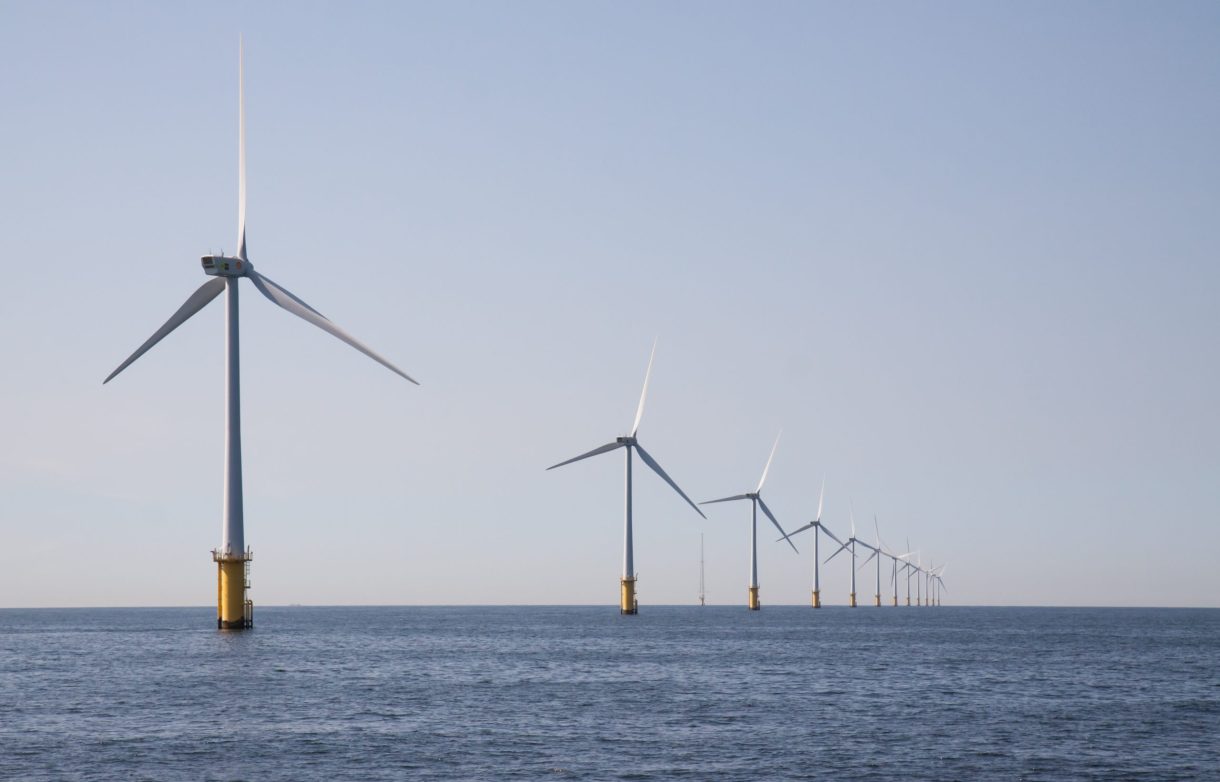
In addition to contributing to the energy transition, offshore wind power plants have a positive impact on marine life. A new study, conducted by researchers from Murdoch University in Australia and Dalian Ocean University in China, shows that offshore wind farms enhance marine ecosystems and contribute to greater diversity in aquatic food chains.

The massive steel towers of offshore wind turbines are new solid and rough surfaces on an otherwise sandy seabed and they function as artificial reefs. Together with submarine cables, they enable the formation of habitats for sessile organisms.

Sessile organisms, such as sponges, corals, sea anemones and shellfish, are permanently attached to a surface and cannot move independently. They feed by filtering particles from the water or by waiting for prey to pass by.

“These organisms act as critical food sources and habitat for other species, and this has flow-on effects for overall ecosystem diversity and health,” explained James Tweedley, one of the researchers.

Scientists from Murdoch University and Dalian Ocean University compared data collected in 2023 and 2024 at the Zhuanghe offshore wind farm in the northern Yellow Sea in China with data from a control area without wind turbines, located about six kilometers to the east.

Built between 2019 and 2021, it is the largest wind farm off the coast of northeastern China, at 1.35 GW. The researchers used the Ecopath with Ecosim software, into which they input biological and environmental data.

The results showed a greater number of functional groups and increased complexity of the marine food web in the wind farm area, particularly among macroinvertebrates and fish.

Fish in wind farm area are up to three times larger

According to the study, published in the journal Global Ecology and Conservation, more than 50% of the total biomass around wind turbine foundations consists of sessile organisms, such as blue mussels (Mytilus edulis) and other filter-feeding invertebrates.

“These benthic-dominated ecosystems are critical for nutrient cycling, diversifying food webs and even storing carbon,” said Neil Loneragan, one of Western Australia’s leading experts on fish and marine biology. According to him, these findings provide a foundation for understanding how offshore wind farms interact with ecosystem energy dynamics and fisheries resources in coastal waters.

Most fish groups exhibited significantly higher biomass in the wind farm area, particularly species that live and feed closer to the seabed. This finding is consistent with the results of other studies suggesting that offshore wind farms act as fish aggregation devices, the paper notes.

Estimates showed that the fish Hexagrammos otakii was up to twice as large in the wind farm area than outside it, while Sebastes schlegelii was more than three times larger, as was the predatory Asian rapa whelk.

While acknowledging the risks associated with exploration and construction, including habitat destruction and disturbance to birds, marine mammals, and fish, the authors pointed out that seabed disturbance can increase food availability as well.
by in News

Greek offshore wind farm program at standstill for more than one year

More than three years after the first offshore wind law, Greece made little progress toward achieving the national goal.

According to the National Energy and Climate Plan (NECP), the country should have its first 1.9 GW of offshore wind farms by 2030.

However, the entire program seems to be on hold. No government official has mentioned it within the past year.

The next steps in the process should be the approval of the National Offshore Wind Program through a joint ministerial decree. According to Insider.gr, the decree has been ready for more than a year now, waiting for the signature. It sent a message to investors that the pace is slow.

Companies selected in the initial auctions would conduct exploration in each allocated offshore zone. The main auctions would follow, for the winners to install the wind power plants.

Exploration permits have so far been provided only to Public Power Corporation (PPC), Terna Energy and Motor Oil Hellas, for a zone in the northeast, offshore Alexandroupolis. It is for pilot projects totaling 600 MW. The wind parks are supposed to become operational by 2029, but the Ministry of Environment and Energy has not yet requested approval from the European Commission for a support mechanism through contracts for difference (CfDs).

More wind needed for the energy mix

It should be noted that the government has acknowledged the need for more wind energy in the country’s renewables mix. Currently, it is dominated by photovoltaics, leading to an imbalance and ever-higher curtailments.

Offshore wind farms are seen more as a source of baseload electricity than solar and onshore wind power, given their high capacity factor, at around 50%.

Advisory firm Ricardo said recently that the Greek NECP is likely going to fail, partly as a result of missing its offshore wind goal.

by in News

WindEurope: EU must boost investment in ports, ships to meet offshore wind targets

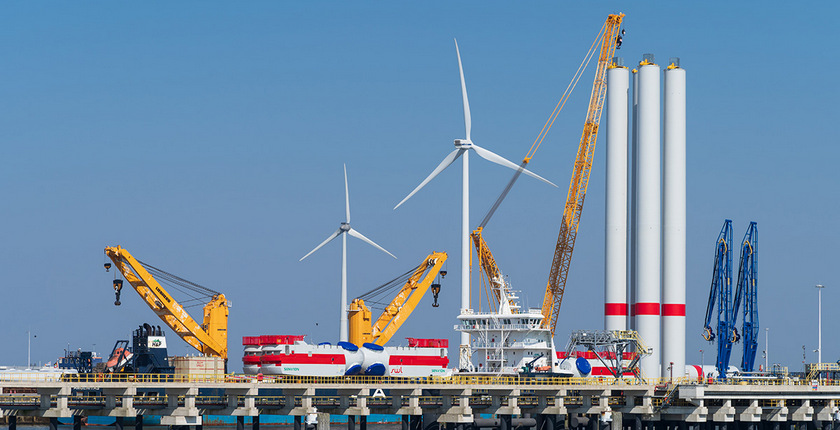
Europe needs to increase investment in ports and shipbuilding, which play a crucial role in offshore wind development, to achieve its goals in this energy segment, according to wind industry association WindEurope. The European Commission’s upcoming strategies for ports and the maritime industry are expected to create conditions for the necessary investment.

The European Union aims to increase its offshore wind capacity from 36.6 GW to 84 GW by 2030, but one of the most pressing challenges it faces is the lack of timely investment in vessel manufacturing and port infrastructure, WindEurope warns.

To meet its 2030 energy security targets, the EU must install at least 10 GW of offshore wind each year. After 2030, this figure will have to increase to 15 GW a year, says WindEurope, noting that robust and resilient port infrastructure and supply chain are key for the achievement of the offshore goals.

After 2030, the EU will have to install 15 GW of offshore wind a year

Over the past three years, over EUR 6.7 billion has been invested in port infrastructure and new vessels across the EU, but a further EUR 6.4 billion is required, the association explains, noting that the European Commission is now working on its EU Ports Strategy.

All offshore wind equipment is transported through ports, and they often serve as bases for the operation and maintenance of offshore wind farms. Ports also host local wind energy supply chains and offer space to store and, in the case of floating turbines, assemble large components, the association notes.

Investment in port infrastructure over the past three years has amounted to EUR 4.4 billion, which can ensure that the EU meets its offshore wind targets, but an additional EUR 2.4 billion is needed to put the bloc on track to achieve post-2030 offshore deployment goals, according to WindEurope.

To make this happen, the EU’s strategy must seek to mobilize additional funding, streamline permitting, and establish planning at the EU level, the association recommends.

A further EUR 4 billion in investment is needed for new ships to handle next-generation wind turbines

When it comes to vessels, they should be a key area of focus in the EU Industrial Maritime Strategy, which aims to enhance the competitiveness, sustainability, and resilience of Europe’s maritime manufacturing sector, WindEurope says.

In the past three years, the EU has invested at least EUR 2.3 billion in new vessels, but it will have to spend a further EUR 4 billion to keep pace with wind turbine technology innovation and handle the upcoming generation of turbines with capacities exceeding 15 MW, it explains.

The strategy should also enable the decarbonization of maritime operations by supporting the shift to clean fuels, such as electricity, ammonia, and hydrogen, and by providing funding for retrofitting vessels and building new zero-emission ships, according to WindEurope.

by in News

Global Wind Day 2025: Wind energy creates new jobs

Global Wind Day, celebrated every year on June 15, was first marked in 2007 as a joint initiative of WindEurope and the Global Wind Energy Council (GWEC). The European Union will need more than 200,000 trained workers in the wind energy sector in the future, which is why this year’s focus of Global Wind Day is on the people who work in the industry.

Global Wind Day aims to raise awareness of the importance of wind as a renewable energy source and its role in reshaping energy systems, decarbonizing the economy, and tackling climate change. The event is celebrated through various activities around the world, organized by international organizations, national associations, and companies operating in the wind energy sector.

Wind energy is now one of the most affordable forms of power generation in large parts of the world. In 2023, global wind energy capacity exceeded one terawatt. Last year alone, a record-breaking 127 gigawatts were added. According to the Global Wind Report published by GWEC, the countries with the most newly installed capacity last year were China, the United States, Brazil, India, and Germany.

The use of wind energy dates back to ancient Egypt. The first modern wind turbines were installed around four decades ago, standing 120 metres tall and placed on land. Today, the tallest wind turbine is fixed to the seabed and is 260 metres tall. Innovations in turbine technology have advanced to the point where we now have floating wind turbines, and soon, offshore wind catchers may become a reality.

Wind industry employs 370,000 people in Europe

This year, Global Wind Day shines a light on the people working in the wind industry. Around the world, children and adults alike are exploring how wind energy works, its potential to change the world, and the job opportunities it offers.

Today, wind farms produce around 20% of Europe’s electricity. The EU aims to increase this to 35% by 2030 and over 50% by 2050.

Currently, the wind industry in Europe employs 370,000 people – a number that could reach 600,000 by 2050. However, a major challenge lies ahead: Europe will need to train more than 200,000 workers to meet the growing demand in this field.

Share your experience in wind industry on Instagram and TikTok

Last year, the #WorkingInWind campaign was launched to raise awareness about the wide range of jobs available in the wind sector. This year, the goal is to inspire younger generations to pursue careers in wind energy.

An impressive 91% of Gen Z use Instagram, and 86% are on TikTok. Many turn to these platforms not only for news but also for inspiration and discovery.

WindEurope and GWEC have invited all current professionals in the wind industry to join the campaign by sharing stories about their career paths – how they got started, what they do, why their work matters, and what a typical day on the job looks like.

According to the campaign guidelines, the story should be shared on the mentioned social media platforms in the form of a photo with text or a short video, using the hashtags #GlobalWindDay and #WorkingInWind.

by in News

Equinor resumes New York offshore wind project of 810 MW after stop-work order lifted

Norway’s Equinor is resuming construction on its Empire Wind project off the coast of New York after the federal authorities lifted a stop-work order issued in mid-April. The project’s first phase, the 810 MW Empire Wind 1, is expected to generate electricity equivalent to the needs of 500,000 homes in the US state.

The construction of Empire Wind 1, the first offshore wind project to feed directly into New York’s power grid, began on April 1. However, the United States Department of the Interior, through its Bureau of Ocean Energy Management (BOEM), ordered the work to stop on April 16, pending the completion of a review.

On May 20, Equinor said its subsidiary Empire Offshore Wind has been informed by BOEM that the stop-work order had been lifted, allowing construction activities to resume.

“We appreciate the fact that construction can now resume on Empire Wind, a project which underscores our commitment to deliver energy while supporting local economies and creating jobs,” stated Anders Opedal, President and CEO of Equinor.

Commercial operation is planned for 2027

In a press release, the company majority-owned by the Government of Norway, explained that Empire Offshore Wind aims to be able to execute planned activities in the offshore installation window in 2025 and reach its planned commercial operation date in 2027, adding that the project is currently more than 30% complete.

The project’s second phase is planned to have 1,260 MW in capacity.

Since the early 2000s, the company has invested about USD 60 billion in energy projects in the United States, mainly in oil and gas, and more recently in low-carbon solutions, critical minerals, and renewables, reads the press release.

by in News

2-in-1: carbon footprint as a quality criterion in the NZIA – solving sustainability and resilience together

By Heike Winkler,EUSEW’s digital ambassador on how fair tendering and sustainability in offshore wind can drive competitiveness and a just energy transition.

We are transitioning from an economy based on fossil energy to an economy based on renewable resources. What could be more obvious than for us to support this development and strengthen our renewable industries, the maritime industry, the circular economy, and the green steel industry? The motto of EUSEW 2025, ‘Powering a fair and competitive green transition’, fits perfectly with the European offshore wind industry.

The motto of this year’s WindEurope Annual Event 2025, which has just taken place in Copenhagen, was ‘Scale up, Electrify, Deliver – Putting wind at the heart of Europe’s competitiveness.’ At the recent WindEurope conference, the offshore wind industry jointly proposed a new Offshore Wind Deal to European governments in order to achieve Europe’s ambitious expansion targets. Resilience and sustainability require close cooperation between business and politics to successfully meet the challenges of the ongoing transformation. Sufficient volume and stable supply chain expansion paths are crucial.

Sustainability requires resilience

For more than two decades, the offshore wind industry has been characterised by an impressively fast-growing know-how, a strong resilience, remarkable innovative power and harmonious synergies from various European industries.

A considerable reduction in the levelised cost of energy (LCOE) of offshore wind energy has been achieved to date, more than the fossil industry has ever had to achieve. This development resulted in permanent cost pressure, which harms the sector.

Decarbonisation of the offshore wind industry itself has been part of the industrialisation process from the very beginning. A current example is the Nordlicht 1 and 2 project in the German North Sea, where a major reduction in CO2 steel emissions is expected to be realised (i.e. by using steel towers).

Level playing field and competitiveness

The level playing field has been repeatedly called into question in recent years due to competitive distortions and discontinuities, e.g. with the thread break (‘Fadenriss’) in Germany starting in 2016, when no more new offshore wind projects were put out to tender, or more recently with the construction stop in the USA. In Germany, many companies went out of business, a lot of experience was lost, thousands of employees lost their jobs and their experience was also lost to the industry. With the current geopolitical uncertainties, particularly regarding energy supply, the sector’s resilience is crucial.

With a level playing field and a robust expansion path, the wind industry would have grown significantly faster.

Net Zero Industry Act and qualitative criteria in tendering processes

At the same time, in line with the Draghi Report on EU competitiveness, the Clean Industrial Deal, together with the Net Zero Industry Act, European competitiveness requires accelerating re-industrialisation and the transformation of energy-intensive companies.

Industrial resilience and sustainability require close cooperation between business and policy, where better procurement practices can advance European interests in the wind sector. For example, the carbon footprint tender criterion should be applied in more than 50% of the coming renewable energy tenders. This is critically important, as it could increase the likelihood of realisation, resilience, while at the same time enhancing the market readiness of European renewable energy industries and thus Europe’s competitiveness.

Every long transport route increases the carbon footprint and reduces the added value of the project in general and where it is to be installed. The EU developed a consultation process to strengthen the net-zero industries, which includes auctions for renewable energies and an implementing law on non-price criteria. The results are currently eagerly awaited.

‘In order to reach a sustainable energy transition that creates added value for European industry, there is no alternative to a sustainable, resilient (2in1) domestic offshore wind supply chain. The carbon footprint criterion in offshore wind tenders is crucial if the transformation of the energy-intensive industry is to deliver climate protection, energy sovereignty and industrial growth at the same time.’ There will be no cost-efficient sustainable energy system in Europe without offshore wind energy.

This opinion editorial is produced in co-operation with the European Sustainable Energy Week (EUSEW) 2025. See ec.europa.eu/eusew for more details.