by in News

Romania begins overhaul to extend operating life of Cernavodă nuclear reactor by 30 years

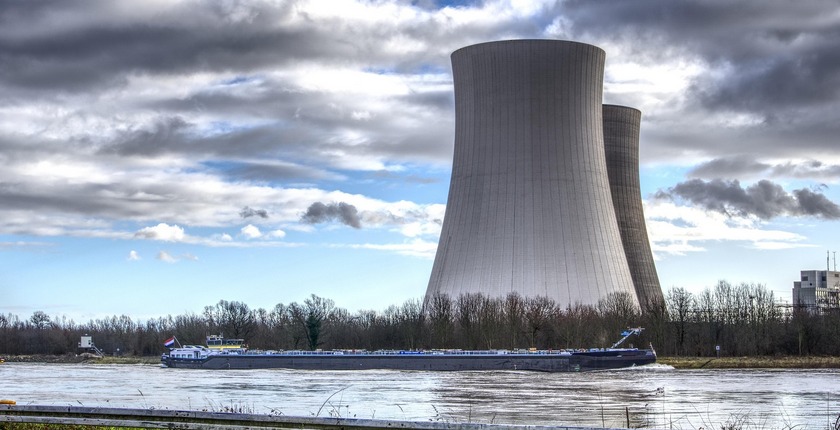
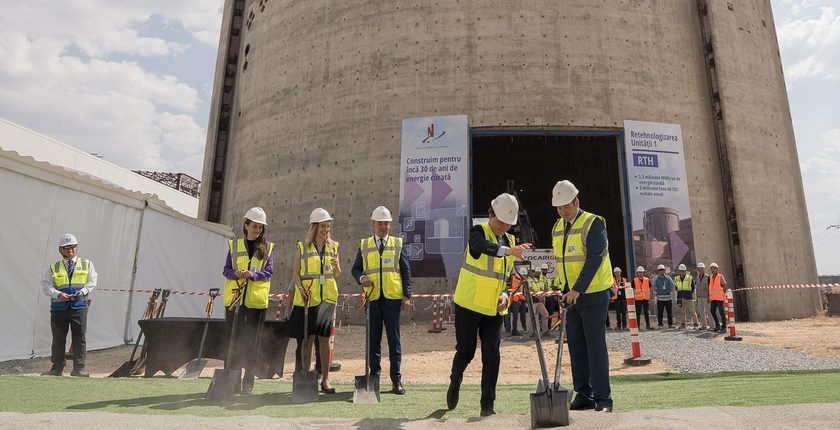
An international consortium led by South Korean state-owned Korea Hydro & Nuclear Power Co. (KHNP) has launched an overhaul of a reactor at Romania’s only nuclear power plant, Cernavodă. The refurbishment will extend the operating life of Cernavodă’s Unit 1 by 30 years.

The reactor, with a capacity of around 700 MW, has been in operation since 1996, and its 30-year license is set to expire in 2027. The reconstruction project is valued at about USD 2.01 billion, KHNP said following a groundbreaking ceremony.

Romania’s state-run Nuclearelectrica, the operator of the Cernavodă plant, signed an agreement with the consortium last December. The group of contractors includes KHNP, Canada’s AtkinsRealis, the Canadian Commercial Corporation, and Italy’s Ansaldo Nucleare, according to Romania-Insider.

The works, targeted for completion by 2030, include the complete replacement of the reactor systems and power-generating turbines, as well as the construction of new infrastructure, including radioactive waste storage facilities, said KHNP, a subsidiary of Korea Electric Power Corporation (KEPCO).

The overhaul is targeted for completion by 2030

KHNP said that four other South Korean firms – Kepco Plant Service & Engineering, Doosan Enerbility, Hyundai Engineering & Construction, and Samsung C&T- will participate as project partners.

At the groundbreaking ceremony, Romanian Minister of Energy Bogdan Ivan said the project would ensure another 30 years of on-grid, environmentally friendly electricity. According to him, it represents the future of Romania’s energy security, accoridng to a report by Profit.ro.

The overhaul will ensure another 30 years of environmentally friendly electricity

Over the last 10 years, Romania has shut down about 56% of its coal- and natural gas-fired capacity, resulting in the country now importing 22% of the electricity it consumes. According to Ivan, this has led Romania to look for alternatives, one of which is nuclear energy.

He recalled that the country was preparing to invest EUR 11 billion in the construction of Units 3 and 4 at the Cernavodă nuclear power plant, adding that “certain phases have already begun.” Ivan also said he believed that in seven years’ time, Romania could become a net exporter of electricity.

The two new reactors would each have a capacity of around 700 MW, according to earlier reports. Cernavodă’s Unit 2, which has been in operation since 2007, also has a capacity of around 700 MW.
by in News

Google secures 50 MW of nuclear power for data centers

Google has secured a new source of clean energy for its data centers in the US states of Tennessee and Alabama through collaboration with nuclear technology company Kairos Power and public power utility Tennessee Valley Authority (TVA). The deal involves a 50 MW advanced nuclear reactor to feed TVA’s grid, which supplies the tech giant’s data centers.

Kairos Power’s advanced nuclear facility Hermes 2, which is set to go online in 2030, will supply electricity to the grid under a power purchase agreement (PPA) with TVA. It is the first-ever offtake agreement in the United States for a generation IV reactor.

Hermes 2, located in Oak Ridge, is the first facility under Kairos Power’s broader deal with Google to enable 500 MW of new, advanced nuclear capacity to come online by 2035, aimed at supporting Google’s growing energy needs. The long-term agreement, signed in October 2024, involves the deployment of multiple small modular reactors (SMRs), Google recalled.

Google’s long-term deal with Kairos involves deploying 500 MW of nuclear capacity by 2035

Amanda Peterson Corio, Google’s Global Head of Data Center Energy, said the collaboration would speed up the deployment of innovative nuclear technologies and help support the needs of the growing digital economy while also bringing firm carbon-free energy to the electricity system.

As part of efforts to meet its growing energy needs, Google recently signed the world’s largest corporate PPA for hydropower. The agreement, signed with global investment firm Brookfield, involves developing 3 GW of hydropower capacity in the United States.

Google has signed similar deals for hydropower, geothermal, and fusion energy

Google has also signed similar agreements for next-generation geothermal energy as well as for fusion energy. The company recently revealed plans to invest over USD 25 billion in data center and AI infrastructure in the next two years.

Rapid AI development and digitalization are making power supply crucial for tech companies. Goldman Sachs Research forecasts that global power demand from data centers will increase by 165% by 2030 from the 2023 level.

by in News

Slovenia launches public consultation on spatial plan for second unit at Krško nuclear plant

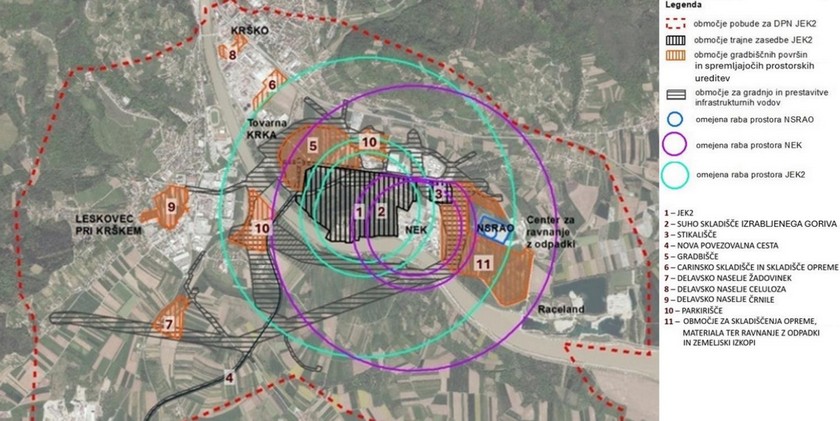
The Slovenian Ministry of Natural Resources and Spatial Planning initiated the development of a spatial plan on the country level for the second unit of nuclear power plant Krško. It invited the public to submit comments and suggestions.

The initiative was announced at a press conference last week by representatives of GEN energija, the state-owned company developing the Krško 2 (NEK 2) project. The document has now been made public and will remain available for comments until the end of September.

The initiative will be available for comments until the end of September

To keep the public informed, GEN energija will open information offices in several locations across Slovenia – Krško, Ljubljana, Maribor, and Nova Gorica.

At the press conference, State Secretary at the Ministry of the Environment, Climate and Energy Tina Sršen described the document as a “milestone,” adding that the project was now moving into broader social and professional coordination.

Final decision on capacity and technology expected in 2028

GEN energija’s chief operating officer, Bruno Glaser, said the capacity of the proposed second unit and the technology to be used have yet to be determined, but that the initiative envisages a capacity of 1,000 MW to 1,650 MW.

He also said that the final investment decision should be made in 2028, along with decisions on the reactor’s capacity and the supplier.

Croatia is willing to participate in the Krško 2 project

Another issue to be resolved before a final investment decision is made is the possible participation of other investors. Croatia has repeatedly expressed its interest in taking part in the project, recalled Gen Energija CEO Dejan Paravan, noting that Croatia’s state-owned power utility Hrvatska Elektroprivreda (HEP) co-owns the existing power plant in Krško.

Slovenian Prime Minister Robert Golob and his Croatian counterpart, Andrej Plenkovič, discussed the topic at a recent meeting, according to Paravan.

by in News

Greece to participate in European Nuclear Alliance

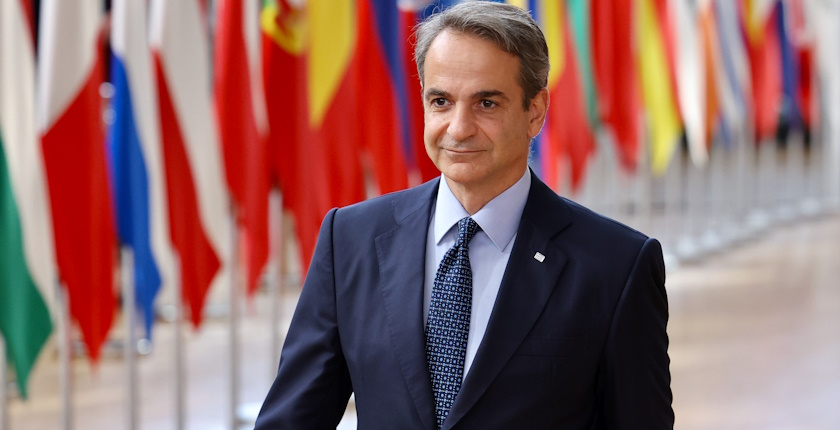
Greece is going to explore its options for the introduction of nuclear energy, according to Prime Minister Kyriakos Mitsotakis.

Speaking during the Energy Transition Summit in Athens, Mitsotakis expanded on his previous statements about nuclear energy and its possible role in the Greek energy mix.

“We are ready to join the Nuclear Alliance. This is not something that is going to happen tomorrow, but Greece must be a part of the discussion,” said the prime minister. The European Nuclear Alliance, launched in 2023, is an initiative of 13 European Union member states. Among them are Bulgaria, Croatia and Romania.

Its goal is to promote nuclear energy and help maintain its role in Europe. Italy has just joined the group.

It is not the first time that Greece has shown interest in the technology. The current government has floated the idea of co-financing a new nuclear power plant in Bulgaria, as part of the deal that would include guaranteed power imports. So far, nothing has materialized.

Mitsotakis also mentioned small modular reactors (SMRs) again as a possible solution, as well as installing reactors in ships to help the sector decarbonize. “We must explore how a naval nation such as Greece can utilize nuclear energy in its fleet,” Mitsotakis noted.

Mitsotakis: Net zero is impossible without nuclear

He added that the world would not be able to cut net greenhouse gas emissions to zero without the technology. According to the prime minister, nuclear fusion is very promising.

Public mistrust and cost issues

There are difficult obstacles to the government’s ambitions. Greek people remain heavily opposed to the installation of nuclear facilities, both inside and near the country. The energy crisis made public opinion only a bit more favorable.

Furthermore, Greece has no experience with nuclear energy and no people engaged in the sector. Everything would have to be created from scratch, from the regulatory framework to the technical knowhow.

Then there is the matter of cost. Even though many voices around the world support a nuclear revival, few new commercial projects have been initiated for traditional nuclear stations. Most new reactors, like in China, are subsidized by the state. Even in Europe, a large part of the discussion concerns renewing and upgrading existing reactors.

The Greek government has raised energy costs as a primary issue for the country and Southeastern Europe. It remains to be seen whether such power plants could operate on a purely commercial basis or if a support scheme could be used.

by in News

French power prices jump as EDF looks into possible nuclear reactor defect

France’s state-owned power utility Électricité de France (EDF) is investigating apparent corrosion cracks found at a 1.5 GW nuclear reactor in the country’s west, which has been offline for annual maintenance since early April. The potential defect has pushed up electricity prices and raised concerns about energy security.

EDF, which manages France’s nuclear fleet of more than 50 reactors, has said further analysis is needed, while admitting there are indications of a possible defect. The Civaux 2 reactor was shut down for maintenance on April 4 and will now stay offline at least until the end of July, according to Montel.

The Civaux nuclear power plant will remain offline at least until the end of July

The cracks were initially reported as “microcracks,” but Montel’s sources have confirmed that they measure 2–3 mm. The reactor cannot be restarted until EDF replaces the damaged sections.

Front-year contracts rose to a four-month high

The issue prompted a jump in electricity prices in France, with front-year contracts rising EUR 5.20 per MWh to a four-month high of EUR 67.50/MWh, Montel reported. At the same time, Q4 and Q1 2026 contracts rose by over EUR 6. According to Reuters, front-year contracts fell back to EUR 65.80 per MWh in the afternoon.

Reuters also reported that benchmark European front-month gas contracts were 2.3% higher, at EUR 35.58/MWh.

Stress corrosion cracks were the cause of an earlier nuclear power crisis, in 2022-2023, when they were discovered on multiple plants in France. The country’s nuclear power output was at a record low in 2022, Montel recalled.

The shutdown could jeopardize France’s energy security

Some experts have warned that the latest defect could threaten the energy security of France, as well as the European Union (EU) as a whole. France relies heavily on nuclear power, which accounted for over 70% of its electricity output in 2018, the highest percentage in the world.

The news comes amid a global nuclear energy revival, triggered by rising electricity demand. Germany, which shut down its last remaining nuclear power plants in 2023, recently agreed with France not to block new nuclear power technologies within the EU, while the World Bank lifted its 20-year ban on financing nuclear projects.

by in News

World Bank to back nuclear projects again amid rising electricity needs

The World Bank has decided to end its 2013 moratorium on financing nuclear energy projects amid growing global electricity demand. The move means the lender would support projects to extend the operating life of existing nuclear power plants and speed up the rollout of small modular reactors (SMRs).

The World Bank board’s decision comes at a time when nuclear energy is experiencing a global revival, as electricity demand in developing countries is projected to more than double by 2035.

Ajay Banga, the president of the World Bank Group, said the institution would work closely with the International Atomic Energy Agency (IAEA) on the issues of safety, security, and regulation.

Banga: Delivering electricity as a driver of development

“We’ve made real progress toward a clear path forward on delivering electricity as a driver of development,” Banga said.

Recently, Germany agreed with France to end its opposition to new nuclear power technologies in the European Union. Economy and energy minister Katherina Reiche said Germany would respect other EU member states’ choice of energy mix, but would not return to nuclear power itself. The country shut down its last remaining nuclear reactors in 2023.

Nuclear energy is making a comeback in Southeast Europe as well

The global nuclear energy revival includes the region tracked by Balkan Green Energy News as well. Slovenia is developing its second reactor, Krško 2, while Romania and Bulgaria are planning new units, as well as SMR projects. Croatia is also taking steps to introduce nuclear energy, including SMRs.

Hungary is already building new reactors at the Paks nuclear power plant, as is Turkey, while Serbia is considering the use of nuclear energy.

Banga said the World Bank’s revised strategy would allow countries to determine the best energy mix, with some choosing solar, wind, geothermal, or hydroelectric power, while others might opt for natural gas or nuclear.

However, no agreement has been reached yet on ending a ban on upstream natural gas projects, with further discussions needed on the issue, according to him.

by in News

Investment risk highest for nuclear power, lowest for solar

Nuclear power plants have the highest construction cost overrun and the longest time delays of all energy projects. In the clean energy sector, the worst marks for violation of set construction cost and timelines go to hydrogen, carbon capture and storage as well as gas power plants, according to a study by the Boston University Institute for Global Sustainability.

The average project costs 40% more than expected for construction and takes almost two years longer than planned, the Boston University Institute for Global Sustainability (IGS) said.

Its researchers used an original dataset 50% larger than the ones in previous literature. They examined cost overrun risks for 662 energy infrastructure projects across 83 countries built between 1936 and 2024, covering USD 1.358 trillion in investment and a total capacity of more than 400 GW.

In total, the study evaluated ten types of projects: coal-, oil-, and natural gas–fueled power plants; nuclear reactors; hydropower plants; utility-scale wind farms; utility-scale solar photovoltaic and concentrated solar power (CSP) facilities; high-voltage transmission lines; bioenergy and geothermal power plants; hydrogen production units; and carbon capture and storage (CCS) facilities.

Both hydrogen and CCS projects exhibited significant time and cost overruns

“We found that more than three fifths of the projects experienced cost overruns, with these overruns being particularly prominent in projects exceeding 1,561 MW in capacity. Positively, the escalation rate in cost overruns has been declining since 1976,” reads the study, published in the Energy Research & Social Science journal.

However, the findings show patterns of cost overruns varied by fuel source. Nuclear and fossil thermal projects exhibited higher cost escalation rates over time, whereas solar power projects showed a decline.

Critically, both hydrogen and CCS projects exhibited significant time and cost overruns, casting doubt on their ability to be rapidly scaled up, to address climate change or meet energy and climate policy priorities, the authors underlined.

The average nuclear power plant has a construction cost overrun of 102.5% and ends up costing USD 1.56 billion more than expected, IGS said.

Red flag for efforts to substantially push forward a hydrogen economy

“Worryingly, these findings raise a legitimate red flag concerning efforts to substantially push forward a hydrogen economy,” said Benjamin Sovacool, lead and first author of the study, director of IGS, and professor at Boston University’s Department of Earth and Environment.

In the results, solar energy and electricity grid transmission projects have the best construction track record and that they are often completed ahead of schedule or below expected cost.

Wind farms also performed favorably in the financial risk assessment, according to the study, called ‘Beyond economies of scale: Learning from construction cost overrun risks and time delays in global energy infrastructure projects’.

“Low-carbon sources of energy such as wind and solar not only have huge climatic and energy security benefits, but also financial advantages related to less construction risk and less chance of delays,” Sovacool stated.

For him, it’s further evidence that such technologies have an array of underrated and underappreciated social and economic value.