by in News

Serbia’s Vinča Institute, EDF to cooperate in nuclear energy

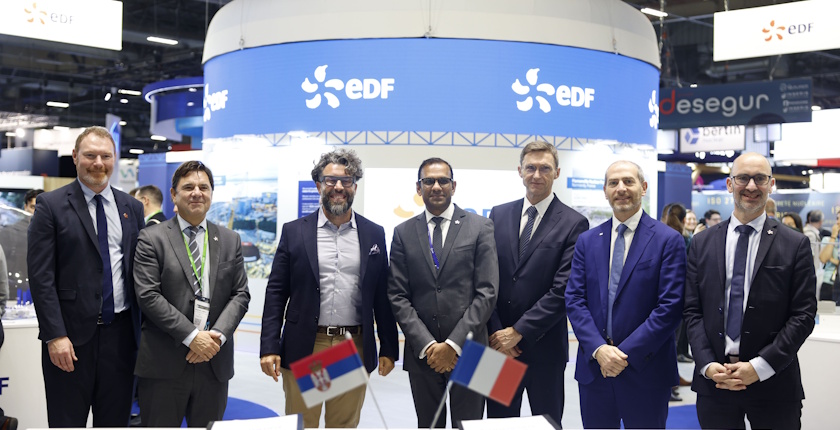
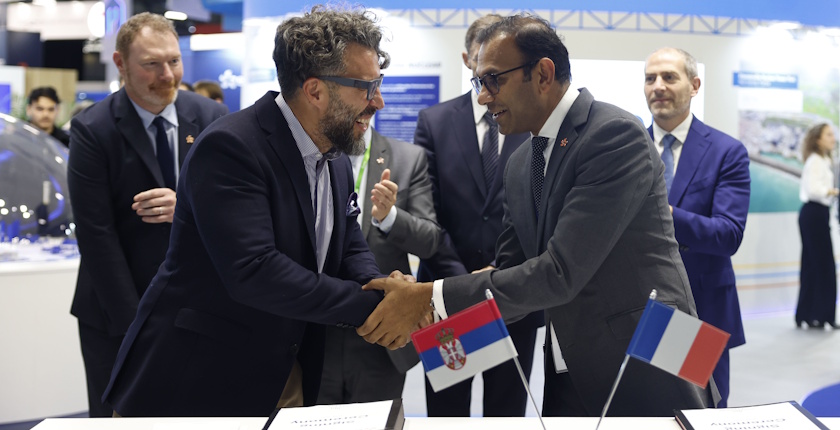
During the World Nuclear Exhibition in Paris 2025, the Vinča Institute of Nuclear Sciences signed a memorandum of cooperation with Électricité de France (EDF).

The Serbian Vinča Institute of Nuclear Sciences said its new memorandum of cooperation with French state-owned energy utility EDF establishes a framework for scientific, technological, and educational cooperation in the nuclear energy sector.

The document was signed by the Vinča Institute’s CEO Slavko Dimović and Vakisasai Ramany, EDF’s Senior Vice President for International Nuclear Development.

Four main sectors of cooperation

The deal envisages joint activities in the areas of scientific research cooperation, professional training and development of employees, international exchange, and public communication on nuclear topics, according to the institute.

The goal is to enhance knowledge, develop expertise, and promote informed public discussion about the potential role of nuclear energy in our country, the Vinča Institute revealed in a social network post.
serbia edf france nuclear energy memoradnum dimovic paris
Slavko Dimović and Vakisasai Ramany (photo: Vinča)

The International Institute of Nuclear Energy I2EN, founded by EDF, will play a key role in implementing the educational programs. It will organize joint academic projects, student exchanges, and research visits.

Dimović: The memorandum is a pledge that we are going to support the growth of young scientists and engineers

The Vinča Institute’s CEO Slavko Dimović stressed that the memorandum represents a continuation of the Serbian-French friendship and an important step toward strengthening the institute’s international cooperation and the exchange of knowledge with one of the world’s leaders in the nuclear energy sector.

The Vinča Institute has long stood as a pillar of scientific and nuclear excellence in Serbia and the region, in his view. EDF brings expertise, experience, knowledge and strong commitment to innovation and the future, Dimović added.

“This memorandum is not just a document, it’s a pledge that we are going to learn from each other, to support the growth of young scientists and engineers, and to promote and help public acceptance of nuclear energy in Serbia,” he underlined.

EDF is active in the region

The Government of Serbia and EDF signed a memorandum of cooperation in April 2024. A few months later, in September, EDF and Egis Industries were awarded a contract for a preliminary technical study for considering the peaceful use of nuclear energy.

France and EDF are very active in the energy sector in the region. The company has established cooperation with the Government of Montenegro, and with the country’s power utility Elektroprivreda Crne Gore (EPCG). France and Slovenia recently signed a declaration on cooperation in the nuclear energy sector, while EDF is in the race to build the new Krško 2 nuclear power plant.

On a bilateral level, Serbia has established contacts or started cooperation in the nuclear energy sphere with China, France, Russia, Slovenia, the United States, and South Korea.
by in News

EDF, Westinghouse complete technical feasibility studies for Krško 2 nuclear power plant

Three reactor projects offered by EDF and Westinghouse have been assessed as technically feasible for the site of the future Krško 2 nuclear power plant, according to technical feasibility studies presented by GEN Energija during the announcement of its 2024 results. GEN Group ended last year with a EUR 186 million profit, down 9% from 2023, when it posted a profit of EUR 204.5 million.

GEN Energija, the parent company of GEN Group, noted that the Krško 2 (JEK2) project is going ahead according to the previously confirmed timeline. In October 2024, Slovenia canceled a referendum on building the second nuclear unit.

In January, it was announced that Westinghouse Electric and EDF would conduct technical feasibility studies for the deployment of their reactor models.

In July, the Ministry of Natural Resources and Spatial Planning initiated the preparation of a spatial plan for the second unit of nuclear power plant Krško and invited the public to submit comments.

GEN Energija has now presented the results of the technical feasibility studies. The reactor projects – EDF’s EPR or EPR1200 and Westinghouse’s AP1000 – were found to be technically feasible for the JEK 2 site.

Planinc: Both technologies include cooling by a natural draft cooling tower

According to Vinko Planinc, head of GEN Energija’s New Nuclear Build Division, the studies confirm that the project enables safe and efficient installation within the existing environment, taking into account flood and earthquake protection requirements.

The expected operational lifespan of both proposed reactors is 60 years, but it could be extended to 80 years if conditions are met, he added.

The location will also allow for the appropriate storage of used nuclear fuel, as well as low- and intermediate-level radioactive waste. Both technologies, he said, use natural draft cooling towers – the most environmentally friendly solution, minimizing the impact on the Sava River and creating the smallest carbon footprint.

The estimated investment from the studies matches the amount in GEN Energija’s study presented in 2024, which projected that JEK 2 would cost at least EUR 9.3 billion for 1,000 MW.

The financing method significantly affects the project’s viability

Regarding an analysis of the JEK2 investment by NGO Mladi za Podnebno Pravičnost (Youth for Climate Justice), Jan Lokar, lead engineer at GEN Energija, said the company estimates the minimum electricity price needed for the project’s economic feasibility at EUR 70.2 per MWh, compared to the NGO’s estimate of EUR 107.

The differences arise primarily from varying assumptions about capital costs, he stressed. GEN Energija expects state support in financing, while the NGO estimate assumes private capital investment.

Paravan: 2024 results exceed planned targets

Photo: GEN Energija

GEN Energija CEO Dejan Paravan presented GEN Group’s business results for 2024. The group had revenues of EUR 2.2 billion, a net profit of EUR 186 million, and added value per employee of EUR 276,000, all exceeding the annual financial targets, he added.

“All our production units operated safely and without major interruptions, reflecting years of investment in knowledge, technology, and maintenance. The important role of GEN Group in Slovenia’s energy supply is confirmed by the fact that in 2024, we reliably supplied Slovenian consumers exclusively with low-carbon electricity at affordable and predictable prices,” Paravan noted.

Alongside the JEK2 project studies, the company said, a small modular reactor (SMR) study is underway, aiming to identify possible locations for this type of reactor in Slovenia.

Photo: GEN Energija
by in News

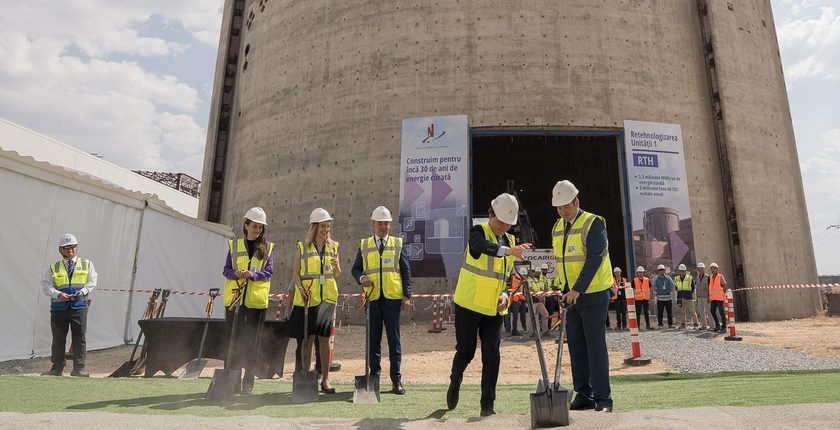
Romania begins overhaul to extend operating life of Cernavodă nuclear reactor by 30 years

An international consortium led by South Korean state-owned Korea Hydro & Nuclear Power Co. (KHNP) has launched an overhaul of a reactor at Romania’s only nuclear power plant, Cernavodă. The refurbishment will extend the operating life of Cernavodă’s Unit 1 by 30 years.

The reactor, with a capacity of around 700 MW, has been in operation since 1996, and its 30-year license is set to expire in 2027. The reconstruction project is valued at about USD 2.01 billion, KHNP said following a groundbreaking ceremony.

Romania’s state-run Nuclearelectrica, the operator of the Cernavodă plant, signed an agreement with the consortium last December. The group of contractors includes KHNP, Canada’s AtkinsRealis, the Canadian Commercial Corporation, and Italy’s Ansaldo Nucleare, according to Romania-Insider.

The works, targeted for completion by 2030, include the complete replacement of the reactor systems and power-generating turbines, as well as the construction of new infrastructure, including radioactive waste storage facilities, said KHNP, a subsidiary of Korea Electric Power Corporation (KEPCO).

The overhaul is targeted for completion by 2030

KHNP said that four other South Korean firms – Kepco Plant Service & Engineering, Doosan Enerbility, Hyundai Engineering & Construction, and Samsung C&T- will participate as project partners.

At the groundbreaking ceremony, Romanian Minister of Energy Bogdan Ivan said the project would ensure another 30 years of on-grid, environmentally friendly electricity. According to him, it represents the future of Romania’s energy security, accoridng to a report by Profit.ro.

The overhaul will ensure another 30 years of environmentally friendly electricity

Over the last 10 years, Romania has shut down about 56% of its coal- and natural gas-fired capacity, resulting in the country now importing 22% of the electricity it consumes. According to Ivan, this has led Romania to look for alternatives, one of which is nuclear energy.

He recalled that the country was preparing to invest EUR 11 billion in the construction of Units 3 and 4 at the Cernavodă nuclear power plant, adding that “certain phases have already begun.” Ivan also said he believed that in seven years’ time, Romania could become a net exporter of electricity.

The two new reactors would each have a capacity of around 700 MW, according to earlier reports. Cernavodă’s Unit 2, which has been in operation since 2007, also has a capacity of around 700 MW.

by in News

Serbia, South Korea’s KHNP to cooperate on nuclear energy, hydrogen

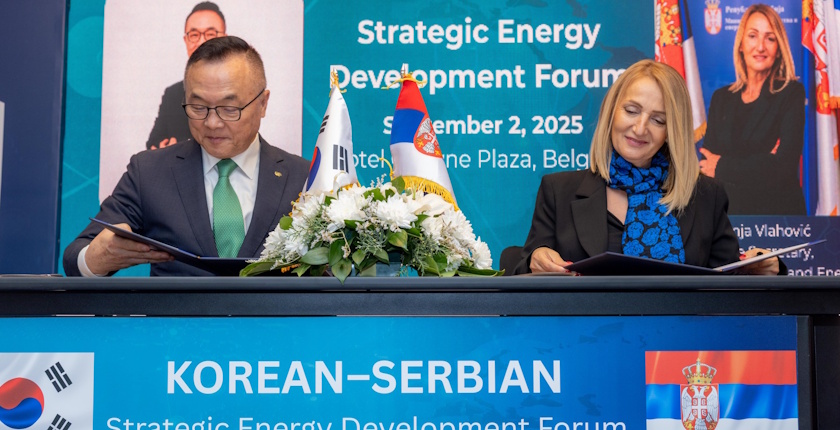
Serbia and South Korean company Korea Hydro & Nuclear Power have signed two memorandums of understanding on cooperation in the fields of nuclear energy and hydrogen.

The memorandums were signed by Sonja Vlahović, State Secretary at the Ministry of Mining and Energy, and Joo-ho Whang, President and CEO of Korea Hydro & Nuclear Power (KHNP), a subsidiary of Korea Electric Power Corporation (KEPCO).

Notably, South Korean company Hyundai Engineering is part of Serbia’s largest renewable energy project—the deployment of 1,000 MW of solar power plants with battery storage.

The memorandums were signed during the Korea-Serbia Strategic Energy Development Forum, held in Belgrade and organized by the Ministry of Mining and Energy and the Korea Trade-Investment Promotion Agency (KOTRA).

So far, Serbia has established contacts or started cooperation on nuclear energy with China, France, Russia, Slovenia, and the United States.

Vlahović: We’ll consider pilot hydrogen projects

The main goal of the nuclear energy memorandum is to help the ministry develop and train personnel in Serbia in the field of nuclear technologies, as well as to facilitate the exchange of technical information and expertise.

Photo: Balkan Green Energy News

The second memorandum, on hydrogen cooperation, will enable joint work to assess the potential for developing pilot green hydrogen projects in Serbia. It envisages technical exchanges and support for human resource development, as well as sharing know-how in the full hydrogen cycle and supply chain management.

State Secretary in the Ministry of Mining and Energy Sonja Vlahović noted that Serbia is considering nuclear energy as one of the potential energy sources that could help it achieve energy security while transitioning to clean energy sources.

Joo-ho Whang: Cooperation will enable sustainable growth for Serbia and the company

“For us, it is very important to develop cooperation with countries and companies that are global leaders in nuclear technologies, to exchange knowledge and experience, and to invest in the development of our experts. We are also very interested in the opportunities offered by hydrogen technologies and, together with partners from South Korea, we will explore potential pilot projects,” she said.

According to KHNP President and CEO Joo-ho Whang, the cooperation will enable sustainable growth for both Serbia and the company.

“We particularly expect that demonstration projects in the field of hydrogen will play a key role in developing the hydrogen industry in Serbia. Additionally, the agreement will open new opportunities for cooperation in the clean energy sector,” he added.

KHNP to assist with workforce training

The nuclear energy memorandum calls for KHNP to support the development of training programs for personnel in the ministry and other relevant government institutions, faculties, and companies. The support is expected to cover various aspects of nuclear technologies, safety, and the regulatory framework.

It also includes establishing a mechanism for regular exchange of technical information, research results, and best practices in nuclear energy, the ministry said.

Dimović: Serbia could have a nuclear power plant by 2040

Photo: Ministry of Mining and Energy/Nenad Kostić

The signing was followed by presentations delivered by KHNP, the ministry, state power utility Elektroprivreda Srbije (EPS), the Vinča Institute for Nuclear Sciences, and KOTRA.

Park So-hyun, Senior Manager of Overseas SMR Project Section, presented nuclear power plant projects that the company is developing in South Korea and other parts of the world.

Hydrogen projects and cooperation with Serbia were the theme of a presentation by Kim Su-Jy, Senior Manager of Global KHNP Hydrogen & Energy Business Sector.

EPS is conducting a hydrogen study

Assistant Minister of Mining and Energy Radoš Popadić outlined the main goals and planned activities of Serbia’s Energy Development Strategy through 2040. Aleksandar Latinović, Head of Ancillary Services at EPS, presented the company’s development projects, recalling that EPS is currently conducting a study on possibilities for hydrogen utilization.

The Vinča Institute highlighted its rich history. CEO Slavko Dimović announced a public discussion aimed at explaining nuclear energy to all of Serbia, not just Belgrade. His optimistic yet realistic plan is for Serbia to have a nuclear power plant by 2040.

Milan Rajić, Senior Specialist at KOTRA, highlighted the agency’s results and invited Serbian entrepreneurs to collaborate with Korean companies.

The signing ceremony was also attended by the Ambassador of the Republic of Korea, Kim Hyung Tae, Serbia’s Minister of Science, Technological Development, and Innovation, Bela Balint, and the Director General for KOTRA Europe Headquarters, Kim Hyeon-cheol.

by in News

Germany, France move to bridge nuclear divide with joint EU energy policy

Germany and France have agreed to work together on shaping a common European energy policy that would include nuclear power as a low-carbon energy source. The deal could help resolve the two countries’ long-standing division over the role of nuclear energy in Europe’s green transition.

Paris and Berlin might offer joint proposals for the European Union’s energy policy through 2040 that would “ensure non-discrimination among all net-zero and low-carbon energy technologies in their respective contribution to European energy, sustainability, and climate goals,” according to a joint economic agenda adopted at a meeting in Toulon, France.

The common EU policy would ensure non-discrimination among all net-zero and low-carbon energy technologies

In Europe, nuclear power is widely considered a low-carbon technology that provides reliable energy while also supporting climate goals and reducing dependence on fossil fuels, with France advocating for its revival. However, Germany shut down its last remaining reactors in 2023 and is focusing on renewables as a way to achieve climate neutrality.

The two countries have now agreed to promote technology neutrality and try to harmonize their respective energy policies in the interests of Europe, said French President Emmanuel Macron.

In turn, France will support Germany’s plans to establish hydrogen interconnections to southwestern Europe. This includes the long-stalled Southwestern Hydrogen Corridor, which connects Spain, Portugal, France, and Germany, according to reports. The corridor comprises the pipeline projects H2Med and HY-FEN.”

Germany and France will support hydrogen interconnections with Spain and Portugal

The initiative will be continuously supported through a Franco-German working group on hydrogen, according to the Franco-German Economic Agenda.

The two countries’ deal to jointly lead the way in shaping a competitive, secure, sustainable, and decarbonized European energy market also involves supporting a potential new electricity interconnector that transmission system operators Amprion, TransnetBW, and RTE are assessing, reads the document.