by in News

Zagreb to invest EUR 56 million in waste management, low-emission machinery

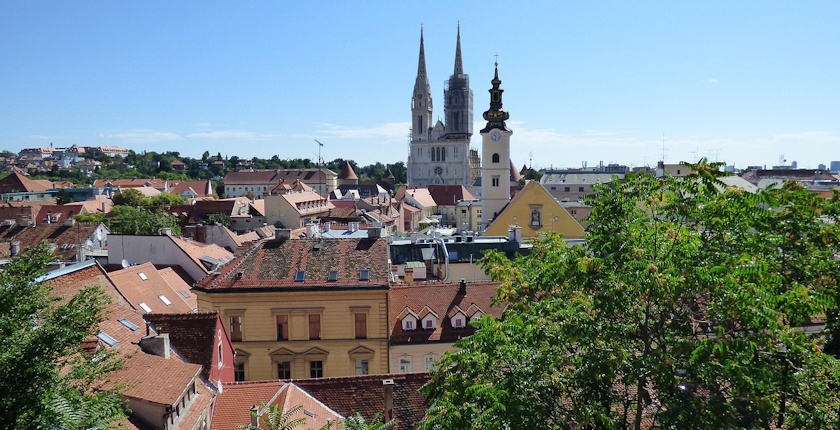
Croatia’s capital, Zagreb, intends to invest EUR 56 million in waste management, green areas, and low-emission machinery. It expects the investment to reduce the environmental footprint of its municipal utilities and their operating costs.

Zagreb Holding (ZGH), the umbrella firm for the city’s utility companies, has requested approval from the authorities for a long-term EUR 56 million green loan agreement.

The Zagreb city assembly will decide on the request on December 16.

The green loan agreement with the International Finance Corporation (IFC) would finance investments aimed at supporting the development of circular waste management by procuring lower-emission vehicles and machinery for separate waste collection, developing green spaces, and maintaining roads.

ZGH to introduce smart waste management technologies

The loan would also be used for primary waste separation infrastructure, bio-waste treatment facilities, as well as information and communication technologies for data-driven smart waste management operations, ZGH said.

The company intends to replace its existing outdated machinery by acquiring municipal vehicles, machines, and equipment, with the aim of increasing operational efficiency and the scope of services provided to citizens.

Additionally, this investment will have a significant environmental impact by reducing greenhouse gas emissions.

NOx and PM emissions will be reduced by up to 80%

According to an analysis by ZGH, the average age of more than 300 vehicles, machines, and pieces of equipment is 14 years, which significantly exceeds the average economic service life of vehicles and machines. More than 70% of the vehicles do not meet current environmental standards (EURO 6), which leads to negative impacts on the environment and rising maintenance costs.

Thanks to the investment in EURO 6 and Stage V compliant vehicles, emissions of nitrogen oxides (NOx) and PM particles would be reduced by up to 80%, the update reads.

ZGH plans to introduce digital systems to increase the operational efficiency of its vehicles and machinery, such as monitoring fuel consumption, technical condition, and mileage.

The loan proceeds will be allocated to the city’s public utilities.

The waste utility Čistoća will receive EUR 22.2 million, road utility Zagrebačke Ceste EUR 14.9 million, green areas utility Zrinjevac EUR 16.4 million, cemetery utility Gradska Groblja EUR 861,000, the ICT Sector EUR 1.5 million, and the customer relations sector EUR 120,000.
by in News

Sarajevo rolls out fully digital system to track air-polluting emissions

Sarajevo, the capital of Bosnia and Herzegovina, has developed a register of air-polluting emissions and an information system to track pollutants. The register aims to reduce air pollution in Sarajevo, which very often tops the list of the world’s most polluted cities.

The project to develop the emissions register and the air-pollutant information system for the Sarajevo Canton took two years, according to the government of the Sarajevo Canton. During that period, comprehensive data were collected on various air pollution sources, including home fireplaces, boiler rooms, industry, traffic, and agriculture.

In creating the register, nearly 100,000 individual emission sources were analyzed. The emissions of all pollutants from those sources were calculated in line with the European Environmental Protection Agency (EPA) standards.

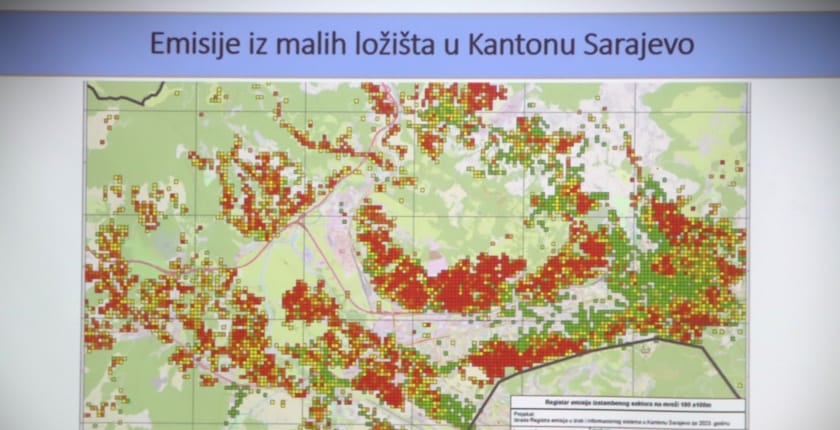
The project has created emissions distribution maps for key pollutants

Compared with previous versions, the new register offers significant improvements. It uses the latest methodologies for the spatial distribution of emissions and data verification, complemented by the establishment of a central GIS database and an interactive web portal.

For the first time, the public can compare emissions data for different pollutants on a high-resolution spatial grid (100×100 meters). In addition to the detailed register of emissions, distribution maps for key pollutants, including particulate matter (PM10), sulfur dioxide (SO2), and nitrogen oxides (NOx), are also available.

The information system is set to be publicly available within a month

According to the government, the system allows for the identification of areas with excessive air pollution. A robust emissions register serves as a foundation for strategic financing of projects aimed at improving air quality, including implementing the Strategy for Limiting the Use of Coal and Other Solid Fuels in the Sarajevo Canton (2023-2033), the government added. The strategy was adopted in February 2024.

The new emissions register and air quality categorization map will provide essential data inputs for future planning and strategies across various sectors, including spatial planning, energy, transportation, and healthcare.

Jansson: Air pollution remains one of the most urgent public health challenges in Sarajevo

Birgitta Jansson, deputy head of development cooperation at the Swedish Embassy in BiH, highlighted air pollution as one of the most urgent public health and environmental challenges in the Sarajevo Canton.

“By taking a pioneering step to make environmental data publicly accessible, the canton is enabling transparent, informed, and long-term action toward cleaner air and climate neutrality – and Sweden is proud to support this important initiative,” she noted.

The Prime Minister of the Sarajevo Canton, Nihad Uk, stressed that the new register allows the government to plan measures more accurately, apply for international funding, and make sustainable decisions based on relevant data.

Softić Kadenić: A unique project in BiH

The Minister of Justice and Administration of the Sarajevo Canton, Darja Softić Kadenić, described the project as unique in BiH, since for the first time it introduces a fully digital, accurate, and comprehensive system for monitoring annual emissions into the air.

It is placing Sarajevo Canton among the more advanced European cities, she added.

According to Raduška Cupać, head of the Energy and Environment Sector at UNDP in BiH, the system is more than a technical tool – it is a strategic asset that empowers institutions, companies, and citizens to take concrete steps toward environmental protection.

The register was developed by a consortium of companies Ceteor, E3, and GDI.

by in News

Balkan leaders have to realise new coal plants are a liability, not a gold mine?

Author:  Pippa Gallop, Research Co-ordinator, CEE Bankwatch Network

In April this year, the EU proved that whatever difficulties it might be going through, it can still make momentous decisions. It approved new pollution control standards for power stations, entitled the LCP BREF (1) The name might sound obscure, but the results should be concrete: The new standards are projected to save up to 20 000 lives annually across the EU.

On the EU’s doorstep in the Western Balkans, however, you would hardly know the LCP BREF existed. Almost all the countries in the region are planning to build new coal power plants, and there has been virtually no mention of the need for them to comply with the new standards.

This is strange, because not only is compliance with the new LCP BREF necessary for EU accession, but most Western Balkans already stipulate it as part of their domestic pollution control legislation (2). This means that as soon as the standards enter force in the EU this year, they also enter into force in most of the region.

CO2 remains an unsolvable problem with coal

Let’s be clear here: the LCP BREF is not a panacea. It limits emissions of SO2, NOx, PM10, HCl, HF and mercury, so it makes a great contribution to reducing coal’s health impacts. But it can’t do anything about the biggest problem with coal: CO2 and its contribution to climate change. There is no filter that can stop CO2 emissions, and if we are to limit climate change to 1.5-2 degrees, no new coal plants can be built. Unlike climate science, BREF is legally binding, and attempts to ignore it will likely backfire even sooner than attempts to ignore climate science.

Legislative changes need to be anticipated

Whether you have to comply with the LCP BREF right now or in a few years, it’s not something you want to ignore. With power stations lasting 40 years and more, they need to be designed in line with the very latest technical and environmental standards, and their promoters need to anticipate the rules coming up within the next few years. Failure to do so means additional and potentially expensive retrofits just a couple of years after a plant has opened.

With the chances of new coal plants being viable already at rock bottom, such additional costs could easily increase the risk of stranded assets. Only very few EU countries are planning new coal plants, because of low electricity prices, the growth of renewable energy, CO2 costs, and pollution control legislation that is gradually making polluters, instead of the public, pay the health costs of coal.

Yet governments and utilities in the Western Balkans are not doing their homework about recent trends and new legislation that awaits them in the next few years, with the result that their planned projects are dangerously out of date.

Earlier this year we revealed that none of the planned coal power plants seem to have properly taken the costs of CO2 into account in their financial planning. Now we’ve crunched the numbers for the LCP BREF and found that none of the plants has proven compliance with the new standards either.

Planned Balkan coal plants not in compliance with new BREF

There are eight units currently being actively planned in the region. Out of these, five would violate the new standards while for three there is insufficient information available. Kostolac B3 in Serbia, Pljevlja II in Montenegro, and the Oslomej reconstruction in Macedonia have been designed in line with the older Industrial Emissions Directive (IED) Annex V standards, but not the new BREF. Tuzla 7 and Banovići in Bosnia-Herzegovina don’t even go this far: Tuzla 7 is bound only by the even more outdated local legislation while the environmental permit for Banovići is unclear about what standards are relevant. For the remaining three units, Ugljevik III units 1 and 2, and Kosova e Re, the information about likely emissions is still unclear.

Kostolac B3 in Serbia is the only plant for which the new BREF has even been mentioned in its official documentation. It is currently undergoing an environmental impact assessment process, in which local groups have commented on the need for the plant to comply with the BREF. The only reaction so far is an amendment in the study stating that the plant would be an existing plant under the BREF and thus allowed to pollute more than new plants. Even if some retrofits are necessary, the study argues, this is a normal procedure after running a plant for a few years, and thus nothing to worry about.

Neither of these claims is true: Any plant receiving its integrated environmental permit after the LCP BREF enters force in the EU is a new one, according to the BREF definitions, and has to stick to the highest standards. As for undertaking retrofits, the study authors should really check the plant’s feasibility assessment, which shows that the plant will be unviable even with a low CO2 price.

The story is not dissimilar with Pljevlja II in Montenegro. Despite being hailed – like all the plants – as being in line with EU standards, it turns out that it is in line only with outdated ones. Local NGOs pointed out during the environmental assessment process that the plant must comply with the new LCP BREF, but they have received no reaction from the authorities as yet.

Montenegro and Serbia may seem like the most alarming cases due to being ahead of others in EU accession, but Bosnia-Herzegovina is if anything a more worrying case, due to the number of projects planned. The Stanari lignite power plant which started commercial operation last September is already out of date compared to the Industrial Emissions Directive and will now be out of line with the BREF as well. If Ugljevik III, Tuzla  7, and Banovići are all completed and all out of line with the BREF, the country will end up with a significant burden on its hands.

If the Balkans electricity utilities really ran on commercial lines, as they are bound by the Energy Community Treaty to do, they would never risk these projects. The new LCP BREF is but one more indicator that coal is an increasing liability, and the Balkan countries should be looking much more carefully at what’s going on around them. After all, the region has ample potential for wind, solar and energy savings combined with a relatively small population, so if this region can’t make a transition to sustainable energy, who can?

NOTES:

  1. Large Combustion Plants Best Available Techniques Reference Document
  2. Albania, the Federation entity of Bosnia-Herzegovina, Kosovo Macedonia and Montenegro. Serbia and Republika Srpska both require the application of best available techniques but do not specify that the EU reference document should be used.