by in News

Serbia’s economy in uncharted territory amid imminent US sanctions against oil company NIS

For NIS in Serbia, doing business will become exceptionally difficult from tomorrow, when the United States imposes sanctions, starting with payment systems. The same goes for any enterprise cooperating with the oil refiner and distributor, majority owned by Russia’s Gazprom Neft and another firm controlled by Gazprom.

Nine months after the US announced sanctions against NIS, which were postponed several times, they are coming into force tomorrow morning. Apparently, the American Office of Foreign Assets Control (OFAC) is imposing restrictive measures for Serbia’s national oil importer, refiner and operator of a chain of service stations. Croatian company Jadranski naftovod (JANAF), which depends to a great extent on supplying NIS, said the deliveries can last until October 15.

The US and the United Kingdom announced sanctions early this year against Russian state-owned Gazprom Neft, which at the time held 50% of ownership, while its parent Gazprom controlled another 6.2%. After a reshuffle, Gazprom Neft now has 44.9% of NIS, and Intelligence, a firm within Gazprom’s system, owns 11.3%. Serbia’s stake is 29.9%.

Plan B has numerous unknowns

The oil refinery in Pančevo is the only diesel and gasoline producer in Serbia and it dominates the market by far. According to media reports, NIS has considered switching to cash payments, with the exception of the domestic currency system DinaCard, and transferring all its accounts to the state-owned Postal Savings Bank.

It is unlikely that the company would be able to cover all the logistics and finances that way. At the same time, the entire Serbian economy is at risk, together with basic services for citizens. Organizing fuel imports will take time, which may lead to shortages and price hikes. Officials and the representatives of the oil sector claim that the current stockpiles can last several months.

Forced nationalization may switch energy crisis to gas supply from Russia

Back in January, President of Serbia Aleksandar Vučić immediately estimated that Russia would have to completely and urgently exit ownership. There was no success in the meantime in talks with the Kremlin and Gazprom.

“There is one possibility. If I said: I may seek nationalization of the property tomorrow. That is the last thing i would say, if I had to. I don’t want that,” Vučić stated late last week.

In case of a forced purchase of the Russian stake, the focus would turn to the supply of Russian gas through the Balkan Stream pipeline, an extension of TurkStream. Serbia still hasn’t signed a long-term contract with the Russian side, and the previous one expired in May.

To make matters worse, Bulgaria said it would end the transit of Russian gas, through Balkan Stream, for short-term arrangements. The move is part of the European Union’s measures to end the purchases of Russian fossil fuels. A total halt is scheduled for 2028. If the supply chain isn’t drastically changed, it would heavily impact Hungary, Slovakia and Serbia, together with Bosnia and Herzegovina and North Macedonia.
by in News

Government of Serbia interested in taking over Plandište wind project

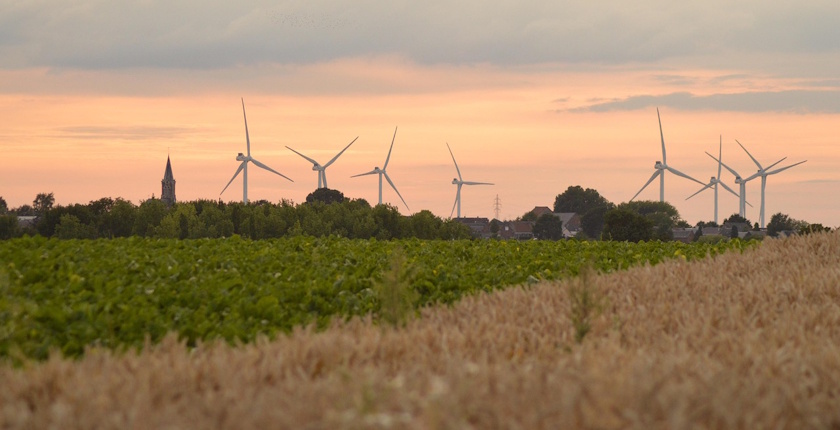
The Government of Serbia is interested in taking over the Plandište wind farm project from oil and gas company Naftna Industrija Srbije and renewable energy firm MET Renewables. They have been jointly developing the project for over ten years.

The Plandište project, with a capacity of 102 MW, was a topic at the latest meeting of the Board of Directors of Naftna Industrija Srbije (NIS), attended by Minister of Mining and Energy Dubravka Đedović Handanović and Chairman of Gazprom Neft’s Executive Board Alexander Dyukov.

Gazprom Neft holds a 44.85% share in NIS, while its parent company Gazprom has another 11.3%.

Alexey Urusov was elected as the new chairman of the NIS Board of Directors, while Dragutin Matanović was appointed vice chairman.

Serbia aims to increase its renewable energy capacity

During the meeting it was noted that there is interest by the state of Serbia in taking over the construction of the Plandište wind park together with Hungarian company MET, thereby increasing the capacities from renewable sources in line with the strategic energy transition goals, the ministry said.

It revealed no further details. The current owners of the project are NIS and Switzerland-based MET Renewables.

The Plandište wind farm was one of the projects that obtained feed-in tariffs from the ministry under the first quota of 500 MW for wind power plants in Serbia. All other projects, totaling 397 MW, have long been completed –  Čibuk 1, Kovačica, Košava 1, Alibunar, Kula, Malibunar, and La Piccolina.

The wind farm was initially scheduled for completion in 2014, then postponed to 2019

The project was originally owned by Energowind, a company founded in 2005 by private investors. In late 2012, NIS bought a 50% share, and the firm was renamed NIS Energowind. Energowind’s CEO Goran Novaković, who was earlier Serbia’s energy minister, has signed the contract with NIS’s then-CEO Kirill Kravchenko.

At the time, the wind farm was scheduled to be completed in 2014, and construction formally began in September 2013. However, there was no progress until March 2019, when MET Renewables, owned by Hungarian private investors, purchased the other 50% stake from the initial owners. The joint firm was named NIS MET Energowind.

The building permit was amended in 2023

Shortly afterward, it was announced that the wind farm would be completed by 2021.

Project firm Wind Park Plandište received the status of privileged renewable energy producer in 2015. It is a right to feed-in premiums, a fixed price for electricity, over a 12-year period. The status has been extended multiple times, most recently in 2018 until 2020, according to the registry of privileged producers on the ministry’s website.

The project firm said that the building permit, amended in 2023, envisages the construction of 17 wind turbines, each with a capacity of 6 MW. The detailed regulation plan, revised in 2022, enables the construction of up to 20 wind turbines with a capacity of up to 7 MW each, according to the firm’s website.

  • 1
  • 2