by in News

NGEN inaugurates Austria’s most powerful battery energy storage system

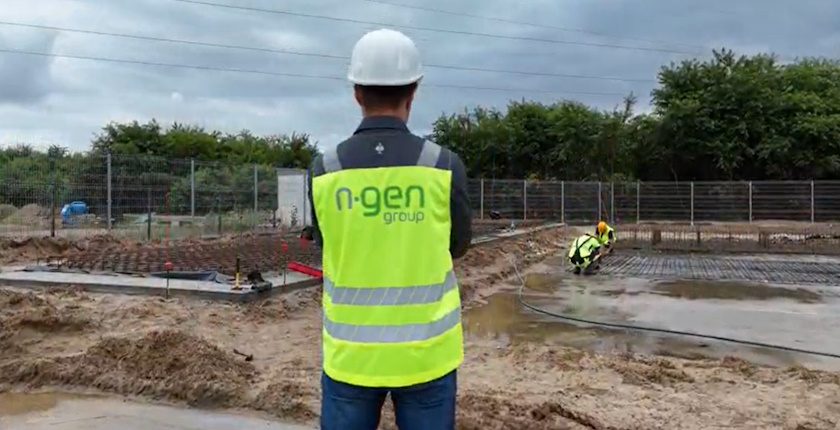
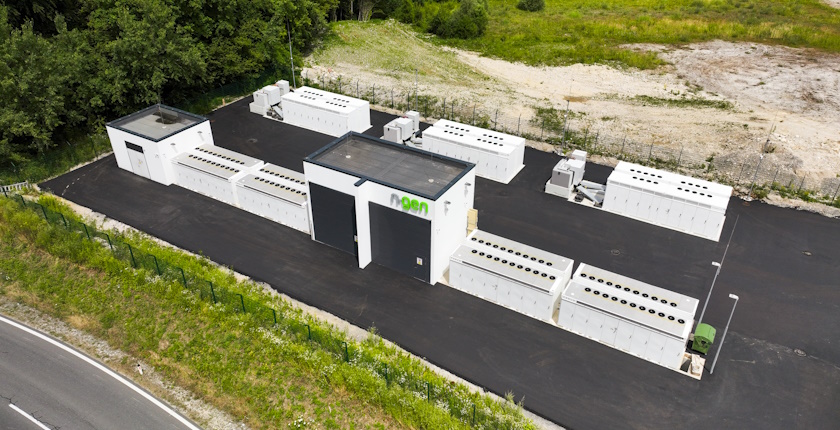
NGEN Group inaugurated its battery storage system in Austria’s Carinthia province after expanding it. At 21.9 MW in operating power and 43.8 MWh in capacity, it is again the country’s largest grid-supporting BESS.

With the official commissioning of the Arnoldstein-Gailitz battery energy storage system (BESS) in the Carinthia province, the NGEN Group has set another milestone in Austria’s energy transition. Following the completion of its second expansion phase in 2025, the facility now boasts 21.9 MW and 43.8 MWh in capacity, making it the country’s largest and most powerful grid-supporting battery storage power plant.

The project marks a significant step toward a sustainable, secure, and climate-neutral energy future and stands as a strong symbol of innovation, energy security, and technological excellence Made in Carinthia, the company stressed. NGEN is headquartered in Žirovnica in Slovenia, just across the border from Arnoldstein.

NGEN’s software contributes to grid stability, renewables deployment

NGEN Group developed the energy storage project and completed the standalone facility in 2023 as Austria’s first large-scale investment of its kind.

The company stressed that the BESS makes a crucial contribution to grid stability and the integration of renewable energy sources through its innovative software solutions. They enable peak shaving – to reduce load peaks and ease grid congestion – and the provision of balancing reserves for grid stability.

The company’s proprietary software enables trading optimization, peak shaving and balancing services

NGEN’s proprietary software also optimizes intraday and day-ahead trading on the power exchange. The Arnoldstein-Gailitz BESS enhances the security of supply by providing flexibility and helps accelerate the integration of renewables.

The company pointed out that the facility has a minimal impact on the landscape. NGEN Group offers rapid project implementation in urban environments and power supply support for charging stations, including lower electricity costs, around-the-clock availability of renewable energy and blackout resilience.

Redispatch capabilities prevent local supply bottlenecks through load flow balancing, the update adds.

Carinthia pioneering resilient, sustainable energy infrastructure

NGEN is already planning a four times larger BESS facility in Upper Austria.

“With the Arnoldstein-Gailitz battery storage power plant, we are sending a clear signal: Carinthia is becoming a pioneer of a modern, resilient, and sustainable energy infrastructure. This facility demonstrates what is possible when technology, political will, and local commitment come together. It bridges the gap between generation and consumption, makes solar energy reliably available, and ensures true energy security,” managing directors of NGEN Austria Matija Dolinar and Andreas Ljuba explained in a joint statement.

The expanded BESS underscores Carinthia’s role as a hub of innovation and demonstrates that grid-stabilizing storage technologies are decisive for the energy transition, not only in Austria but across Europe, the company said.

“Our vision is a fully digitalized and decentralized European electricity system that keeps pace with the rapid growth of renewable energy and sustainably reduces CO2 emissions,” said Chief Executive Officer and Founder of NGEN Group Roman Bernard.

Since 2019, the company has been combining its expertise in engineering, procurement and construction (EPC) services with cutting-edge storage technology and advanced energy market connectivity. NGEN Group currently employs over 200 people across nine countries, including 40 in Austria. It has an annual turnover of EUR 100 million, of which EUR 60 million in Austria.
by in News

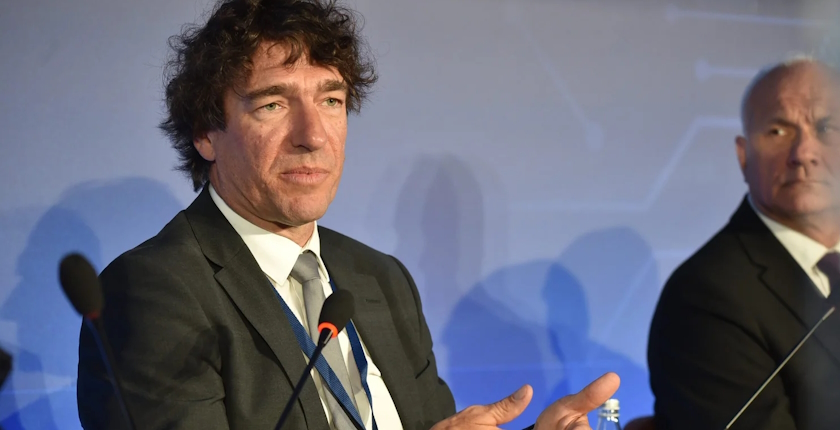
UPDATE: CEO Dejan Paravan leaving Slovenian state-owned GEN energija

CEO of Slovenian state-owned energy utility GEN energija Dejan Paravan has resigned. According to a news report, he is joining NGEN, but the company still didn’t comment on the speculation.

GEN energija, which is developing a project for Slovenia’s second nuclear power plant, is about to appoint a new CEO. After necenzurirano.si reported that Dejan Paravan, the current head of the government-controlled energy company, has quit, the supervisory board officially acknowledged that he submitted his resignation on October 10.

The news website also learned that he would assume a position at privately owned NGEN, which didn’t issue any statements yet on the matter. The same media outlet later wrote that Paravan has agreed to step down at the end of November.

Nada Drobne Popović and Bruno Glaser, the other two members of the board, allegedly offered their resignations and they were rejected.

Paravan has been a close associate of Prime Minister Robert Golob for two decades. The government appointed him as CEO in October 2022.

GEN energija holds the Slovenian half of the Krško nuclear power plant (NEK or, in Slovenian, JEK), and owns hydropower plant operators Savske elektrarne Ljubljana (SEL) and Hidroelektrarne na Spodnji Savi (HESS), and the Brestanica gas-fired power plant.

GEN-I, which was co-founded by Prime Minister Golob, is also part of GEN Group. He was the firm’s CEO until 2021.

As GEN energija’s chief, Paravan is responsible for the NEK 2 (JEK 2) project, for another nuclear power plant. The investment is valued at between EUR 9 billion and EUR 16 billion.

A referendum was scheduled about the proposal, but the National Assembly canceled the vote a year ago.

NGEN builds and operates battery energy storage systems (BESS), and develops software and hardware for running decentralized systems, cybersecurity and access to all segments of the energy market.

Of note, both Dejan Paravan and Co-Founder and CEO of NGEN Group Roman Bernard spoke at this year’s Belgrade Energy Forum (BEF 2025), organized by Balkan Green Energy News.

by in News

Croatian IE-Energy, Slovenia’s NGEN plan virtual network of smart battery storage systems

Croatian firm IE-Energy and Slovenia’s NGEN are developing a battery system for smart energy storage, with a total operating power of 60 MW and a capacity of 120 MWh. The project, valued at 60 million, marks the first step toward creating a virtual network of battery storage systems that would connect producers and consumers of renewable energy.

The project has received a EUR 19.8 million grant from the European Union’s Modernization Fund. The funds are intended for the second and crucial phase of the project, for 50 MW, while the first phase, of 10 MW, is already in an advanced stage of implementation, Croatia’s Ministry of Economy stated following the signing of the subsidy contract.

The project, located in the Croatian city of Šibenik, is expected to be completed as early as next year, according to the statement.

IE-Energy CEO Željko Šmitran told Balkan Green Energy News it would be the first battery energy storage system in Croatia connected to the transmission grid. The project is being implemented in partnership with NGEN, which is also the main engineering, procurement, and construction (EPC) contractor.

The battery modules used are Tesla Megapacks, which enable real-time grid balancing, he added. 

The virtual smart energy storage network will connect renewable power plants, industry, and households

The project represents the first step towards creating a virtual network of smart energy storage facilities that will connect renewable energy producers, industry, and households, Šmitran explained.

The entire project is connected to NGEN’s advanced technology platform, which enables participation in the markets for ancillary services, balancing, and intraday trading, as well as electricity supply, added Šmitran.

Developing a regional smart storage network

The model developed in Croatia in collaboration with NGEN is intended to be replicated in other regional markets where grid flexibility and system stability are in high demand, including Serbia, Bosnia and Herzegovina, and North Macedonia, Šmitran said.

The objective is to build a regional model of smart battery storage facilities and energy communities that will ensure sustainable, reliable, and independent energy supply across Southeast Europe in the long term, he said.

In its statement, the Ministry of Economy also said that the project in Šibenik paves the way for advanced grid services, such as virtual inertia for grid stabilization.

by in News

NGEN Group launches 9.4 MW battery project in Poland; more large-scale investments underway

NGEN Group, a high-tech company with a strong focus on innovation in the energy sector, particularly in the management and construction of battery storage systems, announced that it has launched an energy storage project in Poland. The initiative marks a significant step in the company’s expansion into the Polish market, where it leverages cutting-edge technology to support the country’s transition to a more sustainable and resilient energy infrastructure.

NGEN Group said it plans to undertake several similar projects across Europe in the coming year, including the development of battery systems with a total capacity of up to 1.6 GWh in countries such as Germany, Italy, Portugal, Poland, Croatia, and Austria.

The new battery energy storage system (BESS) will have a power capacity of 9.4 MW and an energy capacity of 18.8 MWh. Powered by Tesla Megapack 2XL technology, the system is designed to provide critical grid balancing services for Poland’s energy system, enhancing network flexibility and stability.

Significant environmental benefits

Beyond these operational benefits, the project is expected to deliver a significant environmental impact, saving approximately 1,800 tons of CO2 emissions annually. This aligns with broader trends in Poland.

“We are thrilled to introduce this advanced energy storage solution in Poland, which is fully aligned with our mission: ‘We are accelerating the green transition with innovative and sustainable energy solutions.’ This drives the next generation of sustainable energy,” said Roman Bernard, co-founder and CEO of NGEN Group. “By integrating Tesla Megapack technology, we are not only strengthening the reliability of the national grid but also contributing to Poland’s ambitious goals for renewable energy integration and carbon emission reduction.”

The project highlights NGEN Group’s expertise in delivering tailored, comprehensive energy solutions for businesses and energy services. As Poland continues to expand its renewable energy portfolio, initiatives like this battery storage system will play a crucial role in managing the intermittency of sources such as wind and solar, ensuring a stable electricity supply, and reducing reliance on fossil fuels.

NGEN is expanding its model across Europe

The company has already successfully collaborated on projects such as the development of a battery system for Uniper in Germany, and it aims to expand this model across Europe.

Based in Slovenia, NGEN Group, meaning Next Generation, specializes in innovative energy solutions, management, and construction of battery storage systems with intelligent balancing group management systems.

The company employs approximately 165 experts, develops proprietary software solutions, and offers customized services to promote sustainable energy practices across Europe. Its vision is a fully digitized and decentralized European energy system that keeps pace with the rapid growth of renewable energy and societal electrification.

NGEN was the technology sponsor this year of Belgrade Energy Forum, an annual conference organized by Balkan Green Energy News.

by in News

NGEN showcases solutions at BEF 2025 for decentralized electricity grid of tomorrow

Slovenia-based NGEN, widely regarded as the most innovative energy company in the SEE region, is expanding throughout Europe with its software platforms and equipment, as well as battery energy storage systems for decentralized grids that enable scaling up the decarbonization of the electricity sector. Co-Founder and CEO Roman Bernard said at the Belgrade Energy Forum 2025 that the company is establishing a digital endpoint for every network element. It enables real-time control over production and consumption, preventing blackouts and providing cybersecurity. At the conference, NGEN presented its services for the construction and operation of BESS and access to all segments of the electricity market.

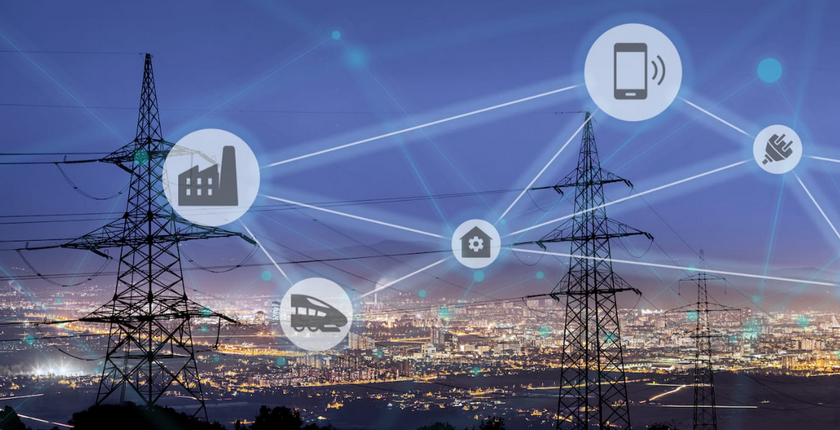
In NGEN’s vision, the electricity system becomes fully digital and decentralized, with every house and business taking an active part in it.

Grid congestion is becoming more frequent, limiting the current rapid deployment of renewables. Most of Europe has centralized networks, where energy flows in one direction, from large power plants to consumers. Grid balancing is still conducted on a 15-minute basis, which is too slow for real-time demand.

NGEN has created platforms for energy that is produced, stored and consumed locally. It is developing a more efficient and reliable environment that can keep up with the scaling up of renewable energy technologies.

Photo: NGEN

NGEN has answers for all challenges of power system

The Slovenia-based company is tackling all current challenges that the power system is facing, Co-founder and Chief Executive Officer Roman Bernard said at Belgrade Energy Forum – BEF 2025. NGEN, the technology sponsor of this year’s conference, operates in nine European countries.

[wpcc-iframe title=”Roman Bernard, Co founder & CEO, Ngen at the Belgrade Energy Forum 2025″ width=”500″ height=”281″ src=”https://www.youtube.com/embed/BchbVdSzoMo?feature=oembed” frameborder=”0″ allow=”accelerometer; autoplay; clipboard-write; encrypted-media; gyroscope; picture-in-picture; web-share” referrerpolicy=”strict-origin-when-cross-origin” allowfullscreen=””]

Pointing to the pace of increase in solar and wind power plant capacity over the past years, Bernard said a centralized system wouldn’t be able to support the overall production and consumption anymore. “We want to make a digital endpoint for every unit that is included in the network. Through it we can communicate and raise or decrease consumption or production,” he explained.

Bernard: Cybersecurity is the most important part of digitalization

It enables control over the system, as otherwise it is in risk of blackouts, while such a transformation also brings significant savings in infrastructure, according to Bernard. He also stressed cybersecurity as the most important part of digitalization.

The CEO of NGEN, which stands for next generation, added that the sector needs to be further regulated across Europe to facilitate the construction of a new kind of infrastructure, as well as to motivate the corporate sector to get involved.

The company’s representatives Marco Scholz and Patrick Simon held a presentation at BEF 2025

Instant frequency response preventing cascading blackouts

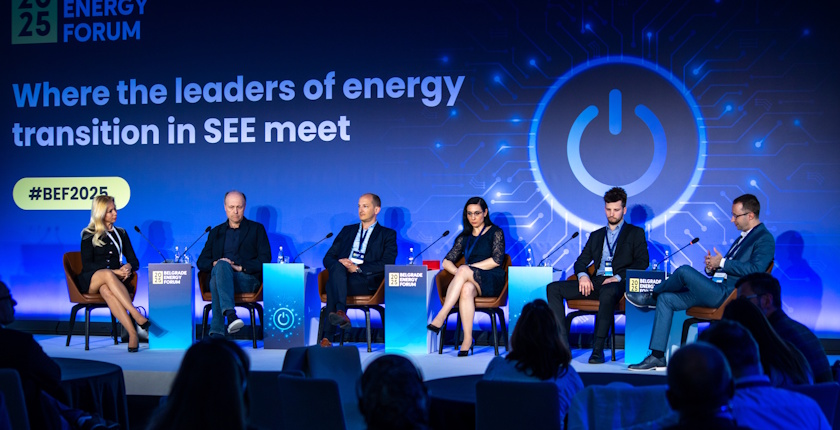
In Bernard’s view, now is the time for battery energy storage systems (BESS), after a massive renewables capacity was added to the system in the last seven or eight years. The CEO was one of the panelists at BEF 2025 in a session on flexibility services called Market Flexibility: The Backbone of a Resilient Energy System.

NGEN developed its own software as well as hardware for running decentralized systems, cybersecurity and access to all segments of the energy market. The software has never gone down so far, its representatives said during their presentation at the conference. The firm is a contractor for engineering, procurement and construction (EPC) of BESS, also providing maintenance and operation.

[wpcc-iframe title=”BEF 2025, Grid Intelligence for energy security how NGEN Synaptic prevents systmatic blackouts” width=”500″ height=”281″ src=”https://www.youtube.com/embed/kcm6UtVTcpA?feature=oembed” frameborder=”0″ allow=”accelerometer; autoplay; clipboard-write; encrypted-media; gyroscope; picture-in-picture; web-share” referrerpolicy=”strict-origin-when-cross-origin” allowfullscreen=””]

Its intelligent software ESGP, Energy Smart Grid Platform, provides instant frequency response preventing cascading blackouts. NGEN’s digital platform, called SG Connect, reacts automatically, providing backup in the event of a failure in under 20 milliseconds, enabling real-time grid balancing. At the same time, it monitors and manages in two-second intervals, through the NGEN Synaptic artificial intelligence (AI controller).

It is a plug-and-play module, installed at energy assets, connecting them to ESGP, the transmission system operator (TSO) and all relevant markets, the company said. On the customer side is the SG Connect application.

NGEN has projects of 2 GWh in Europe under development or in construction. As for notable operational facilities, it installed a BESS in Kidričevo in Slovenia, with 35 MW in operating power and 70 MWh in capacity. The facility is about to get an extension of 70 MW – 140 MWh.

by in News

BEF 2025: Digitalization, open markets, time are major preconditions for flexibility services mainstreaming

Digitalization and massive use of data are crucial for providing flexibility services that bring benefits for transmission system operators and renewable energy producers. Aggregators and software firms have developed the technological solutions. However, the process, together with the introduction of flexibility platforms, requires a long time. The reforms also have to be accompanied by market liberalization and end consumers acting as active buyers, according to the participants of Belgrade Energy Forum 2025.

The panel on flexibility services called Market Flexibility: The Backbone of a Resilient Energy System was one of eight that were held at Belgrade Energy Forum 2025 (BEF 2025).

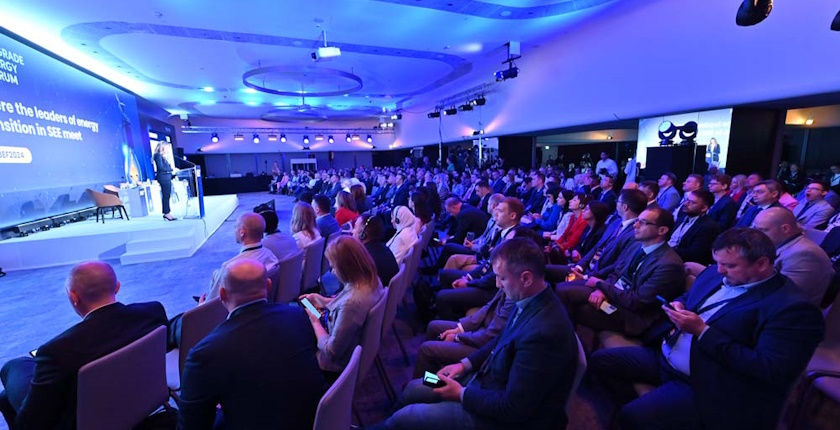
The conference, organized by Balkan Green Energy News, welcomed four hundred participants from more than 30 countries from the region, Europe, and beyond.

“Flexibility has been promoted in Europe as a buzzword, sometimes reflected as demand-side flexibility, but it represents so much more. It includes supply-side flexible assets like hydro, biomass, storage, as well as grid-side flexibility,” according to panel moderator Elena Boškov Kovacs, co-founder and CEO of Blueprint Energy Solutions, and a leading voice on market flexibility in Europe.

Serbia will introduce a flexibility services market

Elena Boškov Kovač and Roman Bernard (photo: Balkan Green Energy News)

Serbia’s transmission system operator (TSO) Elektromreža Srbije (EMS) is preparing to liberalize the ancillary services market. The country adopted the Law on Energy in November and implemented a large proportion of the European Union’s Electricity Integration Package (EIP) while the remaining parts will be transposed through bylaws.

“The balancing capacity market will be liberalized from next year. We will have new participants – active buyers and independent aggregators,” said Marko Zarić, Head of the Market Operations sector of EMS.

He stressed that the TSO is trying to ensure that no market participant is impaired by engaging flexibility resources or demand side response or a balancing service.

“EMS has finished drafting the new market code, which envisages dual balancing responsibility. We will launch a public debate on the act. The TSO estimates that it is the best solution to open the market of flexibility services,” he noted.

Bernard: Technology is on our side

NGEN CEO Roman Bernard expressed the opinion that the region is moving in the right direction, and suggested to regulators to look around and implement best practices. If the participants in the market are motivated, things will go forward, he added.

Back in 2019-2020, when NGEN started its operations in Slovenia, flexibility services were a pioneering job. The Slovenian energy company, the technology sponsor of the BEF 2025 conference, specializes in premium battery energy storage systems (BESS) and smart energy solutions.

According to Bernard, the balancing services market in the EU is well developed thanks to balancing platforms MARI (Manually Activated Reserves Initiative) and PICASSO (Platform for the International Coordination of Automated Frequency Restoration and Stable System Operation).

“We have 150 employees, and we can do everything. Technology is on our side and the sky’s the limit,” he stressed.

For example, NGEN solutions can provide monetization of battery energy storage systems (BESS), and the only thing that is needed is investors in such facilities.

Digitalization is the only way forward

Roman Bernard, Luka Renko and Magdolna Tokai (photo: Balkan Green Energy News)

The representatives of aggregators KOER and Alteo and software company CyberGrid all agreed that digitalization and the use of data are crucial for the energy transition.

Compared to NGEN and its use of BESS, Croatia-based KOER, a pioneer in virtual power plants in the region, is utilizing existing assets, like diesel generators, or employing the flexibility intrinsic to most manufacturing companies; for example, cement factories and wood manufacturers.

Existing assets work well, not just batteries, KOER COO Luka Renko stressed.

The only problem, in his words, is digitalization. The majority of the said firms aren’t ready to connect to the platform to be automatically switched on and off. The markets are getting faster and faster, so digitalization is the only way forward, Renko claimed.

Alteo, a leading Hungarian aggregator, also believes in lots and lots of data, which back up its scheduling and contribute to the security of supply.

Tokai: Alteo is looking for partners in the region

“Our superpower is providing scheduling services with the support of AI, including lots of data,” said Magdolna Tokai, Deputy CEO for International Relations and Corporate Services of Alteo.

Hungary has experienced a photovoltaic boom in the past four or five years, with the installation of almost 8,000 MW. It’s good for greening power production, but not from the perspective of a TSO, and that is where aggregators come into the picture, she added.

Alteo is combining conventional resources like gas-fired power plants with renewables. It currently has 140 MW in renewable resources, it manages 2,000 MW of third-party solar, and operates two virtual power plants. The company is providing the service to small photovoltaic facilities and the TSO.

Alteo is integrating solar energy in a product that is close to baseload, and placing it on the market. It translates to lower balancing costs for solar and a more stable product for the TSO, she explained.

Serbia is facing a challenge from the upcoming 1.2 GW of solar power

Alteo has just started implementing its new strategy for regional growth by exporting know-how on balancing services and providing flexibility to market players.

According to Nikolaj Candellari, Project Manager and Market Intelligence of CyberGrid, real-time data gives a TSO and other market participants the possibility to understand where they are.

He recalled that, over the years, the market went from 15-minute time stamps, down to one minute, and that now it is only two seconds. The improvement helps dealing with challenges, and CyberGrid knows a lot about such issues.

“For Serbia, the challenge comes with 1.2 GW of solar, which will be installed next year. So if you don’t see it as a challenge, ask yourself who needs 1.2 GW of energy at noon on Sunday,” Nikolaj said.

Over its 15 years of existence, CyberGrid developed good examples of how to exchange data with assets and TSOs.

“Assets are always the same, no matter the country, but to have this data exchange with TSOs, or even market platforms, that is something I think we need to do in the future in Southeastern Europe,” he stressed.

How to get to the future: properly liberalize markets

Luka Renko, Magdolna Tokai and Nikolaj Candellari (photo: Balkan Green Energy News)

Elena Boškov Kovač (Blueprint Energy Solutions) asked the panel participants what the solution is for addressing different types of flexibility assets including prosumers.

“How do we avoid getting stuck in the easy-to-commercialize part of the aggregation, and postpone the true demand response, which is needed to avoid the issues with negative pricing and electricity market swings?” she asked.

There is no dilemma for Nikolaj Candellari (CyberGrid): “I think we can connect everything, including households.”

It is something futuristic, he said. “We have to try to go as low as possible and connect everybody because, in the end, it’s not different if you have a 1 MW battery or 100 smaller residential ones” of 1 MW combined, Candellari asserted.

His company is currently implementing a project to integrate 150 batteries of 2 MW overall and put them on the market.

The batteries can drive the prices for end users down by 25% within five years

Candellari and Roman Bernard (NGEN) alike highlighted the factor of market motivation.

Bernard said motivation is created by the market. The imbalance price can go up to EUR 15,000 per MWh, and it is the signal and the motivation to fix everything, in his opinion.

He is convinced that batteries can lower the prices for end users by 25% within five years if dynamic prices are applied.

According to Nikolaj Candellari, participants will come to the market, as long as it’s not too regulated. As an example of a non-functional market, he mentioned Bulgaria, where the capacity price for downward regulation is zero.

“So, why would anybody join the market, if the capacity price is zero? Get the market running and you will get participants and capacity needed to balance it,” he said.

Tokai: We need a proper energy mix

Magdolna Tokai (Alteo) has a slightly different view of the markets. She recalled that episodes of negative prices are happening in Hungary, while that last August and September very high prices were recorded on HUPX, up to EUR 1,000 per MWh, and above EUR 500 per MWh in Croatia and Serbia.

“We have to be prepared for that, which is data, data, data, and the cooperation of all the market players, providing the proper energy mix, and the proper product for the TSO,” she pointed out.

Marko Zarić (EMS) stressed time as a vital ingredient for developing markets. A transition from the regulated market to the truly open market envisages multiple steps that take time, he said.

Flexibility platforms need time for implementation

Nikolaj Candellari and Marko Zarić (photo: Balkan Green Energy News)

Another big change are the balancing platforms developed by aggregators. Traditionally, TSOs were buying the same kind of standardized product, for example, SCADA, EMS, and other market applications, with more or less the same kind of functionalities.

Elena Boškov Kovač (Blueprint Energy Solutions) brought up the question of a more standardized approach. “Before we start talking about interoperability and connecting with everything else, would it be good to at least have platforms with similar kinds of functionalities and services provided?” she asked.

According to Luka Renko (KOER), every platform is structured in line with the needs of the operator. The communication platforms are more or less standardized, but it depends on what one needs in the background and what kind of assets they drive.

Piloting a flexibility platform can take years

The two aggregators, KOER and Alteo, developed their platforms because they couldn’t find a ready-made solution on the market.

A platform must have the ability to communicate with any other solution and to integrate new types of power plants and customers, Magdolna Tokai (Alteo) added.

Elena Boškov Kovač (Blueprint Energy Solutions) recalled that her company has implemented flexibility platforms since 2019, at the dawn of the opening of the flexibility market in Europe, and added that pilot projects for them take a long time.

“They require an immense amount of data. There’s a multitude of different stakeholders that need to support this, unlock the data, provide data resources. Piloting is incredibly important, and it can take years,” she pointed out.

Luka Renko (KOER) added that it took his company three to four years to start working as an aggregator in Croatia.

The future is bright, but we need to work on it

The panelists with Branislava Jovičić, Founder and Editor of Balkan Green Energy News (photo: Balkan Green Energy News)

Summarized, here are the messages of the session’s participants:

Bernard (NGEN): The end consumer will start acting as an active buyer.

Zarić (EMS): We see changes in the future.

Candellari (CyberGrid): Open the markets.

Tokai (Alteo): Give a chance to all market participants and types of production.

Renko (KOER): Digitalization will help.

Elena Boškov Kovač (Blueprint Energy Solutions) praised the companies that had their representatives at the panel for starting to develop solutions ahead of the market reform.

“It’s also a good message to the system of sometimes sleepy energy companies waiting for their proprietary vendors to offer them solutions,” Boškov Kovač stated.

by in News

Belgrade Energy Forum 2025 – 50 speakers at eight panels to track pace of SEE energy transition

The agenda of the third Belgrade Energy Forum, taking place on May 14-15, has been finalized with the addition of further prominent energy experts and companies. The conference, organized by Southeast Europe’s leading energy news portal, Balkan Green Energy News, will feature eight panels covering key topics in the energy sector, with an impressive lineup of speakers. Make sure you register on time via this link.

The Belgrade Energy Forum will once again be a meeting place for representatives of regional and international institutions and organizations, as well as the business community from across the region, Europe, and the world.

Eight panels featuring more than 50 speakers will offer an overview of the current challenges in the energy sector. Conference participants will hear in-depth analyses of the current situation, but also projections for the future. The thread that connects everything at this year’s BEF is digitalization – it permeates energy production, consumption, and storage and allows enough flexibility for the stable functioning of the energy systems of the future, where renewable energy will dominate.

Chikán: Electricity knows no borders

One of the key speakers at the conference, Alteo Group CEO Chikán Attila, will lead the company’s high-level delegation. Alteo has recently launched a regional expansion drive, aiming to establish a green platform of up to 2 GW in energy production, including operation, software, maintenance, storage, and waste management.

The Hungarian company primarily targets its home market, Slovakia, Croatia, and Serbia.

“Electricity knows no borders, therefore partnerships and collaborations among energy market players are essential, even at the regional level. Such cooperation is vital to ensuring the security and reliability of electricity supply, facilitating the integration of renewable energy sources, and providing essential digital solutions, supported by expertise and professional know-how,” Chikán stressed.

Decarbonization strategies for power generation in Southeast Europe 2040/2050

  • Dejan Paravan, CEO, GEN Energija
  • Dušan Živković, CEO, EPS
  • Eric Scotto, CEO, AKUO
  • Milutin Đukanović, Chairman, EPCG Board of Directors
  • Neda Lazendić, Country Manager, WV-International

Although at the heart of national energy systems, state-owned power utilities are faced with an environment that has changed and continues to change rapidly. The key shift is the entry of private capital into electricity production through the construction of solar power plants and wind farms.

The energy transition, at this stage, requires cooperation between state power utilities and private companies. With decarbonization as the main objective, the key challenge lies in choosing appropriate strategies and electricity generation technologies.

Moderating the panel will be Dražen Jakšić, Director of the Energy Institute Hrvoje Požar (EIHP).

“The transition to a low-carbon energy system is a key challenge for our region, demanding innovation, investment, and cooperation. As a sponsor of the Belgrade Energy Forum, EIHP is committed to fostering dialogue and driving sustainable energy solutions. I look forward to an insightful discussion,” he stressed.

Jakšić: The transition to a low-carbon energy system is a key challenge for our region, demanding innovation, investment, and cooperation

In recent years, nuclear energy has emerged as a possible alternative. There is hardly a better interlocutor on this topic in the region than Dejan Paravan, the top man of GEN Energija, the Slovenian company developing the Krško 2 nuclear power plant project.

Dušan Živković, CEO of Elektroprivreda Srbije (EPS), will tell us about the Serbian power utility’s plans when it comes to nuclear energy.

Živković: Without decarbonization, the region’s energy sector has no future

“Without decarbonization, there is no future for the region’s energy sector, and that is the biggest challenge ahead of us. It is essential to accelerate decisions and ensure sustainable project financing mechanisms that will provide energy security for every country and power utility in the decades to come. By investing in existing capacities and new renewable energy projects, EPS, as the biggest utility in the region, will make its own contribution to energy security. That’s why we have initiated a transformation process – because we need to be more profitable, more efficient, and fully prepared to tackle any challenge,” Živković pointed out.

The energy transition, in his words, is the path EPS has chosen, and all its plans will align with that goal, based on the belief that the diversification of energy sources and new technologies are essential for achieving it. “These are just some of the key messages I will share with the participants of this year’s BEF,” said Živković.

Eric Scotto, co-founder and CEO of French company Akuo, will share the latest information on the energy transition from across the globe.

The company’s portfolio consists of 1.9 GW of power plants in operation and under construction, with a further 12 GW in the pipeline in more than 20 countries around the world, including a number of countries in the Southeast Europe region.

Integration of Western Balkans electricity markets into internal European market through market coupling

  • Anže Predovnik, Director, ADEX Group
  • Ivan Asanović, Executive Director, CGES
  • Marko Bislimoski, President, Energy, Water Services and Municipal Waste Management Services Regulatory Commission of the Republic of North Macedonia
  • Zoran Vujasinović, Policy Officer, ACER

The integration of the Western Balkans’ electricity markets with the European Union (EU) markets is a process that deserves much greater public attention than it currently receives. It is safe to say that its true importance will become evident only once it is completed.

Full integration will unlock significant synergies, maximizing the benefits of a unified market by enhancing supply security, accelerating the integration of renewable energy sources, and fostering greater competition and transparency.

Moderator Dejan Stojčevski, CTO of the SEEPEX power exchange, says the panel seeks to encourage dialogue on the importance of cross-border collaboration and market efficiency in bolstering energy security and sustainability in the region.

Bislimoski: The time for inspiring speeches is over. Geopolitical developments demand action – now!

Since market integration is largely the job of regulators, the challenges they face will be analyzed by Marko Bislimoski, president of North Macedonia’s Energy and Water Services Regulatory Commission (RKE).

He says that three things are essential for the regional integration of electricity markets into a single European market: investment, investment, and nothing but investment. In his words, the energy crisis demonstrated that limitations become a reality when governments fail to prioritize the implementation of key energy infrastructure capacities in their budgets.

“This past winter, the region faced the highest electricity prices compared to the rest of Europe. Why? Because the implementation of energy investments is not just a ribbon-cutting ceremony. Today, more than ever before, the countries of the former Yugoslavia must demonstrate maturity. These are the years when energy independence will be built through action. The time for inspiring speeches is over. Geopolitical developments demand action – now!” he stressed.

Energy revolution underway – uniting efforts to deliver green, intelligent and sustainable energy solutions

  • Aleš Prešern, VP, Head of Southeast Europe, Siemens Energy
  • Maja Turković, SVP, CWP Europe
  • Ann-Catherine de Tourtier, Managing Director Mediterranean, Nordex Group

As much as contesting the energy transition may be futile, there are still those who find such a view meaningful, especially in light of certain global political developments. That’s why it is important to give the floor to some of the transition leaders and let them testify that an energy revolution is indeed underway in the region.

The panel’s moderator Mirza Kušljugić – professor, energy expert, and one of the founders of Bosnia and Herzegovina’s Centre for Sustainable Energy Transition Centre (RESET) – goes one step further to show that change is not only happening but also accelerating.

“The key words are a new energy paradigm driven by the four Ds – decarbonization, digitalization, decentralization, and democratization. But now we also have another D: disruption, or radical change in the industry and market caused by technological innovation. Of course, we must focus the discussion – from global processes (China, the US, the EU, the Global South) to where the region stands in all of this,” Kušljugić points out, providing a perfect introduction to the panel.

Turković: It’s more important than ever to have open discussions about real solutions

Aleš Prešern, Vice President and Head of Southeast Europe at Siemens Energy, has worked in the energy sector for more than 20 years. He recalls that digitalization is key, along with grid resilience and electricity transmission.

With nearly 100,000 employees in more than 90 countries, Siemens Energy develops the energy systems of the future, ensuring that the growing energy demand of the global community is met reliably and sustainably. The technologies created in the company’s research departments and factories drive the energy transition and provide the base for one sixth of the world’s electricity generation.

As a leader in renewable energy development, CWP is actively working on several large-scale projects across the SEE region with a total capacity exceeding 7 GW, positioning the company at the forefront of the region’s energy transition. Given its global expertise and insights into the regional energy market, CWP’s contribution to this year’s conference will be invaluable.

Maja Turković, Executive Vice President of CWP Europe, says that BEF 2025 is a key gathering of leading experts driving the energy transition in Southeast Europe.

“As this shift gains momentum, it’s more important than ever to have open, action-driven discussions about real solutions to the challenges and opportunities ahead,” says Turković.

PPAs as a key to renewable energy growth in SEE

  • Nikola Gazdov, Chairman, Association for production, storage and trading of electricity – APSTE
  • Natalija Ljubić, Manager PPA & BESS Transactions, Pexapark
  • Ivana Đurović, Category Manager Renewable Energy, Knauf Group

Power Purchase Agreements (PPAs) are, like flexibility, a tool for fixing the imperfections of renewable energy sources, and they are recognized as a key mechanism within the new electricity market design. They ensure price stability, attract new investment, and accelerate the decarbonization of industry.

Is the region ready for PPAs? What are the dominant models? What is the current market practice? How are PPAs viewed by financial institutions? What do they offer to end consumers and what to investors in new power plants? Answers to these questions will be sought at the panel moderated by Mislav Slade-Šilović, Energy, Utilities & Resources Consulting Leader for Southeast Europe and member of the core PPA team at consultancy PwC.

Experience with PPAs for more than 500 GWh of electricity

Slade-Šilović’s experience in concluding PPAs for the production and consumption of over 500 GWh of electricity per year in the SEE region will certainly be of help.

Nikola Gazdov, Chairman of Bulgaria’s association for electricity production, storage, and trading (APSTE) and member of the Board of Directors of the European solar industry association SolarPower Europe, has no shortage of experience either. As CEO of three companies – Enery Element GmbH, Element Power Group, and Renergy – he is involved in the development of a large number of projects.

Pexapark, a company that provides logistics to businesses in the renewable energy market, is synonymous with PPAs in Europe. Natalija Ljubić is the Manager for PPA and BESS Transactions at Pexapark, which has helped conclude contracts for facilities with a combined capacity exceeding 35 GW.

The views of electricity buyers – without whom there would be no PPAs – will be conveyed by Ivana Đurović, Category Manager for Renewable Energy at Knauf Group.

Market flexibility: the backbone of a resilient energy system

  • Roman Bernard, CEO, NGEN
  • Luka Renko, COO, KOER
  • Alteo Group representative
  • Nikolaj Candellari, Project Manager and Market Intelligence, CyberGrid
  • Marko Zarić, EMS

Moderating the panel will be Elena Boškov Kovač, co-founder and CEO of Blueprint Energy Solutions, and a leading voice on market flexibility in Europe.

She will host representatives of the sector’s leading companies: NGEN, Alteo, KOER, CyberGrid, as well as Serbia’s transmission system operator Elektromreža Srbije (EMS).

“Excited to moderate a high-impact panel on ‘Market Flexibility: The Backbone of a Resilient Energy System’ at the Belgrade Energy Forum 2025,” says Boškov Kovač, whose work has shaped smart grid strategies and digitalization innovation agendas across the EU and under ETIP SNET.

As Europe accelerates its shift to renewables, market flexibility is emerging as the cornerstone of reliable, affordable, and decarbonized energy systems. With the European flexibility market promising to unlock over EUR 20 billion in savings, this session will explore how digital tools, flexible assets, and new market designs are unlocking value and resilience across the grid.

Slovenia’s NGEN is the technology sponsor of BEF 2025

Slovenian energy company NGEN, the technology sponsor of the conference, has managed to establish itself as a significant player in European markets in just five years of operation and is now ready to enter the Western Balkans’ markets.

Specializing in premium battery storage systems and smart energy solutions, the company is developing systems with a total capacity of 1.6 GWh in European countries. Its founder, Roman Bernard, will be speaking at the panel.

Also taking part in the panel will be Luka Renko, COO of KOER, a pioneer in virtual power plants in the region.

Rounding off the lineup of exceptional panelists will be Nikolaj Candellari, who is responsible for project management at CyberGrid. The software company was acquired a few years ago by Austria’s EVN, one of the first to demonstrate that greater integration of renewable energy sources, battery storage, and prosumers is not possible without digitalization and software solutions.

In a nutshell, this innovative company stands for the digitalization of the energy sector, with a focus on virtual power plants.