by in News

First merchant battery projects in Greece to be highly profitable, study shows

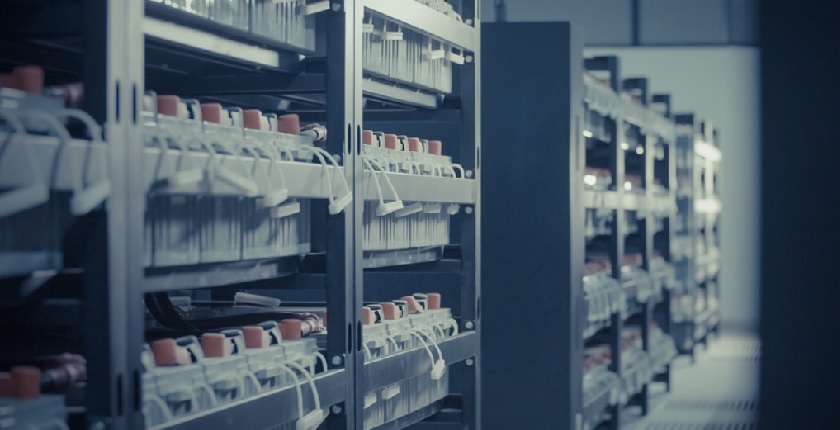
Standalone battery units in Greece are expected to be profitable both in the short and the long term, according to a new study by the Aristotle University of Thessaloniki (AUTh).

The results were based on a simulation carried out for a variety of battery types, with storage durations between two and five hours. A maximum of two charge-discharge cycles per day was taken into account.

The study concerns merchant projects that rely exclusively on the market for their profitability. This means that they can generate revenue in three ways: through the daily arbitrage between the lowest and highest hourly wholesale power prices, from balancing the system and providing reserves.

Storage duration determines revenues

In the case of a battery with a capability of 10 MW and five hours of storage, the results showed a revenue of EUR 2.6 million in 2026. The amount falls after 2030 to EUR 1.6 million, which is still sufficient for investments. It remains near the same level all the way to 2037.

Revenues for a 10 MW facility with a two-hour duration are much lower. They begin at EUR 1.5 million in 2026 and decline to EUR 800,000 after 2030.

Projects will rely mostly on arbitrage after 2028

In comparison, a 10 MW project costs between EUR 2.5 and EUR 5 million to develop, depending on storage duration, according to current battery prices. Therefore, it is evident that investors would return the investment in less than 10 years. Typical systems have an operational life expectancy of 20-25 years.

“Batteries will benefit initially from high revenues through balancing and reserves provision. After the first few years, they will rely mostly on arbitrage,” said Pantelis Biskas, professor at AUTh.

Greece published a plan earlier this year to develop 4.7 GW in commercial battery storage systems. Businesses are currently moving to secure licenses and the first installations are expected to come online by 2028.

It means the projects will probably miss the initial high returns that AUTh expects. However, they will still be profitable, especially the ones with long storage duration.
by in News

Nine times more licenses in Greece than grid capacity

Licensed renewable energy projects in Greece currently stand at about 90 GW. New submissions have been falling sharply.

According to latest data from the Regulatory Authority for Energy, Waste and Water (RAAEY or RAEWW), a total of more than 110 GW has been licensed across all renewable technologies. Photovoltaics have the lion’s share, with 74.4 GW and wind followed with 25.1 GW.

The regulator has already paused or cancelled 41.8 GW of immature or frozen investments, bringing the active total to 76.9 GW. It includes 29.8 GW in wind farms and 44.8 GW in all types of solar.

There also also investments in renewables plus storage, which amount to about 24 GW at various stages. It means that now 92 GW of renewable electricity projects have permits. There is 15 GW in operation, 15 GW with final connection terms, and another 50 GW waiting in line after completing the first regulatory steps. The rest is still at the initial stage.

RAAEY also said available space in the grid is currently 19 GW and that is expected to reach 30 GW by 2030. Therefore, the ratio between potential projects and what the grid can accommodate is about nine to one.

Applications slow down to a trickle

The congestion has been noticed by investors, who have significantly slowed down their applications in recent years. RAAEY’s head of renewable energy and storage Ioannis Charalampidis recalled that in the licensing cycle of December 2020, projects representing 45.5 GW were submitted. This June they were only 1.2 GW.

It is especially evident in photovoltaics, where applications fell from 36.3 GW to some 50 MW. Wind is also affected, with 65% less capacity in submissions than last year

In addition to the large licensing queue, the sector faces delays and red tape. More than three years have passed since the last auction for subsidized renewables projects, from which about 1 GW has not yet been completed.

The sector raises red tape and competition issues

The issue was raised, at RAAEY’s conference last week, by Hellenic Wind Energy Association’s (HWEA or ELETAEN) General Director Panagiotis Papastamatiou. He said the problem lies with small local governing bodies, which either lack the means or the will to do their job properly. He called for centralization, so that one public body can handle the necessary permits.

POSPIEF: “Genocide” for smaller producers

The Hellenic Photovoltaics Union (POSPIEF), which represents small and medium solar investors, spoke of “genocide” in the sector. Chairman Giannis Panagis accused the government of only supporting large producers, leading to distortion of competition and a wave of smaller projects being abandoned or sold. He added that big players enjoy benefits, such as extensions, while small ones are pushed out of the market.

by in News

Smart meters, wildfires, rising demand push Greek distribution grid investment plan to EUR 4.8 billion

In recent years, Greece has been experiencing extreme weather events, such as wildfires and floods, which have threatened its electricity distribution network.

Due to this new reality, caused by climate change, the Hellenic Electricity Distribution Operator (HEDNO or DEDDIE) has increased its five-year development plan for 2026-2030 to EUR 4.79 billion, around 60% up compared to EUR 3 billion allocated for 2024-2028.

The plan for the 2022-2026 period was EUR 2.2 billion.

The goal is for HEDNO to reinforce the grid against these threats and ensure its pylons do not cause wildfires as easily. Moreover, Greece has been lagging behind the European Union when it comes to smart meter penetration, and it must make fast progress in the coming years.

HEDNO has included a total of 204 projects in the new five-year plan

There is also an increased need for new user connections as a result of rising demand and the ever-present need for connecting new renewable energy plants.

To achieve these goals, HEDNO has included a total of 204 projects in the new five-year plan. Smart meters will cost EUR 1.4 billion, compared to EUR 784 million in the previous plan, so as to address the problem of power theft, which has increased in recent years, and to enable dynamic pricing in the retail market.

More specifically, EUR 195 million will be invested in 2026, followed by EUR 260-270 million in the following three years and EUR 357 million in 2030.

New user connections will cost EUR 800 million

The network reinforcement will cost EUR 991 million (EUR 608 million previously), while EUR 650 million will be spent on replacing existing lines (up from EUR 619 million). This includes projects such as underground power lines and underwater connections, as well as a focus on the protection of forests.

New user connections will cost EUR 800 million to cover the projected demand from industry, ports, data centers, and other consumers. HEDNO’s plan also includes EUR 223 million for the grid control and management.

The operator said that contracting and equipment costs have risen in recent years, affecting the size of the new five-year plan.

by in News

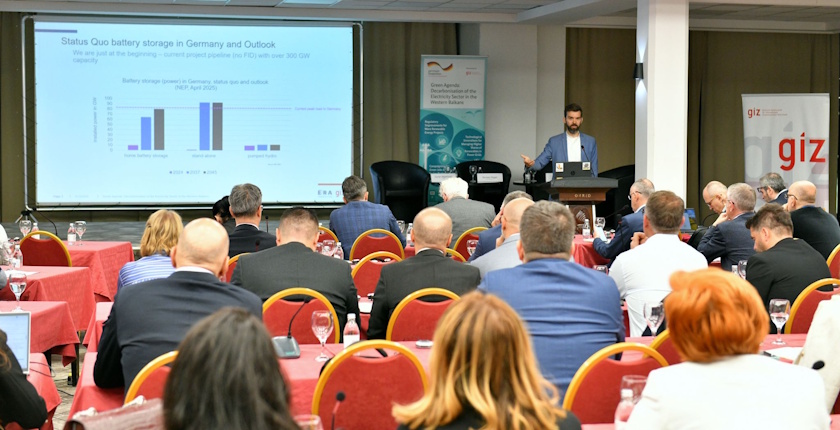
Third Regional Power Sector Exchange in Ohrid: Power grids at core of energy transition

The third Regional Power Sector Exchange of the Western Balkans in Ohrid in North Macedonia gathered over 80 energy professionals from the region to discuss the future of electricity decarbonization and the urgent need to modernize power infrastructure.

Organised under the framework of the Regional Climate Partnership between Germany and the Western Balkans, the conference brought together representatives of transmission and distribution system operators, energy regulators, and energy ministries to accelerate coordinated action toward a greener, more resilient power system.

“No grids, no glory. This slogan captures the challenge in front of us. Without investment in power grids, adaptable regulation, and skilled professionals, the renewable energy transition cannot succeed,” Project Manager at GIZ Nicolas Heger said in his welcoming remarks.

Oberhuber: The Western Balkans have the potential to become a major exporter of clean electricity

Opening addresses were delivered by David Oberhuber, GIZ Country Director in North Macedonia, Anca-Iulia Cimpeanu, European Commission (DG ENER), and Davor Bajs, Energy Community Secretariat.

In his keynote speech, Oberhuber stressed the region’s strategic importance in the Regional Climate Partnership.

The Western Balkans has the potential to become a major exporter of clean electricity to Western Europe and a hub for investment and innovation in renewable energy, he said.

North Macedonia is advancing its energy transition by expanding renewables – solar power capacity reached 506 MW in 2023 – and reducing coal dependency, although thermal power plants still accounted for 47.3% of total electricity production in early 2024.

In 2023, renewables made up 33.15% of electricity generation, with households, transport, and industry as the top energy consumers.

To accelerate the shift, tailored support projects were launched. The Energy, Water Services and Municipal Waste Management Services Regulatory Commission is tackling the surge in renewables applications. Distribution system operator (DSO) EVN is focusing on smart grids and energy quality, and transmission system operator (TSO) MEPSO is exploring options to reduce balancing costs through regional market mechanisms.

Six tailored support projects presented

The event included three sessions on tailored support projects.

Professor Nermin Suljanović presented the project Concept on Data Exchange Between System Operators in Bosnia and Herzegovina.

The data platform enables automatic data exchange among all actors in the electricity market in Bosnia and Herzegovina, ensuring data interoperability and harmonized communication interfaces, according to Suljanović.

He also outlined the project Technical Specification and Requirements for Integration of Renewables into DSO Telecommunication Network.

E-mobility is not only related to energy but also to transportation, telecommunication, data security

A project titled Procedure for Handling RES Connection Requests to the Grid – Queue Management was presented by expert Miltos Aslanoglou, and the Roadmap for Creating a Legal and Regulatory Framework for EV Charging by expert Dejan Stojadinović.

“EU legislation on this matter is a good base for the Western Balkan countries to prepare relevant legal and regulatory frameworks. E-mobility is not only related to energy but also to transportation, telecommunication, data security, and other issues,” Stojadinović said.

Goran Majstrović, Deputy Director and Head of the Energy Transmission and Distribution Department at Energy Institute Hrvoje Požar (EIHP), gave an insight into the project Feasibility Analysis and Funding Assessment for using Dynamic Line Rating (DLR) on the Kosovo* Transmission Grid.

Simplification of Procedures for Prosumer Connection to the Distribution Network in the Federation of BiH was the name of the project introduced by expert Goran Dobrić.

The need for regionally integrated networks has never been greater

Blackouts in both Southern and Southeastern Europe have highlighted vulnerabilities in grid infrastructure amidst growing shares of renewable energy. The need for modern, flexible, and regionally integrated networks has never been greater.

The event was part of a wider regional project implemented by GIZ on behalf of the German government, supporting the integration of renewables and enhancing energy security across the WB6.

In just two years, the project has supported over 30 institutions, trained more than 135 energy professionals, and facilitated the development of the Action Plan for Power Grids in the Western Balkans, in cooperation with the Energy Community Secretariat.

Network redesigns are lagging behind renewables by seven to ten years

Goran Majstrović from Energy Institute Hrvoje Požar presented the Action Plan for Power Grids in the Western Balkans.

“The path to integration of renewables is not just replacing power plants but redesigning the entire system to accommodate them. Network redesigns are lagging behind renewables by seven to ten years,” he asserted.

In the plan, the required grid investments by 2030 in the six countries of the Western Balkans (WB6) are estimated at EUR 10 billion to EUR 14 billion. Investments in primary equipment are seen at EUR 6 billion to EUR 8 billion. As for secondary equipment (digitalization), the forecasted tally is EUR 4 billion to EUR 6 billion.

Phase 2 of the project Green Agenda: Decarbonisation of the Electricity Sector in the Western Balkans is scheduled for completion in 2028. The Regional Power Sector Exchange will remain a key platform for cooperation, helping ensure the energy transition in the region is just and inclusive.

* This designation is without prejudice to positions onstatus and is in line with UNSCR 1244/99 and the ICJ Opinion on the Kosovo declaration of independence.