by in News

Spajić: Japanese company Itochu eyes Montenegro’s waste-to-energy project

Prime Minister of Montenegro Milojko Spajić said an incinerator of up to 50 MW is about to be built, resolving the municipal waste management issue. He added that Itochu from Japan is interested in the investment.

Following a public call for a feasibility study for a waste-to-energy facility in Podgorica, Prime Minister Milojko Spajić said Montenegro would soon build the first incineration plant. It will enable up to 50 MW of renewable energy from waste, sorting out the matter of municipal waste management in accordance with the European Union’s directives and in an environmentally friendly way, in his words.

The public-private partnership will facilitate the construction of an incinerator for the capital city, but it would also be an option for other municipalities, according to Spajić. The prime minister revealed that Japan-based engineering giant Itochu is among the companies interested in the project.

Deponija, the utility in charge of waste management in Podgorica, launched the public call in September. The contract was awarded last month to a consortium of local firms Vatreks Rescue CG and Medix, and Slovenia-based GP sistemi.

A consortium has won the contract for the feasibility study for the incineration facility in Podgorica

They are due to deliver the documentation within two months. The job is worth EUR 435,600 including value-added tax.

There was no indication in the project task about the preferred technology for the incinerator. Such facilities are usually cogeneration plants, combined heat and power (CHP).

In the Western Balkans, there is only one municipal waste incinerator that recovers energy. It is located in Belgrade, the capital of Serbia. Utilizing waste to generate energy is a component of the waste management hierarchy. Incinerators are present all over Europe.

Podgorica’s waste utility Deponija runs the city’s landfill. It already captures biogas, but it flares it without utilizing the energy.

Executive director Aleksandar Božović said the firm would soon obtain the licenses and documentation to build a biogas power plant. The study has been completed, and Deponija is working to secure a grant from an international financial institution, he asserted.

by in News

Spajić: Japanese company Itochu eyes Montenegro’s waste-to-energy project

Prime Minister of Montenegro Milojko Spajić said an incinerator of up to 50 MW is about to be built, resolving the municipal waste management issue. He added that Itochu from Japan is interested in the investment.

Following a public call for a feasibility study for a waste-to-energy facility in Podgorica, Prime Minister Milojko Spajić said Montenegro would soon build the first incineration plant. It will enable up to 50 MW of renewable energy from waste, sorting out the matter of municipal waste management in accordance with the European Union’s directives and in an environmentally friendly way, in his words.

The public-private partnership will facilitate the construction of an incinerator for the capital city, but it would also be an option for other municipalities, according to Spajić. The prime minister revealed that Japan-based engineering giant Itochu is among the companies interested in the project.

Deponija, the utility in charge of waste management in Podgorica, launched the public call in September. The contract was awarded last month to a consortium of local firms Vatreks Rescue CG and Medix, and Slovenia-based GP sistemi.

A consortium has won the contract for the feasibility study for the incineration facility in Podgorica

They are due to deliver the documentation within two months. The job is worth EUR 435,600 including value-added tax.

There was no indication in the project task about the preferred technology for the incinerator. Such facilities are usually cogeneration plants, combined heat and power (CHP).

In the Western Balkans, there is only one municipal waste incinerator that recovers energy. It is located in Belgrade, the capital of Serbia. Utilizing waste to generate energy is a component of the waste management hierarchy. Incinerators are present all over Europe.

Podgorica’s waste utility Deponija runs the city’s landfill. It already captures biogas, but it flares it without utilizing the energy.

Executive director Aleksandar Božović said the firm would soon obtain the licenses and documentation to build a biogas power plant. The study has been completed, and Deponija is working to secure a grant from an international financial institution, he asserted.
by in News

Novi Sad plans to build waste-to-energy cogeneration plant

The City of Novi Sad plans to produce electricity and heat from solid municipal waste and has invited bids for a preliminary feasibility study for a cogeneration plant that would burn processed waste from a planned regional waste management center. Surplus energy could be stored within the future solar thermal system.

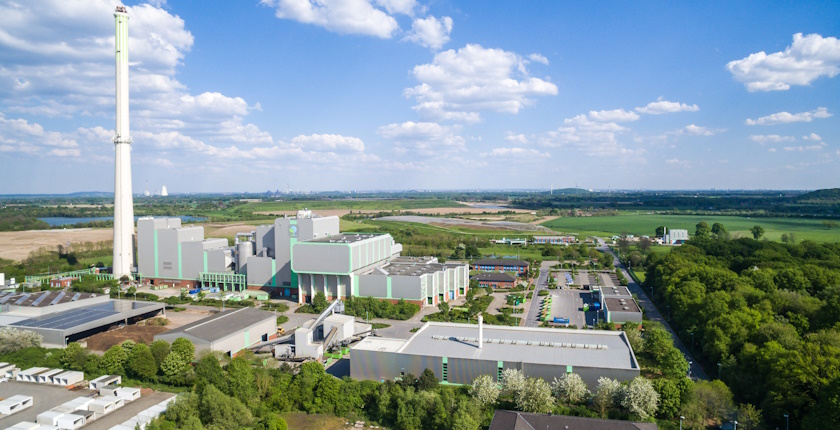
Serbia’s capital, Belgrade, already has a combined heat and power plant (CHP) that uses municipal waste. As such facilities exist all over Europe, Novi Sad’s district heating enterprise Novosadska toplana specified in the public call that the study must include an overview of relevant examples and best practices.

The document is to assess the feasibility of obtaining energy from waste processed into refuse-derived fuel (RDF) and solid recovered fuel (SRF). The fuel would be produced in a mechanical-biological treatment (MBT) plant for biodegradable waste within the future regional waste management center for Novi Sad and the municipalities of Bačka Palanka, Bački Petrovac, Beočin, Žabalj, Srbobran, Temerin, and Vrbas, according to the public call.

The bid submission deadline is December 15, and the study must be completed within 180 days of the contract signing. The job is valued at RSD 22 million.

The purpose of the study is to provide a preliminary assessment of the potential for and benefits of using available solid fuel from waste for high-efficiency cogeneration for the city’s needs, as well as the feasibility of building a CHP plant fueled by RDF and SRF, according to the public call.

The cogeneration plant could burn up to 40,000 tons of solid waste fuel per year

The MBT plant at the regional waste management center is expected to produce between 30,000 and 40,000 tons of solid fuel for cogeneration. The planned location of the plant, along with a fuel storage facility, is adjacent to the existing landfill in Novi Sad, according to the documentation.

The preliminary feasibility study should propose the optimal site for the cogeneration plant, taking into account the infrastructural capacity for connection to Novi Sad’s district heating system and the distance from the fuel storage facility.

The authorities suggest that the site should be in the vicinity of the TE-TO cogeneration plant in Novi Sad, Serbia’s second-largest city, due to its excellent connections to the power grid and the city’s district heating system. In addition, this site will host a planned solar thermal system, whose underground storage facility would be able to store excess energy from the waste-to-energy plant during the summer.

Surplus energy could be stored in the future solar thermal system

The project has secured an EUR 85 million loan from the European Bank for Reconstruction and Development (EBRD) and a grant of EUR 24.7 million from the Western Balkans Investment Fund (WBIF). The system will have a storage capacity of around 870,000 cubic meters, solar collectors with a total capacity of 31 MW, heat pumps with a capacity of 17 MW, and two electric boilers with a combined capacity of 60 MW, according to the EBRD website.

The bank said the launch of the public procurement is expected on November 26.

The proposed location for the cogeneration plant should also take into account Novi Sad’s newly-built heating plant, Majevica, which is expected to become operational by the end of the year.

The study should propose the optimal technology for solid fuel incineration, a preliminary design for the cogeneration plant, as well as systems for flue gas cleaning and ash management, according to the documentation.

Since the City of Novi Sad plans to apply for grants from international institutions and funds for the preparation of technical documentation and further project development, the public call states that the study should be carried out in line with the methodology of international financial institutions such as the World Bank, the German development bank KfW, and the EBRD, including a financial analysis and an assessment of CO₂ emission reductions.

by in News

Race against time to secure EU funding for waste-to-energy plants in Greece

Hostile reactions from citizens and the opposition by municipal authorities threaten to derail Greece’s efforts to build six waste-to-energy plants. Moreover, time is running out to secure EUR 800 million in European funding.

The Ministry of Environment and Energy is expected to publish a call for waste-to-energy projects planned in Attica, Western Macedonia, Rodopi, Peloponnese, Boeotia (Viotia) and Crete. Total investment would amount to EUR 1 billion, for 1.19 million tons in capacity. However, time is running out to secure EUR 800 million in European funding set aside for them and the accompanying recycling plants.

Greece has been warned several times by the European Commission and fined for failing to fulfil its obligations in waste management. The country still relies mostly on landfills to handle municipal waste, instead of modern solutions. Ideally, useful materials should be sorted for recycling before the waste gets burned in incinerators to produce energy.

Two of the proposed units, the ones in Rodopi and Western Macedonia, are expected to provide district heating. The Ptolemaida 5 lignite-fired plant supplies district heating in the coal region of Western Macedonia in the country’s north, but it is scheduled to be decommissioned by 2028 at the latest.

Its owner, Public Power Corporation (PPC or DEI) aims to complete a waste-to-energy plant by then. Other prospective investors include GEK Terna, Metlen, Aktor and Motor Oil Hellas, all big players in the country’s energy market.

High fees and pollution worry municipalities

Many local authorities have expressed their objections to hosting these plants, fearing a rise in municipal fees and pollution. A discussion is underway in numerous municipal councils. They could lodge appeals to the Supreme Court and delay the process.

Amanatidis: Cancel all waste-to-energy plans

The regional council of Western Macedonia recently voted overwhelmingly to reject the plan for PPC’s planned unit from the ministry’s strategic environmental assessment (SEA). Governor Giorgos Amanatidis called on the government to withdraw the study and cancel the project. Municipalities in the same region and other institutions are also against an incinerator.

European funding through the National Strategic Reference Framework (NSRF) ends in 2027. The government and investors have until mid-2026 for implementation, Newmoney reported, adding that waste-to-energy projects take two to three years to complete.

Recently, another initiative, the Apollo program, for investments in renewable energy to lower energy costs for vulnerable consumers, lost EUR 100 million from the EU’s Recovery and Resilience Facility (RRF).

by in News

Montenegro’s capital Podgorica preparing feasibility study for waste incinerator

Municipal waste utility Deponija has made the first step towards building a waste-to-energy facility.

Deponija, the utility in charge of waste management in Montenegro’s capital, launched a public call for the production of a feasibility study for the construction of a municipal waste incinerator within the territory of the city of Podgorica.

The task should be implemented in line with the requirements of sustainable waste management, circular economy, and the European Union’s environmental standards, the call reads.

There is only one waste incinerator in the Western Balkans

Of note, in the Western Balkans region, there is only one waste-to-energy plant, located in Belgrade. Utilizing waste to generate energy is a legitimate component of waste management hierarchy. Incinerators are present all over Europe. Croatia and Slovenia are planning to build such facilities, though some citizens oppose it.

Deponija also listed several motives for preparing the study. They include modernization of the municipal waste management system in Podgorica, reduction of the amount of waste that ends up in the landfill, and the production of renewable energy from waste.

The enterprise also aims to align its operations with the European Union’s waste management directives and gather data for potential partners and investors to assess the project.

The main goal of the study is to establish a sustainable and economically justified system for thermal treatment of municipal waste that will contribute to solving waste management problems in Podgorica, the call reads.

Deponija requested an analysis of different thermal treatment technologies

Deponija said that the study would include technological options or comparative analysis of various waste thermal treatment technologies such as incineration, refuse-derived waste, gasification and pyrolysis.

A key part of the future document is the environmental impact assessment (EIA), which will identify potential impacts on air, water, and land, mitigation measures, and monitoring.

Mayor of Podgorica Saša Mujović supported last year the idea of building a waste-to-energy plant. At that time, he was the minister of energy.

by in News

Greece plans six waste-to-energy plants, set to meet EU landfilling limits

Large Greek companies, interested in the construction and operation of waste incinerators producing electricity and heat, are waiting for the government to complete the legal framework and launch tenders. Without the six planned facilities and accompanying infrastructure, the country would substantially lag behind the European Union’s targets for lowering the share of landfilled material.

Greece is transforming its waste management sector – dozens of units mechanically treating the material to feed six incinerators, covering all the regions. The Ministry of Environment and Energy is about to complete a strategic environmental assessment (SEA), after which its plan is to adopt a legal framework, before the end of the year.

Following a public consultation process, the general parameters would be determined including the details of a tender for the waste-to-energy plants. They are valued at EUR 1 billion in total. State-controlled Public Power Corp. (PPC or, in Greek, DEI) has expressed interest in entering the sector, alongside the conglomerates GEK Terna and Metlen, construction company Aktor, oil refinery operator Motor Oil and water, wastewater and waste processing operator Mesogeos.

The ministry intends to complete the competitive process in 2026, followed by a three-year construction period. The Greek media learned that public-private partnership is a favorable model for the investments.

At least two of six plants would provide district heating

In the central scenario, an incinerator in the Rhodope area would serve the wider region of East Macedonia and Thrace. One would be in Kozani, a coal region, for Central and Western Macedonia, Epirus, Thessaly and Corfu.

The government envisaged a unit in the Peloponnese to cover Western Greece, the Peloponnese peninsula itself and the Ionian Sea, excluding Corfu. One waste-to-energy plant is planned in Boeotia (Viotia), covering parts of Central Greece and the western part of Attica.

The waste incinerator in Kozani is likely to be built in the vicinity of Ptolemaida 5, Greece’s last coal power plant

In the same peninsula, where Athens is situated, a unit would also get shipments of waste from the north Aegean islands, one section of the Cyclades archipelago and the Dodecanese. An incineration plant in Heraklion (Iraklio) would be for Crete, Santorini, Karpathos and Rhodes.

The combined annual capacity of the six units is projected at 1.19 million tons. The largest ones are the Attica project (356,000 tons) and the Kozani plant (288,000 tons). The latter, which would probably be located near PPC’s Ptolemaida 5 coal power plant, is also seen providing up to 40% of the district heating needs in the area. The investment is valued at EUR 300 million.

Ptolemaida 5 is scheduled to be closed at the end of next year, marking the completion of Greece’s coal phaseout. The waste incinerator in Boeotia would provide district heating as well, the plan reads.

System for energy recovery clings on construction of mechanical treatment units, waste separation

On the logistics side, there are 13 waste treatment units in operation in Greece and 25 are under construction. The ministry expects all units to be complete by 2029, to feed the incinerators.

The capacity amounts to 1.45 million tons per year altogether, of which 651,000 tons of waste would be processed into solid recovered fuel (SRF), which is of higher quality. The energy-intensive industry would absorb 150,000 tons. The development of the treatment system requires substantial infrastructure including the selection of municipal waste selection at the source.

Up to 651,000 tons of SRF is expected to be produced per year in the waste treatment facilities

The estimated electricity production from 1.19 million tons of waste is 1.03 TWh, equivalent to 2% of the country’s total consumption. Notably, 57.5% of the projected output is considered renewable energy, in line with the portion of biodegradable waste.

In the study, the options to deploy pyrolysis or gasification technologies were rejected. The authors argued they are not viable in Europe. It left incineration as the only option to recover energy from waste.

If the incinerators aren’t built, but the energy-intensive industry receives the same amount of SRF, 22.7% of waste would be landfilled in 2030, projections showed. The European Union’s target is 10%. The share of landfilled waste rises to 29.2% in the same scenario.

by in News

Case of Struga illegal landfill in North Macedonia goes to Strasbourg court

The Macedonian Young Lawyers Association (MYLA or MZMP) from Skopje said the only hope for justice regarding the issue of the illegal landfill near Struga is now outside North Macedonia. Namely, judicial authorities have declared themselves incompetent for the nongovernmental organization’s 2021 lawsuit against local and state institutions. The landfill is jeopardizing a basic human right – to a healthy environment, the young lawyers pointed out.

North Macedonian environmental and civic activists have been trying to prove in court for years that the illegal landfill at the entrance of the town of Struga is poisoning people. It is the second-largest tourist center in the country, located on the shores of Lake Ohrid. Their struggle, which began in January 2021, has not yielded results.

The Macedonian Young Lawyers Association is suing the Municipality of Struga, the Public Utility Company of Struga, and the Ministry of Environment and Spatial Planning, claiming they have done nothing to solve the serious issue. They demanded that the court bans further waste dumping and that the area be cleaned and revitalized. But instead, thousands of tons of various waste are piling up at the landfill every year, polluting the environment, air, and agricultural land, thus negatively affecting the health of citizens.

Both the Basic Court in Struga and the Appellate Court in nearby Bitola declared that the courts in the country do not have the authority to rule on the issue. It is the first such lawsuit in the country.

Courts protect government even amid human rights violations

Now the landfill issue is moving to the Court of Human Rights in Strasbourg, after a failed attempt to prove that the landfill threatens a fundamental human right, to a healthy environment, but also the right to life, as the institutions did not take measures to prevent or reduce harmful consequences.

„I have an impression that Macedonian courts have a hard time getting out of this matrix, constantly protecting state and public authorities, even when we have a situation of violation of fundamental human rights and the constitutionally guaranteed right to a healthy environment,” Gligorie Kjatoski, from the civil initiative Enough is Enough, told Balkan Green Energy News. He is involved in the dispute as a lawyer.

The two courts in North Macedonia referred to the fact that there is not a single judgment yet against the government that they could apply

„If Strasbourg establishes a violation of one of the fundamental human rights, then that will be the basis for our request to repeat the procedure before the Macedonian courts,” Kjatoski said.

According to him, there are already examples when the European Court of Human Rights acknowledged its jurisdiction for similar cases.

„The practice in Strasbourg is very clear. That no one is responsible for an illegal landfill and enormous environmental pollution is not an option. During the procedure, we submitted several judgments to the European Court of Human Rights, where a violation was established in similar situations. The Appellate Court in Bitola and the court in Struga did not take into account the practice of the European Court, claiming there were no judgments against the Republic of Macedonia that could be directly applied. But I do not know how much that argument holds up,” Kjatoski added.

One 2022 judgment of Higher Court in Serbia is example of protection from illegal landfills

In neighboring Serbia, there are cases where the courts have ruled in favor of the citizens.

„The practice of the European Court of Human Rights is that resolving issues such as this one with the Struga landfill falls within the jurisdiction of regular courts. Unlike the domestic courts, which claim that civil courts do not have the jurisdiction to play a proactive role in protecting human rights in the context of protecting the environment from illegal landfills, courts in the region do rule in favor of citizens, Kjatoski stated. He pointed to a decision by the Higher Court in Belgrade in neighboring Serbia, from September 22, 2022.

Mayor of Struga Ramiz Merko from the Democratic Union for Integration, one of the parties representing the Albanian community in the country, has promised that the problem would be solved and the landfill moved to another location. The United States Department of State blacklisted him almost two years ago.

There are 54 illegal landfills in the Republic of North Macedonia

The Struga site is than 2,000 meters from Lake Ohrid, in a fertile agricultural plain. It covers an area the size of four football fields. According to estimates, more than 40,000 tons of waste are disposed of there annually.

The landfill was established in 2006, as a temporary solution. It is more than 18 meters high and about 10 meters deep.

It is located five hundred meters from the first houses in the city of Struga and the same distance from the Black Drim river. The United Nations Educational, Scientific and Cultural Organization (UNESCO) declared the area a world natural and cultural heritage.

According to data from the Ministry of Environment and Spatial Planning, there are 54 non-standard, illegal landfills in North Macedonia. The only one that meets such conditions is the Drisla near the capital Skopje.

The only solution to the problem is seen in the closure of local and construction of regional landfills, which public officials have been promising for years. But they cannot be built due to resistance from people residing around the proposed locations.

For the waste from Struga and several other settlements in the southwest and the Pelagonia area, there are plans to build a regional landfill in the small municipality of Novaci near Bitola.