by in News

Greece’s first municipal energy community to be launched in its coal capital Kozani

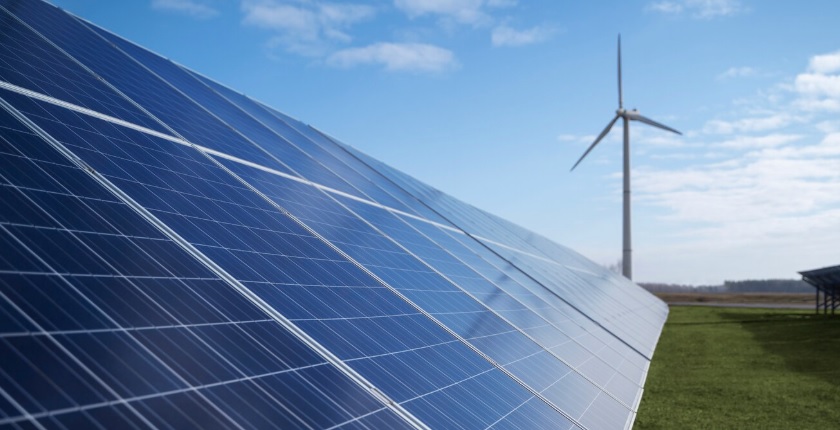
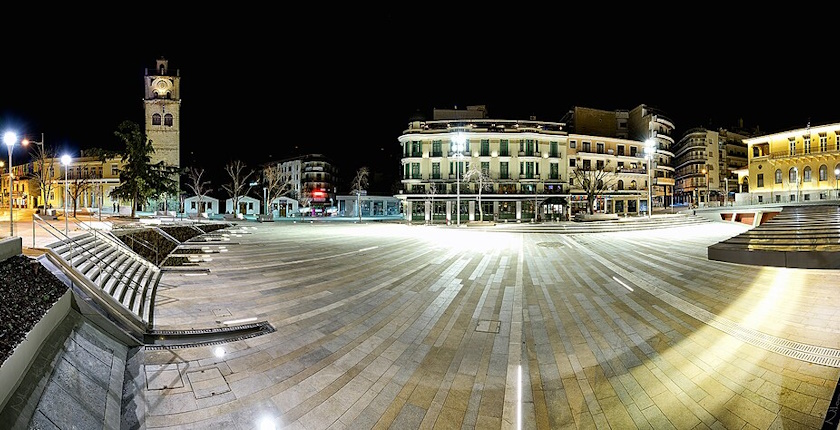
The city of Kozani in northern Greece, home of the country’s dwindling lignite industry, is seeking a contractor for seven photovoltaic systems of 7 MW overall. The municipality said the power plants would supply its buildings, public lighting, pumps and drilling rigs as part of the country’s first energy community led by a local authority. Under a virtual net metering scheme, the facilities are also intended for combating energy poverty.

Energy communities are present all over Greece, but private capital is dominant – instead of individuals, local institutions and small firms. The concept can be especially beneficial for local authorities in coal regions, which are undergoing rapid decarbonization and turning toward cutting-edge technologies.

Job losses and a lack of skills jeopardize communities in such areas. The Municipality of Kozani, the capital of Greece’s coal land, the region of Western Macedonia, is one of them. It was among the first in the country that launched initiatives for energy communities led by local authorities.

Deadline for applications is January 12

Kozani has opened a tender for the selection of a contractor that would build seven photovoltaic plants. The municipal solar power units would operate under a virtual net metering scheme.

It would enable supplying municipal buildings, street lighting, schools, sports facilities, pumps and drilling rigs, but also the means to fight against energy poverty. The municipality received funding via the European Union for the project, under a just development and transition program.

The city claimed that it would be the country’s first energy community of its kind. Prospective candidates can apply by January 12, and the selection is scheduled for January 16. The budget amounts to EUR 6.25 million including value-added tax, and the local authority participates with 20%.

Kozani already invested EUR 650,000 in its energy community

The project is placing the Municipality of Kozani in the lead in energy self-sufficiency and autonomy in the country, Mayor Yiannis Kokkaliaris said.

He revealed that the local authority managed to secure grid connection terms in time not to lose the EUR 650,000 that it spent so far for the purpose.

The Kozani area is already hosting some of Greece’s largest photovoltaic plants and projects. It is envisaged for one of six waste incinerators in the country. Government-controlled Public Power Corp. (PPC Group) plans to build pumped storage hydropower plants on its depleted open pit coal mines in the region.

Of note, Greece recently lost EUR 100 million from the European Union’s Recovery and Resilience Facility (RRF) for the Apollo program. It was aimed for self-consumption for vulnerable households through forming an energy community.
by in News

Romanian city of Timișoara nearing construction of its own solar park

Romania is experiencing strong growth in photovoltaic capacity, with 1.7 GW installed in 2024 alone. Local authorities are actively contributing to the energy transition. They include Timișoara, which will soon get its own solar power plant, of 5.6 MW.

According to data from the Romanian Photovoltaic Industry Association (RPIA), solar power plants with a total capacity of 1.7 GW were installed in Romania last year. The expansion is driven by accessible financing, legal reforms, simplified permitting procedures, and auctions for contracts for difference (CfD).

Local authorities, including counties, are one of the pillars of the country’s energy transition. For example, in the small town of Turceni in southwestern Romania, home to only about 7,000 residents, a EUR 380 million project was recently launched. The municipal authority signed an agreement with the European Investment Bank (EIB) for the construction of agrosolar parks, energy storage systems, and facilities for green hydrogen production and storage.

Timișoara is part of a growing group of local authorities developing solar power projects for their own needs

In northern Romania, the municipality of Târgu Lăpuș has established a public-private partnership with a company founded by Turkish and Romanian investors. The goal is to build a 200 MW solar power plant with an energy storage system. The investment is estimated at EUR 100 million.

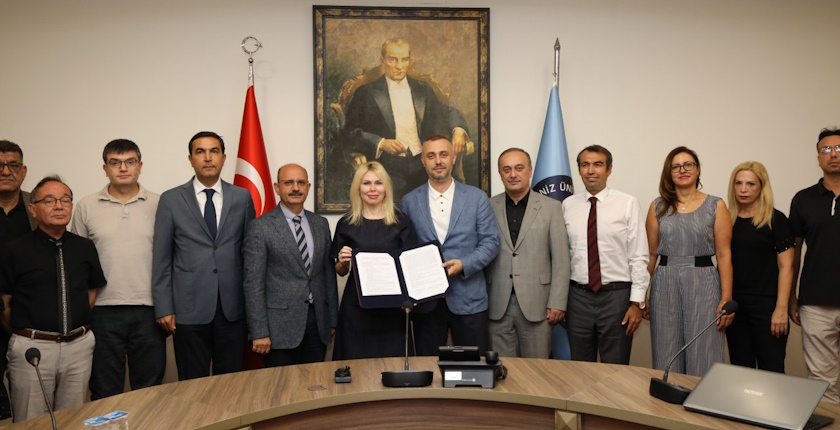
Timișoara, the capital of Timiș county and the largest city in western Romania, has long been a part of the growing group of municipalities developing solar power projects for their own needs. Mayor Dominic Fritz and Minister of Environment Diana Buzoianu have signed a grant agreement for the construction of the city’s first solar park, of 5.6 MW, marking the start of the investment’s next phase.

The municipality will now launch the tender procedure for design and construction services. The solar power plant is expected to generate an average of 7.8 GWh of green energy annually.

Solar park to deliver direct benefits for the city

The total investment value is RON 32.2 million lei (EUR 6.3 million) including value-added tax. The project is conducted under the European Union’s Modernisation Fund, managed by the Ministry of Energy. The fund supports investments in renewable energy, energy efficiency, storage, grids, and just transition in 13 European Union member states with lower incomes. It uses the proceeds from the sale of greenhouse gas emission allowances under the EU Emissions Trading System (EU ETS).

“The solar park will bring direct benefits to the city – lower costs, reduced emissions, and more sustainable infrastructure. It is just one of the projects through which we are transforming Timișoara into a green and smart city, capable of producing a significant share of the energy it consumes from renewable sources,” said Fritz.

The solar power plant will cover two thirds of public lighting needs

PV panels will be installed near the wastewater treatment plant in the Freidorf district, on 20 hectares. The generated electricity will cover around two thirds of the city’s public lighting consumption. The facility would contribute to lowering greenhouse gas emissions with 4,800 tonnes of CO₂ equivalent annually.

The solar power plant is part of the local administration’s broader plan to switch to renewable energy sources and reduce pollution. Timișoara has also expressed interest in a state aid mechanism for the production and transport of geothermal energy for district heating and cooling systems, worth EUR 300 million, covered from the Modernisation Fund. Last year, the city signed a strategic partnership with OMV Petrom to utilize geothermal energy for district heating.

by in News

Romania’s coal town Turceni starts EUR 380 million green energy transformation

Turceni is dependent on the local coal power plant, so the municipal authority is turning to agrivoltaics, energy storage and green hydrogen to replace it. The small town in southwestern Romania is kickstarting a EUR 380 million project.

The coal plant in Turceni used to be one of the biggest in Europe, at 2.3 GW. Located next to the eponymous town in Romania’s Gorj coal region, only two units of 660 MW in total are still operational. At the same time, dozens of such facilities across Europe are shutting down ahead of schedule. The power plant and its associated mines within Complexul Energetic Turceni have been essential for the local economy, which is under threat of devastation amid the country’s coal phaseout.

As with other coal regions in the European Union, the solution is in green energy and new technologies. The town hall has signed a contract with the European Investment Bank for agrisolar parks, energy storage units and the production and storage of green hydrogen.

Turceni town hall secures municipal land for green energy projects

The project is worth a whopping EUR 380 million, Mayor Constantin Popescu revealed. Turceni and its administrative area have fewer than seven thousand inhabitants.

More than 123 hectares of municipal land (pastures) and more than 200 hectares of private land were designated for the renewable energy hub, the mayor stressed.

Bankwatch: The coal region is transitioning to a future based on innovation, sustainability and strong partnerships

Partners in the project are Bankwatch Romania and GAL Sudul Gorjului, the so-called local action group for southern Gorj. Bankwatch said over 370 hectares would be switched to clean and sustainable energy production.

“We are glad that we had an important role in developing the project plan and aligning it with European environmental policies, as well as in applying for technical assistance. For a region that has been, for decades, a pillar of coal-fired energy, this project marks a strategic transformation: a transition to a future based on innovation, sustainability and strong partnerships,” the organization added.

Investments to start in 2026

Implementation is scheduled to begin next year. The project will contribute to a just transition of the region by increasing the production of electricity from renewable energy sources, Popescu asserted. In his words, it will be complementary to the local authority’s other ongoing and future decarbonization investments.

The mayor also highlighted the plans to use geothermal energy for district heating and agriculture.

Complexul Energetic Turceni is part of state-owned Complexul Energetic Oltenia (CE Oltenia). According to the company’s restructuring and decarbonization plan, the coal business will be separated from green energy and other investments.

They include projects for CCGT (combined-cycle gas turbine) power plants of 475 MW in Turceni and 800 MW in nearby Ișalnița, as the main replacement for coal plants. Both are suffering heavy delays.

Minister of Energy Bogdan Ivan said last week that CE Oltenia’s Ișalnița coal plant in neighboring Dolj county would be closed on January 1. Romania has asked the European Commission to delay the closure of several coal plant units, scheduled for this year, until 2030.

Earlier this year, a joint venture between CE Oltenia and OMV Petrom hired contractors for four solar power plants at former coal land, with a combined capacity of about 550 MW. One of the sites is in Ișalnița.

by in News

Rooftop solar on public buildings gains momentum in Slovenia

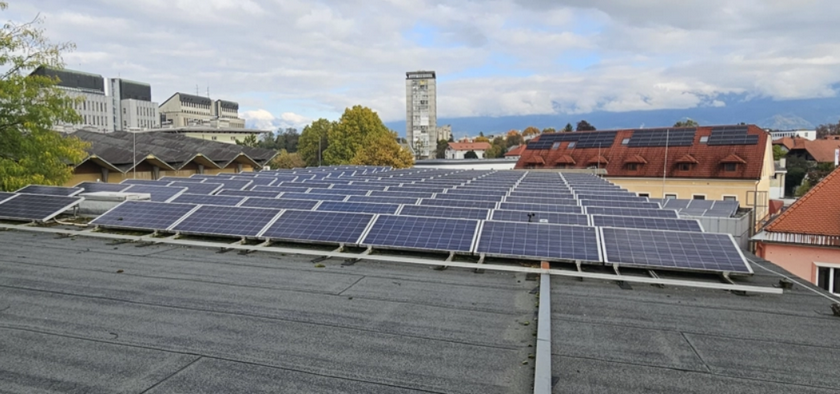
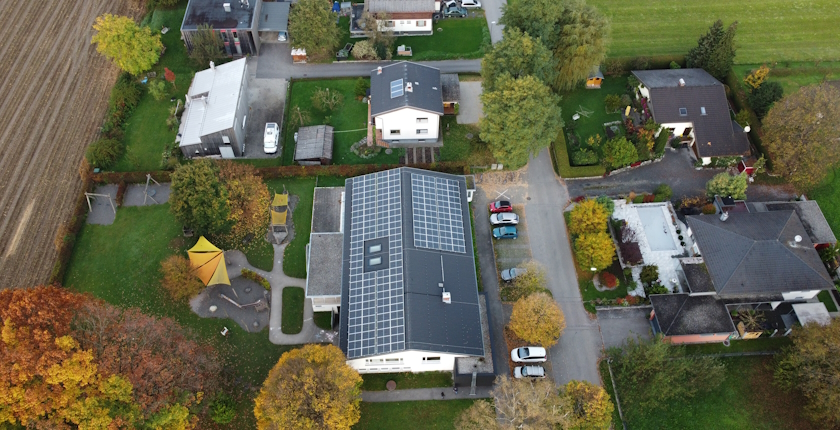
The trend of installing rooftop solar on public buildings to create energy communities is gaining momentum in Slovenia, with two more cities, Velenje and Kranj, joining the initiative. Similar projects were recently announced in Celje, Šoštanj, and Novo Mesto.

Velenje plans to install solar power plants on 13 public buildings in cooperation with ECE, a subsidiary of state power utility Holding Slovenske Elektrarne (HSE). The total capacity of the proposed installations is about 1.97 MW, with an estimated annual electricity output of more than 2.1 GWh.

The project, valued at EUR 1.97 million, is expected to save the municipality over EUR 157,000 in electricity costs annually. Financing is provided through the European Union’s Recovery and Resilience Facility (RRF) and the National Recovery and Resilience Plan. The municipality itself is contributing EUR 530,755.

This model involves the internal exchange of produced electricity, enabling municipalities to optimize consumption and reduce dependence on the market. Photovoltaic plants are installed on the roofs of structures such as sports facilities, administrative buildings, health centers, bus stations, schools, and kindergartens.

Energy communities help municipalities increase energy independence

In Kranj, 16 rooftop solar power plants, with a total capacity of 2 MW, will be installed on public buildings, in a EUR 1.5 million public-private partnership project carried out in cooperation with GEN-I. The municipality has obtained a state subsidy of EUR 700,000, while the remaining amount will be provided by the private partner.

The new solar power plants should be installed by next summer. They are expected to provide electricity for a total of 22 public buildings, cutting their electricity bills in half, according to a statement from the local authority. Kranj already has two rooftop solar plants on public buildings, installed in 2012 and 2013 respectively, it recalled.

In September, contracts were signed in Celje, Šoštanj, and Novo Mesto to install rooftop solar power plants on public facilities.

The project in Celje involves 11 installations with a total capacity of 1.4 MW, which is expected to bring about EUR 200,000 in annual savings. The contract in Šoštanj is for power plants at four public facilities, totaling 500 kW, with expected annual savings of EUR 70,000. In Novo Mesto, a private partner plans to build and operate ten new solar power plants on municipal land and structures.

by in News

City of Pirot in Serbia plans solar power plant on remediated unsanitary landfill

The City of Pirot plans to build a solar power plant on the site of a former unsanitary landfill when it is remediated. The move would strengthen its leadership position in Serbia regarding the use of renewable energy and environmental protection.

In 2013, Pirot opened a regional sanitary landfill, which cost EUR 11 million. It enabled the local authority to shut down an unsanitary landfill on the right bank of the Nišava river. However, the land still hasn’t been remediated and reclaimed.

Now the Ministry of Environmental Protection of Serbia has approved EUR 2 million for the works, Serbia’s public broadcaster RTS reported. With the completion of remediation, the possibility opens up for the six hectares of land in the country’s southeast to be repurposed.

Solar panels would be installed on three hectares

Mayor of Pirot Vladan Vasić said that the documentation for the remediation of the landfill is complete. The city intends to add EUR 500,000 to the EUR 2 million received from the government and complete the first phase. He plans for the second phase to be approved next year, to solve the decades-long issue in an environmentally acceptable way.

Vasić revealed one and a half to two hectares would be allocated for businesses, adding that the purpose of the remaining land is still under consideration.

A photovoltaic plant would be the most cost-effective solution

One idea is to install a 3 MW solar power plant that would supply electricity to the city authority, he pointed out.

Other ideas are a football stadium, a golf course, afforestation, and a park. The photovoltaic plant would be the most cost-effective solution, Vasić added.

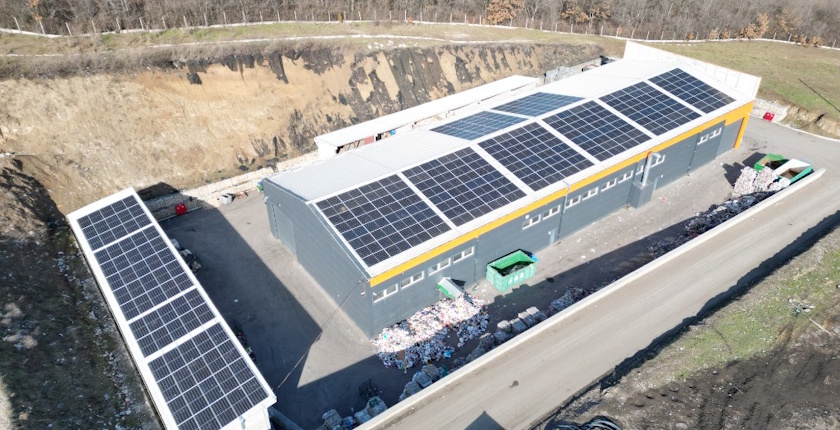
Of note, there is a solar power plant on the roof of the building of public waste utility Regional Landfill Pirot. The 150 kW facility began operating in August last year. The city officials claim it is the largest PV plant in Pirot county.

The first cooperative solar power plants in Serbia are located on the Stara Planina mountain

Pirot is also developing a regional waste management center. In 2022, the city signed a contract for the construction of the second landfill body, a composting plant, and a biogas facility.

The additional segment would extend the operation of the sanitary landfill by 20 years, while the biogas collection system would enable the collection of methane from the landfill.

A system for treating construction waste to enable material recycling is planned as well.

As for solar energy, not far from the city, the Stara Planina mountain is the home of the first cooperative solar power plants in Serbia. The local authority participated in the project. They were put into operation last year.

In mid-2023, PV projects were under development for over 125 MW in total capacity on the city’s territory. Of note, this year Pirot became the 13th local authority to join the Clean Air Regions Initiative, initiated by the Energy Community Secretariat.

by in News

Romanian town signs partnership for 200 MW solar park with BESS

A firm recently established by Turkish and Romanian investors has launched a public-private partnership with the local authority in Târgu Lăpuș in northern Transylvania. They are planning a hybrid power plant worth EUR 100 million.

A public-private partnership in the making in northern Romania is aimed at building a 200 MW photovoltaic plant, the largest in Transylvania, with a battery energy storage system, 2Mnews reported. Global Energy Asset, a firm founded by Turkish and Romanian investors less than half a year ago, has signed a deal with the municipal authority in Târgu Lăpuș.

The investors value the project at EUR 100 million. They intend to install the facility on 200 hectares on the territory of the town, also known as Magyarlápos. Târgu Lăpuș is in Maramureș County.

The seat of Global Energy Asset, formerly known as Global Finance Asset, is Tunari in Ilfov county near Bucharest. In addition to financial benefits and covering the costs of electricity for street lighting, its representatives offered the local authority scholarships for children and sponsorship of events and institutions, the article reveals.

The project firm’s largest shareholder reportedly has ties with Feridun Geçgel of Astor Enerji

Muhammed Ishak Çiftçi, who has Romanian citizenship, controls 48% of the project firm. According to the news outlet, he is associated with Turkish billionaire Feridun Geçgel, Chairman of the Board of Astor Enerji.

It is the largest manufacturer of transformers in Turkey. Astor Enerji entered the Romanian photovoltaic market this year by acquiring four projects for 279 MW in total.

In August, Swiss energy storage provider Energy Vault agreed to supply up to 2 GWh of battery capacity for the Turkish company’s future solar power plants in Romania. Astor Enerji is listed on the Istanbul Stock Exchange (Borsa Istanbul).

Head of Global Energy Asset, lawyer Cătălin Iulian Marin, holds 25%, and there are four more co-owners.

Approving the proposal for the public-private partnership, Târgu Lăpuș town hall cited the need for business ventures amid economic difficulties. Namely, furniture manufacturer Taparo, which supplied IKEA and was the biggest business in the area, has become insolvent.

by in News

Bulgarian capital Sofia to create its first energy community in Vitosha district

Citizens and businesses in Sofia will be able to invest in a photovoltaic system on a school rooftop as part of the first energy community. It would be a partnership between the city’s Vitosha District, individuals and legal entities.

Following a few early initiatives in Bulgaria, the capital city decided to establish its first energy community. The Sofia Municipal Council voted to call on individuals and firms to invest in the installation of a rooftop solar power plant of 74.8 kW in peak capacity.

The system, expected to become operational within a few months, would be on the Acad. Emilian Stanev secondary school in the district of Vitosha. The plan is to use the electricity for the building’s needs and for other municipal facilities.

Participants can invest EUR 260 to EUR 2,600 each

The project is worth BGN 90,000 (EUR 46,000), including value-added tax, according to the local authority. The Vitosha District has earmarked just over EUR 1,000 for the endeavor. Citizens and businesses in Sofia would be invited to invest between EUR 260 and EUR 2,600 per participant in the energy cooperative.

Dzhambazov: I believe that local government should be the driver for decentralized energy

“I believe that local government should be the driver for decentralized energy,” Deputy District Mayor Krasimir Dzhambazov said. There are 24 districts under the Sofia Municipality, also known as Stolichna (capital) Municipality. It provided the school roof free of charge.

After ten years, the city administration becomes the owner of the PV system. It unveiled the project almost a year ago. Bulgarian-Austrian Consulting Co. (BACC) and the Sofia Energy Agency (SOFENA) are consultants in the endeavor.

Vitosha energy community may integrate planned PV self-consumption systems for kindergartens

As 11 more units are about to be installed in Vitosha for self-consumption for kindergartens, including them in the energy community is under consideration, the update reveals.

Earlier this year, the Ministry of Energy, Electricity System Operator (ESO) and the Bulgarian Development Bank (BDB) agreed to introduce a solar power program for municipalities, schools, kindergartens, hospitals and small businesses, without any upfront costs. Minister of Energy Zhecho Stankov said the aim was to create the largest energy community in Europe.

Gabrovo and Burgas have launched the most notable municipal energy community initiatives in Bulgaria. The concept is gaining popularity across the European Union and beyond as an essential segment of the energy transition. In addition, households, small firms and local authorities, utilities and institutions can benefit from energy sharing or becoming prosumers.

Moreover, municipal and regional administrations have the opportunity to strengthen their energy self-sufficiency and achieve savings without burdening their public finances.

by in News

Greece loses EU grant intended for renewable electricity for vulnerable consumers

The ambitious Apollo program, which the Greek government outlined in late 2023, is losing EUR 100 million. The European Union earlier approved the grant for investments in renewable energy and storage, intended to lower energy costs for vulnerable consumers through self-consumption.

The first phase of the Apollo program was envisaged to help vulnerable households. It aimed to support renewable energy projects, through auctions, of 400 MW to 500 MW overall, combined with battery systems.

Each of Greece’s 13 regions, also known as peripheries, would get a green power plant, and eligible consumers who join a local energy community get discounted electricity bills. Therefore, the program is in the form of virtual self-consumption. It is the first of its kind in the region that Balkan Green Energy News tracks.

Apollo fails to take off on time

The scheme was supposed to benefit from an EUR 100 million grant from the European Union’s Recovery and Resilience Facility (RRF). It is implemented via the National Recovery and Resilience Plan Greece 2.0.

However, Apollo was significantly delayed and now the deadlines are considered impossible to achieve, even if they are extended. It means RRF funds are going to be lost. Energypress reported that they have already been removed from the budget.

Namely, the issue is with the batteries. Now their costs would have to be covered entirely by the producers. In turn, they are expected to lock higher prices in Apollo’s auctions, possibly passing them on to end consumers and making the whole initiative less effective at combating energy poverty.

It should be noted that the rest of Apollo remains intact for the time being, despite the setback. The loss of funds concerns household consumers with special tariff A. Funding is still available, in theory, for the other category of vulnerable households, defined by different income criteria.

The entire initiative also aims to lower energy costs for municipal authorities, water utilities and irrigation associations. They haven’t been affected so far.

Standalone battery plants also at risk

Another Greek initiative, for subsidized standalone battery plants, faces very short deadlines. It is eligible for EUR 341 million in RRF funding. In total, projects for 900 MW overall have been selected through three auctions.

The first wave of investors should declare connection readiness this month, so their facilities can become operational by the end of 2025.

HAESS: Selected projects may not receive support

They have complained of a lengthy licensing process and logistical difficulties. The investors asked the Ministry of Environment and Energy for an extension.

In July, the Ministry of Finance submitted a request for the sixth RRF tranche, EUR 2.1 billion in grants, after completing 39 more targets. If it is approved by the administration in Brussels, Greece will have secured EUR 23.4 billion overall, or 65% of allotted funds.

by in News

University in Antalya signs deal for 50.4 MW solar power plant

Akdeniz University in Antalya established a partnership with Kopuz Group, which will build and operate a solar power plant of 50.4 MW in peak capacity. The company is completely covering the cost for the facility, which they expect to meet the university’s entire electricity needs.

Municipal authorities in Turkey are emerging as a pillar of the country’s energy transition. They are not only covering public buildings with solar panels, but also investing in larger ground-mounted photovoltaic systems. The trend has also spread to sports venues, particularly football stadiums, alongside educational institutions, infrastructure and transportation including railways, and a range of other social, industrial and commercial activities. Akdeniz University in Antalya particularly stands out with its new deal.

Rector Özlenen Özkan said the aim of the project for a solar power plant of 50.4 MW is to meet the entire electricity demand at the complex home to some 100,000 people. Antalya, located on the Mediterranean coast, was one of the first cities in Turkey that introduced solar power for their own needs.

Akdeniz University to offtake 24% of PV plant’s output

A partnership was launched with Kopuz Group and Kopuz Energy, selected through a tender. The company will build the facility in Yeşiloba in the Korkuteli district. The cooperation works under a build-operate-transfer model, for 25 years.

The private partner bears all the costs of construction and commissioning, estimated at EUR 52.6 million. The company has two years to complete the PV plant, by far the biggest among all universities in Turkey. It is also the largest public-private partnership involving a university, in the solar power segment, Rector Özkan stressed.

The solar power plant will save EUR 2.3 million in electricity costs

In her words, the facility will generate 100 GWh per year, of which Akdeniz University would offtake 24%. The deal will lower its electricity costs by 31%, Özkan added and pointed out that it translates to EUR 2.3 million. The electricity bill of the university hospital in July amounted to almost EUR 650,000, she revealed.

The site for the PV plant is in a mountainous area and on non-agricultural land, Özkan pointed out.

Antalya is in Turkey’s top league in energy transition

As for the Antalya Metropolitan Municipality, it has almost 15 MW in peak capacity in 22 PV units in operation or under construction. They include a 5 MW ground-mounted solar farm.

The facilities cover more than half of the electricity needs of the local authority. Notably, it uses solar power to assist farmers, produce drinking water and treat wastewater.

According to the city government, Antalya is the first in Turkey to generate and store its own electricity. Moreover, it produces energy from waste and biomass.

A major solar cell factory located just outside the city is undergoing expansion and the complex will also make PV panels. Turkey hosts more than 23 GW of solar power capacity.

by in News

Public call for funding for energy communities in Western Balkans

The Emilia-Romagna Region in northern Italy is supporting the creation and strengthening of renewable energy communities (RECs) in five countries in the Western Balkans. Ten projects can receive up to EUR 200,000 each, alongside technical and other support.

For-profit and non-profit entities in Albania, Bosnia and Herzegovina, Montenegro, North Macedonia and Serbia are eligible for an open call for the setup, empowerment and potential investment in renewable energy communities (RECs). Within a project funded by the European Commission’s Directorate-General for Regional and Urban Policy (DG Regio), the Emilia-Romagna Region invited expressions of interest.

The initiative is called Better Cohesion through Development of Energy Communities in the Western Balkans. The administration of the northern Italian region is conducting the activity with the support of its consortium ART-ER Attractiveness Research Territory. It includes universities, research institutions, the regional chamber of commerce, local authorities and other stakeholders.

Up to 10 projects, or two per country, would receive a maximum of EUR 200,000, together with support in financial planning and community governance, technical assistance and mentoring and access to a digital energy management tool.

Phase 2 is for existing renewable energy communities

Eligible applicants in phase 1 include municipalities, nongovernmental organizations, associations, cooperatives, small and medium-sized enterprises and informal citizen groups with the capacity to formalize. All project activities must be carried out on a not-for-profit basis, meaning any surplus must be reinvested in the community.

Cross-border projects with partners in Croatia, Greece, Slovenia and Italy are eligible

Phase 1 is for candidates looking to activate a new energy community from the ground up — from stakeholder mobilisation to legal establishment. Existing renewable energy communities can enter in phase 2, to assess feasibility and conduct small-scale energy infrastructure investment.

The Emilia-Romagna Region pointed out that the call is also open for cross-border projects with partners in Croatia, Greece, Slovenia, and Italy – the European Union member states within the EU Strategy for the Adriatic and Ionian Region (EUSAIR).

Second deadline to submit drafts is October 20

Applicants are encouraged to engage with the process even at an early or conceptual stage of their initiative, as technical support and guidance will be provided to strengthen and finalize proposals, according to the documentation. The call will consist of two rounds.

The first draft proposal submission deadline is July 16, followed by the negotiation phase until August 22 and a deadline for final proposals on September 8. The respective dates for the second round are October 20, November 21 and December 5.

Applicants that are not yet ready can participate in the second round. It is also the opportunity to fulfill the quota of two projects per country.

Members of RECs must be located near their projects

The Western Balkans are introducing the legal framework for citizen energy communities (CECs) and renewable energy communities (RECs).

Shareholders or members of a renewable energy community are located in the proximity of the renewable energy project that it owns and develops. They are natural persons, small and medium-sized enterprises and local authorities.

A private enterprise can participate in RECs if it isn’t its primary commercial or professional activity

RECs utilize technology for energy production only from renewable sources, encompassing electricity, gas and heat. Private enterprises can participate in such a community only if it isn’t their primary commercial or professional activity.

CECs are limited to electricity but they can use fossil fuels

Citizen energy communities gather individuals, local authorities including municipalities and small enterprises. They engage in generation, distribution, supply, consumption, aggregation, energy storage, energy efficiency services and charging services for electric vehicles. CECs can also provide other energy services to its members or shareholders.

They can operate on a national scale and have the flexibility to employ both fossil fuel– and renewables-based technologies, but solely for electricity production. The range of activities of CECs is broader than for RECs.

  • 1
  • 2