by in News

Alerion to begin construction of wind parks in Romania totaling 336 MW

Italy-based Alerion Clean Power has obtained all permits for three wind farms in Romania. All the sites, for a combined 336 MW, are in Constanța county, the country’s wind power hub, and in a small area swarming with renewable energy projects.

When Alerion struck a deal with Monsson Alma for three wind power projects in Romania in 2021, the country was just beginning to revive the sector following several completely dormant years. The Italian company’s investments are entering the construction phase, Profit.ro reported, at a time when investors are preparing to break ground for dozens of such facilities, and some are soon coming online.

The sites are in Crucea, Saraiu and Vulturu in Constanța county, part of the historic Dobruja (Dobrogea) region. It is the heart of Romania’s wind energy production.

Furthermore, there are numerous other projects and facilities in the same area northwest of the port city of Constanța and bordering Tulcea county. The article adds that Italy-based Alerion Clean Power took over the wind power projects from Emanuel Muntmark, who controls Monsson Group. His company has a significant presence in the ongoing investments in and around the territory of the Crucea commune, in the country’s southeast.

Alerion has received the so-called establishment authorization or permit from the National Energy Regulatory Authority (ANRE). The three projects are for 336 MW altogether, consisting of a 108 MW unit and two twin investments of 114 MW each.

Monsson Group has developed several major projects in and around the territory of the Crucea commune

They will all be connected to the grid via a 400/110 kV transformer station that the Italian company needs to build, the update revealed. The estimated commissioning date is 2027.

Alerion expects the future wind parks to generate an overall 1.1 TWh per year, bringing EUR 85 million in earnings before interest, tax, depreciation and amortization (EBITDA).

The company operates 15 solar parks in Romania, with 165 MW in combined peak capacity. Alerion took out an EUR 18 million loan earlier this year from Banca Comercială Română (BCR), part of Erste Group, for a photovoltaic project of 35 MW in Călărași county. The project was valued at EUR 26.8 million.

In neighboring Bulgaria, Alerion operates the Krupen wind power plant of 12 MW.
by in News

Prime Batteries expanding battery storage manufacturing capacity in Romania

Prime Batteries Technology started the works on multiplying the capacity of its battery storage factory in Bucharest, despite the deteriorating prospects for its industry segment in Romania. Czechia-based Tesla Group has given up on a manufacturing facility project worth almost EUR 100 million, even with state aid approved. The government’s renegotiation of a funding package with the European Union resulted in erasing EUR 150 million in grants.

Prime Batteries Technology or PBT got a major investor on board and launched the works on the expansion of its factory in Romania. Earlier this month, the company obtained the building permit for boosting the capacity in Bucharest to 8.5 GWh per year from the current 2.5 GWh, Chief Executive Officer Vicențiu Ciobanu revealed at a conference organized by Energynomics.

Prime Batteries expects to grow its operational portfolio to 226 MWh this month. The facilities are within existing renewable electricity plants – mainly photovoltaics. The company expects to deliver another 152 MWh in the same segment and another 227.8 MWh in standalone battery energy storage systems (BESS) before the end of 2025.

The rest of the 800 MWh target for this year is due by the end of March. PBT also manufactures batteries for electric vehicles, industrial production and electricity grids.

Private equity firm T2Y steps in, confident in manufacturing investment bet

Prime Batteries has just welcomed private equity firm T2Y on board. According to the announcement, their goal is to surpass 8 GWh in annual capacity by 2030. T2Y became the second-largest shareholder, while Prime Batteries Technology’s Founder Adrian Polec controls the largest stake, Handelsblatt reported.

The company has a supply chain independent of China, T2Y’s Founder Patrick Bettscheider pointed out. He noted that PBT’s machines are Korean while the suppliers are Japanese, Korean and European.

The battery manufacturer has also agreed a partnership with Monsson for the development of projects for 1.07 GWh of storage capacity in Romania and Europe. In addition, Prime Batteries introduced a battery-as-a-service (BaaS) offer for the commercial and industrial segment.

Tesla Group backs out with major loss as EU fails to address Chinese subsidies

Launching the construction of another factory occurred at a hard time for investors in battery manufacturing in the country, but also Europe.

Tesla Group from the Czech Republic recently canceled a project in Romania estimated at almost EUR 100 million, including EUR 39.4 million in state aid. The company acknowledged that it already spent EUR 10 million before the pullout: on land in Brăila for the planned factory, technology, procurement and tenders.

Among other headwinds, Tesla Group cited the significant decline BESS equipment prices and the bankruptcy of major players

Namely, the situation worsened in June 2024 as global competition intensified, Tesla Group stressed, as quoted by Profit.ro. It cited “heavily subsidized Chinese manufacturers” together with “the lack of effective trade protection policies at the EU level,” the significant decline in prices of BESS and the bankruptcy of major players such as Northvolt in Sweden.

The Czech firm said it has become “impossible to sustain or expand battery production operations in Europe.”

Lyten, headquartered in the United States, agreed in July to take over Northvolt.

Romania folds plan to make BESS manufacturing its strategic sector

On top of it all, Romania has lost EUR 150 million in EU grants for battery production, assembly and recycling, according to a document from the Ministry of Energy that the same media outlet saw. The sum was from the National Recovery and Resilience Plan (NRRP or, in Romanian, PNRR), which the government is renegotiating with the administration in Brussels.

Two beneficiaries have requested that their funding contracts be canceled. The ministry will scrap another three, the article reads.

Notably, several contracts for hydrogen production and manufacturing facilities for solar panels have been suspended. Financial support for two cogeneration plants was reduced. Greece, Bulgaria and Romania have been breaching deadlines for reforms and procedures for EU subsidies for batteries, but also other investments essential for the energy transition.

by in News

Romania completes second round of renewable energy auctions – third of wind quota unallocated

Companies that participated in the second round of auctions in Romania for contracts for difference (CfDs) for wind and solar power projects received the ranking list. The target quota for photovoltaics was slightly surpassed, with 1.49 GW approved. Conversely, only 1.26 GW was allocated in the wind project segment, against the available 2 GW. Average winning prices were EUR 40.35 per MWh and EUR 73.89 per MWh, respectively.

Winners include Rezolv Energy’s Dama Solar, which at 1.04 GW in total would currently be by far the largest PV system in Europe, excluding Turkey.

Romania’s Ministry of Energy and transmission system operator Transelectrica have conducted the country’s second wind and solar power auctions for government support in the form of CfDs. They imply fixed prices for beneficiaries for 15 years. If the producer sells its electricity in the market at a higher price, the government receives the difference. It works the other way around as well. The average winning price for wind power was EUR 73.89 per MWh, compared to EUR 40.35 per MWh for photovoltaics.

There was 2 GW available for wind power projects, but the authorities selected only 1.26 GW, within 23 qualified projects. It means their bids were lower than the ceiling of EUR 80 per MWh. Romanian media learned most of the details, while the official report is yet to be issued.

Rezolv, OX2, OMV Petrom, among winners in wind power segment

In the wind power auction, the participants secured less than two thirds of the quota. There are 23 projects of 21 companies on the list, with 1.26 GW accepted overall of the available 2 GW.

Midmar Callatis passed with the lowest bid, EUR 65.17 per MWh, for the Dunărea East project in Constanța county. The entity, controlled by Rezolv Energy, is eligible for a CfD for 211.2 MW. It is the largest proposed capacity that participated in the auction. The Dunărea East and West project is for 600 MW altogether.

The firm signed the grid connection contract last year. It expects to complete the wind park in 2030, to meet the deadline, like almost all other auction winners in both segments.

OX2 has split its project and won three contracts

The second winner by size is the Cerchezu wind power project. The owner, OX2, has split it into chunks, so 128 MW, 25.6 MW and 25.6 MW earned entry into the market incentives scheme. The special purpose vehicle (SPV), called South Wind, has bid EUR 69.87 per MWh, EUR 74.5 per MWh and EUR 76.5 per MWh, respectively, for a combined capacity of 179.2 MW.

Coming in third in terms of selected capacity, with 111.6 MW, is the future Poiana wind power project. The developer is Green Labs, which operates under Electrocentrale Borzești, part of the Renovatio group, under OMV Petrom.

Through its project firm CEF Pelicanu, Renovatio also won a CfD for 103.7 MW for its Alexandru Odobescu project. It bid EUR 76.9 per MWh.

Winning prices in second wind power auction higher amid demand drop

Ecoener Carpatica’s Miroslovești project in Iași county can sign a contract for 54.4 MW, at a price of EUR 68.75 per MWh. The Urleasca project passed with EUR 71.93 per MWh for 31 MW.

Eurowind Energy’s Cheap Energy Company was successful with a bid of EUR 78.5 per MWh for the Pecineaga Northeast (Nord Est or NordEst) endeavor. It applied for 48 MW.

Engie Romania passed with its Falcon wind power project

Falcon Wind of Engie Romania secured a CfD for 52.4 MW with a price of EUR 72.7 per MWh. It was the first under the line in the first round, with a bid that was EUR 5 higher. The location is in Mereni in Constanța county.

The accepted prices in the wind power auction are between EUR 65.17 per MWh and EUR 79.5 per MWh, compared to a range of EUR 54.59 per MWh to EUR 77.33 per MWh in the first round.

Accepted bids for solar power projects significantly lower than in first round

Conversely, solar power prices were much lower than last time. They landed at EUR 35.77 per MWh to EUR 45.2 per MWh, against a range of EUR 45.05 per MWh to EUR 54.19 per MWh in December. This time, the ceiling was EUR 73 per MWh. The commission accepted 26 bids of 1.49 GW in total, extending the quota by 16 MW.

The largest capacity, 520 MW, was awarded to special purpose vehicle West Power Investments for its Dama Solar project. It is for 1.04 GW in total peak capacity, which would make it the biggest solar power plant in Europe excluding Turkey. Rezolv Energy developed the project, together with Monsson. It won the incentives through two equal lots, with bids of EUR 42.2 per MWh each, on a rounded basis.

Enery Element gets almost 460 MW for its two PV projects

Other companies also partitioned their projects for the auction. Enery Element won 11 out of the 26 contracts, for its proposed Baboia PV plant, also called Ogrezeni. The bids were between EUR 35.77 per MWh and EUR 42 per MWh.

In the previous round, it failed to make the quota with EUR 56.82 per MWh. The combined capacity is 350.1 MW. According to Economica.net, the developer may have opted for splitting the PV plant to avoid surpassing the 50-hectare threshold per lot. The Ogrezeni project in Giurgiu county is for more than 500 MW overall, the media outlet noted.

The company also succeeded with four lots of its Dumbrava 2 project. Enery Element’s subsidiary Siret Solar Plant has bid EUR 38.76 per MWh to EUR 38.79 per MWh. The combined capacity is 108.6 MW.

Engie Romania is now eligible for a CfD for 170 MW in peak capacity, for its proposed Cornățelu photovoltaic facility. Its bid was the highest on the list, EUR 45.2 per MWh. The site is in Dâmbovița county

Of note, the government has so far signed contracts with 21 firms that won in the first solar and wind power auctions.

by in News

New solar park in Romania of 71 MW gets final permit for launch

Shikun and Binui Energy is about to begin delivering electricity to the grid from its Satu Mare photovoltaic plant. It is the company’s first renewables project in Romania and the surrounding region.

More than two and a half years after the start of construction, the Satu Mare solar power plant of 71 MW secured the authorization for the beginning of commercial operation, Profit.ro reported. Shikun and Binui Energy borrowed EUR 40.5 million in 2023 for the endeavor from Raiffeisen Bank International and Raiffeisen Bank Romania.

The company is part of Israel-based conglomerate Shikun and Binui, which is active in Romania’s real estate market. The photovoltaic facility in the Satu Mare county is its first investment in renewables in the country and the surrounding region. The contractor is CJR Renewables.

Project began in partnership with Monsson’s Muntmark

With the new permit, project firm Shikun and Binui Energy Satu Mare can register to begin selling electricity and start production. The PV plant spans 85 hectares. In 2021, news emerged that the company would invest up to EUR 50 million through its firm Camre Energy and in partnership with Emanuel Muntmark. He controls Monsson, one of the biggest developers of renewable energy and battery storage projects in Romania.

The same media outlet learned last year that the group intends to install over 300 MW in Buzoiești, in Argeș county. In June 2024, its subsidiary Green Energy Dynamic received technical approval for the Gold Wind onshore wind farm of 376 MW  in Constanta county in eastern Romania. The project is scheduled for completion by the end of 2028.

Earlier there were reports that Shikun and Binui was developing wind and solar power projects in Iași county.

Second solar power plant is under construction in adjacent county

The second major investment of its energy branch is the Șimleu Silvaniei PV facility. The construction of the 101 MW system began more than a year ago. It is in Sălaj county, adjacent to Satu Mare.

Shikun and Binui Energy secured a EUR 49 million loan from Raiffeisen Group for the project. It also picked CJR Renewables as the contractor for Șimleu Silvaniei.

Solar power has been dominating renewable energy investments in Romania for several years, but the wind power segment seems to be rebounding strongly. Battery energy storage systems are also strengthening their role, especially as auxilary facilities for PV and wind parks, turning them into hybrid power plants.

by in News

Simtel to install BESS for Güriş in Romania

Romanian engineering and technology company Simtel will install a battery energy storage system in Romania for Turkey-based Güriş.

With a storage capacity of up to 196.4 MWh and an installed power of up to 98.6 MW, it would be one of the largest battery energy storage systems (BESS) in Romania.

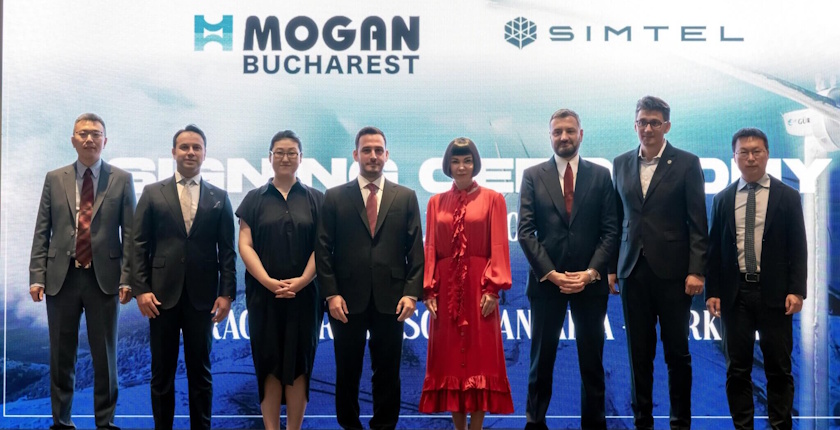
Simtel said it signed an engineering, procurement, and construction contract with Energy Capital Group, owned by Mogan Bucharest SRL, part of the Güriş Group from Turkey.

The contract is worth RON 168.9 million (EUR 33.3 million), and the deadline is nine months.

The contract includes the supply of a BESS, the design, construction, installation, commissioning, completion, and testing of the facility. The project will be implemented in the village of Iaz, Obreja commune, Caraș-Severin county.

Energy Capital Group obtained support via the National Recovery and Resilience Plan

Energy Capital Group received support via the National Recovery and Resilience Plan (NRRP) for its project. It is part of the pillar dedicated to the green transition. Romania approved a grant of over RON 50 million (EUR 9.86 million) for the implementation of the battery energy storage project.

With the investment, Romania is taking a significant step towards strengthening its energy infrastructure and increasing flexibility in consumption and production, according to Simtel COE Mihai Tudor. Storage systems are an essential pillar of the energy transition process and in the sustainable development of power grids, he added.

Director of Mogan Bucharest SRL Kaan Yamantürk said the company sees “a great future and opportunity” in Romania.

Güriş is active elsewhere in Southeastern Europe as well.

Simtel: The largest storage project has a capacity of 72 MWh

Simtel pointed out that the size of the facility is significant, considering that, according to the latest data published by Transelectrica, the current total battery energy storage capacity in Romania is 398.8 MWh.

Moreover, the largest storage project completed so far has a maximum capacity of 72 MWh, the firm added.

Of note, in October last year, Monsson said it was completing the second phase of a battery energy storage system within a hybrid power plant project in Constanța. The first phase was inaugurated in April and, with 24 MWh, it was the largest BESS unit in Romania at the time.

A subsidiary of Monsson has submitted a battery storage project of just over 2 GWh in capacity for an environmental permit in Romania. Simtel and Monsson have signed a strategic partnership on the development of solar and energy storage projects in Romania.

by in News

Austria’s Verbund acquires 272 MW wind project in Romania

Verbund Wind Power Romania, a subsidiary of Austria’s Verbund, has acquired a 272 MW wind project from Monsson, a Sweden-based renewable energy group. The project, taken over at a ready-to-build stage, is expected to enter the construction phase in 2026.

The planned wind farm in Caraș-Severin county in Romania is expected to produce 569 GWh of electricity annually, Verbund said in a press release.

Verbund has been present in the Romanian renewables market since 2012, operating the 226 MW Casimcea wind farm in Tulcea county. It also has a portfolio of wind and photovoltaic projects under development.

Verbund already operates a 226 MW wind farm in Romania

Adrian Borotea, General Manager of Verbund Wind Power Romania, said the company looks forward to future opportunities that can help speed up the country’s energy transition. “In Verbund, we continuously seek to stimulate the growth of the clean energy sector in Romania, in line with our sustainable approach to business,” he stressed.

Sebastian Enache, Head of Mergers and Acquisitions and member of the Board of Directors of Monsson, said the need for clean energy as a central point of the energy sector development in Romania and Europe is growing, adding that the company is proud to have started this cooperation with Verbund, one of the largest producers of electricity from renewable sources in Europe.

The Austrian utility expects 25% of its overall electricity output to be generated from solar and wind energy by 2030, with Romania seen as one of the strategic target markets to achieve the objective.

Monsson has over 5 GW of solar and wind projects in Romania

Monsson has a portfolio of more than 5 GW of wind and solar projects in Romania. It offers a full range of services, including the design, development, construction, and operation of renewable energy power plants, as well as the construction and operation of battery-based energy storage solutions.

The company recently said it was preparing to build a manufacturing facility in the Romanian town of Petrila to produce renewable energy equipment, including robots that clean solar panels.

by in News

Renewables equipment factory to contribute to just transition of coal region in Romania

Monsson Group is preparing to build a manufacturing facility in Petrila for renewable energy equipment, including robots that clean solar panels. The project received funding to contribute to the just transition of Romania’s coal region Jiu valley – Hunedoara.

An investment of nearly EUR 10 million in the first phase is underway in Transylvania, in the town of Petrila, economically devastated after the closure of a coal mine. The project is aimed at reviving the area with a factory for renewable energy equipment such as enclosures for battery energy storage systems, wiring and robots that clean photovoltaic panels.

Monsson Group revealed its facility would also manufacture gear for monitoring environmental parameters and tracking fauna in the area. The Sweden-based company has said 70% of the investment would be covered from Romania’s Just Transition Program which is in turn part of the European Union’s Just Transition Facility.

Romania is planning to prolong the operation of its coal power plants and mines for a smoother switch to renewable sources, in terms of electricity supply. However, such facilities are becoming less financially viable by the day all across the EU. Coal regions are facing economic blows from early shutdowns of power plants and mines.

First major private investment in Petrila

According to Monsson, the new factory would employ more than fifty people in the first phase. It expects to begin construction mid-year.

It is the first major private investment in Petrila, Mayor Vasile Jurca said. He said the project enables reskilling and sustainable development. The local authority provided the land for the factory. Romania has earmarked substantial funding for the construction of renewable energy equipment plants.

The second part of the plan is to install a 20 MWh battery energy storage system to provide system services to the national grid, followed by a 50 MWh unit.

Reskilling program underway

The group, which includes Wind Power Energy and its RenewAcad network of renewable energy training centers, established cooperation with the University of Petroșani in getting skilled workers. Monsson is one of the biggest renewable energy investors in the country.

Petrila is part of the Jiu Valley in Hunedoara county, Romania’s main coal region. It is located near Oltenia, the other coal complex, in the counties of Gorj and Dolj.

Notably, the Maritsa East 3 coal power plant in neighboring Bulgaria ceased operations yesterday again after it was briefly brought back online to maintain energy security.