by in News

Gazprom’s NIS can restart Serbian refinery as US suspends sanctions

Croatian oil pipeline operator JANAF said it received a license from the United States and that it is prepared to resume supply to NIS. The Serbian company, controlled by Russian state-owned Gazprom, came under American sanctions and ceased fuel production a month ago.

Serbian officials announced that the Office of Foreign Assets Control of the US Treasury Department has issued a license to NIS – Naftna industrija Srbije – to restart operations at its refinery. They said the approval lasts until January 23. It means the country’s only refinery can work again after almost three months since oil deliveries ceased.

The Serbian company, controlled by Russian state-owned Gazprom, came under US sanctions in January. After several postponements, the punitive measures came into force in early October. The oil refiner and fuel station chain operator halted production a month ago.

Croatian state-owned oil pipeline operator Jadranski naftovod (JANAF) said it has obtained a US license, valid also until January 23, in cooperation with the Government of Croatia. The company is “fully prepared to immediately ensure uninterrupted transport and supply of crude oil to the Pančevo refinery,” the announcement reads.

Serbian public broadcaster RTS learned from unnamed sources familiar with the matter that President Aleksandar Vučić earlier spoke to OFAC and the US Department of State, as well as with Hungarian Prime Minister Viktor Orbán. The negotiations between Gazprom and Hungarian MOL about the sale of the entire Russian majority stake could be completed before the license expires, according to the report.

Notably, it could take several weeks to restart the refinery, located near Belgrade.

by in News

Serbia backs talks on sale of NIS to Hungary’s MOL – energy minister

Serbian Minister of Mining and Energy Dubravka Đedović Handanović has confirmed that Russian shareholders are negotiating the sale of their stake in Serbia-based oil company NIS to Hungarian oil and gas company MOL, and that the Government of Serbia supports the talks. NIS is majority-owned by Russian energy giant Gazprom, whose exit from the ownership structure is a requirement for lifting US sanctions against the oil company.

Đedović Handanović added that both NIS and MOL have approached the US Office of Foreign Assets Control (OFAC). According to her, the negotiations on the exit of Russian capital from NIS’s ownership structure are supported by the Russian, Hungarian and Serbian governments.

“The Government of Hungary has supported those talks, and we, as the Government of Serbia, will also provide support, with the aim of finding a solution to lift the sanctions and to create the conditions for granting an operating license to NIS,” she stated.

NIS has applied for an OFAC license to continue operating, but has not yet received approval.

Serbia supports the sale of the Russian stake in NIS to enable the lifting of US sanctions

Recently, Serbian President Aleksandar Vučić also confirmed that information had emerged about negotiations between Gazprom and MOL, adding that Serbia had no objections to the sale of NIS to the Hungarian company.

Serbian officials previously said that the Russian side had agreed to sell the company and that negotiations were underway with several firms. According to unofficial information at the time, one of the suitors was Abu Dhabi National Oil Co. (ADNOC) from the United Arab Emirates.

The US sanctions against NIS, which supplies 70–80% of petroleum products to the Serbian market, came into effect on October 9. The sanctions have blocked NIS from importing crude oil, forcing its Pančevo refinery to halt production.

Đedović Handanović: Serbia still has enough fuel, but reserves are depleting

Đedović Handanović said that citizens have not felt the impact of the sanctions and that Serbia still has sufficient fuel, from diesel and gasoline to fuel oil and kerosene, to get through the crisis. However, she noted that these reserves are depleting and that people need to understand that Serbia lacks the logistical capacity to import the volumes of petroleum products it requires.

She stressed that Serbia will continue the dialogue to ensure that NIS can continue operating, regardless of the time required to complete the transaction between MOL and the Russian shareholders.

by in News

MOL in talks about possibility of purchasing stake in Serbian NIS

Hungary acknowledged that state-controlled oil and gas company MOL is in discussions aimed at exploring the possibility of acquiring a stake in NIS. Based in neighboring Serbia, the oil refiner and service station chain operator is under sanctions that the United States imposed on its owner, Russian Gazprom Neft.

Gergely Gulyás, chief of staff of Hungarian Prime Minister Viktor Orbán, revealed today that integrated oil and gas company MOL, headquartered in Budapest, is conducting talks about the possibility of taking over an ownership stake in NIS – Naftna industrija Srbije. Speaking at a media briefing, he added that it is in the Serbian company’s interest to end Russian ownership, pointing out that US sanctions are jeopardizing its operations.

NIS, which runs the only refinery in the country and a service station chain, hasn’t received any oil in a month and a half. The facility, located in Pančevo near Belgrade, is about to halt its operations. NIS came under sanctions because it was majority-owned by Gazprom Neft.

Its parent company Gazprom later reduced Gazprom Neft’s stake to 44.5% and switched the remainder to another subsidiary. The US apparently demands a complete Russian exit.

MOL, not Hungarian government, is in discussions concerning NIS

Gulyás clarified that MOL, a public company, is the one in discussions about a potential stake purchase – not the government. Notably, Hungary controls the company indirectly, through several entities.

The government is ready to help neighboring Serbia with regard to a deal with MOL, the official stressed. Gulyás didn’t confirm or deny speculation that his prime minister would travel to Moscow tomorrow to meet with Vladimir Putin.

Orbán visited Serbia and met with President Aleksandar Vučić today. The Hungarian leader, who managed to get an exemption earlier from the US sanctions on Russian oil and gas, said he would engage in negotiations “in the coming days or tomorrow” to secure the actual supply and “not just papers and permits.”

Russian oil and gas will continue to flow to Hungary, so Serbia will be getting it, too, Orbán claimed.

Gulyás: Fuel export boost to Serbia not to disturb domestic supply

According to earlier media reports, Abu Dhabi National Oil Co. (ADNOC) from the United Arab Emirates is among the suitors for NIS.

Serbia has asked the US to suspend sanctions for 50 days. Vučić said the government would take over NIS if a buyer isn’t found.

Hungarian Minister of Foreign Affairs and Trade Péter Szijjártó said yesterday that MOL’s fuel deliveries to Serbia have been doubled and that they would be 2.5 higher in December on an annual scale.

Gulyás denied that the increase in exports to the neighboring country would disturb domestic supply.

by in News

Alteo building solar park with battery storage for MOL Group

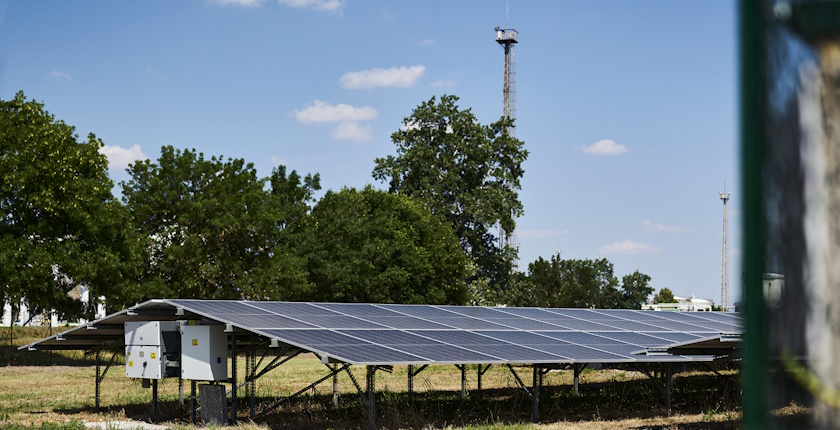
MOL’s 37.4 MW solar power plant with a battery energy storage system (BESS) of 40 MWh will contribute to the energy independence of its oil and gas complex in southern Hungary. Alteo is the contractor building the facility. The battery segment has received grants totaling EUR 20.5 million.

MOL Group marked the start of construction of a solar park and BESS at its Algyő site in Csongrád-Csanád county. The Hungarian company pointed out that smart green transition, reducing external energy consumption, is a key element of its Shape Tomorrow strategy.

The investment will significantly contribute to the energy independence of the oil and gas complex in southern Hungary, improve the flexibility of electricity supply and lower the site’s CO2 emissions by 13,000 tons per year, according to the announcement.

MOL Group hired Alteo, in which it holds minority stake

The photovoltaic plant project is for 37.4 MW and the battery energy storage system would have 40 MWh in capacity. Alteo, listed at the Budapest Stock Exchange, is the contractor for the construction of the facility. MOL Group, which holds a minority stake, controls a total of 73.8% of its shares together with two private equity funds.

The company’s full name is Alteo Energy Services. As an aggregator, it owns or operates gas power plants and renewables, combined with energy storage, while also providing software as a service (SaaS).

Storage is essential for smart energy transition

MOL has won support of EUR 20.5 million in total for the energy storage project in Algyő. A EUR 6.7 million grant came via the European Union’s Recovery and Resilience Facility (RRF) and Hungary’s National Recovery and Resilience Plan (NRRP), while the government secured the remainder.

“Our strategic goal is a smart energy transition, for which energy storage is essential, as it ensures the integration and flexible use of sustainable energy systems. Algyő is a symbolic location for us – it is here that six decades of industrial experience meet the technology of the future,” said Managing Director of MOL Exploration and Production Hungary Péter Archibald Schubert.

Solar power capacity in Hungary has topped 8 GW

The solar power plant’s output is equivalent to the annual consumption of 22,500 households in the county, while the BESS can flexibly cover 7,300 households, he added.

MOL Group operates seven solar parks in Hungary and two in Croatia, of 111 MW altogether. Its goal is to reach 200 MW in renewable energy capacity by the end of next year.

Alteo will operate MOL’s other battery energy storage system, in Tiszaújváros

Of note, the company broke ground in March for a 40 MWh battery system at the MOL Petrochemicals site in Tiszaújváros, in northeastern Hungary. It selected Alteo as its operator. The investment is worth EUR 16.3 million, of which EUR 6.7 million is a grant from NRRP.

As for the PV and battery investment in Algyő, the local authority made the 47-hectare site available to the integrated hydrocarbons producer, Hungarian media reported.

At the ceremony, Deputy State Secretary for Energy Transition at the Ministry of Energy Viktor Horváth said that the country’s solar power capacity has surpassed 8 GW. It is ninth in the world in PV capacity per capita.

In other storage news, MET Group inaugurated the largest BESS in Hungary last week at its gas power plant near Budapest.