by in News

Israel, Greece, Cyprus reaffirm commitment to joint energy projects

Amid chronic delays in the projects for offshore gas and the Great Sea Interconnector and Turkey’s warnings, the leaders of Israel, Greece and Cyprus said after a trilateral summit that they would safeguard their sea lanes and critical infrastructure against emerging threats.

Prime Minister of Israel Benjamin Netanyahu, Prime Minister of Greece Kyriakos Mitsotakis and President of Cyprus Nikos Christodoulides agreed to reinforce trilateral cooperation on security, defense and military matters. In a declaration from their summit in Jerusalem, they reaffirmed the importance of the dialogue in a 3+1 format with the United States.

The joint statement came amid chronic delays in the projects for offshore gas and the Great Sea Interconnector. The latter, an undersea electricity link, is planned to run from the island of Crete in Greece to Cyprus and, from there, to Israel.

Turkey has been openly opposing such projects and even sending its navy to disturb research and exploration. Countering the Great Sea Interconnector, the government in Ankara is apparently planning to establish a power link with the northern Cypriot Turkish-dominated entity.

Netanyahu, Mitsotakis and Christodoulides particularly emphasized the importance of the Great Sea Interconnector project

“Today’s trilateral summit reaffirms our unwavering commitment to strengthen our cooperation, enhancing the security and resilience of our nations for generations to come… We reaffirm our determination to advance joint energy projects, including natural gas development, electricity interconnectors, and renewable energy initiatives, as a solid foundation for cooperation in the region, based on international law, including the law of the sea and the respect of all states to exercise their rights in their respective EEZ / continental shelf,” the document reads.

EEZ is exclusive economic zone, a maritime area in which a country claims exclusive rights. Netanyahu, Mitsotakis and Christodoulides particularly emphasized the importance of the Great Sea Interconnector project.

“We underscore the importance of maritime security and pledge to deepen collaboration in safeguarding sea lanes and critical infrastructure against emerging threats,” they said. The three leaders added they would collaborate regional interconnectivity projects within the so-called India – Middle East – Europe Economic Corridor (IMEC).
by in News

Greece to participate in European Nuclear Alliance

Greece is going to explore its options for the introduction of nuclear energy, according to Prime Minister Kyriakos Mitsotakis.

Speaking during the Energy Transition Summit in Athens, Mitsotakis expanded on his previous statements about nuclear energy and its possible role in the Greek energy mix.

“We are ready to join the Nuclear Alliance. This is not something that is going to happen tomorrow, but Greece must be a part of the discussion,” said the prime minister. The European Nuclear Alliance, launched in 2023, is an initiative of 13 European Union member states. Among them are Bulgaria, Croatia and Romania.

Its goal is to promote nuclear energy and help maintain its role in Europe. Italy has just joined the group.

It is not the first time that Greece has shown interest in the technology. The current government has floated the idea of co-financing a new nuclear power plant in Bulgaria, as part of the deal that would include guaranteed power imports. So far, nothing has materialized.

Mitsotakis also mentioned small modular reactors (SMRs) again as a possible solution, as well as installing reactors in ships to help the sector decarbonize. “We must explore how a naval nation such as Greece can utilize nuclear energy in its fleet,” Mitsotakis noted.

Mitsotakis: Net zero is impossible without nuclear

He added that the world would not be able to cut net greenhouse gas emissions to zero without the technology. According to the prime minister, nuclear fusion is very promising.

Public mistrust and cost issues

There are difficult obstacles to the government’s ambitions. Greek people remain heavily opposed to the installation of nuclear facilities, both inside and near the country. The energy crisis made public opinion only a bit more favorable.

Furthermore, Greece has no experience with nuclear energy and no people engaged in the sector. Everything would have to be created from scratch, from the regulatory framework to the technical knowhow.

Then there is the matter of cost. Even though many voices around the world support a nuclear revival, few new commercial projects have been initiated for traditional nuclear stations. Most new reactors, like in China, are subsidized by the state. Even in Europe, a large part of the discussion concerns renewing and upgrading existing reactors.

The Greek government has raised energy costs as a primary issue for the country and Southeastern Europe. It remains to be seen whether such power plants could operate on a purely commercial basis or if a support scheme could be used.

by in News

Olympus carbon capture project breaks ground in Greece

Carbon capture, utilization and storage (CCUS) is a must for the future of the cement industry, Greek Prime Minister Kyriakos Mitsotakis said at the launch ceremony for Heracles Group’s Olympus project.

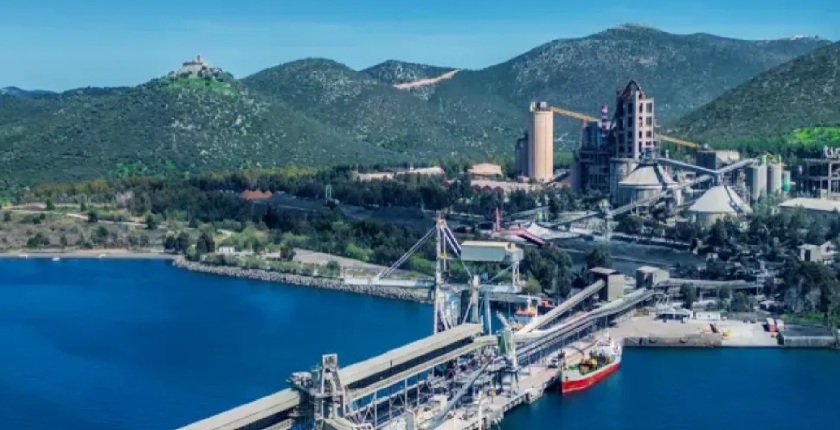
It is one of the very first CCUS plants in Greece, valued at EUR 380 million. The unit in the group’s Milaki cement production complex in the island of Evia (Euboea) is expected to capture up to one million tons of CO2 annually. Emissions from the facility are expected to decrease to net zero by 2029.

Other industrial players also have plans to introduce CCUS.

Cement producer Titan Group is moving forward with a EUR 583 million investment in Boeotia (also Beotia and Viotia) called Ifestos. The carbon capture installation is scheduled for launch in December 2029. In its first year, it is expected to reduce CO2 emissions to the atmosphere by 1.9 million tons.

Motor Oil Hellas aims to install a unit in its Agioi Theodoroi oil refinery for a cost of EUR 300 million to EUR 400 million. The project is called IRIS – Innovative low caRbon hydrogen and methanol productIon by large Scale carbon capture. It is for the construction and operation of a CCUS and e-methanol production system that would cut the refinery’s CO2 emissions by a quarter.

Motor Oil and Titan have won grants from the European Union’s Innovation Fund.

“Support is needed to make these investments viable. Greece is at the forefront of convincing European institutions to provide it,” said Mitsotakis.

The companies’ executives discussed CCUS market developments this week in Athens with European Commissioner for Climate, Net Zero and Clean Growth Wopke Hoekstra.

Prinos CO2 project to store industrial carbon

Captured carbon from these industries would be transferred to the former underground oil deposit in Prinos, offshore Kavala, for storage. Energean is developing the site, aiming for an annual capacity of three million tons, which would be doubled in the second phase.

The first drilling in Prinos is expected in 2026. Energean’s subsidiary EnEarth has signed 15 memoranda of understanding with various Greek and foreign companies.

The facility would be able to store up to six million tons after the second phase is complete. The National Natural Gas System Operator (DESFA) is tasked with delivering the gas there, under a project called Apollo CO2.

by in News

PPC plans EUR 5.8 billion makeover of Western Macedonia coal region, including data centers

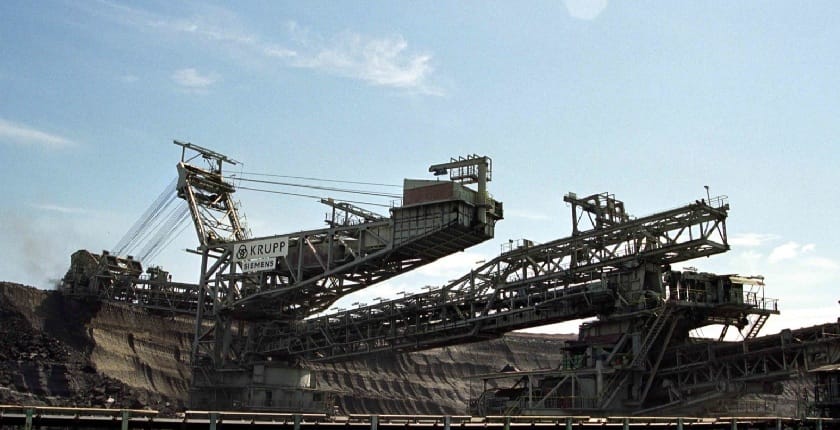
Public Power Corp. (PPC) presented a EUR 5.8 billion investment plan for the coal region of Western Macedonia in northern Greece. It held the ceremony in the retired Kardia 2 lignite-fired power plant.

According to PPC’s chairman and CEO George Stassis, the endeavor consists of the decommissioning of old assets and the rollout of new energy technologies.

Stassis: Western Macedonia can reinvent itself

PPC, or DEI in Greek, said it would return to the government 8,000 hectares of coal land that it no longer needs, after completely restoring it. All equipment, such as 400 kilometers of lignite conveyor belts, cooling towers and excavators, are planned to be recycled up to 95%.

According to the decarbonization timeframe, Ptolemaida 5 will be the last coal plant in the country, continuing to operate until the end of 2026. It is set to be converted to a gas power plant with a capacity of 350 MW. PPC is also open to upgrading it to 500 MW or even 1 GW.

New photovoltaics, storage underway

“Western Macedonia can reinvent itself using new technology,” said the CEO.

The group aims to install a total of 2.1 GW in photovoltaics across the region. A 550 MW solar power plant in the former lignite mine of Ptolemaida is almost complete. It will be the biggest in the Balkans. Separately, a group of clusters of 940 MW is under construction within the Meton joint venture with German RWE.

Energy storage is another major segment in PPC’s investment plan. Within the next three years, it aims to funnel EUR 940 million for a total capacity of 860 MW. It includes two pumped storage hydropower projects. The one in Kardia is for 320 MW and an eight-hour storage duration, and the other in the South Lignite Field – 240 MW and a 12-hour duration. The projects are worth EUR 430 million and EUR 310 million, respectively.

Equally important, battery storage units of 300 MW altogether would be installed in Amyndaio, Akrini, Meliti and Kardia in the country’s main coal region. The other one is Megalopolis in the Peloponnese.

PPC plans a 50 MW hydrogen production facility together with Motor Oil, as Hellenic Hydrogen, and a cogeneration plant to cover district heating needs from the end of 2026.

Large 300 MW data center

Last but not least, the Greek group aims to create a 300 MW data center, as part of an investment of EUR 2.3 billion. A subsidiary in fiber optic cables would upgrade the telecommunication links with Thessaloniki and Igoumenitsa to improve data flow in Greece and abroad.

If conditions are favorable, PPC would further upgrade the data center to 1 GW, increasing its investment by EUR 5.4 billion.

Greek Prime Minister Kyriakos Mitsotakis said at the event that existing infrastructure in Western Macedonia is a great advantage.