by in News

Serbia to put mining strategy to parliament vote

The government passed the draft Strategy for the Management of Mineral and Other Geological Resources of the Republic of Serbia for the period from 2025 to 2040, with projections until 2050, so the National Assembly is required to put it to vote. With full appreciation of economic, environmental and social aspects, the implementation needs to contribute to improving the legal framework, establishing a balance between economic growth and environmental protection, remediation of abandoned mining facilities and securing a stable supply of critical and strategic raw materials, Minister of Mining and Energy Dubravka Đedović Handanović stressed.

After a turbulent public discussion process, the Government of Serbia adopted the draft Strategy for the Management of Mineral and Other Geological Resources of the Republic of Serbia for the period from 2025 to 2040, with projections until 2050. Several dozen objections and suggestions were accepted or partly accepted. However, the text of the strategy that will be passed on to the National Assembly for a vote hasn’t been published yet.

A special emphasis is on the development of risk management mechanisms, climate neutrality and the application of energy-efficient and low-carbon technologies, the government pointed out.

The strategy is based on the principles of sustainable utilization of natural wealth, biodiversity protection, climate resilience and the reduction of negative effects of mining activities, the announcement reads.

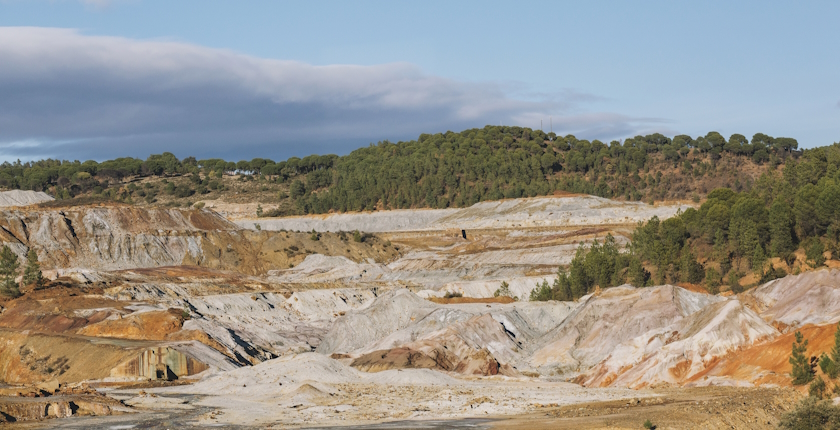
According to the report on the environmental impact of the strategy’s implementation, Serbia hosts many deposits of metallic, non-metallic and energy raw materials, groundwaters and geothermal energy. The authors of the accompanying document acknowledged that the exploitation of mineral raw materials in Serbia caused air, water and land pollution. Metals mining hub of Bor and Majdanpek and the Kolubara and Kostolac lignite basins are the most affected.

Another challenge highlighted in the environmental impact report are the abandoned mines, tailings dumps and mining facilities that require remediation and rehabilitation.

Strengthening state’s role in planning, oversight

The document sets a long-term framework for the responsible management of mineral resources and the strengthening the role of the state in planning, oversight and the improvement of the sector of mining and geology, in the interest of citizens and a sustainable development of local communities, the Ministry of Mining and Energy said.

A special emphasis is on critical and strategic raw materials, geothermal energy and rational utilization of natural resources

Minister Dubravka Đedović Handanović said the strategy defines programs and measures directed toward a secure supply of domestic companies and the energy system with mineral raw materials, job creation and a greater participation of the domestic industry in the value chain, as well as for reducing import dependency and strengthening the country’s economic stability.

She explained that the focus is particularly on critical and strategic raw materials, geothermal energy and rational utilization of natural resources, alongside the implementation of high environmental and security standards. This is the way, in her words, to protect the environment, improve work safeety and lower the risks for people’s health and the quality of life in local communities.

Treating protected areas responsibly

Dubravka Đedović Handanović added that the strategy clearly defines a responsible treatment of protected areas and the spaces of special natural value, through a principle of prevention and respect toward the protection regime, as well as the transparency in the processes of planning and decision making, so that the citizens would be informed timely and included in dialogue.

With full appreciation of economic, environmental and social aspects, the implementation needs to contribute to improving the legal framework, establishing a balance between economic growth and environmental protection, remediation of abandoned mining facilities and securing a stable supply of critical and strategic raw materials, the minister underscored. She said that in the long term it meant greater safety, a better quality of life and responsible development.

by in News

Serbia to put mining strategy to parliament vote

The government passed the draft Strategy for the Management of Mineral and Other Geological Resources of the Republic of Serbia for the period from 2025 to 2040, with projections until 2050, so the National Assembly is required to put it to vote. With full appreciation of economic, environmental and social aspects, the implementation needs to contribute to improving the legal framework, establishing a balance between economic growth and environmental protection, remediation of abandoned mining facilities and securing a stable supply of critical and strategic raw materials, Minister of Mining and Energy Dubravka Đedović Handanović stressed.

After a turbulent public discussion process, the Government of Serbia adopted the draft Strategy for the Management of Mineral and Other Geological Resources of the Republic of Serbia for the period from 2025 to 2040, with projections until 2050. Several dozen objections and suggestions were accepted or partly accepted. However, the text of the strategy that will be passed on to the National Assembly for a vote hasn’t been published yet.

A special emphasis is on the development of risk management mechanisms, climate neutrality and the application of energy-efficient and low-carbon technologies, the government pointed out.

The strategy is based on the principles of sustainable utilization of natural wealth, biodiversity protection, climate resilience and the reduction of negative effects of mining activities, the announcement reads.

According to the report on the environmental impact of the strategy’s implementation, Serbia hosts many deposits of metallic, non-metallic and energy raw materials, groundwaters and geothermal energy. The authors of the accompanying document acknowledged that the exploitation of mineral raw materials in Serbia caused air, water and land pollution. Metals mining hub of Bor and Majdanpek and the Kolubara and Kostolac lignite basins are the most affected.

Another challenge highlighted in the environmental impact report are the abandoned mines, tailings dumps and mining facilities that require remediation and rehabilitation.

Strengthening state’s role in planning, oversight

The document sets a long-term framework for the responsible management of mineral resources and the strengthening the role of the state in planning, oversight and the improvement of the sector of mining and geology, in the interest of citizens and a sustainable development of local communities, the Ministry of Mining and Energy said.

A special emphasis is on critical and strategic raw materials, geothermal energy and rational utilization of natural resources

Minister Dubravka Đedović Handanović said the strategy defines programs and measures directed toward a secure supply of domestic companies and the energy system with mineral raw materials, job creation and a greater participation of the domestic industry in the value chain, as well as for reducing import dependency and strengthening the country’s economic stability.

She explained that the focus is particularly on critical and strategic raw materials, geothermal energy and rational utilization of natural resources, alongside the implementation of high environmental and security standards. This is the way, in her words, to protect the environment, improve work safeety and lower the risks for people’s health and the quality of life in local communities.

Treating protected areas responsibly

Dubravka Đedović Handanović added that the strategy clearly defines a responsible treatment of protected areas and the spaces of special natural value, through a principle of prevention and respect toward the protection regime, as well as the transparency in the processes of planning and decision making, so that the citizens would be informed timely and included in dialogue.

With full appreciation of economic, environmental and social aspects, the implementation needs to contribute to improving the legal framework, establishing a balance between economic growth and environmental protection, remediation of abandoned mining facilities and securing a stable supply of critical and strategic raw materials, the minister underscored. She said that in the long term it meant greater safety, a better quality of life and responsible development.
by in News

Rio Tinto halts lithium mining project Jadar in Serbia

Rio Tinto has suspended its lithium mining project Jadar in Serbia, Bloomberg learned from the company’s internal documents.

The suspension of the Jadar project, valued at USD 2.95 billion, is among the first decisions of Rio Tinto’s new CEO Simon Trott.

Bloomberg wrote that it saw an internal company memo revealing that the investment in Serbia would be switched to a care and maintenance regime, making it dormant.

“Given the lack of progress in permitting, we are not in a position to sustain the same level of spend and resource allocation,” the document reads.

According to the same source, Rio Tinto still considers Jadar an important lithium deposit that could play a significant role in Serbia and Europe’s energy transition.

The European Union has designated the project as strategically important. The race for lithium and other rare metals is intensifying due to China’s growing dominance.

Rio Tinto confirmed the contents of the memo.

The company told Blic that it “remains in Serbia” and that the Jadar project is entering a phase involving an assessment of project costs and resources. “Our focus will be to support our employees through the transition process, and to continue fulfilling our legal obligations to the local community as responsible landowners in the Jadar valley,” it added.

New investments and company restructuring

Trott became CEO in August, and the decision to suspend the Jadar project is part of efforts to streamline the business and focus on faster growth opportunities.

He reorganized Rio Tinto by dividing it into segments for iron, aluminum and lithium, and copper.

According to the memo, the company’s current head of lithium Paul Graves will leave the company.

Last year, Rio Tinto acquired Arcadium Lithium for USD 6.7 billion, gaining access to three lithium projects in development. At the same time, it is investing heavily in the Rincon lithium project in Argentina.

Due to oversupply in the lithium market, prices remain around 85% below their 2022 peak, the article adds.

Rio Tinto is the world’s second-largest mining company by market value. The Jadar mining and processing project, based on the mineral jadarite, discovered in 2004 in the Jadar valley in western Serbia, has faced strong opposition from the country’s citizens, environmental activists, and part of the expert community for many years. Balkan Green Energy News has published a chronological overview of the key events in the development of the Jadar project since 2001, when Rio Tinto arrived in Serbia.

Trott is scheduled to deliver his first strategic presentation on the company’s further development and restructuring on December 4 in London, during Rio Tinto’s Capital Markets Day.

by in News

Germany seeks Bolivia’s lithium as project Jadar in Serbia stalls

Germany is rushing to secure the supply of lithium from Bolivia in talks with the new government, but also to enable domestic mining operations. At the same time, Rio Tinto’s controversial project Jadar in Serbia seems dormant despite nominal support from Brussels and Berlin.

In a statement before his arrival in Bolivia, Germany’s Federal Minister of Foreign Affairs Johann Wadephul didn’t mince words.

“Our potential for cooperation is significant. Bolivia is rich in raw materials, especially lithium, which is indispensable for our energy transition, for electric mobility and for many other sectors in Germany. Bolivia also offers impressive opportunities regarding rare earth elements,” he pointed out.

First in line to speak to Bolivia’s new head of state about lithium

Wadephul noted that he is meeting the Bolivian government under President Rodrigo Paz Pereira on his third day in office “and the first real day of work.” The top German diplomat is inviting the Latin American country to join the upcoming agreement between the European Union and the Southern Common Market (Mercosur).

The race for lithium and rare earths is intensifying amid China’s dominance and the tariff wars that United States President Donald Trump’s administration is pursuing.

In Wadephul’s view, Bolivians want a way out of the ongoing economic crisis. “President Paz has announced plans to open Bolivia to the world. Bolivia has our full support in this,” he added.

Bolivia holds the world’s largest lithium reserves. Before Paz came to power, left-wing governments limited access to foreign miners for two decades.

Rio Tinto’s investment in Serbia slows down amid political turmoil

Germany has signaled that it would use its raw materials fund for support to domestic lithium mining projects that are under review. Notably, there are also investments in the extraction of the alkali metal from underground and geothermal waters, which means without excavation.

The foreign policy chief is in Bolivia at a time when Rio Tinto’s lithium mining project Jadar in western Serbia seems dormant, despite winning a strategic investment status from the European Union five months ago.

Germany was earlier very interested in the endeavor. Former Chancellor Olaf Scholz attended the signing of a memorandum of understanding in July 2024 between the EU and Serbia for a strategic partnership in sustainable raw materials, battery value chains and electric vehicles,

Serbia expects the environmental impact assessment for project Jadar to be completed in a year and a half

Speaker of the National Assembly of Serbia Ana Brnabić recently said the environmental impact assessment for project Jadar would “probably” be completed in 18 months. The next step would be to decide whether to go ahead with it.

Importantly, Serbia is in political turmoil for a whole year now.

Lithium ion batteries are necessary for electric cars, smartphones and laptops, as well as for solar and wind power plants. The demand is steadily growing.

Balkan Green Energy News has published a chronological overview of the key events in the development of the Jadar project since 2001, when Rio Tinto arrived in Serbia.

Rare earths are found in consumer goods such as smartphones and television screens, as well as in electric car engines, semiconductors and turbines.

by in News

Serbia plans new mining law to align legislation with EU rules on critical raw materials

Serbia’s Ministry of Mining and Energy has launched a public consultation on a preliminary framework for a new law on mining and geological exploration. One of the goals of the new law is to align national legislation with European Union regulations on critical raw materials, sustainable development, and the circular economy.

The law will be harmonized with the EU’s Critical Raw Materials Act and the European Green Deal, to gradually align Serbia’s regulatory framework with the EU’s goals for sustainable mining, climate neutrality, and secure minerals supply, according to a document outlining the basis for the draft law.

Earlier this year, the European Commission included a lithium mining project in Serbia among the EU’s strategic projects for critical raw materials. Rio Tinto’s Jadar project is the only one on the list that involves the extraction of lithium and boron.

Lithium mining in Serbia is among the EU’s strategic projects for critical raw materials

Regarding harmonization with EU regulations, Serbia intends to introduce standardized reporting systems in line with the Pan-European Reserves and Resources Reporting Committee (PERC) standards, the UN Framework Classification for Resources (UNFC), and the Petroleum Resources Management System (PRMS), as well as implement ESG principles, which integrate environmental, social, and governance requirements into all phases of geological exploration and mining.

The main objective of the new law is to establish a modern, transparent, and efficient system for managing mineral and other geological resources in line with sustainable development standards, while strengthening the role of the state as the owner and steward of the country’s natural resources, according to the document.

It further highlights the need for more clearly defined mechanisms to ensure the application of sustainable mining principles and compliance with environmental standards, in line with advanced global practices. Investors’ obligations regarding environmental protection, land reclamation, and site remediation should be more precisely regulated during exploration and mining.

Investors’ obligations concerning environmental protection need to be more clearly defined

Improving the legal framework for granting exploration and mining rights is of particular importance, the document states. This would be done through models that ensure greater legal certainty, more efficient oversight, and consistent application of environmental and social standards, in line with sustainable mining principles.

The new law will also set clear criteria for identifying and protecting strategic mineral deposits, and ensure they are included in spatial and development plans. This would enable long-term protection of national interests in the field of mineral resources.

The law will digitalize permitting procedures for exploration and mining

The law will envisage digitalization and electronic processing in all administrative phases through a unified information system that enables electronic application and permitting, while allowing public access to data on exploration and mining fields.

The new law is also intended to ensure gradual alignment with European policies in the fields of green and digital transition.

The public consultation will be open until November 11, during which time citizens and organizations can submit proposals, comments, and suggestions.

by in News

Three cities reviving protests against Rio Tinto’s lithium project in Serbia

Opponents of Rio Tinto’s plan to mine and process a lithium and boron ore called jadarite in western Serbia held a protest in Loznica. Representatives of local activist group Ne damo Jadar announced that such gatherings would be organized in the nearby cities of Valjevo and Šabac as well.

Several thousand people demonstrated in the western Serbian city of Loznica against Rio Tinto’s project Jadar, marking what could be the start of another in a string of protests, which began in 2021. Activists from the area said rallies would be held in neighboring cities, too, with a possibility of expansion throughout the country.

Marijana Petković from the Ne damo Jadar group accused the authorities of breaking the law by approving new infrastructure to be built for the planned lithium and boron mining operation and a processing facility. Rio Tinto filed in February for connecting a future 110 kV transformer station to the grid. The activists are also upset because of indications that the company expects to get approval for an exploitation field. It would imply priority in mining the unique lithium and boron ore, called jadarite.

The Lotel television station in Loznica never came to the Gornje Nedeljice village nor has it given the opportunity to the opponents of the Jadar project to speak, said Nebojša Petković from local group Ne damo Jadar

At the protest, the building of local media outlet Lotel was spray-painted and a poster saying “disturbing content” was glued onto it.

“They don’t have any big influence, but they do on a part of the population in Loznica. And they never came to Nedeljice to film what we have, those houses of ours that are whole, nor to film the demolished houses. They never produced a single report. They never gave the opportunity to us or to experts, not a single opponent of the Jadar project, to come to their television studio,” Nebojša Petković from Ne damo Jadar told N1 TV.

The village of Gornje Nedeljice, where the activist group is based, is the site of the proposed mine and processing plant.

Nebojša Petković pointed out that national TV stations of France, Italy and Sweden and other countries and even one from Japan have reported about the Jadar project.

Next protest scheduled for July 24 in Valjevo

The next protest is scheduled for July 24 in Valjevo, and one will probably be held in Šabac, according to Nebojša Petković. He stressed that further activities in the three cities would be coordinated. Exploratory drilling has been conducted around Valjevo and Šabac, too, prompting numerous protests.

Petković jokingly called the three cities the Serbian Bermuda triangle and expressed hope that other areas in Serbia would join the resistance.

The planned investment has been countered by some of the biggest and most widespread protests ever held in the country, in several waves. The European Commission approved a strategic status in early June to the Jadar project.

Balkan Green Energy News has a chronological overview of the key events since 2001.

Nearby lithium project across the river Drina, in BiH, also faces resistance

Notably, in a repeated vote held recently in the National Assembly of the Republic of Srpska, a civic initiative to declare Majevica a natural park failed to receive sufficient support from lawmakers. The mountain is near Jadar, on the other side of the Drina river, in Bosnia and Herzegovina. The Republic of Srpska is one of the two political entities making up Serbia’s neigboring country, and the other one is called the Federation of BiH.

Activists are also demanding an urgent moratorium on the approval of concessions for exploration and exploitation of ores and other resources.

Citizens in the area have held multiple rallies against the local lithium mining project, supported by local authorities.

by in News

European Commission declares Jadar project in Serbia one of its strategic projects for critical raw materials

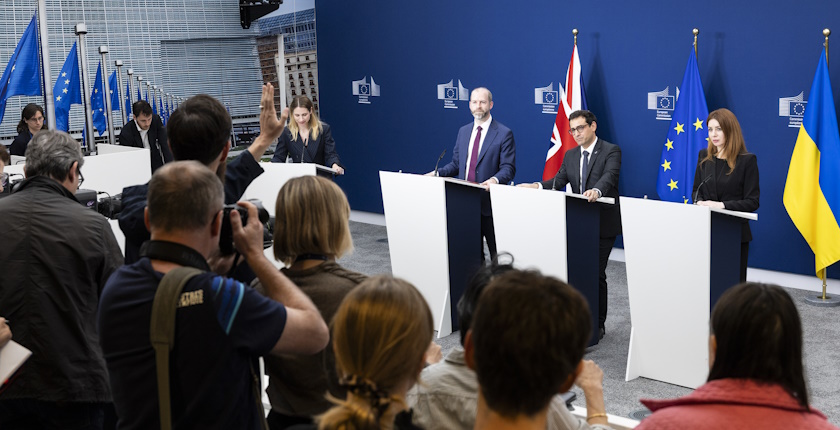
The European Commission published the list of the first 13 strategic projects for raw materials outside of the European Union. One of them is project Jadar in Serbia. It is the only one for lithium and boron. Notably, it got the strategic status only for extraction, even though Rio Tinto said it would also build a processing plant.

After adopting 47 strategic projects in line with the Critical Raw Materials Act (CRMA) in March, today the European Commission added another 13, for locations outside of the EU’s borders. They include Rio Tinto’s controversial project Jadar in Serbia, for lithium and boron. The aim is to diversify the sources of supply and increase economic security, but alongside strengthening value creation in third countries, according to the update.

“Europe needs raw materials to succeed in our industrial and climate ambitions. The EU requires stable, secure and diversified supply chains,” said the European Commission’s Executive Vice-President for Prosperity and Industrial Strategy Stéphane Séjourné.

Photo: European Commission

Strategic projects across globe

The first 13 strategic projects outside of the EU are in Canada, Greenland, Kazakhstan, Norway, Serbia, Ukraine, Zambia, New Caledonia, Brazil, Madagascar, Malawi, South Africa and the United Kingdom. They require EUR 5.5 billion in total capital investment to start operations, the European Commission said.

Séjourné revealed that investors filed 49 applications.

Project Jadar in western Serbia, near the city of Loznica, is the only one for lithium and boron. Interestingly, the European Commission only endorsed the extraction segment, even though Rio Tinto has said it would build a processing facility as well. According to today’s announcement, the investment aims to contribute to the supply of lithium – battery grade, and boron for metallurgy.

Several waves of mass rallies against project Jadar have been held throughout Serbia

The local population in the Jadar valley, environmentalist organizations and a number of experts have been opposing Rio Tinto for several years now, citing the lack of transparency and the risks for health, nature and agriculture, and especially the potential pollution of water sources. They held several waves of large countrywide protests.

Balkan Green Energy News has published a chronological overview of the key events since 2001, when Rio Tinto arrived in Serbia.

The mining giant is conducting project Jadar through its Serbian subsidiary Rio Sava Exploration.

Most projects are for graphite, cobalt, nickel

Most of the other endeavors entail the extraction and processing of graphite, cobalt and nickel. The remaining ones are for mining tungsten, rare earth elements, manganese and copper. A project conducted both in Greenland and Norway is for the extraction and processing of graphite.

Rare earth elements have a key role in producing high-performance magnets used in wind turbines or electric motors for renewable energy technologies and electromobility. Boron is used in the automotive, renewable energy, aerospace and defence sectors.

Lithium ion batteries are currently the dominant technology in the electricity storage segment, excluding pumped storage hydropower plants. The alkali metal has a range of applications: from consumer electronics and electric vehicles to stationary facilities within renewable power plants or for grid balancing.

The selected projects meet the environmental, social and governance standards stipulated in CRMA, together with technical feasibility, the EU executive said. They are eligible for support by the European Commission, member states and financial institutions, including “contacts with relevant offtakers,” it added.

Kokanović: We continue resistance

Local activist from the Ne damo Jadar group Zlatko Kokanović said the academic community and the Serbian Academy of Sciences and Arts (SANU) have clearly rejected Rio Tinto’s lithium project. He also claimed that 63.5% of citizens also oppose it, apparently citing results of a recent survey.

The European Commission’s decision doesn’t guarantee environmental standards, Kokanović told Beta news agency. “It is quite hypocritical from a Europe promoting the rule of law, democracy, freedom of speech, a healthy environment and clean air, water and soil. To the detriment of our health and the health of our children, they want to take our lithium and turn us into a waste dump so that they live healthy,” he stated.

There isn’t any such mining project in a densely populated area and on fertile land anywhere in the world, the activist argued. “It is essentially an experimental facility. They don’t have answers to all questions and their main slogan is: ‘We will try to reduce risks’. We now live without risks, we don’t need to reduce them. If an incident happens, they will say that they are acknowledging the mistake, that they will try not to repeat it, and they will apologize. We don’t have anything from it,” Kokanović underscored.

Separately today, he vowed to continue the resistance with all allowed and forbidden and available means. Kokanović resides in the village of Gornje Nedeljice, the site of the proposed mine.

by in News

Future Green Business conference highlights role of Croatian companies, EU-Africa partnership in climate action

The International Institute for Climate Action (IICA) held its third international Future Green Initiative conference on climate change. The event in Zagreb was dedicated to the role of the business and financial sectors in mitigating climate change. President of IICE Marija Pujo Tadić said Europe wants other states and the main global players to join its ambitious climate targets and action.

Abze Djigma, one of the most prominent African negotiators on the global climate, was a special guest and keynote speaker at the conference. In her words, a just transition isn’t possible without African mineral resources, and Africa is ready to cooperate in the sector, with mutual respect.

Within the trajectory to reaching climate neutrality by the mid-21st century, the EU and its member states intend to determine an intermediate 2040 target of 90% for greenhouse gas emission cuts. It implies a rapid switch to a low-carbon and sustainable economy. The International Institute for Climate Action (IICA) is contributing to the efforts through training, communications and awareness raising for the business and financial sectors and the facilitation of networking.

With its activities, IICA promotes knowledge exchange and strengthening social and personal responsibility toward sustainability. It helps companies adapt their operations and governance to the requirements for stable growth, to tackle the climate crisis.

At its third international conference Future Green Business, the institute gathered Croatian and EU officials and Croatian company executives. The event in Zagreb was titled How the Business and Financial Sector Can Contribute to Climate Change Mitigation (EU & Africa).

Reliable partners are exceptionally important for transition to sustainable economy

President of IICA and Special Advisor-Envoy for Climate Action of the Government of Croatia Marija Pujo Tadić stressed that the conference was a reflection of the recently held 3rd European Union – African Union Ministerial Meeting, which marked 25 years of the partnership. The aim of the event in Zagreb was to highlight the significance of cooperation, particularly in the context of the climate crisis, for the corporate and financial sectors.

The EU is Africa’s biggest trade partner as well as the biggest investor and donor of development and humanitarian aid

“Both continents inevitably have to undergo their path of transforming the economy to a sustainable economy. And on that path, it is exceptionally important to have reliable partners. Europe and Africa are an example with their strong global cooperation of 25 years, directed toward peace, security, governance, prosperity and a human dimension,” Pujo Tadić underscored.

In her view, Africa is EU’s geopolitical priority at a time of increased geopolitical instability. Marija Pujo Tadić recalled that the EU is Africa’s biggest trade partner as well as the biggest investor and donor of development and humanitarian aid.

“Europe remains committed to its climate goals and ambitions and it is calling on other states and the main players to join these ambitious goals and action, and all other countries to meet their national commitments in the runup to COP30 in Brazil,” she asserted.

The conference featured a panel discussion between the representatives of large Croatian companies in the spheres of industrial production, logistics and finance.

Čović Vidović: EU’s Africa policy is no longer developmental but directed toward market-based partnerships

Deputy Head of the European Commission Representation in Croatia and the Head of Press and Media Andrea Čović Vidović said the Council of the EU has just announced that the administration in Brussels and member states mobilized EUR 28.6 billion of international climate finance from public and EUR 7.2 billion from private sources in 2023.

“That support is increasingly targeted not only towards adaptation and mitigation, but towards strategic partnerships, such as with Africa, our very important partner for a sustainable future,” she stated.

The European Commission is spearheading change through legislative initiatives that shape the global climate transition, Čović Vidović stressed. “As for our policy toward Africa, it is no longer developmental. It is aimed at market-based partnerships for mutual benefits. Of course, also for the benefit of the global climate,” she added.

Decisions that political, business leaders make at climate negotiating table affect everyone

A special guest and keynote speaker at the conference was Princess of the Mossi people of Burkina Faso and Co-Chair of the UNFCCC Paris Commitee on Capacity-building Abze Djigma. She has been participating in international climate negotiations for the last two decades.

Abze Djigma highlighted the significance of the concept of just transition. Both political and business leaders need to be aware that their decisions in climate talks affect everyone, and especially that they have the responsibility to improve living conditions, in her words.

At their recent meeting, the European Union and African Union considered the possibilities for cooperation in the critical minerals segment, Abze Djigma noted. A just transition is not possible without African mineral resources, and Africa is ready for cooperation in that field with mutual respect, she underscored.

It is not fair that licenses issued to foreign mining companies enable them to access the international finance market and the billions for their investments, while neither the African countries hosting their projects nor the domestic economy can’t use the asset that way, Abze Djigma asserted. It is why the legal framework needs to include provisions on ownership shares for the government and local firms, so that there are joint opportunities, she explained.

Abze Djigma also promotes empowering youth, the less fortunate and women through, for instance, enabling access to sustainable and affordable energy in rural areas.

Private sector has responsibility but also unique chance to be part of solution

Without systemic and determined action, global temperature will keep growing, with ever more serious consequences for the economy, society and nature, said Croatia’s State Secretary at the Ministry of Environmental Protection and Green Transition Tanja Radić Lakoš.

“The business and financial sectors have the responsibility, but also a unique chance to become part of the solution, with their tools, knowledge and capital. Enterprises that integrate climate change management, climate risks, into the core of their strategies, not only contribute to environmental protection, but become more resilient, more competitive and more attractive to investors,” she asserted.

 Radić Lakoš: Social fairness must be an integral part of the green transition

Radić Lakoš stressed that Croatia would utilize European and national funds for the green transition in a targeted and transparent manner, making sure that no one is left behind.

“Social fairness must be an integral part of the green transition, as it is not a privilege, but the right of all our citizens,” she added and pointed out that the country is eligible for EUR 1.26 billion from the EU’s Social Climate Fund (SCF). Radić Lakoš noted that Croatia is adding EUR 420 million to the sum. SCF is intended for financial support to vulnerable households and enterprises.

The funding contributes to climate objectives through the decarbonization of transportation, improvement of the energy efficiency of buildings and the creation of green jobs.

Croatia getting EUR 1.3 billion by 2030 from proceeds from sales of CO2 certificates

Furthermore, Croatia is receiving the proceeds from the sales of carbon certificates via the Modernisation Fund, Radić Lakoš recalled. The amount allocated to the country until 2030 currently has a market value of EUR 1.3 billion. The funds are intended, among other uses, for the decarbonization of heating systems, energy efficiency measures and low-carbon road transportation.

Another five public calls are envisaged this year, worth an overall EUR 285 million from the Modernisation Fund

So far there were three calls, where 224 beneficiaries were awarded a total of EUR 80 million. There are five more calls envisaged for 2025 and they are worth a combined EUR 285 million, of which part of the support will go through financial instruments, Radić Lakoš added.

In the 20 years since its inception, the Environmental Protection and Energy Efficiency Fund (EPEEF or, in Croatian, FZOEU) conducted almost 60,000 sustainable development and green transition projects, its Director Luka Balen told the audience at the event. “As we can see, climate change is not an issue for the future. It is a matter of everyday life,” he stated.

by in News

EU lawmakers urge for rule of law in Jadar lithium project in Serbia

A group of members of the European Parliament is asking the European Commission to demand from the Government of Serbia to comply with domestic and European law as regards Rio Tinto’s disputed Jadar lithium mining project. They pointed out that arresting and intimidating opponents who criticize the proposed investment is unacceptable. The European lawmakers invited Serbian activists to the European Parliament. Without strict rules, transparency and respect for local communities, things can end badly in mining, the Left’s Jonas Sjöstedt warned.

Rio Tinto is expecting to have its controversial lithium mining project Jadar in Serbia declared strategic by the European Union. Serbia and the European Commission have signed a memorandum of understanding for a strategic partnership in sustainable raw materials, battery value chains and electric vehicles. The Anglo-Australian mining giant’s proposed investment was met with years of fierce resistance from the local population and environmentalists.

Now a group of members of the European Parliament is also raising the issue of the persecution of activists, corruption and the risks to water, nature and public health.

Of note, Balkan Green Energy News has published a chronological overview of the key events in the development of the Jadar project since 2001, when the company arrived in Serbia.

The movement includes people from other areas in the country and neighboring Bosnia and Herzegovina with sites for the exploration of lithium and various minerals, as well as various mining operations.

Some mining companies leaving their waste behind for others to tackle

Completing their visit to Serbia, three EU lawmakers from the Left claimed that the Government of Serbia has many questions to answer about the Jadar project.

“My experience is that if you don’t put up strict demands on mining companies, if you don’t have transparency, if you don’t have respect for local communities, things can end really badly when it comes to mining,” MEP Jonas Sjöstedt stressed at a press conference.

He added that in northern Sweden, where he is from, some mining companies have extracted minerals for a short while before leaving without cleaning up first.

Sjöstedt: Multinationals take advantage of countries if they can

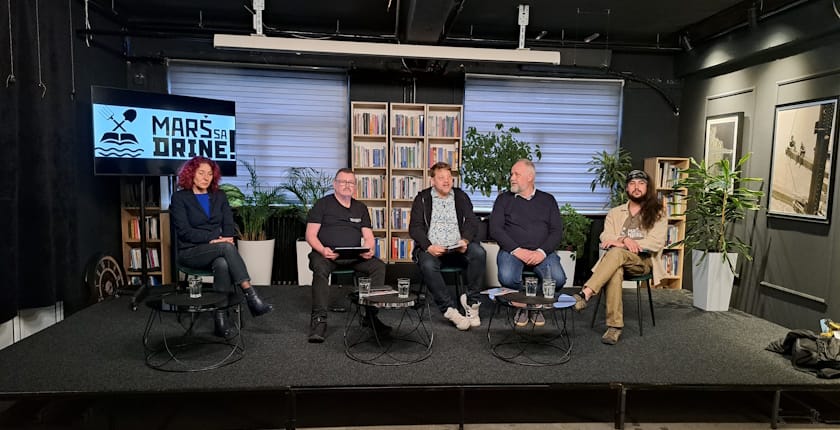
“That’s why it’s so important, so vital to listen to local communities. To have full respect for those who raise environmental concerns. And to not accept corruption or adapt legislation to the wishes of the multinational companies. Because they take advantage of countries if they have the chance,” Sjöstedt said at the event, organized by the Marš sa Drine activist group.

The environmental concerns in the Jadar area are real, especially about the quality of water for millions of people, in his view. If all the questions are not answered how toxic underground water and waste will be treated, it could be a very risky project, Sjöstedt pointed out.

“I’m also deeply worried about all the things we have heard about corruption. That it is possible for big multinational businesses to get their way with Serbian authorities by giving them economical benefits or making a contract that is not fully publicly available. I think that’s a really bad start of big industrial projects,” he asserted.

The level of intimidation against protesters including arbitrary arrests is unacceptable, according to Sjöstedt. “To be able to organize, to freely express your political will, it’s really the essence of democracy and that is what is at stake. Serbia is at a crossroads for the democratic development of the country,” he underscored.

Jadar is unique in natural harmony

The MEPs from the Left vowed to bring activists from Serbia to the European Parliament. Professor Ljiljana Tomović from the Faculty of Biology in Belgrade said at the event that the Jadar area and the adjacent Rađevina in western Serbia are one of the best examples of harmony between natural and human habitats.

They are unique, not only in Serbia, but in most parts of the Balkans, in her view. Tomović noted that more than 3,100 scientists and professors sent a letter to the European Commission to give up on the project.

All deals must be published

Rio Tinto has a long track record of environmental disasters and human rights violations, said EU lawmaker Per Clausen.

“There are legitimate reasons to meet this project with skepticism. Unfortunately, this is not an isolated case in Serbia. Other mining projects, including those financed and operated by Chinese interests, have already led to serious environmental damage and the destruction of nature. Widespread corruption and attacks on democratic rights are part of everyday reality. This is why there is no trust that Serbian authorities will prioritize the needs of local people, the environment or the preservation of nature,” he added.

Voices that should be heard are being silenced, the MEP from Denmark said.

Without democratic control over shared resources, the door opens to corruption and corporate exploitation, MEP Per Clausen warned

“This is not just about biodiversity. It’s about basic survival,” he stressed.

Without democratic control over shared resources, the door opens to corruption and corporate exploitation, Clausen warned.

“We ask the EU Commission to demand that the Serbian government complies with the law in both Serbia and the EU, and give total transparency about all elements of the deal between the EU and Serbia and the deal between the state and the mining company,” he stated.

True democracy means that natural resources belong to the people and are managed correctly for the common good, according to Clausen.

Let’s not replace fossil fuels with another form of environmental destruction

The group met with scientists, locals and representatives of the civil society. “We visited some test drillings and nothing lives around them due to the toxic substances. We cannot achieve the green transition by appeasing our industry and destroying nature and wildlife. In this process, we must not exchange environmental destruction caused by oil and gas for another form of environmental destruction,” said Sebastian Everding.

The German MEP said research should be supported to replace lithium in battery technology “with something that has less impact on the environment and the climate.”

by in News

Activists in northeastern BiH to obstruct Majevica lithium mining project

Switzerland-based Arcore and Canadian company Rock Tech Lithium are planning to excavate lithium, boron and magnesium ore and process it near Lopare in northeastern Bosnia and Herzegovina. Citizens and activists from the area surrounding the Majevica mountain are opposing the project, together with people from the border area in neighboring Serbia.

Supported by the local authority, citizens from both entities in BiH and environmental activists have gathered in the city of Bijeljina at another protest against the plans to mine lithium as well as rare metals. Among the participants were the inhabitants of border areas in neighboring Serbia, where Rio Tinto is developing a controversial project for mining and processing jadarite, a unique lithium mineral. Based on the results of its exploration, Swiss firm Arcore submitted a request to the Government of the Republic of Srpska in February for a concession for a mine on the Majevica mountain.

Around the same time, it also agreed with Canadian company Rock Tech Lithium to establish a joint venture that would include the location in northeastern BiH.

Investors want to produce lithium sulfate on site

According to the partners, they plan to start delivering in 2030 the lithium sulfate produced on site to Rock Tech Lithium’s future converter in Guben, Germany. The facility would process the raw material to get battery-grade lithium hydroxide.

The lithium, boron and magnesium deposit is in Lopare municipality, they added. The investment in Brandenburg was in the final financing phase when the agreement was signed, the two companies have revealed. They estimated that 600,000 tons of lithium carbonate equivalent can be obtained from the proposed mine.

The next step is to complete the prefeasibility study. Rock Tech Lithium holds 75% of the JV. Arcore claims that the location contains at least two million tons of lithium carbonate and that it can be exploited for 65 years.

In addition, President of the Republic of Srpska Milorad Dodik said in early March that the entity and Hungary are preparing an agreement on mining rare metals.

Bijeljina, Lopare and Majevica are all in the Republic of Srpska. The country’s other entity is called the Federation of Bosnia and Herzegovina, where activists in the nearby city of Tuzla and municipalities like Čelić are warning of the potential environmental impact of lithium mining and other shady projects.

Environmentalists demand Majevica to be protected as nature park

Environmentalist groups earlier requested from the Republic of Srpska to impose a moratorium on geological exploration and mining on the mountain.

Environmentalist associations submitted a petition with over 6,000 signatures for a moratorium on geological exploration and mining in Majevica

“This gathering was envisaged to have a regional character as today the citizens of several cities and municipalities have come together. Entire northeastern BiH is in the scope, as Majevica is our joint mountain. We all share the same water, same air and we live on the same land. We organized a civic initiative and we collected more than six thousand signatures and demanded for Majevica to become a nature park,” said Snežana Jagodić Vujić from the Eko put association based in Bijeljina.

In her opinion, the rich part of the world is building for its clean energy while destroying the environment and people in the poorer part of the world.

Semberija plain and Sava basin area are under threat as well

Head of the Municipality of Lopare Rado Savić said opening a mine in Majevica would jeopardize Lopare as well as Semberija, Posavina – areas around the river Sava, all wildlife downstream from its tributary Gnjica, and the Janja, which flows into the Drina river. “Unless there are other development projects, we don’t need mining either,” he added.

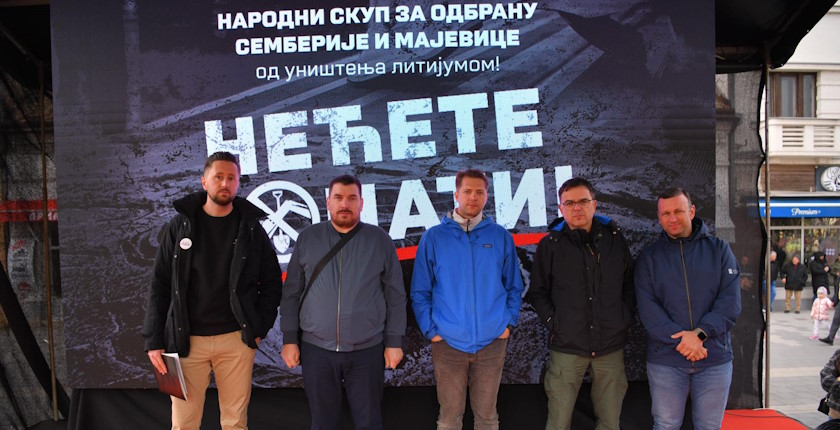
Machines shall not pass through any village, Adi Selman from Tuzla-based activist group Karton revolucija told the crowd. “We promise tonight that, if it is necessary, we will be chasing them away with our pickaxes and hoes and that, even if we are left all alone in this world, we will never give up on the fight to save our Majevica, Semberija and Posavina”, he stressed.

There is no rich mining town in the world and no lithium mine near a populated place or in a nature park, Bijeljina Mayor Ljubiša Petrović claims. “We won’t allow a handful of strongmen to destroy, for other people’s interests and profits, what was created for generations – our water, land and life,” he stated.

  • 1
  • 2