by in News

EPCG Expands Generation and Storage Portfolio with 639 MW of New Projects

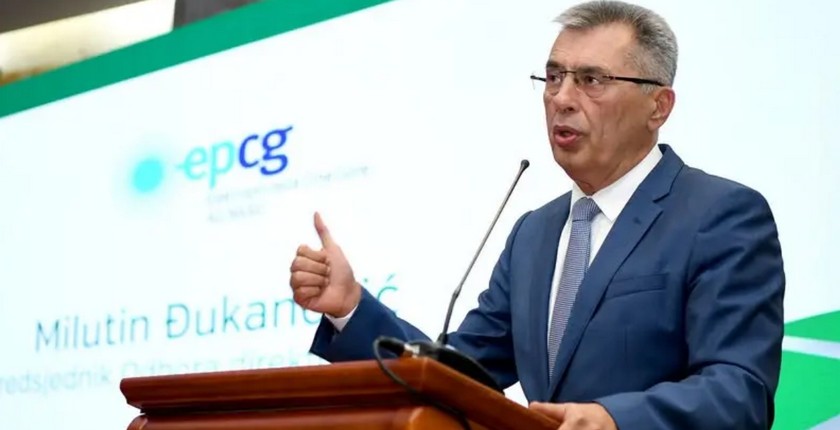
Montenegro’s state-owned utility Elektroprivreda Crne Gore (EPCG) is advancing a broad portfolio of solar, wind, battery storage, and hydropower projects with a combined capacity of 639 MW, and an expected annual electricity output of more than 1 TWh, according to Milutin Đukanović, President of EPCG’s Board of Directors.

In an opinion piece, Đukanović said the company has already completed part of a major investment cycle, including rooftop solar projects, the Gvozd 1 wind farm, the ecological reconstruction of the Pljevlja thermal power plant, and part of the modernization works at the Piva and Perućica hydropower plants. He added that new generation capacities, battery storage systems, hydropower upgrades, rooftop solar, wind projects, and strategic partnerships are EPCG’s response to the operational and market challenges it faced in 2025.

EPCG’s direct project pipeline amounts to around 639 MW/MWp, with estimated investments of approximately EUR 646.5 million and an expected annual output of about 1,024 GWh. Đukanović noted that the investment framework also includes reconstruction and upgrade projects that cannot always be expressed in megawatts.

When strategic and potential private partners are included, the company’s total portfolio rises above 4,636 MW/MWp, with a potential annual electricity generation of more than 8,176 GWh. Đukanović said EPCG is positioning itself for a larger role in Montenegro’s energy transition and in the broader regional power market.

The portfolio includes EPCG-owned solar power plants with a combined capacity of 221.1 MW and projected annual production of 299 GWh, rooftop solar systems for prosumers totaling 209.1 MW and 245 GWh in annual generation, the Gvozd 1 and Gvozd 2 wind farms with a combined capacity of 75.6 MW and expected output of 227 GWh, hydropower projects totaling 71.7 MW and 135 GWh annually, and battery energy storage facilities with an operating power of 60 MW.

A battery energy storage system is also planned at EPCG’s steel plant Željezara Nikšić. The project is estimated at around EUR 48 million and is designed as a 60 MW / 240 MWh system, with an expected annual electricity output of about 118.3 GWh, Đukanović said.

Among the completed investments, EPCG has already added 143.66 MW of new generation capacity, corresponding to around 268 GWh of annual electricity production. The value of these completed projects stands at approximately EUR 258.87 million.

These include rooftop solar systems installed under the Solari 3000+ and Solari 500+ programs, with a total peak capacity of 34.34 MW and expected annual generation of 40.18 GWh, as well as the completed portion of the Solari 5000+ project, which has a total peak capacity of 54.72 MW and expected annual output of 64.02 GWh. A further 20 MW of rooftop solar remains to be installed under the same program.

The 54.6 MW Gvozd 1 wind farm has also been completed, with an investment of EUR 82 million and projected annual output of 163.8 GWh. Together with the second phase, Gvozd 2, the project will raise total wind capacity by about 75.6 MW.

Additional completed investments include the ecological reconstruction of the Pljevlja thermal power plant, valued at EUR 75 million, along with the second phase of reconstruction and modernization works at the Piva hydropower plant, worth EUR 10.83 million, and the second phase at the Perućica hydropower plant, worth EUR 33 million.

Đukanović also noted that the Pljevlja coal mine carried out the diversion of the Ćehotina River during the power plant reconstruction, in a project worth EUR 20 million. The intervention was necessary to secure continued coal mining operations, as available reserves were close to exhaustion.

He said the main reasons for EPCG’s EUR 92.1 million loss in 2025 were the eight-month outage at the Pljevlja thermal power plant due to ecological reconstruction, as well as unfavorable hydrological conditions.

According to Đukanović, once production at Pljevlja resumed, EPCG’s energy balance returned to positive territory. The company then posted a profit of EUR 36.47 million in the first quarter of this year.
by in News

EPCG, Masdar sign cooperation agreement

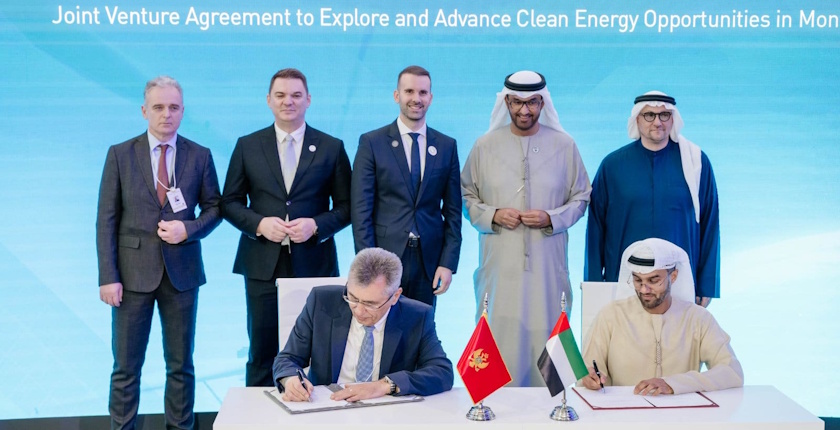
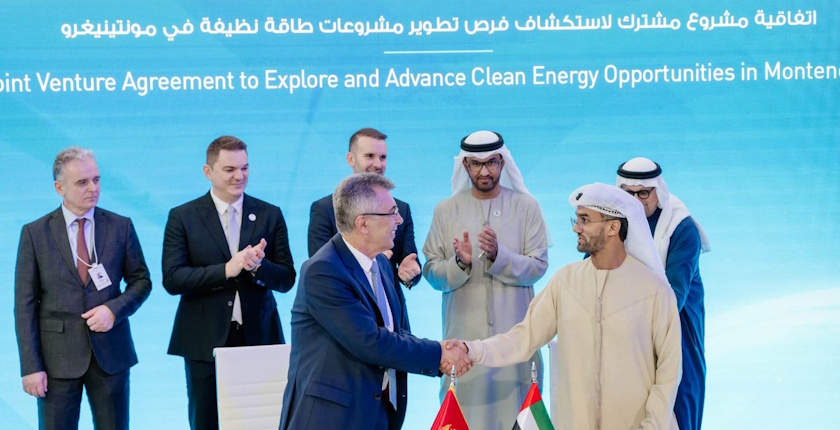
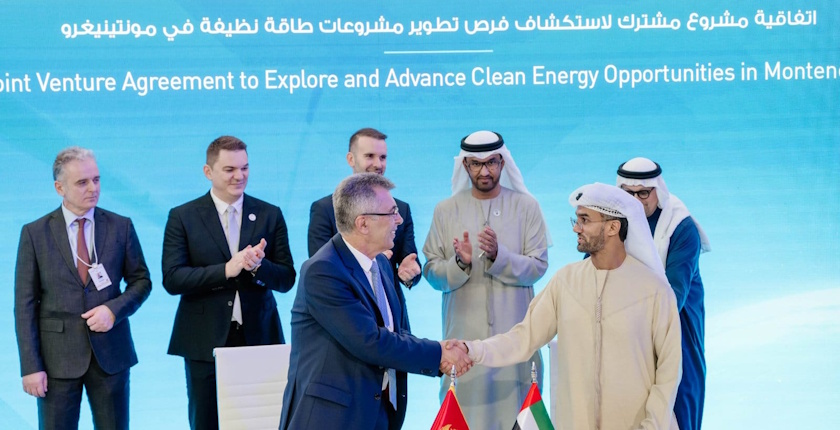
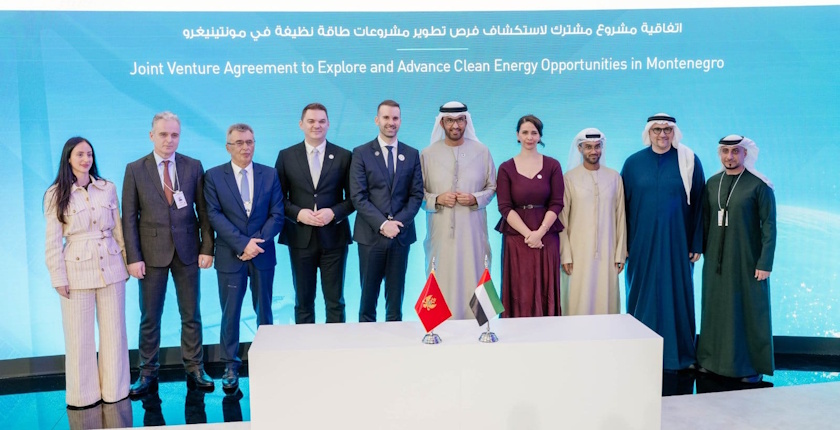
Montenegro’s power utility Elektroprivreda Crne Gore and UAE-based Masdar today signed a cooperation agreement on the sidelines of Abu Dhabi Sustainability Week.

Elektroprivreda Crne Gore (EPCG) said its agreement with Masdar sets the framework for future cooperation in the development of solar and wind projects, as well as other sustainable energy solutions, including the exchange of knowledge and experience and opportunities for joint investments.

The agreement further confirms EPCG’s strategic commitment to actively contribute to the energy transition, strengthen energy security, and support the sustainable economic development of Montenegro through partnerships with global leaders, the update reads.

Abu Dhabi Sustainability Week (ADSW) is a global forum dedicated to the energy transition, climate solutions, and sustainable development.

The agreement was signed during an official visit of the Montenegrin delegation to the United Arab Emirates, led by Prime Minister Milojko Spajić.

Đukanović: Historic agreement

Milutin Đukanović, President of EPCG’s Board of Directors, praised the agreement as historic and its strategic significance for the long-term development of Montenegro’s energy sector.

He stressed that partnering with a renowned company represents a strategic positioning of Montenegro in the modern energy environment and an important step in diversifying energy sources.

montenegro epcg masdar agreement adsw spajic djukanovic
Photo: EPCG

“In the context of the introduction of the CBAM mechanism, it is necessary to accelerate investments in energy, because along with strong development of domestic projects, cooperation with leading international partners is key to faster sector development and greater national competitiveness. Energy development represents a historic opportunity for Montenegro that we must not miss,” Đukanović stressed.

According to EPCG CEO Zdravko Dragaš, the signing of the agreement represents an important advancement in the development of Montenegro’s energy sector and a strong signal of the trust of a renowned global partner in Montenegro’s potential.

Dragaš: Montenegro to become a reliable exporter of green energy

“Our common goal is for Montenegro, in addition to meeting its own consumption, to become a reliable exporter of green energy to the region and beyond, utilizing the existing infrastructure and the country’s strategic position,” Dragaš underscored.

Montenegro and the UAE signed an agreement in November 2025 on cooperation in the energy sector.

Lately, the two countries have had a dynamic relationship in the energy sector. In December of last year, Montenegrin officials and Masdar’s management discussed potential joint projects.

montenegro epcg masdar agreement abu dhabi spajic djukanovic
Photo: EPCG
by in News

EPCG, Masdar sign cooperation agreement

Montenegro’s power utility Elektroprivreda Crne Gore and UAE-based Masdar today signed a cooperation agreement on the sidelines of Abu Dhabi Sustainability Week.

Elektroprivreda Crne Gore (EPCG) said its agreement with Masdar sets the framework for future cooperation in the development of solar and wind projects, as well as other sustainable energy solutions, including the exchange of knowledge and experience and opportunities for joint investments.

The agreement further confirms EPCG’s strategic commitment to actively contribute to the energy transition, strengthen energy security, and support the sustainable economic development of Montenegro through partnerships with global leaders, the update reads.

Abu Dhabi Sustainability Week (ADSW) is a global forum dedicated to the energy transition, climate solutions, and sustainable development.

The agreement was signed during an official visit of the Montenegrin delegation to the United Arab Emirates, led by Prime Minister Milojko Spajić.

Đukanović: Historic agreement

Milutin Đukanović, President of EPCG’s Board of Directors, praised the agreement as historic and its strategic significance for the long-term development of Montenegro’s energy sector.

He stressed that partnering with a renowned company represents a strategic positioning of Montenegro in the modern energy environment and an important step in diversifying energy sources.

montenegro epcg masdar agreement adsw spajic djukanovic
Photo: EPCG

“In the context of the introduction of the CBAM mechanism, it is necessary to accelerate investments in energy, because along with strong development of domestic projects, cooperation with leading international partners is key to faster sector development and greater national competitiveness. Energy development represents a historic opportunity for Montenegro that we must not miss,” Đukanović stressed.

According to EPCG CEO Zdravko Dragaš, the signing of the agreement represents an important advancement in the development of Montenegro’s energy sector and a strong signal of the trust of a renowned global partner in Montenegro’s potential.

Dragaš: Montenegro to become a reliable exporter of green energy

“Our common goal is for Montenegro, in addition to meeting its own consumption, to become a reliable exporter of green energy to the region and beyond, utilizing the existing infrastructure and the country’s strategic position,” Dragaš underscored.

Montenegro and the UAE signed an agreement in November 2025 on cooperation in the energy sector.

Lately, the two countries have had a dynamic relationship in the energy sector. In December of last year, Montenegrin officials and Masdar’s management discussed potential joint projects.

montenegro epcg masdar agreement abu dhabi spajic djukanovic
Photo: EPCG
by in News

Montenegro’s power utility gets EUR 25 million loan to expand Gvozd wind farm

Montenegrin state-owned power utility Elektroprivreda Crne Gore (EPCG) said it signed a EUR 25 million loan contract with the European Bank for Reconstruction and Development (EBRD) for expanding the Gvozd wind farm to 75.6 MW. Once fully operational, it will be the largest wind farm in Montenegro.

The Gvozd 2 project involves the installation of three additional wind turbines, with a combined capacity of 21 MW. It will increase the wind farm’s total projected annual production to over 210 GWh, enough to cover the needs of about 36,000 households and reduce CO2 emissions by almost 137,000 tons a year, EPCG said following the signing of the loan agreement.

The expansion project involves three additional wind turbines with a combined capacity of 21 MW

An EUR 82 million loan for the first, 54.6 MW phase of the wind farm, including the grid connection infrastructure, was signed with the EBRD in June 2023. Gvozd will be EPCG’s first large-scale power generation facility built in more than 40 years.

Construction on the first phase, featuring eight turbines, began in November 2024. EPCG expects the power plant to enter trial operation by the end of this year, with a projected annual electricity output of 150 GWh.

Construction on the first, 54.6 MW phase of wind farm Gvozd was launched in late 2024

Commissioning of the full 75 MW capacity is expected by the end of 2026, according to a press release from the EBRD.

A key step in Montenegro’s energy transition

Milutin Đukanović, President of EPCG’s Board of Directors, described the expansion of Gvozd as a key step in Montenegro’s energy transition. In the press release, EPCG stated that the wind park would significantly contribute to achieving the European goal to produce electricity exclusively from clean sources by 2050 at the latest.

Minister of Energy and Mining Admir Šahmanović noted that the Gvozd project would strengthen Montenegro’s energy security, reduce CO2 emissions, and pave the way for sustainable development.

Francesco Corbo, the EBRD’s Regional Head of Energy for the Western Balkans and Croatia, recalled that the bank, through its Renewable Energy Market Accelerator (REMA) program, helped the Montenegrin authorities organize the country’s first renewable energy auction, for solar projects totaling 250 MW.

by in News

Belgrade Energy Forum 2025 – 50 speakers at eight panels to track pace of SEE energy transition

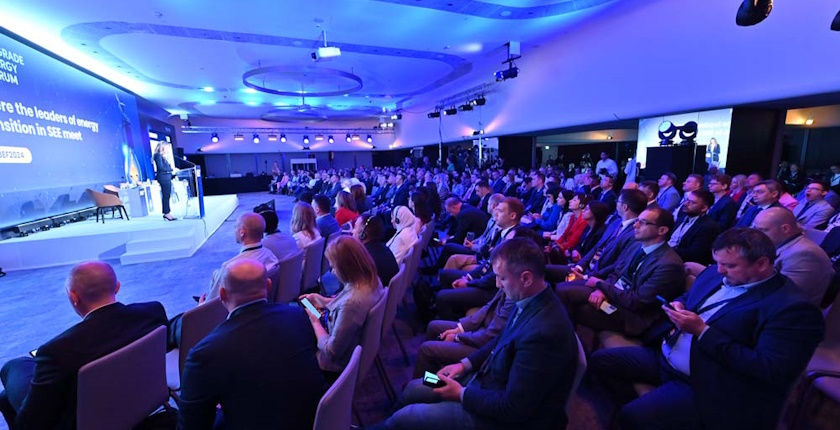
The agenda of the third Belgrade Energy Forum, taking place on May 14-15, has been finalized with the addition of further prominent energy experts and companies. The conference, organized by Southeast Europe’s leading energy news portal, Balkan Green Energy News, will feature eight panels covering key topics in the energy sector, with an impressive lineup of speakers. Make sure you register on time via this link.

The Belgrade Energy Forum will once again be a meeting place for representatives of regional and international institutions and organizations, as well as the business community from across the region, Europe, and the world.

Eight panels featuring more than 50 speakers will offer an overview of the current challenges in the energy sector. Conference participants will hear in-depth analyses of the current situation, but also projections for the future. The thread that connects everything at this year’s BEF is digitalization – it permeates energy production, consumption, and storage and allows enough flexibility for the stable functioning of the energy systems of the future, where renewable energy will dominate.

Chikán: Electricity knows no borders

One of the key speakers at the conference, Alteo Group CEO Chikán Attila, will lead the company’s high-level delegation. Alteo has recently launched a regional expansion drive, aiming to establish a green platform of up to 2 GW in energy production, including operation, software, maintenance, storage, and waste management.

The Hungarian company primarily targets its home market, Slovakia, Croatia, and Serbia.

“Electricity knows no borders, therefore partnerships and collaborations among energy market players are essential, even at the regional level. Such cooperation is vital to ensuring the security and reliability of electricity supply, facilitating the integration of renewable energy sources, and providing essential digital solutions, supported by expertise and professional know-how,” Chikán stressed.

Decarbonization strategies for power generation in Southeast Europe 2040/2050

  • Dejan Paravan, CEO, GEN Energija
  • Dušan Živković, CEO, EPS
  • Eric Scotto, CEO, AKUO
  • Milutin Đukanović, Chairman, EPCG Board of Directors
  • Neda Lazendić, Country Manager, WV-International

Although at the heart of national energy systems, state-owned power utilities are faced with an environment that has changed and continues to change rapidly. The key shift is the entry of private capital into electricity production through the construction of solar power plants and wind farms.

The energy transition, at this stage, requires cooperation between state power utilities and private companies. With decarbonization as the main objective, the key challenge lies in choosing appropriate strategies and electricity generation technologies.

Moderating the panel will be Dražen Jakšić, Director of the Energy Institute Hrvoje Požar (EIHP).

“The transition to a low-carbon energy system is a key challenge for our region, demanding innovation, investment, and cooperation. As a sponsor of the Belgrade Energy Forum, EIHP is committed to fostering dialogue and driving sustainable energy solutions. I look forward to an insightful discussion,” he stressed.

Jakšić: The transition to a low-carbon energy system is a key challenge for our region, demanding innovation, investment, and cooperation

In recent years, nuclear energy has emerged as a possible alternative. There is hardly a better interlocutor on this topic in the region than Dejan Paravan, the top man of GEN Energija, the Slovenian company developing the Krško 2 nuclear power plant project.

Dušan Živković, CEO of Elektroprivreda Srbije (EPS), will tell us about the Serbian power utility’s plans when it comes to nuclear energy.

Živković: Without decarbonization, the region’s energy sector has no future

“Without decarbonization, there is no future for the region’s energy sector, and that is the biggest challenge ahead of us. It is essential to accelerate decisions and ensure sustainable project financing mechanisms that will provide energy security for every country and power utility in the decades to come. By investing in existing capacities and new renewable energy projects, EPS, as the biggest utility in the region, will make its own contribution to energy security. That’s why we have initiated a transformation process – because we need to be more profitable, more efficient, and fully prepared to tackle any challenge,” Živković pointed out.

The energy transition, in his words, is the path EPS has chosen, and all its plans will align with that goal, based on the belief that the diversification of energy sources and new technologies are essential for achieving it. “These are just some of the key messages I will share with the participants of this year’s BEF,” said Živković.

Eric Scotto, co-founder and CEO of French company Akuo, will share the latest information on the energy transition from across the globe.

The company’s portfolio consists of 1.9 GW of power plants in operation and under construction, with a further 12 GW in the pipeline in more than 20 countries around the world, including a number of countries in the Southeast Europe region.

Integration of Western Balkans electricity markets into internal European market through market coupling

  • Anže Predovnik, Director, ADEX Group
  • Ivan Asanović, Executive Director, CGES
  • Marko Bislimoski, President, Energy, Water Services and Municipal Waste Management Services Regulatory Commission of the Republic of North Macedonia
  • Zoran Vujasinović, Policy Officer, ACER

The integration of the Western Balkans’ electricity markets with the European Union (EU) markets is a process that deserves much greater public attention than it currently receives. It is safe to say that its true importance will become evident only once it is completed.

Full integration will unlock significant synergies, maximizing the benefits of a unified market by enhancing supply security, accelerating the integration of renewable energy sources, and fostering greater competition and transparency.

Moderator Dejan Stojčevski, CTO of the SEEPEX power exchange, says the panel seeks to encourage dialogue on the importance of cross-border collaboration and market efficiency in bolstering energy security and sustainability in the region.

Bislimoski: The time for inspiring speeches is over. Geopolitical developments demand action – now!

Since market integration is largely the job of regulators, the challenges they face will be analyzed by Marko Bislimoski, president of North Macedonia’s Energy and Water Services Regulatory Commission (RKE).

He says that three things are essential for the regional integration of electricity markets into a single European market: investment, investment, and nothing but investment. In his words, the energy crisis demonstrated that limitations become a reality when governments fail to prioritize the implementation of key energy infrastructure capacities in their budgets.

“This past winter, the region faced the highest electricity prices compared to the rest of Europe. Why? Because the implementation of energy investments is not just a ribbon-cutting ceremony. Today, more than ever before, the countries of the former Yugoslavia must demonstrate maturity. These are the years when energy independence will be built through action. The time for inspiring speeches is over. Geopolitical developments demand action – now!” he stressed.

Energy revolution underway – uniting efforts to deliver green, intelligent and sustainable energy solutions

  • Aleš Prešern, VP, Head of Southeast Europe, Siemens Energy
  • Maja Turković, SVP, CWP Europe
  • Ann-Catherine de Tourtier, Managing Director Mediterranean, Nordex Group

As much as contesting the energy transition may be futile, there are still those who find such a view meaningful, especially in light of certain global political developments. That’s why it is important to give the floor to some of the transition leaders and let them testify that an energy revolution is indeed underway in the region.

The panel’s moderator Mirza Kušljugić – professor, energy expert, and one of the founders of Bosnia and Herzegovina’s Centre for Sustainable Energy Transition Centre (RESET) – goes one step further to show that change is not only happening but also accelerating.

“The key words are a new energy paradigm driven by the four Ds – decarbonization, digitalization, decentralization, and democratization. But now we also have another D: disruption, or radical change in the industry and market caused by technological innovation. Of course, we must focus the discussion – from global processes (China, the US, the EU, the Global South) to where the region stands in all of this,” Kušljugić points out, providing a perfect introduction to the panel.

Turković: It’s more important than ever to have open discussions about real solutions

Aleš Prešern, Vice President and Head of Southeast Europe at Siemens Energy, has worked in the energy sector for more than 20 years. He recalls that digitalization is key, along with grid resilience and electricity transmission.

With nearly 100,000 employees in more than 90 countries, Siemens Energy develops the energy systems of the future, ensuring that the growing energy demand of the global community is met reliably and sustainably. The technologies created in the company’s research departments and factories drive the energy transition and provide the base for one sixth of the world’s electricity generation.

As a leader in renewable energy development, CWP is actively working on several large-scale projects across the SEE region with a total capacity exceeding 7 GW, positioning the company at the forefront of the region’s energy transition. Given its global expertise and insights into the regional energy market, CWP’s contribution to this year’s conference will be invaluable.

Maja Turković, Executive Vice President of CWP Europe, says that BEF 2025 is a key gathering of leading experts driving the energy transition in Southeast Europe.

“As this shift gains momentum, it’s more important than ever to have open, action-driven discussions about real solutions to the challenges and opportunities ahead,” says Turković.

PPAs as a key to renewable energy growth in SEE

  • Nikola Gazdov, Chairman, Association for production, storage and trading of electricity – APSTE
  • Natalija Ljubić, Manager PPA & BESS Transactions, Pexapark
  • Ivana Đurović, Category Manager Renewable Energy, Knauf Group

Power Purchase Agreements (PPAs) are, like flexibility, a tool for fixing the imperfections of renewable energy sources, and they are recognized as a key mechanism within the new electricity market design. They ensure price stability, attract new investment, and accelerate the decarbonization of industry.

Is the region ready for PPAs? What are the dominant models? What is the current market practice? How are PPAs viewed by financial institutions? What do they offer to end consumers and what to investors in new power plants? Answers to these questions will be sought at the panel moderated by Mislav Slade-Šilović, Energy, Utilities & Resources Consulting Leader for Southeast Europe and member of the core PPA team at consultancy PwC.

Experience with PPAs for more than 500 GWh of electricity

Slade-Šilović’s experience in concluding PPAs for the production and consumption of over 500 GWh of electricity per year in the SEE region will certainly be of help.

Nikola Gazdov, Chairman of Bulgaria’s association for electricity production, storage, and trading (APSTE) and member of the Board of Directors of the European solar industry association SolarPower Europe, has no shortage of experience either. As CEO of three companies – Enery Element GmbH, Element Power Group, and Renergy – he is involved in the development of a large number of projects.

Pexapark, a company that provides logistics to businesses in the renewable energy market, is synonymous with PPAs in Europe. Natalija Ljubić is the Manager for PPA and BESS Transactions at Pexapark, which has helped conclude contracts for facilities with a combined capacity exceeding 35 GW.

The views of electricity buyers – without whom there would be no PPAs – will be conveyed by Ivana Đurović, Category Manager for Renewable Energy at Knauf Group.

Market flexibility: the backbone of a resilient energy system

  • Roman Bernard, CEO, NGEN
  • Luka Renko, COO, KOER
  • Alteo Group representative
  • Nikolaj Candellari, Project Manager and Market Intelligence, CyberGrid
  • Marko Zarić, EMS

Moderating the panel will be Elena Boškov Kovač, co-founder and CEO of Blueprint Energy Solutions, and a leading voice on market flexibility in Europe.

She will host representatives of the sector’s leading companies: NGEN, Alteo, KOER, CyberGrid, as well as Serbia’s transmission system operator Elektromreža Srbije (EMS).

“Excited to moderate a high-impact panel on ‘Market Flexibility: The Backbone of a Resilient Energy System’ at the Belgrade Energy Forum 2025,” says Boškov Kovač, whose work has shaped smart grid strategies and digitalization innovation agendas across the EU and under ETIP SNET.

As Europe accelerates its shift to renewables, market flexibility is emerging as the cornerstone of reliable, affordable, and decarbonized energy systems. With the European flexibility market promising to unlock over EUR 20 billion in savings, this session will explore how digital tools, flexible assets, and new market designs are unlocking value and resilience across the grid.

Slovenia’s NGEN is the technology sponsor of BEF 2025

Slovenian energy company NGEN, the technology sponsor of the conference, has managed to establish itself as a significant player in European markets in just five years of operation and is now ready to enter the Western Balkans’ markets.

Specializing in premium battery storage systems and smart energy solutions, the company is developing systems with a total capacity of 1.6 GWh in European countries. Its founder, Roman Bernard, will be speaking at the panel.

Also taking part in the panel will be Luka Renko, COO of KOER, a pioneer in virtual power plants in the region.

Rounding off the lineup of exceptional panelists will be Nikolaj Candellari, who is responsible for project management at CyberGrid. The software company was acquired a few years ago by Austria’s EVN, one of the first to demonstrate that greater integration of renewable energy sources, battery storage, and prosumers is not possible without digitalization and software solutions.

In a nutshell, this innovative company stands for the digitalization of the energy sector, with a focus on virtual power plants.