by in News

Project pipeline in Greece for CO2 capture, storage nearing EUR 4 billion

Carbon capture and storage projects worth as much as EUR 3.6 billion are under development in Greece. Energean’s subsidiary EnEarth has launched a tender for drilling two wells for the Prinos site under the Aegean Sea, while DESFA won a EUR 169 million EU grant for a carbon dioxide liquefaction unit.

Investors in Greece are counting on demand from the domestic industry for carbon capture and storage (CCS), so that it can remain competitive with regard to carbon dioxide emission costs. Euro2day calculated that the project pipeline is worth up to EUR 3.6 billion as the endeavors are clearing major milestones.

The time for drilling in Prinos is approaching. EnEarth, a subsidiary of Energean, is working on the establishment of the storage facility offshore Kavala. Earlier this month it launched a tender for drilling two wells.

The Prinos project is valued at EUR 1.2 billion

Works are scheduled to begin in the first half of next year. The project is worth EUR 1.2 billion, of which the firm secured EUR 270 million in funding from the European Union. It is waiting for environmental terms (AEPO) from the Ministry of Environment and Energy, as well as for the storage permit.

Notably, a draft law covering the sector is reportedly complete.

DESFA seeks contractor to drill two wells in Prinos

Another step ahead was achieved with a project for a pipeline that would transport CO2 from energy-intensive industrial facilities to a liquefaction system in Revithoussa. The endeavor is called ApolloCO2. Greece’s National Natural Gas System Operator (DESFA) won EUR 169.3 million through the European Union’s Innovation Fund for the terminal.

The system would include temporary storage and transport by ships to permanent storage. The budget amounts to EUR 700 million in the first phase, with another EUR 60 million envisaged for an expansion.

ApolloCO2 is in a group of 61 projects in the Innovation Fund’s latest round for net zero technology, worth EUR 2.9 billion in total.

DESFA is working on the investment with Ecolog, a subsidiary of GasLog.

EU funding three major carbon capture projects that would be connected with Prinos storage site

AppoloCO2 would bring CO2 from three capture facilities also funded by the EU. There is a possibility to involve overseas customers as well.

Cement maker Heracles, part of Holcim Group, is developing the Olympus project worth EUR 400 million in Milaki, Aliveri. Its competitor Titan has a EUR 584 million endeavor underway in Kamari, Boeotia (Viotia). It is called Ifestos.

DESFA has applied for EUR 30 million from Connecting Europe Facility for the CO2 pipeline

Motor Oil Hellas aims to install a unit in its Agioi Theodoroi oil refinery costing EUR 300 million to EUR 400 million. The project is called IRIS – Innovative low caRbon hydrogen and methanol productIon by large Scale carbon capture. It is for the construction and operation of a CCUS and e-methanol production system that would cut the refinery’s CO2 emissions by a quarter. CCUS stands for carbon capture, utilization and storage.

DESFA is seeking EUR 30 million from the EU’s Connecting Europe Facility (CEF) for a 35-kilometer CO2 pipeline. The first part would go from Ifestos and branch out to HELLENiQ Energy’s oil refinery in Elefsina (Eleusis). In subsequent phases, pipelines would reach Heracles’ Olympus, Metlen’s aluminum complex in Aspra Spitia, Thisvi in Boeotia (for GEK Terna’s Heron and HELLENiQ’s subsidiary Elpedison), and eventually Motor Oil’s IRIS.

As capacities grow, larger ships would be required to lower transportation costs. According to the article, three such vessels would cost EUR 240 million overall.
by in News

Karatzis, Metlen to install Greece’s largest battery in joint venture

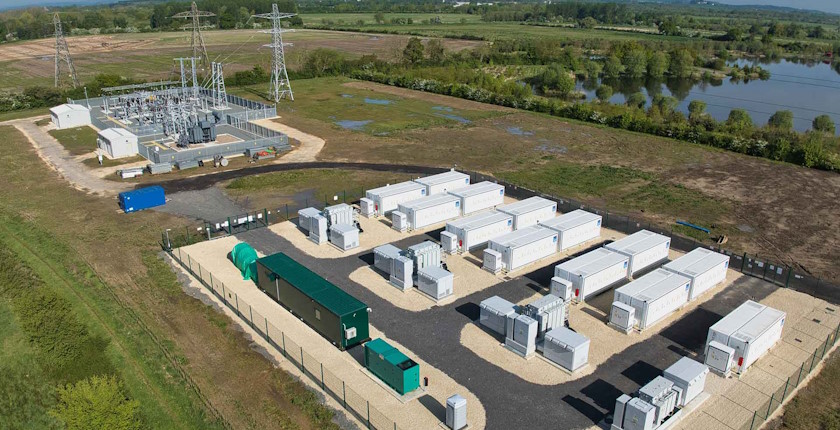
Karatzis Group of Companies and Metlen are establishing a joint venture for a standalone battery energy storage system (BESS) of 330 MW and 790 MWh. It is the biggest project in Greece so far and one of the biggest in Europe.

Metlen said it is entering into a new strategic partnership in Greece with Karatzis Group of Companies, through a joint venture with ownership stakes of 49% and 51% respectively, for the development, construction, operation, and energy management of a BESS with 330MW in operating power and a capacity of 790 MWh. The site is in Thessaly.

The two Greek companies are building upon their cooperation in the sale and purchase of green energy. Since August 2024, it has involved the implementation of a portfolio of solar power plants with a total capacity of 262 MW in the same region, the update adds.

The partners value their BESS investment at EUR 170 million

The BESS would be the largest standalone storage unit planned to date in Greece and one of the biggest in Europe, Metlen said. Total investment amounts to some EUR 170 million.

Karatzis and Metlen expect to complete it in the second quarter of next year. The partners expect no further grants or tax reliefs for the project, according to the announcement.

Metlen is tasked with full construction, operation, and maintenance of the unit through its M Renewables segment. It has presence and projects on five continents, the company pointed out. In 2024 alone, Metlen said it completed storage projects with a total capacity of 0.7 GWh and is in the final stages of agreements for third-party projects totaling 2.2 GWh.

Karatzis, based in Crete, manufactures a variety of netting products. It has five plants. In recent years it expanded to the construction of photovoltaic plants. The Metlen conglomerate produces metals and has a vertical presence in the energy market, being one the largest producers and suppliers in Greece.

by in News

Race against time to secure EU funding for waste-to-energy plants in Greece

Hostile reactions from citizens and the opposition by municipal authorities threaten to derail Greece’s efforts to build six waste-to-energy plants. Moreover, time is running out to secure EUR 800 million in European funding.

The Ministry of Environment and Energy is expected to publish a call for waste-to-energy projects planned in Attica, Western Macedonia, Rodopi, Peloponnese, Boeotia (Viotia) and Crete. Total investment would amount to EUR 1 billion, for 1.19 million tons in capacity. However, time is running out to secure EUR 800 million in European funding set aside for them and the accompanying recycling plants.

Greece has been warned several times by the European Commission and fined for failing to fulfil its obligations in waste management. The country still relies mostly on landfills to handle municipal waste, instead of modern solutions. Ideally, useful materials should be sorted for recycling before the waste gets burned in incinerators to produce energy.

Two of the proposed units, the ones in Rodopi and Western Macedonia, are expected to provide district heating. The Ptolemaida 5 lignite-fired plant supplies district heating in the coal region of Western Macedonia in the country’s north, but it is scheduled to be decommissioned by 2028 at the latest.

Its owner, Public Power Corporation (PPC or DEI) aims to complete a waste-to-energy plant by then. Other prospective investors include GEK Terna, Metlen, Aktor and Motor Oil Hellas, all big players in the country’s energy market.

High fees and pollution worry municipalities

Many local authorities have expressed their objections to hosting these plants, fearing a rise in municipal fees and pollution. A discussion is underway in numerous municipal councils. They could lodge appeals to the Supreme Court and delay the process.

Amanatidis: Cancel all waste-to-energy plans

The regional council of Western Macedonia recently voted overwhelmingly to reject the plan for PPC’s planned unit from the ministry’s strategic environmental assessment (SEA). Governor Giorgos Amanatidis called on the government to withdraw the study and cancel the project. Municipalities in the same region and other institutions are also against an incinerator.

European funding through the National Strategic Reference Framework (NSRF) ends in 2027. The government and investors have until mid-2026 for implementation, Newmoney reported, adding that waste-to-energy projects take two to three years to complete.

Recently, another initiative, the Apollo program, for investments in renewable energy to lower energy costs for vulnerable consumers, lost EUR 100 million from the EU’s Recovery and Resilience Facility (RRF).

by in News

Greece plans six waste-to-energy plants, set to meet EU landfilling limits

Large Greek companies, interested in the construction and operation of waste incinerators producing electricity and heat, are waiting for the government to complete the legal framework and launch tenders. Without the six planned facilities and accompanying infrastructure, the country would substantially lag behind the European Union’s targets for lowering the share of landfilled material.

Greece is transforming its waste management sector – dozens of units mechanically treating the material to feed six incinerators, covering all the regions. The Ministry of Environment and Energy is about to complete a strategic environmental assessment (SEA), after which its plan is to adopt a legal framework, before the end of the year.

Following a public consultation process, the general parameters would be determined including the details of a tender for the waste-to-energy plants. They are valued at EUR 1 billion in total. State-controlled Public Power Corp. (PPC or, in Greek, DEI) has expressed interest in entering the sector, alongside the conglomerates GEK Terna and Metlen, construction company Aktor, oil refinery operator Motor Oil and water, wastewater and waste processing operator Mesogeos.

The ministry intends to complete the competitive process in 2026, followed by a three-year construction period. The Greek media learned that public-private partnership is a favorable model for the investments.

At least two of six plants would provide district heating

In the central scenario, an incinerator in the Rhodope area would serve the wider region of East Macedonia and Thrace. One would be in Kozani, a coal region, for Central and Western Macedonia, Epirus, Thessaly and Corfu.

The government envisaged a unit in the Peloponnese to cover Western Greece, the Peloponnese peninsula itself and the Ionian Sea, excluding Corfu. One waste-to-energy plant is planned in Boeotia (Viotia), covering parts of Central Greece and the western part of Attica.

The waste incinerator in Kozani is likely to be built in the vicinity of Ptolemaida 5, Greece’s last coal power plant

In the same peninsula, where Athens is situated, a unit would also get shipments of waste from the north Aegean islands, one section of the Cyclades archipelago and the Dodecanese. An incineration plant in Heraklion (Iraklio) would be for Crete, Santorini, Karpathos and Rhodes.

The combined annual capacity of the six units is projected at 1.19 million tons. The largest ones are the Attica project (356,000 tons) and the Kozani plant (288,000 tons). The latter, which would probably be located near PPC’s Ptolemaida 5 coal power plant, is also seen providing up to 40% of the district heating needs in the area. The investment is valued at EUR 300 million.

Ptolemaida 5 is scheduled to be closed at the end of next year, marking the completion of Greece’s coal phaseout. The waste incinerator in Boeotia would provide district heating as well, the plan reads.

System for energy recovery clings on construction of mechanical treatment units, waste separation

On the logistics side, there are 13 waste treatment units in operation in Greece and 25 are under construction. The ministry expects all units to be complete by 2029, to feed the incinerators.

The capacity amounts to 1.45 million tons per year altogether, of which 651,000 tons of waste would be processed into solid recovered fuel (SRF), which is of higher quality. The energy-intensive industry would absorb 150,000 tons. The development of the treatment system requires substantial infrastructure including the selection of municipal waste selection at the source.

Up to 651,000 tons of SRF is expected to be produced per year in the waste treatment facilities

The estimated electricity production from 1.19 million tons of waste is 1.03 TWh, equivalent to 2% of the country’s total consumption. Notably, 57.5% of the projected output is considered renewable energy, in line with the portion of biodegradable waste.

In the study, the options to deploy pyrolysis or gasification technologies were rejected. The authors argued they are not viable in Europe. It left incineration as the only option to recover energy from waste.

If the incinerators aren’t built, but the energy-intensive industry receives the same amount of SRF, 22.7% of waste would be landfilled in 2030, projections showed. The European Union’s target is 10%. The share of landfilled waste rises to 29.2% in the same scenario.

by in News

PPC begins construction of 165 MW solar farm with BESS in Bulgaria

PPC Group is accelerating its expansion in the Balkans by laying the foundation stone for its Colosseum solar power project in Bulgaria. The facility will have 165 MW in peak capacity and include a battery energy storage system (BESS), the Greek state-controlled utility revealed. The company’s investment plan includes Italy, where it recently commissioned the first two solar parks.

Public Power Corp. – PPC Group said it commenced the construction of a photovoltaic plant in Stara Zagora in central Bulgaria. The project involves 260,000 bifacial solar panels with an expected annual power generation of more than 265 GWh. It is one of the biggest investments abroad for Greece’s government-controlled utility, which is expanding in Southeastern Europe and beyond.

The Colosseum solar park will have 165 MW in peak capacity and include a BESS facility of 25 MW in operating power and a capacity of 55 MWh. The liquid-cooled lithium iron phosphate (LFP) batteries will support the operation of the photovoltaic plant and contribute to the stability of the electricity system, the company added.

A 33/110 kV substation will be built on the site, the announcement reads. The solar power plant’s estimated output is equivalent to the electricity needs of more than 45,000 Bulgarian households.

PPC has 550 MW in project pipeline in Bulgaria

PPC Group runs an 18 MW wind farm called Garda in the country and another 550 MW in its renewables project pipeline. The company’s overall online green energy capacity is 5.5 GW.

According to its three-year strategic plan, by 2027, PPC Group will develop another 6.3 GW of renewables in Greece and the region. It revealed that more than 60% is under construction or ready for construction.

First PV units from strategic deal with Metlen in Italy came online in December

In December, PPC Group said it launched the operation of photovoltaic plants Carcarello and Luxenia, its first two facilities in Italy. They have 20 MW and 12 MW, respectively, in peak capacity. It translates to over 60 GWh of electricity per year in total from the two solar power units in central Italy.

The production can meet the demand of almost 15,000 households. The contractor for Carcarello and Luxenia was Metlen, formerly known as Mytilineos. The projects are part of a region-wide strategic agreement for photovoltaics, for 2 GW. Another 160 MW of PV capacity is under construction in the country.

Greek state-controlled power utility is largest renewables producer in Romania

PPC Group is the largest renewable energy producer in Romania, operating 25 wind, photovoltaic and hydroelectric facilities as well as battery storage units.

Its subsidiary Reţele Electrice România invested EUR 240 million last year in the expansion and modernization of its electricity distribution network. The firm plans to increase the number of smart meters in the three regions that it serves to two million by the end of 2025.

Gas-hydrogen CHP plant in Kardia to be completed by end-2026

As for its home market, the Greek utility said in January that it started the construction of a high-efficiency combined heat and power (CHP) plant. The future gas facility of 17 units is within the site of the former Kardia coal-fired power plant in the Western Macedonia province.

The company expects to complete the EUR 80 million cogeneration investment by the end of next year. According to earlier updates, the facility will have 105.3 MW in power capacity and 66.5 MW for thermal energy.

The project envisages the use of a mixture of fossil gas and hydrogen. The group is building another gas plant in Alexandroupolis.