by in News

Earth would become 2.8 degrees warmer by 2100 without additional measures

The United Nations Environment Programme (UNEP) has released its annual Emissions Gap Report 2025: Off Target, assessing the state of global greenhouse gas emissions. The document outlines the gap between where global emissions are headed – based on announced national policies and pledges – and what is needed to meet international temperature targets.

Ten years after the adoption of the Paris Agreement, UNEP claims the accord has played a key role in lowering global temperature projections and spurring the development of renewable energy, policies, and targets. Due to countries’ slow progress in reducing emissions, the world is likely to exceed the Paris Agreement’s target of limiting warming to 1.5 degrees Celsius above pre-industrial levels, possibly within this decade.

Under the Paris Agreement, countries are required to submit their nationally determined contributions (NDCs) every five years — their plans for reducing emissions and adapting to climate change.

Implementation of current policies alone would lead to a warming of 2.8 degrees

The report states that by September 30, 2025, only 64 signatory countries, responsible for 63% of global emissions,  had submitted or announced NDC plans with mitigation targets for 2035. However, just 13 countries, accounting for less than 1% of global emissions, have updated their reduction targets.

In addition to the lack of progress in commitments, the report highlights a massive implementation gap. “In addition to the lack of progress in pledges, a huge implementation gap remains, with countries not on track to meet their 2030 NDCs, let alone new 2035 targets,” the report warns.

According to the report, full implementation of all NDCs would lead to a temperature rise of between 2.3 and 2.5 degrees Celsius by the end of the century, compared to last year’s projected range of 2.6 to 2.8 degrees. Implementation of current policies alone would result in a warming of 2.8 degrees, slightly lower than the 3.1 degrees that were projected in last year’s assessment.

Implementing all NDCs by 2035 would cut emissions by 12%-15% from the 2019 levels. However, if the United States withdraws from the Paris Agreement, the reduction would drop to between 9% and 11%.

It is far below the 35% reduction needed to limit warming to two degrees and the 55% required to stay within 1.5 degrees Celsius.

Greenhouse gas emissions continue to rise

Global emissions of greenhouse gases: carbon dioxide (CO2), methane (CH4), nitrous oxide (N2O), and fluorinated gases (F-gases), reached a record 57.7 billion tons of CO2 equivalent last year or 2.3% more than in 2023.

The largest share of emissions comes from the combustion of coal, oil, and gas, about 69% of the total. Combined emissions of CH4, N2O, and F-gases make up about 24%. In addition to fossil fuels, deforestation and land use change were key drivers of the sharp rise in emissions in 2024, according to the report.

Developed countries account for 77% of global emissions

The world’s most developed countries, the G20 group (Argentina, Australia, Brazil, Canada, China, France, Germany, India, Indonesia, Italy, Japan, Mexico, Russia, Saudi Arabia, South Africa, South Korea, Turkey, the United Kingdom, the United States, and the European Union), are responsible for 77% of global emissions, while the least developed countries contribute just 3%.

The largest emitters are China, the US, India, the EU, Russia, and Indonesia. The biggest absolute increase was recorded in India, followed by China and Indonesia, which is also among the world’s most populous nations. Meanwhile, emissions in the EU fell by 2.1%.

Paris Agreement goals are still achievable – but barely

“Urgent and stringent emission reductions” are essential to achieve the goals of the Paris Agreement, yet new NDCs and the current geopolitical context offer little reassurance that such reductions will be realized, the authors stressed.

UNEP Executive Director Inger Andersen emphasized that the pace of change is insufficient, pointing out that emission reductions are “still possible – just.”

“Proven solutions already exist. From the rapid growth in cheap renewable energy to tackling methane emissions, we know what needs to be done. Now is the time for countries to go all in and invest in their future with ambitious climate action – action that delivers faster economic growth, better human health, more jobs, energy security, and resilience,” she said.

To reverse every 0.1 degrees Celsius of warming, about 220 billion tons of CO2 must be removed

To offset every 0.1 degrees Celsius of global temperature rise, approximately 220 billion tons of CO2, equivalent to five years of global emissions, would need to be removed from the atmosphere. While many impacts cannot be fully reversed, UNEP underscores that the 1.5-degree target remains a legal, moral, and political obligation for all governments.

“Scientists tell us that a temporary overshoot above 1.5 degrees is now inevitable – starting, at the latest, in the early 2030s. And the path to a livable future gets steeper by the day. But this is no reason to surrender. It’s a reason to step up and speed up. 1.5 degrees by the end of the century remains our North Star. And the science is clear: this goal is still within reach. But only if we meaningfully increase our ambition,” UN Secretary-General António Guterres said in his message on the report.
by in News

Powering the Future with Sustainable Energy – North Macedonia to host 14-IFESD forum on October 28-30

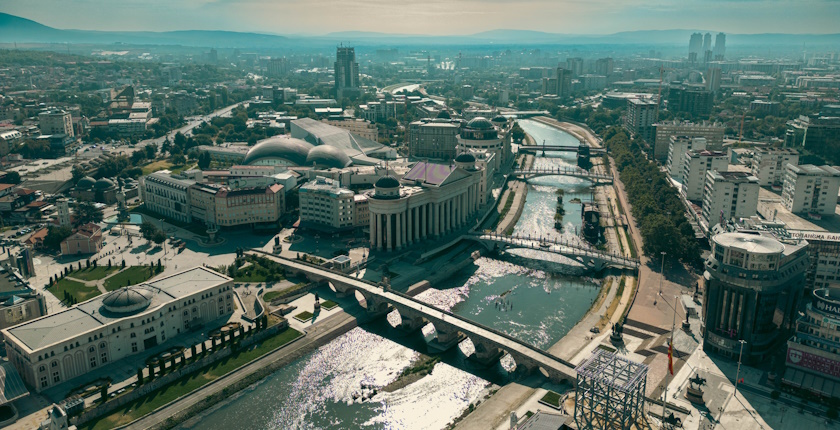
Over 300 officials, policymakers, experts, business leaders, scholars and civil society representatives are gathering in Skopje on October 28 at the three-day International Forum on Energy for Sustainable Development (14-IFESD). Key topics include energy connectivity, energy security, a just energy transition and international energy cooperation.

The 14th International Forum on Energy for Sustainable Development (14-IFESD) will be held from October 28 to 30 at the Hotel Holiday Inn Skopje in North Macedonia. This year’s theme, From Goals to Action: Powering the Future with Sustainable Energy, will guide discussions among more than 300 participants, including officials, policymakers, energy experts, business leaders, scholars and civil society representatives.

They will discuss critical topics such as energy connectivity, energy security, just energy transition, international energy cooperation and collective efforts to accelerate the implementation of the United Nations 2030 Agenda for Sustainable Development.

The forum will serve as a platform for shaping actionable strategies to accelerate progress toward global sustainable energy goals

The Ministry of Energy, Mining and Mineral Resources is organizing the event in collaboration with the UN Development Programme (UNDP) Country Office in North Macedonia and the five regional commissions: UN Economic Commission for Europe (UNECE), UN Economic and Social Commission for Asia and the Pacific (UNESCAP), UN Economic Commission for Latin America and the Caribbean (UNECLAC), UN Economic Commission for Africa (UNECA) and Economic and Social Commission for Western Asia (ESCWA).

Last year’s IFESD was held in Bangkok.

The speakers list includes Prime Minister Hristijan Mickoski, Minister of Energy, Mining and Mineral Resources Sanja Božinovska, Energy Community Secretariat Director Artur Lorkowski and Minister of Energy and Mining of Montenegro Admir Šahmanović.

The forum will serve as a platform for shaping actionable strategies to accelerate progress toward global sustainable energy goals, the organizers said.

One of the segments on the first day of 14-IFESD is dedicated to opportunities for the mitigation of methane emissions from the coal sector. It will take place in a hybrid format – onsite and online.

by in News

Croatia among EU’s top three emitters of methane from oil, gas industry

Croatia is one of the three European Union member countries with the highest methane emissions from the oil and natural gas industry, according to research by Greenpeace Croatia and the Clean Air Task Force (CATF). Greenpeace Croatia noted that methane has 84 times greater global warming potential than carbon dioxide on a 20-year timescale.

Methane emissions from oil and gas infrastructure in Croatia have been comprehensively analyzed for the first time, according to Greenpeace Croatia.

“Methane hunter” Théophile Humann-Guilleminot from the international climate organization Clean Air Task Force (CATF) has examined more than 500 locations all around the world. He also recently visited 27 locations in Croatia, measuring methane emissions at all but one of them.

Greenpeace stressed it is an astonishing 96% of the investigated sites and the highest score by CATF in any EU member state.

Emissions were documented in detail by CATF at each site

The two organizations have visited several locations in Croatia with facilities for the production, transportation, and storage of oil and gas. The infrastructure is owned or operated by INA, Plinacro, and Okoli Underground Storage.

At 26 locations, methane emissions were documented in the form of gas release, venting, and flaring, which could also harm human health, Greenpeace underlined.

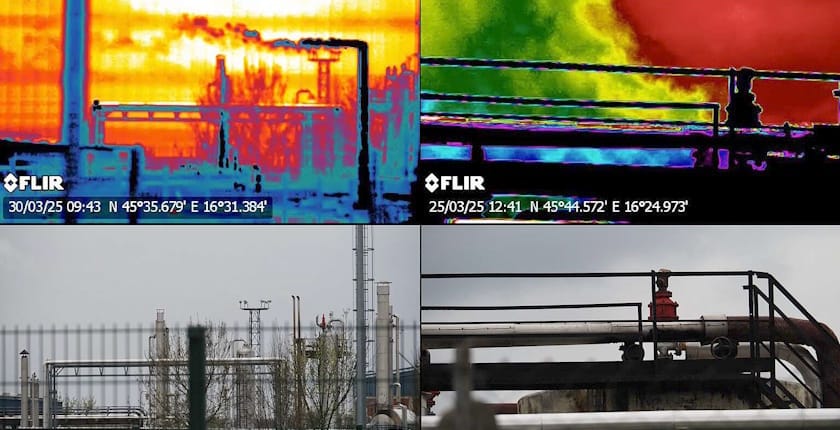
CATF carefully documented emissions at each location using infrared (IR) videos and IR and digital photos. The collected evidence is part of the group’s Cut Methane campaign in Europe and the world.

Humann-Guilleminot: Companies are releasing methane and accelerating climate change, all in pursuit of short-term profits

Théophile Humann-Guilleminot said the research strongly confirmed what scientists have been warning about for years – methane is leaking or being released along the entire oil and gas supply chain.

From the vast gas fields of Texas to Plinacro’s pipelines, companies are releasing methane and accelerating climate change, all in pursuit of short-term profits, he added. In his words, out of all the countries he visited, Croatia ranks amongst the worst three in terms of results.

“The scenes of methane gushing from open, rusted reservoirs in the Ivanić-Grad area, as well as leaks from wells at the Okoli location, are extremely worrying. During the energy crisis, this level of waste demonstrates a clear disregard for the climate and Croatian citizens,” Humann-Guilleminot stated.

Andrić: Greenpeace calls on the government to take seriously the implementation of new regulations on methane

Petra Andrić from Greenpeace Croatia pointed out the researchers could have assumed that methane emissions would be registered in some locations, but that they couldn’t have predicted such shocking results.

“Greenpeace is calling on the Government of the Republic of Croatia to take seriously the implementation of the new regulations on methane. In the long term, it is even more important to phase out fossil gas by 2035 and ban new gas and other fossil projects. The solutions are energy efficiency and renewable energy sources, in which Croatia has enormous potential, especially solar and wind,” she stressed.

Eszter Mátyás from Greenpeace Central and Eastern Europe said the new regulations would be much stricter for the operators in the fossil fuel industry. Therefore they will have to regularly carry out measurements and submit reports to regulatory bodies to prevent the release of methane from their infrastructure, she added.