by in News

MEPSO Advances Strategic 400 kV Interconnection Project for Energy Community Priority Status

North Macedonia’s electricity transmission system operator, MEPSO, has officially nominated the “400 kV East–West Interconnection Corridor – Western Section” for inclusion in the prestigious list of Projects of Energy Community Interest (PECI). This strategic move aims to solidify the project’s status as a regional priority, facilitating cross-border energy cooperation and bolstering the stability of the Balkan power grid.

A Vital Link in the Regional Energy Spine

The nominated western section focuses on establishing a high-capacity link between Tetovo in North Macedonia and Prizren in Kosovo. This infrastructure is a critical component of a broader corridor designed to integrate the networks of Turkey, Bulgaria, Greece, North Macedonia, Kosovo*, Albania, and Montenegro.

Key specifications of the project include:

  • Total Length: Approximately 255 kilometers.

  • Primary Objective: Connecting the capital, Skopje, and the city of Ohrid via Tetovo, while providing a robust cross-border link to Kosovo*.

  • Capacity Upgrade: Replacing the current single 220 kV link between North Macedonia and Kosovo with a modern 400 kV interconnection.

Infrastructure and Operational Enhancements

The project involves a series of interrelated investments beyond simple transmission lines. MEPSO has outlined plans for significant substation developments to manage increased load and ensure operational flexibility:

  • Tetovo Substation: A new 400/110 kV facility will serve as a central hub for multiple high-voltage lines, significantly strengthening the transmission capacity in Western North Macedonia.

  • Oslomej Substation: Another 400/110 kV facility is planned for Oslomej. This location is particularly strategic as it transitions from a traditional coal-fired power site to a hub for new renewable energy projects.

Strategic Significance and Regional Synergy

MEPSO emphasizes that this investment is highly complementary to existing regional efforts, specifically the approved PECI project to upgrade the line between Prizren (Kosovo) and Fierza (Albania) to 400 kV. This synergy will create a seamless high-voltage path connecting North Macedonia, Kosovo*, and Albania.

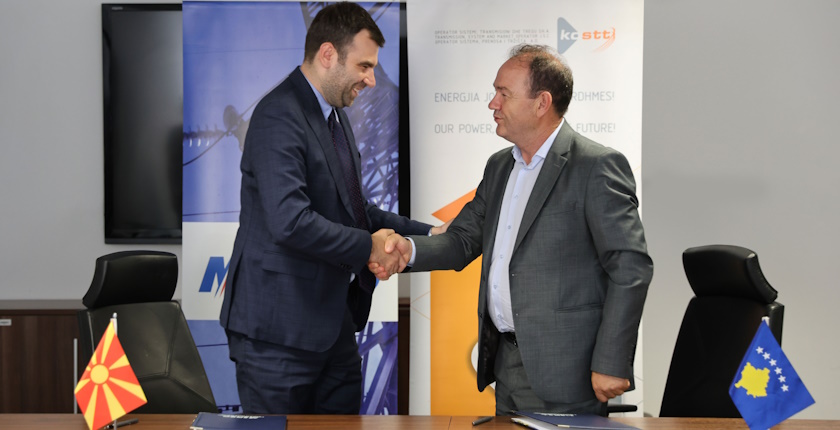
This regional integration was further solidified last year (2025) through a Memorandum of Understanding signed between MEPSO and KOSTT (Kosovo’s Transmission, System and Market Operator).

“Achieving PECI status is a recognition of the project’s pronounced regional relevance. It directly contributes to the Energy Community’s objectives of secure, sustainable electricity supply and the efficient integration of renewable energy sources.” — MEPSO Statement

Timeline and Next Steps

The selection process for the second PECI list follows a rigorous biannual cycle. With the call for nominations having closed on January 19, the final list is expected to receive official approval by December 31, 2026.

Projects granted PECI status benefit from streamlined permitting processes and enhanced access to regulatory and financial support, accelerating the region’s progress toward decarbonization and a unified energy market.
by in News

Firms from Croatia, BiH, Serbia to build power line in North Macedonia

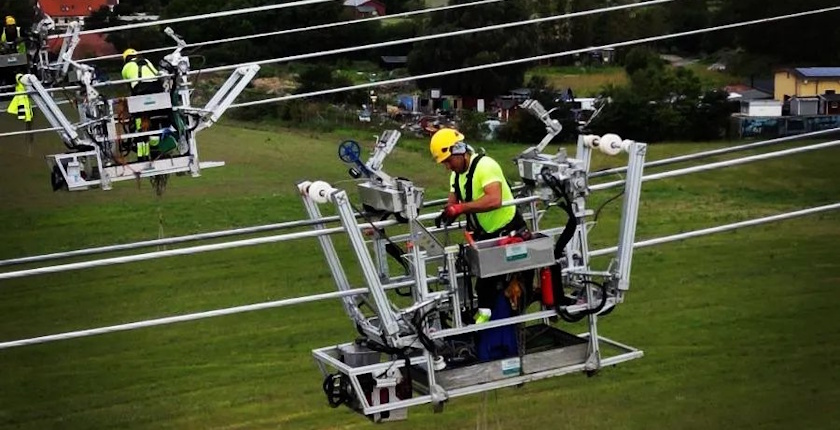
Croatia-based Dalekovod, Elnos from Bosnia and Herzegovina, and Serbian Kodar Energomontaža will jointly build electricity transmission infrastructure in North Macedonia.

Dalekovod said it signed a EUR 19.7 million contract with MEPSO, the transmission system operator of North Macedonia, as the lead member of a consortium that includes Elnos BL and Kodar Energomontaža.

The contracted works include the delivery and construction of a 400 kV power line from the 400/110 kV Bitola 2 substation, via the 400/110 kV Ohrid substation, to the North Macedonia – Albania border.

The project ensures long-term stability of the electricity system in the wider region

The new Ohrid substation is currently under construction, with Končar, another Croatian company, as contractor. Končar is the majority shareholder of Dalekovod since 2022.

The Croatian firm pointed out that the new power line in North Macedonia represents a significant infrastructure project ensuring long-term stability of the electricity system in the wider region.

Dalekovod: Strengthening position in the regional and European market

Construction is scheduled for completion by mid-2028.

Of note, all three companies are active on the territory of former Yugoslavia, as well as across Europe and even worldwide. The owners of Elnos and Kodar are individuals from Bosnia and Herzegovina and Serbia, respectively, while the largest shareholders of Dalekovod are the Government of Croatia and three foreign banks operating in the country.

Operations in the region, Europe, Africa

Dalekovod has subsidiaries in six countries, including Namibia. In October, the company concluded a EUR 100 million deal for the construction of a 400 kV power line in Sweden.

Elnos BL is part of Elnos Group based in Banja Luka, Bosnia and Herzegovina. The company, which recently marked a remarkable dual jubilee – 80 years of tradition and 30 years of modern business development, operates in 18 countries.

A week ago, it signed a contract with Power China Construction Group to build a connection to the transmission grid for the 300 MW Vetrozelena wind farm in Serbia.

Kodar Energomontaža, headquartered in Serbia’s capital Belgrade, has carried out numerous projects across Europe – from southeastern Balkans to Scandinavia, as well as in West Africa.

In March, the company inked a deal with Serbia’s transmission system operator Elektromreža Srbije (EMS) for the construction of a two-system 400 kV transmission line, part of the Trans-Balkan Electricity Corridor.

by in News

North Macedonia receives grant from France for grid modernization

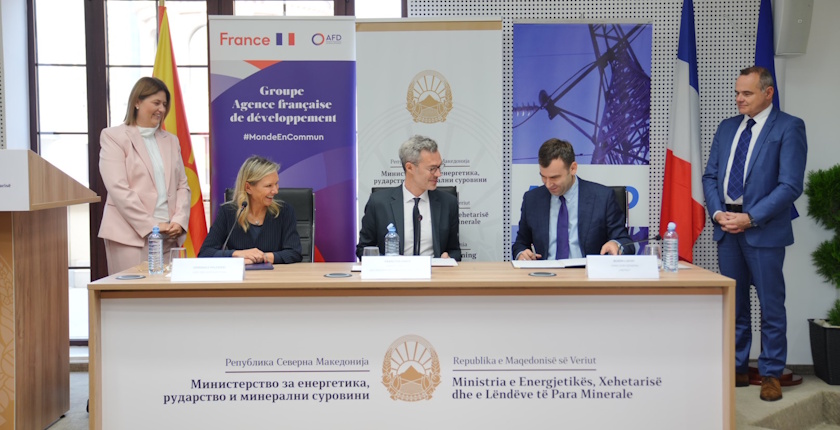
The transmission system operator of North Macedonia – MEPSO, France’s development agency Agence Française de Développement (AFD), and RTE International signed an agreement for a grant intended to support the Balkan country’s transmission system. At the same time, the Ministry of Energy, Mining, and Mineral Resources signed a joint declaration with AFD, officially welcoming the agency as a partner of North Macedonia’s Investment Platform for a Just Energy Transition.

The EUR 600,000 grant is for technical assistance for the modernization and digitalization of the transmission grid in North Macedonia, MEPSO said.

The project focuses on four areas: preparing system adequacy studies using the ANTARES market simulator, sizing system reserves, developing a methodology for calculating transmission losses and producing a feasibility study, and a project for substation digitalization.

Božinovska: AFD’s technical assistance will enable MEPSO to manage variability in the system more efficiently

As part of the project, experts from RTE International, a subsidiary of the French transmission system operator (TSO) RTE, have already held a training course for MEPSO’s engineers on the use of the ANTARES simulator, the Ministry of Energy, Mining and Mineral Resources said.

Minister Sanja Božinovska stressed that AFD‘s technical assistance would enable the company to manage more efficiently the variability resulting from increased participation of renewable sources and market fluctuations.

A more advanced and smarter grid means fewer outages, better use of clean energy, stronger regional connections, and greater system resilience – whether to weather conditions, demand fluctuations, or market instability, Božinovska noted.

Milevski: Pilot project will be launched for the digitalization of a 110 kV substation

According to RTE International CEO Veronika Milevski, the agreement combines advanced power system modeling, innovative reserve forecasting using artificial intelligence (AI), and a pilot project for the digitalization of a 110 kV substation.

This is a decisive step toward a more resilient, transparent, and competitive electricity grid, she pointed out.

MEPSO CEO Burim Latifi explained that the digital transformation pilot project is aimed at developing a fully digital substation with advanced protection, management, and monitoring systems.

Vince: AFD is committed to supporting a just and sustainable energy transition

It is a concrete step toward transforming MEPSO into a smarter, more efficient, and future-oriented TSO, he added.

Of note, AFD and RTE established collaboration with Montenegro’s TSO CGES in November last year. AFD also signed a memorandum of understanding with Albania’s power utility KESH in April.

Regarding the signing of the joint declaration, Sanja Božinovska said the partnership is improving the country’s ability to modernize its electricity system, integrate more renewables, and strengthen security of supply.

AFD is committed to supporting North Macedonia’s just and sustainable energy transition, according to the Deputy Director of the AFD Office for the Western Balkans, François Vince.

The signing of the two agreements was attended by French Ambassador Christophe Le Rigoleur.

Photo: Sanja Božinovska/Facebook
by in News

North Macedonia, Kosovo* planning 400 kV power interconnection

The transmission system operators (TSOs) of North Macedonia and Kosovo* are developing a project for a 400 kV interconnection line between Tetovo and Prizren. The investment would include other grid upgrades and expansion.

Director-General of North Macedonia’s MEPSO Burim Latifi and Acting Chief Executive Officer of Transmission, System and Market Operator (KOSTT) of Kosovo* Shaban Neziri signed a memorandum of cooperation in Skopje. The two transmission system operators intend to jointly upgrade the high-voltage network. The emphasis is on a strategic project for a 400 kV interconnection line from Tetovo to Prizren.

The endeavor aligns with the European Union’s energy transition goals by 2050, North Macedonia’s TSO said. The project is nominated through the planning platform of the European Network of Transmission System Operators for Electricity (ENTSO-E) for increasing transmission capacities.

New interconnection to encourage investments in renewables

North Macedonia and Kosovo* have only one interconnection now, of 220 kV. According to ENTSO-E, Southeastern Europe needs to at least double transmission capacities and, in some cases, increase them even more than that, MEPSO stressed.

On that note, the bilateral project includes additional investments in the transmission network, such as the construction of a 400/110 kV transformer station in Tetovo, in North Macedonia’s northwest, and 400 kV transmission lines from Tetovo to Ohrid and Skopje.

“The 400 kV Tetovo-Prizren transmission line project will not only increase the system’s capacity and reliability but also enable greater electricity exchange, encouraging new investments in renewable energy sources,” Latifi said.

Investment to bolster East-West energy corridor

Regarding the other benefits, the heads of the two TSOs agreed that the project would bolster the transmission infrastructure in the region, strengthen the so-called East-West energy corridor and improve system flexibility.

The new document confirms the joint commitment to creating a modern and reliable energy infrastructure, Neziri stressed. “With this project, we are enhancing energy connectivity in the region and contributing to achieving the energy goals of the Western Balkans,” he added.

Strong interconnections are essential for the integration of the electricity market in the Western Balkans

The project is in the planning and technical preparation phase. The start of construction depends on securing financial resources and coordination with all relevant stakeholders, MEPSO explained.

Strong interconnections are essential for the integration of the electricity systems and markets in the region with the EU, through market coupling. Together with Albania and Greece, North Macedonia and Kosovo* are part of one such regional project, which has been suffering delays.

Market coupling is a prerequisite for the exemption of the power markets in the Western Balkans and the rest of the Energy Community from the EU’s Carbon Border Adjustment Mechanism, or CBAM, under which a CO2 tax is set to start being charged on January 1.

* This designation is without prejudice to positions onstatus and is in line with UNSCR 1244/99 and the ICJ Opinion on the Kosovo declaration of independence.
by in News

Low consumption causes grid failure, power outage in North Macedonia

A grid failure caused a brief power outage in North Macedonia in the early hours on Sunday, May 18. Disruptions at the affected 400/110 kV transformer stations were triggered by high voltage levels in the grid, caused by low consumption, typical for nighttime hours and weekends at this time of year, according to a statement by the country’s transmission system operator, MEPSO.

MEPSO said its teams restored normal electricity supply in about an hour and were working to fully normalize the stability of the power system.

According to the update, grid instability caused by low consumption at nighttime and on weekends is a problem shared by almost all transmission system operators in the region and around Europe.

Bulgaria’s energy minister: Bulgaria played the crucial role in stabilizing North Macedonia’s grid

At the same time, Bulgarian Minister of Energy Zhecho Stankov said that a grid failure had affected several countries in Southeast Europe, though not Bulgaria. He added that his country’s balancing facilities were crucial in stabilizing North Macedonia’s grid, restoring supply, and preventing the crisis from spreading further. In Bulgaria, the Electricity System Operator (ESO) is responsible for the transmission network.

He claimed Serbia and Croatia have also experienced problems due to a lack of balancing facilities. “The colleagues from Serbia also had certain difficulties in the morning hours, and we managed to balance them out,” Stankov stated.

EMS has denied that any disruptions or outages occurred in Serbia

However, Serbia’s transmission system operator Elektromreža Srbije (EMS) told Balkan Green Energy news that the country’s grid did not experience any disruptions or outages and that there was no need for assistance from Bulgaria. EMS said it would not specifically comment on the Bulgarian minister’s statement because it was unclear what it was referring to.

In its reply to Balkan Green Energy News, EMS underscores that there were no consequences for the transmission system of the Republic of Serbia, explaining that EMS, at the request of MEPSO, to facilitate the repairs in North Macedonia, temporarily shut down the 400 kV transmission line between the Vranje 4 transformer station and the North Macedonian border.

Renewables had no share in the problem, according to Stankov

Stankov also stressed that solar power plants did not play a role in the crisis, unlike in Portugal and Spain in late April. The grid failure occurred in the early morning hours and amid low renewable energy generation, he said, adding that “renewable energy had no share in the problem.”

Bulgaria plans to build three new pumped storage hydropower plants

Bulgaria’s system remained stable thanks to its generating and balancing capacities, in Stankov’s view. He told the press that the country possesses 90% of all the reactive energy compensation capabilities in Southeast Europe.

Bulgaria is working with the European Investment Bank (EIB) to build at least three pumped storage hydropower plants in the Rhodope region, aimed at further enhancing regional grid resilience, Stankov pointed out. The minister vowed to keep the country’s grid on standby to support other regional networks in need of stabilization.

Stankov revealed that one such project is being developed for the Vacha dam. The other two pumped storage hydropower plants are planned to be built on the Dospat and Batak dams.

by in News

North Macedonia’s MEPSO seeks contractor for power line to Albanian border

Transmission system operator MEPSO launched an international tender for the construction of a 400 kV transmission line, the North Macedonian part of a planned interconnection with Albania. The company earlier canceled the contract with Energoinvest, which began building it four years ago.

State-owned MEPSO said the project is of great importance for the energy stability of North Macedonia and regional integration. The tender is for the construction of an overhead transmission line of one hundred kilometers from the Bitola 2 transformer station to the North Macedonian – Albanian border.

The call was issued after the cancellation of the contract under which construction initially began in 2021.

North Macedonia, Albania waiting over three decades for electricity interconnection

The investment is valued at EUR 17 million. The project is funded through a loan from the European Bank for Reconstruction and Development (EBRD) and grants from the European Union.

The North Macedonian part of the interconnector with Albania is scheduled to be completed by the end of 2027

„I regret that for more than three decades, despite political pluralism and democratic changes, there was no institutional courage and vision to establish an electricity connection with Albania. Today, we are correcting this historical omission,” said Burim Latifi, Director-General of MEPSO.

The transmission line is expected to be completed by the end of 2027, with construction set to begin in early 2026, according to the country’s electricity transmission system operator (TSO).

The deadline for submitting bids is 45 days, and the selection of the most favorable bidder is expected in the third quarter of 2025, MEPSO added.

Latifi: Energoinvest jeopardized power line project

The company claimed the previous contractor, Energoinvest from Bosnia and Herzegovina, jeopardized the project and public interest through unjustified requests for additional funds and by unilaterally abandoning the site, leading to the termination of the contract.

So far, only a small portion of the planned towers for the transmission line has been constructed.

„We encountered a seriously neglected project. Out of 269 planned foundations for transmission towers, only 24 were completed, clearly showing the lack of seriousness in completing the project,” Latifi stated.

The funds spent so far were used for equipment procurements

Energoinvest has received EUR 5.8 million, of which EUR 2.5 million was recovered through bank guarantees, he added. Latifi clarified that the funds were used for procuring equipment, now owned by MEPSO.

The company pointed out that the power line would be part of the proposed East-West energy corridor, connecting Bulgaria, North Macedonia, Albania and Montenegro, which is linked with Italy by an undersea cable.

„The construction of this interconnector will position our system as an essential part of European electric power infrastructure, enabling stable participation in regional markets, access to system and balancing services, and providing more secure and economical energy supply for all citizens,” MEPSO states.

by in News

Macedonia’s MEPSO planning to rehabilitate its power transmission grid

The Electricity Transmission System Operator of Macedonia AD MEPSO published tenders inviting proposals for goods and services for its project to rehabilitate and modernize its nation-wide power transmission grid along with a power system control project. The total investment in the projects is estimated to stand at EUR 40.5 million.

The money to finance the projects in all their stages will be co-financed by the European Bank for Reconstruction and Development (EBRD) and the Macedonian power transmission company. The bank said in a statement that AD MEPSO wants to use a loan from or a grant administered by the EBRD along with its own funds to complete the project to rehabilitate and modernize its sub-stations and other infrastructure and facilities.

AD MEPSO has invited interested companies to make offers for goods, work and services which includes procuring equipment for sub-stations, high voltage equipment, equipment for the remote monitoring of sub-stations, optical ground wire and overhead transmission lines along with their installation and telecommunications equipment among other things as well as work on the rehabilitation of a number of sub-stations and relay protection work.

The tender specifies that work is planned to be done on the rehabilitation of sub-stations in the towns of Prilep, Bitola, Skoplje, Veles, Štip, Probištip and Ovče Polje.

The Electricity Transmission System Operator of Macedonia AD MEPSO is a fully state-owned company, formed in 2005 following the transformation of the Electric Power Company of Macedonia. The company says that its main business is providing a smooth electricity transmission through the national high voltage network, power control and the organization of the national electricity market. It supplies power to large-scale industrial consumers such as Bucim, OKTA, Maksteel, Mitalsteel, USJE, Silmak, and the FENI Industry as well as to the low voltage grids of the EVN Macedonia and ELEM Energetika privately-owned power supply companies.

Source : balkangreenenergynews