by in News

North Macedonia Moves Closer to European Green Electricity Certification System

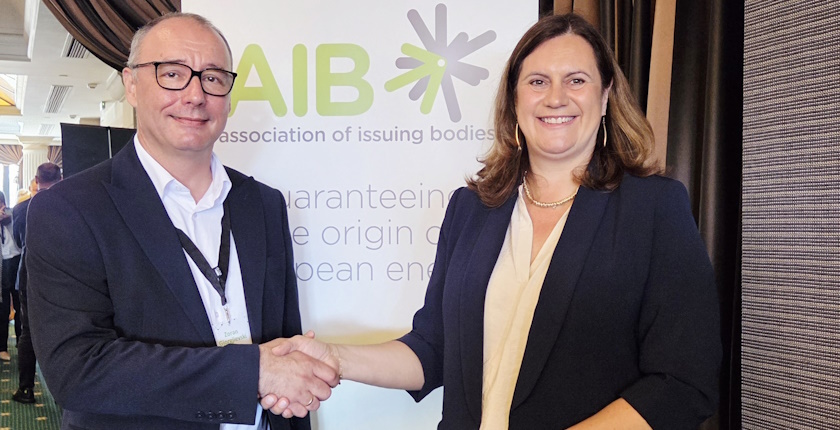
North Macedonia’s National Electricity Market Operator, MEMO, has officially joined the Association of Issuing Bodies (AIB), marking an important step toward deeper integration with the European framework for guarantees of origin and cross-border renewable electricity trade.

The decision was confirmed during the General Assembly of the Association of Issuing Bodies, where MEMO became a full member of the Brussels-based European energy certification organization. The move comes as the Ministry of Energy, Mining and Mineral Resources and the Energy Community Secretariat continue efforts to advance the mutual recognition of guarantees of origin between the European Union and Energy Community countries.

Guarantees of origin are electronic certificates proving that a specific quantity of electricity has been generated from renewable energy sources. They are increasingly important for transparent energy markets, renewable energy producers, suppliers and companies seeking to demonstrate the use of green electricity in line with ESG and decarbonisation standards.

MEMO introduced its electronic registry for guarantees of origin in April last year, in cooperation with energy certificate company Grexel and in line with European Energy Certificate System rules and AIB standards. Since then, North Macedonia has issued around 500,000 guarantees of origin, with each certificate representing 1 MWh of electricity produced from renewable sources.

According to MEMO Chief Executive Officer Zoran Gjorgjievski, AIB membership enables the Macedonian guarantees of origin system to implement the procedures required for future accession to the European Energy Certificate System. This will allow the secure, transparent and internationally recognized issuance and trading of green electricity certificates.

He emphasized that further integration of North Macedonia’s electricity market with the European energy market is essential, as it creates new opportunities for renewable energy producers, suppliers and businesses while strengthening trust, competitiveness and investment attractiveness in the country’s renewable energy sector.

Denko Rafajlovski, Head of MEMO’s Renewable Energy Support Department, noted that guarantees of origin play a key role in promoting renewable energy and giving consumers greater transparency and choice over the source of the electricity they use. Through the AIB Hub, national registries are connected, enabling the efficient cross-border transfer of green certificates between countries.

MEMO became an observer member of AIB last year as a first step toward full membership. Its accession now represents a significant milestone in the development of a modern, transparent and European-aligned electricity market in North Macedonia.

Cross-border trade in guarantees of origin will become possible once national legislation and technical requirements are fully harmonized with European Union standards.

by in News

North Macedonia Launches Intraday Electricity Market as Regional Power Trading Evolves

North Macedonia has taken another significant step toward deeper integration with the European electricity market following the launch of its intraday power market by the National Electricity Market Operator (MEMO). The development represents a major advancement in the country’s electricity market liberalization process and strengthens operational flexibility within the regional energy system.

The official launch ceremony gathered senior representatives from the government, energy institutions, market participants, and international partners. The intraday trading platform and clearing infrastructure were delivered by Slovenia’s BSP Energy Exchange, continuing its cooperation with MEMO after supporting the establishment of North Macedonia’s day-ahead market. Intraday trading operates through Deutsche Börse’s M7 trading system, one of Europe’s widely adopted electricity trading platforms.

The introduction of intraday trading comes three years after the launch of the country’s day-ahead market and reflects the increasing sophistication of North Macedonia’s power sector. Intraday markets play a critical role in modern electricity systems by enabling market participants to adjust positions closer to the actual delivery hour. This improves balancing efficiency, reduces imbalance costs, and enhances the integration of variable renewable energy sources such as solar and wind.

Prime Minister Hristijan Mickoski described the launch as evidence of tangible reform progress in the national energy sector. According to him, energy security and resilience have become strategic priorities for all European economies amid accelerating market transformation and geopolitical uncertainty.

“At a time when energy is one of the most critical issues for every country, our obligation is to create a system that is secure, competitive, and resilient to global challenges,” Mickoski stated during the event.

He emphasized that North Macedonia intends to actively participate in European energy flows and policy frameworks rather than remain on the periphery of the continent’s ongoing energy transition.

Minister of Energy, Mining and Mineral Resources Sanja Božinovska underlined that the intraday market is only one phase of a broader market integration strategy. She reiterated the government’s commitment to future market coupling with the European Union and the continued development of regional electricity trading mechanisms.

“This is just the starting point for our full integration into the European energy family,” Božinovska said, adding that authorities will continue advancing regional cooperation and aligning domestic market structures with EU standards.

MEMO Chief Executive Officer Zoran Gjorgjievski highlighted the operational significance of intraday trading in a rapidly changing electricity environment increasingly shaped by renewable generation and real-time balancing requirements.

“From today, our market not only plans for tomorrow – it operates in real time. The intraday market is a direct response to the dynamics of the modern energy sector,” Gjorgjievski noted.

He stressed that transparent and efficient price formation remains essential for optimal resource allocation, prudent investment decisions, and effective risk management across the electricity value chain.

Gjorgjievski also warned that emerging European regulatory frameworks, particularly the Carbon Border Adjustment Mechanism (CBAM), could introduce additional pressure on domestic electricity producers and potentially affect regional market liquidity. While supporting decarbonization objectives, he argued that the energy transition must remain economically sustainable and carefully managed to avoid undermining market competitiveness.

The launch of the intraday market is also viewed as an important preparatory step toward integration into the single European electricity market. Chairman of the Management Board of ADEX Group and CEO of BSP Energy Exchange Anže Predovnik said the project reflects strong institutional cooperation, strategic government support, and MEMO’s operational commitment.

“What lies ahead is integration into the single European market. Together, we will build a more connected and competitive future,” Predovnik stated.

North Macedonia’s intraday market currently includes 21 participants, demonstrating growing interest among regional traders and electricity companies.

According to Martin Martinovski, electricity and statistics expert at the Energy Community Secretariat, the operational intraday market strengthens North Macedonia’s role within the regional balancing framework. As integration with the EU electricity market progresses, the country could increasingly contribute low-carbon flexibility to neighboring systems while benefiting from cross-border balancing support.

Market growth figures indicate a rapid expansion in trading activity since the launch of organized electricity trading in the country. Trading volumes increased from 335 GWh by the end of 2023 to nearly 970 GWh in 2024, before surpassing 1.37 TWh last year. MEMO currently counts forty active market members, while first-quarter 2026 trading volumes were 19% higher compared to the same period a year earlier. 

by in News

MEMO Analysis Links Solar Output to Lower Day-Ahead Power Prices in North Macedonia

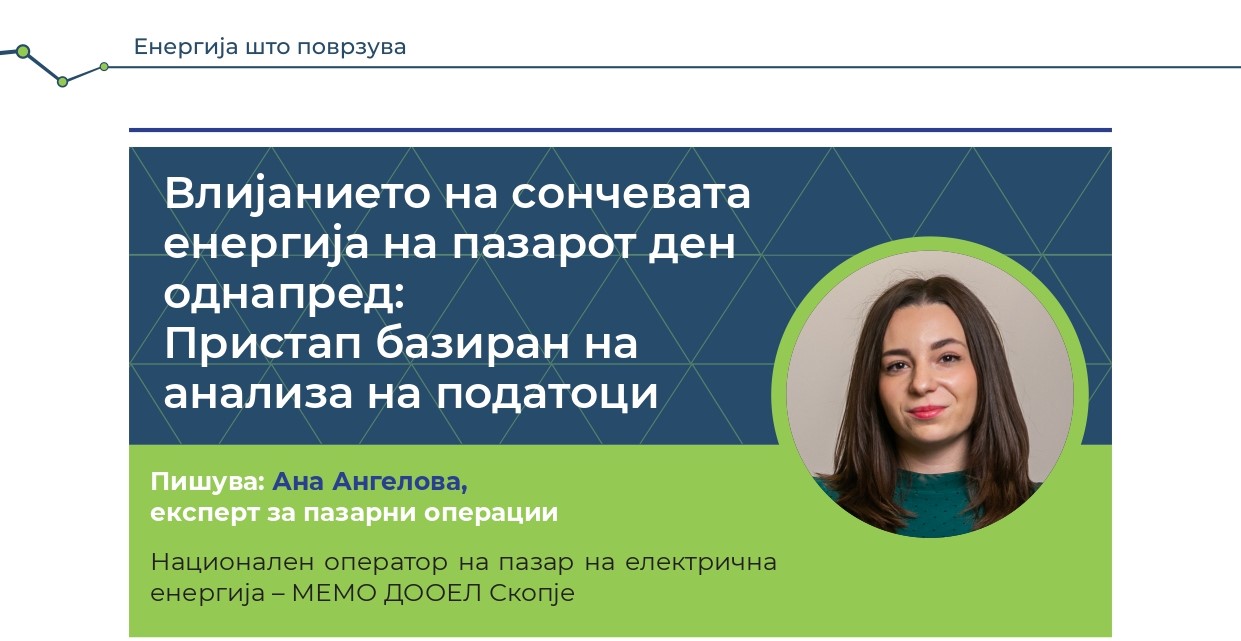
Electricity generation from solar power plants tends to push prices down on the power exchange, while reduced solar output is associated with price increases, according to an analysis by Ana Angelova, a market operations specialist at the National Electricity Market Operator (MEMO).

The analysis aimed to identify seasonal trends and highlight the relationship between photovoltaic (PV) generation, electricity consumption, traded volumes, and day-ahead prices on the North Macedonian power exchange. MEMO noted that the day-ahead market operates in an isolated mode.

Angelova used official power exchange data for 2024, focusing on hours when PV plant efficiency exceeded 30%.

Consumption remains broadly stable across the year

The findings point to a clear seasonal pattern. Electricity consumption stays relatively steady throughout the year, with only minor declines during spring and summer. PV generation, however, shows a pronounced seasonal swing—peaking in summer and reaching its lowest levels in winter.

Angelova also stressed that higher PV output coincides with increased traded volumes on the day-ahead market.

Prices bottom out in April, rise toward winter

According to the analysis, day-ahead prices are lowest in April, a period linked to milder weather, lower demand, and stronger solar production. From summer onward—and particularly during winter—prices trend higher, peaking in November.

The November price peak aligns with a combination of weak PV generation and higher consumption.

“Increased electricity generation from photovoltaic plants is associated with lower prices, while low generation leads to higher market prices, emphasizing the impact of renewable energy availability on price formation. The trend indicates that energy policies should focus on addressing weaknesses during the winter period and harnessing the potential of solar energy in summer,” Angelova wrote.

Proposed measures to strengthen renewables integration

north macedonia solar analysis memo power exchange ana angelova

Photo: MEMO

Angelova outlined several options to improve the integration of renewables—especially solar—into the power system. The proposed mechanisms include:

  • Flexible market mechanisms: introduction of a 15-minute trading interval, creation of an intraday market, dynamic tariffs, and guarantees of origin.

  • Energy storage technologies: battery energy storage systems (BESS) and pumped-storage hydropower plants.

  • Alignment with the European energy framework: adoption of ENTSO-E grid codes, coupling with the single European electricity market, deployment of smart meters, and use of financial instruments such as contracts for difference (CfD) and power purchase agreements (PPA).

by in News

North Macedonia’s MEMO power exchange starts work with BSP on intraday segment launch

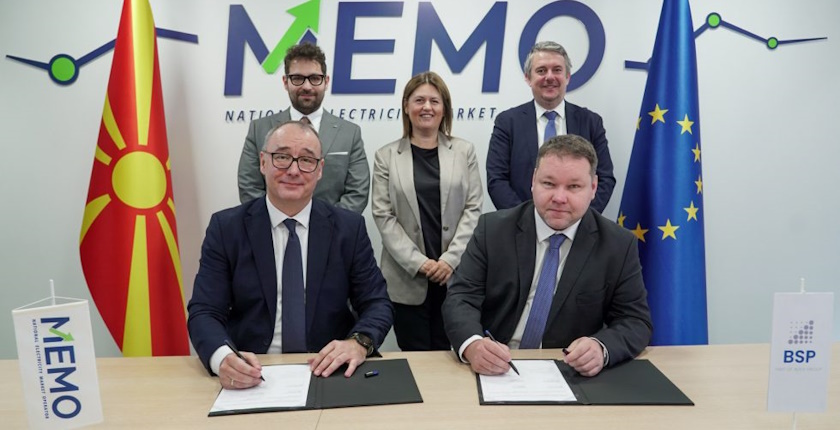
North Macedonia’s National Electricity Market Operator – MEMO signed an agreement with the Slovenian BSP Energy Exchange for the provision of trading platforms and a clearing platform. The deal marked the start of work on the introduction of the intraday electricity market by mid-year. It is part of efforts toward North Macedonia’s integration into the single European electricity market.

North Macedonia’s National Electricity Market Operator – MEMO has selected Slovenia’s BSP Energy Exchange to provide trading platforms and a clearing platform for the day-ahead and intraday segments. Chief Executive Officer of MEMO Zoran Gjorgjievski signed the agreement today with Chairman of the Management Board of ADEX and CEO of BSP Anže Predovnik.

Their cooperation has been expanding since the launch of North Macedonia’s day-ahead power market on May 10, 2023. Through partnership, the intraday segment is expected to be established by mid-year, the officials noted.

Commitment to transparent, reliable, efficient market

MEMO pointed out that the deal is aimed at enhancing the functionality of the organized electricity market and preparing it for integration with the single European market.

“This agreement represents a continuation of the cooperation with BSP and EPEX SPOT, and an important step in the development of the Macedonian power exchange, as well as in strengthening its technical and institutional readiness for market integration with the European Union. Partnering with a renowned exchange such as BSP and EPEX SPOT, with whom we have already established cooperation based on trust and proven results, confirms our commitment to a transparent, reliable and efficient market,” Gjorgjievski stated.

The representatives of MEMO and BSP kicked off the preparations for the launch of the intraday segment

He added that following the signing, activities to establish the intraday market officially began at a kickoff meeting with BSP’s representatives. It is expected to become operational by the end of the second quarter of 2026, the CEO recalled.

“The establishment of the intraday market is of crucial importance for greater flexibility and efficiency in electricity trading, particularly in conditions of increased participation of renewable energy sources. It enables market participants to timely adjust their positions and significantly contributes to the reduction of imbalances,” Gjorgjievski said.

Predovnik: Strategically important step

MEMO and North Macedonia took a strategically important step, Predovnik underscored.

“The signing of the contract for the establishment of the intraday electricity market and the implementation of the project to be completed in Q2 2026 mark an important milestone in the country’s integration into the European electricity market. With clear and ambitious guidance, and the strong support of the responsible minister and the ministry, North Macedonia continues to make convincing progress on its path towards full integration into the European electricity market – recognized both in the region and across the EU. The high-performing MEMO and BSP / EPEX SPOT teams, together with the minister and the ministry’s support, provide a powerful and clear guarantee that North Macedonia will be among the first countries in the region to join the single European electricity market,” he said.

Direct benefit for market participants as well as energy stability

North Macedonian Minister of Energy, Mining and Mineral Resources Sanja Božinovska attended the signing of the agreement.

Božinovska stressed the role of the intraday market in flexibility, use of renewables and risk reduction.

“With such concrete projects, we are building market stability, transparency and competitiveness. The ministry actively and continuously supports the institutional and technical readiness of market operators. Our goal is clear – a functional, secure, and European-aligned electricity market. The intraday market brings greater flexibility, improved management of renewable energy sources, and a reduction of systemic risks. This represents a direct benefit both for market participants and for the country’s overall energy stability,” Božinovska stated.

BSP Energy Exchange (BSP Southpool) is wholly owned by ADEX Group, created in a merger with its Serbian counterpart SEEPEX. In December 2024, ADEX completed a merger with the Hungarian Power Exchange (HUPX).

by in News

North Macedonia’s MEMO power exchange starts work with BSP on intraday segment launch

North Macedonia’s National Electricity Market Operator – MEMO signed an agreement with the Slovenian BSP Energy Exchange for the provision of trading platforms and a clearing platform. The deal marked the start of work on the introduction of the intraday electricity market by mid-year. It is part of efforts toward North Macedonia’s integration into the single European electricity market.

North Macedonia’s National Electricity Market Operator – MEMO has selected Slovenia’s BSP Energy Exchange to provide trading platforms and a clearing platform for the day-ahead and intraday segments. Chief Executive Officer of MEMO Zoran Gjorgjievski signed the agreement today with Chairman of the Management Board of ADEX and CEO of BSP Anže Predovnik.

Their cooperation has been expanding since the launch of North Macedonia’s day-ahead power market on May 10, 2023. Through partnership, the intraday segment is expected to be established by mid-year, the officials noted.

Commitment to transparent, reliable, efficient market

MEMO pointed out that the deal is aimed at enhancing the functionality of the organized electricity market and preparing it for integration with the single European market.

“This agreement represents a continuation of the cooperation with BSP and EPEX SPOT, and an important step in the development of the Macedonian power exchange, as well as in strengthening its technical and institutional readiness for market integration with the European Union. Partnering with a renowned exchange such as BSP and EPEX SPOT, with whom we have already established cooperation based on trust and proven results, confirms our commitment to a transparent, reliable and efficient market,” Gjorgjievski stated.

The representatives of MEMO and BSP kicked off the preparations for the launch of the intraday segment

He added that following the signing, activities to establish the intraday market officially began at a kickoff meeting with BSP’s representatives. It is expected to become operational by the end of the second quarter of 2026, the CEO recalled.

“The establishment of the intraday market is of crucial importance for greater flexibility and efficiency in electricity trading, particularly in conditions of increased participation of renewable energy sources. It enables market participants to timely adjust their positions and significantly contributes to the reduction of imbalances,” Gjorgjievski said.

Predovnik: Strategically important step

MEMO and North Macedonia took a strategically important step, Predovnik underscored.

“The signing of the contract for the establishment of the intraday electricity market and the implementation of the project to be completed in Q2 2026 mark an important milestone in the country’s integration into the European electricity market. With clear and ambitious guidance, and the strong support of the responsible minister and the ministry, North Macedonia continues to make convincing progress on its path towards full integration into the European electricity market – recognized both in the region and across the EU. The high-performing MEMO and BSP / EPEX SPOT teams, together with the minister and the ministry’s support, provide a powerful and clear guarantee that North Macedonia will be among the first countries in the region to join the single European electricity market,” he said.

Direct benefit for market participants as well as energy stability

North Macedonian Minister of Energy, Mining and Mineral Resources Sanja Božinovska attended the signing of the agreement.

Božinovska stressed the role of the intraday market in flexibility, use of renewables and risk reduction.

“With such concrete projects, we are building market stability, transparency and competitiveness. The ministry actively and continuously supports the institutional and technical readiness of market operators. Our goal is clear – a functional, secure, and European-aligned electricity market. The intraday market brings greater flexibility, improved management of renewable energy sources, and a reduction of systemic risks. This represents a direct benefit both for market participants and for the country’s overall energy stability,” Božinovska stated.

BSP Energy Exchange (BSP Southpool) is wholly owned by ADEX Group, created in a merger with its Serbian counterpart SEEPEX. In December 2024, ADEX completed a merger with the Hungarian Power Exchange (HUPX).

by in News

CBAM tests market integration and green investments

Author: Zoran Gjorgjievski, CEO of North Macedonia’s National Electricity Market Operator MEMO

This text reflects a personal viewpoint and represents an attempt to present the Macedonian position in an argument-based manner — with respect for European objectives, but also with a clear message that the implementation of CBAM must be just, proportionate, and based on clearly defined implementation phases.

The Carbon Border Adjustment Mechanism (CBAM), which is scheduled to enter into force on 1 January 2026, represents one of the most ambitious instruments within the European climate package. Its objective – to create a level playing field between industries within the European Union and those outside the Union – is, at a theoretical level, justified and logical. However, the application of CBAM to electricity in regions such as ours, where market and regulatory conditions are still transforming, raises serious risks and challenges that deserve careful assessment. This is particularly relevant given the increased volume of investments in renewable energy sources (RES) recorded in recent years, accompanied by ambitious plans for their further expansion through active institutional support.

For Macedonia, which has invested significant efforts in the development of an organized electricity market – currently operating at the day-ahead level and, as of next year, also at the intraday level – as well as in its gradual integration with the single European market, the application of CBAM may create structural imbalances.

Changes in the structure of electricity generation and price formation on European markets in recent years indicate high volatility, which is even more pronounced in markets of a similar size to ours, primarily due to limited liquidity and the specific characteristics of the generation mix. The introduction of an additional carbon component, based on indirect verification methodologies, may introduce further unpredictability and reduce the competitiveness of domestic RES producers.

At the same time, subjecting exports to CBAM could create pressure during hours of low consumption and increased RES production – periods in which the majority of electricity exports from our country are concentrated. This could lead to a paradoxical situation in which RES producers are forced to curtail or suspend production in order to avoid imbalance costs.

Risks for the organized electricity market

Although initial analyses suggest that an increase in trading volumes on the day-ahead market may be expected in the short term, the inability to place total production through the organized market will encourage market participants to seek alternative channels. This carries the potential to undermine the development of a transparent and competitive market and to reduce trading liquidity.

For a young market like ours, which has recorded significant liquidity growth of over 40% and a record number of active participants in just the past year, this could represent a real slowdown of its development momentum.

The energy crisis of the 2021–2023 period clearly demonstrated that security of supply and price stability cannot be ensured without functional, liquid, and investment-attractive electricity markets. Under such conditions, the application of CBAM to electricity, without taking into account the specific characteristics of organized markets in non-EU countries, may produce the opposite effect: reduced liquidity, increased uncertainty, and delayed investments in renewable energy.

Differing speeds of two interrelated mechanisms – market coupling and CBAM – call into question the integration of electricity markets

This is particularly important given that regional integration into the single European market has been slowed by a number of objective and subjective factors, both in the Energy Community Contracting Parties and within the EU itself, and cannot proceed at the same pace as the implementation of CBAM. These differing speeds of two interrelated mechanisms – market coupling and CBAM – call into question the very rationale of the Energy Community, namely the integration of electricity markets.

It thus becomes evident that introducing CBAM without adequate progress in market integration with the EU creates a structural imbalance, whereby Energy Community countries incur additional costs without fully benefiting from an integrated market. Therefore, accelerating market coupling and aligning the start of CBAM implementation accordingly is a key prerequisite for mitigating the economic and investment impacts of CBAM.

Potential slowdown of renewable energy investments

Although CBAM is theoretically intended to stimulate green investments, in practice, there is a risk that it could have the opposite effect on already implemented projects, primarily due to the seasonal and daily characteristics of RES generation and the limited capacities for electricity storage.

A premature and insufficiently calibrated introduction of CBAM for electricity may create a perception of increased regulatory risk

This situation may place serious pressure on the financing sources of RES projects, exposing them to increased credit risk, especially in cases where expected returns on investment (ROI) are brought into question due to CBAM-related effects. This analysis does not even address the distorted investment expectations created during the energy crisis, when extreme electricity price growth further skewed investment projections.

Furthermore, Macedonia’s energy transition largely depends on private capital and strategic investors, who expect a stable, predictable, and competitive market environment. A premature and insufficiently calibrated introduction of CBAM for electricity exports by the EU may create a perception of increased regulatory risk, which could result in the postponement or redirection of investments to other markets.

Need for a transitional period and regional coordination

Despite the challenges outlined above, it is important to emphasize that Macedonia supports the objectives of European decarbonization and is already making substantial efforts to align with EU policies. What is essential is the provision of an appropriate transitional period, aligned with the pace of integration into the single European market.

Such a transitional period would allow the domestic industry and the energy sector to adapt gradually, without compromising already established market instruments and ongoing investments.

The regional context is equally important. The electricity systems of the Western Balkans are highly interconnected, and the risk of destabilization in one country can easily spill over into others. Therefore, it is necessary for the European Commission to consider a model that rewards reforms, supports the gradual phase-out of coal, and enables the integration of electricity markets without creating new barriers.

Where is the market headed?

Although CBAM has a clear climate and economic rationale, the question remains whether its application at this point in time is aligned with the realities in the countries of the Energy Community.

Macedonia demonstrates a clear commitment: market liquidity is increasing, renewable energy sources are developing dynamically, and concrete steps are being taken toward market coupling with the EU. Excessive rigidity in the application of CBAM could undermine this positive trajectory.

by in News

Good start for North Macedonia: in first two months 100k+ guarantees of origin issued

North Macedonia has issued 107,666 guarantees of origin for electricity in the first two months since introducing the mechanism.

In April, the National Electricity Market Operator (MEMO) established the Register of Guarantees of Origin for electricity.

On May 26, MEMO officially issued the first renewable energy guarantees of origin to state-owned power company Elektrani na Severna Makedonija (ESM) for electricity produced from hydropower plants.

In June, 56,620 guarantees were issued for hydropower plants, followed by 51,046 for photovoltaic plants in July, according to MEMO.

Guarantees of origin have been issued for eight power plants

The company stressed an increasing number of companies are joining the Register of Guarantees of Origin, calling it a key step in building a transparent and modern energy market.

MEMO said it ensures the compliance of national regulations with European ones by maintaining a secure and standard system for the issuance, transfer, and activation of guarantees of origin.

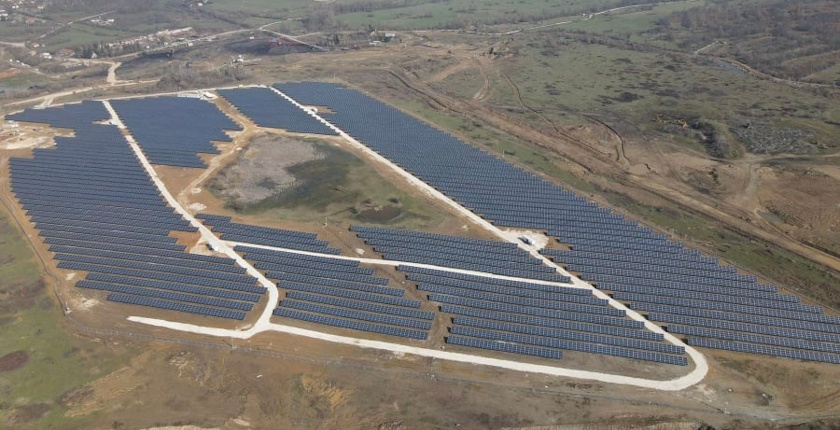
Guarantees of origin have been issued for eight power plants: hydropower plants Kozjak and Sveta Petka and solar power plants Oslomej, Dolani Solar, EVN Solar 1, Štip Solar, Crn Kamen 1, and Crn Kamen 2.

Energy Community members are gradually introducing guarantees of origin

In April, MEMO adopted the rules for administering guarantees of origin for electricity in line with the Law on Energy, a decree that regulates the mechanism, and the standards of the Association of Issuing Bodies (AIB).

The company is responsible for establishing and managing the register, including issuing the guarantees, recording transfers, and recognizing, revoking, and canceling GOs.

The rules are also aligned with the principles of the European Energy Certificate System (EECS). The GOs system was established in cooperation with Grexel, a company specializing in energy certificates.

The cooperation with Grexel is part of the initiative to establish a regional system for guarantees of origin initiated by the Energy Community Secretariat. The goal is to develop nine registries for the contracting parties in line with the European Union’s rules: in Albania, the two entities making up Bosnia and Herzegovina (the Federation of BiH and the Republic of Srpska), Georgia, Kosovo*, North Macedonia, Moldova, Montenegro, and Ukraine.

So far, Albania, Georgia, Montenegro, North Macedonia, and the Republic of Srpska have launched their registries.

However, implementing the initiative is not sufficient for guarantees of origin to be recognized in the EU.

* This designation is without prejudice to positions onstatus and is in line with UNSCR 1244/99 and the ICJ Opinion on the Kosovo declaration of independence.
by in News

North Macedonia issues first guarantees of origin for renewables

North Macedonia’s National Electricity Market Operator MEMO has issued the country’s first guarantees of origin (GOs), certificates verifying that electricity is generated from renewable energy sources. The guarantees were awarded to state power utility Elektrani na Severna Makedonija (ESM) for electricity produced from hydropower. With this step, North Macedonia joins virtually all other countries in the region, which already have GO schemes in place.

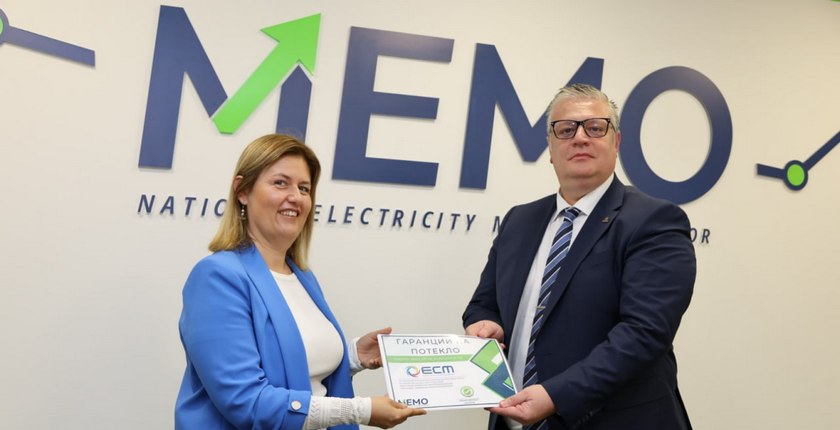
The issuance of the first guarantees of origin represents a step forward in the implementation of the green transition in North Macedonia, in line with European standards and sustainable energy development goals, said Minister of Energy, Mining and Mineral Resources Sanja Božinovska, who handed over the GOs to ESM General Director Lazo Uzunčev.

Božinovska underlined that the GOs would help create a transparent and sustainable energy market in the country.

Earlier this year, MEMO adopted the rules for administering guarantees of origin for electricity in line with the Law on Energy, the guarantees of origin decree, and the standards of the Association of Issuing Bodies (AIB), a Brussels-based organization that standardizes GOs. The operator is responsible for managing the GO registry and issuing and revoking GOs.

MEMO’s GO rules will ensure full acceptance in the European market

The rules are also harmonized with the principles of the European Energy Certificate System (EECS) and will ensure full acceptance in the European market, MEMO said in a press release.

More companies are joining the GO registry

Zoran Gjorgjievski, MEMO’s CEO, said that a large number of other companies are already in the process of joining the GO registry. “As the responsible operator, we are actively working on issuing, recording, and recognizing them,” he stressed.

The management of ESM emphasized that the company is continuing its efforts to increase electricity production from renewable sources, including the construction of new wind farms and photovoltaic power plants, for which it also plans to obtain GOs.