by in News

Terna Energy Secures Environmental Approval for Major Pumped Storage Project in Northern Greece

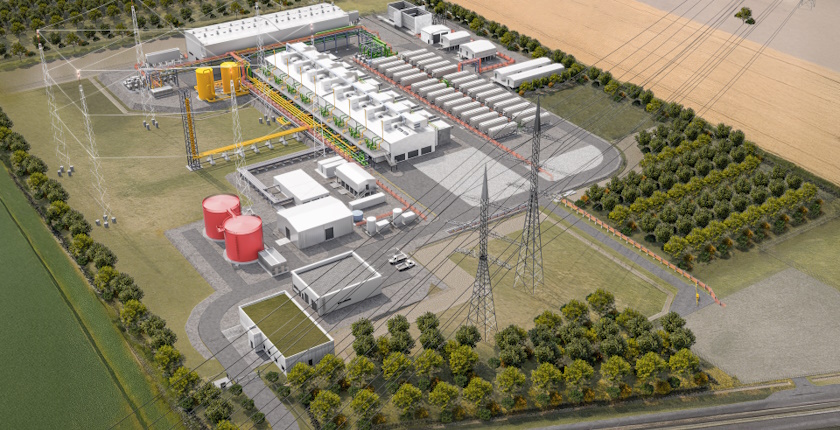
Northern Greece is emerging as a critical hub for large-scale energy storage, with several twin pumped storage hydropower (PSH) systems moving through the regulatory pipeline. In the latest development, the Ministry of Environment and Energy has granted environmental clearance—specifically the Approval of Environmental Terms (AEPO)—for the first phase of the Vrohonera project.

The Vrohonera endeavor is being spearheaded by Terna Energy, a subsidiary of Masdar. This milestone follows closely on the heels of similar approvals granted to the Katselis family for their nearby Flampouro and Trani Vrachi twin PSH projects.

Pumped storage hydropower design

Pumped storage hydropower design

Strategic Location and Technical Specifications

Located southeast of Veria in the Imathia region of Central Macedonia, the Vrohonera complex will utilize the Agia Varvara artificial lake as its lower reservoir. This reservoir is situated on the Haliacmon (Aliakmonas) River, Greece’s longest waterway.

The project has seen significant scaling since its initial “producer certificates” were issued in 2021:

  • Vrohonera 1: The latest AEPO outlines a generation capacity of 450 MW via three turbines and a pumping capacity of 537 MW. This represents a substantial increase from the 2021 proposal of 401 MW and 372 MW, respectively.

  • Vrohonera 2: Initial proposals for the second phase included 131.5 MW in production and 217.8 MW in pumping capacity.

  • Storage & Efficiency: Integrated into the European Network of Transmission System Operators for Electricity (ENTSO-E) development plan, the combined Vrohonera complex is designed to provide 8 GWh of storage with an estimated cycle efficiency of 73% and an operational lifespan of 50 years.

The total investment for the Vrohonera complex is valued at €1.1 billion, with commissioning currently targeted for 2031.

Expanding the PSH Portfolio

Terna Energy’s commitment to Greek energy storage extends beyond Vrohonera. The company is currently executing several other high-stakes projects included in the ENTSO-E list:

  1. Amfilochia: This flagship PSH plant is nearing the finish line, with completion expected within the current year.

  2. Ladonas: A joint venture with the Public Power Corp. (PPC Group), this 220 MW generation (231 MW pumping) facility is slated for completion in 2032 and will provide 2 GWh of storage capacity.

  3. Amari: Located on Crete, this project represents a sophisticated hybrid PSH and wind power solution, further diversifying Greece’s largest island’s energy mix.

By advancing these projects, Terna Energy and Masdar are positioning themselves as primary architects of Greece’s energy transition, providing the long-duration storage essential for a renewables-heavy grid.
by in News

EPCG, Masdar sign cooperation agreement

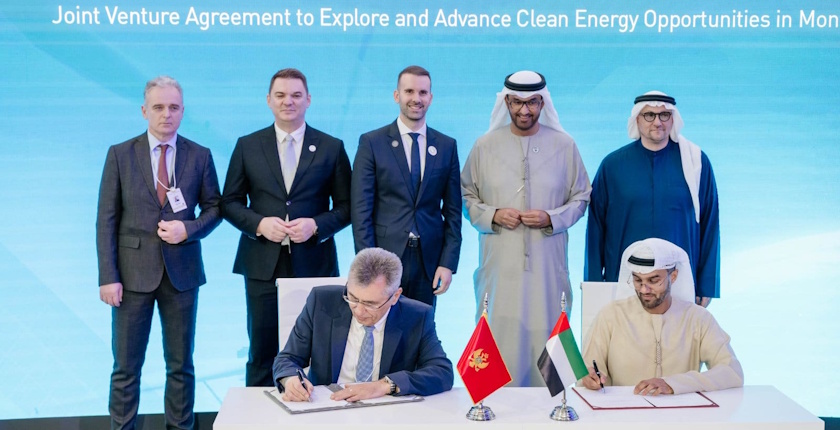
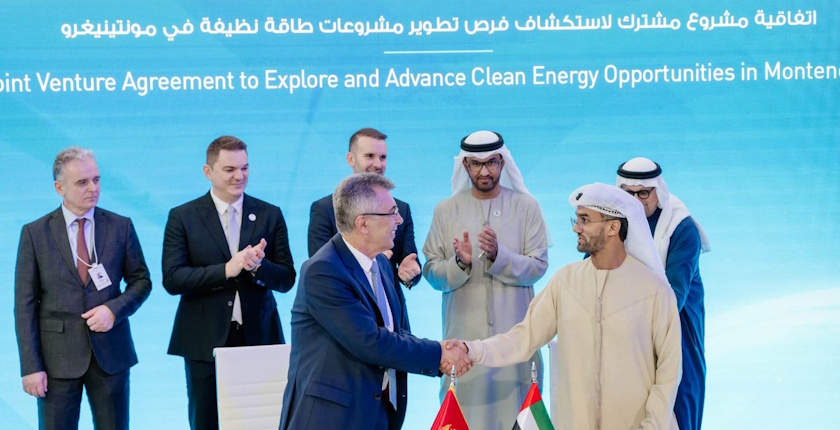
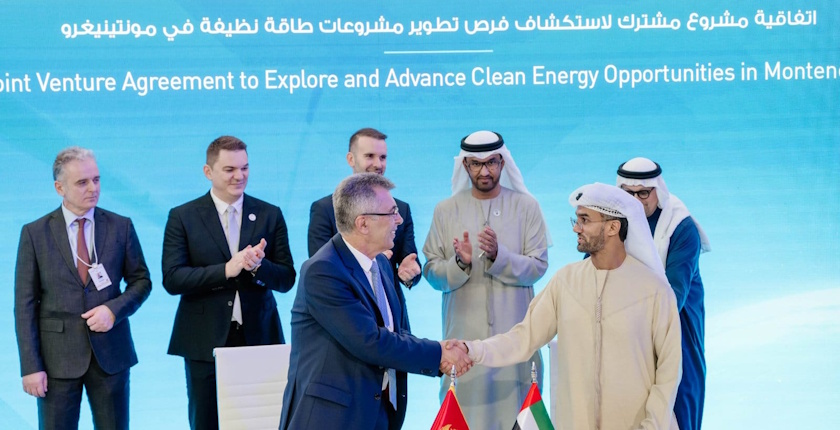
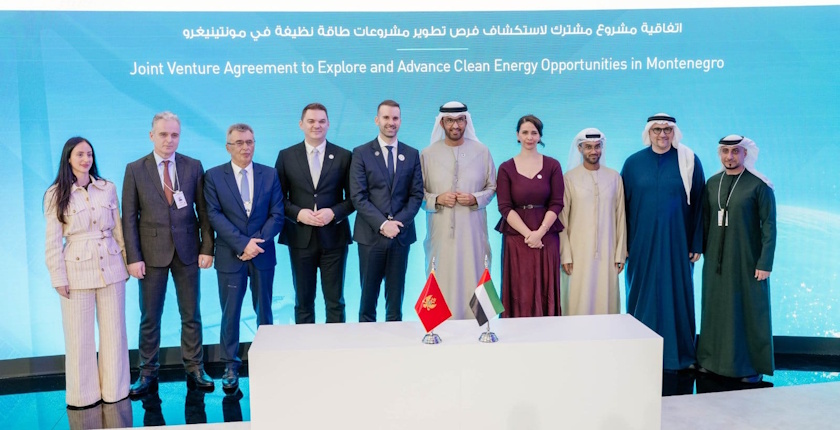
Montenegro’s power utility Elektroprivreda Crne Gore and UAE-based Masdar today signed a cooperation agreement on the sidelines of Abu Dhabi Sustainability Week.

Elektroprivreda Crne Gore (EPCG) said its agreement with Masdar sets the framework for future cooperation in the development of solar and wind projects, as well as other sustainable energy solutions, including the exchange of knowledge and experience and opportunities for joint investments.

The agreement further confirms EPCG’s strategic commitment to actively contribute to the energy transition, strengthen energy security, and support the sustainable economic development of Montenegro through partnerships with global leaders, the update reads.

Abu Dhabi Sustainability Week (ADSW) is a global forum dedicated to the energy transition, climate solutions, and sustainable development.

The agreement was signed during an official visit of the Montenegrin delegation to the United Arab Emirates, led by Prime Minister Milojko Spajić.

Đukanović: Historic agreement

Milutin Đukanović, President of EPCG’s Board of Directors, praised the agreement as historic and its strategic significance for the long-term development of Montenegro’s energy sector.

He stressed that partnering with a renowned company represents a strategic positioning of Montenegro in the modern energy environment and an important step in diversifying energy sources.

montenegro epcg masdar agreement adsw spajic djukanovic
Photo: EPCG

“In the context of the introduction of the CBAM mechanism, it is necessary to accelerate investments in energy, because along with strong development of domestic projects, cooperation with leading international partners is key to faster sector development and greater national competitiveness. Energy development represents a historic opportunity for Montenegro that we must not miss,” Đukanović stressed.

According to EPCG CEO Zdravko Dragaš, the signing of the agreement represents an important advancement in the development of Montenegro’s energy sector and a strong signal of the trust of a renowned global partner in Montenegro’s potential.

Dragaš: Montenegro to become a reliable exporter of green energy

“Our common goal is for Montenegro, in addition to meeting its own consumption, to become a reliable exporter of green energy to the region and beyond, utilizing the existing infrastructure and the country’s strategic position,” Dragaš underscored.

Montenegro and the UAE signed an agreement in November 2025 on cooperation in the energy sector.

Lately, the two countries have had a dynamic relationship in the energy sector. In December of last year, Montenegrin officials and Masdar’s management discussed potential joint projects.

montenegro epcg masdar agreement abu dhabi spajic djukanovic
Photo: EPCG
by in News

EPCG, Masdar sign cooperation agreement

Montenegro’s power utility Elektroprivreda Crne Gore and UAE-based Masdar today signed a cooperation agreement on the sidelines of Abu Dhabi Sustainability Week.

Elektroprivreda Crne Gore (EPCG) said its agreement with Masdar sets the framework for future cooperation in the development of solar and wind projects, as well as other sustainable energy solutions, including the exchange of knowledge and experience and opportunities for joint investments.

The agreement further confirms EPCG’s strategic commitment to actively contribute to the energy transition, strengthen energy security, and support the sustainable economic development of Montenegro through partnerships with global leaders, the update reads.

Abu Dhabi Sustainability Week (ADSW) is a global forum dedicated to the energy transition, climate solutions, and sustainable development.

The agreement was signed during an official visit of the Montenegrin delegation to the United Arab Emirates, led by Prime Minister Milojko Spajić.

Đukanović: Historic agreement

Milutin Đukanović, President of EPCG’s Board of Directors, praised the agreement as historic and its strategic significance for the long-term development of Montenegro’s energy sector.

He stressed that partnering with a renowned company represents a strategic positioning of Montenegro in the modern energy environment and an important step in diversifying energy sources.

montenegro epcg masdar agreement adsw spajic djukanovic
Photo: EPCG

“In the context of the introduction of the CBAM mechanism, it is necessary to accelerate investments in energy, because along with strong development of domestic projects, cooperation with leading international partners is key to faster sector development and greater national competitiveness. Energy development represents a historic opportunity for Montenegro that we must not miss,” Đukanović stressed.

According to EPCG CEO Zdravko Dragaš, the signing of the agreement represents an important advancement in the development of Montenegro’s energy sector and a strong signal of the trust of a renowned global partner in Montenegro’s potential.

Dragaš: Montenegro to become a reliable exporter of green energy

“Our common goal is for Montenegro, in addition to meeting its own consumption, to become a reliable exporter of green energy to the region and beyond, utilizing the existing infrastructure and the country’s strategic position,” Dragaš underscored.

Montenegro and the UAE signed an agreement in November 2025 on cooperation in the energy sector.

Lately, the two countries have had a dynamic relationship in the energy sector. In December of last year, Montenegrin officials and Masdar’s management discussed potential joint projects.

montenegro epcg masdar agreement abu dhabi spajic djukanovic
Photo: EPCG
by in News

New round of talks between Montenegro and Masdar on strategic partnership

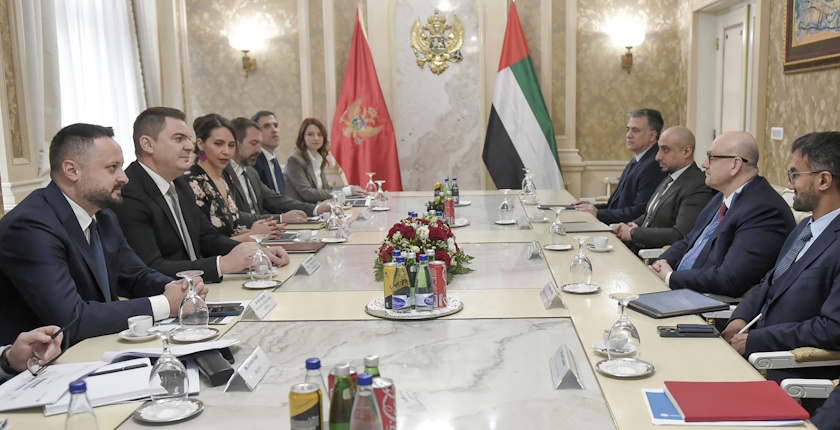
Representatives of the Government of Montenegro and Masdar discussed potential joint projects in the energy sector. The focus of the meeting was on solar energy, energy storage, and hydropower.

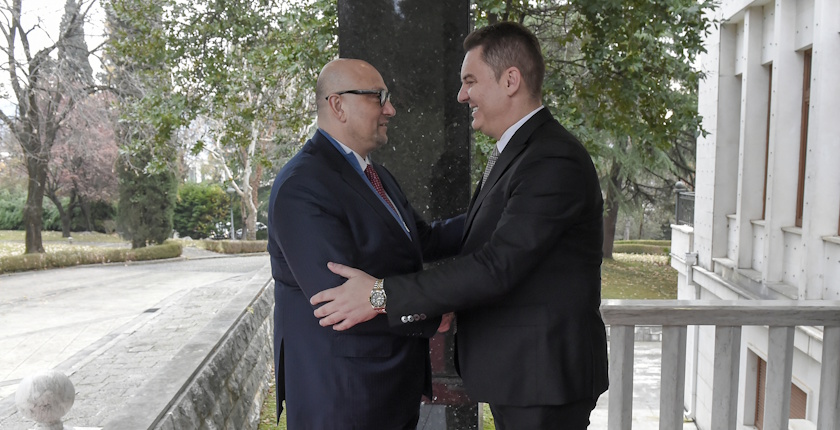
Minister of Energy and Mining of Montenegro Admir Šahmanović and the Minister of Public Works Majda Adžović met today at Villa Gorica in Montenegro’s capital Podgorica with Masdar CEO Mohamed Jameel Al Ramahi and his team.

It was the second meeting between Al Ramahi and Šahmanović in a short period. They met in early September.

The discussions now continued on top priority projects for the Government of Montenegro, ones that could be of mutual interest, according to the Ministry of Energy and Mining.

Priority should be given to projects that are the most technically advanced

Discussions will be intensified to define collaboration models, potential investments, and the selection of first projects to be implemented, the update reads.

Solar projects, including for floating solar power plants, alongside battery energy storage systems (BESS) and hydropower plants, have been identified as segments of special interest. These are also the areas where Masdar has significant engineering and technical experience, the ministry said.

montenegro masdar sahmanovic
Al Ramahi and Šahmanović (photo: Government of Montenegro/Saša Matić)

The two sides agreed to focus on projects that are the most technically advanced, environmentally sustainable, and aligned with the development of the power grid, to ensure their sustainable and efficient implementation.

Šahmanović: Montenegro’s strategic and long-term goal is to establish itself as a reliable and competitive player in the European energy market

Minister Šahmanović pointed out that the country’s strategic and long-term goal is to establish itself as a reliable and competitive player in the European energy market. He underscored that the development of energy infrastructure and renewable energy sources are among the government’s key priorities.

Officials participating in the meeting praised the planned construction of a second submarine cable line with Italy. It is an extremely wise and strategic investment that ensures Montenegro a stronger and more stable position in the European electricity market, they added.
Montenegro’s vision as an energy hub is fully aligned with the government’s development plans, Šahmanović stressed.

Minister of Public Works Majda Adžović highlighted the extensive experience of the United Arab Emirates in energy and infrastructure development in the public sector. It is of great importance for Montenegro’s activities in increasing renewable energy capacities, she added.

Masdar’s expert teams will continue technical talks with the management of EPCG and CGES

Masdar’s representatives have expressed readiness to continue technical discussions with the management of power utility Elektroprivreda Crne Gore (EPCG) and transmission system operator (TSO) Crnogorski Elektroprenosni Sistem (CGES).

The company’s expert teams will aim to identify priority and mature projects for joint implementation, the ministry said.

EPCG’s CEO Zdravko Dragaš and Ivan Mrvaljević, Executive Officer of EPCG’s Directorate for Development and Engineering, pointed out that the development of green energy is the company’s top priority.

A total of 200 MW in renewable energy projects are currently in development, they added.

Ivan Asanović, CEO of CGES, presented projects that are in the final stages of implementation.

by in News

OMV, Masdar to build 140 MW green hydrogen plant in Austria

OMV and Masdar are setting up a joint venture for the development and operation of the fifth-largest electrolyzer plant in Europe. The facility is already under construction in Austria. The UAE-based company would be a minority shareholder, with 49%.

Austrian integrated energy, fuels and chemicals company OMV and Masdar – Abu Dhabi Future Energy Co. signed a binding agreement to establish a joint venture for the financing, construction and operation of the 140 MW green hydrogen electrolyzer plant in Bruck an der Leitha, Austria.

It would be one of Europe’s largest green hydrogen production facilities, marking a major step in OMV’s commitment to decarbonizing its Schwechat refinery, the update adds. Construction of the facility began in September. The companies expect it to become operational in 2027.

OMV to procure electricity, own green hydrogen produced in Bruck an der Leitha

The JV will be majority-owned by OMV, with the clean energy giant from the United Arab Emirates holding 49%. The partnership combines the Austrian company’s integrated fuels and chemicals business and Masdar’s commercial, financial and technical expertise.

The two companies said they would explore opportunities for green hydrogen, e-SAF and synthetic chemicals

OMV, which is already running a 10 MW electrolyzer plant for green hydrogen in Schwechat, will procure the renewable electricity for production and own the green hydrogen produced in the new facility, the announcement reads. Bruck an der Leitha is near the borders with Hungary and Slovakia.

The partnership lays the foundation for strategic collaboration to explore green hydrogen, synthetic sustainable aviation fuels (e-SAF) and synthetic chemicals production in both the UAE and Central and Northern Europe, following the signing of a letter of intent in April. The joint venture would be set up early 2026, conditional on completion of final documentation, shareholders’ approvals and regulatory approvals.

Photo: OMV, Masdar

Hattmannsdorfer: Austria aims to become Europe’s leading hydrogen hub

The binding agreement was signed at the ADIPEC conference and exhibition in Abu Dhabi. The ceremony was held in the presence of UAE’s Minister of Industry and Advanced Technology and Chairman of Masdar Sultan Ahmed Al Jaber, Austria’s Federal Minister of Economy, Energy and Tourism Wolfgang Hattmannsdorfer, Chairman of the Executive Board and Chief Executive Officer of OMV Alfred Stern and CEO of Masdar Mohamed Jameel Al Ramahi.

“We can only secure jobs and prosperity in Austria if we stand firmly for open trade and build successful international partnerships. Together with strategic partnership between OMV and Masdar, we have brought one of the largest direct investments of recent years to Austria. OMV and Masdar are jointly constructing the fifth-largest hydrogen plant in Europe – right here in Austria. This project further strengthens Austria’s leading role in a key technology of the future. Our goal is clear: Austria aims to become Europe’s leading hydrogen hub,” Minister Wolfgang Hattmannsdorfer stated.

By combining Masdar’s global expertise in developing and scaling clean energy projects with OMV’s industrial and technological capabilities, the joint venture will accelerate the decarbonization of hard-to-abate industries, according to Masdar’s CEO Al Ramahi.

by in News

First section of Čibuk 2 wind park in Serbia begins trial operation

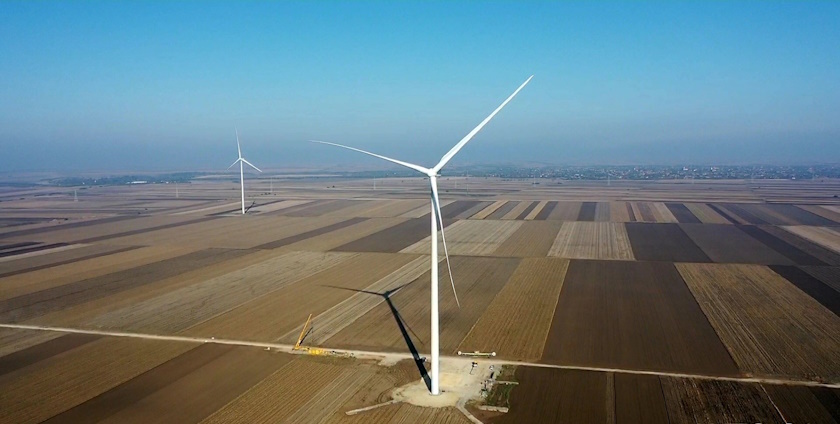
Masdar and Taaleri Energia generated the first megawatt-hours in their Čibuk 2 wind farm in Serbia. The first 35 MW out of the planned 154 MW is now in trial operation.

The installation of all 22 turbines in the Čibuk 2 wind power plant northeast of Belgrade is set to be completed by mid-November, Renewable Energy Sources of Serbia (RES Serbia) revealed. Trial operation of the first part began on October 21 and 35 MW has been connected to the grid so far, according to the update.

The entire wind farm will come online in early December, the association said. The project in the municipality of Kovin in the south Banat area is for 154 MW. The wind farm is between the villages of Bavanište and Mramorak.

Abu Dhabi Future Energy Co. – Masdar and Finland-based Taaleri Energia’s Taaleri SolarWind III Fund reached the financial close just 13 months ago. At the same time, special purpose vehicle (SPV) Čibuk 2 Wind Energy, a subsidiary of their joint venture Masdar Taaleri Generation, signed a power purchase agreement (PPA), as well as contracts on balancing and a market premium, with state-owned power utility Elektroprivreda Srbije (EPS).

UniCredit and Erste provided project financing, while Nordex is the equipment supplier.

The Čibuk 2 project secured a market premium at Serbia’s first wind power auction.

The facility is located next to the existing Čibuk 1 wind farm of 158 MW, the largest in Serbia. Masdar and Taaleri Energia commissioned it in 2019.

by in News

Šahmanović: Masdar ready for new investments in Montenegro’s energy sector

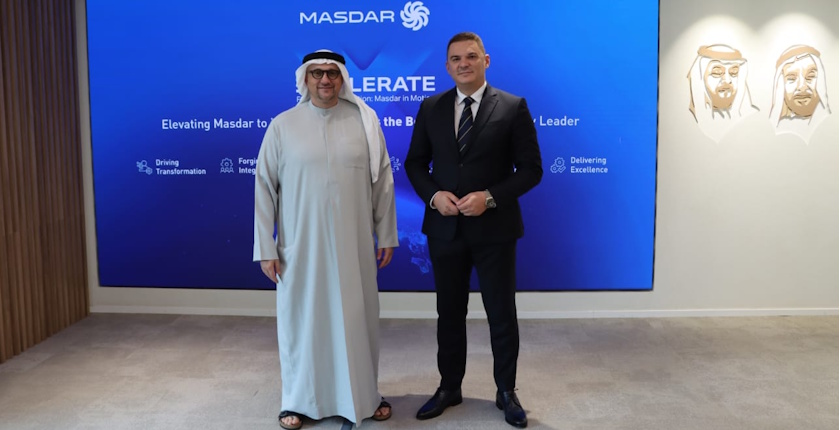
Montenegrin Minister of Energy and Mining Admir Šahmanović has met with Mohamed Jamel al-Ramahi, CEO of Masdar, a United Arab Emirates state-owned renewable energy company. During the meeting in Abu Dhabi, Šahmanović highlighted the energy sector as Montenegro’s biggest development opportunity, while Masdar’s top man confirmed the company’s readiness to expand its operations in Southeast Europe.

As part of his visit to the United Arab Emirates (UAE), Minister Admir Šahmanović held talks with representatives of Masdar, one of the global leaders in renewable energy.

“Montenegro undeniably has the potential and natural resources, but we are equally aware of our financial limitations. Investments in capital energy infrastructure projects are measured in hundreds of millions of euros, which requires strong partnerships and the pooling of resources,” Šahmanović said at the meeting.

Šahmanović: Energy is Montenegro’s greatest development opportunity

According to him, Montenegro sees the energy sector as the greatest development opportunity, which can trigger economic growth, create new jobs, and ensure long-term stability.

“To achieve this, we choose strategic partners carefully – those who share our vision and are ready to invest in a sustainable and strong energy sector,” he said.

The Montenegrin minister and Masdar representatives discussed opportunities to further strengthen cooperation and develop new projects. Šahmanović stressed that cooperation with Masdar so far – on the Krnovo wind farm – provides a solid foundation for even more ambitious projects.

Masdar is looking to expand its business in Eastern Europe

Masdar’s CEO confirmed that the company has the capital, know-how, and interest for significant business expansion in Eastern Europe, with Montenegro taking priority in its investment plans.

Šahmanović emphasized that the Government of Montenegro is committed to creating a favorable business environment – through clear procedures, a stable regulatory framework, and more efficient administration – to ensure security and predictability for investors.

That, he noted, is not only a prerequisite for attracting new investments but also a guarantee that the energy sector will become a pillar of the country’s economic growth and energy independence.

by in News

Agios Efstratios becomes Greece’s first energy-autonomous island

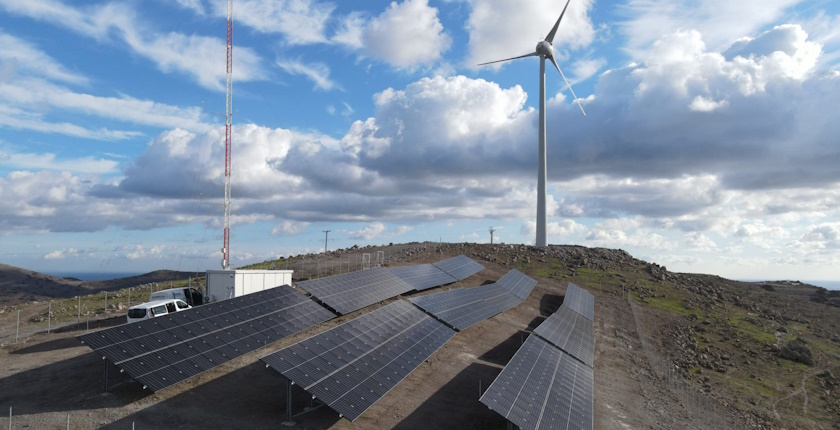
A hybrid energy project transforming Agios Efstratios into the first energy-autonomous island in Greece is in trial operation. The system consists of a wind turbine, solar power plant, batteries, electric boilers and a district heating network.

It is a benchmark for the non-interconnected islands that won’t be connected to the mainland grid with undersea power cables.

Agios Efstratios is no longer renowned only for its history and natural beauty. It is an example of energy autonomy and sustainability. The island, also known as Ai Stratis, became the first non-interconnected Greek island with a 100% electricity supply from renewables. And more.

A pioneering energy complex is in trial operation. Agios Efstratios, which has only some 250 permanent residents, is in a group of small islands undergoing transformation through projects launched at the national level and benefiting from European Union funding.

Terna Energy completed hybrid energy system in Agios Efstratios

The Centre for Renewable Energy Sources and Saving (CRES or KAPE), an independent public entity, is responsible for the endeavor, on behalf of the Municipality of Agios Efstratios. Terna Energy, owned by Masdar, is the contractor for the works in the small North Aegean island.

The new hybrid energy system includes a 900 kW Enercon E44 wind turbine and a solar power unit of 225 kW. Their combined annual output is estimated at above 3 GWh.

Excess electricity is stored. One unit is a Tesla Megapack battery energy storage system (BESS) of 1.25 MW in operating power and a two-hour duration. It means the capacity is 2.5 MWh. There is also an electric boiler facility of 1 MW with hot water storage tanks that can hold 500 cubic meters of water at 120 degrees Celsius. It corresponds to 25 MWh.

The district heating network in Agios Efstratios is four kilometers long. It will be tested in the winter.

An oil-fired generator operated by state-controlled Public Power Corp. (PPC) remains as backup. It can work alongside the hybrid power plant.

Greece is connecting many islands to mainland power grid

The solutions from Agios Efstratios can be applied in other islands or in microgrids, CRES noted and said residents are getting cheaper energy.

The government launched its Islands Decarbonization Fund last year, with financing from the European Investment Bank (EIB). Together they aim to provide at least EUR 1.6 billion, and mobilize total investments of EUR 3 billion to EUR 5 billion.

In the hot summer months, there are many non-interconnected islands that can’t meet their power demand, especially because of the tourist season. Some are also struggling with water supply, prompting the need for desalination, which requires electricity. They rely on fuel oil generators.

The country’s Independent Power Transmission Operator (IPTO or, in Greek, Admie) is investing in major interconnection projects. A link to the mainland grid has improved the living conditions in the Cyclades islands of Syros, Paros and Mykonos. Together with a project for the western part of the archipelago, the transmission system operator is planning subsea cables to the Dodecanese and the Northeast Aegean.

by in News

With 152 MW of wind power installed in H1 2025, Greece continues low trajectory

Just 152.2 MW of wind farms were installed in Greece in the first half of 2025, thus continuing the low trajectory of recent years.

According to the Hellenic Wind Energy Association (HWEA or ELETAEN), total wind capacity in the country reached 5,507 MW at the end of June. In the first six months of the year, 37 new wind turbines were installed in Greece, with a capacity of 152.2 MW, representing a total investment of EUR 180 million.

New capacity doubled compared to the same period of 2024, but is not enough to support a more balanced renewable mix, HWEA said. In comparison, photovoltaics consistently add similar capacity in just one month on average.

The association also mentioned that currently there is 1 GW of wind projects under construction, or contracted. The majority are expected to launch operations within the next 18 months. There is another 300 MW selected through auctions for which letters of guarantee were submitted, and it is expected to reach completion. As a result, total capacity is projected to reach 6.5 GW within the period.

HWEA: Red tape is delaying 846 MW of wind projects

HWEA stressed that due to red tape, the construction of over half of the wind power capacity awarded at renewable energy auctions in the period 2018-2022 has been delayed. Namely, 1.592 MW was selected, but just 746 MW is operational today.

“If they had been completed on time, these wind projects, with a total capacity of 846 MW, would have provided more cheap energy and permanent relief to Greek consumers and the national economy,” HWEA pointed out.

Terna Energy and Vestas lead the pack

When it comes to wind energy’s geographical dispersion, Central Greece (Sterea Ellada) leads with 2.427 MW, followed by 709 MW in the Peloponnese and 535 MW in Eastern Thrace.

The top 5 market players are Terna Energy (1,034 MW – 18.8%), owned by Masdar, Motor Oil Hellas’s subsidiary MORE (774 MW – 14.1%), Iberdrola Rokas (409 MW – 7.4%), Principia (368 MW – 6.7%) and PPC Renewables (308 MW – 5.6%), which operates within state-controlled Public Power Corp. or PPC).

The most prominent wind turbine suppliers are Vestas, with 45.1% of the market, followed by Enercon, with 25.7%, and Siemens Gamesa, with 16.4%. They are trailed by Nordex, with 7.6%, GE Renewable Energy (now GE Vernova), with 3.7%, and EWT, Goldwind and Leitwind.

by in News

Hidroelectrica to begin construction of its pilot floating photovoltaic plant

Romanian state-owned hydropower plant operator Hidroelectrica picked the contractor for a 10 MW floating solar power plant, its first, on the reservoir of the Ipotești hydroelectric plant.

Hidroelectrica awarded the contract for the construction of the Proiect Pilot Nufărul floating photovoltaic system.

The pilot project could open the way for the installation of a group of such facilities, also on the Olt river and in a joint venture with Abu Dhabi Future Energy Co. (Masdar).

Pilot floating plant is part of wider push for synergy of photovoltaic technology with hydropower

Notably, Hidroelectrica picked the contractor last month for setting up solar panels on the roofs of its 20 hydroelectric plants. They are on the middle and downstream parts of the Olt river as well.

The site for the 10 MW pilot project is the reservoir of the 57 MW Ipotești hydropower plant. Hidroelectrica conducted the procurement through a tender, which it valued at EUR 9.3 million excluding value-added tax. The utility awarded the deal to Waldevar Energy, which won with a bid of EUR 7.7 million excluding VAT.

The firm’s subcontractors are Marine Research, S.C. DHI-SW Project, and Makor Energy Solutions.

Project implementation is limited to 14 months, of which the works would last ten months.

Hidroelectrica to learn from new investment to replicate it

The floating power plant will consist of bifacial photovoltaic panels of 620 W, inverters of 100 kW, energy optimizers and four transformer stations, the documentation reveals. Annual output is estimated at 13.4 GWh. The floaters would be made of high-density polyethylene (HDPE).

The facility would be connected to the grid via the Ipotești hydropower plant.

Hidroelectrica pointed out that it aims to diversify the production portfolio and capitalize on synergy between solar and hydropower. The state-owned hydropower operator intends to obtain know-how from the construction and exploitation of the pilot system and replicate the concept elsewhere.

The turnkey contract includes design, purchases, assembly, installation, testing and commissioning.

Hidroelectrica operates 188 plants with a capacity of 6.4 GW overall. It has one wind farm, Crucea Nord, of 108 MW.

  • 1
  • 2