by in News

Ljiljana Velimirović is the Female Leader in Sustainable Energy for 2025

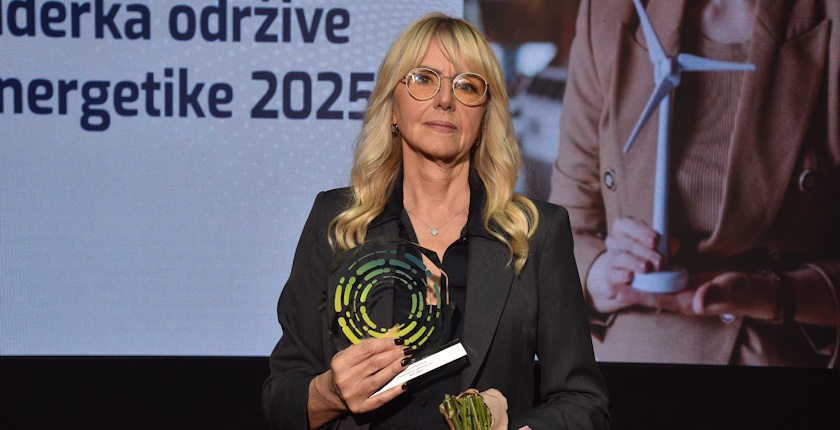
Ljiljana Velimirović, Project Manager 1, Investment Sector, Serbian state-owned power utility Elektroprivreda Srbije, received the Female Leader in Sustainable Energy 2025 award. The award recognizes outstanding results and dedication in advancing the energy sector in the Republic of Serbia.

At the annual event of WISE Serbia Women’s Network in sustainable energy, climate action, and environmental protection, Ljiljana Velimirović received the Female Leader in Sustainable Energy 2025 award. The announcement of the leader has been organized for the third consecutive year with the support of Deutsche Gesellschaft für Internationale Zusammenarbeit (GIZ) GmbH.

WISE Serbia has existed since 2018. It is one of the first networks of its kind in the world, with over 250 members currently.

The award competition featured 10 remarkable women whose leadership, exceptional achievements, and vision play a key role in the sustainable development of the sector, accelerating the energy transition, improving energy security and safety, and promoting greater recognition of women in the field.

During the public voting process, which was held from September 24 to October 10, a total of 2,842 votes were cast. Ljiljana Velimirović, a mechanical engineer with over 35 years of professional experience, received the highest number of votes. GIZ Project Director Till Barmeier presented the award.

Photo: GIZ Project Director Till Barmeier with the laureate Ljiljana Velimirović, Project Manager 1, Investment Sector, EPS

On receiving the award, Velimirović thanked the WISE network for its dedication and for promoting women in energy, as well as all her colleagues, whom she highlighted as her greatest support.

“I am very proud to have been chosen to represent Elektroprivreda Srbije in the Female Leader in Sustainable Energy of 2025 competition. It is an honor that, by leading projects to build desulfurization plants in our largest thermal power plants, I have contributed to the ecological modernization not only of EPS but of the entire Serbian energy sector,” Velimirović said.

The event was officially opened by Branislava Jovičić, co-founder of WISE Serbia, founder and editor of the Balkan Green Energy News portal, and director of the Belgrade Energy Forum conference, H.E. Anke Konrad, Ambassador of the Federal Republic of Germany to Belgrade, and Jovana Joksimović, Assistant Minister for International Cooperation, European Integration, and Project Management, Ministry of Mining and Energy.

Jovičić: WISE network has built a strong community of women over eight years

In her speech, Branislava Jovičić emphasized that over seven years, WISE Serbia has built a strong community of 250 professionals whose knowledge, experience, and vision contribute to the development of sustainable energy and climate policy in Serbia.

Thanks to the support of international partners and the dedication of its members, the network has conducted two major studies on the role of women in energy, launched a mentoring program connecting different generations of professionals, and become an important platform for knowledge exchange, inspiration, and joint initiatives.

Photo: Branislava Jovičić, co-founder of WISE Serbia, founder and editor of the Balkan Green Energy News portal, and director of the Belgrade Energy Forum conference

“Today, when dark clouds of geopolitical turmoil and denial of climate reality hang over the world, I dare say that the fight for sustainability, climate, and peace is a task that each of us must embrace, regardless of our profession. This is our generational mission. Our responsibility to ourselves and future generations,” Jovičić said.

Konrad: Women Remain Undervalued Drivers of Change

Sustainable strengthening of energy supply is important in Serbia, Germany, and around the world, emphasized German Ambassador Anke Konrad in her speech.

“The energy transition requires organizations that symbolize this transition. Therefore, I thank the Center for the Promotion of Sustainable Development through the WISE Serbia project for their engagement over the past years, which the German Federal Government has supported through GIZ for many years.”

Photo: H. E. Anke Konrad, Ambassador of the Federal Republic of Germany in Serbia

Konrad highlighted that people are the most important factor in the energy transition and reminded that women remain undervalued drivers of change.

Konrad: The Female Leader in Sustainable Energy award shows what can be achieved when leadership, innovation, and social responsibility go hand in hand

“The WISE project has evolved into a unique platform, a space where professionals build networks, share knowledge, mentor young talents, and create visible role models. The Female Leader in Sustainable Energy award shows what can be achieved when leadership, innovative strength, and social responsibility go hand in hand,” she concluded.

Jovana Joksimović, at the opening, noted that she has been a member of WISE Serbia since its foundation, highlighting the importance of unity and support among women in the energy sector.

Emphasizing that the green transition is not only about meeting international obligations, Joksimović reminded that the plan is for every second megawatt produced by 2030 to come from renewable sources, leading to a cleaner and healthier environment for current and future generations.

Jovana Joksimović, Assistant Minister for International Cooperation, European Integration, and Project Management, Ministry of Mining and Energy

Citing data from the International Renewable Energy Agency (IRENA), Joksimović pointed out that women make up 32% of employees in the global renewable energy sector, but their share is still below the global average of 45.9% of women in the overall economy.

“Every percentage point of women’s participation reminds us how much more progress can be made, and how much we have already achieved. I am proud of every one of us who is part of the energy transition—in wind farms, solar power plants, banking, engineering, management, innovation, education, and law.”

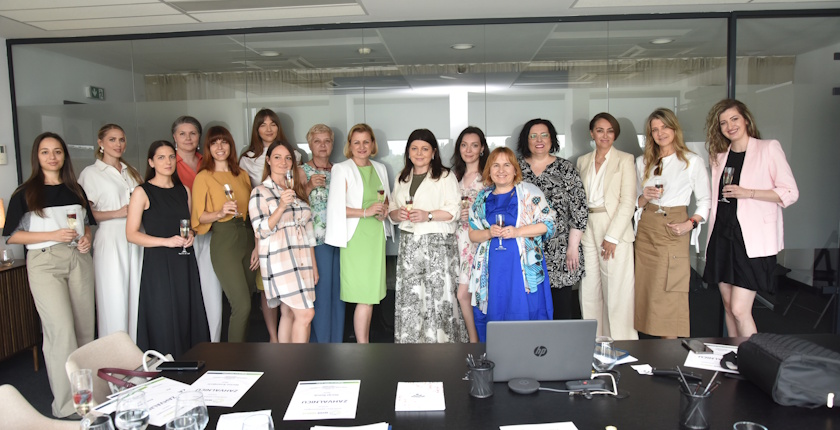
Photo: WISE Serbia women’s network and nominees for Female Leader in Sustainable Energy 2025 award

Women’s Leadership in Times of Geopolitical Challenges – Excellence, Achievements, and a Sustainable Vision

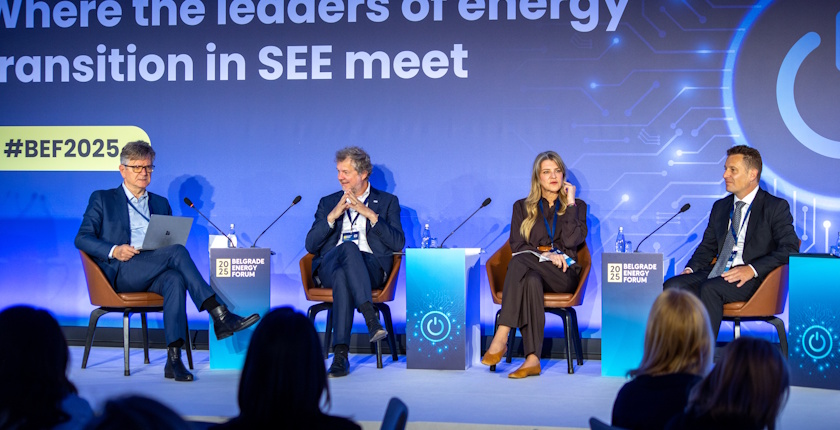
After the award ceremony, a panel discussion was held under the title “Women’s Leadership in Times of Geopolitical Challenges – Excellence, Achievements, and a Sustainable Vision.” The panel was moderated by Maja Turković, Executive Vice President of CWP Europe and recipient of the Female Leader in Sustainable Energy award in 2023.

Photo: Panel discussion “Women’s Leadership in Times of Geopolitical Challenges – Excellence, Achievements, and a Sustainable Vision”

Panel participants included Svetlana Cerović, Director of the Specialized Financing Department at UniCredit Bank Serbia and last year’s Female Leader in Sustainable Energy 2025 award; Marija Rošulj, Credit Risk and ESG Specialist at ProCredit Bank and participant in the WISE mentoring program; Jasmina Grbović Novaković, Director of the Center for Excellence in Hydrogen and Renewable Energy at the Vinča Institute of Nuclear Sciences; and Amalija Pavić, Deputy Executive Director at AmCham Serbia.

The panelists shared their experiences on the role of women in shaping the energy transition in a complex geopolitical environment, emphasizing the importance of collaboration and leadership based on knowledge and sustainability values.
by in News

CWP Europe gets European Commission’s backing for renewables projects in Albania, Montenegro

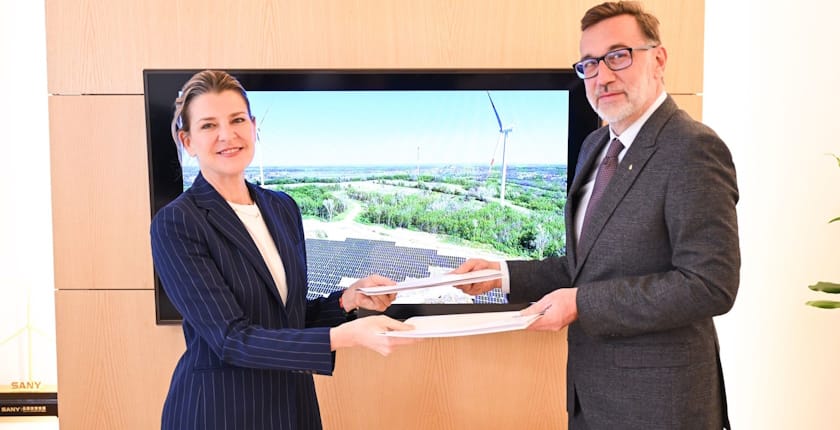
CWP Europe has signed a joint declaration with the European Commission, the Albanian Investment Development Agency, and the Montenegrin Investment Agency in support of its two landmark renewable energy projects – the Tropoja wind farm in Albania and the Montechevo solar farm with battery storage in Montenegro.

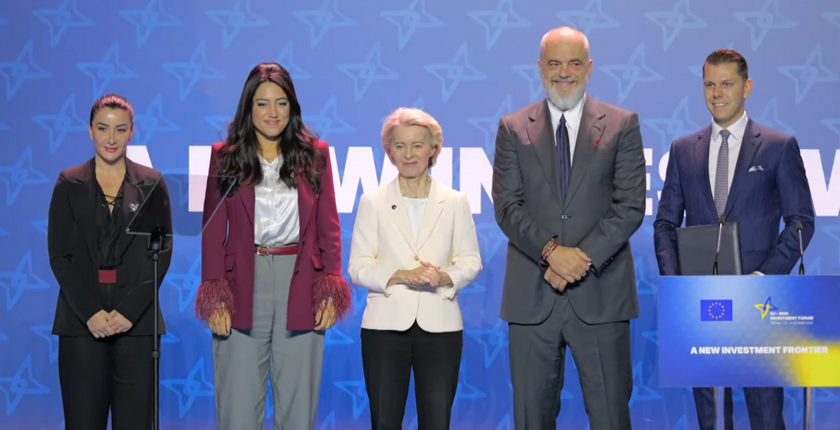
The declaration of support for CWP Europe’s projects was signed during the EU-Western Balkans Investment Forum in Albania’s capital, Tirana, in the presence of Albanian Prime Minister Edi Rama and European Commission President Ursula von der Leyen, according to a press release from CWP Europe, a leading renewable energy project developer in Southeast Europe.

The 600 MW Tropoja wind farm will advance Albania’s energy independence by providing clean, affordable electricity, supporting the country’s energy strategy, the company stressed.

The 600 MW Tropoja wind farm will boost Albania’s energy independence

In Montenegro, the 400 MW Montechevo solar farm will combine solar generation with battery storage directly connected to the country’s new 400 kV transmission grid. It will leverage Montenegro’s strategic interconnections – including the undersea power cable to Italy – to maximize the export of clean electricity and its integration into the European energy market.

A new energy backbone for the Western Balkans and Europe

Speaking at the signing ceremony, von der Leyen emphasized the Western Balkans’ increasing role in Europe’s clean energy transition.

“Today you are signing several investments that will do just that. From clean energy production in all six Western Balkan partners to energy storage in Montenegro. They will bring the cost of electricity down. And they will also contribute to our collective energy independence. You are building a new energy backbone not only for the Western Balkans. But for all of Europe,” said von der Leyen.

CWP Europe CEO Dimitar Enchev signed the declaration on behalf of the company, alongside Executive Vice Presidents Maja Turković and Viktor Garbev.

Enchev: We are unlocking the region’s immense renewable energy potential

“With Tropoja and Montechevo, we are unlocking the region’s immense renewable energy potential and strengthening cooperation across the Western Balkans. We greatly appreciate the support of the European Commission, the Albanian Investment Development Agency, and the Montenegro Investment Promotion Agency in advancing this shared vision for a clean, economically competitive and secure energy future of the region and Europe as a whole,” said Enchev.

Over the past 17 years, CWP has invested in sustainable development and the energy transition, successfully developing the largest wind farms in the region, including the largest one in Europe – the 600 MW Fântânele-Cogealac project in Romania. It is currently developing over 7 GW of renewable energy capacity, according to the statement.

by in News

Applications for 2025 Female Leader in Sustainable Energy Award in Serbia opened

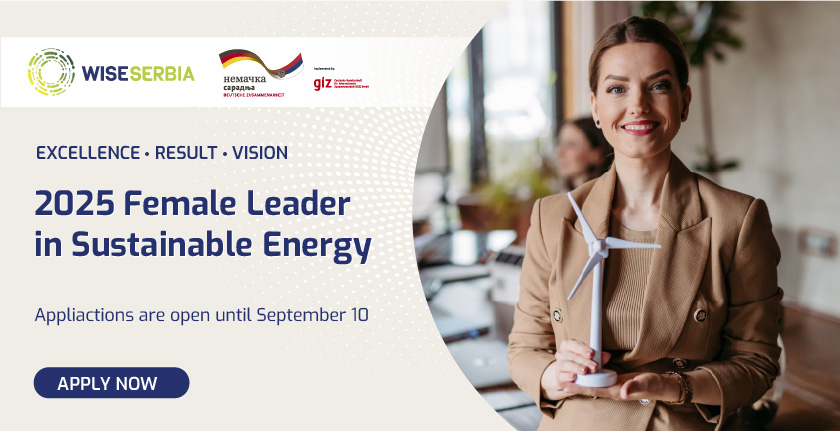
WISE Serbia, the Network of Women in Sustainable Energy, Climate Action, and Environment, under the auspices of the German development cooperation GIZ, announces the call for nominations for the 2025 Female Leader in Sustainable Energy Award. The call is intended for women who are professionally engaged in the energy and related sectors in the Republic of Serbia and who have demonstrated outstanding results in their careers. Application process is open until September 10.

The call for nominations for the 2025 Female Leader in Sustainable Energy Award aims to recognize women who, through their leadership, outstanding achievements, and vision, have demonstrated significant contribution to the sustainable development of the Serbia’s energy and related sectors, energy transition acceleration, improvement of energy efficiency, energy security, and safety, as well as the greater recognition of women in this field.

The Female Leader in Sustainable Energy award was established in 2023 by the Center for the Promotion of Sustainable Development, the founder of the WISE Serbia women’s network, under the auspices of the German development cooperation GIZ. The WISE Serbia network was established in 2018 and is among the first of its kind globally.

The recipient for the previous year, was Svetlana Cerović, Director of Specialized Financing at UniCredit Bank Serbia

The title of the Female Leader of Sustainable Energy has been awarded to several notable individuals. For 2023, the recipients are Dubravka Đedović Handanović, Minister of Mining and Energy in the Government of the Republic of Serbia; Maja Turković, Executive Vice President at CWP Global; and Ana Džokić, co-founder of the energy cooperative Elektropionir. The recipient for the previous year, 2024, was Svetlana Cerović, Director of Specialized Financing at UniCredit Bank Serbia.

Photo: GIZ’s Project Director Till Barmeier with the laureate, Svetlana Cerović from UniCredit Bank Serbia

“The Female Leader in Sustainable Energy Award is an opportunity to learn more about the achievements, initiatives, and enthusiasm of women who push boundaries through their engagement and contribution to sustainable energy. It is also an exceptional opportunity for networking and exchanging knowledge and experiences within the WISE initiative and beyond,” said Cerović.

Last year’s award winner invited all interested women to take part in this year’s award process and emphasized that she looks forward to future cooperation and joint initiatives.

Information about the Award competition

Women professionally engaged in the energy sector, climate action, or environmental protection in Serbia are eligible to apply, both citizens of Serbia and foreign nationals working in Serbia. The candidates themselves can submit applications, as well as their employers, colleagues, or teams who wish to highlight the outstanding achievements of their associates.

The pannel discussion at 2024 annual event of the WISE Serbia women’s network : pictured from left: Maja Turković, Ankica Babulov, Dušan Macura, Ana Džokić

The call is open to all profiles – decision-makers, employees in business, public enterprises, academia, civic energy, non-governmental sector, international organizations, consulting teams, legal and financial institutions, IT experts, as well as media representatives.

The call is open from August 25 to September 10.

The call for nominations for the Leader of Sustainable Energy is open from August 25 to September 10, 2025. The application needs to be emailed by September 10, 2025, to [email protected]. It needs to include:

  1. Nomination letter presenting the candidate and listing the significant results and achievements, nominating her for the selection.
  2. Professional résumé.
  3. A short nomination statement to present the shortlisted candidate to the wider public (on the WISE Serbia website and social media platforms). The statement should be up to 100 words.
  4. Photo portrait in high resolution.
  5. Contact info – email address, phone number, social network accounts that the candidate is actively using.

Applications should be sent by email to [email protected].

After processing the submitted applications, the candidates’ profiles will be published on the WISE Serbia Network website – wisesrbija.org, and the voting will be open to the public. The candidate with the highest number of votes will be awarded the title of Leader in Sustainable Energy.

The announcement ceremony for the Leader in Sustainable Energy 2025 will take place during the WISE Serbia Women’s Network annual conference in mid-October in Belgrade.

by in News

WISE Serbia mentorship program successfully completed: trust, support, and personal growth

The first mentorship program of the WISE Serbia women’s network, focusing on sustainable energy, the green economy, and climate action, and implemented with the support of German development cooperation GIZ, was successfully concluded with an event held in Belgrade. Over six months of intensive collaboration, seven mentor-mentee pairs built mutual trust, exchanged knowledge, and developed leadership potential, demonstrating the vital role of support in career development.

The WISE Serbia mentorship program brought together 14 remarkable women. Seven experienced leaders from the energy and environmental sectors shared their extensive knowledge with seven young network members in the early stages of their careers.

The mentorship pairs included:

  1. Maja Adamović, Director of the Transmission System Maintenance Division at Serbia’s electricity transmission system operatorElektromreža Srbije (EMS), and Jelena Perović, ESG Consultant at Deloitte Advisory d.o.o.;
  2. Ivona Milić, Senior ESG Specialist for Corporate Clients at Raiffeisen Bank, and Marija Rošulj, Credit and Environmental Risk Officer at ProCredit Bank;
  3. Maja Turković, Executive Vice President at CWP Europe, and Marina Arsenijević, Project Manager at Voltiza Inc.;
  4. Aleksandra Lukić, Chief Engineer in the thermal energy production department at municipal heating utility JKP Novosadska toplana in Novi Sad, and Bojana Petrović Raičević, Senior Specialist for Energy and Environmental Law at NIS a.d. Novi Sad;
  5. Svetlana Cerović, Head of Specialized Financing at UniCredit Bank, and Ana Minić, Technical Consultant for Renewable Energy and Energy Efficiency at MACS Energy & Water;
  6. Ankica Barbulov, Director of Negawatt Solutions, and Milica Vujošević, Energy Efficiency Manager at Delta Holding;
  7. Nataša Zdravković, Investment Manager at Ezpada Group, and Sara Ostojić, Lawyer at SOG a.o.d. in cooperation with Kinstellar.

The closing event was held in partnership with and under the patronage of Kinstellar, one of the leading law firms in Belgrade, operating across Central and Eastern Europe, Southeastern Europe, and Central Asia.

Founded in 2008, Kinstellar now operates in 12 countries and employs more than 300 lawyers. In Serbia, it is particularly recognized for its work in the energy and infrastructure sectors, advising on some of the region’s largest energy investments, including wind farms, mining projects, and renewable energy transactions.

Photo (Balkan Green Energy News): Radovan Grbović, Partner at Kinstellar, welcomes program participants

One of the mentees, Sara Ostojić, is an attorney at Kinstellar and Head of the Energy Sector in Serbia. She expressed great satisfaction that her firm was hosting the closing event.

Radovan Grbović, partner and attorney with over 20 years of experience, addressed the participants, emphasizing the importance of mutual support and a stronger role for women in sustainable energy and the green transition.

Mentorship is about sharing life experience

The program’s outcomes were presented by Nataša Vukmirović, professional mentorship coach from the International Institute for Coaching and Mentoring, who highlighted that the program’s goals had been fully achieved. She noted that strong relationships of trust had been built and that most participants had expressed a desire to continue engaging in similar initiatives.

“Through evaluation and facilitation of joint sessions, I had the opportunity to witness meaningful knowledge exchange and feel the power of support, trust, and shared learning. The program demonstrated that developmental mentoring is a valuable approach in the sustainable energy and green economy sectors and can significantly impact participants’ career development,” said Vukmirović.

According to her, the program goes beyond education—it is based on values that empower individuals and protect the common good. This is echoed in the positive experiences of participants.

Marija Rošulj emphasized that her positive experience with Ivona Milić inspired her to become a mentor herself. “Mentorship is not just about work, but about a person’s character and sharing life experience, not just professional experience.”

The pair plans to continue working together and develop a joint project beyond the formal program.

Photo: (Balkan Green Energy News) mentorship pair Marija Rošulj, ProCredit Bank, and Ivona Milić, Raiffeisen Bank

“One of the things I appreciated most was that my mentor helped me achieve a deeper reflection on my career path and supported the development of my emotional intelligence and effective communication,” said Ana Minić, whose mentor was Svetlana Cerović, last year’s recipient of the Female Leader in Sustainable Energy 2024 award.

Photo (Balkan Green Energy News): Ana Minić, MACS Energy & Water

Mutual learning – the heart of the program

Mentors noted the process was reciprocal, and that through working with young women, they carried out a kind of introspection of their career paths. “It was especially interesting to identify what made me successful, which I could share with Milica, who also works in renewables and energy efficiency. I tried, by talking about my career, my development path, my ups and downs, to identify the golden thread that has kept me afloat and thanks to which I can say that I am doing well in business today,” said Ankica Barbulov, co-founder and director of Negawatt Solutions and the first to introduce the ESCO financing model in Serbia.

Mentee Milica Vujošević said that her mentor was an inspiration and that working with her was a great honor.

Photo (Balkan Green Energy News): Mentorship pair Milica Vujošević, Delta Holding, and Ankica Barbulov, Negawatt Solutions

Aleksandra Lukić, Chief Engineer and one of the first women in the thermal energy production department at heating utility JKP Novosadska Toplana, emphasized that she and her mentee, Bojana Petrović Raičević, are very different and that this was a strength in their relationship.

“At first, I wondered how I could help someone from a completely different profession. I’m a mechanical engineer, and Bojana is a lawyer. But our differences allowed for deeper exchange, not only about careers but also life values, work-life balance, and personal development. In the end, I think we both gained more than we expected.”

Bojana added: “Aleksandra helped me clarify my goals and map out a plan for my career, both short-term and long-term steps. I’m grateful she was my mentor.”

Photo (Balkan Green Energy News): Mentorship pair Aleksandra Lukić, JKP Novosadska Toplana, and Bojana Petrović Raičević, NIS

Maja Adamović, Director at Elektromreža Srbije, saw the program as an opportunity to learn and improve future programs. She highlighted progress in strengthening women’s networks in the energy sector, citing the launch of the Women in Energy section within CIGRE Serbia as a great example of women’s growing interest in connection, empowerment, and collective impact.

Photo (Balkan Green Energy News): Maja Adamović, Elektromreža Srbije

Maja Turković, Executive Vice President of CWP Europe and co-founder of WISE Serbia, also served as a mentor. “Marina and I worked on identifying her potential in line with her education, interests, and labor market trends, as well as on shaping her career profile. I think we have defined a direction for her professional development and competencies she can further build on,” said Turković, adding she would gladly be a mentor again.

Marina Arsenijević, her mentee, said the program came at the right time: “After this program, I’m more aware of who I am and what I want to do in the next five or ten years.”

Photo (Balkan Green Energy News): Mentorship pair Maja Turković, CWP Europe, and Marina Arsenijević, UGT Renewables

Throughout the program, mentors generously shared knowledge, experiences, and insights, while mentees showed openness to learning and a willingness to build their leadership capacities. All mentors expressed great satisfaction with participation in the program, highlighting mutual learning as one of its most valuable aspects.

The WISE Serbia program demonstrated how important mentorship is for women’s professional and personal development in green industries. Through experience-sharing, knowledge transfer, and mutual support, participants not only strengthened their capacities but also contributed to creating a strong community of women working on a more sustainable and equitable future.

by in News

Maja Turković: Technology is our strongest card

The technological solutions needed to increase the share of renewable sources in Southeast Europe are already available and accessible, according to Maja Turković, Senior Vice President of CWP Europe. Countries in the region now need to adopt regulations to boost the deployment of battery storage and hybrid power plants, she said on the sidelines of Belgrade Energy Forum 2025.

“I believe that technology is our strongest card,” said Maja Turković, adding that its cost is decreasing, as are financing costs. Speaking at the panel on the ongoing energy revolution, she suggested that more financial resources are available than there are eligible projects.

The cost of technologies is decreasing, as are financing costs

Prices of solar panels have dropped 60% over the last two years, while battery costs fell by 40% by the end of 2024 and by a further 5% this year, to under EUR 100,000 per MWh, Turković pointed out at the panel, titled Energy revolution underway – uniting efforts to deliver green, intelligent and sustainable energy solutions.

[wpcc-iframe title=”Maja Turkovic, Executive Vice President, CWP Europe at Belgrade Energy Forum 2025″ width=”500″ height=”281″ src=”https://www.youtube.com/embed/qp8wwaYre0g?feature=oembed” frameborder=”0″ allow=”accelerometer; autoplay; clipboard-write; encrypted-media; gyroscope; picture-in-picture; web-share” referrerpolicy=”strict-origin-when-cross-origin” allowfullscreen=””]

She said that integrating batteries with solar power plants is the latest trend, but that transmission system operators in the region still do not allow it. However, in some countries, a grid connection approved for solar can also be used for batteries, she noted.

Integrating solar with batteries is the latest trend

Turković expressed the hope that regulations in the region will follow the technological evolution. “We hope to improve the preparedness of countries in the region to adopt appropriate regulations and to increase the capacity of battery storage and hybrid power plants in general, which are far more desirable for the system itself,” she stressed.

Talking about CWP Europe, Turković recalled that the company is developing projects for wind power plants, solar power plants, and battery storage in nine countries, and that it has also begun diversifying into hybrid power plants. She added that the company is also developing its own battery management software for short-term power markets.

CWP Europe recently signed the largest single power purchase agreement (PPA) for a solar project with Serbia’s state-owned power utility Elektroprivreda Srbije (EPS), marking a major milestone in the country’s energy transition. The PPA was signed for the 150 MW Solarina photovoltaic park that CWP Europe is developing in eastern Serbia.

by in News

BEF 2025: Technologies for energy transition are here, getting cheaper every day

Technologies for the energy transition already exist, and their use is increasing thanks to falling costs. Investors and bankers claim they are ready to invest and that money isn’t an issue. The missing part are upgraded transmission grids, along with policies and regulations to integrate everything into a suitable environment, according to investors and lenders gathered at Belgrade Energy Forum 2025.

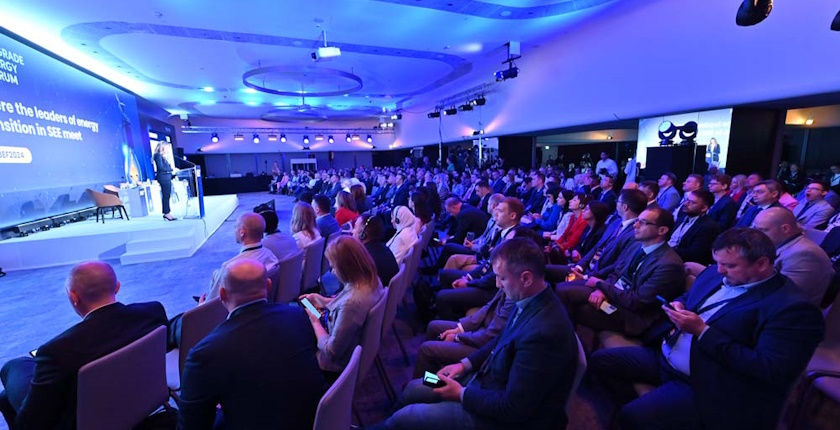
The third Belgrade Energy Forum, BEF 2025, welcomed four hundred participants from more than 30 countries from the region, Europe, and beyond. The two-day conference was organized by Balkan Green Energy News.

Participants in the panel Energy revolution underway – uniting efforts to deliver green, intelligent, and sustainable energy solutions were Maja Turković, Senior Vice President of CWP Europe, Aleš Prešern, Vice President and Head of Southeast Europe of Siemens Energy, and Christian Beynio, Head of Advisory of Kommunalkredit Austria AG.

According to panel moderator Mirza Kušljugić, a member of the Board of the Regional Center for Sustainable Energy Transition (RESET) from Bosnia and Herzegovina, the energy transition is actually a revolution, given the technological changes.

“The region is still burdened by tradition. We know the transition is inevitable, but we aren’t fully aware that it will be disruptive,” Kušljugić stated.

Technology is here, and so is financing

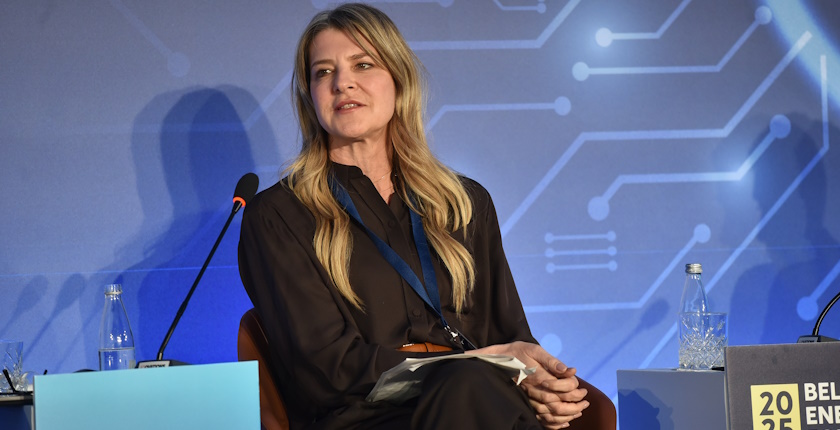
Mirza Kušljugić, Aleš Prešern and Maja Turković (photo: Balkan Green Energy News)

Maja Turković, Senior Vice President of CWP Europe, stressed that technology, currently undergoing a revolution, is the best card the world has in the transition. She even suggested that financing isn’t a problem and that there are more financial resources available than projects qualified to receive funding.

However, she is surprised by the rapid growth in solar power installations. Turković argued that market-based projects cannot achieve double-digit internal rates of return on equity. Part of the explanation may lie in the fact that panel prices have dropped by 60% over two years.

Battery prices have also fallen. The largest drop was last year, 40%, with a further 5% decline this year alone, according to Turković. Prices have slipped below EUR 100,000 per MWh.

Turković: Regarding CAPEX and technology, we’re ready

The latest trend is the integration of batteries with solar power plants. While transmission system operators in the region still don’t allow it, in some countries a grid connection approved for solar can also be used for batteries. “Regarding CAPEX and technology, we’re ready,” Turković underlined.

Aleš Prešern, Vice President and Head of Southeast Europe in Siemens Energy, is particularly impressed with the speed of change.

“We who are working in the energy sector are used to very slow changes. Energy was a conservative industry. In 2004, 1 GW of solar was built, but now data shows that it is how much is installed in one day. Batteries cost EUR 1 million per MWh not that long ago, and now they are ten times cheaper,” he noted.

Prešern: Transmission networks are the bottleneck of the transition

They are indeed dramatic changes, for which the existing power system wasn’t prepared. It is clear why Siemens Energy, as a technology company, considers transmission networks to be the bottleneck in the transition, Prešern said.

To illustrate the slowness of grid investments, he pointed to Austria, as one of the examples, where it took 10 years to build one important segment of the 400 kV network.

Both Turković and Prešern agree that nowadays the keyword is flexibility.

Maja Turković and Christian Beynio (photo: Balkan Green Energy News)

She explained there are operating battery management systems at low voltage levels that incorporate artificial intelligence and use market signals for activation when prices are low.

Prešern added that the required stability through balancing could be provided by gas power plants. Siemens Energy has never seen such high demand for gas turbines like today, he asserted.

Beynio: Don’t forget the non-banking institutions when looking in new financing

“If you ask about availability of financing, yes, it’s there,” Christian Beynio, Head of Advisory at Kommunalkredit Austria AG, confirmed. In his view, prices or, rather, the drop in prices of equipment, is the biggest innovation. Earlier, he said, it was a completely different game, heavily subsidized, while nowadays no subsidies are required per se.

The trend that Kommunalkredit Austria AG identified is the pooling of smaller assets, and a shift from financing projects toward financing developers and companies as corporates. It is yet to come to the region, he added.

Investment in grids, in his words, has to be initiated by the government. They have two solutions – go to the sovereign debt market or engage private investors. “Don’t forget the non-banking institutions when looking for new financing. This is a trend across Europe, and it will be relevant for the Balkans,” Beynio advised.

Battery projects won’t go so smoothly

Aleš Prešern (photo: Balkan Green Energy News)

Maja Turković expressed the belief that installing batteries won’t go as smoothly as solar. The main reason is the difficulty of securing a stable cash flow for batteries, unlike for production facilities. Cash flow enables financing, so batteries will likely need to be financed with internal funds, she underlined.

Turković noted that batteries are best monetized by providing system services and arbitrage, but pointed out they can also participate in capacity mechanisms, a scheme that could involve power purchase agreements (PPAs).

She said the development of the regulatory framework should be faster, to facilitate investments in batteries. Investors are ready to commit their funds to battery installation, and everyone in the market agrees that batteries are essential, Turković stressed.

Prešern: People and not technology are a guarantee that networks will exist and function properly

Amid the widespread discussions about technology and regulations, Aleš Prešern highlighted another issue. Energy, in his opinion, has always been an exciting sector, but the message hasn’t been getting through to young people in recent years. It was the case not only in the region but also in Europe, and beyond, leading to a shortage of skilled personnel.

However, he expressed the belief that things are changing and enthusiasm is returning. Prešern even suggested it could be a major advantage for the region, well known for its high-quality engineers.

Siemens Energy strives to employ as many good engineers as possible because, ultimately, people and not technology are a guarantee that networks will exist and function properly, he stressed.

The solution is also in using new technologies to better utilize existing grids

Christian Beynio (photo: Balkan Green Energy News)

The combination of rapid changes in the energy sector and slow investments in the grids threatens to put the transition to a standstill.

Better utilization of existing infrastructure could be the solution. Siemens Energy fits well there, as several years ago it established a division called Digital Grid. According to Prešern, the idea was to be quicker in data utilization, something that other sectors like automotive have long advanced, while energy has lagged.

The company recently acquired a Slovenian-Austrian firm that produces sensors installed directly on power lines, a technology called dynamic line rating. The devices provide real-time data about the conditions in power lines, potentially enabling their use beyond original design limits.

“With this technology, we believe we can increase the capacity of existing networks by an average of 30%,” Prešern revealed.

New technologies have changed bankers’ jobs as well

New technologies have changed bankers’ jobs as well, Christian Beynio admitted. He recalled that it was easy to finance wind farms in Serbia because they had feed-in tariffs from the government. The only risk element was the wind blowing or not blowing, Beynio said.

Nowadays there are merchant power producers that combine their facilities with batteries and use algorithms in electricity trading, he added. It means bankers need to sit with market consultants to identify all outcomes, he stressed.

“You won’t find singular cash flow streams. It’s going to be multi-dimensional and people simply need to adjust. It’s going to be more short term also on the lending side. It’s rather going to be corporate lending to people and companies who know what they are doing and can credibly demonstrate that with a track record. That is the digitalization impact we see”, Beynio said.

Maja Turković (photo: Balkan Green Energy News)
by in News

CWP Europe signs PPA, CfD for its Solarina PV project with Serbia’s EPS

CWP Europe signed a power purchase agreement (PPA), including balancing responsibility, and a contract for difference (CfD) for its Solarina photovoltaic project, with Serbia’s state-owned power utility Elektroprivreda Srbije (EPS).

Solarina is a special purpose vehicle or SPV for a photovoltaic park of 150 MW in connection capacity. Its site is near the city of Zaječar in eastern Serbia. The developer, CWP Europe, won a CfD in February for 105 MW at the country’s second solar power auction. All other projects were for 10 MW at most.

Executive Vice President of CWP Europe Maja Turković signed a PPA and the contracts for difference and balancing responsibility for Solarina with Assistant to CEO of EPS for Power Portfolio Management David Žarković.

Largest single PPA ever signed for solar power with EPS

The agreement marks a major milestone in Serbia’s energy transition – it is the largest single PPA ever signed for a solar project with EPS, Turković pointed out. “We thank the Ministry of Mining and Energy and EPS for their trust and another opportunity to jointly contribute to a more stable and greener energy future for Serbia,” she added.

CWP Europe has a project pipeline of more than 10 GW in Southeastern Europe, Moldova and Ukraine

All green electricity generated by the Solarina solar park will be supplied to the domestic market at a competitive price, enhancing the stability and sustainability of the country’s energy supply, CWP Europe added. Of note, the CfD is for EUR 52.89 per MWh.

“The continuation of the cooperation confirms once more that EPS is a reliable partner and associate to everyone whose business activity involves green energy. In addition, this way we also confirm the joint dedication to Serbia’s energy transition and the development of renewable energy sources, as EPS will offtake all produced energy and it will remain in our country,” Žarković stated.

PPAs for projects Solarina, Vetrozelena are both for entire output

Serbia’s state-owned power utility has the same arrangement since 2023 for the Vetrozelena wind power project, which was developed by CWP Europe and also won market premiums, at the first round of renewable energy auctions. Both PPAs are for the entire output.

The company has a project portfolio of more than 10 GW in total for wind and solar power and battery energy storage systems in Serbia, Bulgaria, Romania, Montenegro, Albania, North Macedonia, Croatia, Moldova and Ukraine.

CWP is a silver sponsor of the two-day Belgrade Energy Forum – BEF 2025, which is starting tomorrow. Maja Turković will participate in the panel discussion ‘Energy revolution underway – uniting efforts to deliver green, intelligent and sustainable energy solutions’.

by in News

Belgrade Energy Forum 2025 – 50 speakers at eight panels to track pace of SEE energy transition

The agenda of the third Belgrade Energy Forum, taking place on May 14-15, has been finalized with the addition of further prominent energy experts and companies. The conference, organized by Southeast Europe’s leading energy news portal, Balkan Green Energy News, will feature eight panels covering key topics in the energy sector, with an impressive lineup of speakers. Make sure you register on time via this link.

The Belgrade Energy Forum will once again be a meeting place for representatives of regional and international institutions and organizations, as well as the business community from across the region, Europe, and the world.

Eight panels featuring more than 50 speakers will offer an overview of the current challenges in the energy sector. Conference participants will hear in-depth analyses of the current situation, but also projections for the future. The thread that connects everything at this year’s BEF is digitalization – it permeates energy production, consumption, and storage and allows enough flexibility for the stable functioning of the energy systems of the future, where renewable energy will dominate.

Chikán: Electricity knows no borders

One of the key speakers at the conference, Alteo Group CEO Chikán Attila, will lead the company’s high-level delegation. Alteo has recently launched a regional expansion drive, aiming to establish a green platform of up to 2 GW in energy production, including operation, software, maintenance, storage, and waste management.

The Hungarian company primarily targets its home market, Slovakia, Croatia, and Serbia.

“Electricity knows no borders, therefore partnerships and collaborations among energy market players are essential, even at the regional level. Such cooperation is vital to ensuring the security and reliability of electricity supply, facilitating the integration of renewable energy sources, and providing essential digital solutions, supported by expertise and professional know-how,” Chikán stressed.

Decarbonization strategies for power generation in Southeast Europe 2040/2050

  • Dejan Paravan, CEO, GEN Energija
  • Dušan Živković, CEO, EPS
  • Eric Scotto, CEO, AKUO
  • Milutin Đukanović, Chairman, EPCG Board of Directors
  • Neda Lazendić, Country Manager, WV-International

Although at the heart of national energy systems, state-owned power utilities are faced with an environment that has changed and continues to change rapidly. The key shift is the entry of private capital into electricity production through the construction of solar power plants and wind farms.

The energy transition, at this stage, requires cooperation between state power utilities and private companies. With decarbonization as the main objective, the key challenge lies in choosing appropriate strategies and electricity generation technologies.

Moderating the panel will be Dražen Jakšić, Director of the Energy Institute Hrvoje Požar (EIHP).

“The transition to a low-carbon energy system is a key challenge for our region, demanding innovation, investment, and cooperation. As a sponsor of the Belgrade Energy Forum, EIHP is committed to fostering dialogue and driving sustainable energy solutions. I look forward to an insightful discussion,” he stressed.

Jakšić: The transition to a low-carbon energy system is a key challenge for our region, demanding innovation, investment, and cooperation

In recent years, nuclear energy has emerged as a possible alternative. There is hardly a better interlocutor on this topic in the region than Dejan Paravan, the top man of GEN Energija, the Slovenian company developing the Krško 2 nuclear power plant project.

Dušan Živković, CEO of Elektroprivreda Srbije (EPS), will tell us about the Serbian power utility’s plans when it comes to nuclear energy.

Živković: Without decarbonization, the region’s energy sector has no future

“Without decarbonization, there is no future for the region’s energy sector, and that is the biggest challenge ahead of us. It is essential to accelerate decisions and ensure sustainable project financing mechanisms that will provide energy security for every country and power utility in the decades to come. By investing in existing capacities and new renewable energy projects, EPS, as the biggest utility in the region, will make its own contribution to energy security. That’s why we have initiated a transformation process – because we need to be more profitable, more efficient, and fully prepared to tackle any challenge,” Živković pointed out.

The energy transition, in his words, is the path EPS has chosen, and all its plans will align with that goal, based on the belief that the diversification of energy sources and new technologies are essential for achieving it. “These are just some of the key messages I will share with the participants of this year’s BEF,” said Živković.

Eric Scotto, co-founder and CEO of French company Akuo, will share the latest information on the energy transition from across the globe.

The company’s portfolio consists of 1.9 GW of power plants in operation and under construction, with a further 12 GW in the pipeline in more than 20 countries around the world, including a number of countries in the Southeast Europe region.

Integration of Western Balkans electricity markets into internal European market through market coupling

  • Anže Predovnik, Director, ADEX Group
  • Ivan Asanović, Executive Director, CGES
  • Marko Bislimoski, President, Energy, Water Services and Municipal Waste Management Services Regulatory Commission of the Republic of North Macedonia
  • Zoran Vujasinović, Policy Officer, ACER

The integration of the Western Balkans’ electricity markets with the European Union (EU) markets is a process that deserves much greater public attention than it currently receives. It is safe to say that its true importance will become evident only once it is completed.

Full integration will unlock significant synergies, maximizing the benefits of a unified market by enhancing supply security, accelerating the integration of renewable energy sources, and fostering greater competition and transparency.

Moderator Dejan Stojčevski, CTO of the SEEPEX power exchange, says the panel seeks to encourage dialogue on the importance of cross-border collaboration and market efficiency in bolstering energy security and sustainability in the region.

Bislimoski: The time for inspiring speeches is over. Geopolitical developments demand action – now!

Since market integration is largely the job of regulators, the challenges they face will be analyzed by Marko Bislimoski, president of North Macedonia’s Energy and Water Services Regulatory Commission (RKE).

He says that three things are essential for the regional integration of electricity markets into a single European market: investment, investment, and nothing but investment. In his words, the energy crisis demonstrated that limitations become a reality when governments fail to prioritize the implementation of key energy infrastructure capacities in their budgets.

“This past winter, the region faced the highest electricity prices compared to the rest of Europe. Why? Because the implementation of energy investments is not just a ribbon-cutting ceremony. Today, more than ever before, the countries of the former Yugoslavia must demonstrate maturity. These are the years when energy independence will be built through action. The time for inspiring speeches is over. Geopolitical developments demand action – now!” he stressed.

Energy revolution underway – uniting efforts to deliver green, intelligent and sustainable energy solutions

  • Aleš Prešern, VP, Head of Southeast Europe, Siemens Energy
  • Maja Turković, SVP, CWP Europe
  • Ann-Catherine de Tourtier, Managing Director Mediterranean, Nordex Group

As much as contesting the energy transition may be futile, there are still those who find such a view meaningful, especially in light of certain global political developments. That’s why it is important to give the floor to some of the transition leaders and let them testify that an energy revolution is indeed underway in the region.

The panel’s moderator Mirza Kušljugić – professor, energy expert, and one of the founders of Bosnia and Herzegovina’s Centre for Sustainable Energy Transition Centre (RESET) – goes one step further to show that change is not only happening but also accelerating.

“The key words are a new energy paradigm driven by the four Ds – decarbonization, digitalization, decentralization, and democratization. But now we also have another D: disruption, or radical change in the industry and market caused by technological innovation. Of course, we must focus the discussion – from global processes (China, the US, the EU, the Global South) to where the region stands in all of this,” Kušljugić points out, providing a perfect introduction to the panel.

Turković: It’s more important than ever to have open discussions about real solutions

Aleš Prešern, Vice President and Head of Southeast Europe at Siemens Energy, has worked in the energy sector for more than 20 years. He recalls that digitalization is key, along with grid resilience and electricity transmission.

With nearly 100,000 employees in more than 90 countries, Siemens Energy develops the energy systems of the future, ensuring that the growing energy demand of the global community is met reliably and sustainably. The technologies created in the company’s research departments and factories drive the energy transition and provide the base for one sixth of the world’s electricity generation.

As a leader in renewable energy development, CWP is actively working on several large-scale projects across the SEE region with a total capacity exceeding 7 GW, positioning the company at the forefront of the region’s energy transition. Given its global expertise and insights into the regional energy market, CWP’s contribution to this year’s conference will be invaluable.

Maja Turković, Executive Vice President of CWP Europe, says that BEF 2025 is a key gathering of leading experts driving the energy transition in Southeast Europe.

“As this shift gains momentum, it’s more important than ever to have open, action-driven discussions about real solutions to the challenges and opportunities ahead,” says Turković.

PPAs as a key to renewable energy growth in SEE

  • Nikola Gazdov, Chairman, Association for production, storage and trading of electricity – APSTE
  • Natalija Ljubić, Manager PPA & BESS Transactions, Pexapark
  • Ivana Đurović, Category Manager Renewable Energy, Knauf Group

Power Purchase Agreements (PPAs) are, like flexibility, a tool for fixing the imperfections of renewable energy sources, and they are recognized as a key mechanism within the new electricity market design. They ensure price stability, attract new investment, and accelerate the decarbonization of industry.

Is the region ready for PPAs? What are the dominant models? What is the current market practice? How are PPAs viewed by financial institutions? What do they offer to end consumers and what to investors in new power plants? Answers to these questions will be sought at the panel moderated by Mislav Slade-Šilović, Energy, Utilities & Resources Consulting Leader for Southeast Europe and member of the core PPA team at consultancy PwC.

Experience with PPAs for more than 500 GWh of electricity

Slade-Šilović’s experience in concluding PPAs for the production and consumption of over 500 GWh of electricity per year in the SEE region will certainly be of help.

Nikola Gazdov, Chairman of Bulgaria’s association for electricity production, storage, and trading (APSTE) and member of the Board of Directors of the European solar industry association SolarPower Europe, has no shortage of experience either. As CEO of three companies – Enery Element GmbH, Element Power Group, and Renergy – he is involved in the development of a large number of projects.

Pexapark, a company that provides logistics to businesses in the renewable energy market, is synonymous with PPAs in Europe. Natalija Ljubić is the Manager for PPA and BESS Transactions at Pexapark, which has helped conclude contracts for facilities with a combined capacity exceeding 35 GW.

The views of electricity buyers – without whom there would be no PPAs – will be conveyed by Ivana Đurović, Category Manager for Renewable Energy at Knauf Group.

Market flexibility: the backbone of a resilient energy system

  • Roman Bernard, CEO, NGEN
  • Luka Renko, COO, KOER
  • Alteo Group representative
  • Nikolaj Candellari, Project Manager and Market Intelligence, CyberGrid
  • Marko Zarić, EMS

Moderating the panel will be Elena Boškov Kovač, co-founder and CEO of Blueprint Energy Solutions, and a leading voice on market flexibility in Europe.

She will host representatives of the sector’s leading companies: NGEN, Alteo, KOER, CyberGrid, as well as Serbia’s transmission system operator Elektromreža Srbije (EMS).

“Excited to moderate a high-impact panel on ‘Market Flexibility: The Backbone of a Resilient Energy System’ at the Belgrade Energy Forum 2025,” says Boškov Kovač, whose work has shaped smart grid strategies and digitalization innovation agendas across the EU and under ETIP SNET.

As Europe accelerates its shift to renewables, market flexibility is emerging as the cornerstone of reliable, affordable, and decarbonized energy systems. With the European flexibility market promising to unlock over EUR 20 billion in savings, this session will explore how digital tools, flexible assets, and new market designs are unlocking value and resilience across the grid.

Slovenia’s NGEN is the technology sponsor of BEF 2025

Slovenian energy company NGEN, the technology sponsor of the conference, has managed to establish itself as a significant player in European markets in just five years of operation and is now ready to enter the Western Balkans’ markets.

Specializing in premium battery storage systems and smart energy solutions, the company is developing systems with a total capacity of 1.6 GWh in European countries. Its founder, Roman Bernard, will be speaking at the panel.

Also taking part in the panel will be Luka Renko, COO of KOER, a pioneer in virtual power plants in the region.

Rounding off the lineup of exceptional panelists will be Nikolaj Candellari, who is responsible for project management at CyberGrid. The software company was acquired a few years ago by Austria’s EVN, one of the first to demonstrate that greater integration of renewable energy sources, battery storage, and prosumers is not possible without digitalization and software solutions.

In a nutshell, this innovative company stands for the digitalization of the energy sector, with a focus on virtual power plants.